
 By Muke
AI for DeFi Data Analysis: A Practical On-Chain Workflow
AI for DeFi Data Analysis: A Practical On-Chain Workflow is about turning transparent-but-messy blockchain activity into repeatable research: clean datasets, defensible features, testable hypotheses, and monitored models. If you’ve ever looked at TVL dashboards, yield pages, and token charts and thought “this feels hand-wavy,” this workflow is your antidote. And if you like structured, staged analysis (the way SimianX AI frames multi-step research loops), you can bring the same discipline to on-chain work so results are explainable, comparable across protocols, and easy to iterate.
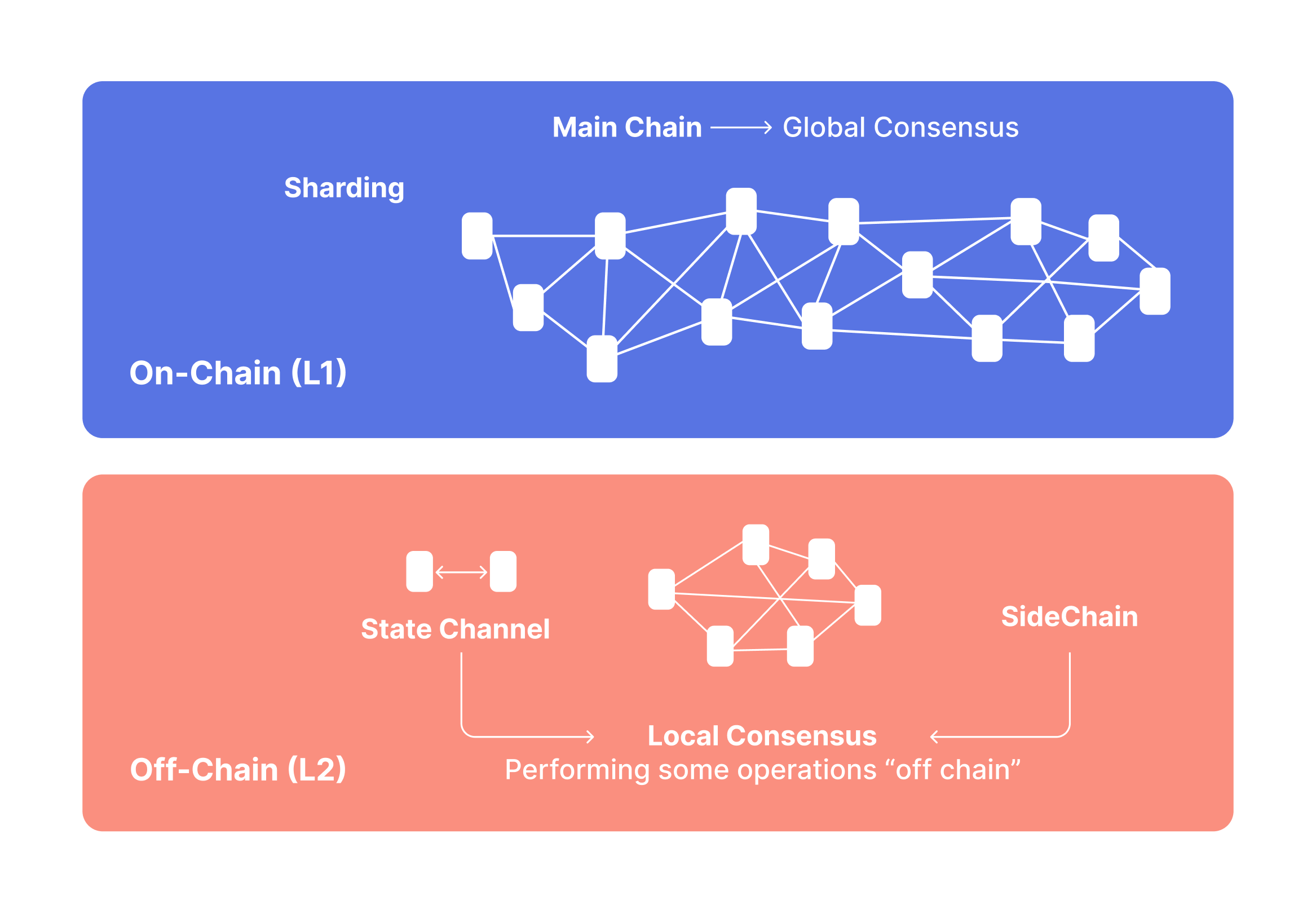
Why on-chain data analysis is harder (and better) than it looks
On-chain data gives you ground truth for what happened: transfers, swaps, borrows, liquidations, staking, governance votes, and fee flows. But “ground truth” doesn’t mean “easy truth.” DeFi analysts run into problems like:
- Entity ambiguity: addresses aren’t identities; contracts proxy other contracts; relayers mask EOAs.
- Composable flows: one user action triggers multiple internal calls, events, and state changes.
- Incentive distortion: yields can be inflated by emissions, wash activity, or temporary liquidity mining.
- Adversarial environments: MEV, sandwiching, oracle games, and governance capture create non-stationary behavior.
- Evaluation traps: labeling “good protocols” vs “bad protocols” is subjective unless you define a measurable outcome.
The upside is huge: when you build an AI-ready pipeline, you can answer questions with evidence, not vibes—then keep re-running the same workflow as conditions change.
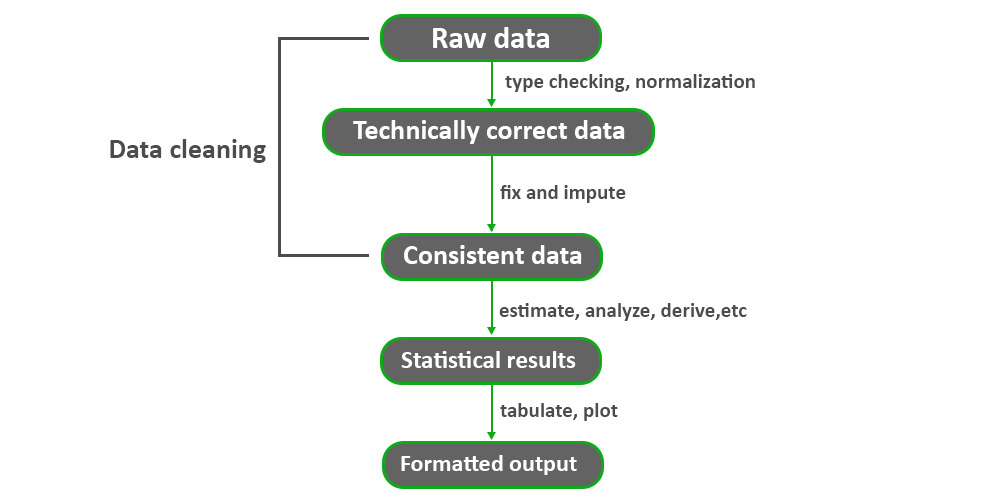
Step 0: Start with a decision, not a dataset
The fastest way to waste time in DeFi is to “download everything” and hope patterns emerge. Instead, define:
- Decision: what will you do differently based on the analysis?
- Object: protocol, pool, token, vault strategy, or wallet cohort?
- Time horizon: intraday, weekly, quarterly?
- Outcome metric: what counts as success or failure?
Example decisions that map well to AI
- Protocol risk monitoring: “Should we cap exposure to this lending market?”
- Yield sustainability: “Is this APY mostly emissions, or fee-backed?”
- Liquidity health: “Can we enter/exit with acceptable slippage under stress?”
- Wallet behavior: “Are ‘smart money’ cohorts accumulating or distributing?”
- Governance dynamics: “Is voting power concentrating among a few entities?”
Key insight: AI is strongest when the target is measurable (e.g., drawdown probability, liquidation frequency, fee-to-emissions ratio), not when the target is “good narrative.”
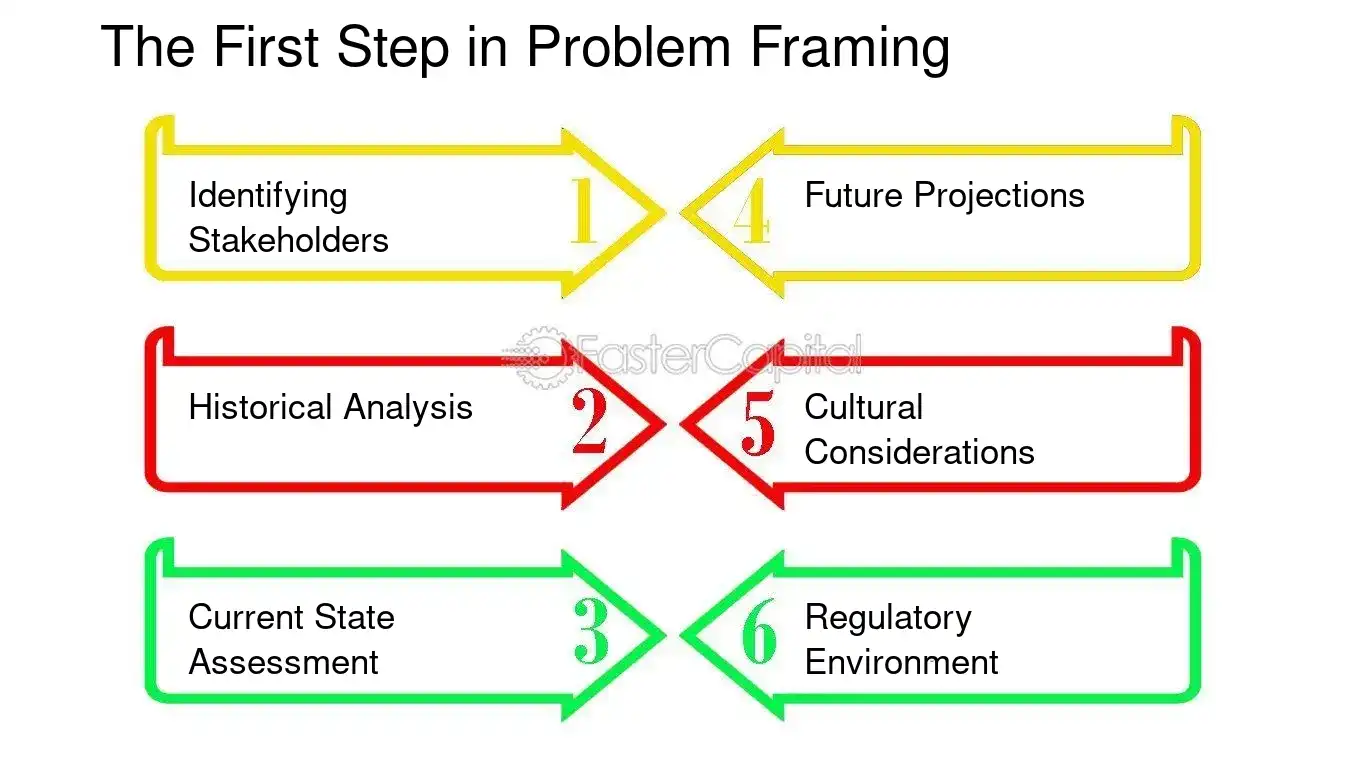
Step 1: Build your on-chain data foundation (sources + reproducibility)
A practical on-chain workflow needs two layers: raw chain truth and enriched context.
A. Raw chain truth (canonical inputs)
At minimum, plan to collect:
- Blocks/transactions: timestamps, gas, success/failure
- Logs/events: emitted by contracts (DEX swaps, mints/burns, borrows, repays)
- Traces/internal calls: call graph for complex transactions (especially important for aggregators and vaults)
- State snapshots: balances, reserves, debt, collateral, governance power at time t
Pro tip: treat every dataset as a versioned snapshot:
- chain + block range (or exact block heights)
- indexer version (if using a third-party)
- decoding ABI versions
- price oracle method
B. Enrichment (context you’ll need for “meaning”)
- Token metadata: decimals, symbols, wrappers, rebasing behavior
- Price data: trusted oracle prices + DEX-derived TWAPs (with guardrails)
- Protocol semantics: which events correspond to which economic actions
- Labels: contract categories (DEX, lending, bridges), known multisigs, CEX hot wallets, etc.
Minimal reproducible schema (what you want in your warehouse)
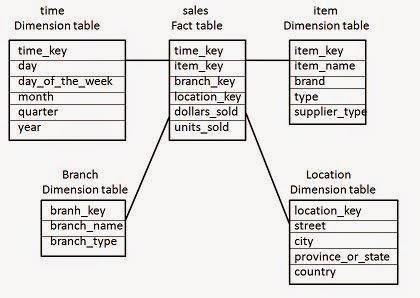
Think in “fact tables” and “dimensions”:
fact_swaps(chain, block_time, tx_hash, pool, token_in, token_out, amount_in, amount_out, trader, fee_paid)fact_borrows(chain, block_time, market, borrower, asset, amount, rate_mode, health_factor)dim_address(address, label, type, confidence, source)dim_token(token, decimals, is_wrapped, underlying, risk_flags)dim_pool(pool, protocol, pool_type, fee_tier, token0, token1)
Use inline code naming consistently so downstream features don’t break.
Step 2: Normalize entities (addresses → actors)
AI models don’t think in hex strings; they learn from behavioral patterns. Your job is to convert addresses into stable “entities” where possible.
Practical labeling approach (fast → better)
Start with three tiers:
- Tier 1 (high confidence): protocol contracts, well-known multisigs, verified deployers
- Tier 2 (medium): cluster heuristics (shared funding source, repeated interaction patterns)
- Tier 3 (low): behavioral archetypes (arb bot, MEV searcher, passive LP)
What to store for every label
label(e.g., “MEV bot”, “protocol treasury”)confidence(0–1)evidence(rules triggered, heuristics, links)valid_from/valid_to(labels change!)
Wallet clustering: keep it conservative
Clustering can help (e.g., grouping addresses controlled by one operator), but it can also poison your dataset if it’s wrong.
- Prefer precision over recall: false merges are worse than missed merges.
- Track clusters as hypotheses, not facts.
- Keep raw addresses available so you can roll back.
| Entity task | What it unlocks | Common pitfall |
|---|---|---|
| Contract classification | Protocol-level features | Proxy/upgrade patterns mislead |
| Wallet clustering | Cohort flows | False merges from shared funders |
| Bot detection | Clean “organic” signals | Label drift as bots adapt |
| Treasury identification | Real yield analysis | Mixing treasury vs user fees |
Step 3: Feature engineering for DeFi (the “economic truth” layer)
This is where AI becomes useful. Your model learns from features—so design features that reflect mechanisms, not just “numbers.”
A. DEX & liquidity features (execution reality)
Useful features include:
- Depth & slippage: estimated price impact for trade sizes (e.g., $10k/$100k/$1m)
- Liquidity distribution: concentration near current price (for concentrated liquidity AMMs)
- Fee efficiency: fees per unit TVL, fees per unit volume
- Wash-trade signals: high volume with low net position change
- MEV pressure: sandwich patterns, backrun frequency, priority fee spikes around pool activity
Bold rule: If you care about tradability, model slippage under stress, not “average daily volume.”
B. Lending features (insolvency & reflexivity)
- Utilization rate: demand pressure indicator
- Collateral concentration: top-N collateral share (whale risk)
- Liquidation density: how much collateral is near liquidation thresholds
- Bad-debt proxy: liquidations that fail or recover less than debt
- Rate regime shifts: abrupt changes in borrow/supply rates
C. “Real yield” vs incentive yield (sustainability core)
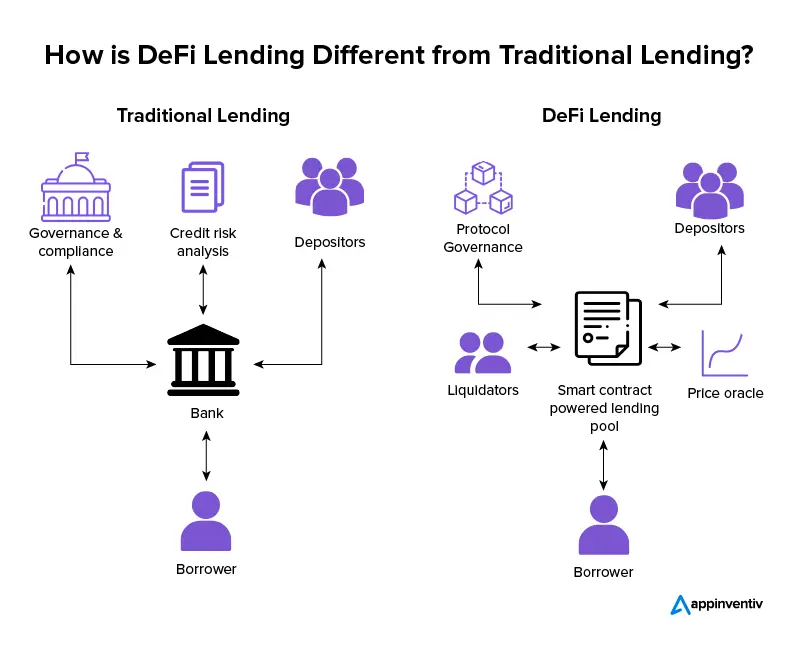
DeFi yields often mix:
- Fee-backed yield: trading fees, borrow interest, protocol revenue
- Incentive yield: token emissions, rewards, bribes, one-off subsidies
A practical decomposition:
gross_yield = fee_yield + incentive_yieldreal_yield ≈ fee_yield - dilution_cost(where dilution cost is context-dependent, but you should at least track emissions as a percentage of market cap and circulating supply growth)
Key insight: sustainable yield is rarely the highest yield. It’s the yield that survives when incentives taper.
Step 4: Label the target (what you want the model to predict)
Many DeFi datasets fail because labels are vague. Good targets are specific and measurable.
Examples of model targets
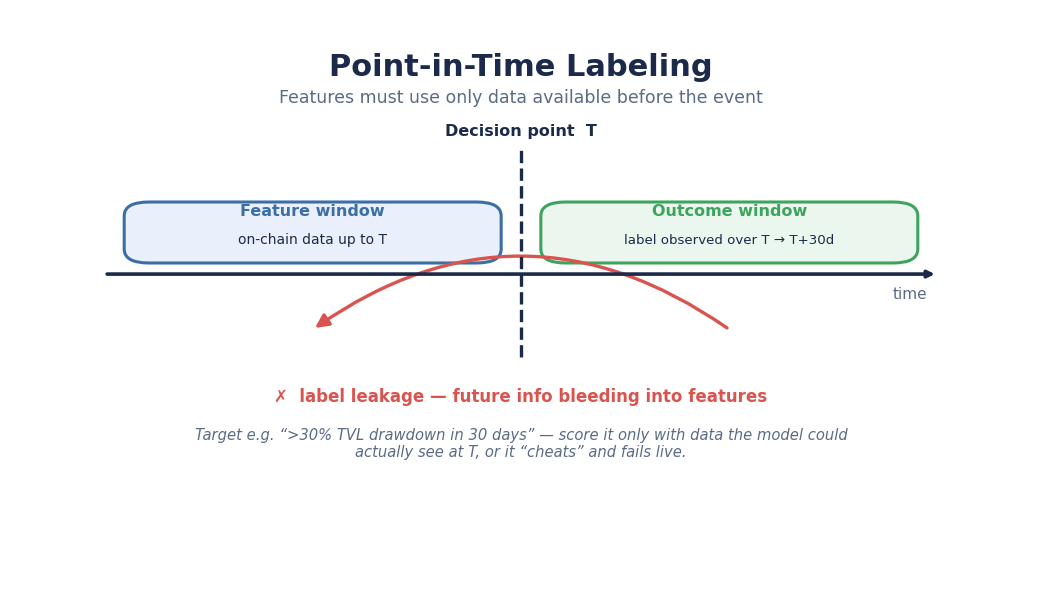
- Risk classification: “Probability of >30% TVL drawdown in 30 days”
- Liquidity shock: “Chance slippage >2% for $250k trade during high volatility”
- Yield collapse: “Fee-to-emissions ratio drops below 0.3 for 14 consecutive days”
- Exploit/anomaly: “Abnormal outflows relative to historical baseline”
- Regime detection: “Market transitions from organic to incentive-driven liquidity”
Avoid label leakage
If your label uses future information (like a later exploit), ensure your features only use data available before the event. Otherwise the model “cheats.”
Step 5: Choose the right AI approach (and where LLMs fit)
Different DeFi questions map to different model families.
A. Time-series forecasting (when dynamics matter)
Use when you predict:
- fees, volume, utilization, emissions schedules
- TVL inflows/outflows
- volatility regimes
B. Classification & ranking (when you pick “top candidates”)
Use when you need:
- “top 20 pools by sustainable yield”
- “protocols most likely to experience liquidity shocks”
- “wallet cohorts most likely to accumulate”
C. Anomaly detection (when you don’t know the attack yet)
Useful for:
- new exploit patterns
- governance attacks
- bridge drain signatures
- oracle manipulation regimes
D. Graph learning (when relationships are the signal)
On-chain is naturally a graph: wallets ↔ contracts ↔ pools ↔ assets. Graph-based features can outperform flat tables for:
- sybil detection
- coordinated behavior
- contagion paths (liquidation cascades)
Where LLMs help (and where they don’t)
LLMs are great for:
- parsing proposals, docs, audits into structured notes
- extracting “what changed” in governance forums
- generating hypotheses and checks
LLMs are not a substitute for:
- correct on-chain decoding
- causal inference
- backtesting discipline
A practical hybrid:
- LLMs for interpretation + structure
- ML/time-series/graphs for prediction + scoring
- rule-based checks for hard constraints
Step 6: Evaluation and backtesting (the non-negotiable part)
DeFi is non-stationary. If you don’t evaluate carefully, your “signal” is a mirage.
A. Split by time, not randomly
Use time-based splits:
- Train: older periods
- Validate: middle
- Test: most recent out-of-sample window
B. Track both accuracy and decision quality
In DeFi, you often care about ranking and risk, not just “accuracy.”
- Classification: precision/recall, ROC-AUC, PR-AUC
- Ranking: NDCG, top-k hit rate
- Risk: calibration curves, expected shortfall, drawdown stats
- Stability: performance decay over time (drift)
A simple evaluation checklist
- Define the decision rule (e.g., “avoid if risk score > 0.7”)
- Backtest with transaction costs & slippage assumptions
- Run stress regimes (high gas, high volatility, liquidity crunch)
- Compare against baselines (simple heuristics often win)
- Store an audit trail (features, model version, snapshot blocks)
| Evaluation layer | What you measure | Why it matters |
|---|---|---|
| Predictive | AUC / error | Signal quality |
| Economic | PnL / drawdown / slippage | Real-world viability |
| Operational | latency / stability | Can it run daily? |
| Safety | false positives/negatives | Risk appetite alignment |
Step 7: Deploy as a loop (not a one-off report)
A real “practical workflow” is a loop you can run every day/week.
Core production loop
- Ingest new blocks/events
- Recompute features on rolling windows
- Score pools/protocols/wallet cohorts
- Trigger alerts for threshold breaches
- Log explanations and snapshots for auditability
Monitoring that matters in DeFi
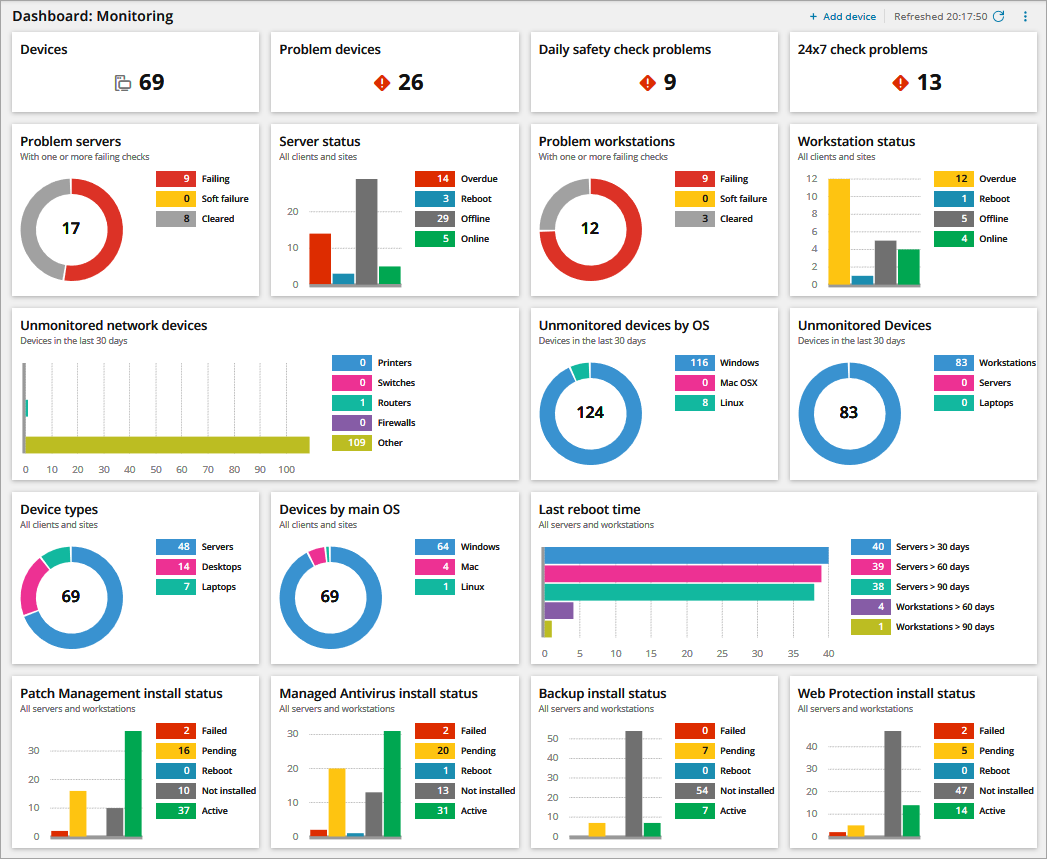
- Data drift: are volumes/fees/regimes outside historical ranges?
- Label drift: is “MEV bot” behavior changing?
- Pipeline health: missing events, ABI decode failures, price oracle anomalies
- Model decay: performance drops in recent windows
Practical rule: if you can’t explain why the model changed its score, you can’t trust it in a reflexive market.
A worked example: “Is this APY real?”
Let’s apply the workflow to a common DeFi trap: attractive yields that are mostly incentives.
Step-by-step
- Define object: a specific pool/vault
- Horizon: next 30–90 days
- Outcome: sustainability score
Compute:
fee_revenue_usd(trading fees / borrow interest)incentives_usd(emissions + bribes + rewards)net_inflows_usd(is TVL organic or mercenary?)user_return_estimate(fee revenue minus IL / borrow costs where relevant)
A simple sustainability ratio:
fee_to_incentive = fee_revenue_usd / max(incentives_usd, 1)
Interpretation:
fee_to_incentive > 1.0often indicates fee-backed yieldfee_to_incentive < 0.3suggests incentives dominate
| Metric | What it tells you | Red flag threshold |
|---|---|---|
| feetoincentive | fee-backed vs emissions | < 0.3 |
| TVL churn | mercenary liquidity | high weekly churn |
| whale share | concentration risk | top 5 > 40% |
| MEV intensity | execution toxicity | rising sandwich rate |
| net fees per TVL | efficiency | falling trend |
Add AI:
- Forecast
fee_revenue_usdunder multiple volume scenarios - Classify “organic vs incentive-driven” regime
- Alert when ratio trends downward rapidly
How does AI for DeFi data analysis work on-chain?
AI for DeFi data analysis works on-chain by transforming low-level blockchain artifacts (transactions, logs, traces, and state) into economic features (fees, leverage, liquidity depth, risk concentration), then learning patterns that predict outcomes you can measure (yield sustainability, liquidity shocks, insolvency risk, anomalous flows). The “AI” part is only as good as:
- the feature mapping from events → economics,
- the labels that define success/failure,
- and the evaluation loop that prevents overfitting.
If you treat the workflow as a repeatable system—like the staged research approach emphasized in SimianX-style multi-step analysis—you get models that improve over time instead of brittle one-off insights.
Practical tooling: a minimal stack you can actually run
You don’t need a huge team, but you do need discipline.
A. Data layer
- Warehouse (tables + partitions by chain/time)
- ABI decoding and event normalization
- Price pipeline with oracle/TWAP guardrails
B. Analytics layer
- Feature jobs (rolling windows, cohort metrics)
- Evaluation harness (time splits, baselines, stress tests)
- Dashboards + alerting
C. “Research agent” layer (optional but powerful)
This is where a multi-agent mindset shines:
- one agent checks data quality
- one focuses on protocol mechanics
- one stress-tests assumptions
- one writes the final brief with citations and caveats
This is also where SimianX AI can be a helpful mental model: instead of relying on a single “all-knowing” analysis, use specialized perspectives and force explicit tradeoffs—then output a clear, structured report. You can explore the platform approach at SimianX AI.
Common failure modes (and how to avoid them)
- Mistaking TVL for health: TVL can be rented. Track churn, concentration, and fee efficiency.
- Ignoring slippage costs: backtests without execution assumptions are fantasy.
- Over-trusting labels: “smart money” labels drift; keep confidence and re-validate.
- Not modeling incentives: emissions schedules matter; treat them as first-class variables.
- No audit trail: if you can’t reproduce a score from the same blocks, it’s not research—it's content.
FAQ About AI for DeFi Data Analysis: A Practical On-Chain Workflow
How to build on-chain features for machine learning in DeFi?
Start from protocol mechanics: map events to economics (fees, debt, collateral, liquidity depth). Use rolling windows, avoid leakage, and store feature definitions with versioning so you can reproduce results.
What is real yield in DeFi, and why does it matter?
Real yield is yield primarily backed by organic protocol revenue (fees/interest) rather than token emissions. It matters because emissions can fade, while fee-backed returns often persist (though they can still be cyclical).
What’s the best way to backtest DeFi signals without fooling yourself?
Split by time, include transaction costs and slippage, and test across stress regimes. Always compare to simple baselines; if your model can’t beat a heuristic reliably, it’s probably overfit.
Can LLMs replace quantitative on-chain analysis?
LLMs can speed up interpretation—summarizing proposals, extracting assumptions, organizing checklists—but they can’t replace correct event decoding, rigorous labeling, and time-based evaluation. Use LLMs to structure research, not to “hallucinate” the chain.
How do I detect incentive-driven (mercenary) liquidity?
Track TVL churn, fee-to-incentive ratios, and wallet cohort composition. If liquidity appears when incentives spike and leaves quickly afterward, treat yield as fragile unless fees independently support it.
Conclusion
AI becomes genuinely valuable in DeFi when you turn on-chain noise into a repeatable workflow: decision-first framing, reproducible datasets, conservative entity labeling, mechanism-based features, time-split evaluation, and continuous monitoring. Follow this practical on-chain loop and you’ll produce analysis that’s comparable across protocols, resilient to regime changes, and explainable to teammates or stakeholders.
If you want a structured way to run staged, multi-perspective research (and to translate complex data into clear, shareable outputs), explore SimianX AI as a model for organizing rigorous analysis into an actionable workflow.
Related Reading
- AI Agents Analyze DeFi Risks: TVL, Real Yield Rates
- AI Models DeFi Volatility & Chain-Reaction Risk
- AI Early-Warning for DeFi Liquidity & Depeg Risks