
 By Muke
AI to Address Delayed and Inaccurate Crypto Price Data in Trading Risk Management
Delayed and inaccurate price data is a silent risk multiplier in crypto trading: it turns good strategies into bad fills, misprices margin, and creates false comfort in dashboards. This research explores AI to address delayed and inaccurate crypto price data by detecting staleness, correcting outliers, and enforcing “trust-aware” risk controls that adapt when market data quality degrades. We also outline how SimianX AI can serve as an operating layer for market-data QA, monitoring, and action—so risk decisions are based on validated prices, not hopeful ones.

Why price delays and inaccuracies are common in crypto
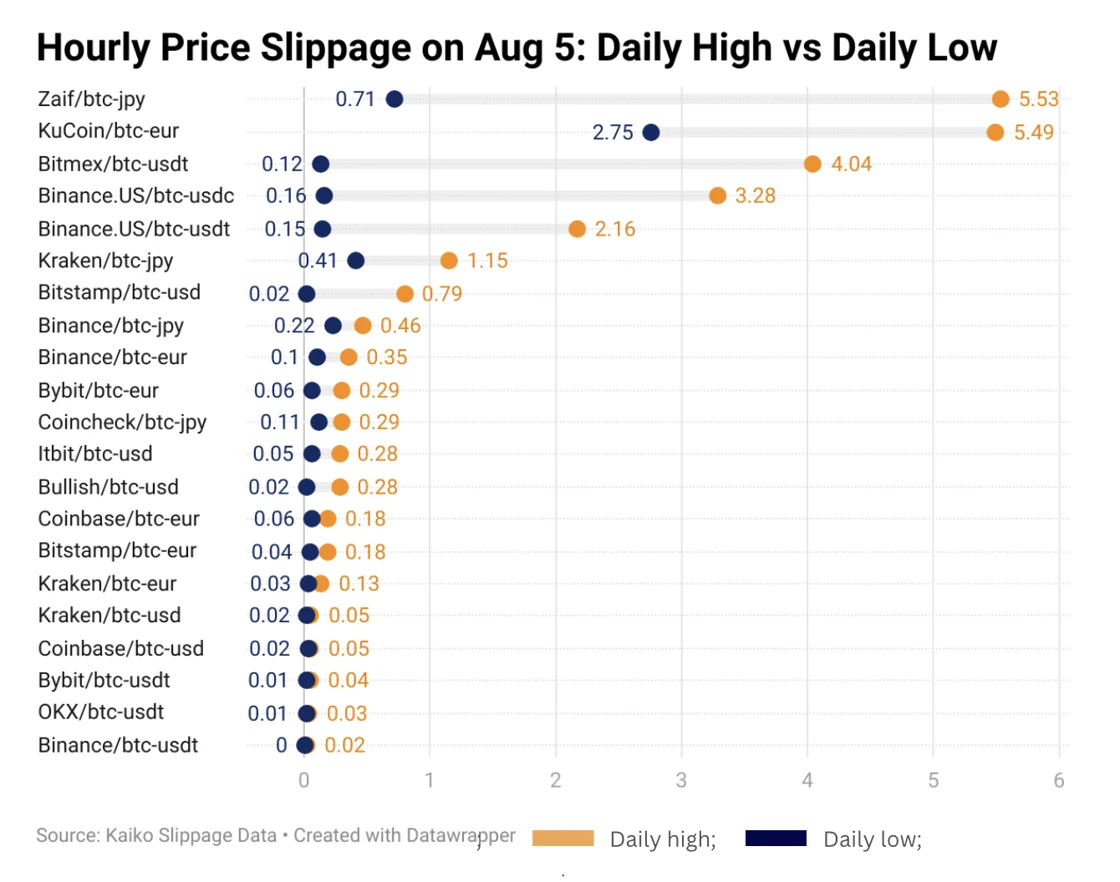
Crypto market data looks “real-time,” but it often isn’t. The ecosystem has fragmented venues, heterogeneous APIs, uneven liquidity, and inconsistent timestamping. These factors create measurable delays and distortions that traditional risk systems—built for cleaner market data—don’t always handle well.
1) Venue fragmentation and inconsistent “truth”
Unlike a single consolidated tape, crypto prices are spread across:
- Centralized exchanges (CEXs) with different matching engines and quote conventions
- Perpetual/futures venues with funding-driven basis dynamics
- OTC desks and internalization flows that never appear in public order books
- On-chain DEX pools with AMM pricing and MEV effects
Even when venues quote the “same” symbol, the effective price differs due to fees, spread, microstructure, and settlement constraints.
2) API latency, packet loss, and rate limits
A WebSocket feed can degrade silently—dropping messages or reconnecting with gaps. REST snapshots may arrive late or be rate-limited during volatility. The result: stale best bid/ask, lagging trades, and incomplete order-book deltas.
3) Clock drift and timestamp ambiguity
Some feeds provide event timestamps (exchange time), others provide receipt timestamps (client time), and some provide both inconsistently. If clocks are not disciplined (e.g., NTP/PTP), your “latest” price can be older than you think—especially when comparing sources.
4) Low-liquidity distortions and microstructure noise
Thin books, sudden spread widening, and short-lived quotes can create:
- spiky last-trade prints
- phantom best prices that vanish before you can trade
- abnormal mid prices due to one-sided liquidity
5) Oracle update cadence and DeFi-specific issues
On-chain pricing introduces additional failure modes: oracle update intervals, delayed heartbeats, and manipulation risk in illiquid pools. Even if your trades are off-chain, risk systems often rely on blended indices influenced by on-chain signals.
In crypto, “price” is not a single number—it’s a probabilistic estimate conditioned on venue quality, timeliness, and liquidity.
How stale or wrong prices break risk management
Risk is a function of exposure × price × time. When price or time is wrong, the entire chain of controls becomes brittle.
Key risk impacts
- Underestimated VAR / Expected Shortfall: stale volatility regimes look calmer than reality.
- False liquidation thresholds: margin systems may think positions are safe when they’re not (or trigger prematurely).
- Hedging drift: delta hedges based on lagging prices accumulate basis losses.
- Execution blowups: slippage controls and limit-price placement fail when “reference price” is stale.
- PnL misattribution: you can’t separate alpha from data noise if the mark is wrong.
The compounding effect during volatility
When markets move fast, data quality often worsens (rate limits, reconnects, bursty updates). That’s precisely when your risk system needs to be most conservative.
Takeaway: Data quality is a first-class risk factor. Your controls should tighten automatically when the price feed becomes less trustworthy.
A practical framework: treat market data as a scored sensor
Instead of assuming price data is correct, treat each source as a sensor producing:
1) a price estimate, and
2) a confidence score.
The four dimensions of market-data quality
- Timeliness: how old is the last reliable update? (staleness in milliseconds/seconds)
- Accuracy: how plausible is the price relative to other sources and market microstructure?
- Completeness: are key fields missing (book levels, trade prints, volumes)?
- Consistency: do deltas reconcile with snapshots, and do timestamps move forward correctly?
The output risk systems should consume
price_estimate(e.g., robust mid, index, or mark)confidence(0–1)data_status(OK / DEGRADED / FAIL)reason_codes(stalefeed, outlierprint, missingdepth, clockskew, etc.)
This turns “data problems” into machine-actionable signals.
AI methods to detect delays and inaccuracies
AI doesn’t replace engineering fundamentals (redundant feeds, time sync). It adds a layer of adaptive detection that learns patterns, identifies anomalies, and generates confidence scores.
1) Staleness detection beyond simple timers
A naive rule like “if no update in 2 seconds, mark stale” is insufficient. AI can model expected update behavior by:
- asset (BTC updates more frequently than a micro-cap)
- venue (some exchanges burst, others smooth)
- time-of-day and regime (volatility clusters)
Approach:
- build a predictor for expected inter-arrival time and flag deviations
- classify “silent degradation” (feed connected but not delivering meaningful changes)
Useful signals:
- inter-arrival time distribution
- percent of unchanged top-of-book updates
- reconnect frequency and gap sizes
2) Outlier and manipulation detection (prints and quotes)
Outliers can be legitimate (gap moves) or erroneous (bad tick, partial book). AI can distinguish with context.
Approaches:
- robust statistical filters (median absolute deviation, Hampel filters)
- multivariate anomaly detection on features:
mid,spread,top size,trade count,volatility,order book imbalance - model-based checks: if spread collapses to near-zero on an illiquid venue, that’s suspicious
3) Cross-venue reconciliation as probabilistic consensus
Instead of choosing one “primary” exchange, use an ensemble:
- compute a robust consensus price (median-of-means, trimmed mean)
- weight sources by real-time confidence (latency, completeness, recent divergence, historical reliability)
This is especially effective when a single venue goes “off-market” briefly.
4) Nowcasting to compensate for known delays
If you know a source lags by ~300ms, you can “nowcast” a better estimate using:
- short-horizon models (Kalman filters, state-space models)
- microstructure features (order book imbalance as a short-term predictor)
Nowcasting must be conservative: it should increase uncertainty rather than create false precision.
5) Confidence scoring and calibration
A confidence score is only useful if it correlates with actual error. Calibration methods:
- backtest confidence vs. realized deviation from a reference index
- assign penalties for missing fields, time drift, and divergence
- track per-venue “trust curves” that adapt over time
The goal is not perfect prediction. The goal is risk-aware behavior when your data is imperfect.
System architecture: from raw feeds to risk-grade prices
A robust design separates ingestion, validation, estimation, and action.
Reference pipeline (conceptual)
- Ingestion layer: multiple redundant channels per venue (
WebSocket+RESTsnapshots) - Time discipline: normalized timestamps, clock drift monitoring
- Event-time processing: avoid using receipt time as truth; keep both
- QA layer: rules + AI detectors produce
data_statusandconfidence - Price estimator: robust aggregation produces
mark_priceandband - Risk engines: VAR, liquidation, limits consume
mark_price+confidence - Control plane: throttles trading when confidence drops
Why “event-time vs processing-time” matters
If your pipeline uses processing-time, a network delay looks like the market slowed down. Event-time processing preserves the real sequence and allows accurate staleness scoring.
Minimum viable redundancy checklist
- 2+ venues for price reference (even if you trade only one)
- independent network paths (where feasible)
- periodic snapshots to reconcile deltas
- per-symbol SLAs (e.g., BTC staleness threshold tighter than small-cap)
Step-by-step: implementing AI-driven data quality controls
This is a practical roadmap you can apply in production.
- Define data SLAs by asset class
- max_staleness_ms per symbol/venue
- acceptable divergence bands vs. consensus
- minimum fields required (best bid/ask, depth, trades)
- Instrument the feed
- log message counts, sequence gaps, reconnects
- store both exchange timestamps and receipt timestamps
- compute rolling health metrics
- Build baseline rules
- hard staleness cutoff
- invalid values (negative prices, zero spread in impossible contexts)
- sequence-gap detection for books
- Train anomaly detectors
- start simple: robust stats + Isolation Forest
- add multivariate models as data grows
- segment by symbol liquidity and venue behavior
- Create a confidence score
- combine: timeliness + completeness + divergence + model anomaly probability
- ensure calibration: confidence correlates with actual error
- Deploy “gating” in risk + execution
- if confidence falls: widen slippage, reduce size, switch reference price, or halt
- keep a human-readable reason code for audits
- Monitor and iterate
- dashboards: confidence over time, venue reliability, regime shifts
- post-incident reviews: was the system conservative enough?
What to do when data is degraded: fail-safes that actually work
AI detection is only half the story. The other half is how your system responds.
Recommended control actions by severity
- DEGRADED: reduce risk appetite automatically
- lower max leverage
- reduce order size
- widen limit bands
- require extra confirmations (2-of-3 sources)
- FAIL: stop or isolate
- kill switch for strategies
- move to “safe mode” (only reduce exposure, no new risk)
- freeze marks and trigger manual review if needed
A simple decision table
| Condition | Example signal | Recommended action |
|---|---|---|
| Mild staleness | staleness < 2s but rising | widen slippage, reduce size |
| Divergence | venue price deviates > X bp | down-weight venue, use consensus |
| Book gaps | missing deltas / sequence breaks | force snapshot, mark degraded |
| Clock skew | exchange time jumps backward | quarantine feed, alert |
| Full outage | no reliable source | halt new risk, unwind cautiously |
Principle: When data quality drops, your system should become more conservative automatically.
Reference table: staleness and divergence budgets by asset tier
Treat these as starting thresholds, then calibrate each cell against your own realized fill quality. Tighter tiers demand fresher data because slippage and liquidation math is far more sensitive when books are deep and fast — the same dynamic quantified in The Latency Tax.
| Asset tier | Example | Max staleness | Divergence band | Min sources | Action on breach |
|---|---|---|---|---|---|
| A — majors | BTC, ETH | 250–500 ms | 5–10 bp | 3 | down-weight venue, widen slippage |
| B — large alts | SOL, XRP | 0.5–1 s | 10–25 bp | 2–3 | reduce size, require 2-of-3 |
| C — mid-caps | top-100 alts | 1–2 s | 25–60 bp | 2 | enter DEGRADED mode |
| D — micro-caps | thin-book tokens | 2–5 s | 60–150 bp | 2 | manual confirm, cap size |
Execution risk management: tie price confidence to trading behavior
Delayed or wrong prices hit execution first. Risk teams often focus on portfolio metrics, but micro-level controls prevent blowups.
Practical controls linked to confidence
- Dynamic slippage: allowable slippage scales with
confidence(lower confidence → higher caution, or lower participation) - Price bands: place orders only within a band of consensus; otherwise require human override
- Inventory limits: tighten per-symbol limits when confidence is low
- Circuit breakers: pause strategy if confidence stays below threshold for N seconds
- Quote sanity checks: reject trades when spread or depth is inconsistent with normal patterns
A “trust-aware” order placement rule
- Reference price = robust consensus
- Max order size = base size × confidence
- Limit offset = base offset × (1 / confidence) (or clamp to safe bounds)
This avoids the common failure mode: “the model thought price was X, so it traded aggressively.”
DeFi and oracle considerations (even for CEX traders)
Many desks consume blended indices that incorporate on-chain signals or rely on oracle-linked marks for risk. AI can help here too:
- detect oracle lag vs. fast-moving venues
- flag DEX pool price distortions from shallow liquidity
- incorporate on-chain liquidity and MEV indicators into confidence scoring
If you trade perps, funding and basis can cause persistent differences—AI should learn expected basis behavior so it doesn’t treat normal basis as an anomaly.
Where SimianX AI fits in the workflow
SimianX AI can be positioned as an analysis and control layer that helps teams:
- unify multiple price sources (CEX + DEX + indices) into a single QA pipeline
- compute real-time confidence scores and reason codes
- generate risk alerts when feed health degrades
- support post-incident investigation with searchable data lineage
A practical approach is to use SimianX AI for:
- data quality dashboards (staleness, divergence, gap rates)
- anomaly triage (which venue broke, which symbols are affected)
- policy testing (simulate “DEGRADED mode” and measure performance)
- operational playbooks (who gets paged, what actions are automated)
Internal link: SimianX AI

A realistic case study (hypothetical)
Scenario: A fast-moving altcoin spikes on Exchange A. Exchange B’s feed silently degrades: WebSocket stays connected but stops delivering depth updates. Your strategy trades on Exchange B using a stale mid price.
Without AI controls
- risk mark remains stale
- strategy continues placing orders as if spread is normal
- fills occur at off-market prices → immediate adverse selection and drawdown
With AI + confidence gating
- staleness model flags abnormal inter-arrival times
- divergence vs. consensus increases
- confidence drops below threshold → strategy enters DEGRADED mode
- reduces size, widens limits, requires 2-of-3 confirmation
- losses are capped, and the incident is triaged quickly with reason codes
In production, “failing safely” matters more than being right all the time.
FAQ About AI to address delayed and inaccurate crypto price data
What causes inaccurate crypto price feeds during high volatility?
High volatility amplifies rate limits, reconnects, message bursts, and thin-book effects. A single off-market print can distort last-trade marks, while missing book deltas can freeze your mid price.
How to detect stale crypto prices without false alarms?
Use a hybrid approach: simple timers plus models that learn expected update rates per symbol and venue. Combine staleness with divergence and completeness signals to avoid triggering on naturally slower markets.
Best way to reduce crypto oracle latency risk in a trading stack?
Don’t rely on a single oracle or a single venue. Build a consensus estimator across sources, track oracle update behavior, and enforce conservative modes when the oracle lags or diverges materially.
Should I down-weight a venue permanently if it produces outliers?
Not necessarily. Venue quality is regime-dependent. Use adaptive reliability scoring so a venue can recover trust after a period of stability, while still being penalized during repeated failures.
Can AI fully replace deterministic validation rules?
No. Deterministic checks catch obvious invalid states and provide clear auditability. AI is best used to detect subtle degradation, learn patterns, and produce calibrated confidence scores on top of rules.
Conclusion
Using AI to address delayed and inaccurate crypto price data turns market data from an assumed truth into a measured, scored input that your risk system can reason about. The winning pattern is consistent: multi-source ingestion + rigorous time handling + AI detection + confidence-driven controls. When your data becomes uncertain, your trading and risk posture should automatically become more conservative—reducing position sizes, widening bands, or halting new risk until the feed recovers.
If you want a practical, end-to-end workflow to validate prices, score confidence, monitor anomalies, and operationalize response playbooks, explore SimianX AI and build a risk stack that stays resilient even when the data doesn’t.
Related Reading
- The Latency Tax: How 5-Min Delayed Quotes Cost You Money
- Security of AI-Based Cryptocurrencies: Threats & Defenses
- AI for DeFi Volatility and Chain-Reaction Risk Modeling