
 By Muke
AI to Model the Volatility and Chain Reactions of DeFi Risks
DeFi doesn’t usually fail because of a single “bad trade.” It fails because volatility shocks propagate through liquidity, leverage, and incentive layers—and a small crack becomes a chain reaction. This is exactly why AI to model the volatility and chain reactions of DeFi risks is becoming a practical necessity for anyone allocating serious capital on-chain. In this research guide, we’ll build a rigorous framework: what “contagion” looks like in DeFi, which on-chain features matter, and how modern AI methods can simulate cascades before they happen. We’ll also show how teams can operationalize these models inside a repeatable research workflow with tools like SimianX AI.
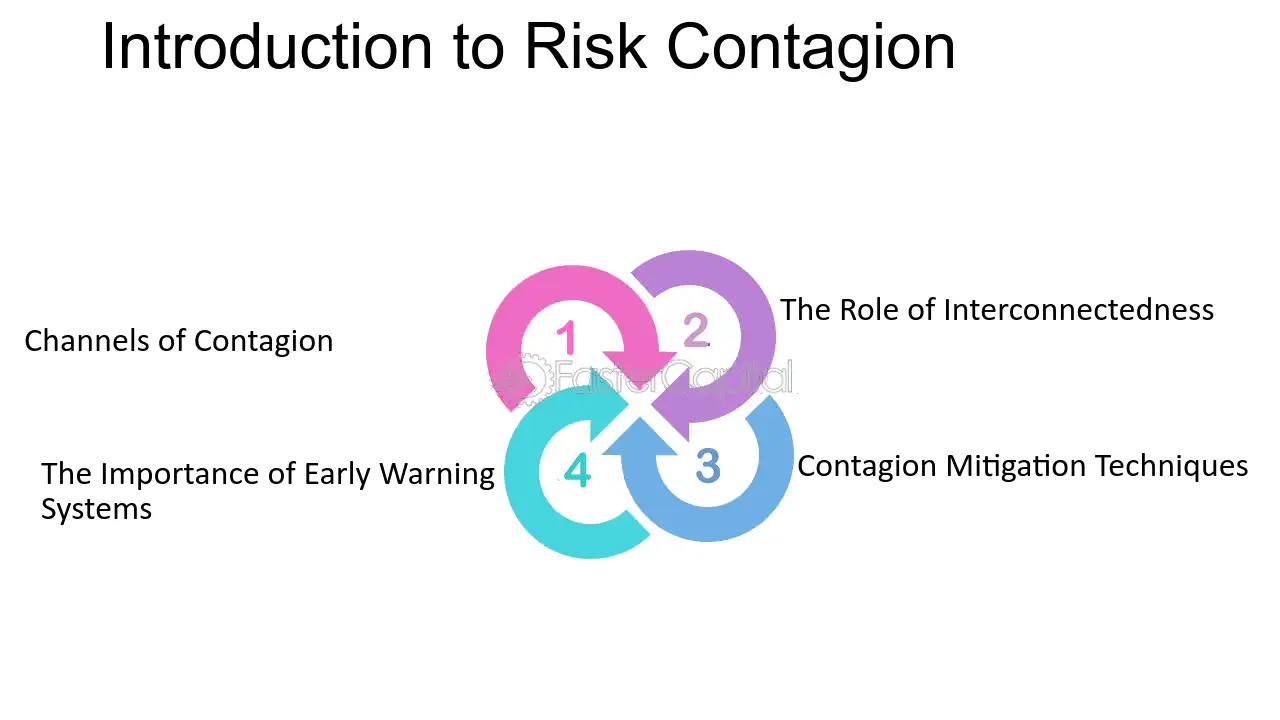
1) What “chain reactions” mean in DeFi (and why volatility is the trigger)
In traditional finance, contagion often flows through balance sheets and funding markets. In DeFi, contagion is coded into protocols and amplified by composability:
- Leverage loops (borrow → LP → borrow again)
- Shared collateral (same collateral backing multiple protocols)
- Liquidity cliffs (thin orderbooks / shallow AMM curves)
- Oracle dependencies (price feeds bridging venues)
- Reflexive incentives (emissions drive TVL; TVL drives emissions narratives)
A DeFi “shock” typically begins with a volatility impulse:
- A fast price move widens spreads and increases slippage
- Slippage worsens liquidation outcomes
- Liquidations push price further
- Redemptions, depegs, and forced deleveraging spread across protocols
Key insight: In DeFi, volatility isn’t just a market condition—it is often the mechanism that turns local risk into systemic risk.
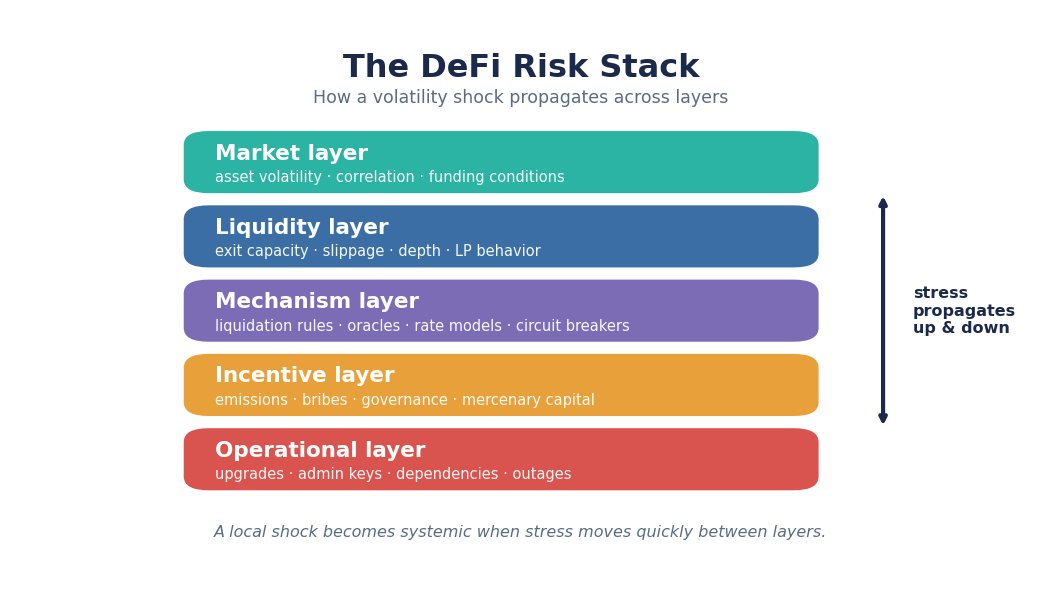
A simple mental model: DeFi risk as a layered stack
Think of your position as sitting on a stack:
- Market layer: underlying asset volatility, correlation, funding conditions
- Liquidity layer: exit capacity, slippage, depth, LP behavior
- Mechanism layer: liquidation rules, oracles, rate models, circuit breakers
- Incentive layer: emissions, bribes, governance, mercenary capital
- Operational layer: upgrades, admin keys, dependencies, outages
“Chain reactions” happen when stress moves down or up the stack quickly.
2) A data blueprint: what you must measure to model cascades
If you can’t measure it, you can’t simulate it. For DeFi cascades, you need features that capture (a) volatility regime, (b) leverage concentration, and (c) exit friction.
Core feature families (practical and measurable)
| Feature family | What it measures | Example signals (on-chain) | Why it matters for cascades |
|---|---|---|---|
| Volatility & regime | Whether the system is calm or stressed | realized vol, return autocorrelation, jump frequency, funding swings | regime shifts change liquidation probability nonlinearly |
| Liquidity & slippage | How costly it is to exit | AMM curve sensitivity, pool depth, CEX/DEX basis, routing fragmentation | shallow liquidity turns liquidations into price impact |
| Leverage & concentration | Who gets liquidated first, and how hard | borrow utilization, collateral concentration, whale positions, health factor distribution | clustered leverage causes “domino liquidations” |
| Oracle fragility | Price integrity under stress | oracle update frequency, medianization, deviation bands, DEX-CEX divergence | oracles can transmit or amplify shocks |
| Stablecoin peg health | Whether the unit of account breaks | peg deviation, redemption queues, collateral quality drift | depegs rewrite all risk calculations instantly |
| Incentive reflexivity | TVL that can vanish overnight | emission APR share, mercenary LP churn, bribe dependence | incentives often disappear exactly when needed most |
Data hygiene rules (non-negotiable):
- Align everything to consistent timestamps (block time → uniform intervals)
- De-duplicate addresses/entities where possible (heuristics, clustering)
- Separate state variables (e.g., utilization) from actions (e.g., large withdrawals)
- Preserve raw series; create transformed features rather than overwriting
This is where platforms like SimianX AI can help: you want a documented, repeatable pipeline that turns noisy on-chain activity into defensible features and versioned assumptions.
3) Modeling volatility: from regimes to “shock likelihood”
Volatility modeling is not just forecasting returns. For DeFi risk, you’re forecasting the probability of structural stress.
A practical volatility modeling ladder
Level 1 — Baselines (fast, robust):
- realized volatility (RV), exponentially weighted RV (
EWMA) - drawdown statistics, tail quantiles (
VaR,CVaR) - jump detection (large moves beyond a threshold)
Level 2 — Regime detection (what you actually need):
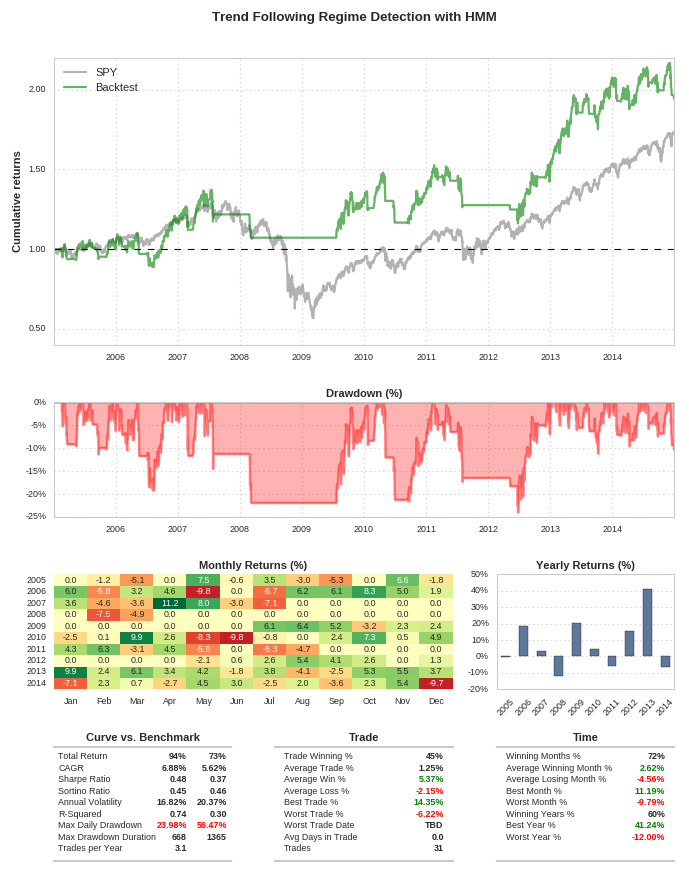
- Hidden Markov Models (HMM) for calm vs stressed regimes
- Change-point detection (CUSUM / Bayesian) for abrupt shifts
- Rolling correlation clusters to detect “risk-on → risk-off” flips
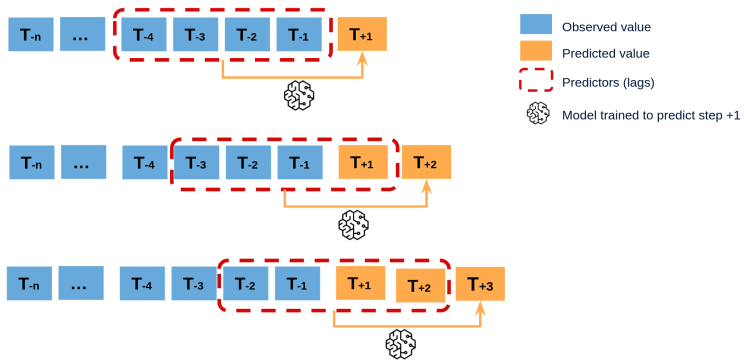
Level 3 — ML/AI sequence models (when you have enough data):
- temporal models for multivariate signals (returns + liquidity + leverage)
- attention-based sequence models for non-linear interactions
- hybrid models: classic volatility signal + AI classifier for “stress probability”
Rule of thumb: For DeFi, the best objective is often not “predict price.” It’s “predict stress state and its transition probability.”
What to predict (targets that map to real risk)
Instead of predicting next_return, define targets like:
P(liquidation_wave_next_24h)expected_slippage_at_sizeunder stressed liquidityprobability_of_oracle_deviation_eventprobability_of_peg_break > x bps
These targets are closer to what actually wipes out capital.
4) Modeling chain reactions: contagion graphs and liquidation dynamics
To model “chain reactions,” you need structure: who depends on whom, and what links tighten under stress.
4.1 Build the DeFi dependency graph
Represent the ecosystem as a directed graph:
- Nodes: tokens, pools, lending markets, oracles, bridges, stablecoins
- Edges: dependency strength (collateral links, oracle feeds, shared LP, bridge wrappers)
Edge weights should be state-dependent:
- during calm periods, the link between
Token AandStablecoin Smight be weak - during stress, if
Ais major collateral forS, that weight spikes
Graph features to track:
- centrality (which nodes are systemic)
- clustering (fragile “modules” that fail together)
- time-varying connectivity (how dependencies strengthen during stress)
4.2 Liquidation cascade modeling (the engine of contagion)
Liquidations are often the mechanical driver of chain reactions. A useful abstraction:
- A set of borrowers has collateral
Cand debtD - A price drop moves health factors below threshold
- Liquidators sell collateral into available liquidity
- Price impact creates second-order liquidations
You can model this cascade with:
- state equations (health factor distribution updates)
- market impact functions (slippage vs size)
- feedback loops (price impact → more liquidations)
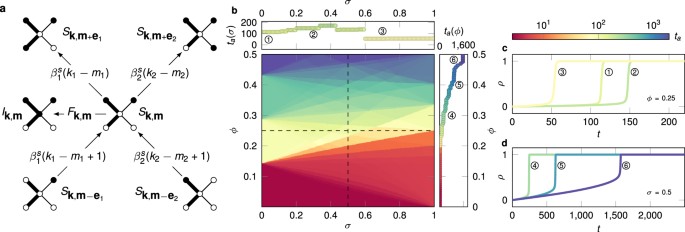
Agent-based simulation (ABM): the most intuitive way to test cascades
Use agents representing:
- borrowers (risk tolerance, leverage)
- liquidators (capital constraints, strategy)
- LPs (withdraw under stress, rebalance)
- arbitrageurs (peg defense / basis trades)
ABM is powerful because DeFi stress is behavioral and mechanical:
- LPs pull liquidity “because Twitter”
- liquidators pause if MEV costs spike
- arbitrage capital disappears when volatility jumps
4.3 Historical DeFi cascade events: a reference table
Models are only as credible as the episodes they can explain. The table below maps real, well-documented DeFi cascades to the volatility trigger that started them and the propagation channel that turned a local shock into a systemic one—precisely the pathways a cascade model must reproduce.
| Event | Date | Volatility trigger | Primary propagation channel |
|---|---|---|---|
| bZx flash-loan attacks | Feb 2020 | Oracle-manipulating flash loans | Oracle fragility → mispriced collateral |
| Iron Finance (TITAN) bank run | Jun 2021 | Reflexive redemption spiral | Incentive reflexivity → liquidity cliff |
| Terra/UST depeg | May 2022 | Algorithmic peg break | Stablecoin depeg → cross-protocol contagion |
| Mango Markets exploit | Oct 2022 | Oracle price manipulation | Oracle fragility → under-collateralized debt |
| FTX collapse contagion | Nov 2022 | Centralized-venue insolvency | Confidence + shared exposure → DEX outflows |
| Curve/CRV liquidity scare | Jul–Aug 2023 | Exploit + concentrated borrowing | Leverage concentration → forced deleveraging |
Notice that each row is a different path from volatility to insolvency: the oracle, peg, incentive, and leverage channels rarely fail the same way twice. A model that only reproduces one of these columns will miss the next cascade—which is why scenario diversity matters more than point accuracy. These episodes echo the liquidity and tail-risk dynamics explored in AI DeFi Yield Analysis: APY, Liquidity, Hidden Risks and Testing DeFi Yields with AI: Real Yield vs Tail Risk.
5) AI methods that actually help (and where they fail)
AI is useful when the system is nonlinear, multivariate, and regime-dependent—which is exactly DeFi.
What AI is great at
- learning interactions between volatility, liquidity, leverage, and peg health
- detecting early anomalies (feature drift, behavior shifts)
- ranking systemic nodes (which pools/markets are “dangerous” now)
- generating scenario distributions rather than single-point forecasts
What AI is bad at (if you’re not careful)
- extrapolating beyond historical regimes (new mechanism, new attack vector)
- “black box” models with no causal hooks
- training on contaminated labels (e.g., your “liquidation events” include false positives)
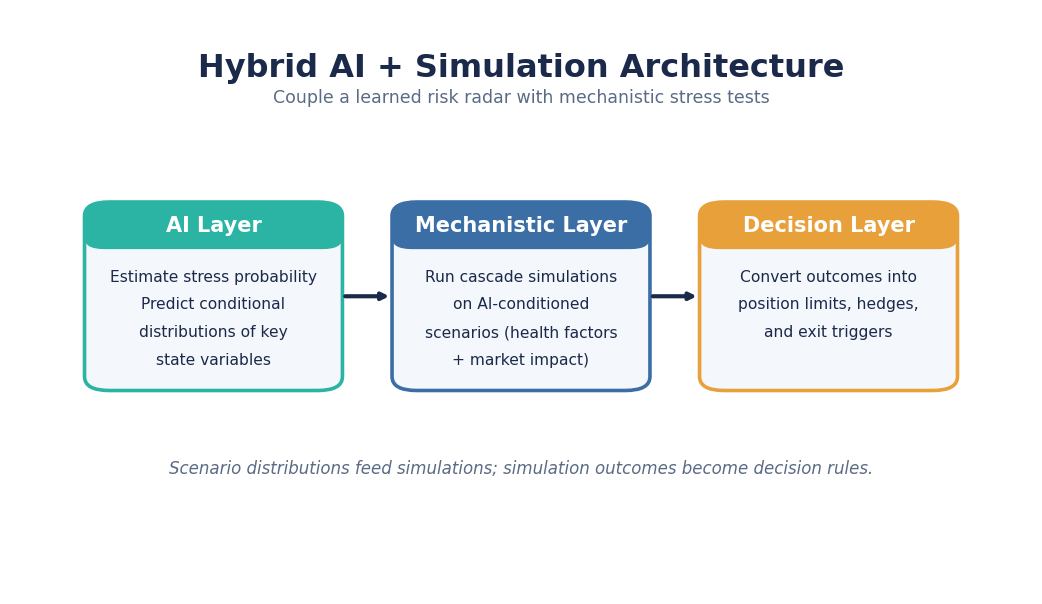
Practical recommendation: Use AI as a risk radar (detection + scenario generation), and couple it with mechanistic simulations (liquidation/impact models) for decision-grade stress tests.
A robust hybrid architecture (recommended)
- AI layer: estimates
stress_probabilityand predicts conditional distributions of key state variables - Mechanistic layer: runs simulations given AI-conditioned scenarios
- Decision layer: converts outcomes into position limits, hedges, and exit triggers
This is also where SimianX AI fits naturally as an operational workflow: organize research into consistent stages, keep evidence attached to outputs, and ensure each risk conclusion is reproducible.
6) Step-by-step: a practical pipeline to model DeFi risk chain reactions
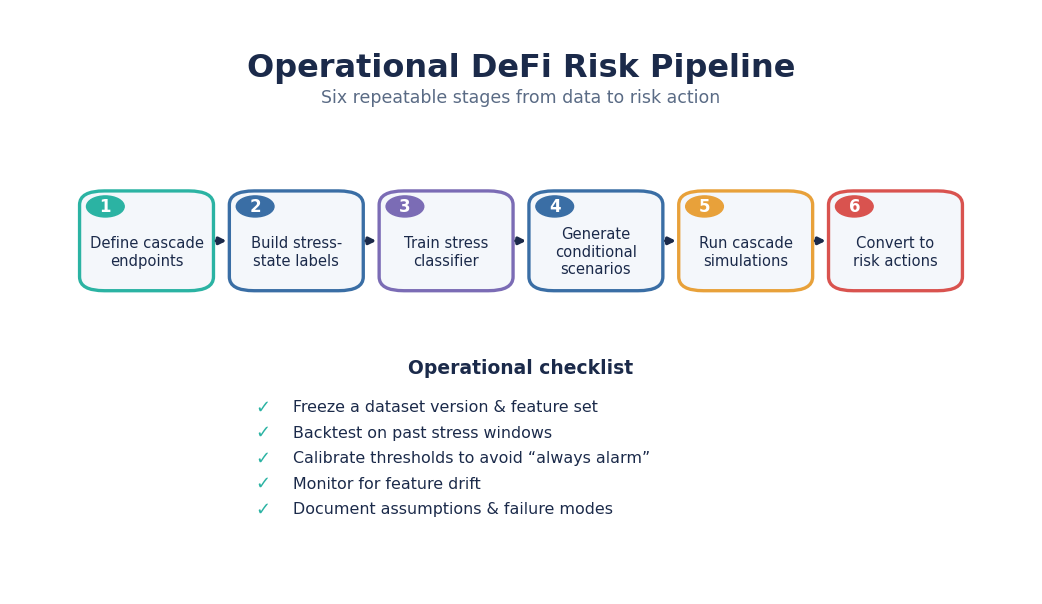
Here’s a concrete pipeline you can implement for any protocol category (lending, stablecoins, LP strategies):
Step 1 — Define your cascade endpoints
Pick outcomes you care about:
- max drawdown over horizon
- time-to-exit at size
- probability of liquidation
- probability of stablecoin depeg beyond threshold
Step 2 — Build “stress state” labels
Create labels from observable events:
- liquidation spikes (rate > percentile threshold)
- liquidity cliff events (depth drops by X%)
- peg deviation events (deviation > Y bps)
- oracle divergence events (DEX vs oracle gap > Z%)
Step 3 — Train a stress classifier (interpretable first)
Start with something you can explain:
- gradient boosting / logistic models on engineered features
Then iterate to sequence models if needed.
Step 4 — Generate conditional scenarios
Instead of one forecast, generate a distribution:
- “If stress probability is 70%, what are plausible liquidity paths?”
- “How does utilization evolve in stressed states?”
Step 5 — Run cascade simulations
For each scenario:
- simulate borrower health factors
- simulate liquidation volumes
- simulate market impact and price paths
- re-evaluate health factors → iterate until stable
Step 6 — Convert outcomes into risk actions
Examples:
- position sizing based on worst-case slippage distribution
- automated hedge trigger if
P(cascade) > threshold - protocol exposure cap if centrality rises
Numbered checklist (operational):
- Freeze a dataset version and feature set
- Backtest on past stress windows
- Calibrate thresholds to avoid “always alarm”
- Add monitoring for feature drift
- Document assumptions and failure modes
7) How can AI model the volatility and chain reactions of DeFi risks in real time?
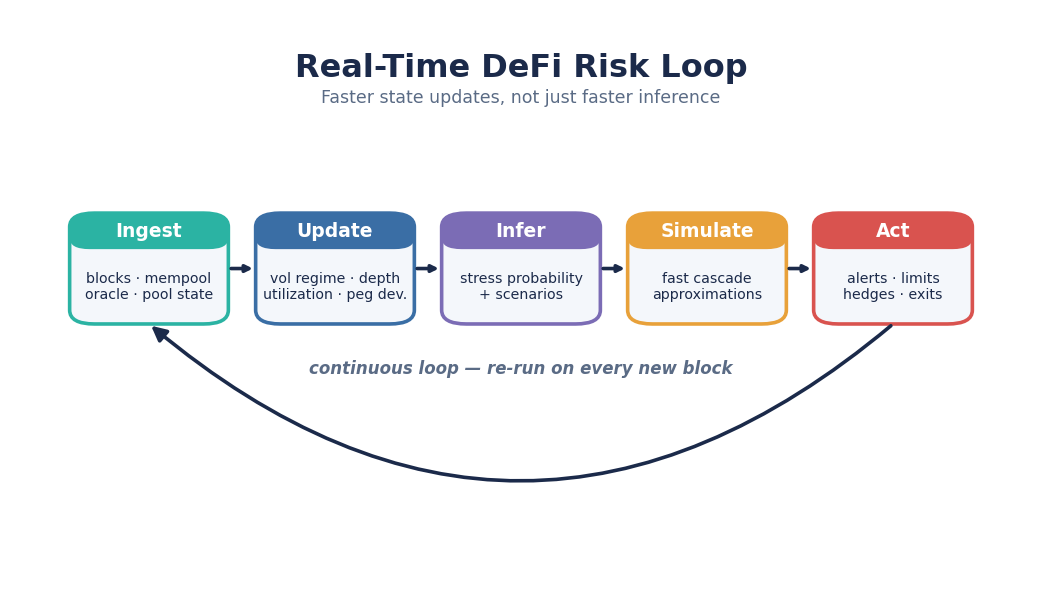
Real-time modeling is less about “faster inference” and more about faster state updates.
The real-time loop (what matters)
- ingest: blocks, mempool (optional), oracle updates, pool state
- update: volatility regime, liquidity depth, utilization, peg deviation
- infer: stress probability + scenario distribution
- simulate: quick cascade approximations (fast impact models)
- act: alerts, limits, hedges, exit routing suggestions
Real-time signals worth prioritizing
- sudden liquidity withdrawals by top LPs
- rapid utilization spikes in lending markets
- widening DEX/CEX basis (especially for collateral assets)
- oracle update lags and deviation band touches
- stablecoin redemption pressure proxies
If you only monitor prices, you’re late. Real-time DeFi risk is about monitoring the constraints that turn price moves into insolvency.
8) Evaluation: how to know your model is useful (not just fancy)
A DeFi risk model should be judged by decision utility, not just prediction scores.
Useful evaluation metrics
- Precision/recall for stress events (avoid endless false alarms)
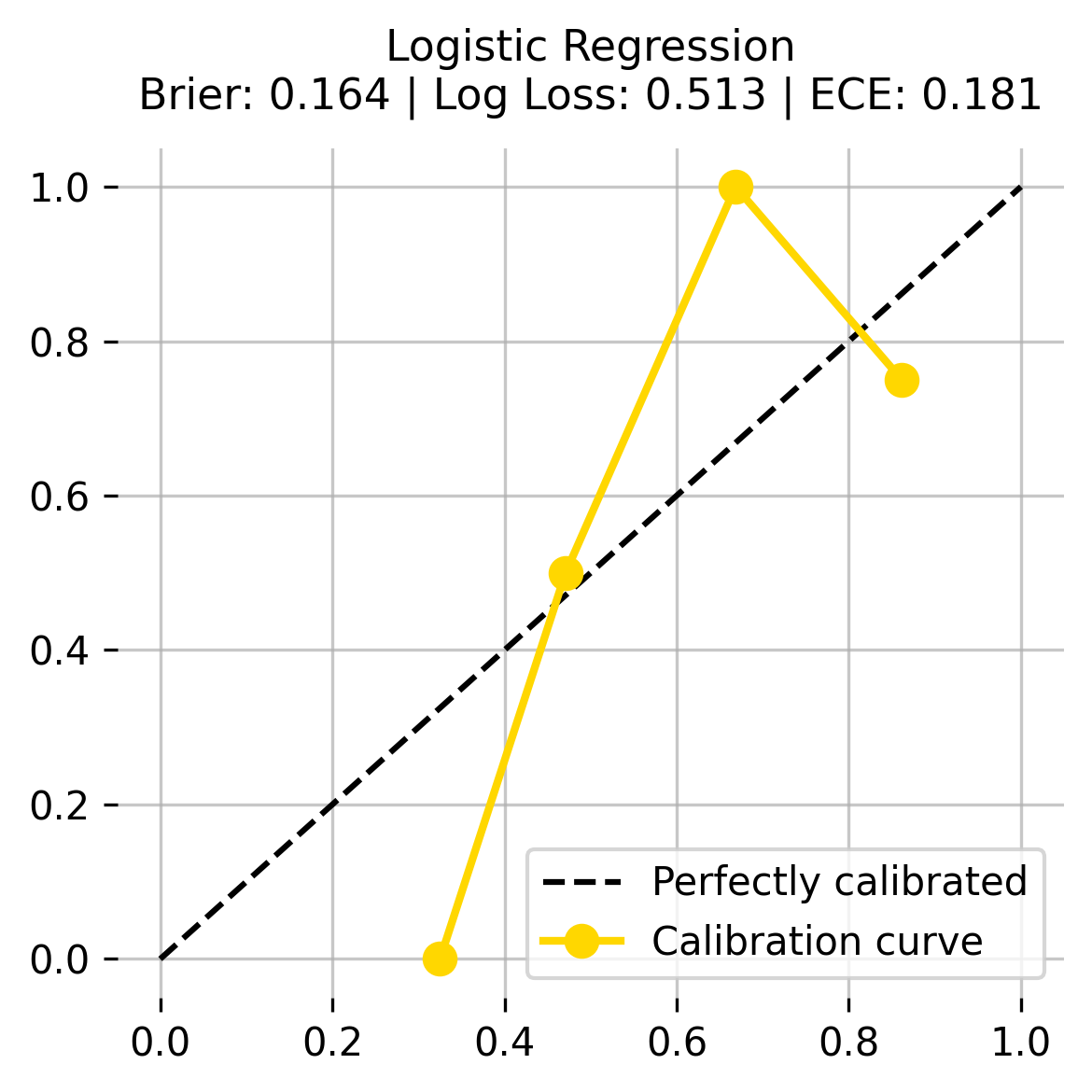
- Brier score or calibration curves for probabilistic outputs
- Lead time: how many hours/days of warning before cascade endpoints
- PnL impact of rules derived from the model (paper-traded first)
- Robustness across chains and market regimes
A simple evaluation table
| Evaluation question | What “good” looks like | What “bad” looks like |
|---|---|---|
| Does it warn early? | consistent lead time before stress | only triggers after damage |
| Is it calibrated? | 70% means ~70% in practice | overconfident probabilities |
| Does it generalize? | works across assets/chains | only fits one regime |
| Does it improve decisions? | lower drawdowns / better exits | no measurable benefit |
FAQ About AI to Model the Volatility and Chain Reactions of DeFi Risks
What is the best way to model DeFi liquidation cascades?
Start with a mechanistic cascade simulator (health factors + market impact), then condition scenarios with an AI stress model. The combination captures both the physics and the signals of DeFi contagion.
How to model DeFi risk cascades without perfect wallet attribution?
Use distributional features (health factor histograms, concentration indices, top-N borrower exposure) rather than per-entity identity. You can still simulate cascades with aggregate state variables and conservative assumptions.
What causes DeFi liquidation cascades most often?
A volatility shock plus a liquidity cliff is the classic combo: falling prices trigger liquidations, and thin liquidity makes those liquidations push prices further. Oracle or peg instability can amplify the loop.
Can AI predict stablecoin depegs reliably?
AI can provide early-warning probabilities using peg deviation patterns, collateral quality drift, liquidity conditions, and redemption pressure proxies. But depegs are regime changes—treat AI as a probabilistic radar, then stress-test consequences mechanically.
How do I monitor DeFi tail risk in real time?
Prioritize state variables that represent constraints: liquidity depth, utilization, peg deviation, oracle divergence, and large LP withdrawals. Tail risk is often visible in system plumbing before it appears in price.
Conclusion
Using AI to model DeFi volatility is valuable—but the real edge comes from modeling how volatility becomes contagion: liquidation mechanics, liquidity cliffs, oracle dependencies, and peg fragility. A strong workflow combines (1) regime-aware AI stress probabilities, (2) scenario generation, and (3) mechanistic cascade simulation that translates stress into exit costs and insolvency risk. If you want to operationalize this into a repeatable research loop—features, simulations, dashboards, and documented assumptions—explore SimianX AI and build your DeFi risk models as systems, not opinions.
Related Reading
- AI Monitoring for DeFi Risk Mitigation: Framework
- AI Early-Warning for DeFi Liquidity & Depeg Risks
- AI Agents Analyze DeFi Risks: TVL, Real Yield Rates
- AI for DeFi Data Analysis: Practical On-Chain Workflow
- AI DeFi Yield Analysis: APY, Liquidity, Hidden Risks
- Testing DeFi Yields with AI: Real Yield vs Tail Risk