
 Por Muke
BTC 20/60/200-Día Promedios Móviles para Identificar Mercados Alcistas vs Bajistas
Entender los promedios móviles de BTC 20/60/200 días para identificar mercados alcistas vs bajistas es uno de los marcos más poderosos y prácticos en el análisis de tendencias de Bitcoin. Estos tres promedios móviles—corto plazo (20 días), medio plazo (60 días) y largo plazo (200 días)—forman un mapa estructural del momento del mercado, cambios de régimen y transiciones de tendencias macro.
En esta guía de investigación, desglosaremos cómo interpretar los promedios móviles de 20/60/200 días en Bitcoin, cómo los cruces señalan cambios de régimen y cómo los traders pueden aplicar este marco utilizando herramientas avanzadas de análisis de IA como SimianX AI.
Por Qué los Promedios Móviles de 20/60/200 Días Son Importantes en Bitcoin
Los promedios móviles suavizan los datos de precios para revelar la tendencia subyacente. Pero usar tres marcos de tiempo distintos simultáneamente crea un sistema de confirmación de múltiples capas:
- MA de 20 días → momento a corto plazo
- MA de 60 días → tendencia intermedia
- MA de 200 días → filtro de régimen macro
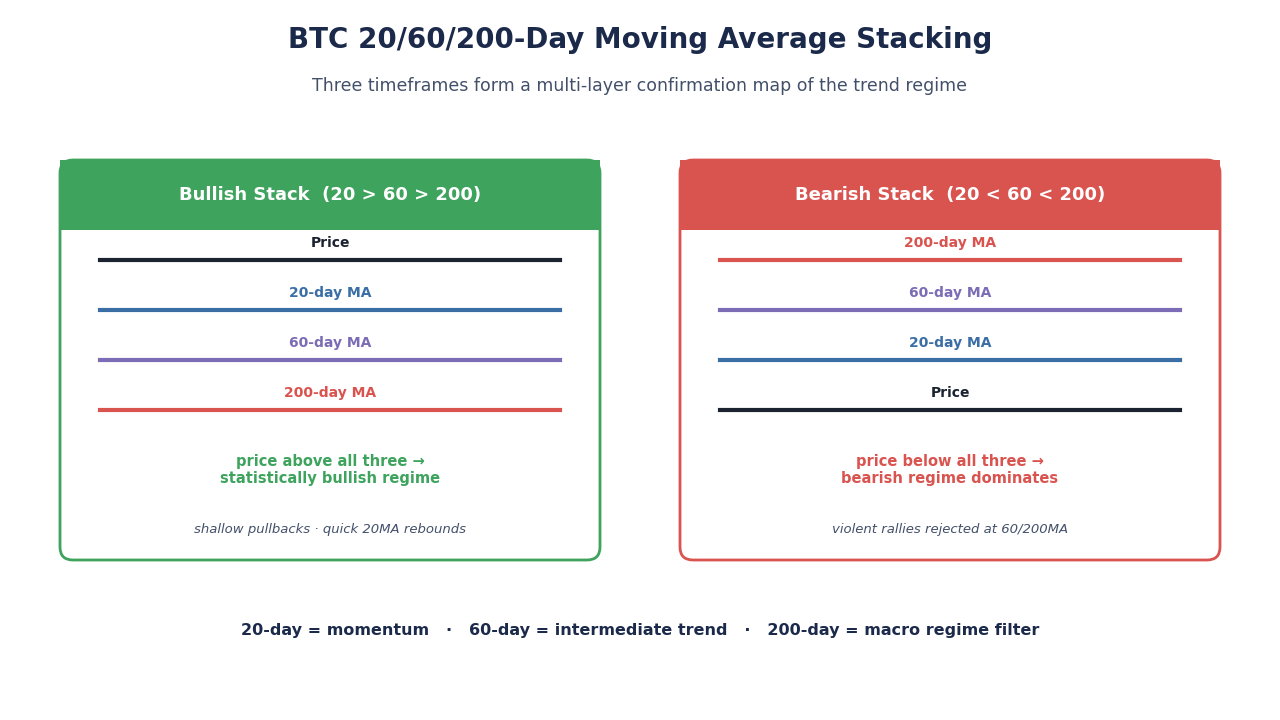
Cuando la estructura 20 > 60 > 200 se alinea hacia arriba, Bitcoin está estadísticamente en un régimen alcista. Cuando está invertida (20 < 60 < 200), un régimen bajista domina.
Concepto Central: Apilamiento de Tendencias
La posición relativa de estos promedios móviles determina la fuerza de la tendencia.
Apilamiento Alcista:
- 20 días por encima de 60 días
- 60 días por encima de 200 días
- Precio por encima de los tres
Apilamiento Bajista:
- 20 días por debajo de 60 días
- 60 días por debajo de 200 días
- Precio por debajo de los tres
Esta alineación a menudo marca ciclos estructurales alcistas vs bajistas en la historia de BTC.
Evidencia Histórica: Fases Alcistas y Bajistas de BTC
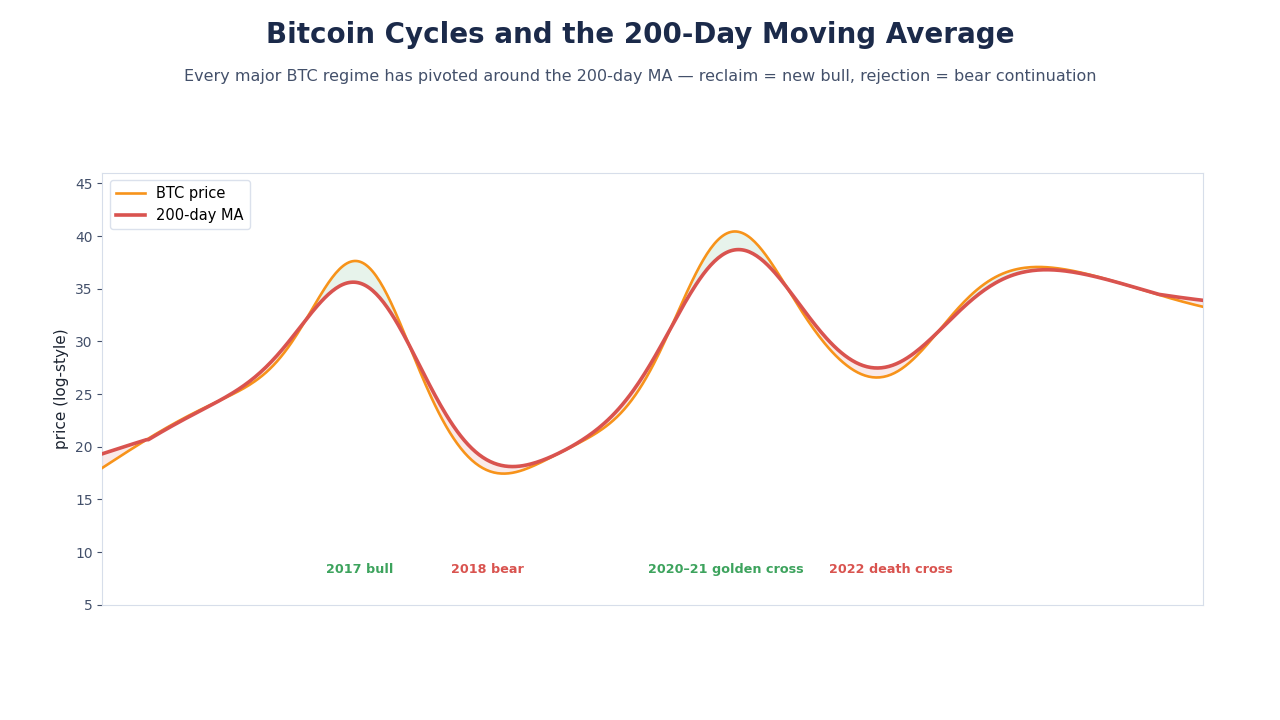
Los ciclos principales de Bitcoin muestran una interacción consistente con el promedio móvil de 200 días.
- Mercado Alcista de 2017 → precio sostenido por encima del MA de 200
- Mercado Bajista de 2018 → rechazo persistente por debajo del MA de 200
- Ciclo 2020–2021 → cruce dorado y apilamiento ascendente
- Caída de 2022 → cruce de la muerte y apilamiento descendente
El papel de la media móvil de 200 días
La MA de 200 días actúa como un indicador de salud del mercado a largo plazo.
| Condición | Interpretación |
|---|---|
| Precio por encima de la MA de 200 | Régimen macro alcista |
| Precio por debajo de la MA de 200 | Régimen macro bajista |
| Recuperación de la MA de 200 | Potencial nuevo ciclo alcista |
| Rechazo en la MA de 200 | Continuación del mercado bajista |
En muchos casos, los flujos de capital institucional regresan solo después de que BTC recupera y se mantiene por encima de la MA de 200 días.
Entendiendo el cruce dorado y el cruce de la muerte en BTC
El marco 20/60/200 refina el análisis clásico de cruces.
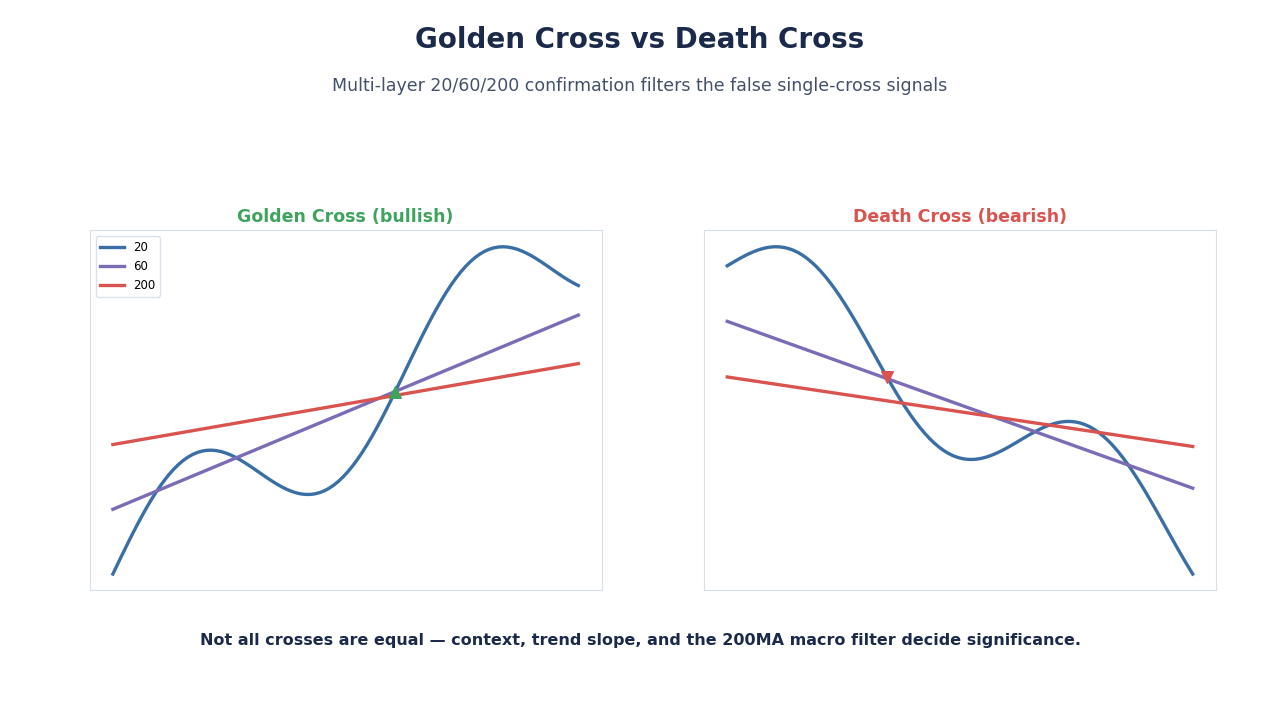
Cruce dorado (señal alcista)
Ocurre cuando:
- La media de 20 días cruza por encima de la media de 60 días
- La media de 60 días tiende a cruzar por encima de la media de 200 días
- El precio se mantiene por encima de la media de 200 días
Cruce de la muerte (señal bajista)
Ocurre cuando:
- La media de 20 días cruza por debajo de la media de 60 días
- La media de 60 días tiende a cruzar por debajo de la media de 200 días
- El precio se negocia por debajo de la media de 200 días
No todos los cruces son iguales. El contexto y la pendiente de la tendencia importan.
Por qué la confirmación de múltiples capas es superior
Usar solo un cruce aumenta las señales falsas. Combinar 20/60/200 mejora la precisión al filtrar el ruido.
- Ruido a corto plazo → filtrado por la MA de 60
- Retrocesos medianos → filtrados por la MA de 200
- Ruptura estructural → confirmada cuando todo se alinea
Paso a paso: Cómo usar las MAs de 20/60/200 días de BTC en el trading
Paso 1: Identificar el régimen macro
Verifique si el precio está por encima o por debajo de la MA de 200 días.
Paso 2: Confirmar la estructura de la tendencia
Evaluar la alineación:
- ¿Es 20 > 60 > 200?
- ¿O 20 < 60 < 200?
Paso 3: Buscar Entradas de Retroceso
En regímenes alcistas:
- Esperar a que el precio vuelva a probar la MA de 20 o 60
- Entrar en la confirmación de un mínimo más alto
En regímenes bajistas:
- Vender en los repuntes hacia la resistencia de la MA de 60 o 200
Paso 4: Gestión de Riesgos
Usar rupturas de MA como señales de invalidación.
- Cerrar posición larga si el precio pierde la MA de 200 en una tendencia alcista macro
- Cerrar posición corta si BTC recupera la MA de 200 de manera contundente
¿Cómo Identificar el Mercado Alcista vs Bajista de Bitcoin Usando MA de 20 60 200?
Esta es la pregunta más común que hacen los traders.
El Marco
Lista de Verificación de Confirmación de Mercado Alcista:
- Precio por encima de la MA de 200 durante más de 30 días
- MA de 60 en pendiente ascendente
- MA de 20 manteniéndose consistentemente por encima de la MA de 60
- Máximos más altos y mínimos más altos
Lista de Verificación de Confirmación de Mercado Bajista:
- Precio por debajo de la MA de 200 durante un período prolongado
- MA de 60 en pendiente descendente
- MA de 20 fallando en la resistencia de la MA de 60
- Máximos más bajos y mínimos más bajos
La clave es estructura sostenida, no cruces de un solo día.
Perspectiva Avanzada: Pendiente, Distancia y Compresión de Volatilidad
Más allá de la alineación, los traders sofisticados analizan:
- La inclinación de la MA
- La distancia entre las medias móviles
- La contracción de la volatilidad antes de la ruptura
Cuando la distancia entre 20 y 60 se comprime mientras está por encima de la MA de 200, a menudo señala acumulación.
Cuando la compresión ocurre por debajo de la MA de 200, el riesgo de ruptura aumenta.
Integrando IA: Usando SimianX AI para el Análisis de Regímenes de Medias Móviles
Si bien la lectura manual de gráficos funciona, los traders modernos necesitan confirmación sistemática.
SimianX AI mejora el análisis de la media móvil de 20/60/200 días de BTC al:
- Detectar automáticamente los regímenes de alineación de MA
- Señalar eventos de cruce dorado / cruce de muerte
- Combinar medias móviles con señales de volatilidad y liquidez
- Proporcionar puntuaciones de confianza para la fuerza de la tendencia
En lugar de adivinar visualmente los cambios de tendencia, SimianX AI los cuantifica.
Por ejemplo:
| Tipo de Señal | Interpretación de IA |
|---|---|
| 20 > 60 > 200 | Probabilidad de régimen alcista ↑ |
| 20 aplanamiento | Debilitamiento del impulso |
| 60 acercándose a 200 desde arriba | Aumento del riesgo macro |
| Precio recuperando 200 | Alerta de transición de ciclo |
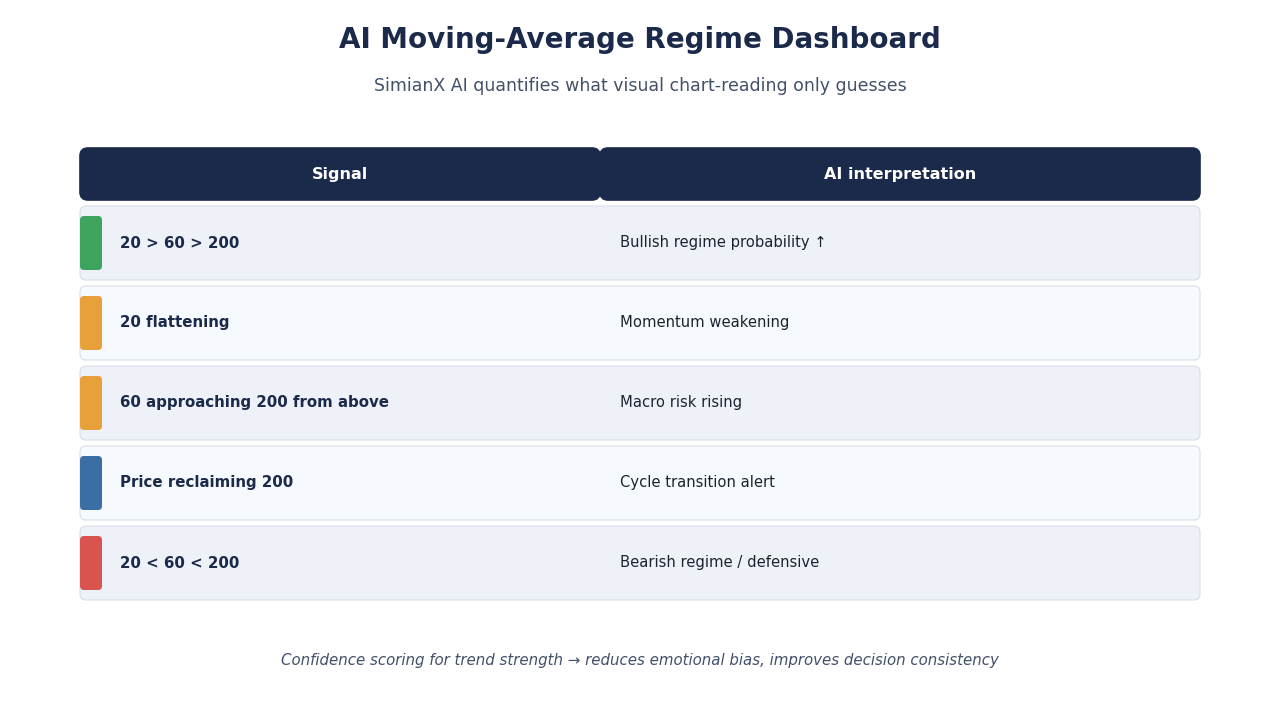
Esto reduce el sesgo emocional y mejora la consistencia en la toma de decisiones.
Errores Comunes al Usar Promedios Móviles de BTC
- Operar cada cruce a ciegas
- Ignorar el filtro macro de 200 días
- Usar promedios móviles de forma aislada
- Sobrerreaccionar durante un cambio de régimen temprano
- No esperar a las velas de confirmación
Los promedios móviles funcionan mejor cuando se combinan con análisis de volumen, volatilidad y liquidez.
Estrategia de MA 20/60/200 de BTC vs Otros Indicadores
| Indicador | Fortaleza | Debilidad |
|---|---|---|
| RSI | Extremos de impulso | Señales falsas en rangos |
| MACD | Claridad en cruces | Rezagado |
| Pilas de MA 20/60/200 | Filtro de régimen claro | Más lento durante transiciones |
La pila de promedios móviles sobresale en clasificación de régimen, lo cual es crítico para posicionamiento de swing y macro.
Caso de Uso Práctico: Estrategia de Retroceso en Mercado Alcista
En mercados alcistas fuertes:
- Esperar a que el precio retroceda al MA de 60
- Confirmar que el MA de 20 se mantenga por encima de 60
- Entrar con un stop por debajo del MA de 60
- Apuntar a los máximos anteriores
Este enfoque reduce la persecución de picos y mejora la relación riesgo-recompensa.
Preguntas Frecuentes sobre los Promedios Móviles de 20/60/200 Días de BTC
¿Qué significa el cruce de 20 60 200 MA en Bitcoin?
Indica un posible cambio en la estructura del mercado. Cuando los MA de corto plazo cruzan por encima de los de largo plazo, el impulso se está fortaleciendo; lo contrario indica debilitamiento.
¿Es confiable el promedio móvil de 200 días para Bitcoin?
Históricamente, sí. Ha actuado consistentemente como un filtro macro alcista/bajista a través de múltiples ciclos de BTC.
¿Cuánto tiempo debe permanecer BTC por encima del MA de 200 para confirmar un mercado alcista?
Típicamente, varias semanas de acción de precios sostenida por encima del MA de 200 mejora la confiabilidad.
¿Pueden las medias móviles predecir los picos de Bitcoin?
Son indicadores rezagados. Confirman la fuerza de la tendencia pero no predicen con precisión los picos.
Conclusión
Usar las medias móviles de 20/60/200 días de BTC para identificar mercados alcistas vs bajistas proporciona un marco estructurado y basado en datos para entender los ciclos macro de Bitcoin. La MA de 200 días define el régimen, la MA de 60 días confirma la dirección de la tendencia, y la MA de 20 días captura los cambios de momentum.
Al combinar alineación, pendiente y análisis de cruces, los traders pueden evitar decisiones emocionales y operar con claridad estructural.
Para un análisis sistemático de medias móviles mejorado por IA y detección de régimen en tiempo real, explora SimianX AI. Con clasificación de tendencias inteligente, paneles de múltiples marcos de tiempo e interpretación automática de señales, SimianX AI ayuda a los traders a ir más allá de las conjeturas y navegar por los mercados de Bitcoin con precisión.
Profundización: Cuantificando los Regímenes de Medias Móviles de 20/60/200 Días de BTC
Para elevar tu estrategia de medias móviles de 20/60/200 días de BTC más allá de la lectura visual de gráficos, debemos cuantificar los regímenes de tendencia. Los traders institucionales rara vez se basan en interpretaciones subjetivas. En su lugar, miden:
- Distancia entre medias móviles (diferencial)
- Tasa de cambio (pendiente)
- Duración del tiempo por encima/debajo de la MA de 200
- Fuerza de tendencia ajustada por volatilidad
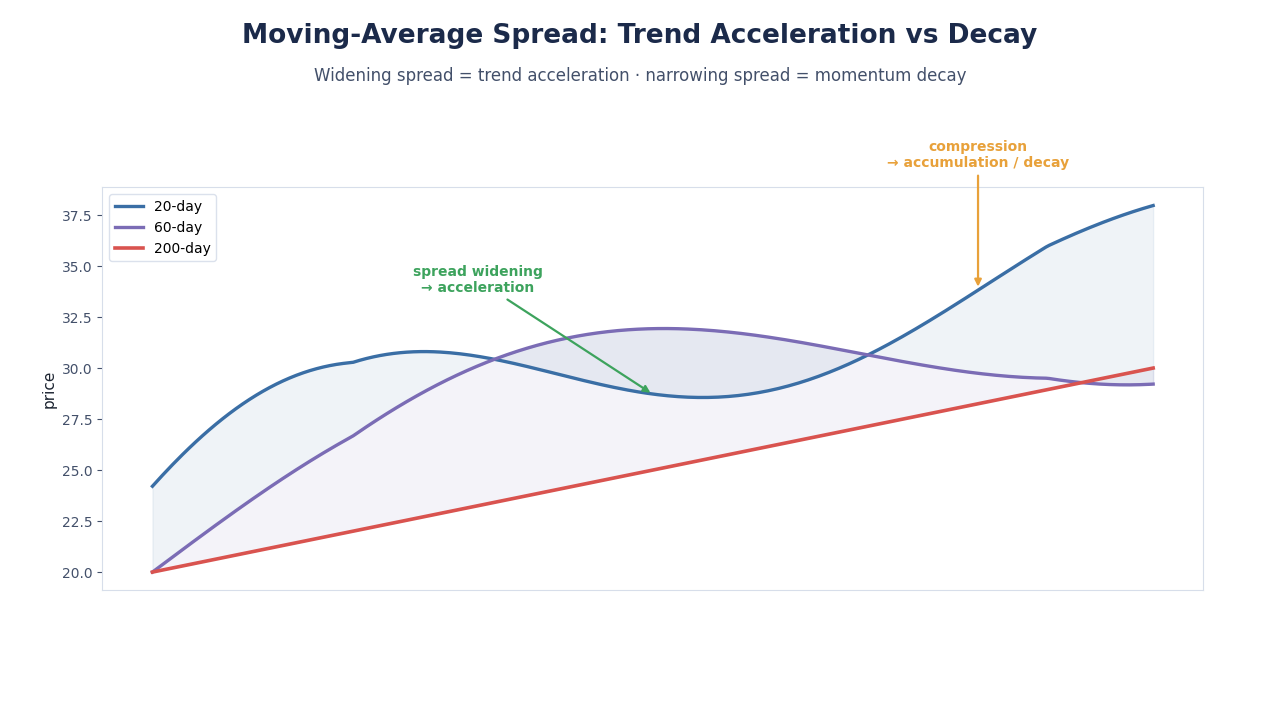
1️⃣ Midiendo el Diferencial de Medias Móviles
El diferencial de MA se refiere a la distancia entre:
- 20 días y 60 días
- 60 días y 200 días
Un diferencial en expansión durante una tendencia alcista sugiere aceleración de la tendencia.
Un diferencial en contracción sugiere decadencia del momentum.
Por ejemplo:
| Condición del Mercado | Diferencial 20–60 | Diferencial 60–200 | Interpretación |
|---|---|---|---|
| Alcista Temprano | Expansivo | Estrecho | Fase de ruptura |
| Alcista Maduro | Amplio | Expansivo | Tendencia fuerte |
| Toro Tardío | Estrechamiento | Amplio | Agotamiento de momentum |
| Transición Bear | Invirtiendo | Estrechamiento | Cambio de régimen |
Este tipo de análisis de spreads se puede rastrear automáticamente utilizando herramientas de IA como SimianX AI, que detectan patrones de compresión y expansión a través de marcos de tiempo.
Regímenes de Volatilidad y Promedios Móviles
Los promedios móviles funcionan mejor cuando se interpretan junto con la volatilidad.
Perfil de Volatilidad del Mercado Alcista
- Retrocesos superficiales
- Rebotes rápidos del MA de 20 días
- MA de 60 días rara vez probado
Perfil de Volatilidad del Mercado Bajista
- Rallys violentos hacia la resistencia
- Rechazo frecuente en el MA de 60 días
- MA de 200 días actúa como techo
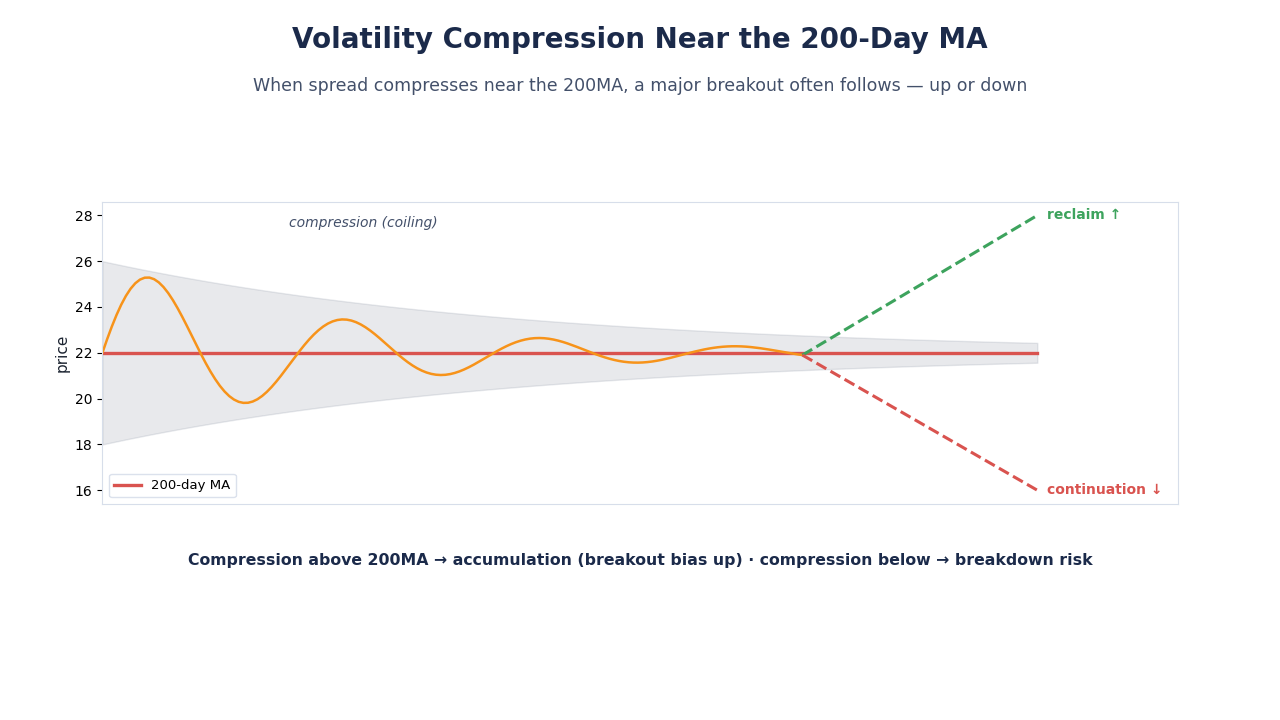
Cuando la volatilidad se comprime cerca del MA de 200 días, a menudo señala potencial de ruptura importante—ya sea recuperación hacia arriba o continuación hacia abajo.
Confirmación de Múltiples Marcos de Tiempo: MA Diarios vs Semanales
Los traders avanzados a menudo superponen promedios móviles semanales.
Si:
- Diario 20 > 60 > 200
- Precio semanal por encima del MA de 200 semanas
Entonces las tendencias macro y tácticas se alinean.
Por el contrario:
- Diario alcista pero semanal por debajo del MA de 200 semanas → rally en contra de la tendencia
Los mercados alcistas de Bitcoin más fuertes ocurren cuando tanto las estructuras de MA diarias como semanales se alinean hacia arriba.
Ventaja Estadística: Pruebas Retrospectivas de la Estrategia del MA de 200 Días de BTC
Una de las estrategias de Bitcoin más estudiadas es:
**Largo solo cuando BTC está por encima del MA de 200 días.
Moverse a efectivo cuando esté por debajo.**
Los datos históricos muestran:
- Reducción del drawdown máximo
- Mayores retornos ajustados al riesgo
- Evitación de ciclos bajistas prolongados
Sin embargo, agregar la alineación de 20/60 mejora el timing.
Versión Mejorada:
- Entrar cuando:
- Precio por encima del MA de 200
- MA de 20 cruza por encima del MA de 60
- Salir cuando:
- Precio cierra por debajo del MA de 200
- O 20 cruza por debajo de 60
Esta estructura híbrida reduce entradas falsas durante mercados laterales.
Ciclos de Liquidez y el Promedio Móvil de 200 Días
Bitcoin no se mueve en aislamiento. Las condiciones de liquidez importan.
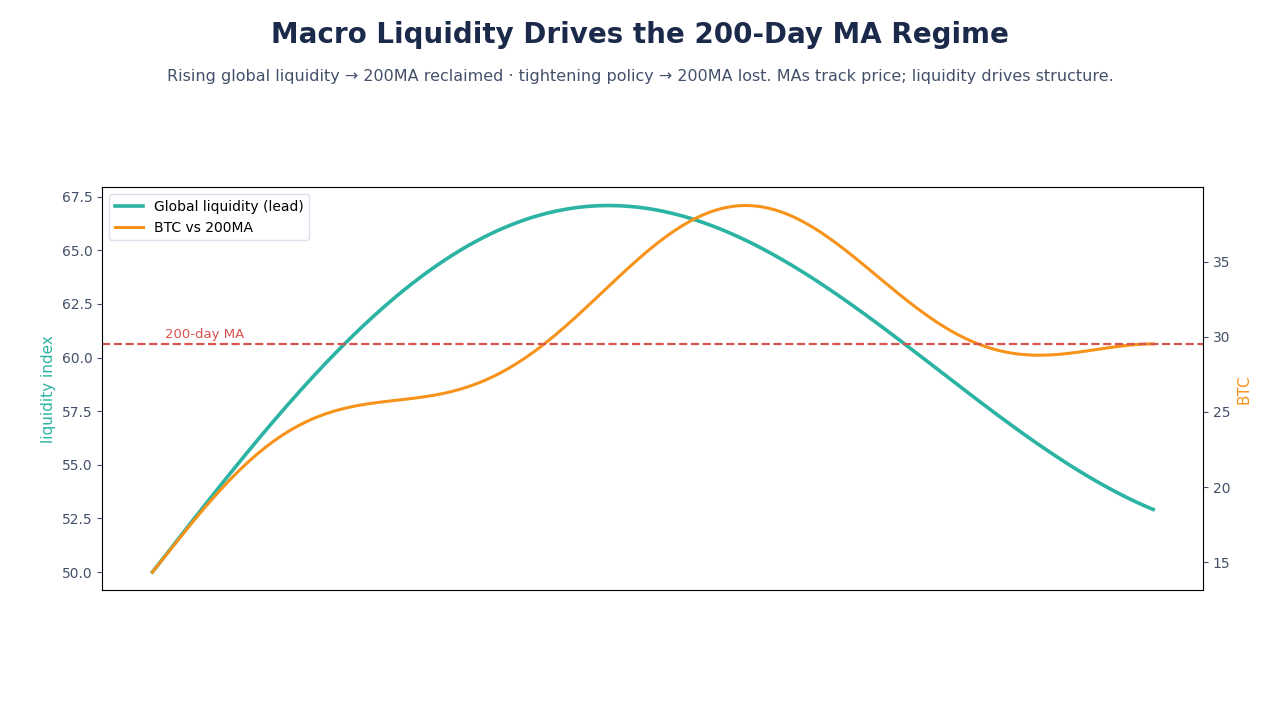
- Aumento de la liquidez global → 200 MA a menudo recuperado
- Endurecimiento de la política monetaria → 200 MA a menudo perdido
Mientras que las medias móviles rastrean el precio, la liquidez macro impulsa cambios estructurales.
SimianX AI integra:
- Indicadores macro
- Modelos de volatilidad
- Señales de liquidez
- Flujos en cadena
Esto proporciona una confirmación en capas más allá de la simple acumulación de MA.
Identificación de Transiciones Tempranas del Mercado Alcista
La oportunidad más rentable a menudo ocurre justo después de que BTC recupera la MA de 200 días.
Patrón Temprano del Mercado Alcista:
- Alineación bajista (20 < 60 < 200)
- Formación de base de precio
- 20 MA se aplana
- 60 MA deja de declinar
- Precio recupera 200 MA con volumen
- 20 cruza por encima de 60
Esta secuencia marca la transición de la fase de acumulación a expansión.
La paciencia es crítica. Muchos traders entran demasiado pronto antes de que la reversión de la pendiente confirme.
Identificación de la Agotamiento Tardío del Mercado Alcista
Los ciclos alcistas tardíos muestran señales de advertencia:
- Precio muy extendido por encima de 200 MA
- Aplanamiento de 20 MA
- 20 cruzando por debajo de 60 mientras sigue por encima de 200
- Picos de volatilidad en aumento
Esto a menudo señala distribución.
Cuando el impulso a corto plazo se debilita mientras que la tendencia a largo plazo sigue al alza, aumenta la precaución.
Estructura de Trampa de Rally del Mercado Bajista
En mercados bajistas:
- Precio se recupera por encima de 20 MA
- 20 cruza por encima de 60 brevemente
- Pero ambos permanecen por debajo de 200
- 60 MA tiene pendiente descendente
- Precio rechazado en 200 MA
Estas son a menudo trampas alcistas.
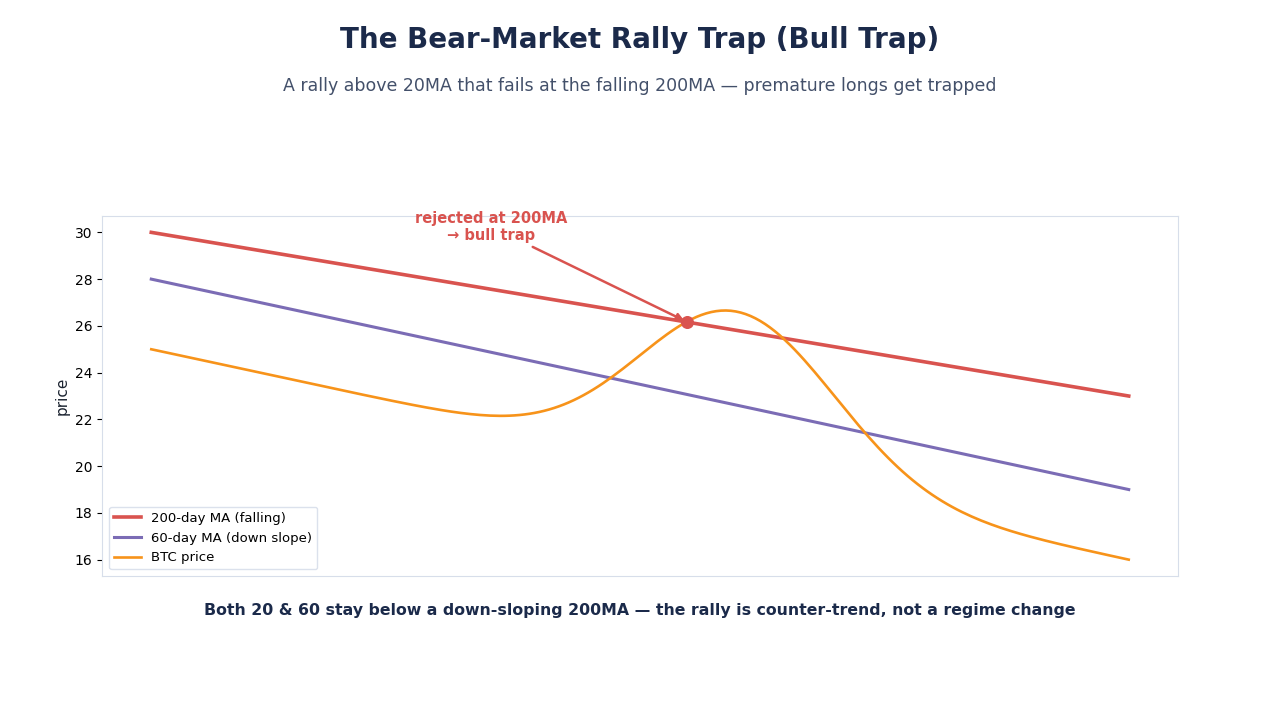
Entender esto previene entradas largas prematuras.
Estrategia Avanzada: Tamaño de Posición Dinámico por Alineación de MA
En lugar de decisiones binarias largas/cortas, los traders pueden escalar la exposición:
| Alineación | Tamaño de la posición |
|---|---|
| 20 > 60 > 200 | 100% de asignación |
| 20 > 60 pero por debajo de 200 | 50% de asignación |
| Alineación mixta | 25% o neutral |
| 20 < 60 < 200 | Defensivo / corto |
Este tamaño sistemático reduce los altibajos emocionales.
SimianX AI puede automatizar tales ajustes de exposición basados en regímenes a través de carteras.
Combinando Promedios Móviles con Métricas On-Chain
Para Bitcoin, la actividad on-chain añade otra capa.
En regímenes alcistas:
- Aumentando direcciones activas
- Aumento del volumen de transacciones
- Flujos de salida positivos en exchanges
En regímenes bajistas:
- Disminución de la actividad on-chain
- Aumentan los flujos de entrada en exchanges
Cuando la fortaleza on-chain se alinea con la apilamiento alcista 20/60/200, la convicción aumenta.
Ventaja Psicológica del Marco de Régimen de MA
Los mercados inducen extremos emocionales:
- Euforia cerca de los máximos
- Miedo cerca de los mínimos
El MA de 200 días ofrece una estructura objetiva.
En lugar de reaccionar a los titulares, los traders preguntan:
¿Está el precio por encima o por debajo del MA de 200 días?
Este filtro simple elimina el ruido y mantiene el enfoque en la tendencia estructural.
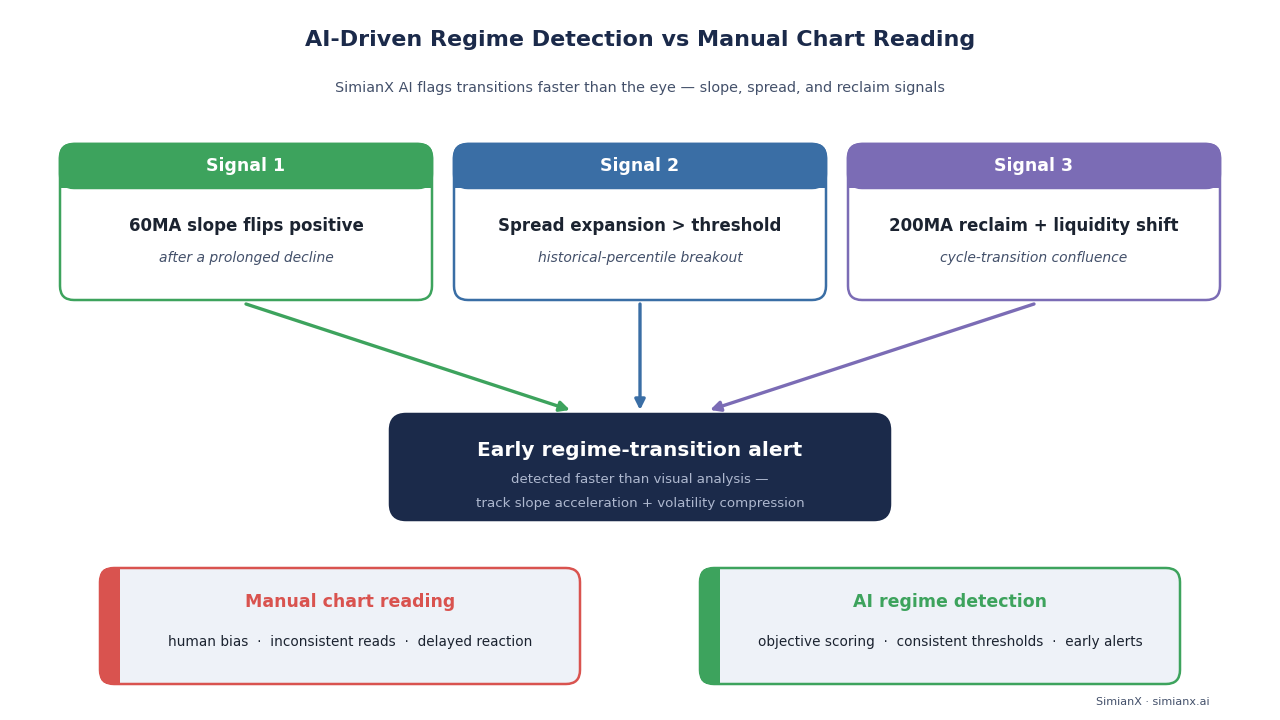
Detección de Régimen Impulsada por IA vs Lectura Manual de Gráficos
El análisis manual tiene limitaciones:
- Sesgo humano
- Interpretación inconsistente
- Reacción tardía
Los sistemas mejorados por IA como SimianX AI:
- Rastrean la aceleración de la pendiente del MA
- Detectan compresión de volatilidad
- Puntúan la probabilidad de tendencia
- Alertan sobre transiciones de régimen temprano
Por ejemplo:
- Cuando la pendiente del MA de 60 se invierte positivamente después de una prolongada caída
- Cuando la expansión del diferencial supera el umbral histórico
- Cuando la recuperación del MA de 200 se alinea con un cambio de liquidez
Estas señales pueden ser detectadas más rápido que el análisis visual.
Análisis de Escenarios: Tres Entornos de Mercado
Escenario 1: Mercado Alcista Fuerte
- 20 > 60 > 200
- Diferenciales en expansión
- Retrocesos superficiales
- Asignación de alto riesgo
Escenario 2: Fase Transicional
- Precio rondando los 200
- 20 cruzando frecuentemente
- Compresión de volatilidad
- Exposición reducida
Escenario 3: Mercado Bear Profundo
- 20 < 60 < 200
- Ampliación de la diferencia hacia abajo
- Fallos de rally en 60
- Estrategia defensiva
Mapear estos escenarios previene el sobrecomercio.
Integrando MA de 20/60/200 en Estrategia de Portafolio Multiactivo
La misma lógica puede aplicarse a:
- ETH
- Principales altcoins
- S&P 500
Cuando BTC y las acciones comercian por encima de sus MA de 200 días, el apetito de riesgo macro es fuerte.
Cuando ambos pierden el MA de 200, el riesgo sistémico aumenta.
Esta confirmación entre mercados mejora el momento de asignación de capital.
Gestión de Riesgos: Evitando Falsas Rupturas
No cada recuperación del MA de 200 conduce a un ciclo alcista.
Busca:
- Confirmación de volumen fuerte
- Aplanamiento y giro hacia arriba del MA de 60
- Cierres sostenidos por encima de 200 (varias semanas)
- Formación de mínimos más altos
Las falsas rupturas a menudo:
- Recuperan brevemente
- Pierden el MA de 200 en días
- No logran formar mínimos más altos
Esperar confirmación mejora la probabilidad.
El Poder de la Paciencia en la Estrategia de MA
Las medias móviles son indicadores rezagados. Eso no es un defecto, es una característica.
Confirman tendencias después del cambio inicial.
Tratar de predecir antes de la confirmación aumenta el riesgo.
Los traders profesionales a menudo aceptan perder el primer 5–10% del movimiento para evitar caídas del 50%.
Perspectiva del Inversor a Largo Plazo
Para los inversores de Bitcoin a largo plazo:
- Acumular agresivamente cuando el precio esté por encima del MA de 200
- Escalar con cautela cuando esté por debajo del MA de 200
- Evitar la venta por pánico durante retrocesos breves por encima de 200
Esta disciplina macro ha mejorado históricamente la resiliencia del portafolio.
Resumiendo: Un Marco Estructurado
Lista de Verificación Diaria:
- ¿Está BTC por encima o por debajo del MA de 200 días?
- ¿Está el MA de 60 días inclinándose hacia arriba o hacia abajo?
- ¿Está el MA de 20 días confirmando el impulso?
- ¿Está la diferencia ampliándose o comprimiéndose?
- ¿Está la volatilidad alineada con la tendencia?
- ¿Son las señales macro/liquidez de apoyo?
Cuando se alinean 4+ condiciones, la confianza en el régimen aumenta.
Perspectiva Estratégica Final
El marco de medias móviles de 20/60/200 días no se trata de predicción, se trata de clasificación.
- Clasificar el régimen
- Alinear el tamaño de la posición
- Gestionar el riesgo
- Evitar trampas emocionales
Combinado con análisis mejorados por IA de SimianX AI, los traders pueden transformar un concepto técnico simple en un motor de decisión sistemático.
Los ciclos de Bitcoin seguirán evolucionando. Pero mientras existan tendencias, las medias móviles seguirán siendo una de las herramientas más poderosas para identificar mercados alcistas frente a bajistas.
Y cuando se mejoran con automatización inteligente, su ventaja se multiplica.
Lectura Relacionada
- Crash de Bitcoin Feb 2026: ¿$60K Es el Fondo Real?
- Cómo Operar un Bear Market Cripto: Playbook de Supervivencia
- Qué es el open interest en cripto y qué señala cuando sube
- Ciclos de halving de Bitcoin: referencia 2012-2028 completa
- Bitcoin tras cada recorte de la Fed: referencia 2019-2026
- Ciclos de dominancia de Bitcoin: cuándo llega la altseason