The CLARITY Act 2026 Explained: What It Means for U.S. Crypto Markets
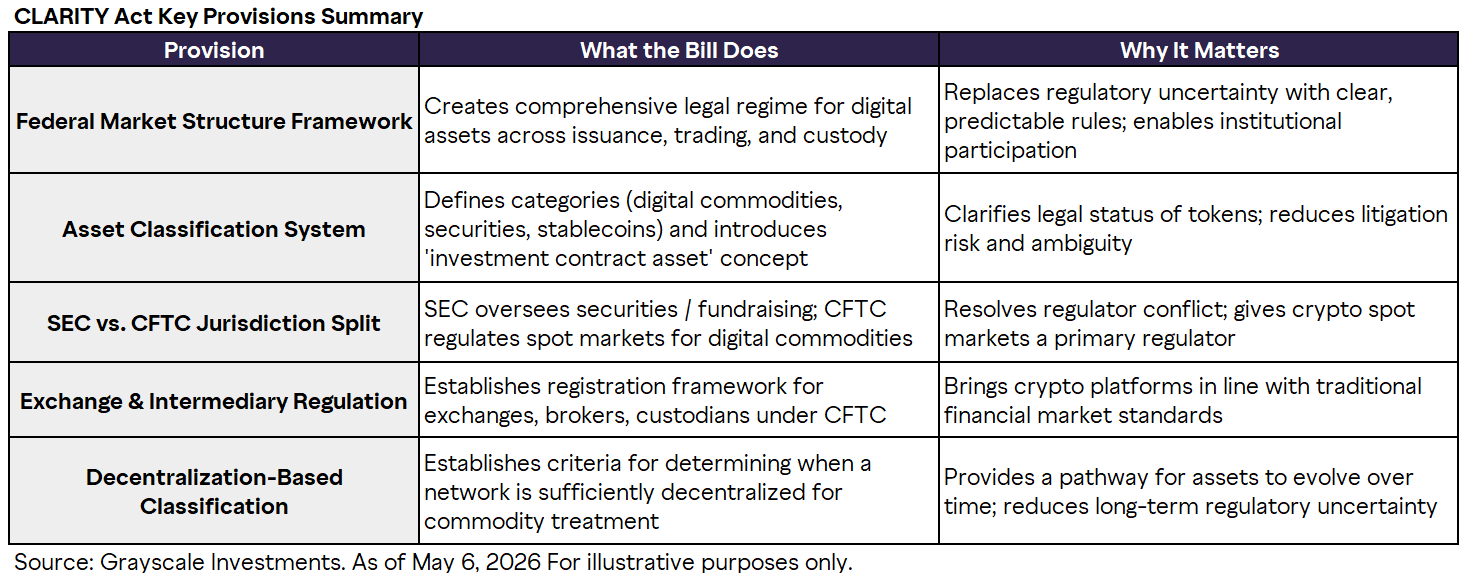
The CLARITY Act 2026 could become one of the most consequential changes to U.S. digital-asset regulation since crypto entered mainstream financial markets. Rather than regulating every token through enforcement actions and case-by-case interpretations, the proposed framework attempts to establish clearer rules for token issuance, trading platforms, decentralized finance, stablecoins, tokenized securities and software developers.
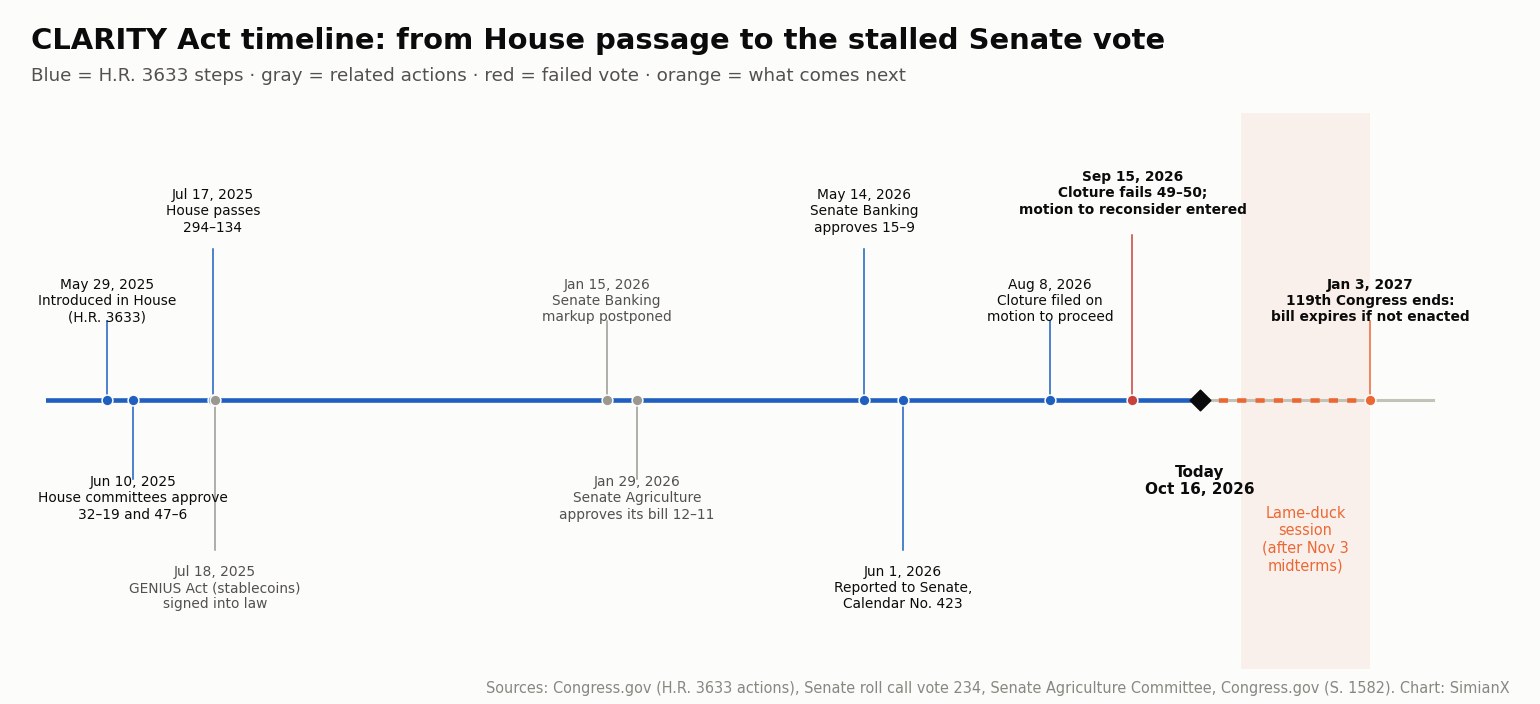
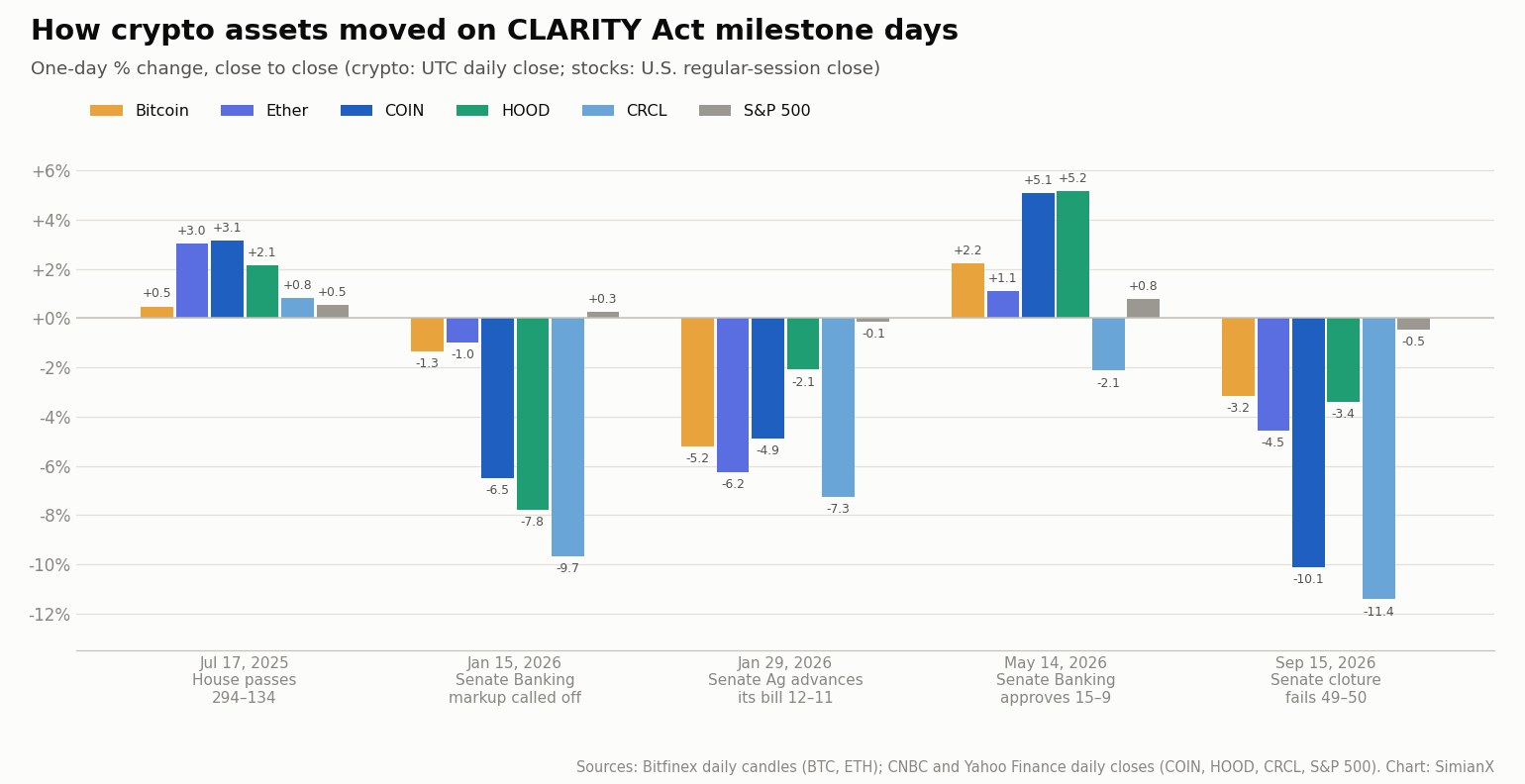
For investors, the most important point is that the bill is not yet law. The House passed H.R. 3633 by a bipartisan 294–134 vote on July 17, 2025. The Senate Banking Committee subsequently advanced an amended version by 15–9 on May 14, 2026, and the bill was formally reported to the Senate on June 1. As of July 17, 2026, it remains on the Senate calendar rather than enacted legislation.
That distinction matters. Markets may begin pricing in regulatory change before legislation becomes effective, but the final rules could still be amended substantially. For readers following those shifting probabilities, SimianX AI can help organize regulatory news alongside price action, institutional adoption, market structure and asset-specific risks.

What Is the CLARITY Act 2026?
“CLARITY Act 2026” is the commonly searched name for the legislation moving through Congress in 2026. Its formal title remains the Digital Asset Market Clarity Act, and the Senate-reported bill is H.R. 3633.
The Senate amendment is broader and structurally different from the original House bill. Its major titles address:
- Securities regulation for certain network tokens and ancillary assets
- Anti-money-laundering and illicit-finance controls
- Decentralized finance
- Stablecoin interest and rewards
- Tokenized securities
- Software-developer protections
- Customer-property treatment in bankruptcy
- Regulatory sandboxes and AI innovation programs
The current Senate text would also require extensive follow-on rulemaking. This means Congress would establish the legal framework, while agencies such as the SEC, CFTC, Treasury Department, Federal Reserve and banking regulators would determine many of the operational details.
The real market catalyst may not be passage alone. It may be the transition from legal uncertainty to an identifiable rulemaking timetable.
CLARITY Act 2026 Legislative Status
| Stage | Status | Why It Matters |
|---|---|---|
| House passage | Passed 294–134 in July 2025 | Demonstrated meaningful bipartisan support |
| Senate Banking Committee | Advanced 15–9 in May 2026 | Moved the securities, banking and DeFi framework forward |
| Senate report | Reported June 1, 2026 | Placed the amended bill on the Senate calendar |
| Senate floor | Not completed as of July 17, 2026 | Final passage remains uncertain |
| Presidential signature | Not reached | The proposal is not yet federal law |
| Agency implementation | Would follow enactment | Many provisions require new regulations |
The CFTC side of the framework also remains important. In January 2026, the Senate Agriculture Committee advanced separate digital-commodity legislation designed to create a CFTC-supervised spot-market regime, including intermediary registration, customer-asset safeguards, conflicts rules and new funding for the agency. A complete market-structure package may therefore require reconciliation between the Banking and Agriculture committees’ approaches.
How Could the CLARITY Act 2026 Change Token Issuance?
One of the proposal’s most important ideas is the concept of an ancillary asset. The Senate text describes an ancillary asset as a network token whose value remains dependent on the entrepreneurial or managerial efforts of an originator or related party.
The framework would not simply declare every such token a security forever. Instead, it would regulate transactions involving the asset, require disclosures and create a path through which the token’s regulatory treatment could evolve as the network develops.
The bill instructs the SEC to establish a tailored exemption known as Regulation Crypto. Projects using this route would face crypto-specific disclosure obligations rather than automatically relying on the full registration framework used for traditional public companies. The proposal also includes restrictions for insiders and related persons, intended to reduce undisclosed selling and pump-and-dump behavior.
This could change token launches in three ways:
- More formal disclosures before distribution.
Issuers could need to explain token economics, network governance, related parties, development plans and material risks.
- Greater accountability for insiders.
Founders, affiliated entities and large related holders could face restrictions on how and when they sell.
- A more credible fundraising route.
Projects that currently avoid the United States might reconsider launching or raising capital under a defined exemption.
The likely result would not be unrestricted token issuance. It would be a shift from regulation by ambiguity toward regulated token formation.

Which Tokens Could Benefit Most?
The largest beneficiaries could be projects with:
- Identifiable development teams
- Transparent token allocations
- Functional blockchain networks
- Auditable governance processes
- Sustainable usage beyond speculative trading
- Sufficient resources to meet disclosure and compliance obligations
By contrast, anonymous launches, highly concentrated token allocations and projects dependent on vague future promises could face greater difficulty entering regulated U.S. markets.
This suggests a potential quality divide. Established protocols may gain legal credibility, while low-transparency tokens could lose exchange access or institutional demand.
SEC vs. CFTC: Will the Regulatory Boundary Finally Become Clear?
For years, the central U.S. crypto question has been whether an asset belongs under securities law, commodities law or a combination of both.
The Securities and Exchange Commission issued interpretive guidance in 2026 describing categories of crypto assets and explaining how a non-security crypto asset can be connected to—or later separated from—an investment-contract transaction. The SEC stated that its interpretation complements Congress’s attempt to create a statutory market-structure framework.
The CLARITY framework could formalize a distinction between:
- The fundraising transaction
- The underlying network token
- The platform where the token trades
- The intermediary providing custody or execution
That separation is crucial. A token sold as part of an investment contract may not necessarily remain a security in every later transaction. Conversely, putting a traditional security on a blockchain does not transform it into a commodity.
Potential Division of Responsibilities
| Activity | Likely Primary Regulator |
|---|---|
| Investment-contract fundraising | SEC |
| Ancillary-asset disclosures | SEC |
| Tokenized stocks and bonds | SEC |
| Digital-commodity spot intermediaries | CFTC under the companion framework |
| Payment-stablecoin issuance | Banking regulators under the GENIUS Act framework |
| Illicit finance and AML | Treasury and FinCEN |
| Bank participation in digital assets | Federal banking regulators |
A clearer division could lower legal costs and reduce the risk that businesses build products only to discover later that regulators classify them differently.
However, jurisdictional clarity does not mean lighter regulation. Registered platforms would likely face surveillance, reporting, custody, governance, risk-management and customer-protection requirements similar to those found in traditional finance.
How New Crypto Rules Could Reshape Exchanges and Brokers
Centralized exchanges may be among the biggest long-term beneficiaries—and the biggest near-term compliance spenders.
A federal market-structure framework could allow compliant platforms to consolidate state-by-state licensing, securities obligations and commodity-market requirements into a more predictable operating model. That could support institutional adoption, deeper liquidity and more standardized token-listing procedures.
At the same time, exchanges may need to invest heavily in:
- Market surveillance
- Customer-asset segregation
- Qualified custody
- Conflict-of-interest controls
- Token disclosure monitoring
- Anti-manipulation systems
- Capital and operational resilience
- Transaction reporting
- Cybersecurity and business continuity
Large, well-capitalized platforms could gain an advantage. Smaller exchanges may struggle with fixed compliance costs, encouraging consolidation or strategic partnerships.
For investors, the key question is not merely whether regulation is “good for crypto.” It is which companies can convert regulatory clarity into market share without allowing compliance expenses to overwhelm margins.
Possible Market Winners and Losers
| Segment | Potential Effect | Main Variable |
|---|---|---|
| Large U.S. exchanges | Positive over time | Ability to absorb compliance costs |
| Offshore exchanges | Negative for U.S. access | Comparability and registration requirements |
| Regulated custodians | Positive | Institutional asset flows |
| Transparent token issuers | Positive | Eligibility for compliant distribution |
| Anonymous token projects | Negative | Disclosure and listing barriers |
| Market-surveillance providers | Positive | Increased compliance demand |
| Crypto legal and audit firms | Positive | Rulemaking and registration workload |
| Small trading platforms | Mixed to negative | Cost of federal compliance |

Will the CLARITY Act Regulate DeFi?
The Senate proposal attempts to regulate DeFi according to control, rather than treating every line of blockchain code as a financial intermediary.
Its current language distinguishes decentralized protocols from systems where a person or coordinated group can materially alter protocol functionality, transaction rules or access. A genuinely automated, non-custodial protocol may receive different treatment from a platform marketed as decentralized but effectively controlled by a company, foundation or small governance group.
This creates a practical test:
- Who can upgrade the smart contracts?
- Who controls the user interface?
- Can someone censor transactions?
- Can administrators freeze or redirect assets?
- Is governance meaningfully distributed?
- Does a centralized party collect fees or exercise discretion?
The proposal would also protect certain software activities from being treated as securities intermediation solely because a developer writes code, operates a node, validates transactions or provides an oracle service. Those protections would not necessarily shield someone who controls customer funds or operates a disguised centralized exchange.
Why the DeFi Control Test Matters
If enacted and implemented consistently, the framework could encourage teams to design protocols with:
- Reduced administrative keys
- Transparent upgrade procedures
- Distributed governance
- Non-custodial execution
- Open-source smart contracts
- Independent security councils
- Clear separation between development and transaction control
This may create a premium for credible decentralization. Projects would have an economic reason to reduce hidden control rather than using decentralization only as a marketing label.
The framework is controversial, however. Supporters argue that it protects peer-to-peer software while regulating centralized control points. Critics contend that gaps could remain in anti-money-laundering enforcement, sanctions compliance and national-security protections.
Stablecoin Yield Could Become a Major Fault Line
One of the Senate bill’s most market-sensitive provisions concerns interest and yield on payment stablecoins.
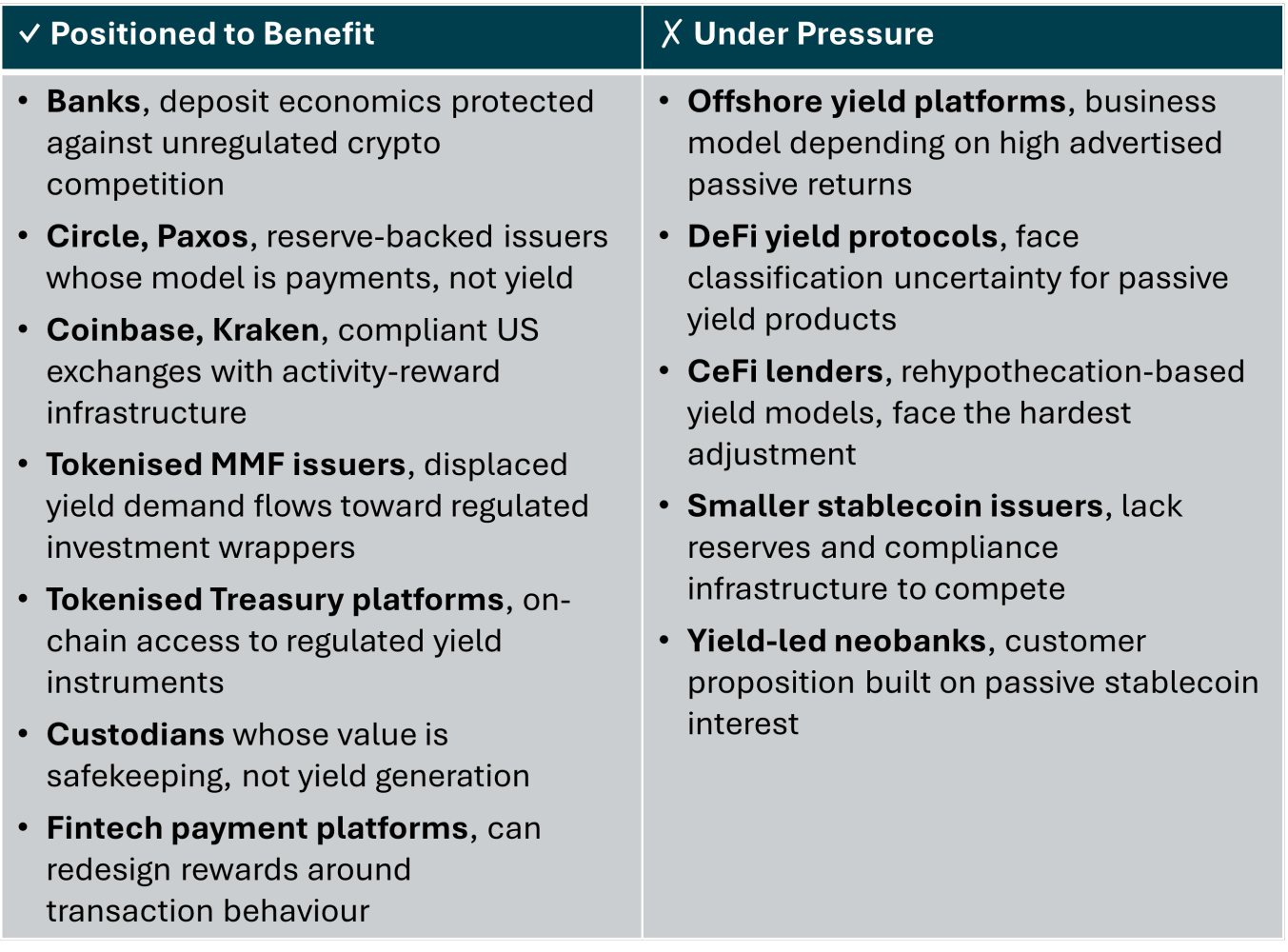
The current language would prohibit covered digital-asset service providers from paying U.S. customers interest or yield solely for holding payment stablecoins when the payment is economically equivalent to interest on a bank deposit. It would still allow qualifying transaction-based or activity-based rewards, including incentives tied to payments, remittances, liquidity provision, collateral, staking or product usage. Regulators would need to define the boundary through joint rulemaking.
That boundary could reshape competition among:
- Crypto exchanges
- Stablecoin distributors
- Banks
- Payment companies
- DeFi lending protocols
- Treasury-backed digital-cash products
A simple “hold USDC and receive yield” program could face more restrictions than a reward connected to payments, liquidity provision or another genuine economic activity.
The distinction matters because stablecoin reserve assets can generate substantial interest income. The battle is ultimately about who captures that yield: the issuer, the distribution platform, the customer or the banking system.
SimianX has separately examined the broader stablecoin competition among payment companies, USDC and USDT in its Stablecoins 2026 market guide. That market could change considerably depending on how regulators define permissible rewards.
Tokenized Securities Would Remain Securities
The CLARITY Act does not create a simple escape route for putting stocks, bonds or fund interests on a blockchain.
The Senate text states that a tokenized security should generally receive the same regulatory treatment as the traditional security it represents. An asset does not stop being a security merely because ownership is recorded or transferred through distributed-ledger technology. The SEC could adapt operational requirements for custody, records, reconciliation, settlement finality, audits and chain reorganizations, but core investor-protection laws would continue to apply.
This is an important signal for Wall Street:
Blockchain may change the settlement rail, but it does not automatically change the legal character of the asset.
That could support institutional tokenization because banks and asset managers would not need to treat on-chain securities as an entirely separate asset class. Instead, they could focus on modernizing infrastructure while preserving established ownership and investor rights.
The likely opportunities include:
- Near-instant settlement
- Programmable corporate actions
- On-chain collateral mobility
- Extended trading hours
- Automated compliance
- Fractional ownership
- Improved reconciliation
- Cross-platform asset portability
But the operational questions remain substantial. Institutions must still solve custody, identity, transfer-agent integration, transaction finality, blockchain forks and the relationship between on-chain records and legally authoritative books.
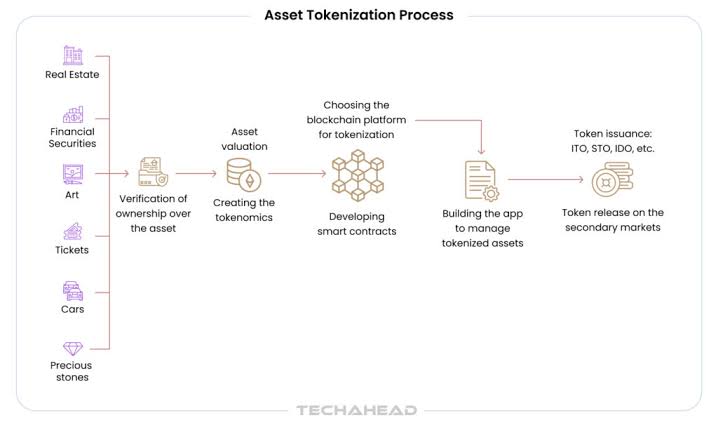
These issues connect directly with SimianX research on the DTCC tokenized securities pilot, which examines how regulated market infrastructure is beginning to move securities onto blockchain rails.

A Practical CLARITY Act 2026 Investment Framework
Investors should avoid treating the legislation as a single bullish or bearish event. The better approach is to build a regulatory exposure map.
Step 1: Identify the Asset’s Legal Dependency
Ask whether the investment depends on:
- Token fundraising
- Exchange transaction revenue
- Stablecoin rewards
- Custody services
- DeFi governance
- Tokenized securities
- Institutional blockchain adoption
Step 2: Separate Passage From Implementation
There are at least four potential catalysts:
- Senate floor scheduling
- Passage of a final Senate version
- Reconciliation with the House
- Agency rulemaking after enactment
Each stage could produce different winners and losers.
Step 3: Monitor the Rulemaking Details
The words “subject to regulation” often matter more than the headline text. Investors should monitor:
- SEC definitions of ancillary assets
- Permitted disclosure exemptions
- CFTC intermediary rules
- Stablecoin-reward definitions
- DeFi control standards
- Custody requirements
- Transition and compliance deadlines
Step 4: Track Market Confirmation
A positive regulatory headline is more credible when accompanied by:
- Higher spot volume
- Improving exchange inflows
- Institutional product launches
- Stronger stablecoin supply growth
- Expanding developer activity
- Reduced legal reserves or litigation exposure
- Sustained relative strength in affected equities and tokens
Using SimianX AI, investors can compare the legislative narrative with price behavior, company fundamentals, crypto liquidity and competing interpretations rather than relying on a single headline.
The Biggest Risks to the CLARITY Act Thesis
The legislation still faces political, legal and implementation risks.
1. The Final Text Could Change
The Senate amendment differs substantially from the House-passed version. Any final law would need sufficient Senate support and eventual agreement between both chambers.
2. SEC and CFTC Rules Could Diverge
Even with a statute, inconsistent definitions or timelines could recreate regulatory fragmentation.
3. Compliance Could Favor Incumbents
Rules intended to protect consumers may create fixed costs that only large exchanges, banks and asset managers can absorb.
4. DeFi Enforcement Could Remain Uncertain
The distinction between decentralized software and controlled intermediation will depend on facts such as governance, upgrade authority, custody and fee collection.
5. Stablecoin Rules Could Reshape Business Models
Restrictions on passive stablecoin yield could reduce customer acquisition advantages for crypto platforms while protecting bank deposits.
6. Political Opposition Could Delay Passage
Senate supporters describe the bill as a balance between innovation, investor protection and national security. Opponents argue that it may weaken securities protections or leave illicit-finance vulnerabilities. The final result will depend on how Congress resolves those disagreements.

FAQ About CLARITY Act 2026
What Is the CLARITY Act 2026?
The CLARITY Act is a proposed U.S. digital-asset market-structure framework covering token issuance, securities regulation, DeFi, stablecoin rewards, tokenization, customer protection and software development. The House passed an earlier version, while the Senate Banking Committee advanced a substantially amended version in 2026.
Has the CLARITY Act Passed Into Law?
No. As of July 17, 2026, H.R. 3633 had been reported to the Senate and placed on the Senate calendar, but it had not completed Senate floor passage or received presidential approval.
How Will the CLARITY Act Affect Crypto Prices?
The bill does not guarantee higher crypto prices. It could support compliant exchanges, transparent token projects, custody providers and institutional blockchain infrastructure, while creating pressure on opaque issuers, offshore platforms and passive stablecoin-yield models.
Will the CLARITY Act Regulate DeFi Developers?
The Senate proposal protects certain software-development, node, validation and oracle activities from securities regulation solely because they support a distributed ledger. Developers or organizations exercising control, custody or discretionary authority could still face intermediary obligations.
Does the CLARITY Act Make Tokenized Stocks Commodities?
No. The Senate text says that a security does not stop being a security merely because it is issued, recorded or transferred using blockchain technology. Tokenized equities would remain subject to securities laws and applicable anti-fraud protections.
Conclusion
The CLARITY Act 2026 could move U.S. crypto markets toward a more structured regulatory era. Its most important effects may include a tailored token-issuance framework, clearer treatment of decentralized protocols, restrictions on passive stablecoin yield, protections for software developers and explicit confirmation that tokenized securities remain securities.
The proposal could benefit transparent projects, regulated custodians, compliant exchanges and institutional tokenization platforms. At the same time, it could raise costs for smaller intermediaries, reduce the appeal of opaque token launches and force DeFi organizations to prove that their decentralization is real rather than cosmetic.
Because the bill is not yet law, investors should track legislative probability, final statutory language, agency rulemaking and market confirmation as separate variables. Explore SimianX AI to evaluate crypto regulatory catalysts through multiple research perspectives and connect policy developments with the assets, companies and market structures most exposed to change.
Related Reading
- Stablecoins 2026: Visa, Stripe & the USDT vs USDC Race
- Circle OCC Approval 2026: USDC Wins as USDT Risk Rises
- DTCC Tokenized Securities Pilot 2026: Wall Street On-Chain
- Securitize NYSE Debut 2026: Tokenized Stocks Hit Wall Street
- Securitize Stock 2026: SECZ Tokenized Shares Guide
- UK Tokenization Roadmap 2026: The £33B Capital Markets Push
References
- U.S. Congress — H.R. 3633 (Digital Asset Market Clarity Act)
- U.S. Securities and Exchange Commission
- U.S. Commodity Futures Trading Commission
- U.S. Senate Committee on Banking, Housing, and Urban Affairs
- U.S. Senate Committee on Agriculture, Nutrition, and Forestry
- Financial Crimes Enforcement Network (FinCEN)
- Federal Reserve