
 By Muke
Which cryptocurrencies can and cannot be traded using artificial intelligence?
If you’re trying to understand which cryptocurrencies can and cannot be traded using artificial intelligence, the most accurate answer is not a fixed list of tickers—it’s a set of constraints. AI can “decide” to trade anything, but it can only execute trades where (1) a market exists, (2) you have legal and technical access, and (3) the asset’s mechanics don’t block you from entering and exiting. This research-style guide explains those constraints, then translates them into a practical taxonomy you can apply on any exchange or DEX. Along the way, we’ll reference SimianX AI as a structured research workflow that helps you document assumptions, test hypotheses, and avoid “black box” decisions in fast-moving crypto markets.
What “AI trading” really means in crypto (and why it matters)
“AI trading” can describe several different systems:
- Signal-only AI: A model predicts direction/volatility; you still place orders manually.
- Execution AI / algorithmic bot: A system places orders via an exchange API, often with rules for position sizing and risk.
- LLM-assisted trading: Large language models summarize news/sentiment and propose trades, while deterministic code executes.
- On-chain autonomous trading: Smart-contract-based strategies (or bots using private relays) trade directly on DEXs.
In practice, the question “can AI trade this coin?” becomes:
Can I get reliable market data and place orders, then exit the position, in a way that is legal and repeatable?
That definition reveals why “can” and “cannot” depend on the venue, jurisdiction, and token mechanics, not just the token name.
The tradability checklist: the 6 constraints that decide “can” vs “cannot”
A cryptocurrency is AI-tradable if it passes these constraints.
- Market access (listing + pairs)
- The asset must be listed on a venue you can use (CEX/DEX).
- There must be a usable trading pair (e.g., BTC/USDT, ETH/USD, SOL/USDC).
- Execution access (API + account permissions)
- Your venue must allow programmatic trading (API keys, rate limits, order types).
- Your account must be permitted to trade that asset (region rules, KYC tier, product eligibility).
- Liquidity and market quality
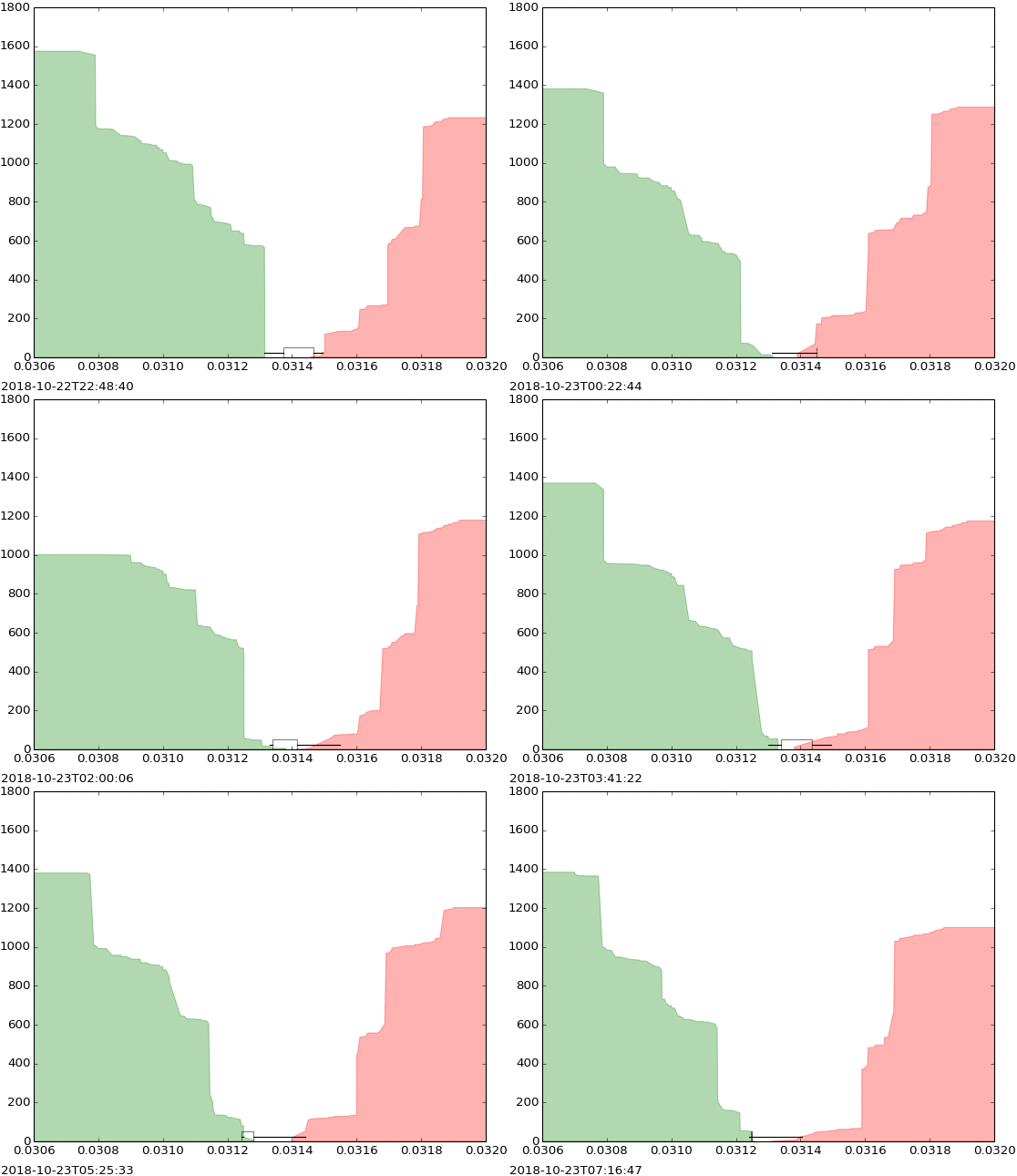
- Enough depth to enter/exit without huge slippage.
- Reasonable spreads and stable order-book behavior.
- Data availability
- Adequate historical data (OHLCV, order book, funding rates if derivatives).
- Stable, consistent symbol mapping (no constant re-tickering across venues).
- Token mechanics and transfer rules
- No “can buy but cannot sell” mechanics.
- No blacklist/whitelist behavior that blocks your address.
- No transfer-pauses that trap inventory.
- Compliance and operational risk
- Your jurisdiction and venue policies allow trading.
- You can custody, settle, and manage risk (position limits, circuit breakers).
If any of these fail, the coin is “cannot”—not in the philosophical sense, but in the engineering + risk + compliance sense that matters for AI systems.
A practical taxonomy: coins AI can trade (most of the time)
Below is a useful categorization for AI trading systems. These are not promises of profit—just execution feasibility.
Category A: “Almost always AI-tradable” (high liquidity, stable markets)
These tend to have:
- large spot markets across many venues,
- liquid derivatives (often),
- abundant data for backtesting and model training.
Typical examples:
- BTC, ETH
- Large L1/L2 ecosystems (often):
SOL,BNB,ADA,AVAX,MATIC/POL,ARB,OP - Major infrastructure tokens (often):
LINK
Why AI likes them: lower slippage, cleaner signals, more robust order-book behavior, better survivability in regime shifts.
Category B: “Usually tradable, but model risk is higher” (mid-cap & narrative-driven)
These are tradable on many venues but can be:
- more sensitive to hype cycles,
- more gap-prone,
- more likely to get halted/delisted on some venues.
Typical examples (illustrative, not exhaustive):
- DeFi blue chips:
UNI,AAVE,CRV(varies by venue) - Gaming/consumer tokens: depends heavily on cycle and liquidity
AI caution: your model must handle regime changes (e.g., a token behaves “mean-reverting” for months, then becomes purely narrative-driven).
Category C: “Technically tradable, but execution is fragile” (new listings, small caps, meme coins)
Many meme coins and new listings are tradeable, but:
- spreads can be wide,
- liquidity is thin,
- price impact dominates,
- data history is short or non-representative.
AI can trade them only if:
- you explicitly model slippage and fees,
- you cap position size,
- you use strict kill-switches and max-loss rules.
In AI trading, the hardest part isn’t prediction—it’s surviving bad liquidity.
Which cryptocurrencies cannot be traded using artificial intelligence (in practice)?
This is the part most traders actually mean by “cannot”: assets that block automation or safe exit.
1) Not listed on your accessible venue (or no API trading)
If a token isn’t listed where you can trade (or the venue doesn’t allow API execution for that market), then your AI cannot trade it—full stop.
- Some assets exist only on niche venues.
- Some venues restrict API trading by region or account tier.
- Some markets are “view-only” for certain customers.
2) Region-restricted or compliance-blocked assets
Even if a token is globally “tradable,” you may be blocked by:
- local regulations,
- exchange policy,
- sanctions screening,
- product eligibility (spot allowed, derivatives blocked, etc.).
For AI systems, compliance constraints are part of the “environment.” If your AI’s action space excludes a token, it’s non-tradable for that system.

3) Tokens with transfer restrictions that trap inventory
On-chain, some tokens include rules that can make you effectively unable to exit:
- sell restrictions,
- blacklists/whitelists,
- trading limits,
- punitive transfer taxes that make selling uneconomical.
From an AI perspective, these are unmodeled state constraints—your “sell” action may fail or be economically irrational.
4) Honeypots and “can buy but cannot sell” scams
On DEXs especially, some tokens are engineered so users can buy but cannot sell (or can only sell if whitelisted). These are categorically non-tradable for any sane AI system, because the exit is structurally blocked.
5) Non-transferable or non-market assets
Some crypto-like items are not meant to be traded:
- non-transferable tokens (e.g., “soulbound” designs),
- claim-only points/credits with no market,
- internal accounting units.
AI can “analyze” them, but cannot execute trades because there is no valid market mechanism.
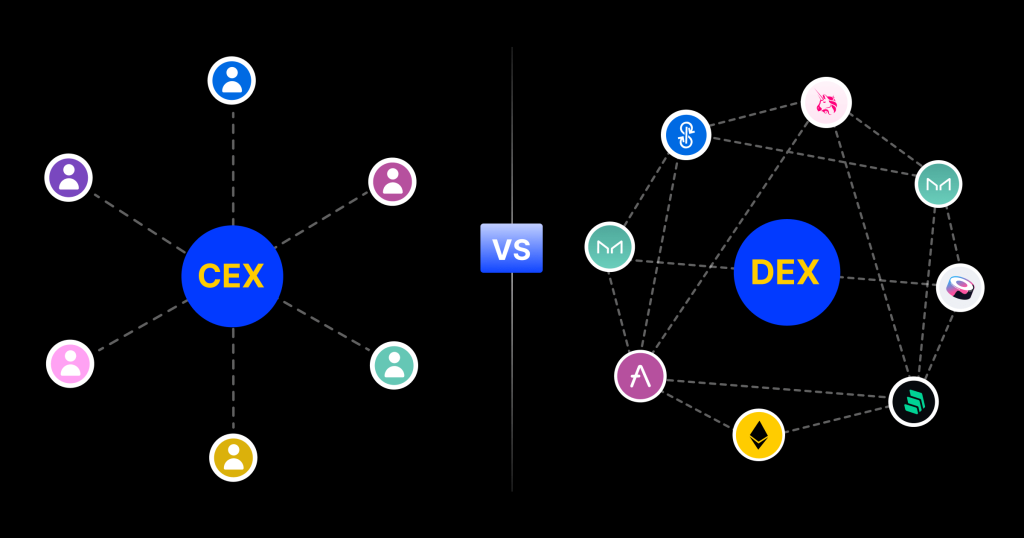
CEX vs DEX: where “can” becomes “maybe”
Centralized exchanges (CEXs)
Pros for AI trading:
- clearer order books,
- standardized order types,
- more reliable fills for large caps,
- better historical data.
Cons:
- listing constraints,
- jurisdiction restrictions,
- API rate limits / changing rules.
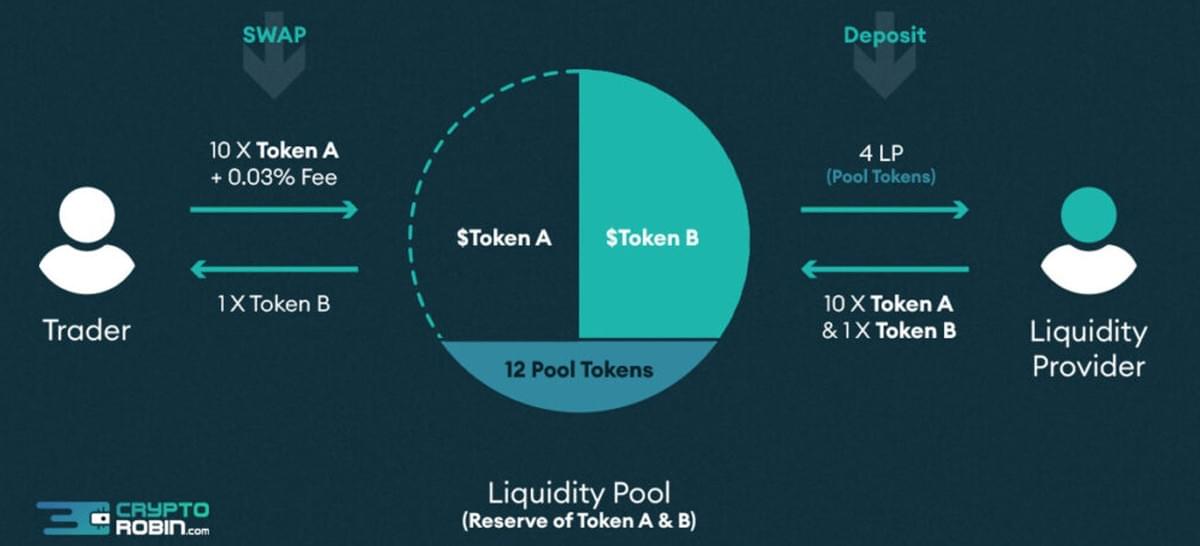
Decentralized exchanges (DEXs)
Pros:
- long tail of tokens (more “coverage”),
- permissionless access.
Cons:
- MEV/front-running risks,
- fake liquidity,
- token-level restrictions,
- fragmented liquidity across pools.
Rule of thumb:
AI trading on DEXs is feasible, but your “cannot” set grows because you must detect contract-level traps and execution hazards.
A scoring framework you can apply to any coin (including ones you’ve never seen)
Instead of asking for a static list, score each asset with a simple rubric.
Tradability score (0–10)
Assign 0–2 points for each dimension:
| Dimension | 0 points | 1 point | 2 points |
|---|---|---|---|
| Venue access | Not accessible | Limited | Fully accessible |
| API execution | No API / blocked | Partial | Full support |
| Liquidity | Thin / unstable | Moderate | Deep |
| Data history | Minimal | Some | Extensive |
| Exit reliability | Risky | Mostly ok | Reliable |
Interpretation:
- 8–10: strong candidate for AI trading
- 5–7: tradable but needs strict risk controls
- 0–4: avoid (functionally “cannot”)
This is where SimianX AI fits naturally: use a structured workflow to document the score, the evidence behind it, and the risk assumptions before capital is deployed.
Step-by-step: how to build an “AI-tradable universe” safely
- Choose your venue(s) (CEX, DEX, or both) and list all available symbols.
- Filter by compliance (your region + account eligibility + product type).
- Filter by liquidity using objective metrics (spread, depth, volume, slippage simulation).
- Check data availability (history length, missing candles, symbol stability).
- Run token-mechanics checks for on-chain assets (transfer restrictions, taxes, blacklists).
- Backtest with realistic costs (fees + slippage + latency + partial fills).
- Deploy with guardrails:
- max position size,
- max daily loss,
- circuit breaker on abnormal spreads,
- kill-switch on repeated order failures.
A coin isn’t “AI-tradable” until it is tradable with guardrails.
A practical “red flags” list for the “cannot” bucket
- Sudden spread blowouts unrelated to market volatility
- Order failures or frequent partial fills
- Inconsistent price feeds across venues
- On-chain: abnormal transfer taxes, “onlyOwner” trading controls, blacklist patterns
- Volume spikes with no depth (fake liquidity symptoms)
Examples: what tends to be tradable vs non-tradable (patterns, not promises)
Usually tradable (pattern)
- Large caps with multiple venues and deep books:
BTC,ETH - High-activity ecosystems with sustained liquidity: often major L1s and their top tokens
- Stablecoin pairs for execution (even if stablecoins themselves offer little directional alpha)
Often “cannot” (pattern)
- Unlisted tokens (no accessible venue)
- Region-blocked products (e.g., derivatives access limitations)
- DEX honeypots / restricted-transfer tokens
- Ultra-micro-caps where slippage dominates any signal
- Tokens with repeated contract-level incidents (pauses, blacklists, exploit history that breaks markets)
FAQ About which cryptocurrencies can and cannot be traded using artificial intelligence
Can AI trade any coin that exists on a blockchain?
Not necessarily. AI can only trade what it can reliably execute and exit. Many tokens exist without liquid markets, accessible venues, or safe transfer mechanics.
What crypto is best for AI trading bots?
In general, highly liquid assets with long histories (often BTC and ETH) are easiest to trade with AI. They reduce slippage and make backtests more realistic.
How do I know if a token is a honeypot or has sell restrictions?
On DEXs, you should treat unknown tokens as hostile until proven otherwise: check contract behavior, simulate buys/sells, and verify transfer rules. If selling fails or fees become extreme, it’s functionally non-tradable.
Are stablecoins tradable using AI?
Yes, but stablecoins usually have low volatility, so they are typically used for pairing, routing, and risk-off parking rather than directional strategies.
Do I need a special platform to do AI crypto trading research?
You can build everything yourself, but a structured workflow helps avoid “model drift” and inconsistent assumptions. Tools like SimianX AI can help organize research, compare scenarios, and keep a documented decision trail.
Conclusion
So, which cryptocurrencies can and cannot be traded using artificial intelligence? Most major cryptocurrencies can be traded by AI if you have venue access, API execution, sufficient liquidity, reliable data, and a clean exit path. Coins that are unlisted, region-blocked, transfer-restricted, or engineered to prevent selling fall into the practical “cannot” category—especially for automated systems that must be robust, repeatable, and risk-controlled.
If you want a cleaner process to define your tradable universe, score assets consistently, and turn research into actionable rules, explore SimianX AI as a structured way to document assumptions and improve decision quality before you deploy capital.
Related Reading
- AI Crypto Analysis: A Practical Trading Guide for 2026
- AI Crypto Analysis Workflow: From Data to Decisions
- Time-Series Models vs LLMs for Crypto: Why Hybrid Wins