 By Muke
Iran War Impact on Stocks: Risk-Off Returns as Oil Surges
The Iran war impact on stocks has rapidly escalated into a classic risk-off regime, as escalating tensions, tanker attacks, and disruptions in the Strait of Hormuz push oil prices sharply higher. For investors, this is not just another geopolitical headline—it is a systemic shock to liquidity, inflation expectations, and global asset allocation.
Platforms like SimianX AI are increasingly critical in navigating these environments, helping traders interpret multi-factor signals—from oil spikes to sentiment shifts—in real time.
Why the Iran War Is Triggering a Global Risk-Off Move
The Strait of Hormuz is not just another shipping route—it carries roughly 20% of global oil supply. When disruptions occur here, markets react instantly.
Recent developments include:
- Tanker attacks and restricted passage through the strait
- Oil supply disruptions exceeding 10 million barrels/day
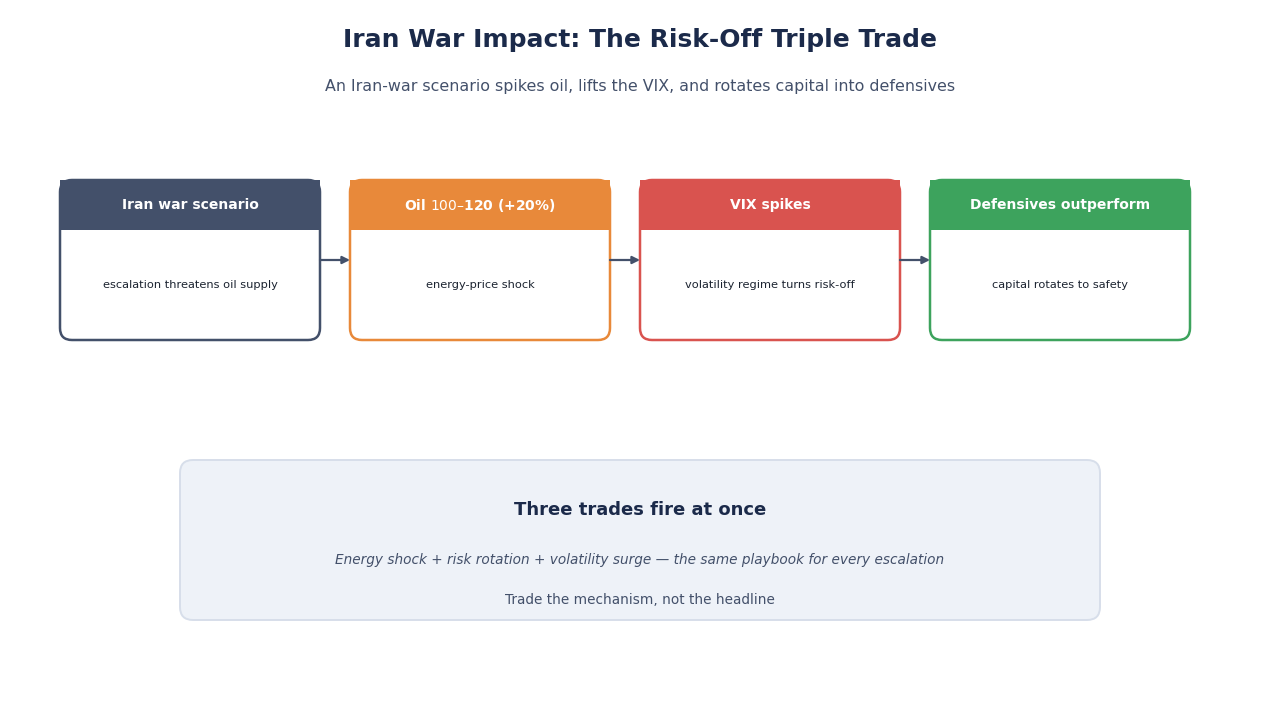
- Brent crude surging above $100–$120+ per barrel
- Global equities falling as energy shocks ripple through markets
“The Strait of Hormuz crisis is the largest energy supply disruption since the 1970s.”
This combination creates a textbook macro shock:
Energy shock → Inflation spike → Policy uncertainty → Equity selloff
Key Risk-Off Signals Emerging
- Equities declining globally
- Oil and commodities surging
- Bond yields volatile
- USD strengthening vs risk currencies
The Oil Shock Mechanism: Why Stocks Fall When Oil Spikes
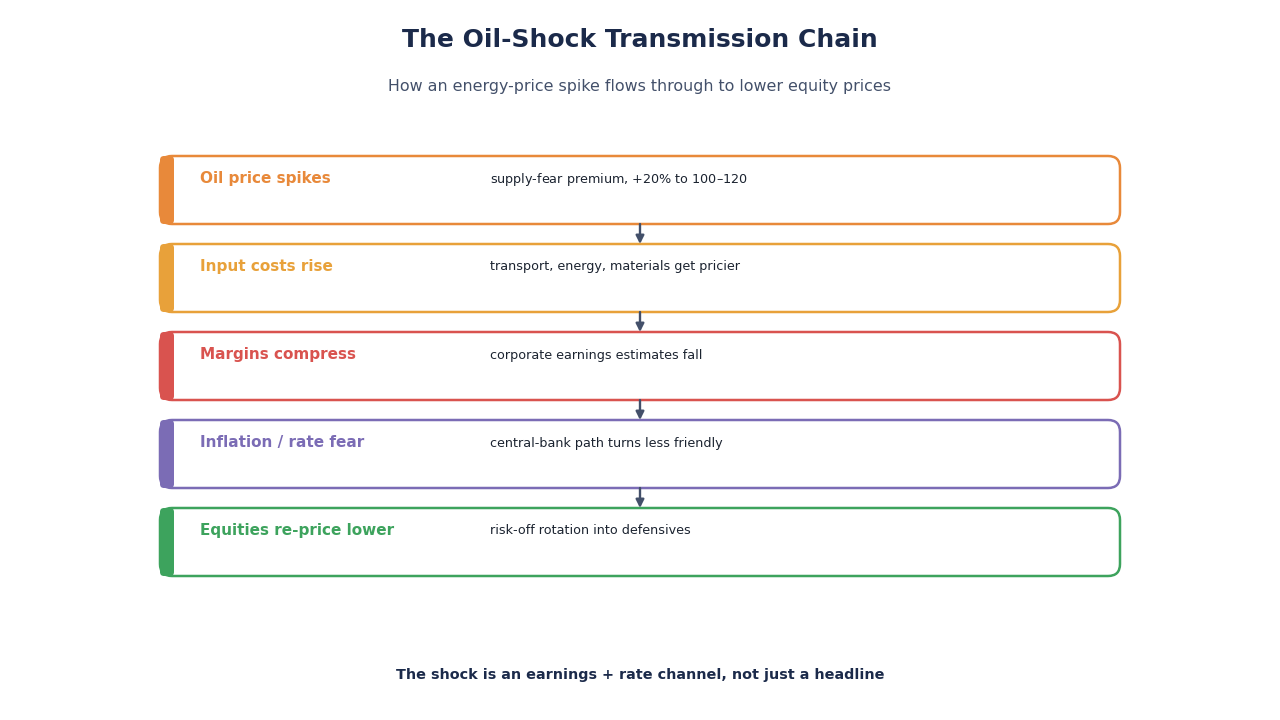
Oil is not just a commodity—it is a global economic input. When oil prices surge:
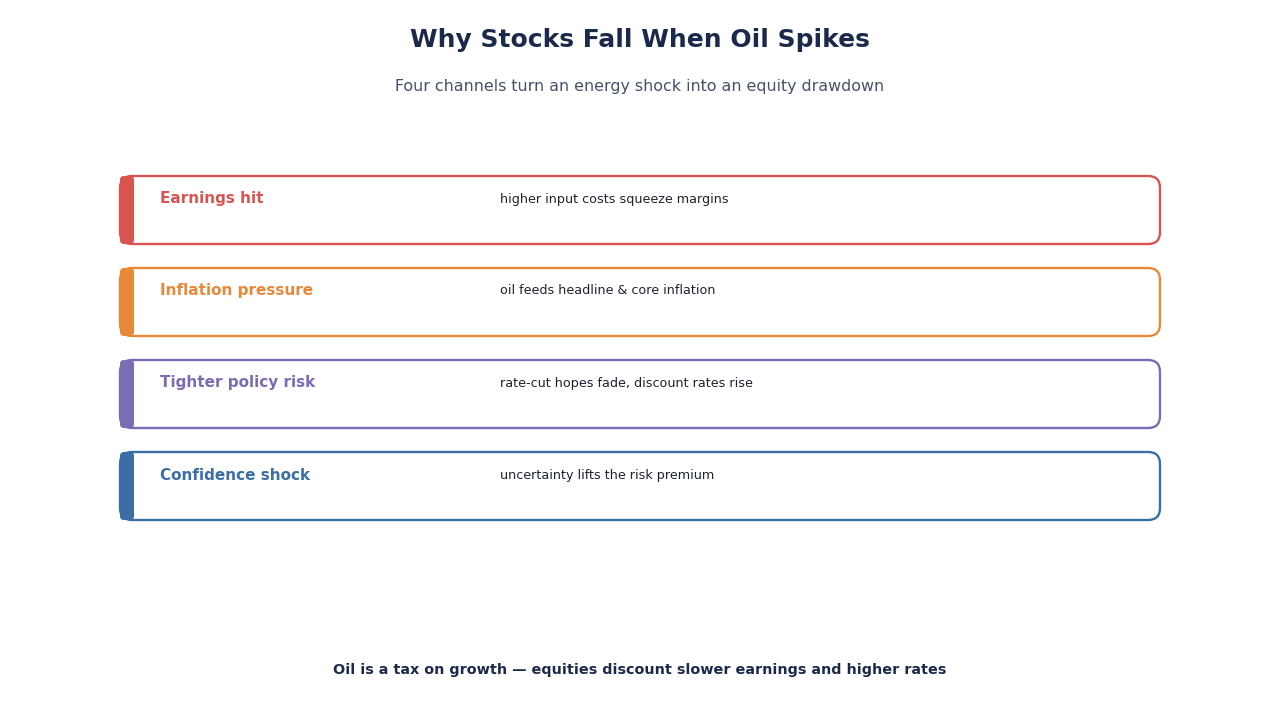
1. Corporate Margins Get Squeezed
Higher fuel, transport, and input costs reduce earnings across sectors:
- Airlines ✈️
- Manufacturing 🏭
- Logistics 🚚
2. Inflation Expectations Rise
Oil directly feeds into CPI:
- Energy costs rise
- Food prices increase (fertilizer + transport)
- Central banks delay rate cuts
3. Liquidity Tightens
Markets begin pricing:
- Higher interest rates
- Lower growth expectations
- Increased recession risk
| Shock Factor | Market Impact |
|---|---|
| Oil spike | Margin compression |
| Supply disruption | Inflation surge |
| War escalation | Risk premium expansion |
| Policy uncertainty | Lower equity valuations |
4. Capital Rotates into Defensive Assets
- Energy stocks ↑
- Gold ↑
- USD ↑
- Growth stocks ↓
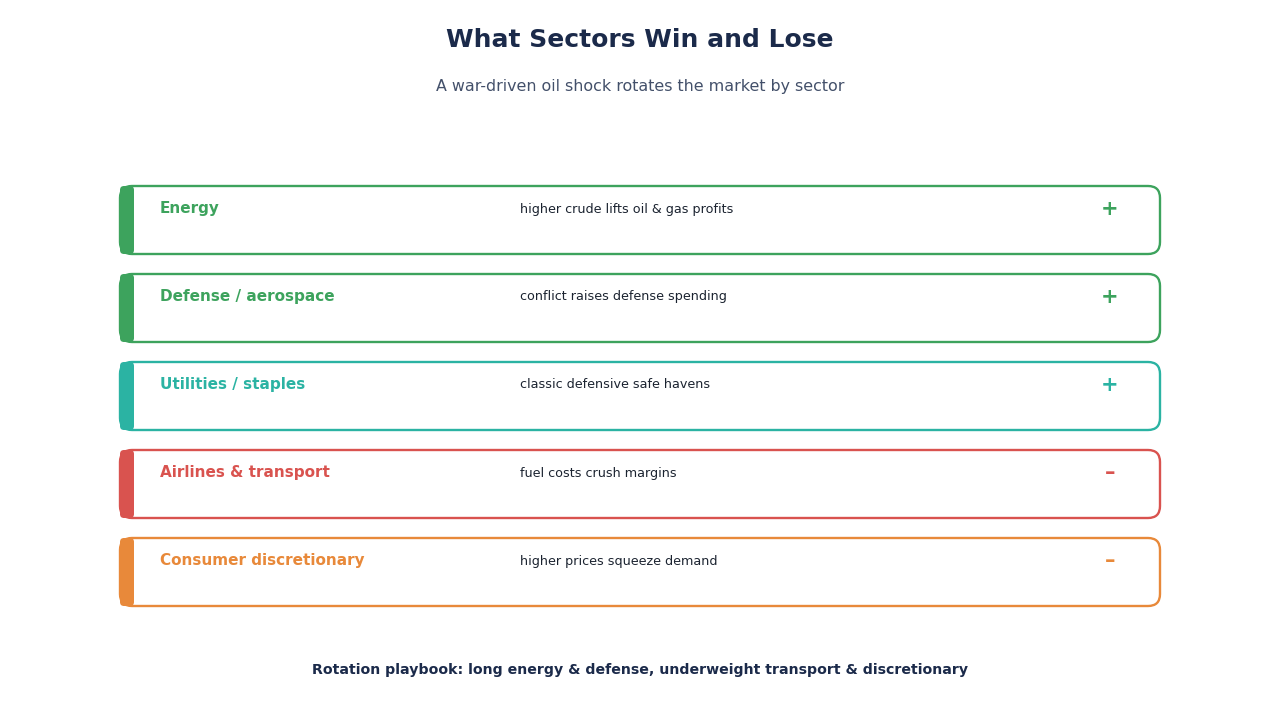
What Sectors Win and Lose in This Environment?
Understanding sector rotation is key to trading the Iran war impact on stocks.
Winners
- Energy (Oil & Gas) – direct beneficiaries
- Defense stocks – increased military spending
- Commodities – inflation hedge
Losers
- Consumer discretionary – demand destruction
- Airlines & travel – fuel costs spike
- Tech / growth – valuation compression
Markets don’t crash randomly—they reprice based on macro shocks.
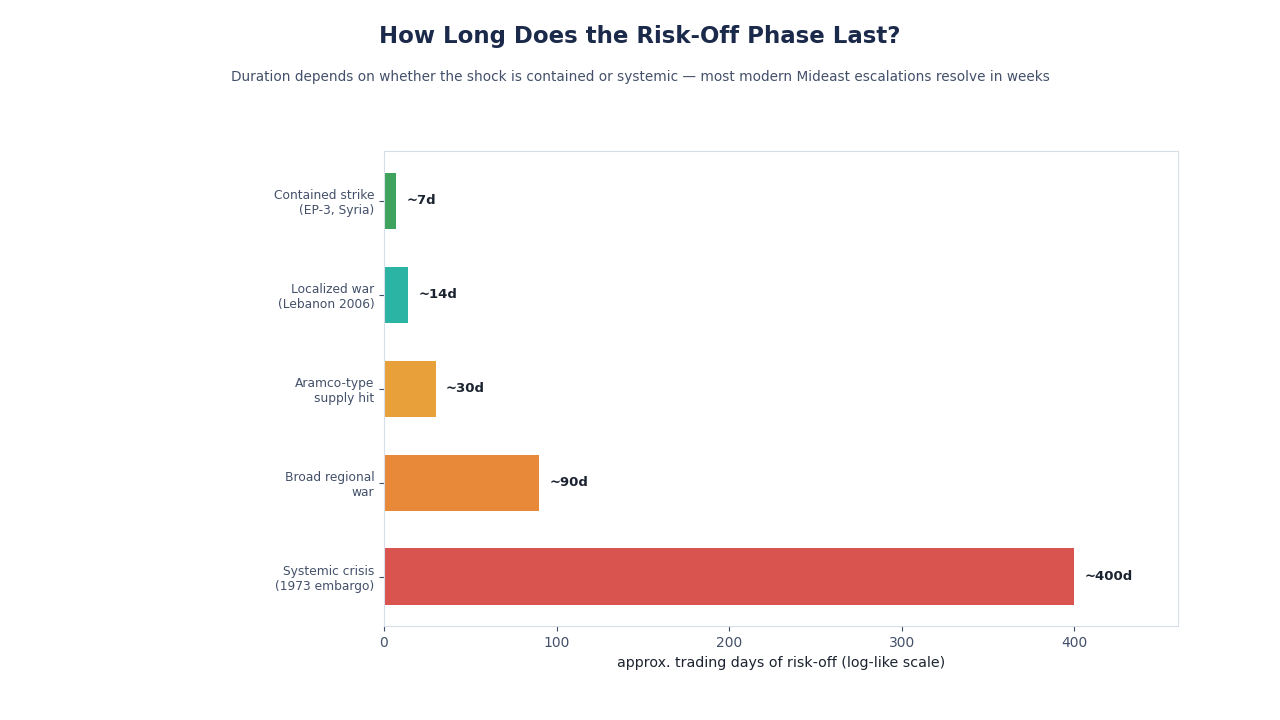
How Long Does a War-Driven Risk-Off Phase Last?
Historical patterns suggest three phases:
- Shock Phase (0–2 weeks)
- Sharp selloff
- Oil spikes aggressively
- Adjustment Phase (2–8 weeks)
- Markets stabilize
- Sector rotation emerges
- Resolution / Repricing Phase
- Either recovery or deeper bear trend
In the current Iran scenario:
- Oil could remain above $100+ through Q2
- Prolonged disruption could push prices toward $150+
- Stocks remain highly sensitive to headlines
How to Trade the Iran War Impact on Stocks
This is where structured frameworks—and tools like SimianX AI—become critical.
Step-by-Step Strategy Framework
- Track Oil as the Primary Signal
- If oil rises → risk-off intensifies
- If oil stabilizes → equities recover
- Monitor Multi-Agent Signals (SimianX AI)
SimianX AI helps combine:
- Technical signals (EMA, RSI, MACD)
- News sentiment (war escalation, tanker attacks)
- Fundamental data (oil supply, inflation)
- Identify Key Levels
- Support / resistance in indices
- Volatility regimes
- Focus on High-Probability Trades
- Short rallies in risk-off regimes
- Long energy / defensive assets
- Avoid overexposed growth trades
| Strategy Type | Example Action |
|---|---|
| Risk-off trading | Short equity rallies |
| Defensive rotation | Long energy / commodities |
| Event-driven | Trade news spikes |
How SimianX AI Gives an Edge
Unlike manual analysis, SimianX AI aggregates multiple AI agents:
- Indicator agent → trend confirmation
- Intelligence agent → real-time news shocks
- Fundamental agent → macro context
- Decision agent → final trade bias
This creates a disciplined, high-probability decision system—especially valuable in chaotic geopolitical markets.
How to Use SimianX AI During Geopolitical Crises
Practical Workflow
- Open BTC, S&P 500, or oil charts
- Switch timeframes (1m / 15m / 1d)
- Watch the real-time signal stream:
- EMA trend
- RSI momentum
- News sentiment
- Follow AI-generated:
- Bias (bullish/bearish)
- Key levels
- Risk warnings
Why This Matters Now
In war-driven markets:
- Human reaction = emotional
- AI decision = structured
The edge is not predicting the future—it’s reacting better than others.
FAQ About Iran War Impact on Stocks
What happens to stocks when oil prices surge due to war?
Stocks typically fall because higher oil prices increase inflation, reduce corporate margins, and create uncertainty. Defensive sectors outperform while growth stocks decline.
How does the Strait of Hormuz affect global markets?
It controls about 20% of global oil flows, so disruptions immediately impact energy prices, inflation, and global liquidity conditions.
Is this a temporary or long-term market risk?
It depends on the duration of the conflict. Short disruptions lead to quick recoveries, but prolonged blockages can trigger recession risks and deeper bear markets.
What is the best strategy during geopolitical market volatility?
Focus on risk management, follow macro signals like oil, rotate into defensive sectors, and use tools like SimianX AI for structured decision-making.
Conclusion
The Iran war impact on stocks is a powerful reminder that markets are deeply interconnected with geopolitics. As tanker attacks, oil shocks, and Strait of Hormuz disruptions unfold, we are clearly back in a risk-off environment driven by energy and uncertainty.
For traders and investors, the key is not guessing outcomes—but tracking signals, managing risk, and adapting quickly.
This is where tools like SimianX AI become essential. By combining technical indicators, real-time intelligence, and macro analysis into one system, SimianX helps you navigate volatility with clarity and discipline.
In chaotic markets, structured decision-making is your edge.
Deep Dive: Macro Transmission Channels of the Iran War Shock
To fully understand the Iran war impact on stocks, we need to go beyond headlines and analyze the transmission channels through which geopolitical shocks propagate across financial markets.
1. Energy → Inflation → Rates Loop
The most immediate and powerful channel is the energy-inflation feedback loop:
- Oil ↑ → Transportation costs ↑
- Energy ↑ → Industrial input costs ↑
- CPI ↑ → Central bank tightening bias ↑
This creates a policy trap:
Central banks cannot ease aggressively even if growth slows, because inflation is being driven externally.
2. Liquidity Compression Channel
War-driven uncertainty reduces:
- Risk appetite
- Cross-border capital flows
- Leverage usage
This leads to:
- Lower equity multiples
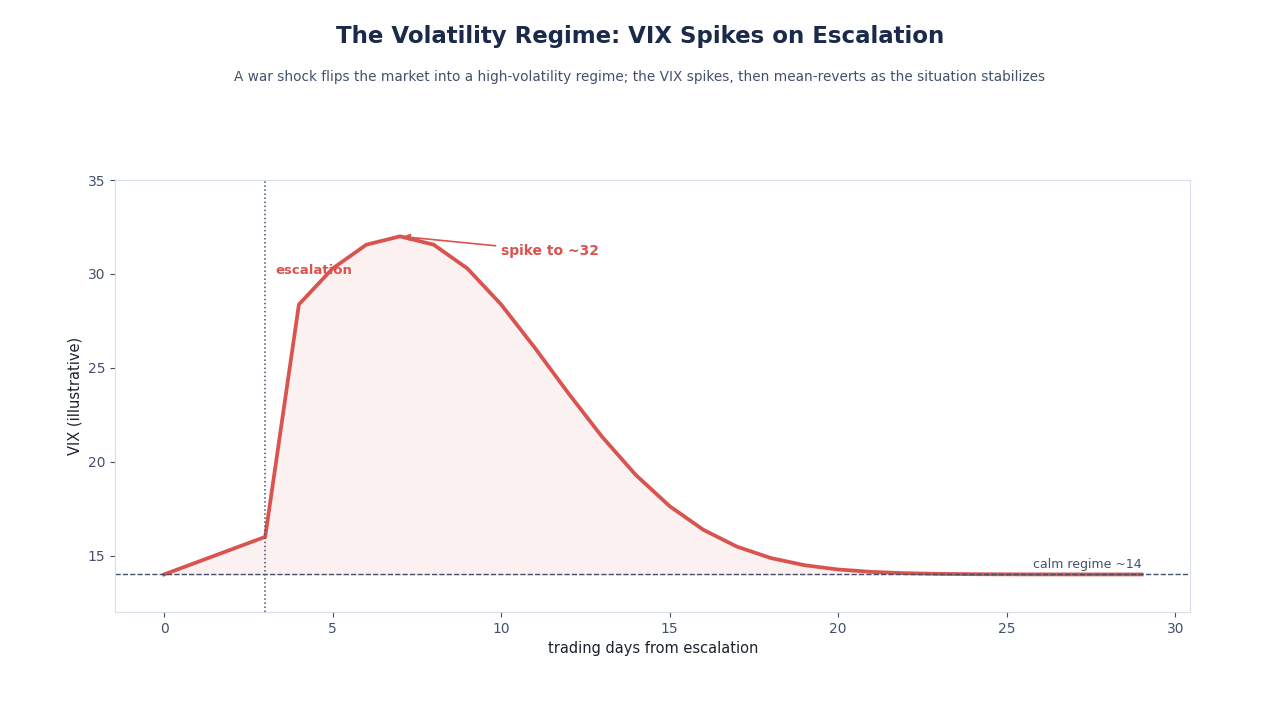
- Higher volatility (VIX regimes shift upward)
- Wider credit spreads
3. Global Trade Disruption Channel
The Strait of Hormuz is a choke point not only for oil, but also for:
- LNG shipments
- Petrochemicals
- Global supply chains
This disrupts:
- Asia-Europe trade
- Emerging market stability
- Currency flows
| Channel | First-Order Effect | Second-Order Effect |
|---|---|---|
| Oil supply shock | Price spike | Inflation surge |
| Trade disruption | Supply chain delays | Earnings revisions down |
| Risk sentiment | Equity selloff | Capital flight to USD |
| Policy response | Rate uncertainty | Valuation compression |
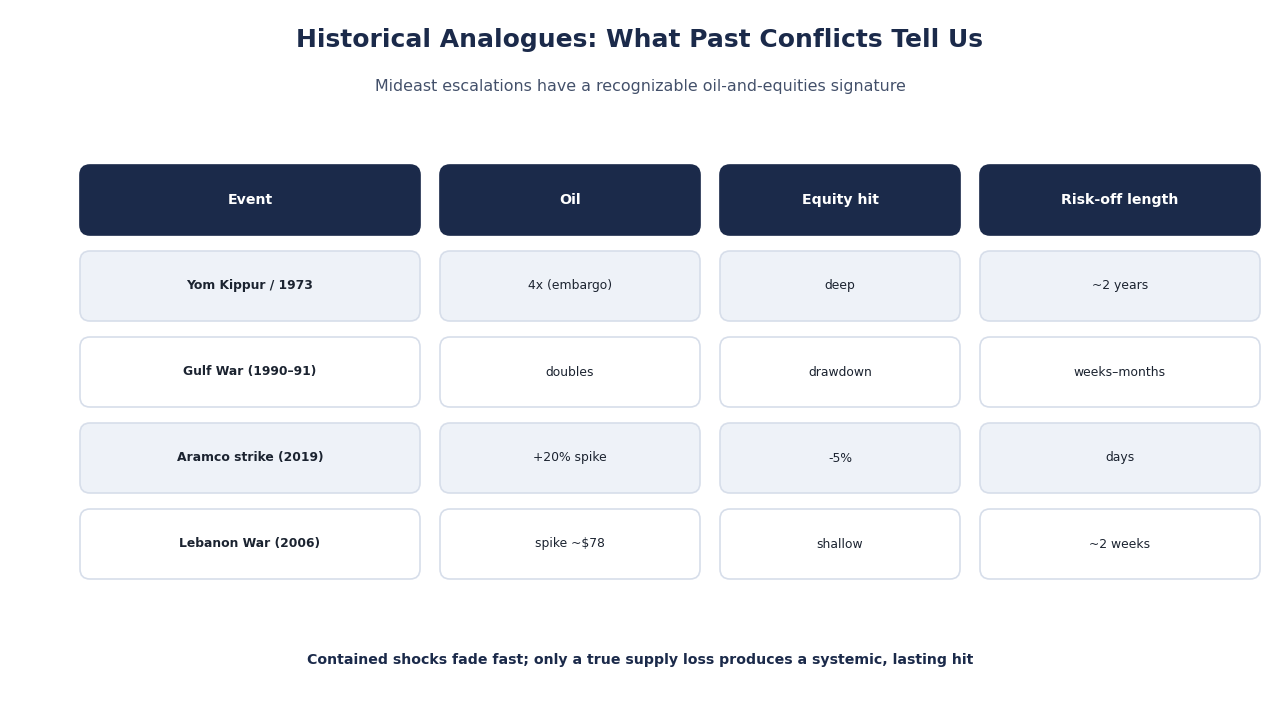
Historical Analogues: What Past Conflicts Tell Us
To contextualize the current situation, we compare historical geopolitical shocks and their market outcomes.
Case Study Comparison
| Event | Drawdown | Bottom Time | Recovery Time | Oil Impact |
|---|---|---|---|---|
| Gulf War (1990) | -16% | ~3 months | ~6 months | Severe |
| Iraq War (2003) | -14% | Pre-invasion | Fast recovery | Moderate |
| Israel–Hamas (2023) | -4.5% | 14 days | 19 days | Limited |
| Iran Hormuz Crisis (2026) | TBD | Ongoing | TBD | Extreme |
Key Insight
The severity of stock market impact is directly proportional to energy disruption duration, not just military escalation.
This is why the current Iran scenario is particularly dangerous:
- It directly targets global oil arteries
- It creates persistent supply risk
- It feeds into inflation expectations globally
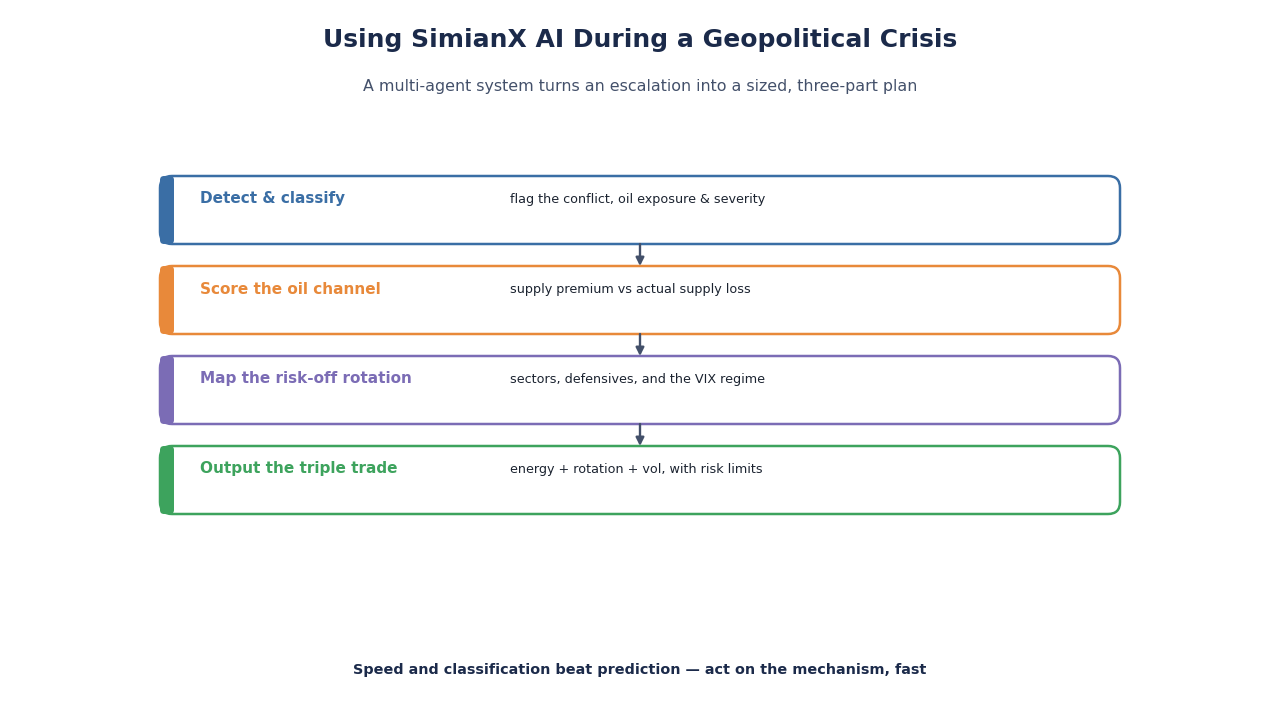
Market Microstructure: How Institutions Are Positioning
Beyond macro, the Iran war impact on stocks is also visible in market microstructure data.
Observed Institutional Flows
- Hedge funds increasing:
- Energy exposure
- Commodities allocation
- Reducing:
- High-beta tech
- Emerging markets
Derivatives Signals
- Put/call ratios rising
- Volatility skew steepening
- Tail-risk hedging increasing
Credit Markets
- Credit spreads widening → early warning signal
- High-yield underperforming → recession pricing
Credit markets often “see the truth” before equities fully react.
Multi-Asset Reaction Framework
To trade effectively, you must understand how different asset classes react together.
Cross-Asset Correlation Matrix (Risk-Off Scenario)
| Asset Class | Direction | Reason |
|---|---|---|
| Oil | ↑ | Supply disruption |
| Gold | ↑ | Safe haven demand |
| USD | ↑ | Global liquidity preference |
| Equities | ↓ | Growth + margin pressure |
| Bonds | Mixed | Inflation vs safety demand |
| Crypto | Volatile | Liquidity-sensitive |
Scenario Analysis: What Happens Next?
Scenario 1: Short-Term Containment
- Strait partially reopened
- Oil stabilizes around $90–$100
- Stocks rebound quickly
Market behavior:
- V-shaped recovery
- Growth stocks lead
Scenario 2: Prolonged Disruption (Base Case)
- Intermittent tanker attacks
- Oil stays above $100
- Inflation remains sticky
Market behavior:
- Range-bound equities
- Sector rotation dominates
- Volatility elevated
Scenario 3: Full Escalation (Tail Risk)
- Strait closure
- Oil spikes to $150+
- Global recession risk
Market behavior:
- Sharp equity drawdown
- Credit stress
- Policy intervention
This is the scenario markets are starting to price in at the margin.
Tactical Trading Playbook (Advanced)
This section translates macro insights into actionable strategies.
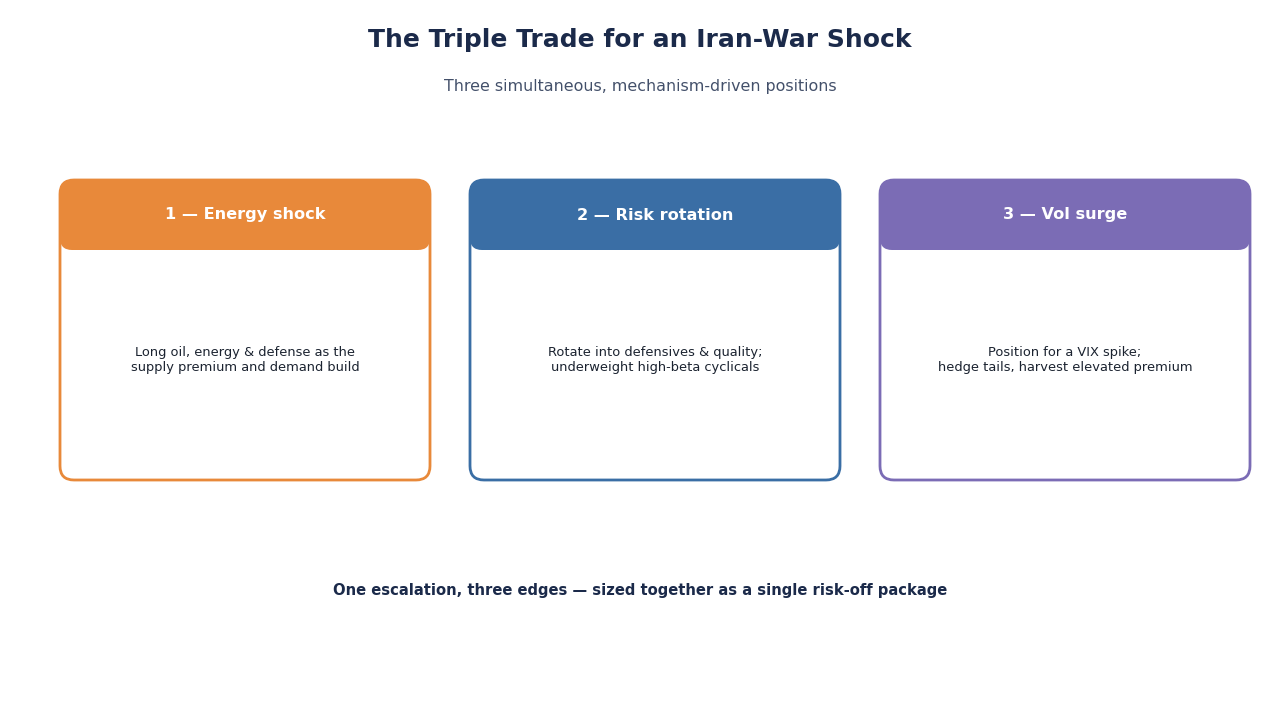
Strategy 1: Oil-Led Signal Trading
- Long oil → short equities
- Monitor divergence:
- If oil ↑ but stocks stabilize → bottom forming
Strategy 2: Volatility Regime Trading
- High VIX environment:
- Short rallies
- Avoid breakout chasing
- Low VIX reset:
- Trend-following resumes
Strategy 3: Sector Rotation Timing
Use a 3-phase rotation model:
- Energy leadership
- Defensive sectors (utilities, healthcare)
- Late-cycle rebound (tech, growth)
Strategy 4: Event-Driven Execution
- Trade headlines (tanker attacks, policy statements)
- Use tight risk controls
- Avoid overnight exposure during peak uncertainty
How SimianX AI Enhances Execution Precision
During geopolitical shocks, execution quality determines profitability.
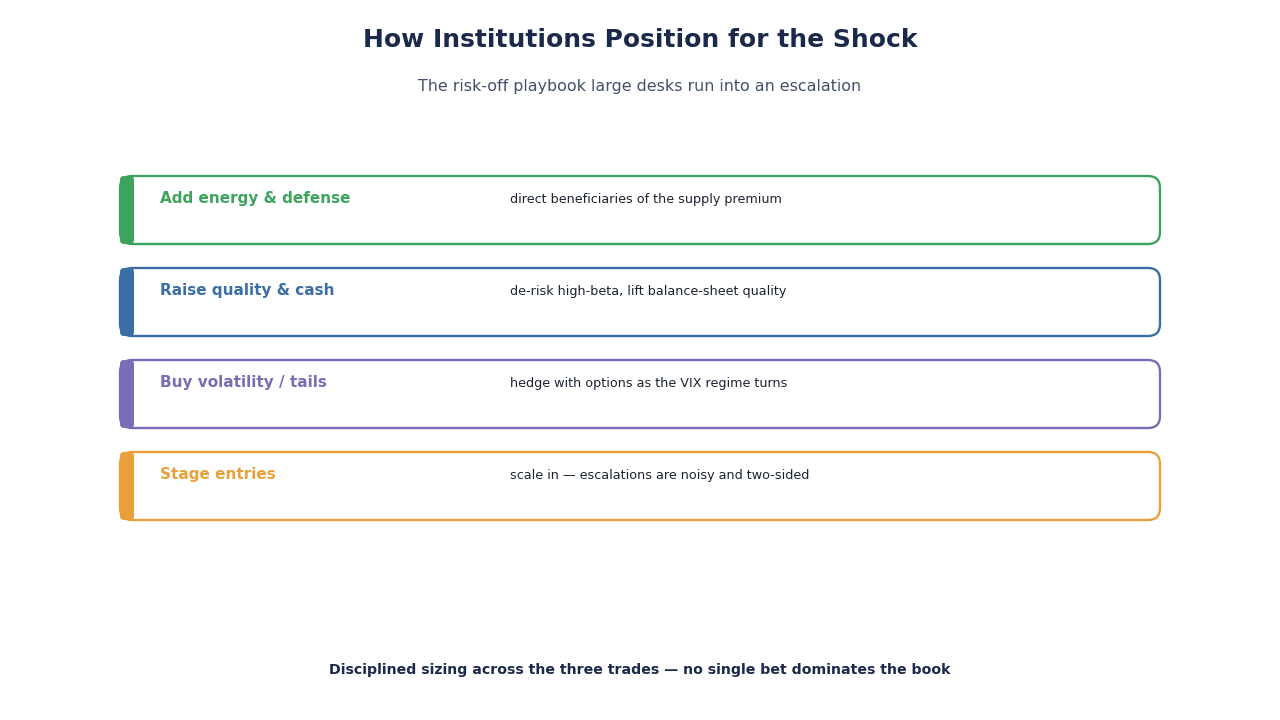
SimianX AI Workflow Advantage
SimianX AI integrates:
- Real-time intelligence ingestion
- Multi-timeframe signal processing
- Conflict resolution via decision agents
This enables:
- Faster reaction to news
- Reduced emotional bias
- Higher signal clarity
Example Use Case
When tanker attack news breaks:
- Intelligence agent detects sentiment spike
- Indicator agent confirms trend shift
- Decision agent outputs:
- Bearish bias
- Key resistance
- Risk level
This transforms chaotic information into structured action.
Advanced Risk Management Framework
Risk Layers to Monitor
- Macro risk → oil, inflation
- Market risk → volatility, liquidity
- Position risk → leverage, exposure
Risk Control Checklist
- Reduce position size during high uncertainty
- Use stop-loss based on volatility
- Avoid correlated exposures
| Risk Type | Tool / Signal |
|---|---|
| Macro | Oil price trend |
| Market | VIX / credit spreads |
| Execution | SimianX signal confidence |
Behavioral Psychology: Why Most Traders Fail Here
War-driven markets amplify psychological errors:
- Overreaction to headlines
- Chasing volatility
- Ignoring risk
Common Mistakes
- Buying dips too early
- Ignoring macro signals
- Overleveraging
The market punishes emotion faster than ignorance.
Building a Repeatable Edge with AI
This is where SimianX AI becomes a structural advantage, not just a tool.
Why AI Matters in War Markets
- Processes information faster than humans
- Removes emotional bias
- Integrates multiple signals simultaneously
Repeatable Edge Framework
- Signal aggregation
- Decision standardization
- Execution discipline
Extended FAQ: Iran War Impact on Stocks
How long do oil-driven market shocks typically last?
They typically last as long as supply disruptions persist. Short disruptions may resolve within weeks, while prolonged conflicts can sustain volatility for months.
Can stocks rise during war?
Yes, if markets anticipate resolution or if economic impact is limited. However, energy-driven wars usually create downside pressure initially.
Is it safe to invest during geopolitical crises?
It depends on strategy. Defensive positioning, diversification, and risk management are key. Tools like SimianX AI help improve decision quality.
What indicators matter most right now?
Oil prices, credit spreads, volatility (VIX), and real-time geopolitical news are the most critical signals.
Conclusion (Extended)
The Iran war impact on stocks is not a short-term anomaly—it is a macro regime shift driven by energy, inflation, and geopolitical risk.
We are witnessing:
- A return of oil-driven market cycles
- Increased importance of macro signals
- Higher demand for real-time decision systems
For traders and investors, survival—and success—depends on:
- Understanding macro transmission
- Adapting to volatility regimes
- Executing with discipline
This is precisely where SimianX AI delivers value.
By combining:
- Multi-agent analysis
- Real-time signal processing
- Structured decision outputs
SimianX AI enables you to navigate even the most chaotic environments with clarity and confidence.
In a world where geopolitical shocks are becoming the norm, the edge belongs to those who can interpret signals faster, act smarter, and stay disciplined.
Related Reading
- Second Lebanon War 2006: Oil $78 Spike, Stocks Resilient
- Israel-Hamas 2023: S&P -4.5% Drawdown, 14-Day Bottom
- U.S. Strike on Iran General: Stocks Down, Oil +4% Shock
- Iran-US War Impact on Stocks: AI Risk Signals Live
- 2019 Saudi Aramco Drone Strike: Oil +20%, Stocks -5%
- Yom Kippur War 1973: Oil 4x, 2-Year Global Stock Crash