
 Oleh Muke
Ekspektasi Pasar untuk Pemotongan Suku Bunga Fed pada 2026: Sinyal, Waktu, dan Dampak Ekonomi
Terbaru: Untuk keputusan The Fed paling akhir, suku bunga dana federal yang berlaku, dan setiap keputusan FOMC sejak 2022, lihat halaman kami yang selalu diperbarui: Keputusan Suku Bunga The Fed: Hasil FOMC Terbaru dan Riwayat.
Ekspektasi pasar untuk pemotongan suku bunga Fed pada 2026 menjadi salah satu tema makro yang paling penting bagi investor global, trader, dan manajer risiko. Setelah bertahun-tahun pengetatan agresif, pengendalian inflasi, dan normalisasi neraca, pasar keuangan kini berusaha untuk memperkirakan kapan — dan seberapa cepat — Federal Reserve akan beralih kembali ke pelonggaran. Untuk platform seperti SimianX AI, yang mengkhususkan diri dalam intelijen makro multi-agen dan pasar kripto, fase transisi ini menciptakan beberapa sinyal prediktif yang paling kuat di seluruh obligasi, ekuitas, dan aset digital.
Memahami titik balik ini bukan hanya tentang menebak tanggal — ini tentang mendekode sistem umpan balik besar dari inflasi, pertumbuhan, utang, pasar tenaga kerja, likuiditas, dan psikologi pasar.
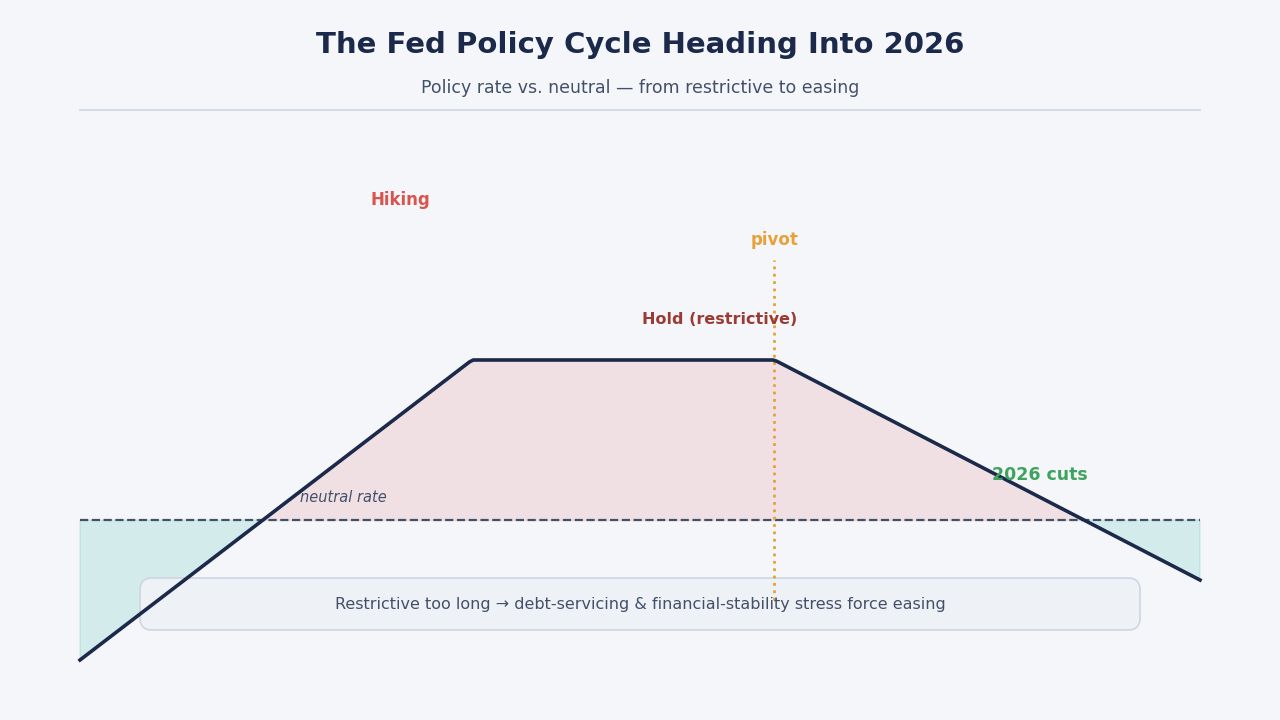
Mengapa 2026 Penting untuk Kebijakan Federal Reserve
Federal Reserve tidak beroperasi berdasarkan kalender — ia beroperasi berdasarkan tekanan makroekonomi. Namun 2026 muncul sebagai tahun kritis dalam model harga yang melihat ke depan karena berada di persimpangan tiga kekuatan kuat:
- Efek tertunda dari siklus kenaikan suku bunga 2022–2024
- Tembok jatuh tempo utang pemerintah dan korporasi AS
- Disinflasi struktural yang didorong oleh teknologi dan produktivitas
Pasar sudah mendiskontokan bahwa pada 2026, sesuatu harus berubah. Entah pertumbuhan melambat cukup untuk memaksa pemotongan, atau stres keuangan memaksa Fed untuk memulihkan likuiditas.
Ketika suku bunga tetap tinggi terlalu lama, sistem keuangan tidak pecah secara tiba-tiba — mereka membengkok perlahan dan kemudian patah.
Ekspektasi pasar untuk pemotongan suku bunga Fed pada 2026 oleh karena itu bukan spekulatif — mereka adalah refleksi dari stres yang terbangun di dalam sistem.
Mandat Ganda Fed dan Pembatas Ketiga yang Tersembunyi
Secara resmi, Federal Reserve mengelola dua tujuan:
- Stabilitas harga
- Pekerjaan maksimum
Tetapi pada kenyataannya, ada kendala ketiga:
Stabilitas sistem keuangan.
Ketika suku bunga tetap tinggi:
- Portofolio obligasi runtuh
- Bank kehilangan modal
- Pemerintah menghadapi biaya refinancing yang meningkat
- Harga aset jatuh
Pada tahun 2026, pemerintah AS akan menggulirkan triliunan dolar utang dengan suku bunga yang jauh lebih tinggi. Bahkan dengan inflasi moderat, pelayanan utang menjadi tidak stabil secara politik dan ekonomi.
Inilah sebabnya mengapa pasar berjangka, imbal hasil obligasi, dan kurva swap semakin menunjukkan bahwa pelonggaran tidak terhindarkan.
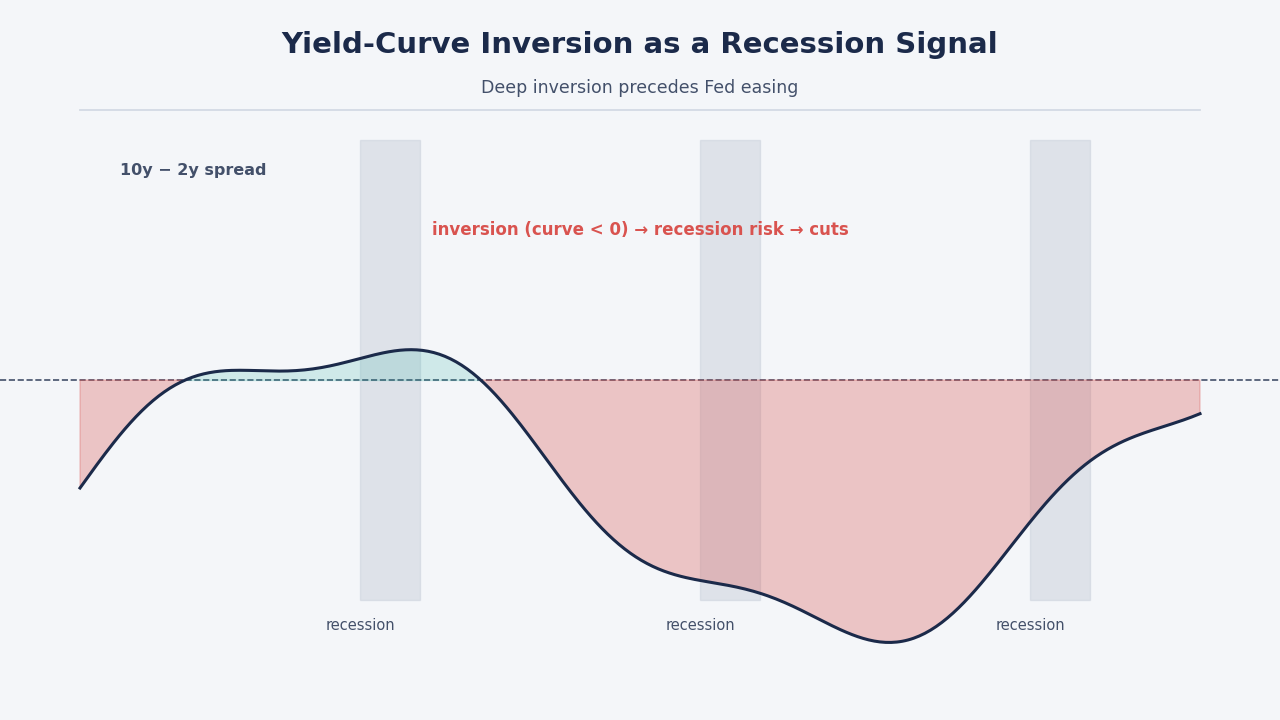
Sinyal Apa yang Digunakan Pasar untuk Memprediksi Pemotongan Suku Bunga 2026?
Pasar tidak menebak — mereka menyimpulkan. Ekspektasi untuk pemotongan Fed pada tahun 2026 berasal dari jaringan sinyal:
| Sinyal | Apa yang Dikatakan kepada Kita |
|---|---|
| Kurva imbal hasil | Inversi dalam menunjukkan risiko resesi |
| Swap inflasi | Harapan inflasi jangka panjang yang menurun |
| Kontrak berjangka Fed Funds | Trader memperkirakan pemotongan di masa depan |
| Spread kredit | Stres dalam pinjaman korporat |
| Metrik likuiditas | Uang ketat menciptakan kerentanan pasar |
Setiap metrik ini masuk ke dalam model penetapan harga yang digunakan oleh hedge fund, bank, dan sistem AI seperti SimianX.
Pasar obligasi sering kali melihat pivot Fed jauh sebelum pembuat kebijakan mengakuinya.
Mengapa Pasar Sudah Memperkirakan Pivot 2026
Pasar bergerak berdasarkan ekspektasi, bukan pada pernyataan resmi. Bahkan jika inflasi tetap lengket pada 2024–2025, pandangan ke depan berbeda.
Inilah alasannya:
- Peningkatan produktivitas dari AI mengurangi tekanan inflasi
- Suku bunga tinggi menghancurkan investasi perumahan, usaha kecil, dan teknologi
- Pemerintah tidak dapat mempertahankan pelayanan utang 5–6% tanpa batas
Ini menciptakan situasi di mana pada tahun 2026, menjaga suku bunga tinggi menjadi lebih berbahaya daripada memotongnya.
Bagaimana Pemotongan Suku Bunga Fed pada 2026 Akan Mempengaruhi Ekonomi
Ketika Fed memotong suku bunga, itu bukan hanya "uang yang lebih murah." Ini mengubah segalanya:
1. Utang menjadi dapat dikelola lagi
Suku bunga yang lebih rendah mengurangi risiko gagal bayar untuk perusahaan dan pemerintah.
2. Harga aset menggelembung
Saham, kripto, dan real estat naik seiring kembalinya likuiditas.
3. Selera risiko meningkat
Investor beralih dari uang tunai dan obligasi ke aset pertumbuhan.
4. Dolar melemah
Yang meningkatkan komoditas dan pasar negara berkembang.
Ekspektasi pasar untuk pemotongan suku bunga Fed pada 2026 oleh karena itu menyiratkan penyesuaian harga aset global yang besar.
Apa yang Terjadi pada Saham Setelah Pemotongan Suku Bunga?
Secara historis, pemotongan suku bunga pertama sering terjadi selama tekanan ekonomi — bukan saat booming. Tetapi apa yang mengikuti sangat kuat.
| Fase | Perilaku Pasar |
|---|---|
| Sebelum pemotongan | Volatilitas dan ketakutan |
| Pemotongan pertama | Campuran, ketakutan resesi |
| 6–12 bulan kemudian | Pasar bullish yang kuat |
Inilah sebabnya mengapa investor cerdas tidak menunggu Fed — mereka memposisikan diri sebelum perubahan arah.
Model AI SimianX melacak pergeseran rezim ini dengan menganalisis likuiditas, kurva imbal hasil, dan sentimen secara real time.
Bagaimana Kripto Bereaksi terhadap Pelonggaran Fed
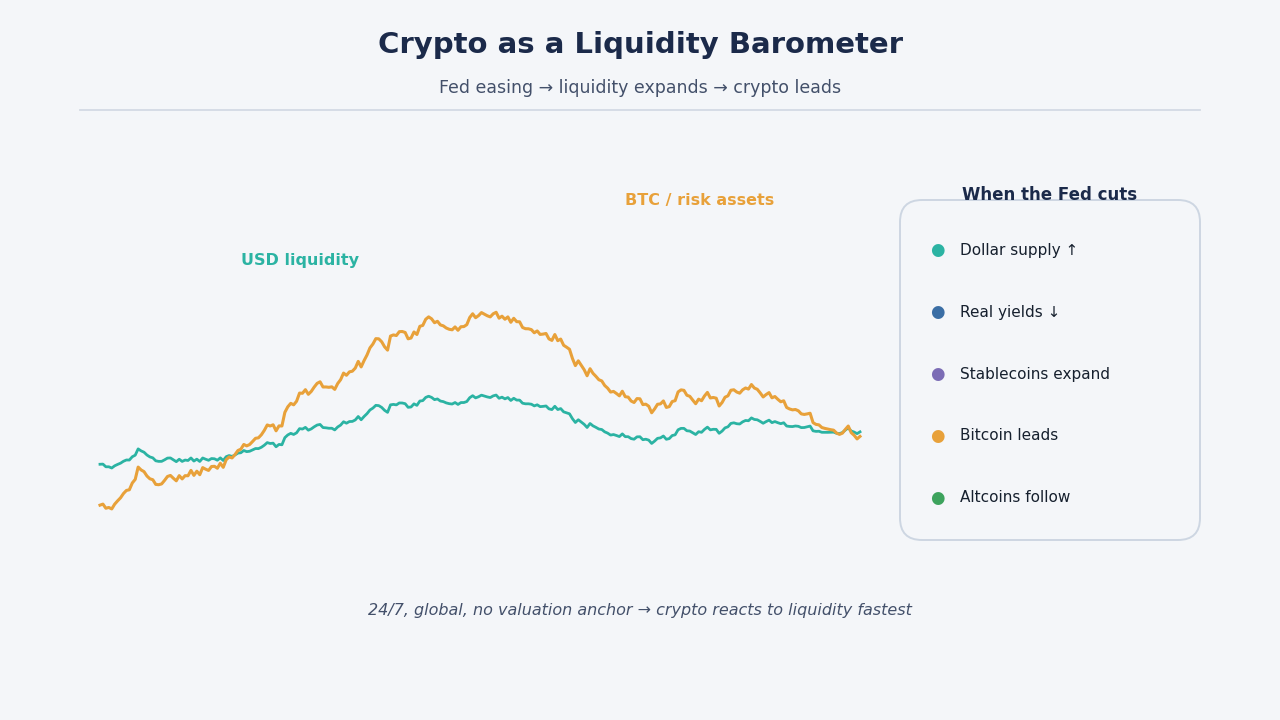
Kripto bukan hanya spekulatif — itu adalah barometer likuiditas.
Ketika Fed memotong:
- Pasokan dolar meningkat
- Imbal hasil riil turun
- Modal mengalir ke penyimpanan nilai alternatif
Bitcoin dan Ethereum secara historis berkinerja terbaik ketika:
Suku bunga riil turun dan likuiditas berkembang.
Siklus pemotongan suku bunga pada 2026 dapat memicu pasar bullish kripto besar lainnya.
Bagaimana AI SimianX Memodelkan Perubahan Kebijakan Fed
Berbeda dengan dasbor tradisional, SimianX AI menggunakan sistem multi-agen yang memantau:
- Data makro
- Aliran pasar obligasi
- Likuiditas on-chain
- Sentimen risiko
- Bahasa bank sentral
Para agen ini menghasilkan peringatan dini ketika:
- Probabilitas pemotongan suku bunga meningkat
- Rezim likuiditas berubah
- Aset berisiko memasuki fase akumulasi
Ini memungkinkan trader dan investor untuk memposisikan diri sebelum berita muncul.
SimianX AI mengubah kebijakan Fed menjadi intelijen pasar yang dapat ditindaklanjuti.
Cara Mempersiapkan Pemotongan Suku Bunga Fed pada 2026
Berikut adalah kerangka strategis:
- Pantau imbal hasil obligasi dan swap inflasi
- Lacak ekspansi likuiditas
- Perhatikan pemanjangan kurva imbal hasil
- Akumulasi aset berisiko secara bertahap
- Gunakan model risiko berbasis AI untuk menghindari sinyal palsu
Keuntungan terbesar tidak datang dari reaksi — tetapi dari antisipasi.
SimianX AI mengotomatiskan seluruh proses ini di pasar tradisional dan crypto.
Apa Saja Risiko Terbesar untuk Pemotongan Suku Bunga 2026?
Pasar bisa salah. Risiko kunci meliputi:
- Inflasi muncul kembali
- Guncangan geopolitik
- Gangguan rantai pasokan
- Dominasi fiskal yang memaksa tangan Fed
Namun, bahkan dalam skenario ini, dinamika utang membuat suku bunga tinggi jangka panjang tidak berkelanjutan.
FAQ Tentang Ekspektasi Pasar untuk Pemotongan Suku Bunga Fed pada 2026
Kapan Fed akan mulai memotong suku bunga pada 2026?
Pasar saat ini mengimplikasikan pemotongan dapat dimulai pada awal hingga pertengahan 2026 jika pertumbuhan melemah dan inflasi turun menuju target. Kurva futures dan swap memperbarui probabilitas ini setiap hari.
Sinyal apa yang memprediksi pemotongan suku bunga Fed?
Pemanjangan (steepening) kurva imbal hasil, penurunan ekspektasi inflasi, kenaikan pengangguran, dan pelebaran spread kredit adalah sinyal-sinyal terkuat.
Bagaimana pemotongan Fed akan mempengaruhi pasar crypto?
Suku bunga yang lebih rendah meningkatkan likuiditas, melemahkan dolar, dan meningkatkan selera risiko — secara historis bullish untuk Bitcoin dan aset digital.
Dapatkah AI memprediksi perubahan kebijakan Fed?
Sistem AI seperti SimianX menganalisis ribuan sinyal makro, pasar, dan likuiditas untuk mendeteksi pergeseran rezim lebih awal daripada model tradisional.
Apakah terlalu awal untuk mempersiapkan pemotongan suku bunga 2026?
Tidak. Penempatan terbaik terjadi 12–18 bulan sebelum perubahan kebijakan, bukan setelahnya.
Kesimpulan
Ekspektasi pasar untuk pemotongan suku bunga Fed pada 2026 bukanlah hype spekulatif — mereka didasarkan pada dinamika utang, tren inflasi, stres likuiditas, dan aliran modal global. Saat sistem makro mendekati pivot berikutnya, investor yang memahami sinyal-sinyal ini akan memiliki keuntungan yang kuat.
Dengan menggunakan SimianX AI, trader dan institusi dapat melacak pergeseran kebijakan Fed, rezim likuiditas, dan reaksi pasar aset secara real-time — mengubah ketidakpastian makro menjadi strategi yang terstruktur dan berbasis data.
Jelajahi masa depan intelijen makro hari ini dengan SimianX AI.
Federal Reserve adalah simpul pusat dari sistem dolar global. Pemotongan suku bunga pada 2026 akan menyebar melalui beberapa saluran yang terhubung erat:
| Saluran | Mekanisme | Dampak Pasar |
|---|---|---|
| Kebijakan suku bunga | Suku bunga semalam lebih rendah | Bank meningkatkan pinjaman |
| Pasar Treasury | Harga obligasi naik, imbal hasil turun | Modal bergerak keluar dari obligasi |
| Pendanaan dolar | USD melemah | Aset berisiko secara global naik |
| Repo & jaminan | Leverage lebih murah | Hedge fund mengambil risiko kembali |
| Neraca bank | Nilai aset pulih | Kredit berkembang |
Reaksi berantai ini berarti bahwa pivot Fed tidak hanya membantu saham AS — itu mengembalikan seluruh sistem keuangan global.
Pada 2026, mekanisme ini menjadi kritis karena leverage global jauh lebih tinggi dibandingkan siklus sebelumnya.
Leverage tinggi membuat pemotongan suku bunga menjadi jauh lebih kuat.
Inilah sebabnya mengapa pasar bereaksi sangat keras terhadap bahkan pergeseran kecil dalam ekspektasi Fed.
Dinding Utang yang Memaksa Tindakan Fed
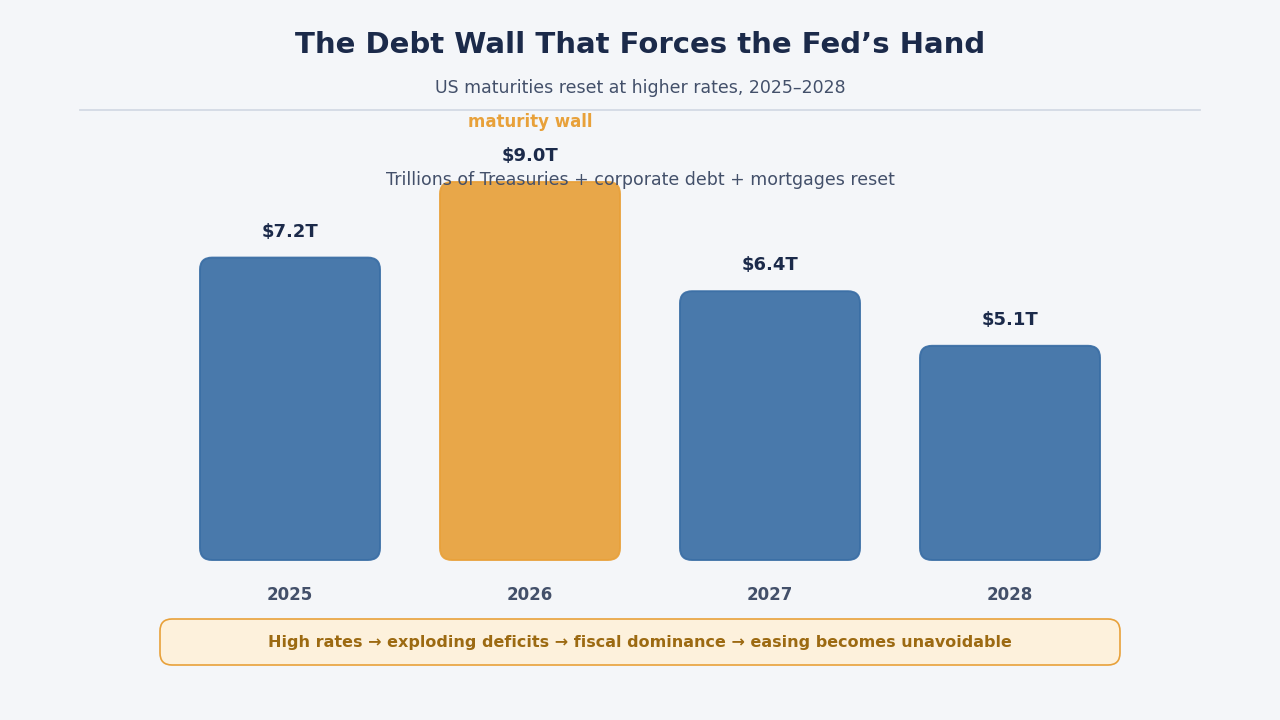
Salah satu pendorong struktural terkuat di balik ekspektasi pasar untuk pemotongan suku bunga Fed pada tahun 2026 adalah dinding jatuh tempo utang AS.
Antara 2025 dan 2028:
- Triliunan dolar Treasury AS jatuh tempo
- Utang korporasi harus dibiayai ulang
- Hipotek rumah disetel ulang
Jika suku bunga tetap tinggi:
- Pemerintah AS menghadapi defisit yang meledak
- Kebangkrutan korporasi meningkat
- Bank menghadapi peningkatan pinjaman bermasalah
Pada suatu titik, kebijakan moneter bertabrakan dengan realitas fiskal.
Ini dikenal sebagai dominasi fiskal — ketika bank sentral harus mendukung solvabilitas pemerintah.
Pada tahun 2026, dominasi fiskal menjadi tak terhindarkan.
Pasar tahu ini. Itulah sebabnya imbal hasil jangka panjang dan kurva swap sudah menyiratkan pelonggaran — bahkan jika inflasi tetap tidak nyaman.
Mengapa Pemotongan Suku Bunga Menciptakan Pergerakan Pasar Nonlinier
Sebuah wawasan kunci yang banyak diabaikan oleh para trader adalah bahwa pemotongan suku bunga tidak bersifat linier dalam efeknya.
Mereka memicu transisi fase dalam sistem keuangan.
Inilah sebabnya:
Ketika suku bunga turun sedikit, tidak ada yang berubah
Ketika mereka turun di bawah ambang batas, leverage menjadi menguntungkan lagi
Ketika likuiditas kembali, modal spekulatif meledak
Inilah sebabnya:
- Crypto menjadi parabolik
- Saham teknologi mengungguli
- Modal ventura bangkit kembali
- Pasar negara berkembang melonjak
Pivot Fed pada tahun 2026 dapat menghasilkan pasar bullish nonlinier, bukan yang bertahap.
SimianX AI memodelkan ini dengan mendeteksi perubahan rezim, bukan hanya tren.
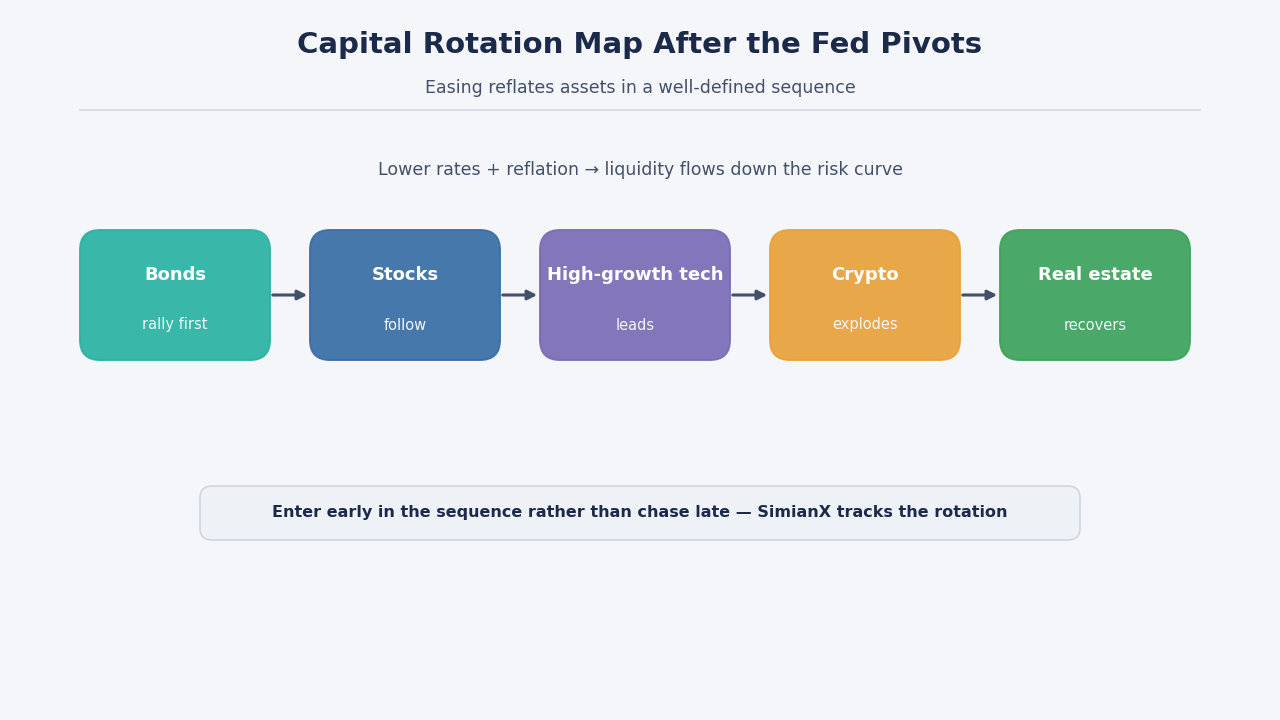
Peta Rotasi Modal Setelah Fed Berputar
Ketika pelonggaran dimulai, modal tidak mengalir secara acak. Itu mengikuti urutan yang terdefinisi dengan baik:
- Obligasi rally terlebih dahulu
- Saham mengikuti
- Teknologi pertumbuhan tinggi memimpin
- Crypto dan aset spekulatif meledak
- Real estat pulih
Pola ini telah diulang di berbagai siklus.
Memahami di mana kita berada dalam urutan itu sangat penting untuk pengembalian yang disesuaikan dengan risiko.
SimianX AI melacak rotasi ini menggunakan:
- Aliran sektor
- Penerbitan stablecoin on-chain
- Permukaan volatilitas ekuitas
- Indikator risiko makro
Ini memungkinkan trader untuk masuk lebih awal daripada mengejar terlambat.
Bagaimana Crypto Menjadi Perdagangan Fed-Pivot Tercepat
Crypto bereaksi lebih cepat terhadap likuiditas daripada kelas aset lainnya karena:
- Ini diperdagangkan 24/7
- Ini dapat diakses secara global
- Ini tidak memiliki jangkar valuasi
- Ini menyerap kelebihan modal dengan cepat
Ketika pasar percaya bahwa pemotongan suku bunga akan datang:
- Stablecoin berkembang
- Leverage meningkat
- Bitcoin memimpin
- Altcoin mengikuti
Pivot Fed 2026 dapat menghasilkan supercycle crypto yang mirip dengan 2020–2021, tetapi didorong oleh likuiditas global yang lebih banyak.
Deteksi Berbasis AI dari Titik Balik Fed
Keuntungan nyata bukanlah mengetahui bahwa pemotongan suku bunga akan terjadi — pasar sudah mengharapkannya.
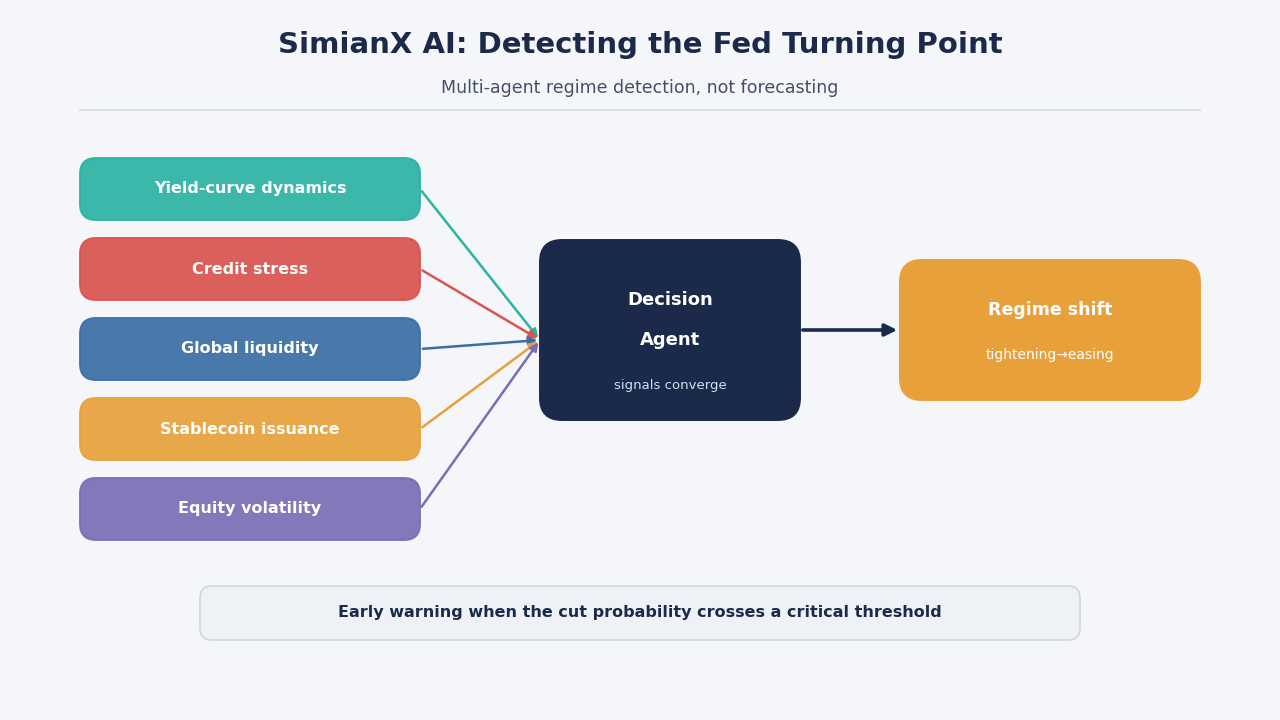
Keuntungannya adalah mengetahui kapan probabilitas melintasi ambang kritis.
Di sinilah SimianX AI memiliki kekuatan unik.
Sistem multi-agennya memantau:
- Dinamika kurva imbal hasil
- Stres pasar obligasi
- Aliran likuiditas global
- Penerbitan stablecoin crypto
- Rezim volatilitas ekuitas
Agen-agen ini menghasilkan peringatan dini ketika sistem makro beralih dari "pengetatan" ke "pelonggaran."
Ini bukan peramalan — ini adalah deteksi rezim.
Mengapa 2026 Kemungkinan Menjadi Siklus Keuangan Baru
Setiap pivot Fed besar mereset permainan ekonomi.
2026 sedang dibentuk untuk menjadi:
- Sebuah reset biaya utang
- Sebuah reset valuasi aset
- Sebuah reset aliran modal global
- Sebuah reset adopsi crypto
Pasar sudah memposisikan diri untuk ini — secara diam-diam, secara bertahap, melalui futures, obligasi, dan derivatif.
Pertanyaannya bukan apakah Fed akan memotong.
Pertanyaannya adalah siapa yang akan diposisikan sebelum itu terjadi.
Bagaimana SimianX Menggunakan Ekspektasi, Waktu, dan Dampak Ekonomi untuk Mengantisipasi Pivot Fed 2026
Sementara sebagian besar investor berbicara tentang pemotongan suku bunga Fed pada tahun 2026 dalam istilah abstrak, SimianX AI mengubah ekspektasi makro tersebut menjadi intelijen yang dapat diperdagangkan secara real-time dengan memecah masalah menjadi tiga lapisan: ekspektasi, waktu, dan dampak ekonomi — masing-masing dipantau oleh jaringan agen AI yang spesialis.
Mengubah Ekspektasi Pasar menjadi Sinyal yang Dapat Diukur
Pasar mengekspresikan ekspektasi untuk kebijakan Fed melalui ribuan indikator yang terfragmentasi: kurva imbal hasil, futures, aliran obligasi, premi risiko, dan bahkan likuiditas kripto. SimianX tidak bergantung pada satu model untuk menginterpretasikan ini. Sebaliknya, beberapa agen secara independen menganalisis berbagai lapisan pasar — makro, teknis, aliran berita, dan risiko — dan terus-menerus saling memvalidasi kesimpulan masing-masing.
Struktur multi-agen ini memungkinkan SimianX untuk mendeteksi kapan probabilitas pemotongan Fed 2026 melewati ambang batas kritis, bahkan sebelum menjadi jelas dalam berita utama. Saat ekspektasi bergeser, SimianX memperbarui lapisan intelijensinya secara real-time, memastikan pengguna melihat tidak hanya apa yang diyakini pasar, tetapi seberapa kuat dan seberapa konsisten keyakinan tersebut.
Menentukan Waktu Perubahan Fed dengan Deteksi Perubahan Rezim
Bagian tersulit bukanlah mengetahui bahwa suku bunga akan dipotong — tetapi mengetahui kapan sistem bertransisi dari pengetatan ke pelonggaran. SimianX dirancang khusus untuk masalah ini. Ia terus-menerus memantau:
- Dinamika kurva imbal hasil
- Stres kredit
- Kondisi likuiditas
- Volatilitas pasar
- Ekspansi stablecoin on-chain
Ketika sinyal-sinyal independen ini berkumpul, Agen Keputusan SimianX mengenali perubahan rezim makro — momen ketika pemotongan Fed di masa depan menjadi dapat ditindaklanjuti daripada hipotetis. Ini memungkinkan trader dan investor untuk memposisikan diri sebelum perubahan 2026, alih-alih bereaksi setelah harga aset telah bergerak.
Memodelkan Dampak Ekonomi dan Pasar
Pemotongan suku bunga Fed tidak mempengaruhi semua aset secara merata. SimianX memodelkan bagaimana pelonggaran akan menyebar melalui:
- Saham (rotasi pertumbuhan vs. nilai)
- Bonds (kompresi imbal hasil dan keuntungan modal)
- Crypto (percepatan yang didorong oleh likuiditas)
- Selera risiko dan leverage
Dengan menggabungkan Indikator Agen, Agen Intelijen, dan Agen Keputusan, SimianX menerjemahkan pelonggaran makro menjadi konsekuensi pasar yang jelas — membantu pengguna memahami tidak hanya bahwa pemotongan 2026 akan datang, tetapi aset mana yang akan mendapatkan manfaat pertama, mana yang kemudian, dan di mana risiko terkumpul.
Dari Ekspektasi Makro ke Strategi yang Dapat Dilaksanakan
Apa yang membuat SimianX kuat adalah bahwa ia tidak memperlakukan pemotongan suku bunga Fed 2026 sebagai satu peristiwa. Ia memperlakukannya sebagai pergeseran bertahap dalam rezim likuiditas global — yang terungkap selama berbulan-bulan melalui obligasi, mata uang, ekuitas, dan crypto.
Dengan mengubah ekspektasi, waktu, dan dampak ekonomi menjadi sinyal yang diperbarui terus-menerus yang didorong oleh AI, SimianX memberikan keuntungan struktural kepada trader dan investor dalam menavigasi siklus moneter berikutnya — jauh sebelum Fed secara resmi mengumumkannya.
Bacaan Terkait
- Buku Panduan Rotasi Sektor S&P 500 dengan Sinyal AI
- S&P 500 ke 7000: Sinyal Momentum, Likuiditas & Valuasi
- CPI AS vs Kripto: Swing 5% Harian & Playbook Rate Bet
- Bitcoin Setelah Setiap Pemangkasan Fed: Referensi 2019-2026
- Nasdaq 100 Pulse Likuiditas: Imbal Hasil, Spread, Revisi
- Dashboard Risiko Saham AS: Sinyal AI Breadth & Spreads
- Walmart & Target 2026: Sinyal Stres Konsumen AS Terurai
- SimianX Crypto Leaderboard