
Dữ Liệu Thực Thời Gian + Phân Tích AI: Tại Sao Các Báo Giá Trễ 5 Phút Có Thể Làm Bạn Mất Tiền
Giới Thiệu: Cuộc Đua Tốc Độ Trong Các Thị Trường Hiện Đại
Các thị trường tài chính không còn là nơi chỉ có người nhanh mới có lợi thế; chúng đã trở thành một hệ sinh thái mà tốc độ là yếu tố quyết định sự sống còn và khả năng sinh lời. Trong đấu trường kỹ thuật số này, các nhà giao dịch và thuật toán chiến đấu giành lấy lợi thế tính bằng mili-giây, nơi thông tin không chỉ là sức mạnh—mà là tiền tệ. Trong suốt nhiều thập kỷ, các nhà đầu tư bán lẻ đã phải dựa vào dữ liệu cổ phiếu bị trì hoãn, thường là 15 hoặc 20 phút sau thời gian thực, với nhiều nền tảng hiện đại cung cấp một “thỏa hiệp” với sự trì hoãn 5 phút. Điều này trước đây được coi là đủ để đưa ra quyết định sáng suốt. Tuy nhiên, sự xuất hiện của Trí Tuệ Nhân Tạo (AI) và giao dịch thuật toán tiên tiến đã thay đổi hoàn toàn phép tính này.
Bài viết này đi sâu vào một điểm yếu quan trọng và thường bị đánh giá thấp: sự kết hợp giữa phân tích AI mạnh mẽ và dữ liệu thị trường bị trì hoãn. Đây là một nghịch lý trong đầu tư hiện đại: sử dụng công cụ có khả năng phân tích ở cấp độ mili-giây nhưng lại cung cấp cho nó thông tin đã cũ vài phút. Chúng ta sẽ khám phá cách mà độ trễ này tạo ra một sự chậm trễ nguy hiểm trong vòng lặp ra quyết định, dẫn đến việc bỏ lỡ cơ hội, thực hiện giao dịch với mức giá kém và phơi bày rủi ro không thể thấy trước. Luận điểm chính rất đơn giản: Trong thời đại AI, các báo giá trễ 5 phút không chỉ là sự bất tiện nhỏ; chúng là một trách nhiệm tài chính trực tiếp và có thể đo lường được. Việc kết hợp một động cơ AI hiện đại với dữ liệu trễ giống như việc đưa một tay đua xe vô địch vào một trận tắc đường—kỹ năng của họ gần như trở nên vô dụng vì các ràng buộc của môi trường.
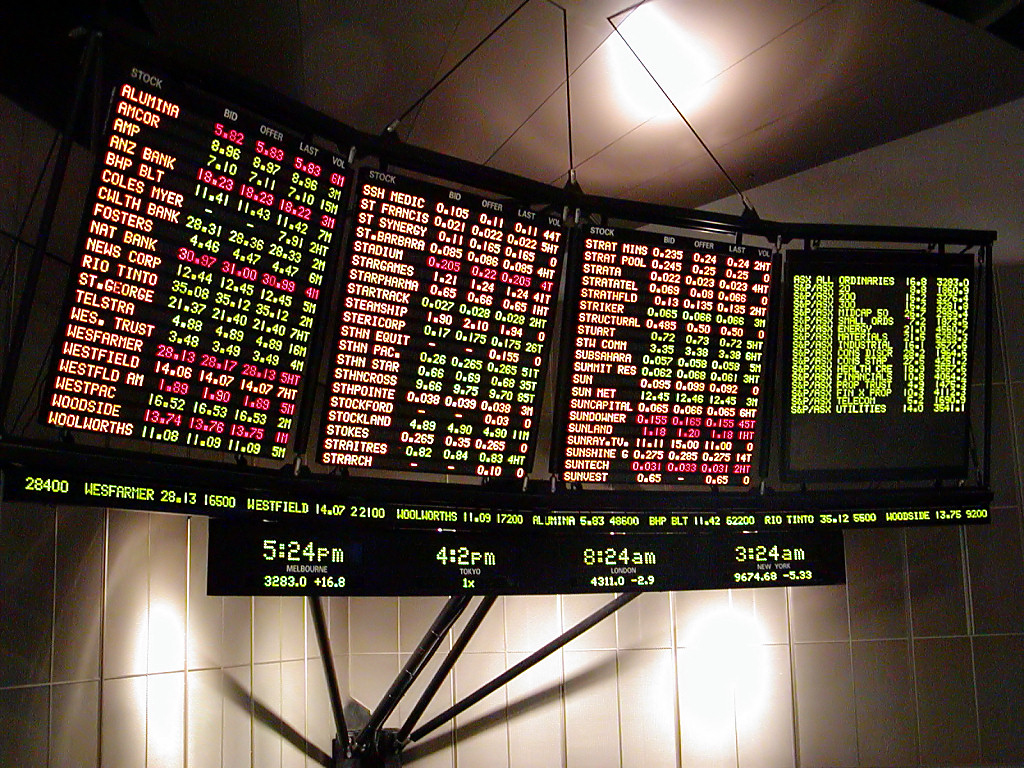
Mục 1: Cấu Trúc Dữ Liệu Thị Trường - Thực Thời Gian So Với Trì Hoãn
Để hiểu được rủi ro, trước tiên ta phải hiểu bản chất của các luồng dữ liệu thị trường.
Dữ liệu Thời gian Thực là gì?
Dữ liệu thời gian thực là một luồng thông tin trực tiếp từ các sàn giao dịch chứng khoán (ví dụ, NYSE, NASDAQ) cung cấp các cập nhật ngay lập tức về từng sự kiện trên thị trường. Điều này bao gồm:
- Cập nhật Báo giá: Mỗi thay đổi trong giá Mua và Giá Bán.
- Thực hiện Giao dịch: Mỗi cổ phiếu được giao dịch, với giá và khối lượng chính xác của nó, ngay tại thời điểm đó.
- Sách Lệnh (Dữ liệu Cấp II): Danh sách đầy đủ các lệnh mua và bán tại các mức giá khác nhau, thể hiện tính thanh khoản và xu hướng tiềm năng của thị trường.
Dòng dữ liệu này là liên tục và không gián đoạn, cung cấp một cái nhìn trực tiếp, từng bước một về nhịp đập của thị trường. Truy cập vào dữ liệu này thường yêu cầu một khoản phí đăng ký trả cho sàn giao dịch hoặc nhà cung cấp dữ liệu, vì vậy nhiều nền tảng giao dịch "miễn phí" không cung cấp dữ liệu này.
Dữ liệu Chậm là gì?
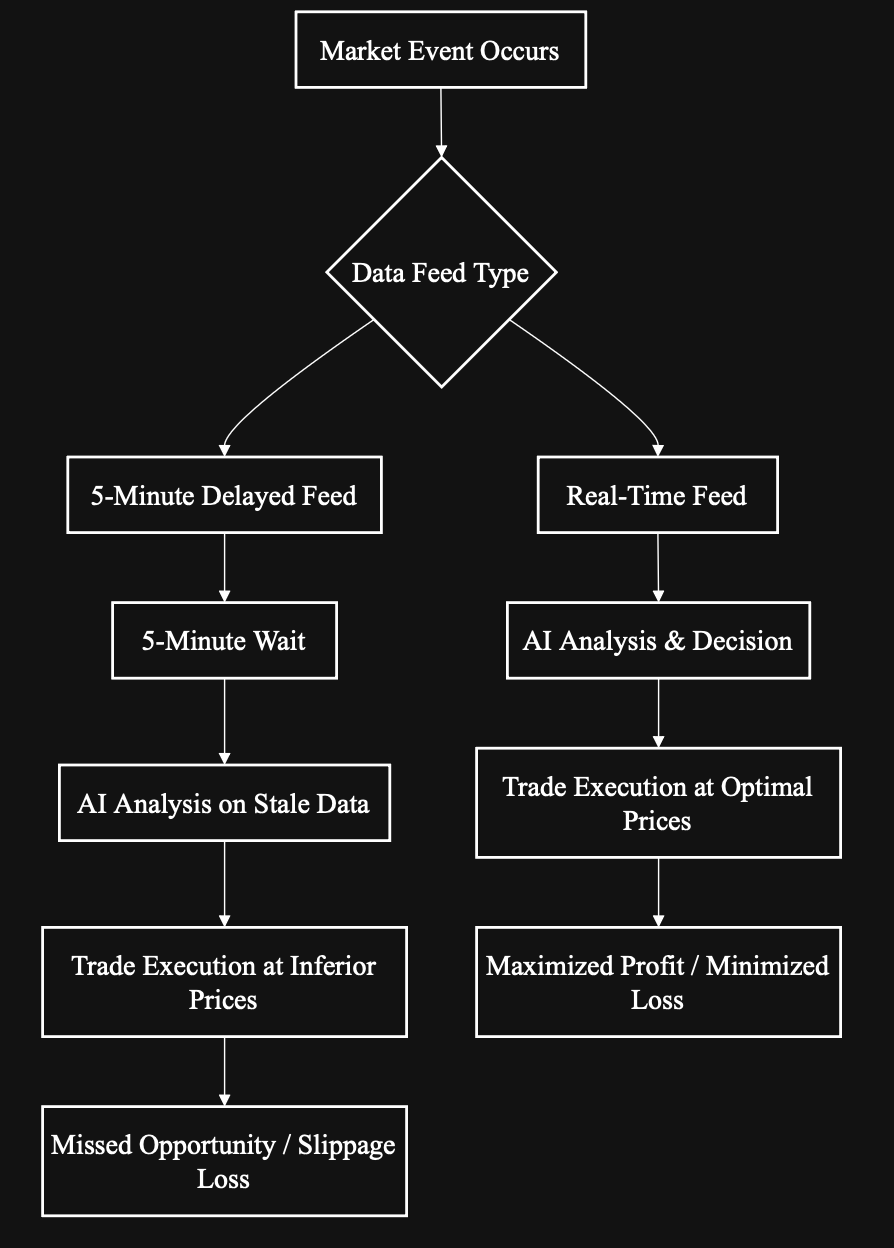
Dữ liệu chậm chính xác là những gì bạn nghĩ: một bức tranh về thị trường từ một thời điểm trong quá khứ. Cụm từ "báo giá chậm 5 phút" có nghĩa là giá bạn thấy trên màn hình thực sự đã xảy ra cách đây năm phút. Sự chậm trễ này là một nhượng bộ theo quy định cho phép các nhà môi giới cung cấp dữ liệu thị trường với chi phí thấp hơn (hoặc miễn phí) cho các nhà đầu tư bán lẻ. Mặc dù có vẻ nhỏ, nhưng trong bối cảnh các thị trường điện tử hiện đại, năm phút là một khoảng thời gian rất dài.
Mục 2: Động cơ AI - Tại sao nó cần nhiên liệu Thời gian Thực
Trí tuệ nhân tạo, đặc biệt dưới dạng học máy và xử lý ngôn ngữ tự nhiên, đã cách mạng hóa nghiên cứu chứng khoán. Những lợi thế của nó, như đã được nêu trong bài viết tham khảo, là vô cùng lớn. Tuy nhiên, những lợi thế này hoàn toàn phụ thuộc vào chất lượng và tính kịp thời của dữ liệu mà nó xử lý.
- Nhận diện Mẫu với Tốc độ Ánh sáng
AI algorithms được thiết kế để nhận diện các mẫu phức tạp, phi tuyến tính qua hàng nghìn biến số. Chúng có thể phát hiện sự tương quan tinh tế giữa một tiêu đề tin tức, một sự thay đổi nhẹ trong khối lượng quyền chọn và một sự thay đổi trong áp lực sổ lệnh, dự đoán sự di chuyển giá trong ngắn hạn. Tuy nhiên, mẫu này có một yếu tố thời gian. Tín hiệu dự báo có thể chỉ hợp lệ trong vài giây hoặc phút. Khi một nguồn cấp dữ liệu bị trì hoãn truyền tải thông tin, mẫu này đã được thực thi, và AI thực sự đang phân tích lịch sử, không phải dự đoán tương lai.
- Phân Tích Tâm Lý Trong Nháy Mắt
Một sức mạnh cốt lõi của AI là thực hiện phân tích tâm lý trên hàng nghìn bài báo, bài đăng mạng xã hội và bản ghi cuộc gọi thu nhập trong thời gian thực. Hãy tưởng tượng một AI phát hiện được cảm xúc tiêu cực rõ rệt từ giọng điệu của CEO trong một cuộc gọi thu nhập vừa kết thúc. Trong một hệ thống thời gian thực, điều này có thể kích hoạt một phân tích và một tín hiệu bán tiềm năng trong vài giây. Với sự trì hoãn 5 phút, thị trường đã hấp thụ thông tin này, giá cổ phiếu có thể đã giảm, và "nhận định" của AI giờ đây trở thành một sự thật đã được biết đến rộng rãi, không còn mang lại lợi thế.
- Phân Tích Dự Báo và Mô Hình Kịch Bản
Các hệ thống AI chạy hàng nghìn mô phỏng để phân tích kịch bản và kiểm tra căng thẳng. Một AI thời gian thực có thể liên tục chạy lại những mô phỏng này khi dữ liệu mới được cập nhật, liên tục cập nhật dự báo xác suất về hướng đi của một cổ phiếu. AI sử dụng dữ liệu trì hoãn bị mắc kẹt trong việc chạy mô phỏng trên một trạng thái thị trường đã cũ. Những "dự đoán" của nó dựa trên một thực tế không còn tồn tại, khiến các kết quả của nó vốn dĩ không đáng tin cậy và có thể gây hiểu lầm nguy hiểm.
Phần 3: Chi Phí Cụ Thể Của Việc Trì Hoãn 5 Phút Trong Một Thế Giới Dẫn Dắt Bởi AI
Các rủi ro lý thuyết chuyển thành những tổn thất tài chính cụ thể. Dưới đây là cách mà một sự trì hoãn 5 phút có thể trực tiếp khiến bạn mất tiền khi kết hợp với công cụ AI.
- Điểm vào và ra bị bỏ lỡ (Slippage)
Đây là chi phí trực tiếp nhất. Thuật toán AI của bạn, dựa trên phân tích dữ liệu theo thời gian thực, có thể xác định một điểm mua hoàn hảo khi cổ phiếu đạt $100.00 với khối lượng giao dịch mạnh. Nhưng với sự trì hoãn 5 phút:
- Phút 0: Cổ phiếu đạt $100.00, kích hoạt tín hiệu mua của AI bên trong.
- Phút 1-4: Cổ phiếu, do ảnh hưởng của các người tham gia giao dịch theo thời gian thực khác, tăng lên $101.50.
- Phút 5: Bạn nhìn thấy tín hiệu kích hoạt ở mức $100.00, nhưng bạn đặt lệnh mua thị trường với giá hiện tại, là $101.50.
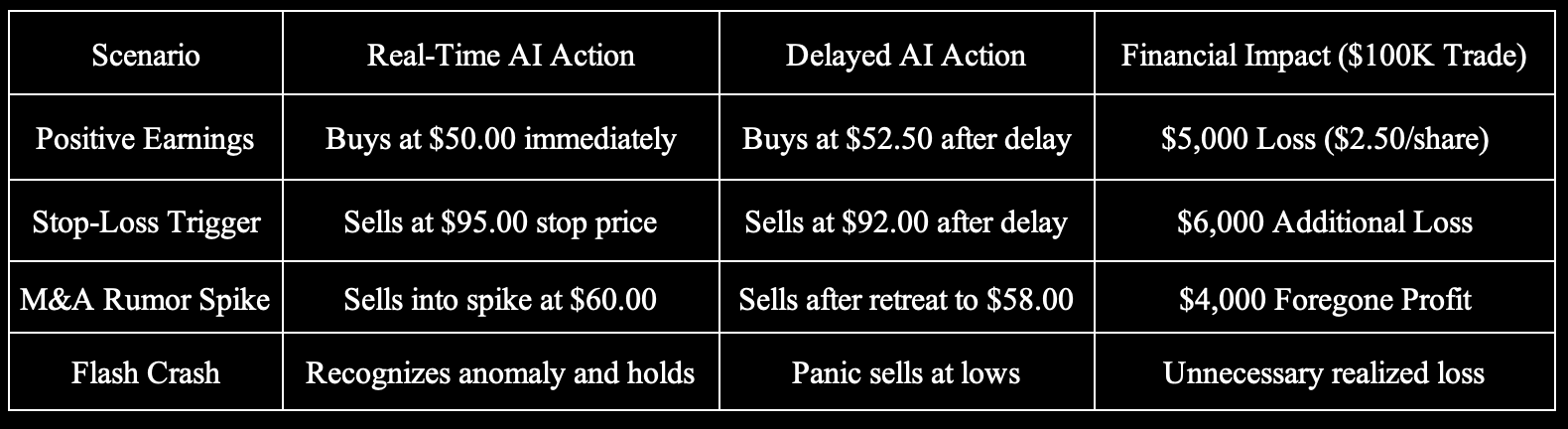
Bạn ngay lập tức chịu tổn thất $1.50 mỗi cổ phiếu do slippage. Logic tương tự áp dụng cho các lệnh dừng lỗ. AI của bạn có thể báo hiệu bán nếu cổ phiếu giảm xuống dưới $95.00 để quản lý rủi ro. Với sự trì hoãn, bạn có thể chỉ phát hiện ra sự giảm giá sau khi cổ phiếu đã rớt xuống $92.00, gây ra một tổn thất lớn hơn.
- Ảo tưởng về Cơ hội (Tín hiệu sai)
Một feed bị trì hoãn có thể cung cấp những "cơ hội" thực chất là những cái bẫy. Một cổ phiếu có thể thể hiện một đột biến tăng mạnh bất ngờ trong feed bị trì hoãn, khiến AI của bạn đánh dấu đó là một đột phá tiềm năng. Thực tế, đột biến đó đã xảy ra cách đây năm phút, và cổ phiếu đã đảo chiều và đang giảm mạnh. Hành động dựa trên tín hiệu trì hoãn này có nghĩa là bạn đang mua ở đỉnh của một xu hướng đã kết thúc.
- Chiến lược Arbitrage và Mean Reversion không hiệu quả
Nhiều chiến lược dựa trên AI dựa vào arbitrage thống kê hoặc mean reversion, tận dụng những sự sai lệch giá nhỏ giữa các tài sản có liên quan (ví dụ: một ETF và các cổ phiếu cơ sở của nó). Những sai lệch này thường chỉ tồn tại trong vài giây. Một sự trì hoãn 5 phút đảm bảo rằng bạn sẽ luôn đến muộn để tận dụng lợi thế này. "Alpha" (lợi nhuận vượt trội) mà AI của bạn đã xác định đã bị các công ty sử dụng dữ liệu thời gian thực tận dụng từ lâu.
- Tăng khả năng dễ bị tổn thương với tin tức và sự kiện
Thông báo từ các công ty, dữ liệu kinh tế và các tuyên bố từ Fed có thể làm thị trường biến động mạnh chỉ trong vài giây. Một AI với dữ liệu chứng khoán theo thời gian thực có thể phân tích tin tức và thực hiện giao dịch ngay khi thông tin vừa đến. Một AI với dữ liệu trễ sẽ mù mờ trước động thái ban đầu. Khi nó nhận được dữ liệu, sự điều chỉnh giá lớn đã xảy ra, và bạn chỉ còn phản ứng với hậu quả thay vì dự đoán hay tham gia vào động thái ban đầu.
Tác Động Số Học Của Độ Trễ Dữ Liệu Đến Một Giao Dịch Giả Thuyết $100,000
Phần 4: Giải Pháp - Tích Hợp AI Với Dữ Liệu Thực Thời Gian Chính Xác
Giải pháp không phải là từ bỏ AI mà là trao quyền cho nó với dữ liệu mà nó xứng đáng nhận được. Mục tiêu là tạo ra một vòng quyết định liền mạch và tần suất cao.
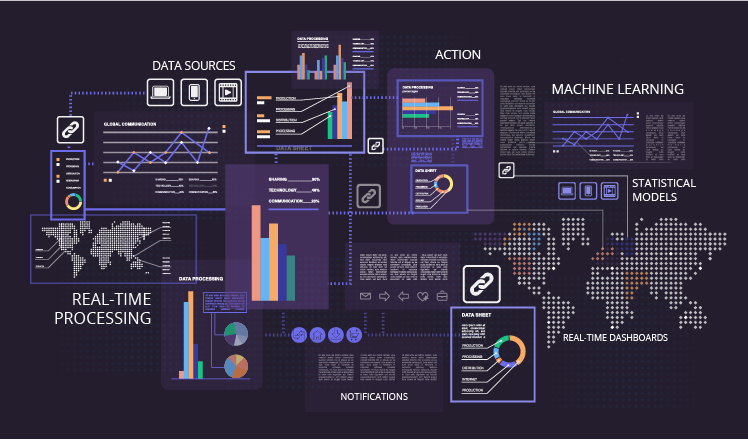
Kiến Trúc Hệ Thống Giao Dịch AI Tối Ưu
- Lớp Tiếp Nhận Dữ Liệu: Một đường truyền trực tiếp, độ trễ thấp từ các sàn giao dịch lớn và các API tin tức. Đây là nền tảng.
- Lõi Xử Lý AI: Động cơ AI (ví dụ, nhận dạng mô hình, phân tích cảm xúc, mô hình dự đoán) phải được tối ưu hóa cho tốc độ, xử lý từng tick dữ liệu mới khi nó đến.
- Lớp Quyết Định & Thực Thi: Hệ thống tạo ra tín hiệu (ví dụ, mua, bán, giữ) và, nếu hoàn toàn tự động, chuyển tín hiệu đến API của sàn môi giới để thực hiện ngay lập tức.
Công Cụ Dành Cho Nhà Đầu Tư
- Dành Cho Nhà Đầu Tư Chuyên Nghiệp: Xây dựng hoặc cấp phép các nền tảng tùy chỉnh tích hợp với các nhà cung cấp dữ liệu tổ chức như Bloomberg, Refinitiv, hoặc các đường truyền dữ liệu độ trễ thấp chuyên biệt.
- Dành Cho Nhà Đầu Tư Bán Lẻ Năng Động: Một số nền tảng và công cụ AI với dữ liệu thị trường trực tiếp đang ngày càng trở nên dễ tiếp cận. Các nền tảng này bao gồm:
- Các nền tảng vẽ đồ thị nâng cao (ví dụ, TradingView, Thinkorswim) cung cấp dịch vụ đăng ký dữ liệu thời gian thực.
- Các công ty môi giới API-first (ví dụ: Alpaca, Interactive Brokers) cho phép bạn kết nối các mô hình AI của riêng bạn với một nguồn cấp dữ liệu thời gian thực và tài khoản giao dịch.
- Các dịch vụ phân tích giao dịch AI thời gian thực chuyên biệt cung cấp các phân tích AI đã được đóng gói sẵn trên dữ liệu trực tiếp.
Phần 5: Tương Lai Là Thời Gian Thực và Thích Ứng
Định hướng của thị trường là rõ ràng. Việc sử dụng AI sẽ trở nên phổ biến hơn, và giá trị của tốc độ sẽ chỉ gia tăng. Tương lai chỉ ra rằng:
- Tác nhân AI Siêu Cá Nhân Hóa: AI không chỉ phân tích thị trường mà còn hiểu được mức độ chấp nhận rủi ro và mục tiêu danh mục đầu tư của bạn, thực hiện điều chỉnh thời gian thực.
- Dữ Liệu Thay Thế Thời Gian Thực: Việc tích hợp hình ảnh vệ tinh trực tiếp, cảm xúc trên mạng xã hội và dữ liệu giao dịch thẻ tín dụng sẽ trở thành tiêu chuẩn, yêu cầu xử lý thời gian thực để hiệu quả.
- Dân Chủ Hóa Công Cụ: Rào cản gia nhập dữ liệu cổ phiếu thời gian thực AI sẽ tiếp tục giảm, khiến nó trở thành điều cần thiết cho tất cả các nhà đầu tư nghiêm túc, không chỉ những chuyên gia.
Kết Luận: Đừng Trung Lập Lợi Thế Lớn Nhất Của Bạn
Sử dụng hệ thống nghiên cứu và giao dịch AI mà không có nguồn cấp dữ liệu thời gian thực là sự phân bổ tài nguyên sai lầm cơ bản. Bạn đang đầu tư vào một động cơ mạnh mẽ nhưng lại buộc nó vào một chiếc neo. Rủi ro dữ liệu cổ phiếu trễ không phải là giả thuyết; chúng có thể đo lường được, tái diễn và đáng kể. Chúng thể hiện dưới dạng sự trượt giá liên tục, lỡ mất lợi nhuận và thua lỗ lớn hơn.
Những thông tin giao dịch AI theo thời gian thực có thể cung cấp cho bạn lợi thế cạnh tranh lại bị chuyển thành các phân tích hậu sự lịch sử. Trong môi trường tài chính hiện đại, nơi mọi thứ đều bị thúc đẩy bởi hiệu quả, bạn không thể để mình bị tụt lại năm phút. Để thực sự khai thác sức mạnh của trí tuệ nhân tạo cho nghiên cứu và giao dịch chứng khoán, bạn phải cung cấp cho nó điều duy nhất tương xứng với tiềm năng của nó: dữ liệu thị trường theo thời gian thực, ngay lập tức. Nâng cấp dữ liệu của bạn, và bạn sẽ mở khóa được sức mạnh thực sự của AI.