 By Muke
Why Is AI Spending Still Surging? TSMC Outlook Signals Nvidia Demand
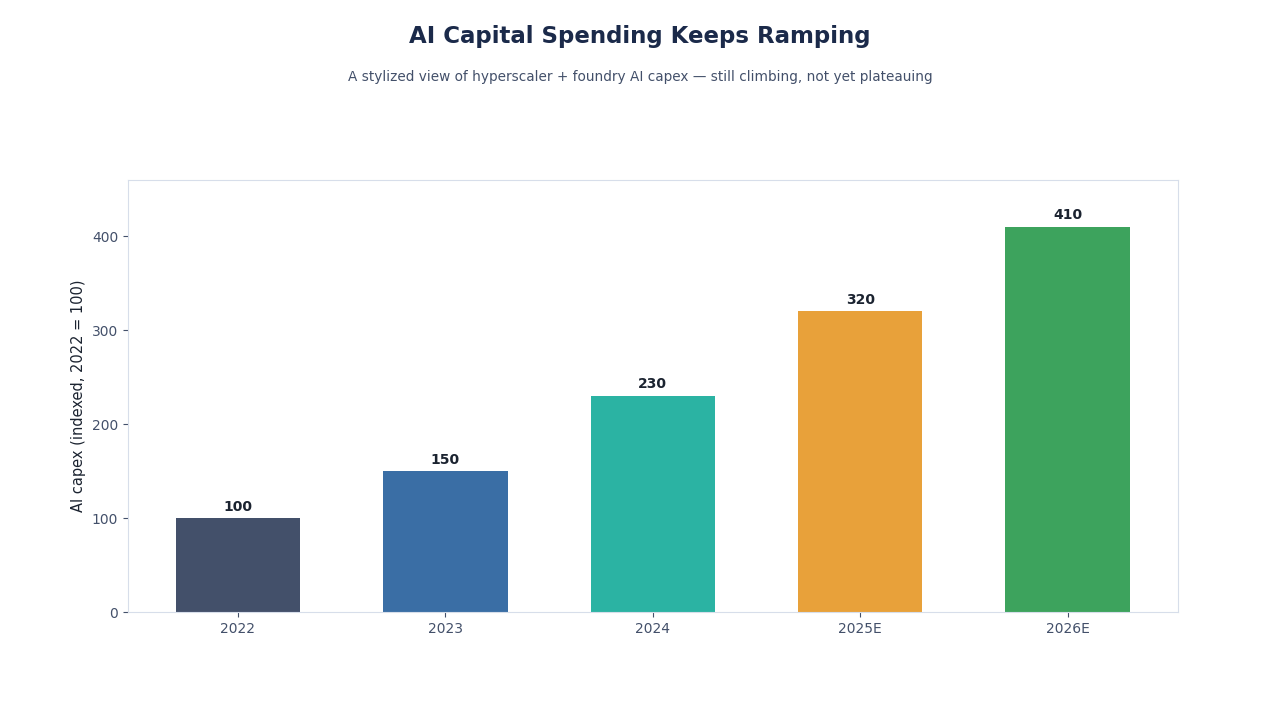
The question “why is AI spending still surging” has become one of the most important themes in global markets today. With TSMC raising its outlook and explicitly signaling extremely strong AI-related demand, investors are once again reassessing the durability of the AI boom—especially demand for Nvidia chips.
In this environment, platforms like SimianX AI are becoming increasingly relevant. By combining macro signals, semiconductor data, and real-time market intelligence, SimianX AI helps traders and investors interpret whether this AI spending cycle is accelerating—or nearing a peak.
The Core Signal: TSMC’s Outlook Is a Leading Indicator
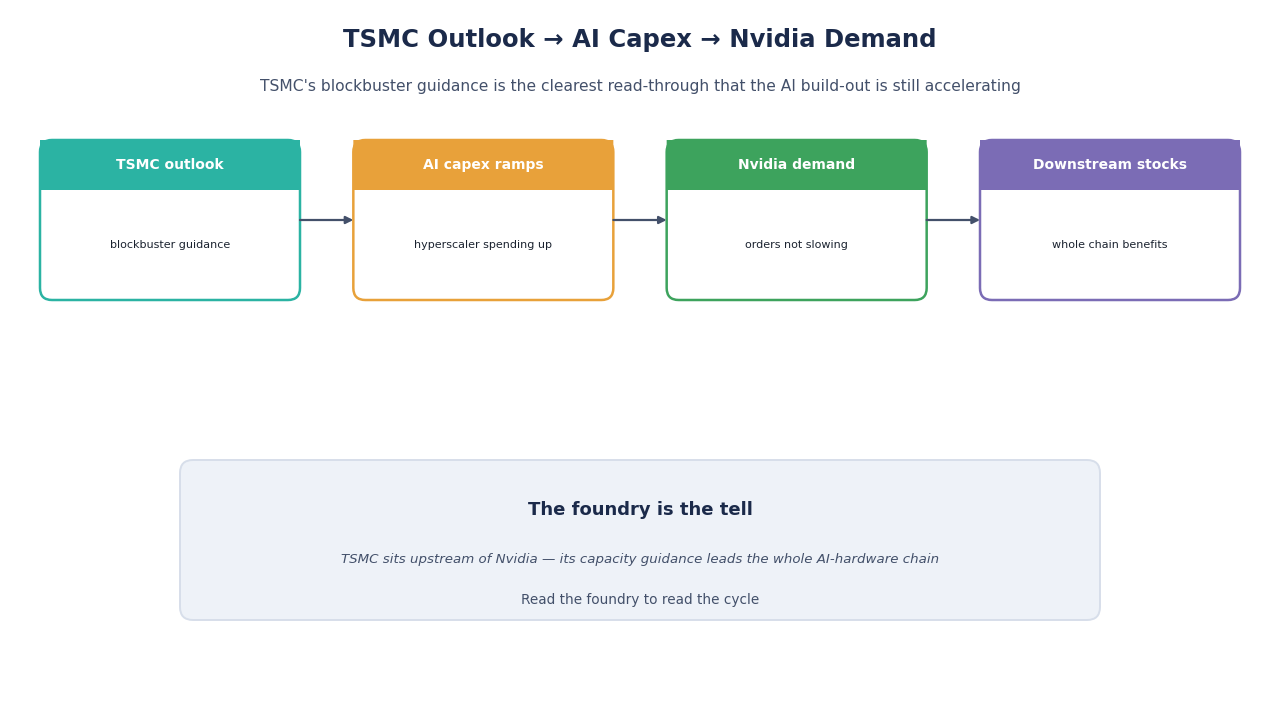
When TSMC raises its revenue guidance and capital expenditure, it’s not just a company-level story—it’s a global signal about AI infrastructure demand.
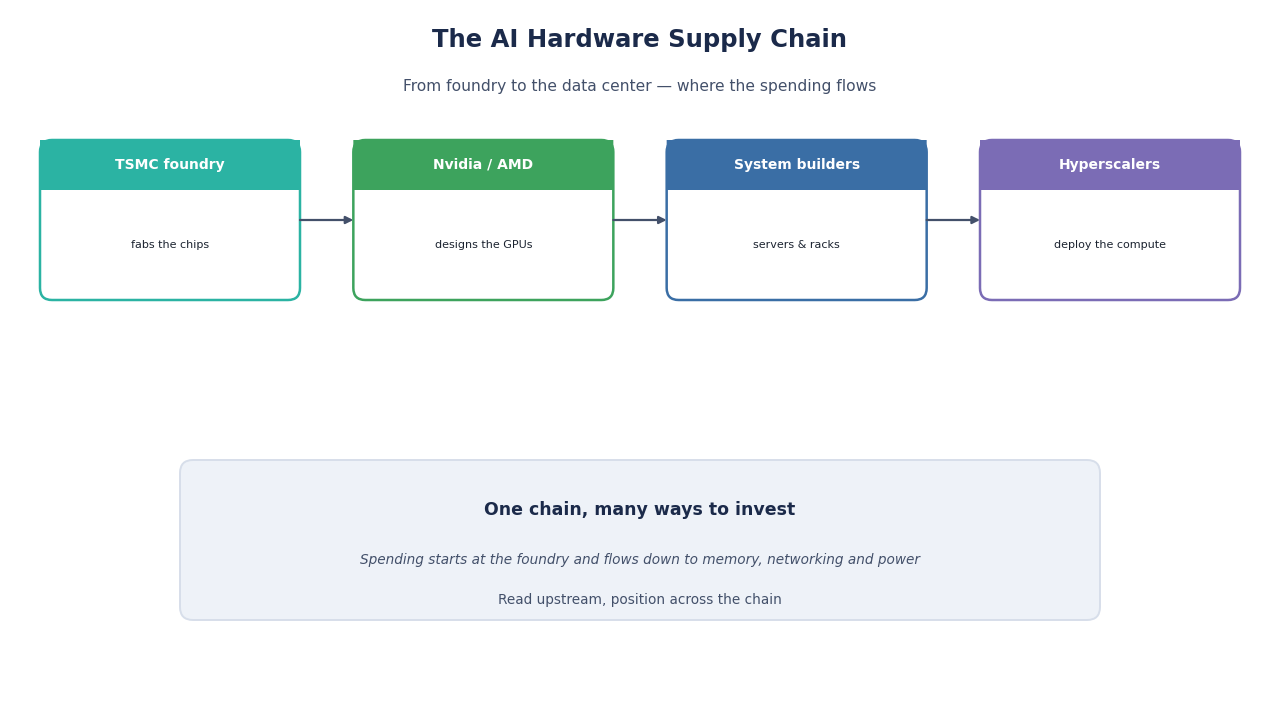
TSMC sits at the center of the AI ecosystem:
- It manufactures chips for Nvidia, AMD, and major hyperscalers
- It has visibility into future orders months ahead
- It reflects real demand, not speculative sentiment
When TSMC says AI demand is “extremely strong,” it’s effectively confirming that hyperscalers are still aggressively investing.
Key takeaway: The AI boom is not slowing—it is still in an expansion phase.
What TSMC’s Data Really Tells Us
| Signal | Interpretation |
|---|---|
| Raised revenue outlook | Strong forward orders |
| Increased capex | Confidence in sustained demand |
| AI demand emphasized | Structural, not cyclical growth |
Why Is AI Spending Still Surging? Key Drivers Explained
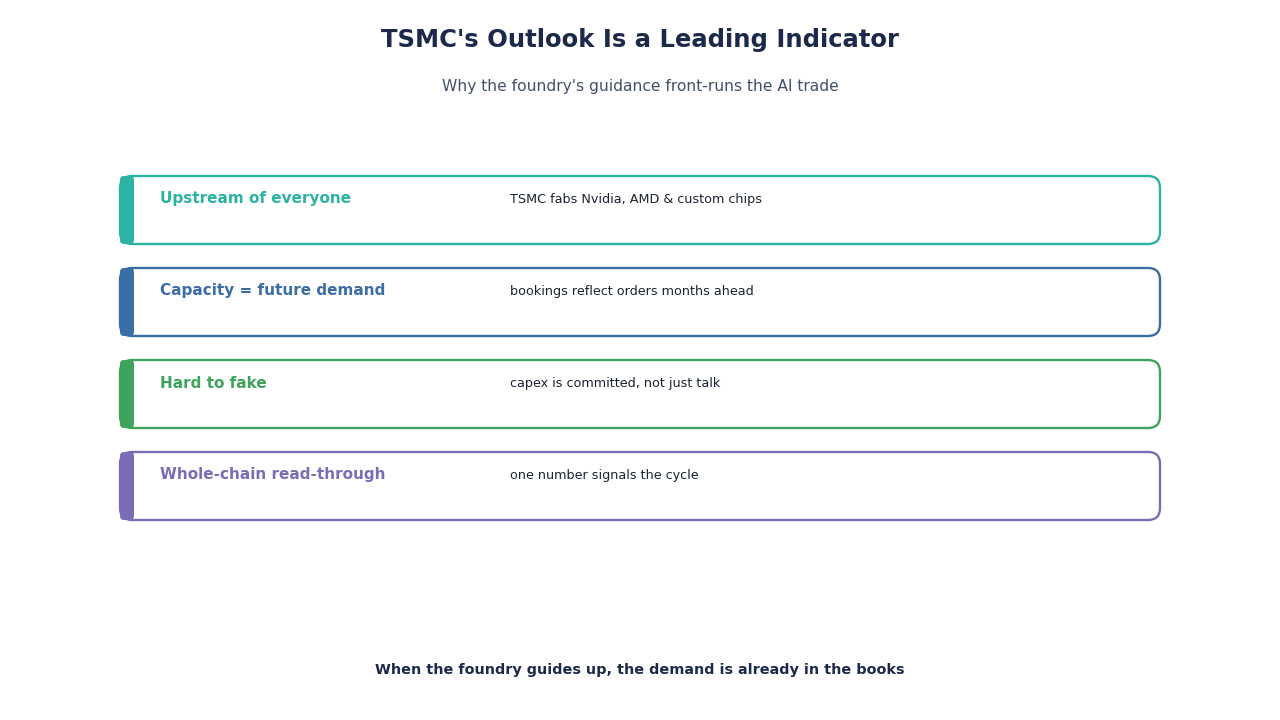
1. Hyperscaler Arms Race
Cloud giants like Amazon, Microsoft, and Google are locked in an AI infrastructure race.
- Massive GPU cluster deployments
- Data center expansion globally
- Proprietary model development (LLMs, multimodal AI)
This creates persistent demand for Nvidia GPUs, which directly feeds into TSMC’s production pipeline.
2. Enterprise AI Adoption Is Just Beginning
While consumer AI (ChatGPT, copilots) gets attention, the real spending wave is:
- Enterprise automation
- AI-driven analytics
- Industry-specific AI models
This phase is still early, meaning spending has a long runway.
3. Model Scaling Still Requires More Compute
AI models are becoming:
- Larger (trillions of parameters)
- More complex (multimodal, real-time)
- More expensive to train and run
This leads to exponential demand for chips, not linear.
AI demand is compute-driven. As long as models scale, chip demand grows.
4. Supply Constraints Keep Prices High
Even with increased production:
- Advanced nodes (e.g., 3nm, 5nm) are limited
- Nvidia’s GPUs remain supply-constrained
- Lead times are still long
This creates a high-margin environment, reinforcing spending incentives.
What This Means for Nvidia Demand
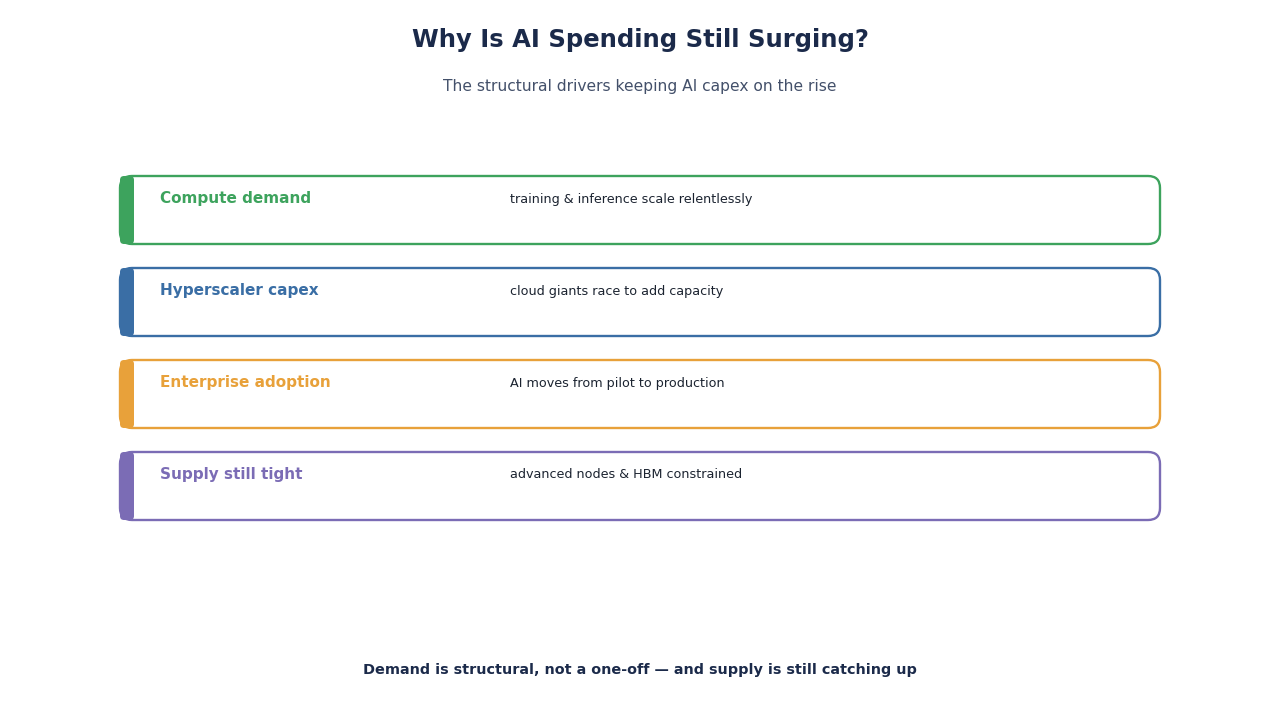
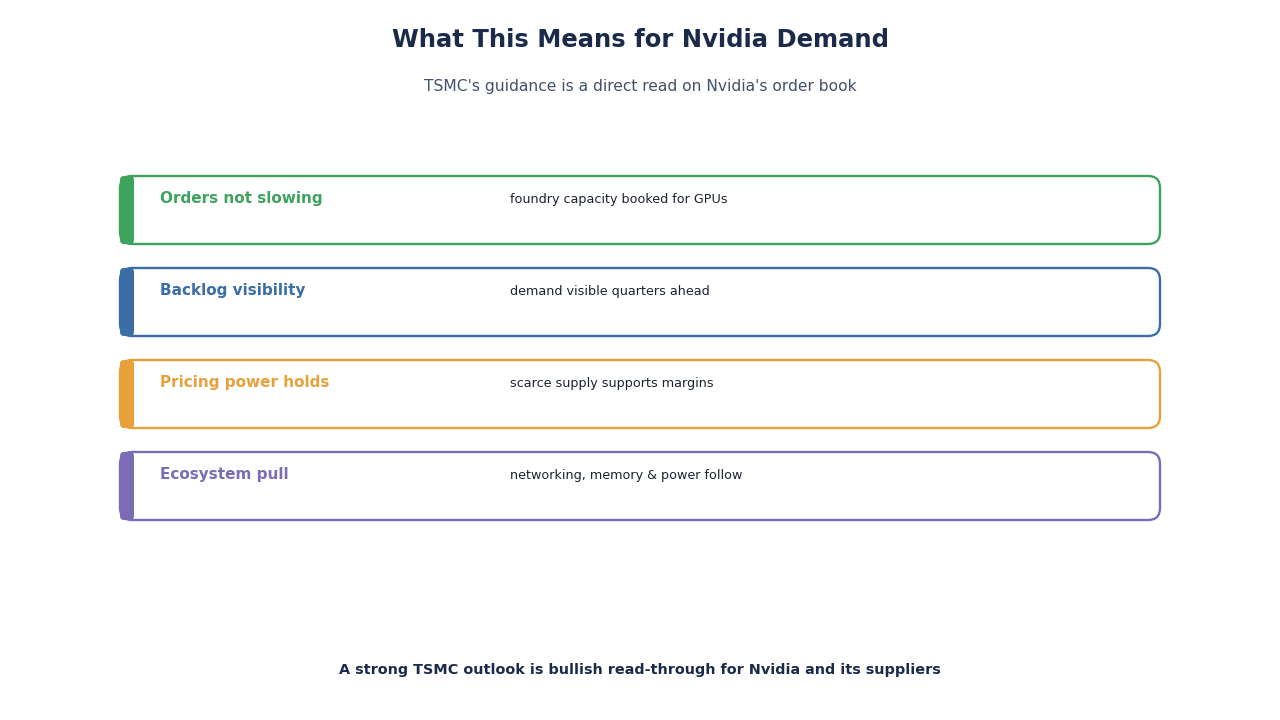
TSMC’s signal is essentially a proxy for Nvidia’s forward revenue strength.
Key Implications:
- Nvidia remains the primary beneficiary of AI spending
- Demand visibility extends multiple quarters ahead
- Pricing power remains strong
Demand Flywheel
- More AI applications →
- More compute needed →
- More GPU demand →
- More TSMC production →
- Reinforced AI investment cycle
This feedback loop explains why AI spending continues to surge rather than normalize.
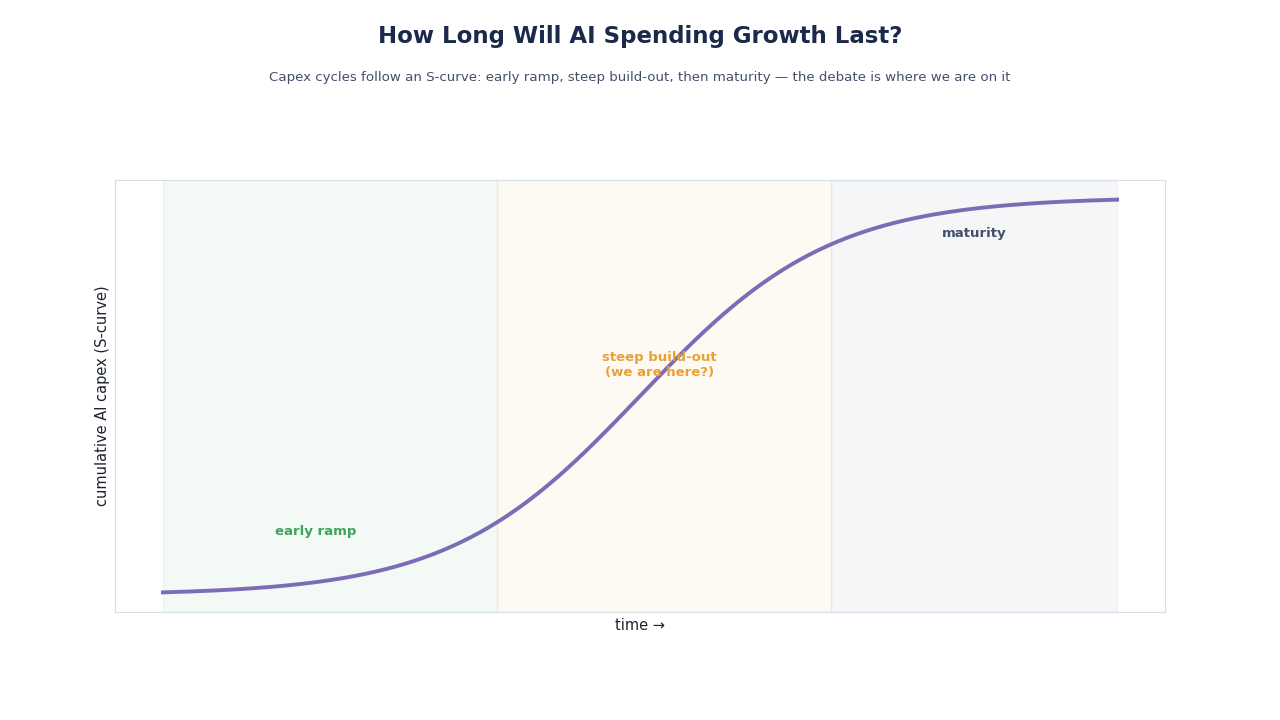
How Long Will AI Spending Growth Last?
Short Answer: Longer Than Most Expect
AI spending behaves differently from past tech cycles:
| Cycle Type | Duration | Behavior |
|---|---|---|
| Cloud (2010s) | ~10 years | Gradual build |
| Mobile (2000s) | ~8 years | Hardware-driven |
| AI (current) | Ongoing | Exponential + compute-driven |
AI is both software AND infrastructure, making it more persistent.
Key Risks to Watch
- Overcapacity in data centers
- Slowing enterprise ROI
- Regulatory constraints
- Energy limitations
But none of these are immediate enough to stop the current surge.
How to Analyze AI Spending Trends Using SimianX AI
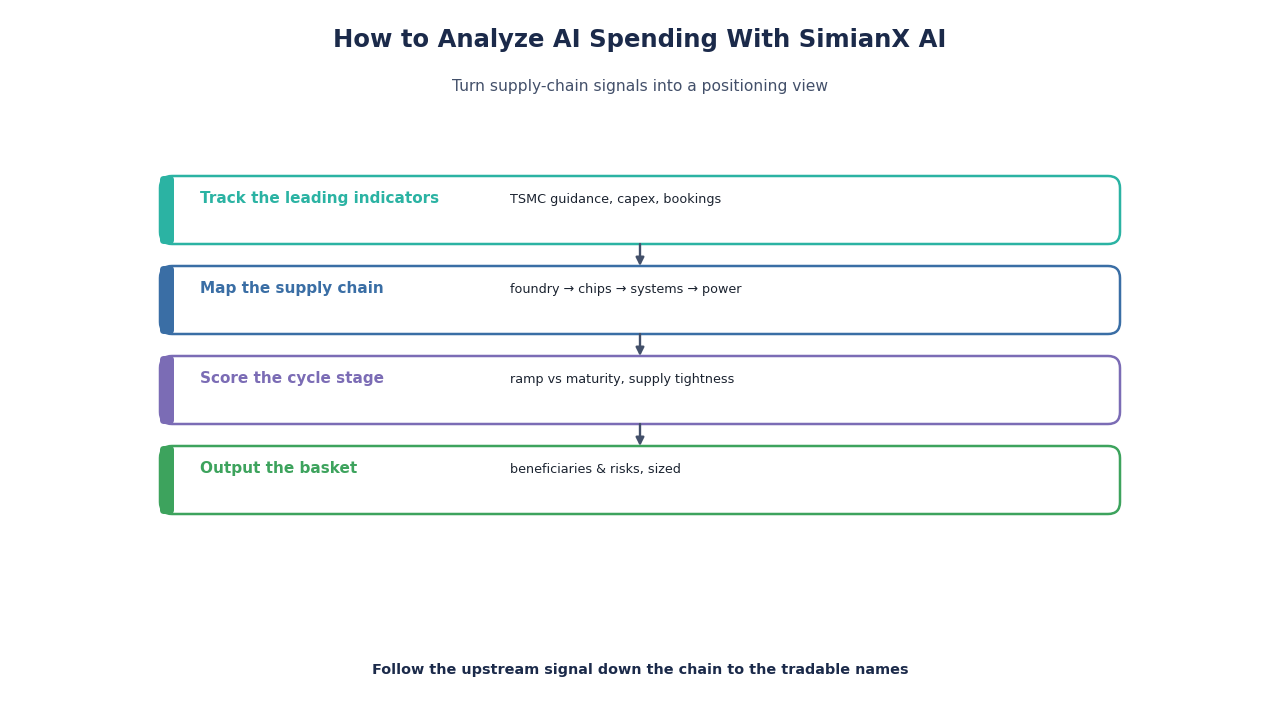
Understanding why AI spending is still surging requires combining multiple signals—something that is difficult to do manually.
This is where SimianX AI becomes powerful.
What SimianX AI Helps You Track
- Semiconductor signals (TSMC, Nvidia, supply chain)
- Market sentiment shifts
- Macro factors (rates, liquidity)
- Cross-asset correlations
Example Workflow
- Monitor AI-related stocks (NVDA, AMD)
- Track macro catalysts (earnings, guidance)
- Analyze sentiment and positioning
- Generate structured trading decisions
SimianX AI acts like a multi-agent system that synthesizes conflicting signals into actionable insights.
Practical benefits:
- Avoid emotional decision-making
- Identify early trend shifts
- Understand why markets move—not just that they move
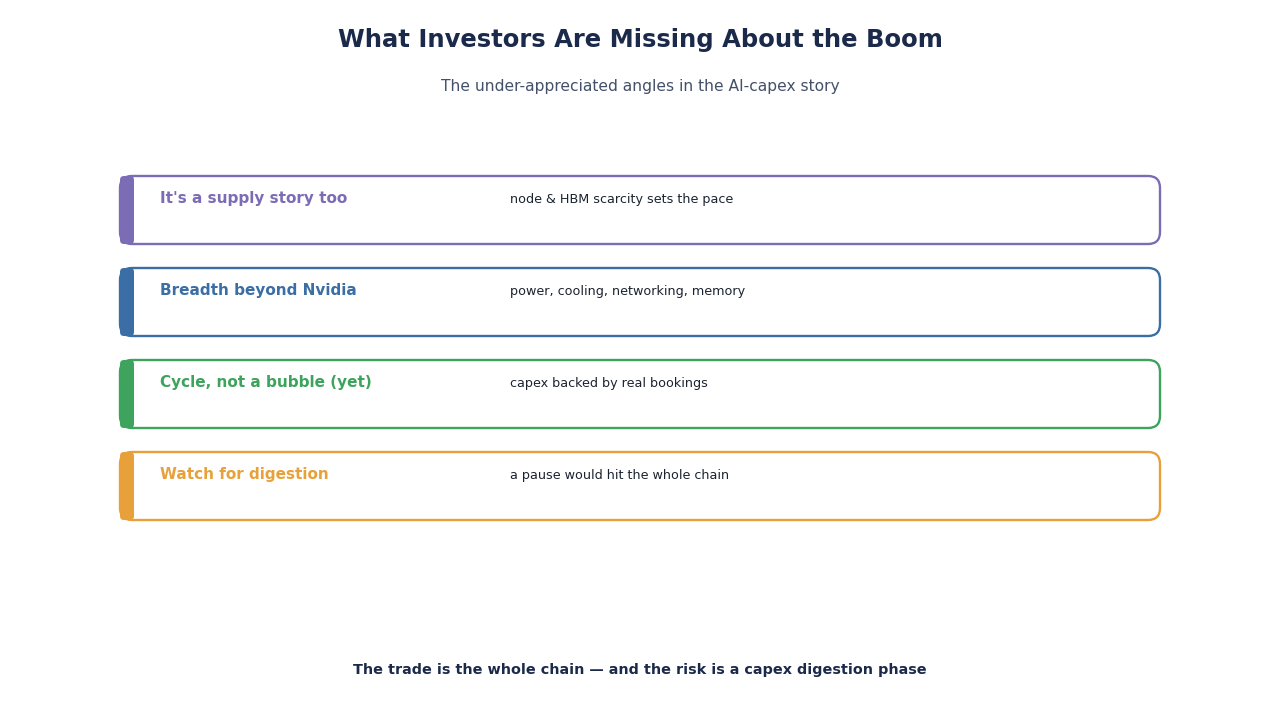
What Investors Are Missing About the AI Boom
Many investors assume AI spending will slow soon—but they underestimate:
- The structural nature of AI adoption
- The global competition aspect
- The feedback loop between software and hardware
Common Misconceptions
- “AI is already priced in” → Not if demand keeps expanding
- “Spending will normalize soon” → No clear catalyst yet
- “Nvidia demand will peak” → Still supply-constrained
Reality
AI is transitioning from:
- Experimentation → Infrastructure layer of the economy
That shift supports multi-year capital investment cycles.
FAQ About Why Is AI Spending Still Surging
What is driving AI spending growth in 2026?
AI spending is driven by hyperscaler competition, enterprise adoption, and increasing computational requirements for advanced models. These factors create sustained demand for chips and infrastructure.
How long will Nvidia demand stay strong?
Nvidia demand is likely to remain strong as long as AI model scaling continues and supply constraints persist. TSMC’s outlook suggests demand visibility remains robust.
Is AI spending a bubble or a long-term trend?
While valuations may fluctuate, AI spending itself appears to be a long-term structural trend tied to digital transformation and global competition.
Why is TSMC important for AI analysis?
TSMC is a key manufacturer for AI chips, giving it early visibility into demand trends. Its guidance often reflects real underlying demand rather than market speculation.
Conclusion
So, why is AI spending still surging? The answer lies in a powerful combination of hyperscaler competition, early-stage enterprise adoption, and ever-growing computational demands. TSMC’s raised outlook confirms that this is not a short-term spike—but a sustained expansion cycle.
For investors and traders, understanding these signals is critical. Instead of reacting to headlines, using tools like SimianX AI allows you to analyze AI spending trends in real time, identify opportunities, and make smarter decisions.
As the AI boom continues to evolve, those who can interpret the data—not just follow the narrative—will have the strongest edge.
The Second-Order Effects of Surging AI Spending
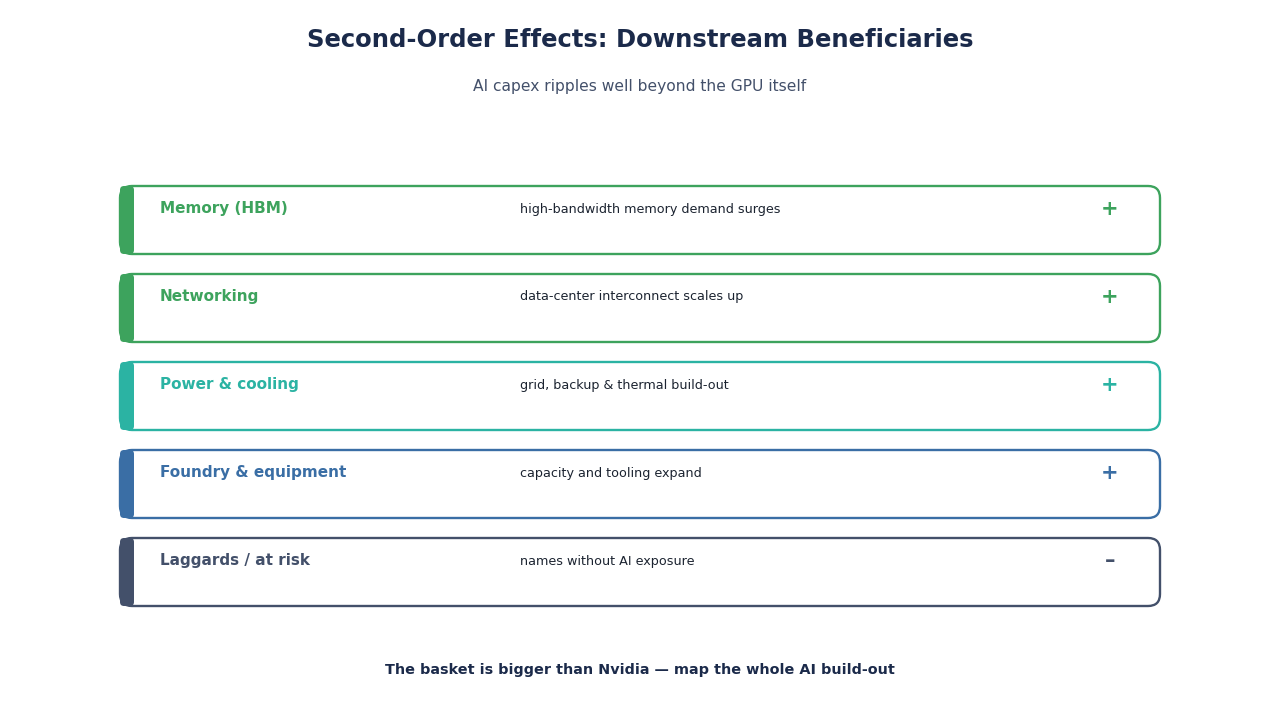
While the first-order impact of AI spending is clearly visible in companies like Nvidia and TSMC, the second-order effects are where the next wave of opportunities—and risks—are forming.
Infrastructure Spillover: Beyond GPUs
AI spending is no longer limited to GPUs. The ecosystem is expanding into:
- Networking hardware (high-speed interconnects like InfiniBand)
- Memory (HBM) suppliers such as SK Hynix and Samsung
- Power and cooling systems for high-density data centers
- Edge computing infrastructure
This creates a multi-layered demand stack, meaning even if GPU growth slows, other layers may continue expanding.
The AI boom is not a single industry story—it’s an entire infrastructure transformation.
The Rise of “AI-First” Capital Allocation
Corporations are now prioritizing AI in capital expenditure decisions:
- Delay traditional IT upgrades
- Redirect budgets toward AI infrastructure
- Build proprietary AI capabilities
This leads to a capital rotation effect, where AI absorbs budget from other sectors rather than competing equally.
| Capital Allocation Shift | Impact |
|---|---|
| Legacy IT → AI | Structural demand increase |
| SaaS tools → AI copilots | Product replacement risk |
| Human labor → automation | Productivity gains |
The Global Dimension: AI Spending Is a Geopolitical Race
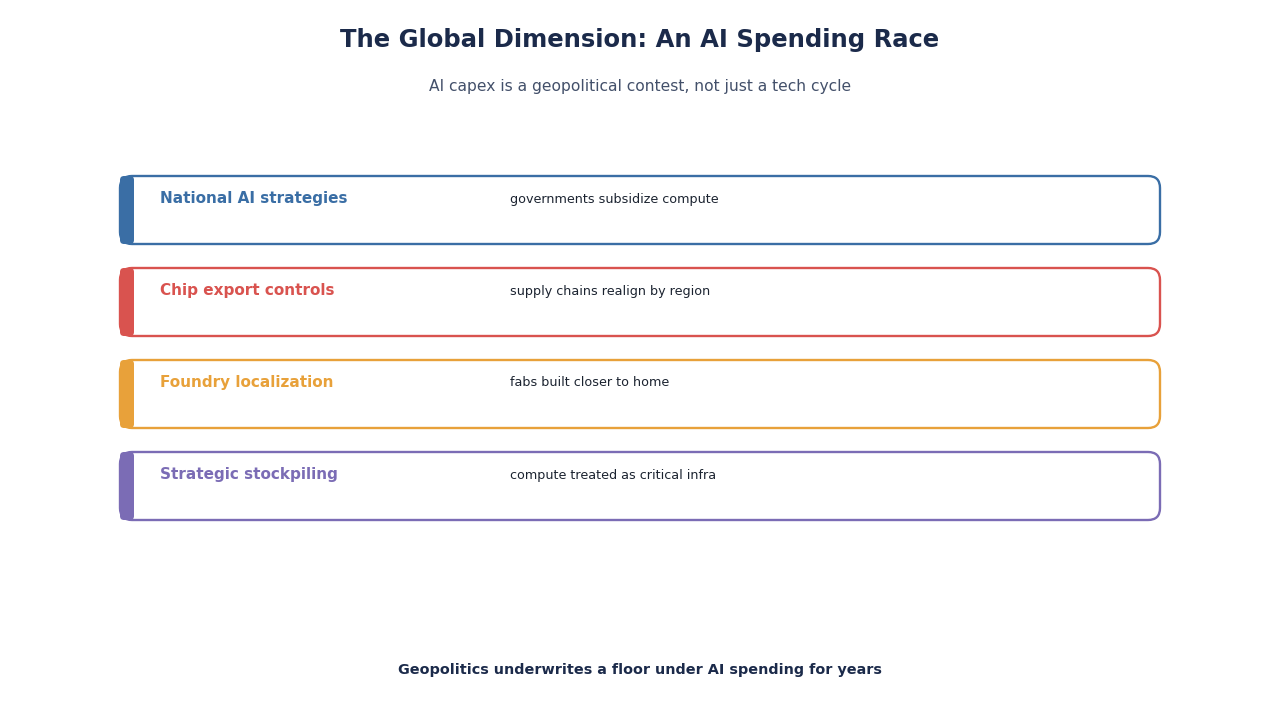
AI spending is no longer purely economic—it is strategic and geopolitical.
U.S. vs China vs Rest of World
- United States: Leading in chip design (Nvidia) and cloud infrastructure
- China: Accelerating domestic semiconductor ecosystem
- Europe / Middle East: Investing heavily in sovereign AI capabilities
This creates a non-optional spending dynamic:
Governments and corporations must invest in AI—not because it’s profitable today, but because not investing is strategically unacceptable.
Sovereign AI and National Infrastructure
Countries are increasingly building:
- National AI compute clusters
- Domestic LLM ecosystems
- Strategic chip reserves
This adds a baseline layer of demand that is less sensitive to market cycles.
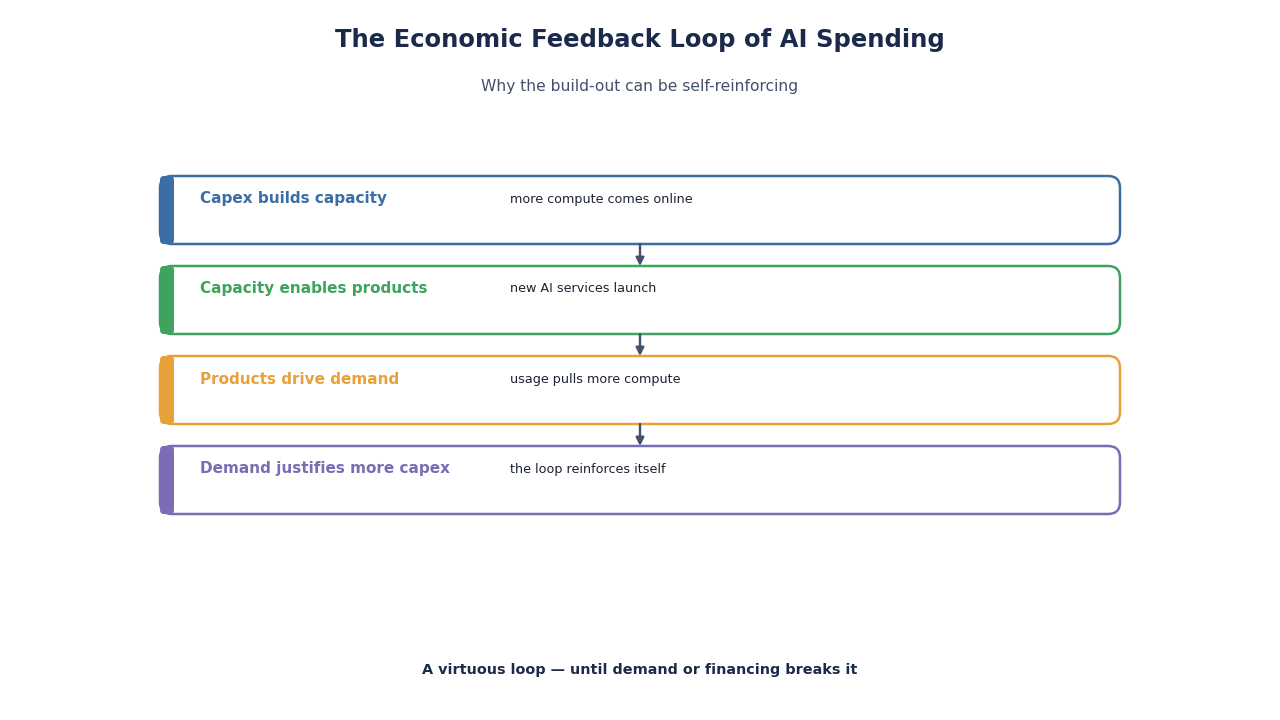
The Economic Feedback Loop of AI Spending
AI spending creates its own momentum through economic reinforcement loops.
Loop Structure
- AI investment increases productivity
- Productivity boosts corporate earnings
- Higher earnings justify more AI investment
- More investment drives further innovation
This loop can sustain spending even in tight monetary environments.
AI vs Interest Rates
Traditionally, higher interest rates reduce capex. But AI is behaving differently:
- ROI expectations are higher
- Competitive pressure overrides cost concerns
- First-mover advantage is critical
Conclusion: AI spending is less rate-sensitive than previous tech cycles.
Market Structure: Who Captures the Value?
Not all participants benefit equally from surging AI spending.
Value Capture Layers
| Layer | Winners | Characteristics |
|---|---|---|
| Chip Design | Nvidia | High margins, pricing power |
| Manufacturing | TSMC | Volume-driven growth |
| Cloud Providers | AWS, Azure | Recurring revenue |
| Applications | AI SaaS | Fragmented, competitive |
Concentration Risk
A key feature of this cycle:
- Value is highly concentrated at the top
- Nvidia captures disproportionate profits
- Downstream players face margin pressure
AI spending is broad—but profits are narrow.
When Does AI Spending Slow Down?
Despite strong momentum, no cycle lasts forever. Understanding inflection points is critical.
Leading Indicators of a Slowdown
- Declining GPU utilization rates
- Falling cloud AI pricing
- Slower enterprise adoption
- Inventory buildup at chipmakers
Lagging Indicators
- Revenue misses from Nvidia or TSMC
- Capex cuts by hyperscalers
- Market sentiment shifts
Timeline Framework
| Phase | Signal | Market Reaction |
|---|---|---|
| Early | Demand acceleration | Stock rally |
| Mid | Peak optimism | Valuation expansion |
| Late | Demand normalization | Volatility |
| End | Oversupply | Correction |
Currently, evidence suggests we are still in the mid-phase expansion.
AI Spending vs Historical Tech Bubbles
A common concern: Is this another bubble like dot-com?
Key Differences
| Factor | Dot-com Bubble | AI Cycle |
|---|---|---|
| Revenue base | Weak | Strong |
| Profitability | Limited | High (Nvidia) |
| Infrastructure | Premature | Fully utilized |
| Adoption | Speculative | Real |
Key Similarity
- High expectations can still lead to valuation corrections
AI is not a bubble—but parts of the market can still become overheated.
Practical Strategy: How Traders Should Position
Understanding why AI spending is still surging is only valuable if it translates into actionable strategy.
Strategy 1: Follow the Leaders
- Focus on Nvidia, TSMC, and key suppliers
- Avoid over-fragmented AI application plays
Strategy 2: Track Data, Not Narratives
Use structured analysis:
- Earnings guidance
- Capex announcements
- Supply chain signals
This is where SimianX AI becomes essential.
Strategy 3: Trade the Cycle, Not the Hype
- Enter during confirmation phases (like TSMC outlook upgrades)
- Reduce exposure during euphoria phases
Strategy 4: Use Multi-Timeframe Analysis
- Short-term: News-driven momentum
- Medium-term: Earnings cycles
- Long-term: Structural trends
How SimianX AI Helps You Navigate AI Spending Cycles
Modern markets are too complex for single-signal analysis. SimianX AI solves this by integrating multiple dimensions:
Multi-Agent Analysis Framework
- Indicator Agent → Technical signals (RSI, MACD, trends)
- Intelligence Agent → News, sentiment, capital flows
- Fundamental Agent → Earnings, macro, valuation
- Decision Agent → Synthesizes final bias
This structure allows traders to:
- Detect early trend shifts
- Resolve conflicting signals
- Improve decision consistency
Real-World Use Case
Imagine tracking Nvidia after TSMC raises guidance:
- Intelligence Agent detects bullish news
- Indicator Agent confirms trend strength
- Fundamental Agent validates earnings trajectory
- Decision Agent outputs high-confidence bullish bias
Instead of guessing, you operate with structured intelligence.
The Next Phase of AI Spending: What Comes Next?
The next wave of AI spending will likely shift focus:
From Training to Inference
- Training demand remains strong
- Inference demand will scale massively
From Centralized to Distributed AI
- Edge AI devices
- On-device inference
- Lower latency requirements
From General AI to Specialized AI
- Industry-specific models
- Vertical integration
- Proprietary datasets
The Hidden Constraint: Energy and Power
One underappreciated factor:
- AI data centers consume enormous energy
- Power availability may become a bottleneck
Implications
- Increased investment in energy infrastructure
- Geographic shifts in data center locations
- New cost structures for AI deployment
This could become the next limiting factor in AI spending growth.
Behavioral Dynamics: Why Markets Underestimate AI Cycles
Investors often misjudge long cycles due to:
- Recency bias
- Overfitting past bubbles
- Underestimating exponential growth
Typical Pattern
- Underestimate early growth
- Chase momentum late
- Panic at corrections
Understanding this behavior gives traders an edge.
Final Strategic Insight
AI spending is not just “strong”—it is:
- Self-reinforcing
- Globally competitive
- Structurally embedded
This makes it fundamentally different from previous cycles.
Extended FAQ About AI Spending Surge
Will AI spending eventually plateau?
Yes, but only after infrastructure reaches saturation and marginal returns decline. Current data suggests we are far from that point.
What companies benefit beyond Nvidia?
Memory manufacturers, networking firms, and cloud providers all benefit from expanding AI infrastructure demand.
How should long-term investors approach AI?
Focus on structural winners, monitor cycle indicators, and avoid chasing overvalued narratives.
Can macro shocks stop AI spending?
They may slow growth temporarily, but structural demand is likely to persist due to competitive pressure.
Final Conclusion
The surge in AI spending—validated by TSMC’s upgraded outlook and strong Nvidia demand—is not a temporary phenomenon. It is part of a multi-year transformation of the global economy, driven by technology, competition, and capital allocation shifts.
For traders and investors, the challenge is not just understanding the trend—but navigating it effectively.
By leveraging tools like SimianX AI, you can:
- Track real-time AI market signals
- Analyze multi-dimensional data
- Make structured, high-confidence decisions
As the AI cycle continues to evolve, those who combine data, discipline, and intelligent tools will be best positioned to capture its full potential.
Related Reading
- Why TSMC Stock Fell After Q3 2026: Every Earnings Reaction
- AI vs Predictive AI: Basic Tools Fail in Volatile Markets
- AI Stock Boom: Nvidia Leads the Chip Supercycle Now
- AI Chip Stocks Stay Strong: AMD, Intel Drive Data Centers
- Alphabet Nears Nvidia in Market Value as AI Trade Broadens
- Micron (MU): Why HBM3e Makes It the 2026 AI Memory Play