 लेखक: Muke
आज लुसिड स्टॉक क्यों बढ़ रहा है? LCID उबर डील और ईवी मार्केट की अस्थिरता पर कूदता है
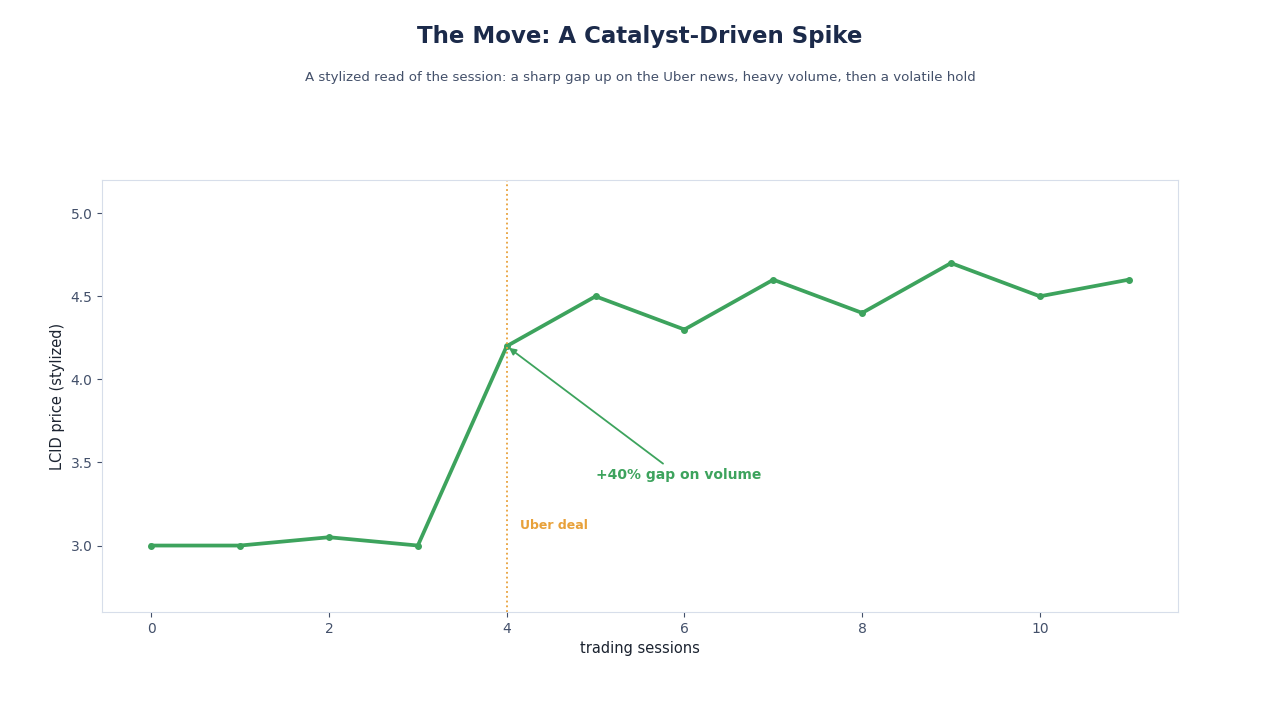
निवेशक पूछ रहे हैं “आज लुसिड स्टॉक क्यों बढ़ रहा है” क्योंकि LCID के शेयर उबर के साथ एक रणनीतिक साझेदारी की खबर के बाद बढ़ रहे हैं और इलेक्ट्रिक वाहन (ईवी) क्षेत्र में बढ़ती अस्थिरता के कारण। हेडलाइन-प्रेरित गति और मैक्रो ईवी भावना में बदलाव के संयोजन ने लुसिड को फिर से सुर्खियों में ला दिया है।
आज के तेजी से बदलते बाजारों में, SimianX AI जैसे प्लेटफार्म व्यापारियों को ऐसे बहु-कारक आंदोलनों को समझने में मदद करते हैं—खबरों, तकनीकी संकेतों और मैक्रो डेटा को क्रियात्मक अंतर्दृष्टियों में संयोजित करते हैं।
आज लुसिड स्टॉक के बढ़ने का कारण क्या है?
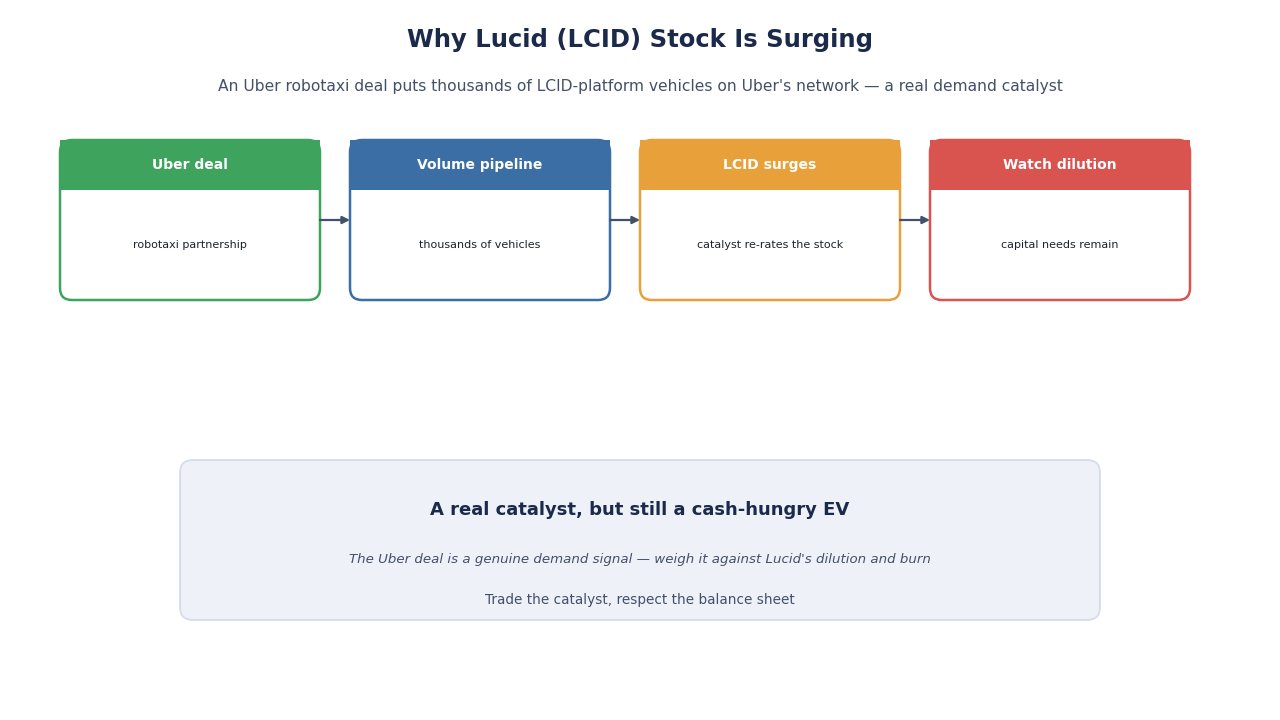
LCID की कीमत में वृद्धि का तात्कालिक उत्प्रेरक Lucid और Uber के बीच की रिपोर्ट की गई सहयोग है। इस डील को फ्लीट इलेक्ट्रिफिकेशन में संभावित विस्तार के रूप में देखा जा रहा है, जो ईवी कंपनियों के लिए एक प्रमुख विकास कथा है।
बाजार नए राजस्व मार्गों पर सबसे तेजी से प्रतिक्रिया करते हैं—और इस तरह की साझेदारियाँ दीर्घकालिक स्केलेबिलिटी का संकेत देती हैं।
वृद्धि के पीछे के प्रमुख चालक
- उबर साझेदारी की संभावनाएँ
- फ्लीट-स्तरीय ईवी अपनाने का दरवाजा खोलता है
- लुसिड की व्यावसायिक स्थिति को मजबूत करता है
- ईवी क्षेत्र की अस्थिरता
- टेस्ला, रिवियन, और अन्य ईवी नाम क्षेत्रीय गति को बढ़ा रहे हैं
- शॉर्ट कवरिंग गतिविधि
- LCID में ऐतिहासिक रूप से उच्च शॉर्ट इंटरेस्ट है
- अटकलों पर आधारित खुदरा प्रवाह
- सोशल मीडिया और गति व्यापारियों द्वारा बढ़ावा दिया गया आंदोलन
यह क्यों महत्वपूर्ण है: निवेशक केवल खबर पर प्रतिक्रिया नहीं कर रहे हैं—वे भविष्य की विकास अपेक्षाएँ और कथा में बदलाव को मूल्यांकन कर रहे हैं।
ईवी मार्केट की अस्थिरता LCID के आंदोलन को कैसे बढ़ा रही है
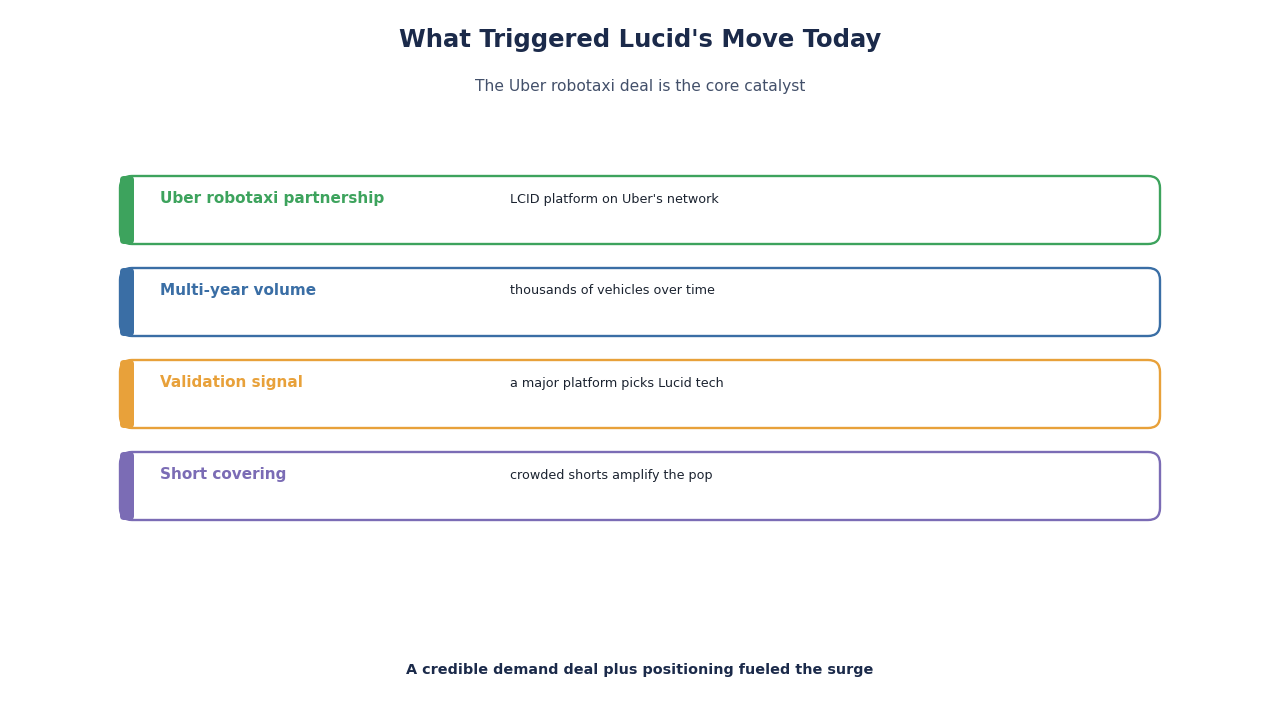
लुसिड का स्टॉक अकेले नहीं चलता। यह व्यापक ईवी बाजार की भावना के प्रति अत्यधिक संवेदनशील है, जो हाल ही में अधिक अस्थिर हो गई है क्योंकि:
- ब्याज दरों की अपेक्षाएँ (विकास स्टॉक्स पर प्रभाव)
- बैटरी आपूर्ति श्रृंखला की चिंताएँ
- विरासत ऑटोमेकर्स से प्रतिस्पर्धात्मक दबाव
- एआई-चालित ट्रेडिंग रणनीतियाँ गति को तेज कर रही हैं
ईवी क्षेत्र तुलना
| कंपनी | हालिया उत्प्रेरक | बाजार की प्रतिक्रिया |
|---|---|---|
| टेस्ला | एआई + स्वायत्तता अपडेट | मजबूत रैली |
| रिवियन | उत्पादन मार्गदर्शन में बदलाव | अस्थिर उतार-चढ़ाव |
| लुसिड मोटर्स | उबर साझेदारी समाचार | तेज वृद्धि |
यह संदर्भ समझाता है कि लुसिड की चाल बढ़ी हुई क्यों है—यह कंपनी-विशिष्ट समाचार और क्षेत्र-व्यापी गति दोनों पर सवार है।
आज लुसिड स्टॉक क्यों चल रहा है? एक गहरा विश्लेषण
उबर डील के बाद लुसिड स्टॉक क्यों चल रहा है?
उबर साझेदारी एक मान्यता संकेत के रूप में कार्य करती है। लुसिड जैसी कंपनी के लिए, जिसने उत्पादन पैमाने और डिलीवरी संख्या के साथ संघर्ष किया है, ऐसा सौदा सुझाव देता है:
- संभावित नियमित मांग पाइपलाइन
- मोबिलिटी-एज़-ए-सर्विस (MaaS) पारिस्थितिकी तंत्र में प्रवेश
- लक्जरी ईवी निचे से परे ब्रांड दृश्यता में सुधार
साथ ही, ट्रेडर्स यह अनुमान लगा रहे हैं:
- क्या यह सौदा वास्तविक राजस्व में परिवर्तित होता है
- क्या लुसिड संचालनात्मक रूप से कार्यान्वित कर सकता है
- यह टेस्ला की स्वायत्त महत्वाकांक्षाओं की तुलना में कैसे है
तकनीकी विश्लेषण: चार्ट क्या कह रहे हैं
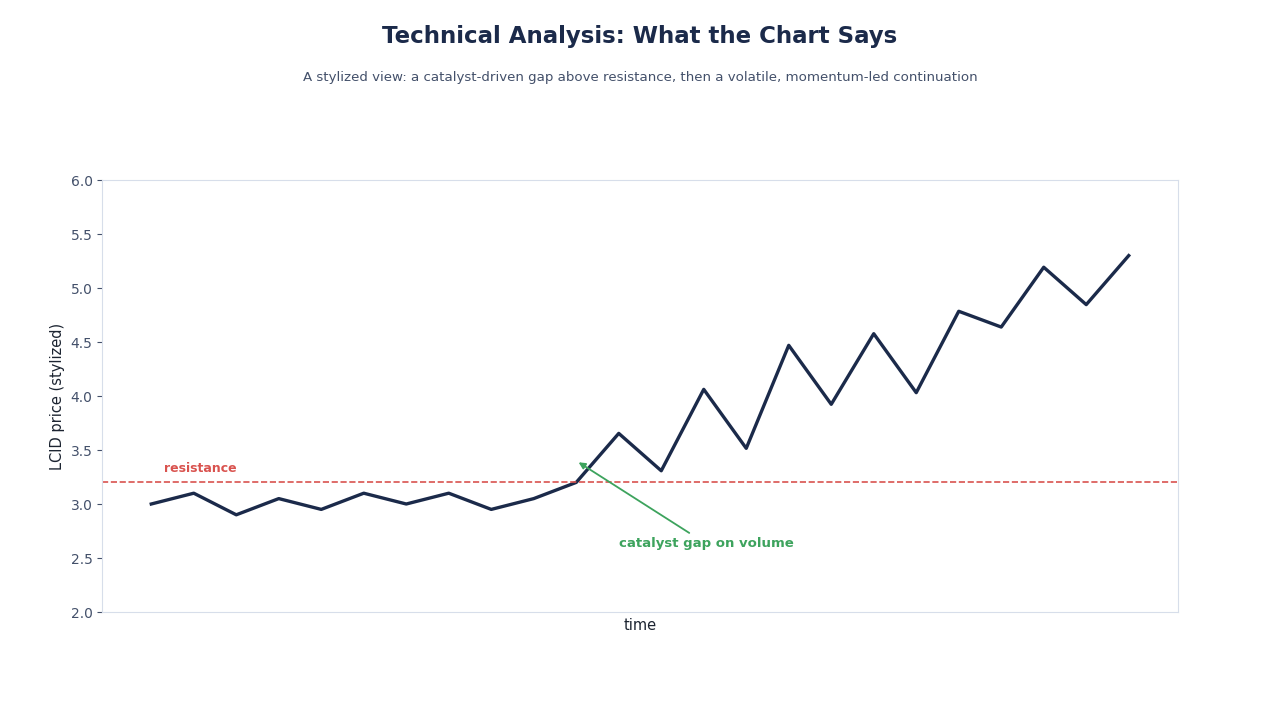
तकनीकी दृष्टिकोण से, LCID की चाल का समर्थन भी किया गया है:
- अल्पकालिक प्रतिरोध के ऊपर ब्रेकआउट
- ट्रेडिंग वॉल्यूम में वृद्धि
- गति संकेतक बुलिश होते जा रहे हैं (RSI, MACD)
सिमियनएक्स एआई जैसे प्लेटफार्मों का उपयोग करते हुए, ट्रेडर्स कर सकते हैं:
- मल्टी-टाइमफ्रेम संकेतों (1म → 1D) को संयोजित करें
- वास्तविक समय बाजार प्रवाह का विश्लेषण करें
- झूठे ब्रेकआउट्स बनाम स्थायी रुझानों का पता लगाएं
मुख्य अंतर्दृष्टि: सभी समाचार-प्रेरित रैलियां स्थायी नहीं होतीं—तकनीकी से पुष्टि करना महत्वपूर्ण है।
स्मार्ट ट्रेडर्स LCID की चाल को कैसे समझ रहे हैं
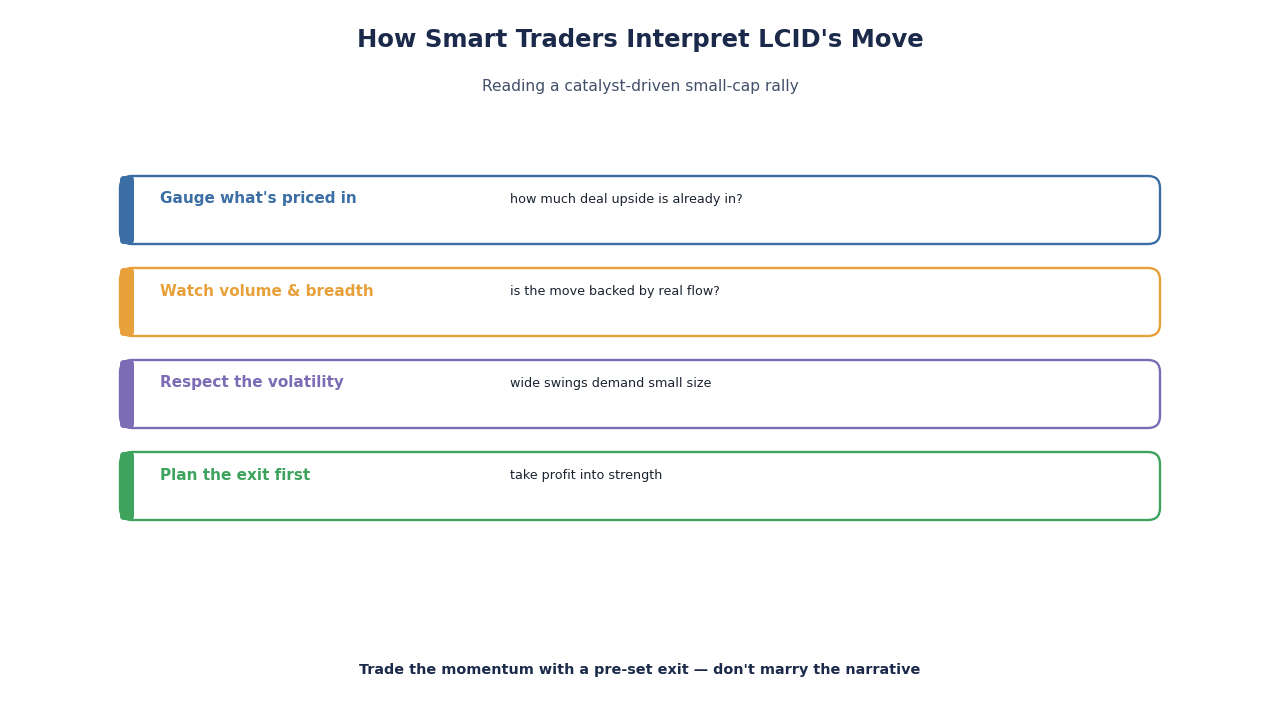
पेशेवर ट्रेडर्स सिर्फ यह नहीं पूछ रहे हैं लूसिड स्टॉक आज क्यों बढ़ रहा है—वे पूछ रहे हैं:
- क्या यह रुझान उलटाव या अल्पकालिक स्पाइक है?
- क्या संस्थाएं जमा कर रही हैं या वितरित कर रही हैं?
- यह मैक्रो ईवी रोटेशन में कैसे फिट बैठता है?
चरण-दर-चरण दृष्टिकोण
- उत्तेजक पहचानें
- उबर डील + ईवी क्षेत्र की गति
- डेटा के साथ मान्य करें
- मात्रा, विकल्प प्रवाह, भावना
- तकनीकी की क्रॉस-चेक करें
- समर्थन/प्रतिरोध स्तर
- जोखिम का आकलन करें
- अस्थिरता और नकारात्मक परिदृश्य
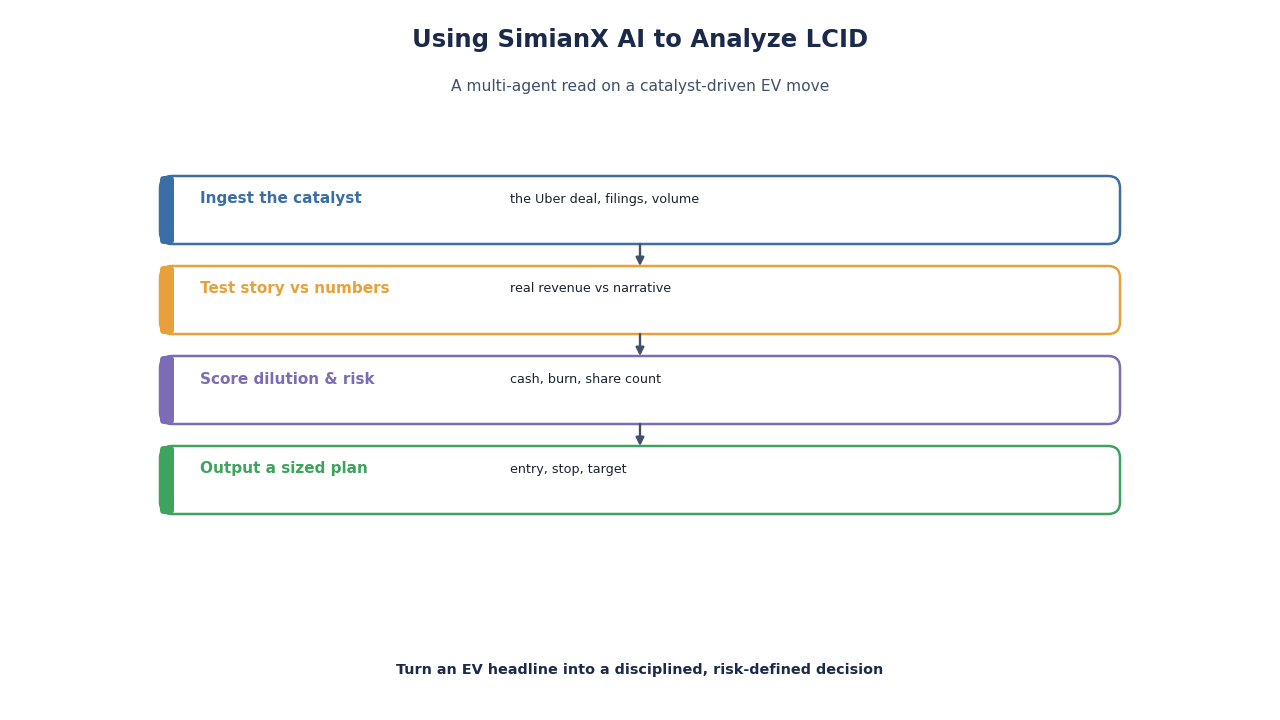
यह संरचित दृष्टिकोण SimianX AI में उत्कृष्टता है, जो एकाधिक-एजेंट निर्णय ढांचा प्रदान करता है, अलग-अलग संकेतों के बजाय।
व्यावहारिक उदाहरण: LCID का विश्लेषण करने के लिए SimianX AI का उपयोग करना
| विशेषता | उदाहरण उपयोग मामला |
|---|---|
| तकनीकी एजेंट | LCID ब्रेकआउट स्तरों का पता लगाना |
| भावना एजेंट | उबर डील समाचार प्रभाव का विश्लेषण करना |
| मौलिक एजेंट | लूसिड विकास दृष्टिकोण का मूल्यांकन करना |
| निर्णय एजेंट | व्यापार पूर्वाग्रह में संकेतों को संयोजित करना |
इन दृष्टिकोणों को एकीकृत करके, ट्रेडर्स भावनात्मक निर्णय लेने से बचते हैं और डेटा-प्रेरित निष्पादन पर ध्यान केंद्रित करते हैं।
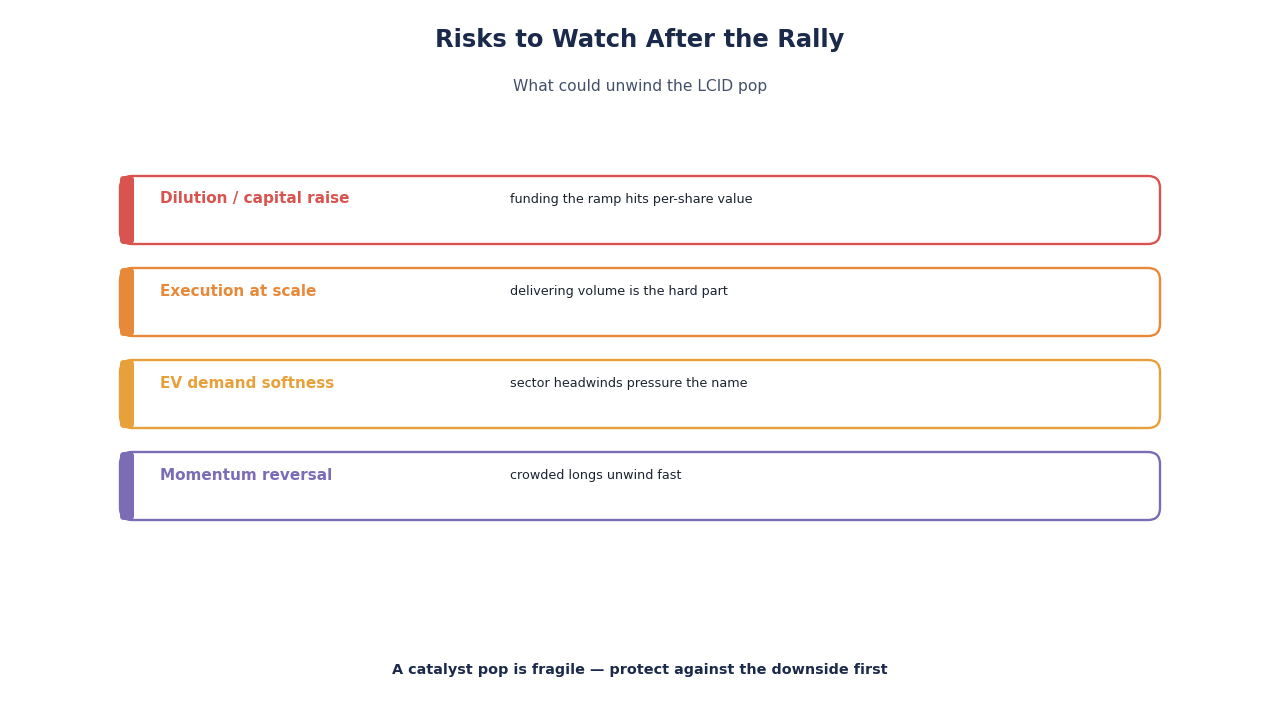
रैली के बाद देखने के लिए जोखिम
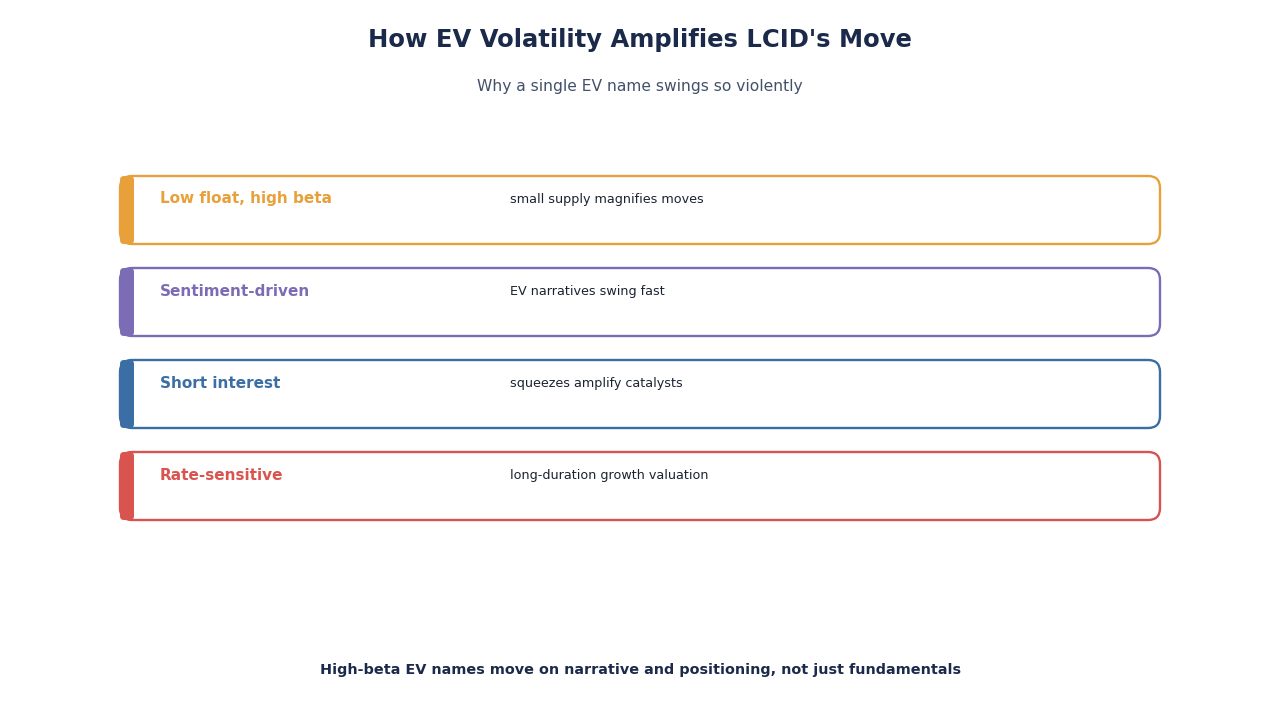
हालांकि LCID ऊँचा जा रहा है, जोखिम बने हुए हैं:
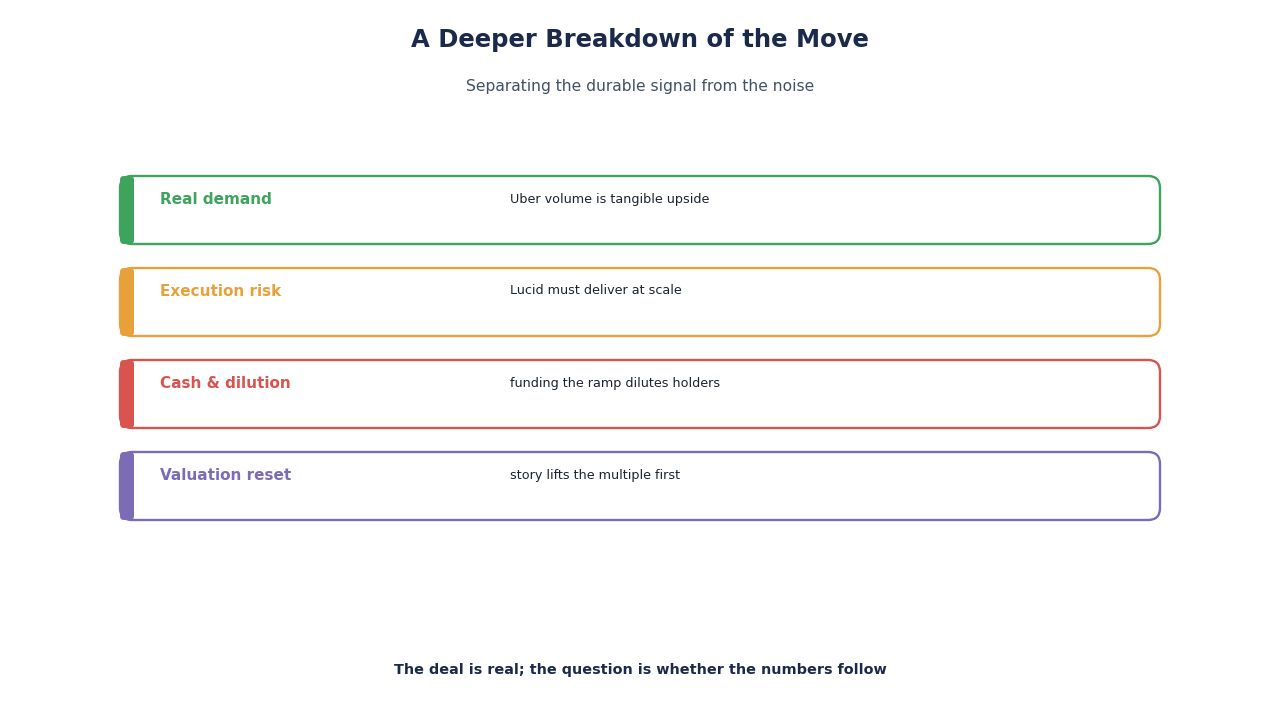
- निष्पादन जोखिम
- लूसिड की उत्पादन चुनौतियाँ बनी हुई हैं
- समाचार पर अधिक प्रतिक्रिया
- बाजार शायद बहुत अधिक आशावाद में मूल्यांकन कर रहा है
- मैक्रो दबाव
- बढ़ती दरें ईवी मूल्यांकन को प्रभावित कर सकती हैं
- प्रतिस्पर्धा
- टेस्ला और पारंपरिक ऑटो निर्माताओं का दबाव बढ़ता जा रहा है
स्मार्ट निवेशक हमेशा पूछते हैं: अगला क्या गलत हो सकता है?
FAQ: लूसिड स्टॉक आज क्यों बढ़ रहा है
LCID स्टॉक आज उबर डील के बाद क्यों बढ़ रहा है?
स्टॉक बढ़ रहा है क्योंकि उम्मीदें हैं कि उबर साझेदारी नए राजस्व चैनल खोल सकती है और लुसीद के व्यापार मॉडल को मान्य कर सकती है, साथ ही मजबूत ईवी क्षेत्र की गति भी है।
क्या इस रैली के बाद लुसीद स्टॉक खरीदना अच्छा है?
यह आपकी रणनीति पर निर्भर करता है। शॉर्ट-टर्म ट्रेडर्स गति पर ध्यान केंद्रित कर सकते हैं, जबकि लॉन्ग-टर्म निवेशकों को उत्पादन क्षमता और वित्तीय स्थिरता जैसे मूलभूत पहलुओं का मूल्यांकन करना चाहिए।
ईवी बाजार की अस्थिरता लुसीद स्टॉक को कैसे प्रभावित करती है?
लुसीद ईवी क्षेत्र की भावना के प्रति अत्यधिक संवेदनशील है। जब क्षेत्र में तेजी आती है या यह अस्थिर हो जाता है, तो LCID अक्सर बढ़ी हुई मूल्य आंदोलनों का अनुभव करता है।
ट्रेडर्स को LCID के लिए अगला क्या देखना चाहिए?
मुख्य कारकों में उबर डील पर फॉलो-अप विवरण, उत्पादन अपडेट, और विकास स्टॉक्स को प्रभावित करने वाली व्यापक बाजार स्थितियाँ शामिल हैं।
निष्कर्ष
तो, लुसीद स्टॉक आज क्यों बढ़ रहा है? इसका उत्तर उबर साझेदारी की खबर, ईवी क्षेत्र की अस्थिरता, और बाजार की अटकलों के शक्तिशाली मिश्रण में है। जबकि यह रैली आकर्षक है, यह ऐसे जोखिमों के साथ भी आती है जिन्हें सावधानीपूर्वक विश्लेषण की आवश्यकता होती है।
ट्रेडर्स और निवेशकों के लिए जो इन जटिल संकेतों को समझने के लिए प्रयासरत हैं, SimianX AI जैसे उपकरण एक स्पष्ट बढ़त प्रदान करते हैं—वास्तविक समय के डेटा, एआई-चालित अंतर्दृष्टि, और संरचित निर्णय-निर्माण को एक प्लेटफॉर्म में मिलाकर।
यदि आप अनुमान से आगे बढ़ना चाहते हैं और LCID जैसे बाजार के आंदोलनों को सटीकता के साथ समझना चाहते हैं, तो SimianX AI का अन्वेषण करने का यह सही समय है और अपनी ट्रेडिंग रणनीति को ऊंचा उठाएं।
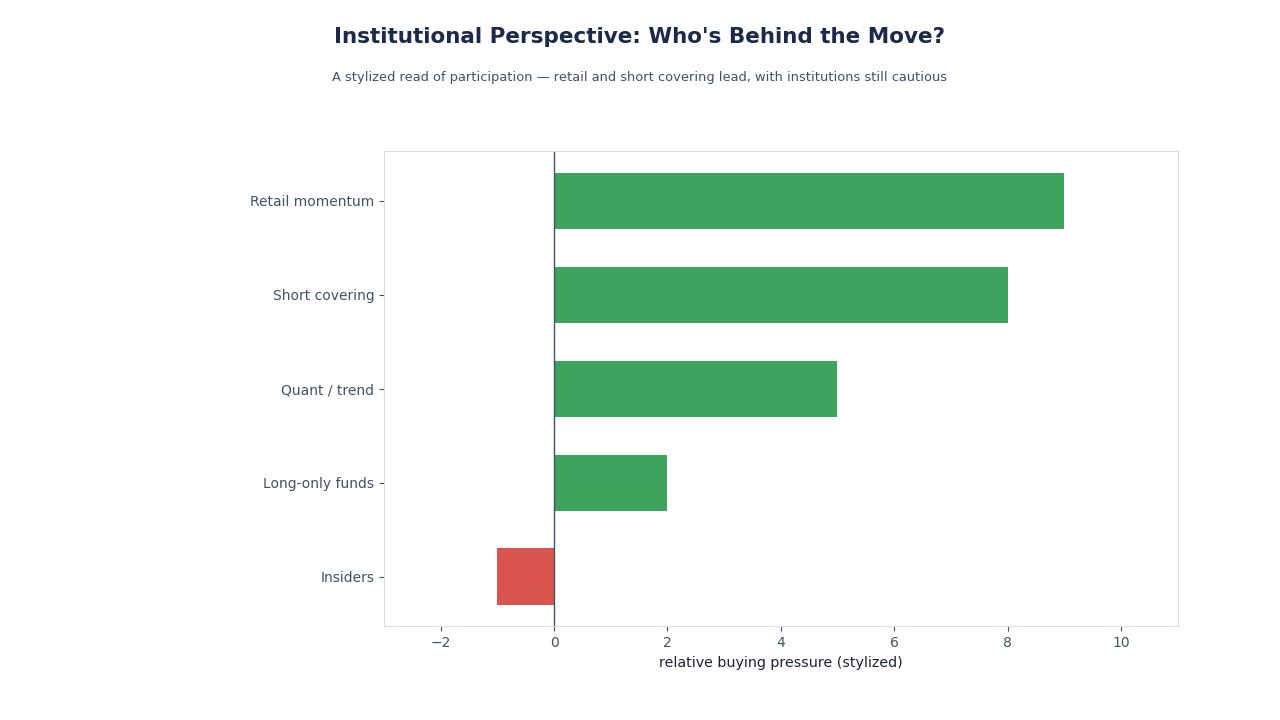
संस्थागत दृष्टिकोण: क्या बड़े खिलाड़ी LCID की चाल के पीछे हैं?
लुसीद स्टॉक आज क्यों बढ़ रहा है का विश्लेषण करते समय, यह महत्वपूर्ण है कि शीर्षकों से परे जाएं और संस्थानिक व्यवहार की जांच करें। रिटेल ट्रेडर्स अक्सर समाचारों पर प्रतिक्रिया करते हैं, लेकिन संस्थान कथानक परिवर्तन से पहले और दौरान स्थिति बनाते हैं।
संस्थागत भागीदारी के संकेत
- असामान्य विकल्प गतिविधि
- कॉल विकल्पों की मात्रा में वृद्धि बुलिश स्थिति का सुझाव देती है
- डार्क पूल संचय
- बड़े ऑफ-एक्सचेंज ट्रेड छिपी खरीदारी का संकेत देते हैं
- वॉल्यूम विस्तार
- निरंतर उच्च वॉल्यूम विश्वास की पुष्टि करता है, केवल अटकल नहीं
“रिटेल गति को बढ़ाता है, लेकिन संस्थान प्रवृत्तियों को परिभाषित करते हैं।”
इसे कैसे व्याख्यायित करें
| संकेत प्रकार | यह क्या सुझाव देता है | LCID संदर्भ |
|---|---|---|
| विकल्प प्रवाह | अटकल या हेज किए गए दांव | बुलिश पूर्वाग्रह |
| डार्क पूल प्रिंट्स | संस्थागत संचय | संभावित स्थिति |
| वॉल्यूम ब्रेकआउट | प्रवृत्ति की पुष्टि | मजबूत चाल |
SimianX AI का उपयोग करके, व्यापारी इन संकेतों को वास्तविक समय में इसके प्रवाह बुद्धिमत्ता एजेंट के माध्यम से ट्रैक कर सकते हैं, जो शोर और सच्चे संचय के बीच अंतर करने में मदद करता है।
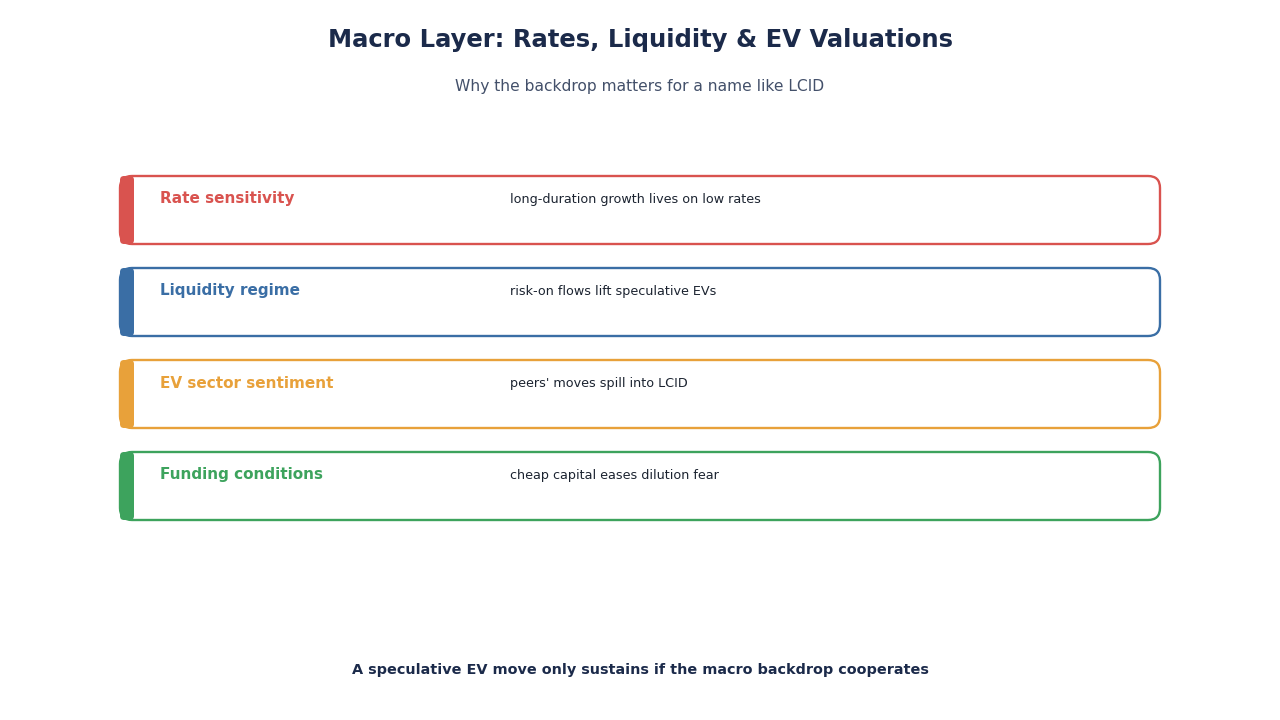
मैक्रो लेयर: ब्याज दरें, तरलता, और ईवी मूल्यांकन
लूसिड की मूल्य गति को मैक्रो तरलता स्थितियों पर विचार किए बिना पूरी तरह से समझा नहीं जा सकता।
LCID के लिए दरें क्यों महत्वपूर्ण हैं
ईवी कंपनियाँ जैसे लूसिड दीर्घकालिक संपत्तियाँ हैं, जिसका अर्थ है:
- उनके मूल्यांकन भविष्य की आय की अपेक्षाओं पर बहुत निर्भर करते हैं
- उच्च ब्याज दरें भविष्य के नकद प्रवाह का वर्तमान मूल्य कम करती हैं
वर्तमान मैक्रो चालक
- फेड दर कट की अपेक्षाएँ (2026 का दृष्टिकोण)
- ठंडा होने वाले मुद्रास्फीति के संकेत
- विकास स्टॉक्स में जोखिम-ऑन रोटेशन
- एआई-प्रेरित पूंजी पुनर्वितरण
जब तरलता बढ़ती है, LCID जैसी उच्च-बेटा स्टॉक्स असमान रूप से बेहतर प्रदर्शन करती हैं।
मैक्रो प्रभाव तालिका
| कारक | बुलिश प्रभाव | बेयरिश जोखिम |
|---|---|---|
| दर में कटौती | उच्च मूल्यांकन | देर से कटौती से नुकसान |
| महंगाई में कमी | विकास स्टॉक्स का समर्थन | चिपचिपी महंगाई का जोखिम |
| तरलता विस्तार | अधिक पूंजी प्रवाह | अचानक कड़ा होना |
SimianX AI के मैक्रो एजेंट के साथ, व्यापारी LCID संकेतों को वास्तविक समय के मैक्रो डेटा के साथ ओवरले कर सकते हैं, जिससे वे उन अंधे स्थानों से बच सकते हैं जो अक्सर खुदरा प्रतिभागियों को फंसाते हैं।
प्रतिस्पर्धात्मक परिदृश्य: लुसिड बनाम टेस्ला बनाम रिवियन
लुसिड की रैली EV पारिस्थितिकी तंत्र के भीतर सापेक्ष स्थिति को भी दर्शाती है।
प्रमुख अंतर
| मीट्रिक | लुसिड मोटर्स | टेस्ला | रिवियन |
|---|---|---|---|
| बाजार स्थिति | लग्जरी EV | मास + AI | एडवेंचर EV |
| लाभप्रदता | नकारात्मक | मजबूत | सुधार हो रहा है |
| उत्पादन पैमाना | सीमित | विशाल | बढ़ता हुआ |
| कथा चालक | साझेदारियाँ | AI + स्वायत्तता | लॉजिस्टिक्स |
रणनीतिक अंतर्दृष्टि
लुसिड का उबर सौदा इसे निम्नलिखित के करीब लाता है:
- फ्लीट इलेक्ट्रिफिकेशन
- प्रीमियम राइड-हेलिंग अनुभव
- व्यावसायिक EV अपनाना
यह इसे टेस्ला की स्वायत्तता-प्रथम कथा और रिवियन की लॉजिस्टिक्स + आउटडोर निचे से अलग करता है।
भावना विश्लेषण: सोशल मीडिया और खुदरा प्रवाह
आधुनिक स्टॉक आंदोलनों पर भावना चक्रों का प्रभाव बढ़ता जा रहा है।
वर्तमान LCID भावना चालक
- स्टॉक फोरम और X (ट्विटर) पर ट्रेंडिंग
- “टॉप मूवर्स” सूचियों में बढ़ती हुई उल्लेख
- खुदरा FOMO (छूटने का डर)
भावना चक्र
- समाचार उत्प्रेरक
- सामाजिक वृद्धि
- खुदरा प्रवाह
- गति में तेजी
- लाभ लेना
कुंजी यह पहचानना है कि हम इस चक्र में कहाँ हैं।
SimianX AI के भावना एजेंट का उपयोग करके, व्यापारी कर सकते हैं:
- वास्तविक समय की कथा ताकत को ट्रैक करें
- पीक हाइप क्षेत्रों की पहचान करें
- थकावट स्तरों पर प्रवेश करने से बचें
परिदृश्य विश्लेषण: LCID के लिए अगला क्या होता है?
लूसिड स्टॉक आज क्यों बढ़ रहा है इसका पूरी तरह से उत्तर देने के लिए, हमें आगे के परिदृश्यों का अन्वेषण करना होगा।
बुलिश परिदृश्य
- उबर डील बड़े पैमाने पर बेड़े के आदेशों में विस्तारित होती है
- उत्पादन सफलतापूर्वक बढ़ता है
- EV क्षेत्र स्थायी बुल चक्र में प्रवेश करता है
➡️ संभावित परिणाम: उच्च ऊँचाई के साथ प्रवृत्ति जारी रहना
न्यूट्रल परिदृश्य
- डील सीमित दायरे में बनी रहती है
- बाजार लाभ को पचाता है
- साइडवेज समेकन
➡️ संभावित परिणाम: रेंज-बाउंड ट्रेडिंग
बेयरिश परिदृश्य
- निष्पादन में निराशा
- मैक्रो टाइटनिंग लौटती है
- लाभ लेने में तेजी आती है
➡️ संभावित परिणाम: तेज गिरावट
संभाव्यता ढांचा
| परिदृश्य | संभाव्यता | रणनीति |
|---|---|---|
| बुलिश | मध्यम | प्रवृत्ति पर सवारी करें |
| न्यूट्रल | उच्च | रेंज में व्यापार करें |
| बेयरिश | मध्यम | जोखिम प्रबंधन |
SimianX AI के निर्णय एजेंट के साथ, ये परिदृश्य लाइव डेटा इनपुट्स के आधार पर गतिशील रूप से अपडेट होते हैं, जिससे व्यापारियों को अंधाधुंध भविष्यवाणी करने के बजाय अनुकूलित करने में मदद मिलती है।
उन्नत रणनीति: मल्टी-टाइमफ्रेम विश्लेषण का उपयोग करके LCID का व्यापार करना
पेशेवर व्यापारी एकल समय सीमा पर निर्भर नहीं करते।
मल्टी-टाइमफ्रेम दृष्टिकोण
- 1-मिनट चार्ट
- प्रवेश सटीकता
- 15-मिनट चार्ट
- intraday प्रवृत्ति
- 1-घंटा चार्ट
- स्विंग दिशा
- 1-दिन चार्ट
- मैक्रो संरचना
उदाहरण कार्यप्रवाह
- 1D पर ब्रेकआउट पहचानें
- 1H पर प्रवृत्ति की पुष्टि करें
- 15M पर पुलबैक का इंतजार करें
- 1M पर प्रवेश करें
यह स्तरित दृष्टिकोण झूठे संकेतों को कम करता है और समय को बेहतर बनाता है।
यह ठीक उसी तरह है जैसे SimianX AI अपने विश्लेषण को संरचित करता है, कई समय सीमाओं को एकल एकीकृत निर्णय आउटपुट में मिलाकर।
LCID व्यापारियों के लिए जोखिम प्रबंधन ढांचा
कोई भी विश्लेषण जोखिम नियंत्रण के बिना पूरा नहीं होता है।
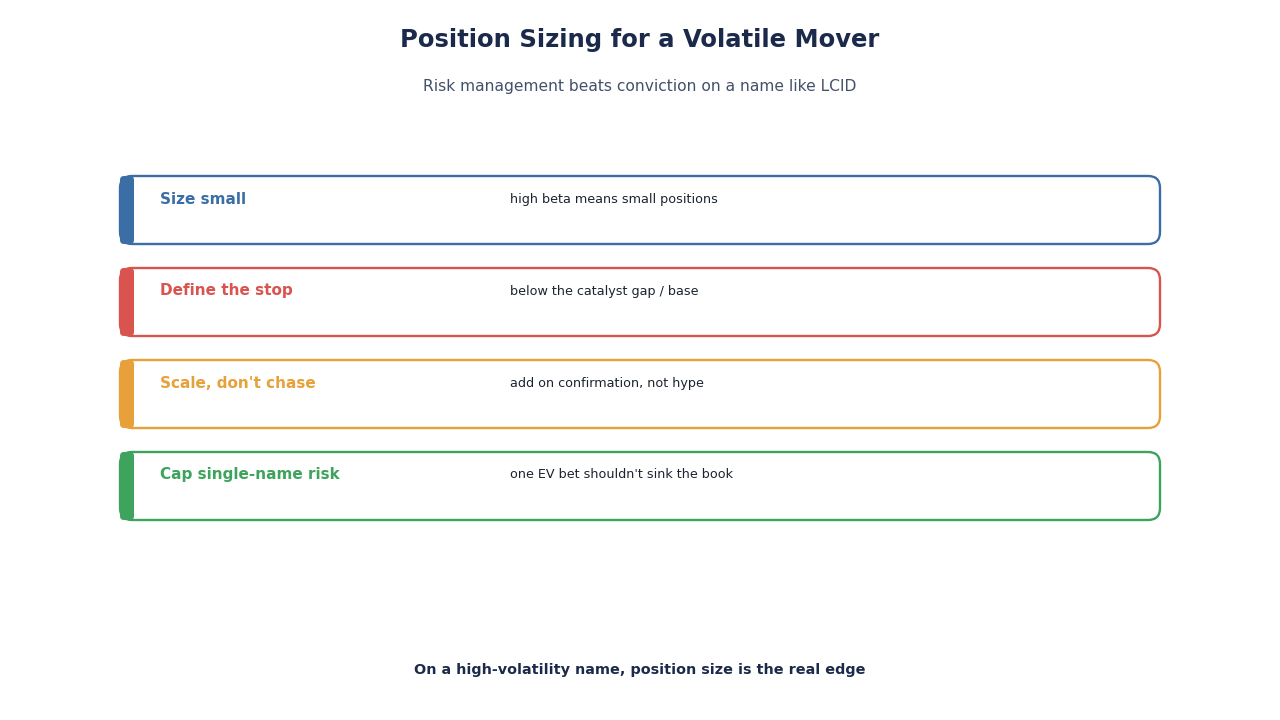
प्रमुख सिद्धांत
- पोजिशन साइज़िंग
- प्रति व्यापार 1-2% से अधिक जोखिम न लें
- स्टॉप लॉस प्लेसमेंट
- प्रमुख समर्थन स्तरों के नीचे
- उतार-चढ़ाव समायोजन
- उच्च उतार-चढ़ाव में चौड़े स्टॉप
- लाभ लेने की रणनीति
- धीरे-धीरे बाहर निकलें
जोखिम तालिका
| जोखिम प्रकार | शमन रणनीति |
|---|---|
| उतार-चढ़ाव स्पाइक | पोजिशन साइज़ कम करें |
| समाचार झटका | रात भर के जोखिम से बचें |
| झूठा ब्रेकआउट | पुष्टि का इंतजार करें |
SimianX AI का उपयोग करके, व्यापारी प्रत्येक संकेत के लिए जोखिम स्तर और आत्मविश्वास स्कोर प्राप्त करते हैं, जो विषयगत निर्णय को मात्रात्मक निर्णयों में बदल देता है।
दीर्घकालिक दृष्टिकोण: क्या लुसिड एक प्रमुख EV खिलाड़ी बन सकता है?
लुसिड की दीर्घकालिक सफलता निष्पादन, स्केलेबिलिटी, और विभेदन पर निर्भर करती है।
वृद्धि चालक
- नए बाजारों में विस्तार
- बैटरी प्रौद्योगिकी नवाचार
- रणनीतिक साझेदारियाँ (जैसे उबर)
- लक्जरी ईवी में ब्रांड स्थिति
चुनौतियाँ
- उच्च नकद जलन
- उत्पादन बाधाएँ
- तीव्र प्रतिस्पर्धा
लुसिड की कहानी अभी भी लिखी जा रही है—यह एक उच्च जोखिम, उच्च पुरस्कार कथा है।
गहराई में: उबर साझेदारी — रणनीतिक निहितार्थ
उबर का सौदा केवल एक शीर्षक नहीं है—यह एक संरचनात्मक परिवर्तन का अवसर प्रस्तुत करता है।
संभावित उपयोग के मामले
- प्रीमियम राइड-हेलिंग बेड़े
- स्वायत्त भविष्य का एकीकरण
- कॉर्पोरेट ईवी बेड़े
राजस्व प्रभाव परिदृश्य
| परिदृश्य | प्रभाव |
|---|---|
| छोटा पायलट | सीमित राजस्व |
| क्षेत्रीय विस्तार | मध्यम वृद्धि |
| वैश्विक एकीकरण | परिवर्तनकारी |
व्यवहारिक वित्त: व्यापारी LCID जैसे मूव्स का पीछा क्यों करते हैं
मनोविज्ञान को समझना यह जानने के लिए कुंजी है कि लुसिड स्टॉक आज क्यों बढ़ रहा है।
भावनात्मक चालक
- छूटने का डर (FOMO)
- झुंड व्यवहार
- समाचार पर अधिक प्रतिक्रिया
स्मार्ट व्यापारी मानसिकता
- प्रक्रिया पर ध्यान केंद्रित करें, परिणाम पर नहीं
- विस्तारित मूव्स का पीछा करने से बचें
- डेटा का उपयोग करें, भावनाओं का नहीं
विस्तारित FAQ: लुसिड स्टॉक आज क्यों बढ़ रहा है
LCID की रैली कितनी देर तक चल सकती है?
यह इस बात पर निर्भर करता है कि क्या यह मूव स्थायी वॉल्यूम और फॉलो-थ्रू उत्प्रेरकों द्वारा समर्थित है। इसके बिना, रैलियाँ अक्सर फीकी पड़ जाती हैं।
क्या उबर का सौदा पहले से ही मूल्य में शामिल है?
आंशिक रूप से, हाँ। बाजार अपेक्षाओं को तेजी से मूल्य में शामिल करते हैं, लेकिन भविष्य के अपडेट प्रवृत्ति को बढ़ा सकते हैं।
LCID अन्य ईवी स्टॉक्स की तुलना में अधिक क्यों बढ़ता है?
क्योंकि इसके कम मार्केट कैप और उच्च अस्थिरता के कारण, यह समाचार और भावना के प्रति अधिक संवेदनशील है।
क्या लूसिड दीर्घकालिक में टेस्ला से प्रतिस्पर्धा कर सकता है?
लूसिड एक अलग खंड को लक्षित करता है, लेकिन उत्पादन को बढ़ाना मुख्य चुनौती बनी हुई है।
अंतिम विचार: जानकारी को क्रिया में बदलना
आज लूसिड की गतिविधि इस बात का एक उत्तम उदाहरण है कि आधुनिक बाजार समाचार, भावना, और तरलता के चौराहे पर कैसे काम करते हैं।
लेकिन केवल जानकारी पर्याप्त नहीं है।
वास्तविक बढ़त आती है:
- डेटा को संरचना देना
- शोर को छानना
- अनुशासन के साथ निष्पादन करना
यही वह जगह है जहाँ SimianX AI आवश्यक हो जाता है।
दर्जनों संकेतों को मैन्युअल रूप से ट्रैक करने के बजाय, SimianX प्रदान करता है:
- एआई-संचालित मल्टी-एजेंट विश्लेषण
- वास्तविक समय का बाजार खुफिया
- विश्वास स्तर के साथ स्पष्ट निर्णय आउटपुट
एक ऐसे बाजार में जहाँ गति और स्पष्टता सफलता को परिभाषित करती है, एआई निर्णय प्रणाली होना अब वैकल्पिक नहीं है—यह एक प्रतिस्पर्धात्मक लाभ है।
यदि आप वास्तव में LCID जैसे मूव्स को समझना चाहते हैं—और उन पर सटीकता के साथ कार्य करना चाहते हैं—तो आज ही SimianX AI का उपयोग करना शुरू करें।
संबंधित लेख
- Snowflake स्टॉक 36% उछला: AI Data Cloud और AWS डील की वजह से
- Dell स्टॉक 2026 में +17%: AI सर्वर ब्रेकआउट का पूर्ण विश्लेषण
- AI stocks बूम: Nvidia की अगुवाई में सेमीकंडक्टर सुपरसाइकिल