
 Oleh Muke
Nasdaq 100 Pulse Likuiditas: Yields, Spreads, Revisi Analisis
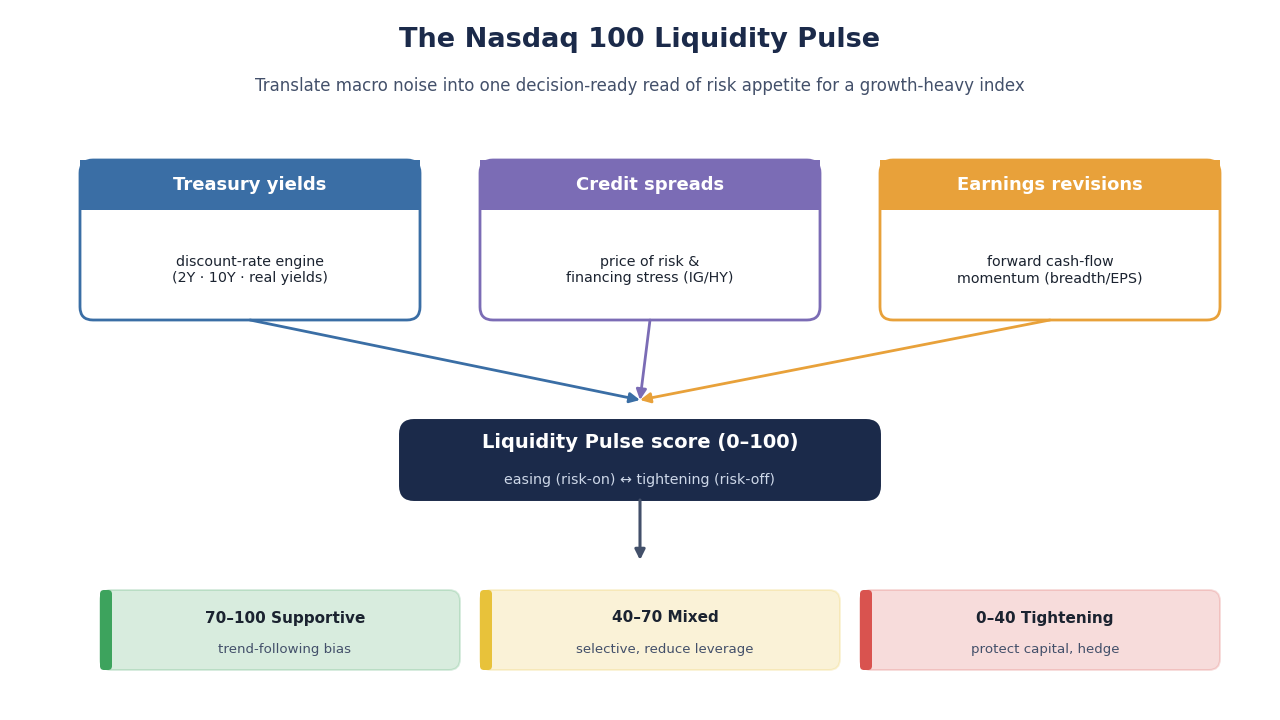
Nasdaq 100 Liquidity Pulse adalah cara praktis untuk menerjemahkan "kebisingan makro" menjadi pembacaan berulang dan siap-keputusan atas selera risiko—terutama untuk indeks yang berat ke pertumbuhan, di mana tingkat diskonto dan kondisi pendanaan sangat menentukan. Dalam riset ini, Anda akan belajar membangun Liquidity Pulse dari tiga pilar terukur—imbal hasil Treasury, spread kredit, dan revisi ekspektasi laba—serta mengubahnya menjadi alur kerja bertenaga AI di dalam SimianX AI. Jika Anda ingin kerangka yang tidak bergantung pada firasat, inilah jawabannya.
Mengapa Nasdaq 100 sangat sensitif terhadap "likuiditas"
Nasdaq 100 (sering dilacak via NDX atau QQQ) memiliki bias struktural ke arus kas berdurasi panjang: teknologi kapitalisasi besar, perangkat lunak, semikonduktor, dan platform komunikasi. Itu menciptakan mekanisme yang jelas:
- Imbal hasil Treasury memengaruhi tingkat diskonto yang dipakai untuk menilai arus kas masa depan.
- Spread kredit mengungkapkan harga pasar atas risiko dan tekanan pendanaan.
- Revisi ekspektasi laba mengukur apakah pasar sedang menaikkan atau memangkas asumsi laba ke depan.
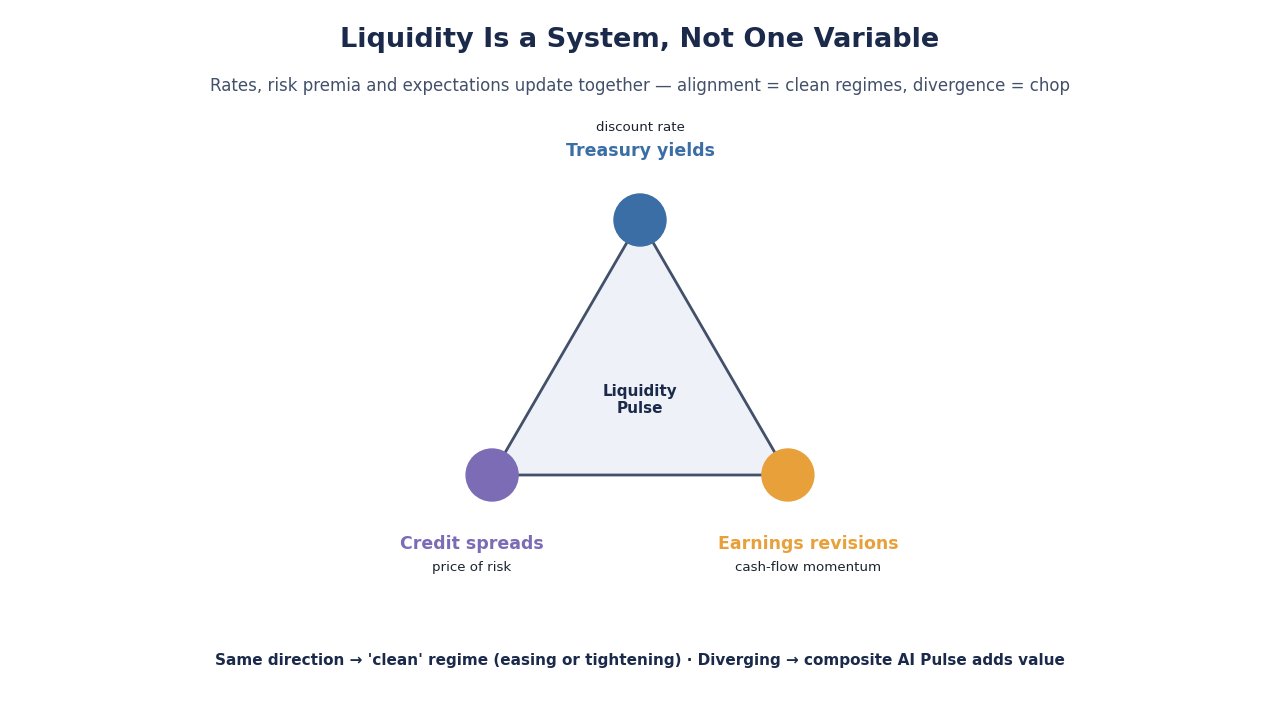
Ketika ketiganya bergerak searah, biasanya muncul rezim "bersih": pelonggaran likuiditas (risk-on) atau pengetatan likuiditas (risk-off). Ketika berpencar, muncullah gerak bolak-balik—dan di situlah Pulse komposit berbantuan AI menjadi berharga.
Ide kunci: likuiditas bukan satu variabel. Ia adalah sistem—suku bunga, premi risiko, dan ekspektasi yang diperbarui bersama-sama.
Tiga pilar Liquidity Pulse (dan apa arti sebenarnya masing-masing)
Pilar 1 — Imbal hasil Treasury: motor tingkat diskonto
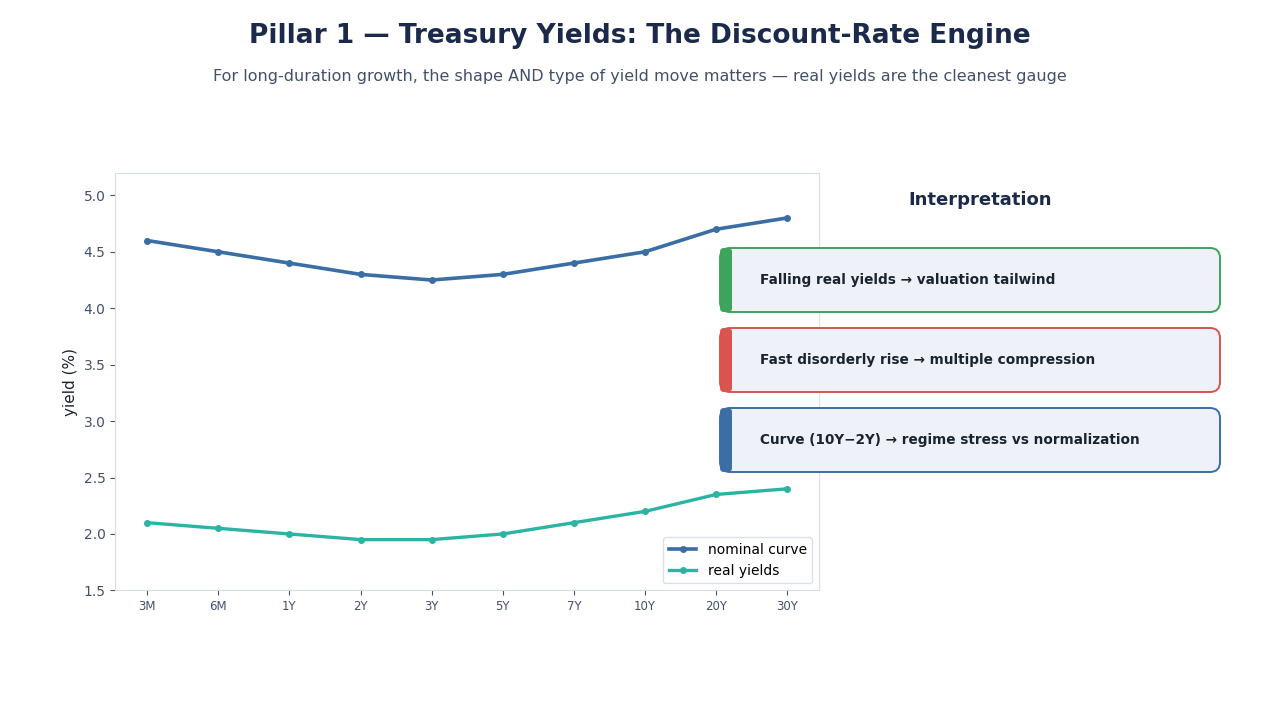
Imbal hasil Treasury melakukan lebih dari sekadar "naik atau turun". Untuk pemosisian Nasdaq 100, bentuk dan jenis pergerakan imbal hasil itu penting:
2Ydan5Y: ekspektasi kebijakan + penilaian ulang makro jangka pendek10Y: tingkat diskonto durasi panjang (penting untuk multiple pertumbuhan)- Imbal hasil riil (jika tersedia): sering kali pengukur "paling bersih" tekanan durasi
- Ukuran kurva (mis.
10Y-2Y): tekanan rezim vs normalisasi
Pintasan interpretasi
- Imbal hasil turun (terutama yang riil) sering = angin baik bagi valuasi
- Imbal hasil naik (cepat, tak teratur) sering = risiko kompresi multiple
Pilar 2 — Spread kredit: harga risiko (dan tekanan tersembunyi)
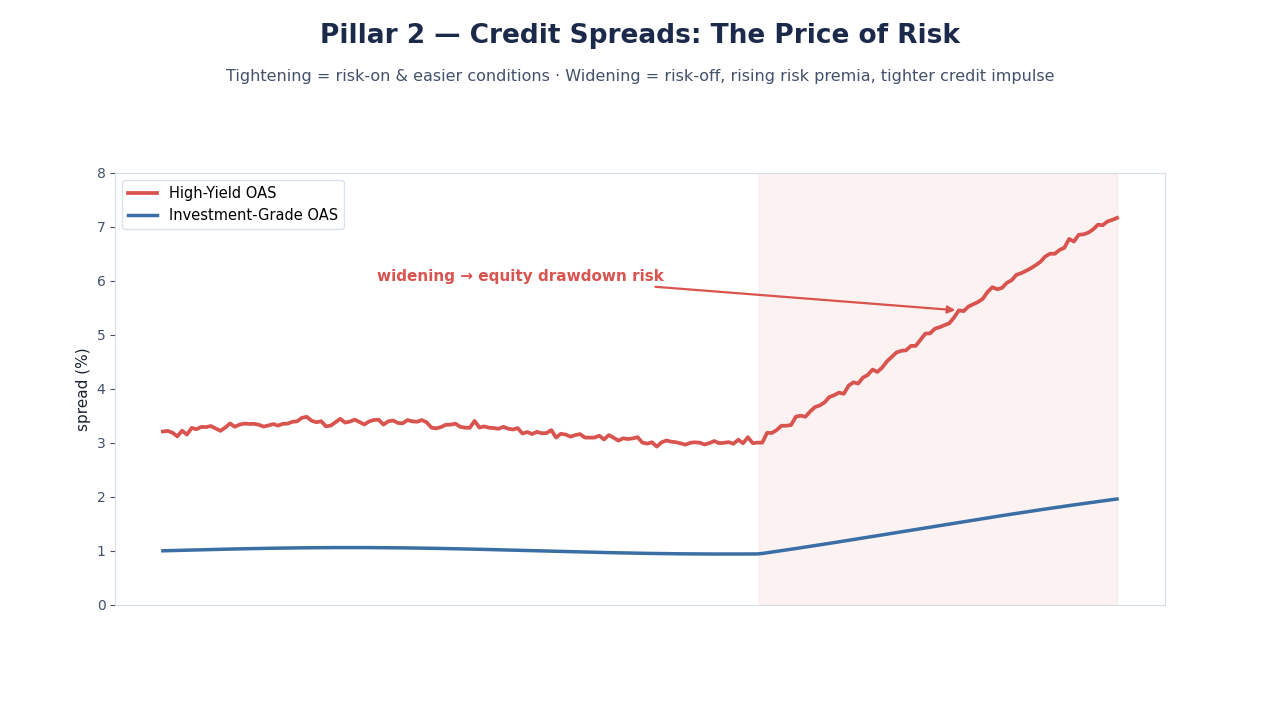
Spread kredit adalah selisih imbal hasil antara obligasi korporasi dan Treasury bertenor serupa. Ia menangkap selera risiko, ketakutan gagal bayar, dan tekanan pendanaan.
Dua kelompok spread yang umum:
- Spread Investment Grade (IG): kehati-hatian awal / pelemahan makro
- Spread High Yield (HY): tekanan lebih tajam / risiko penurunan (drawdown) saham
Pintasan interpretasi
- Spread menyempit = risk-on dan kondisi finansial lebih longgar
- Spread melebar = risk-off, premi risiko naik, impuls kredit lebih ketat
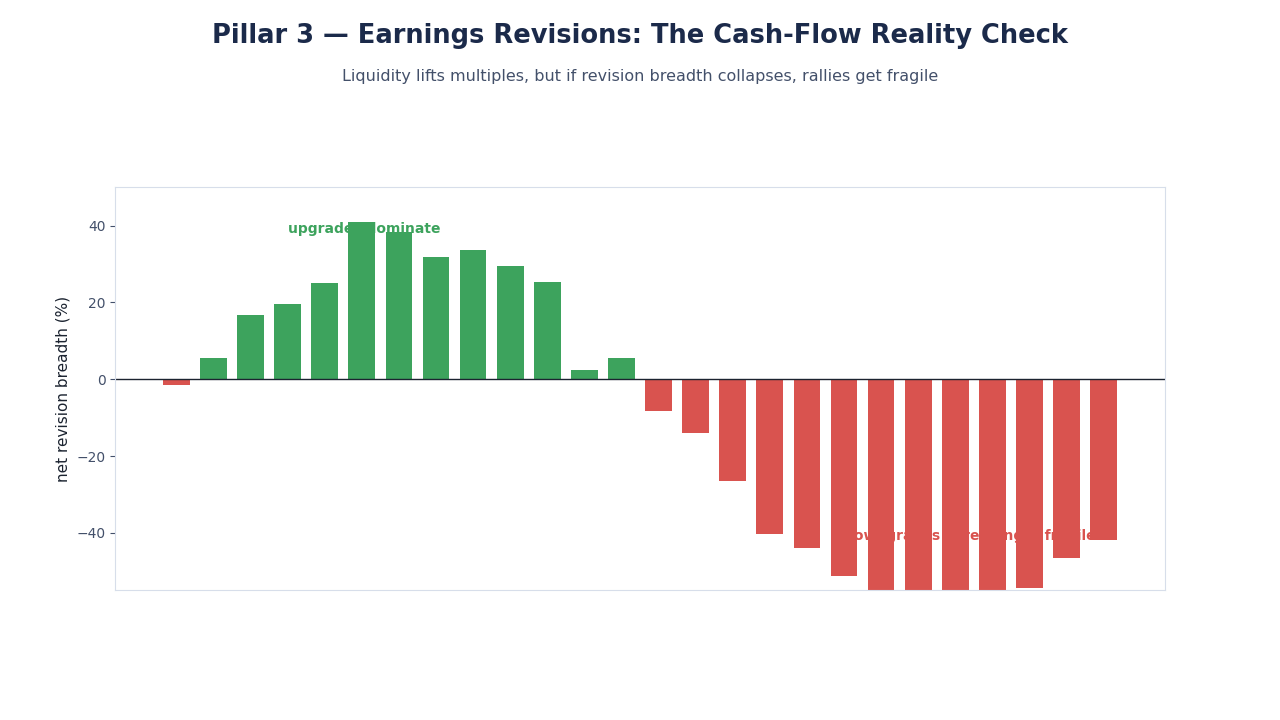
Pilar 3 — Revisi ekspektasi laba: pemeriksaan realitas arus kas
Revisi laba adalah perubahan ekspektasi ke depan—sering ditangkap melalui:
- Keluasan revisi (berapa banyak kenaikan vs penurunan)
- Revisi neto (kenaikan dikurangi penurunan, disesuaikan magnitudo)
- Tren EPS ke depan (konsensus EPS naik atau turun)
Untuk Nasdaq 100, revisi bisa berperan sebagai filter "momentum fundamental":
- Likuiditas dapat mengangkat multiple, tetapi jika revisi ambruk, reli menjadi rapuh.
- Sebaliknya, revisi yang kuat dapat menstabilkan drawdown bahkan ketika imbal hasil naik moderat.
Menggabungkan tiga pilar menjadi satu Nasdaq 100 Liquidity Pulse
Pulse yang baik seharusnya:
- Dapat dibandingkan lintas waktu (z-score / persentil)
- Tahan terhadap kebisingan (penghalusan + logika rezim)
- Dapat ditindaklanjuti (ambang dan playbook yang jelas)
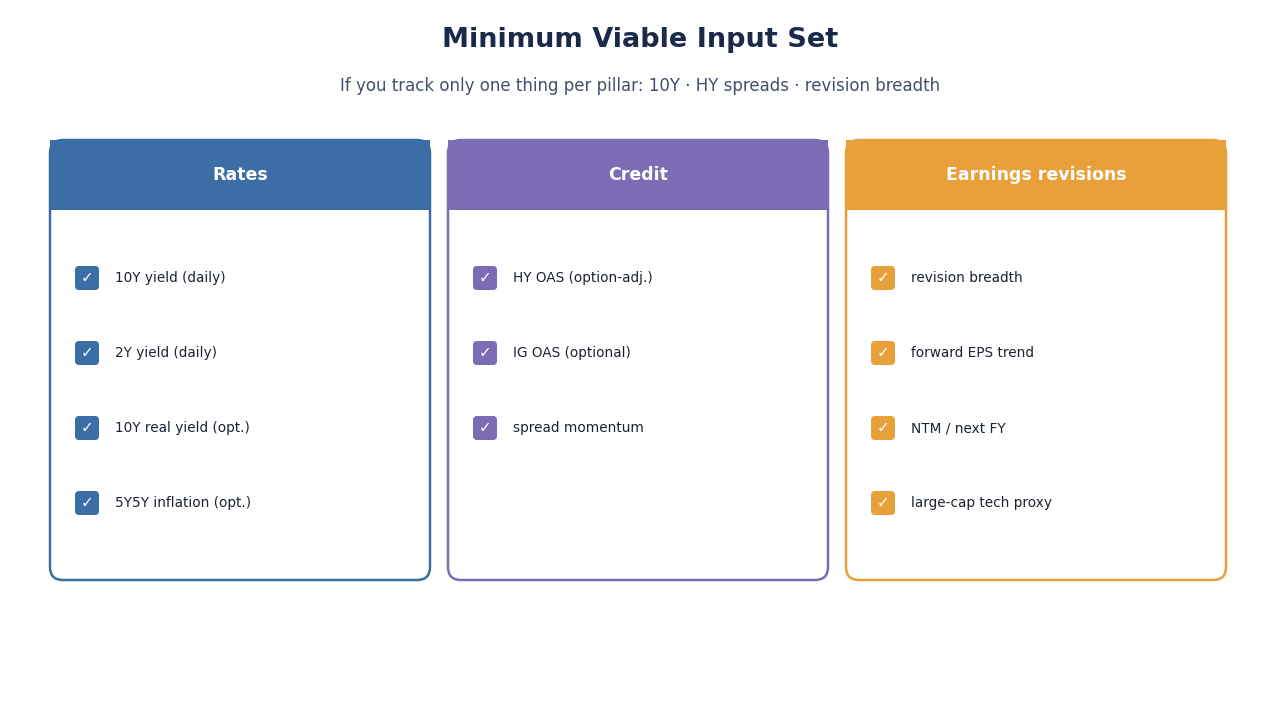
Langkah 1: pilih input yang dapat diamati (himpunan minimum yang layak)
Himpunan awal yang sederhana dan kuat:
- Suku bunga
- 10Y yield (harian)
- 2Y yield (harian)
- opsional: 10Y real yield, ekspektasi inflasi 5Y5Y
- Kredit
- HY OAS (spread disesuaikan opsi) atau proxy spread HY
- IG OAS (opsional)
- Revisi laba
- keluasan revisi untuk komponen Nasdaq 100 (atau proxy teknologi kapitalisasi besar)
- tren EPS ke depan (12 bulan ke depan atau tahun fiskal berikutnya)
Jika hanya bisa melacak satu hal per pilar: 10Y, spread HY, keluasan revisi.
Langkah 2: normalisasi setiap input (agar bisa digabungkan)
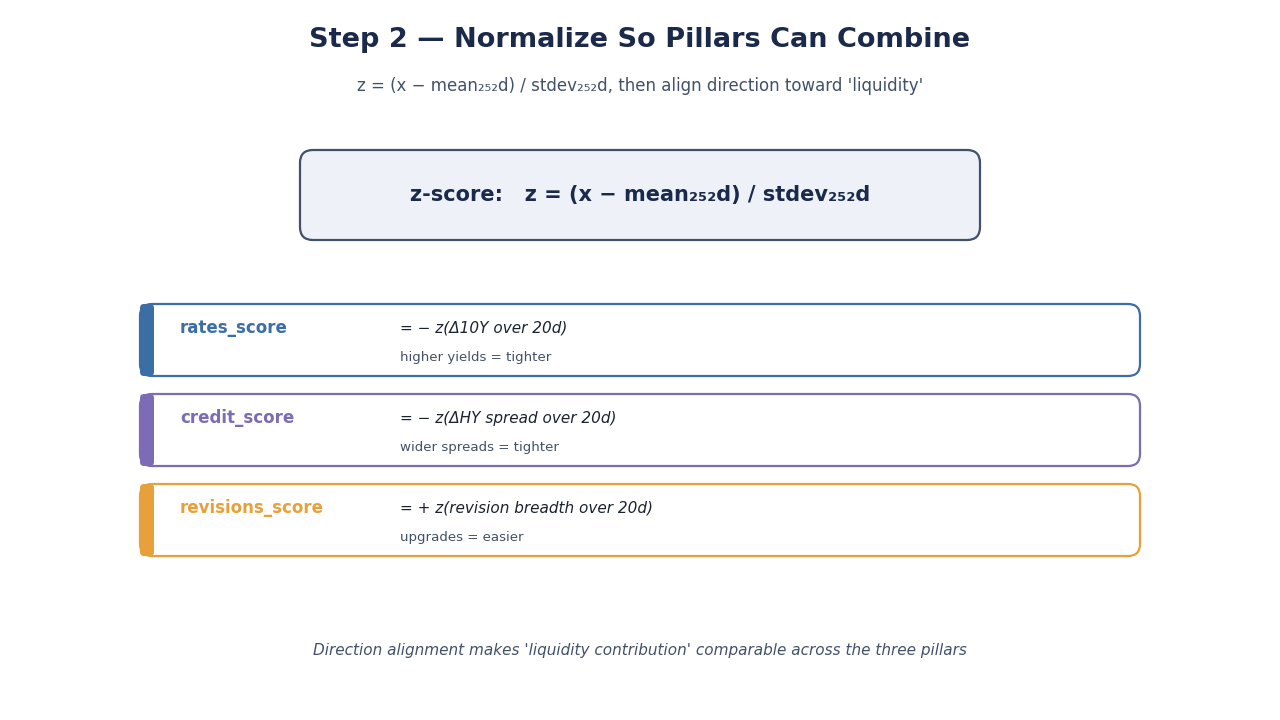
Ubah deret mentah ke skala yang sebanding, mis. z-score:
z = (x - mean_252d) / stdev_252d
Lalu samakan arahnya:
- Imbal hasil lebih tinggi = lebih ketat (negatif bagi likuiditas)
- Spread lebih lebar = lebih ketat (negatif bagi likuiditas)
- Revisi ke atas = lebih longgar (positif bagi likuiditas)
Sehingga Anda dapat mendefinisikan "kontribusi likuiditas" sebagai:
rates_score = -z(10Y_change_20d)credit_score = -z(HY_spread_change_20d)revisions_score = +z(revision_breadth_20d)
Langkah 3: bobotkan pilar (mulai sederhana, kemudian lebih cerdas)
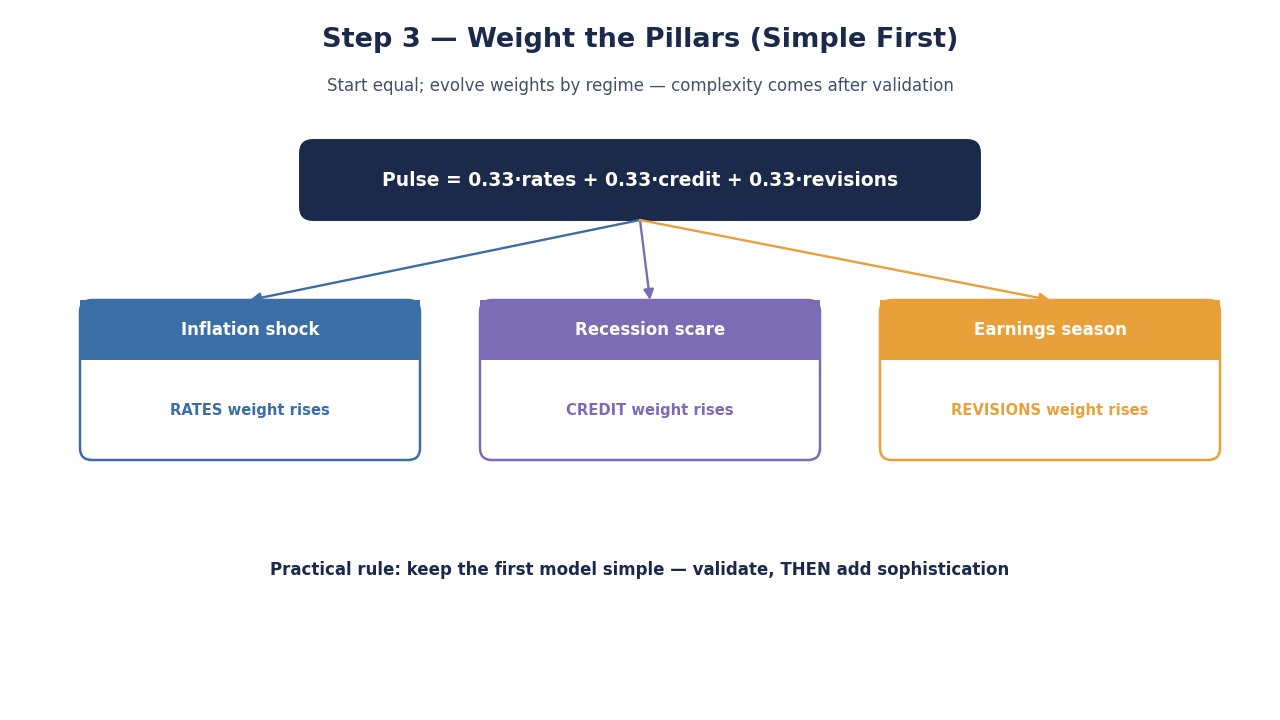
Mulai dengan bobot sama:
Pulse = 0.33*rates + 0.33*credit + 0.33*revisions
Lalu kembangkan bobot berdasarkan rezim:
- Saat guncangan inflasi, bobot suku bunga naik
- Saat ketakutan resesi, bobot kredit naik
- Saat musim laporan, bobot revisi naik
Aturan praktis (penting): jaga model pertama tetap sederhana—kompleksitas datang setelah validasi.
Langkah 4: tambahkan lapisan rezim (agar tidak overtrading)
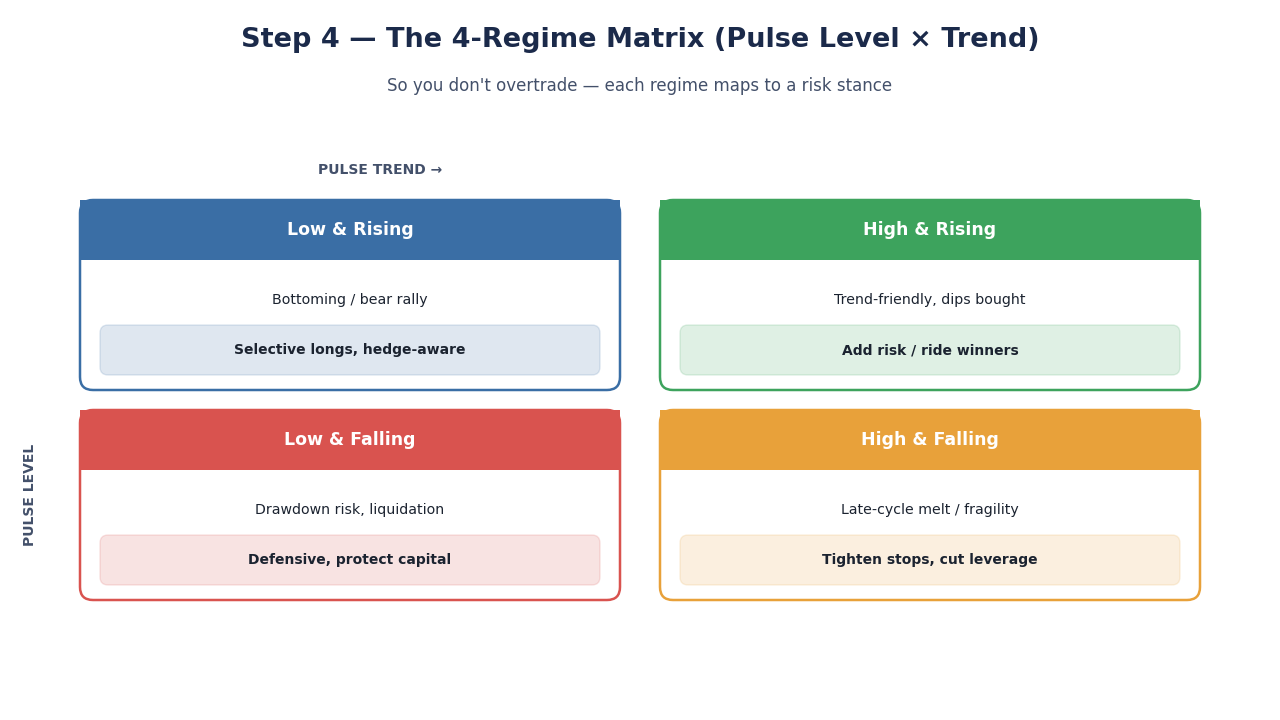
Buat 4 rezim dari Pulse dan trennya:
| Rezim | Level Pulse | Tren Pulse | Perilaku Khas Nasdaq 100 | Sikap Risiko |
|---|---|---|---|---|
| 1 | Tinggi | Naik | Ramah tren, penurunan dibeli | Tambah risiko / biarkan pemenang berjalan |
| 2 | Tinggi | Turun | Melt akhir siklus / kerapuhan | Perketat stop, kurangi leverage |
| 3 | Rendah | Naik | Pembentukan dasar / reli bearish | Long selektif, sadar hedge |
| 4 | Rendah | Turun | Risiko drawdown, likuidasi | Defensif, utamakan modal |
Bagaimana Nasdaq 100 Liquidity Pulse memberi sinyal risk-on vs risk-off?
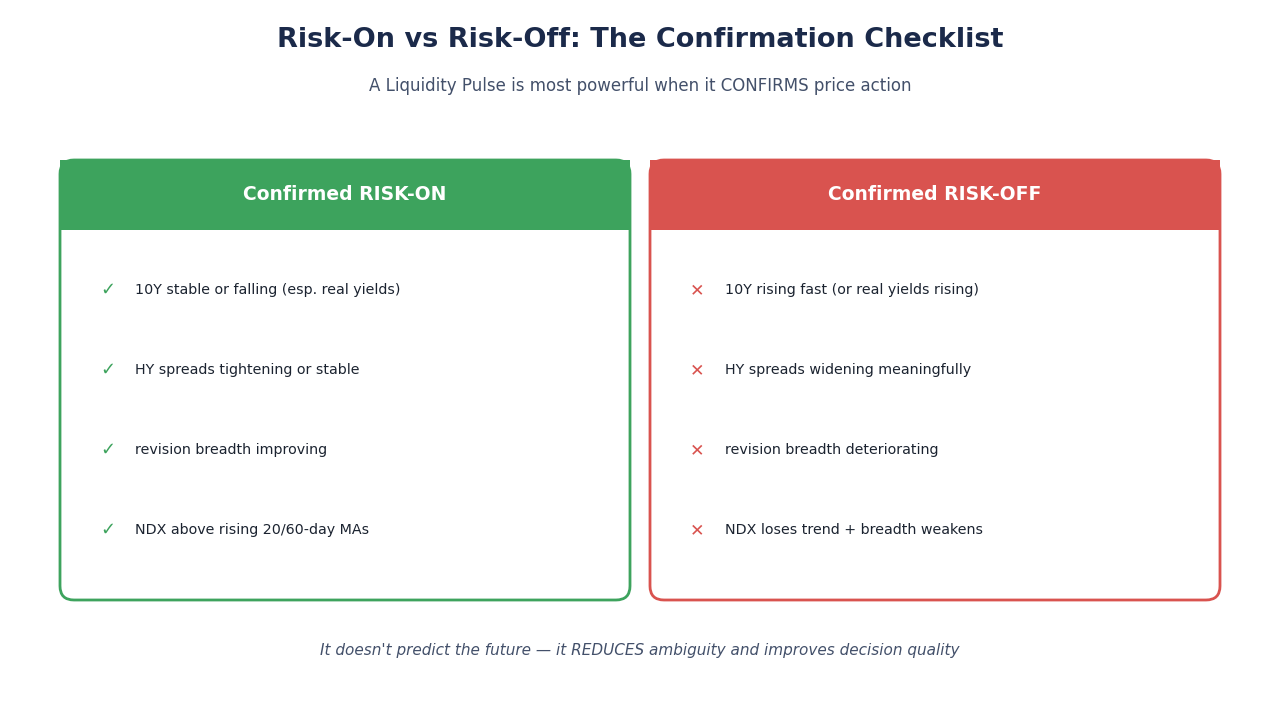
Liquidity Pulse paling kuat ketika mengonfirmasi aksi harga:
Risk-on terkonfirmasi (keyakinan tinggi)
10Ystabil atau turun (terutama imbal hasil riil)- spread HY menyempit atau stabil
- keluasan revisi membaik
- Nasdaq 100 di atas ukuran tren kunci (mis. rata-rata bergerak
20/60hari menanjak)
Risk-off terkonfirmasi (keyakinan tinggi)
10Ynaik cepat (atau imbal hasil riil naik)- spread HY melebar signifikan
- keluasan revisi memburuk
- Nasdaq 100 kehilangan tren + keluasan pasar melemah
Liquidity Pulse yang kuat tidak meramal masa depan—ia mengurangi ambiguitas dan meningkatkan kualitas keputusan.
Membangun alur kerja AI: dari sinyal ke keputusan (cara SimianX)
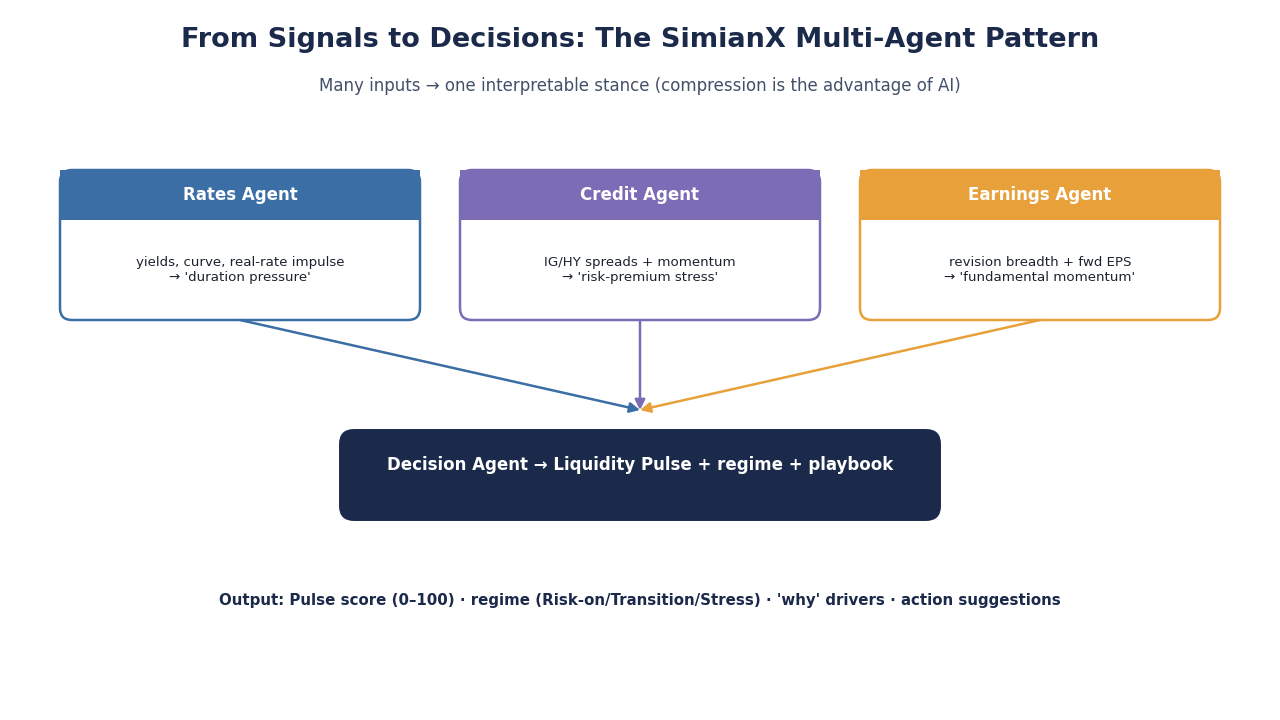
Mode kegagalan yang umum: trader memantau 20 dashboard dan tetap ragu. Keunggulan AI adalah kompresi: banyak input menjadi satu sikap yang dapat ditafsirkan.
Berikut pola multi-agen efektif yang dapat Anda jalankan di dalam SimianX AI:
- Agen Suku Bunga: memantau imbal hasil, kurva, dan impuls suku bunga riil; melabeli "tekanan durasi"
- Agen Kredit: melacak spread IG/HY dan momentum spread; melabeli "tekanan premi risiko"
- Agen Laba: melacak keluasan revisi dan tren EPS ke depan; melabeli "momentum fundamental"
- Agen Keputusan: memadukan ketiganya menjadi Liquidity Pulse + rezim + playbook
Dalam praktik, SimianX AI dapat menyajikan:
- satu skor Pulse (0–100)
- label rezim (Risk-on / Transisi / Tekanan)
- penjelasan "mengapa" (pendorong utama + apa yang berubah hari ini)
- saran tindakan (ukuran posisi, hedge, jangka waktu)
Referensi internal: mulai dari hub riset SimianX di SimianX AI dan jelajahi lebih banyak alur bergaya makro di halaman Stories.
Model scoring praktis yang dapat Anda implementasikan hari ini
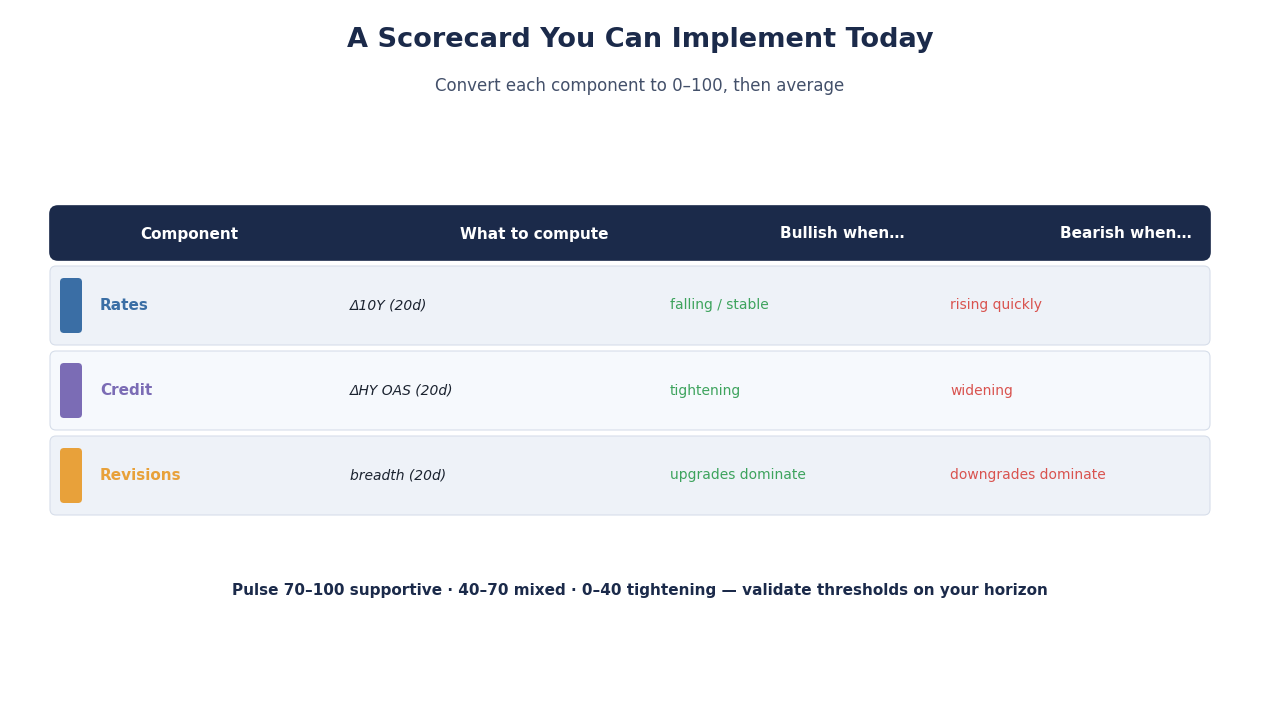
Berikut scorecard sederhana yang bisa dipakai bahkan tanpa stack kuantitatif lengkap.
Transformasi sinyal (ramah pemula)
- Impuls suku bunga:
Δ10Y selama 20 haridipetakan ke persentil - Impuls kredit:
Δspread HY selama 20 haridipetakan ke persentil - Impuls revisi:
keluasan revisi selama 20 haridipetakan ke persentil
Tabel scorecard
| Komponen | Yang dihitung | Bullish bagi Nasdaq 100 saat… | Bearish saat… |
|---|---|---|---|
| Suku bunga | Δ10Y (20d) | turun / stabil | naik cepat |
| Kredit | ΔHY OAS (20d) | menyempit | melebar |
| Revisi | keluasan (20d) | kenaikan mendominasi | penurunan mendominasi |
Ubah masing-masing menjadi skor 0–100, lalu rata-ratakan.
Contoh ambang (jangan dianggap universal)
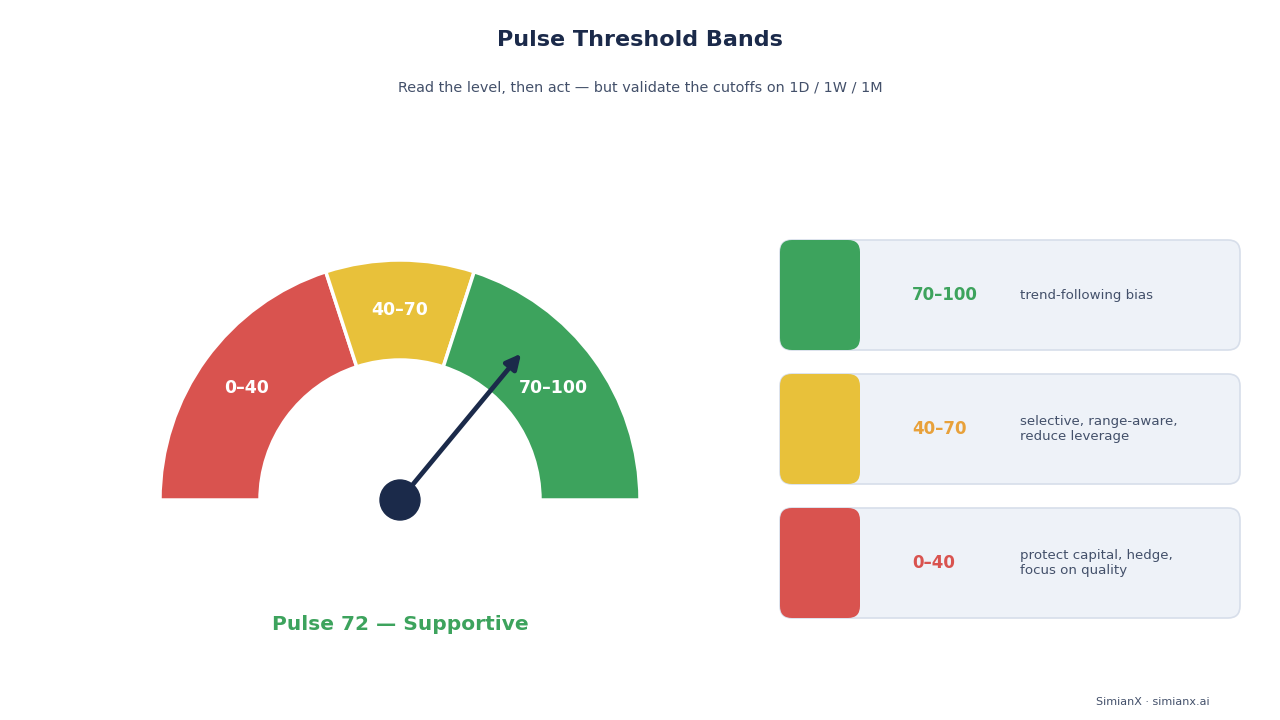
- Pulse 70–100: likuiditas mendukung → bias mengikuti tren
- Pulse 40–70: campuran → selektif, sadar rentang, kurangi leverage
- Pulse 0–40: pengetatan → lindungi modal, hedge, fokus pada kualitas
Pengingat (penting): ambang harus divalidasi pada horizon data Anda (1D, 1W, 1M).
Sebuah playbook: cara trading dengan Liquidity Pulse (tanpa overfitting)
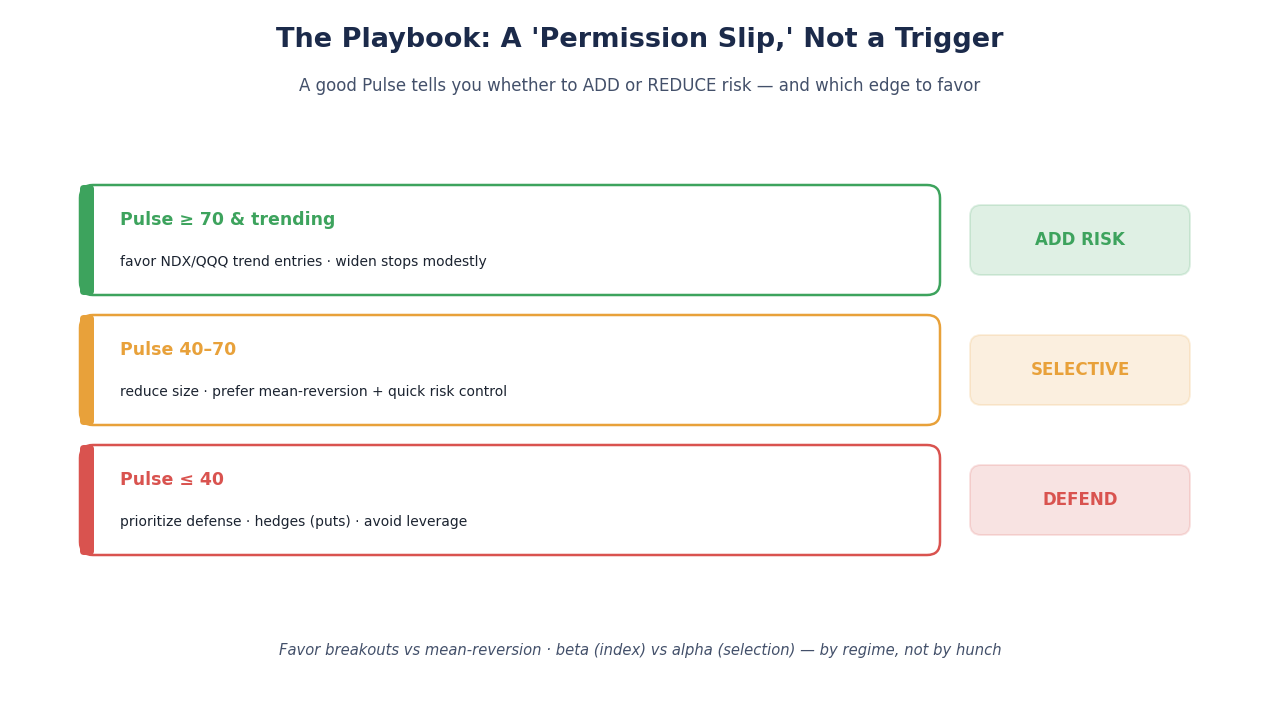
Gunakan sebagai "izin", bukan sebagai pemicu
Liquidity Pulse yang baik menjawab:
- Apakah saya harus menambah atau mengurangi risiko?
- Apakah saya harus mengutamakan breakout atau mean reversion?
- Apakah saya harus memilih beta (eksposur indeks) atau alpha (pemilihan saham)?
Satu set aturan sederhana (ilustratif)
- Jika Pulse ≥ 70 dan harga sedang tren:
- utamakan entri tren di NDX/QQQ
- lebarkan stop secara moderat (tren butuh ruang)
- Jika Pulse 40–70:
- kurangi ukuran posisi
- utamakan peluang mean reversion + kontrol risiko cepat
- Jika Pulse ≤ 40:
- prioritaskan pertahanan
- pertimbangkan hedge (mis. put pelindung) dan hindari leverage
Ukuran posisi: tuas yang lebih aman daripada prediksi
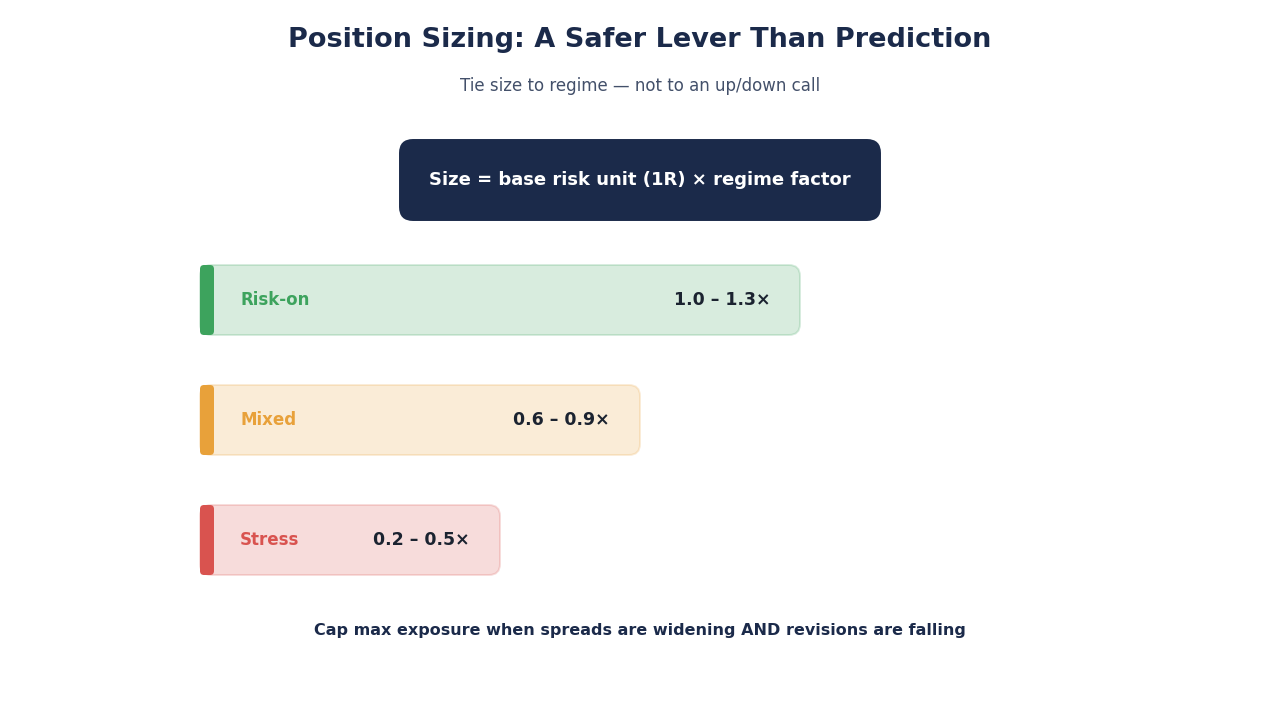
Alih-alih "naik atau turun", ikat ukuran ke rezim:
- Mulai dengan satu unit risiko dasar (mis. 1R)
- Kalikan dengan faktor rezim:
- Risk-on: 1.0–1.3x
- Campuran: 0.6–0.9x
- Tekanan: 0.2–0.5x
- Batasi eksposur maksimum ketika spread melebar dan revisi turun
Jebakan umum (dan cara menghindarinya)
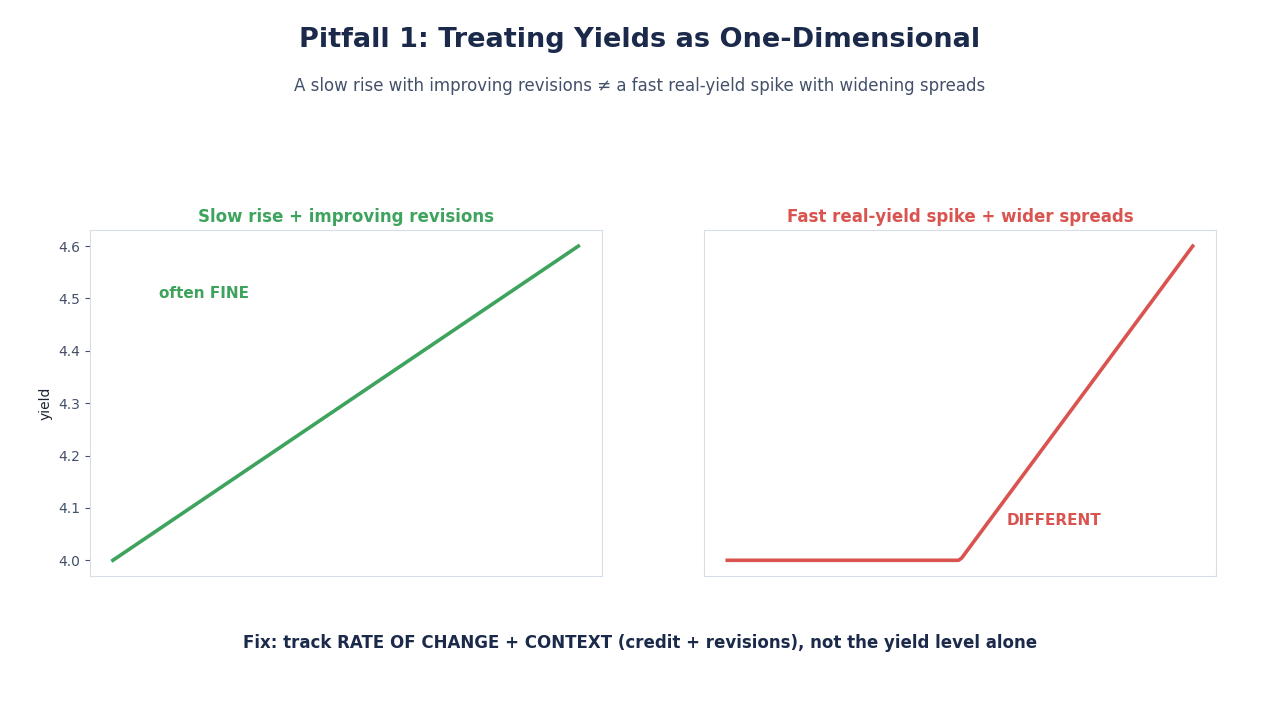
Jebakan 1: memperlakukan imbal hasil sebagai satu dimensi
Kenaikan imbal hasil yang lambat dengan revisi yang membaik bisa baik-baik saja.
Lonjakan cepat imbal hasil riil dengan spread yang melebar adalah hal yang berbeda.
Perbaikan: lacak laju perubahan + konteks (kredit + revisi).
Jebakan 2: mengabaikan "motor laba"
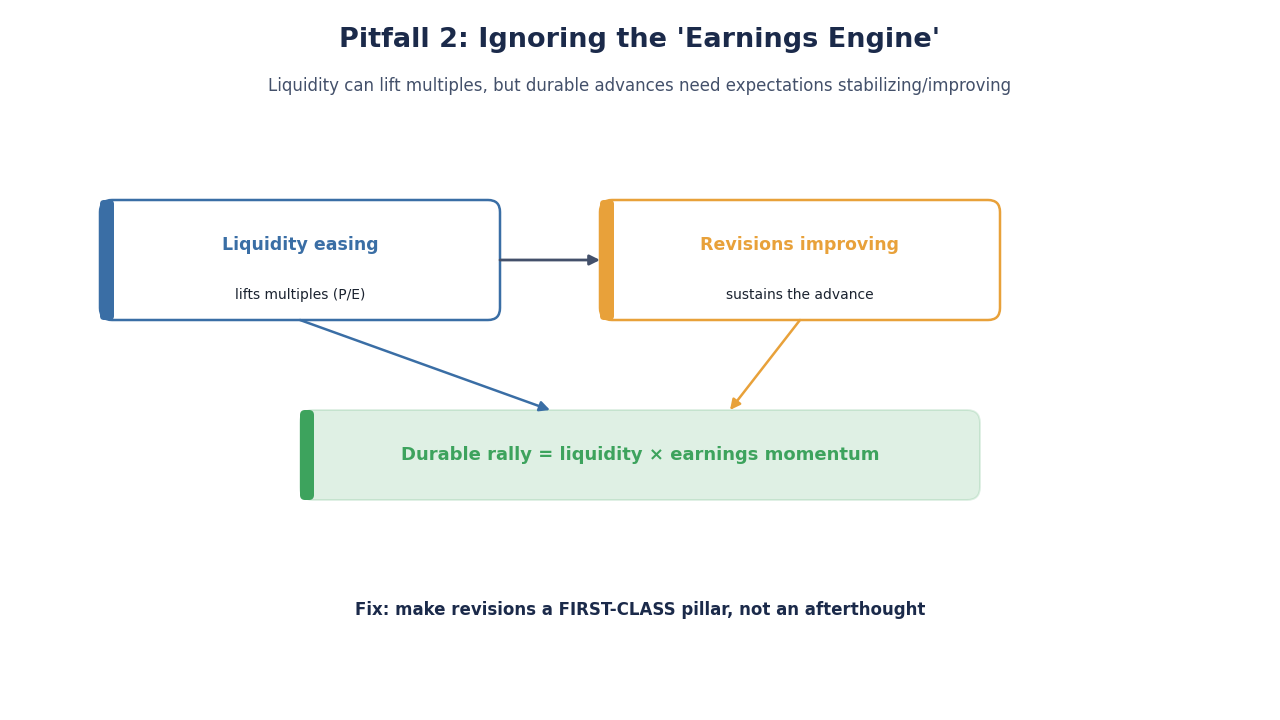
Nasdaq 100 bisa reli karena likuiditas, tetapi kenaikan yang awet biasanya butuh ekspektasi yang stabil atau membaik.
Perbaikan: jadikan revisi pilar kelas satu, bukan sekadar pelengkap.
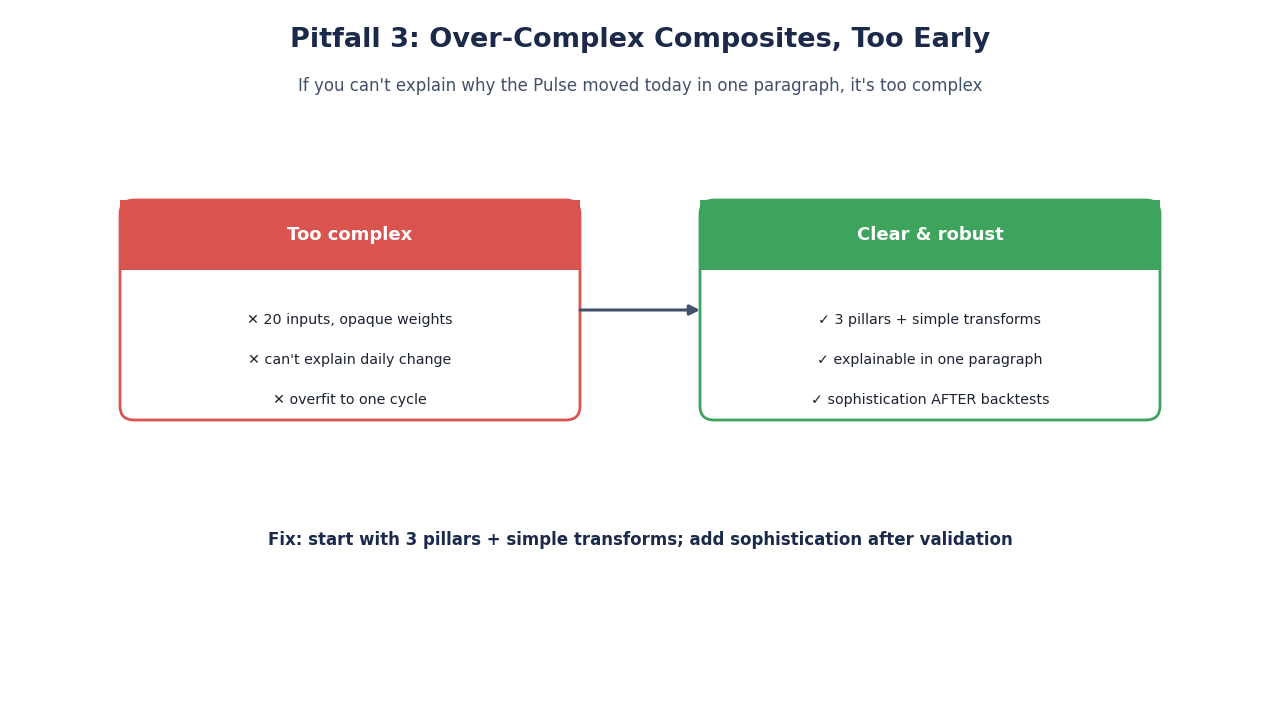
Jebakan 3: membangun komposit terlalu rumit terlalu dini
Jika Anda tidak bisa menjelaskan dalam satu paragraf mengapa Pulse berubah hari ini, kemungkinan ia terlalu rumit.
Perbaikan: mulai dengan 3 pilar + transformasi sederhana; tambahkan kecanggihan setelah backtest.
Backtest Liquidity Pulse (cetak biru riset)
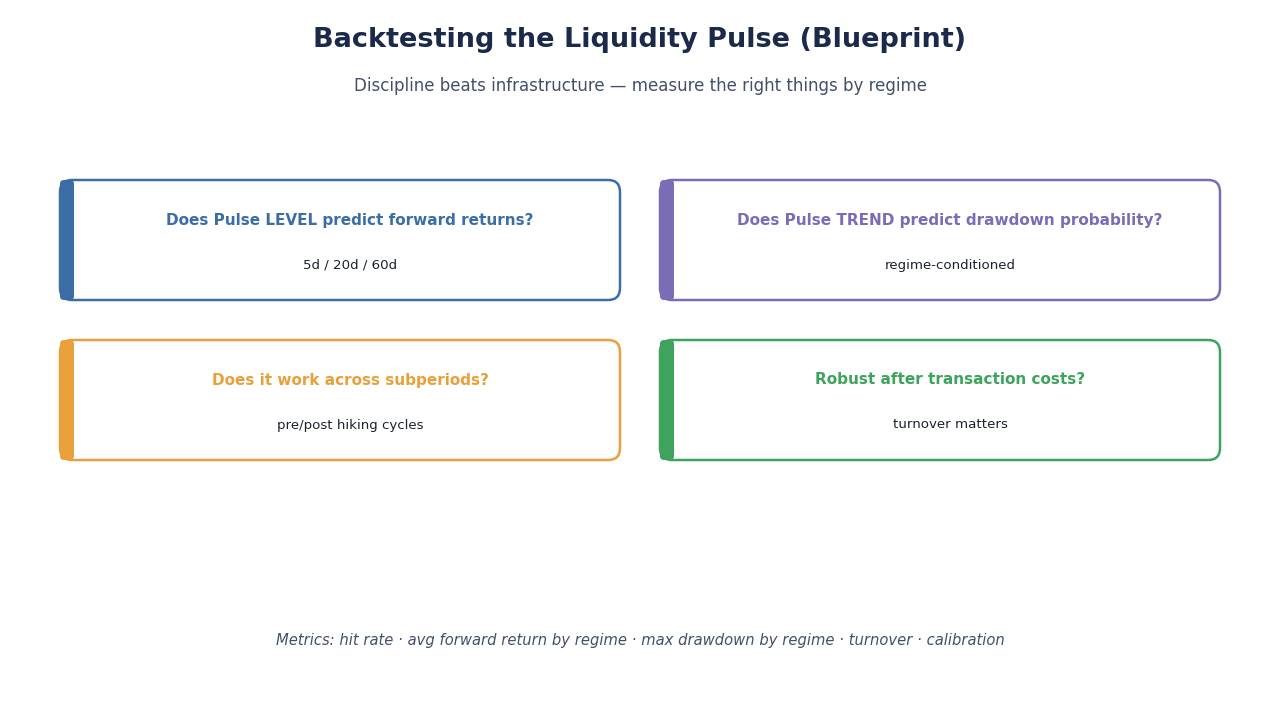
Anda tidak butuh infrastruktur institusional untuk uji yang bermakna, tetapi Anda butuh disiplin.
Pertanyaan minimum backtest
- Apakah level Pulse memprediksi imbal hasil ke depan (
5d,20d,60d)? - Apakah tren Pulse memprediksi probabilitas drawdown?
- Apakah model bekerja lintas subperiode (sebelum/sesudah siklus kenaikan suku bunga)?
- Apakah hasil tetap kuat setelah biaya transaksi?
Metrik evaluasi yang disarankan
- hit rate (akurasi arah)
- imbal hasil ke depan rata-rata per rezim
- drawdown maksimum per rezim
- turnover (seberapa sering sinyal berbalik)
- kalibrasi (apakah "tekanan" benar-benar berarti tekanan?)
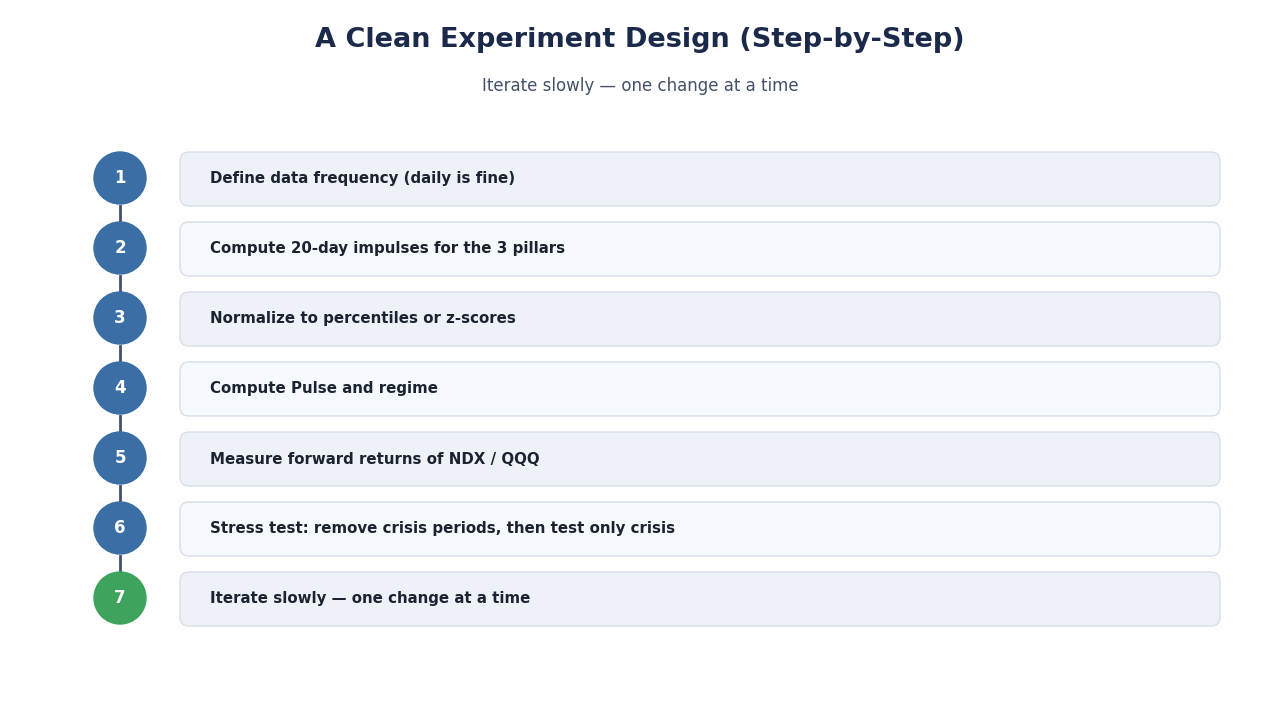
Desain eksperimen yang bersih (langkah demi langkah)
- Tetapkan frekuensi data (harian sudah cukup)
- Hitung impuls 20 hari untuk ketiga pilar
- Normalisasi ke persentil atau z-score
- Hitung Pulse dan rezim
- Ukur imbal hasil ke depan
NDX/QQQ - Stress test dengan membuang periode krisis (lalu uji hanya periode krisis)
- Iterasi perlahan (satu perubahan dalam satu waktu)
Ekstensi lanjutan (opsional, tetapi kuat)
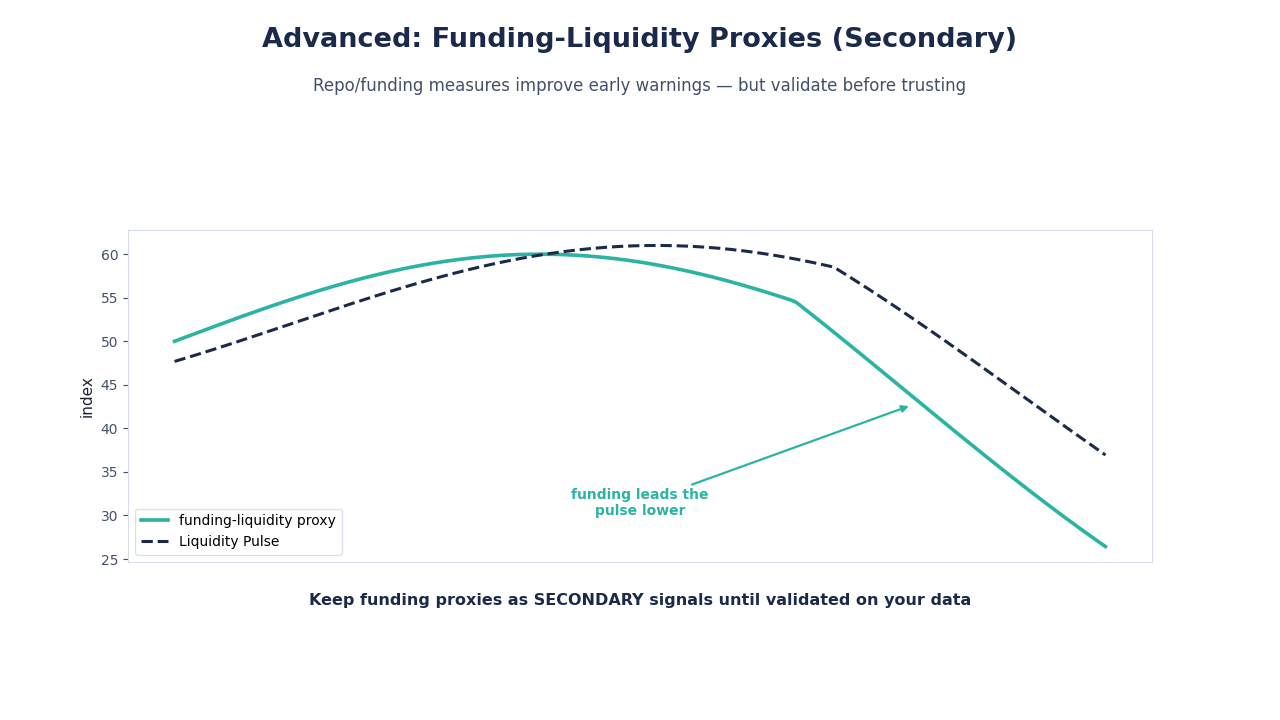
Tambahkan proxy "likuiditas pendanaan"
Jika Anda punya akses ke ukuran repo/pendanaan, mereka bisa memperbaiki peringatan dini. Tetapi jadikan mereka sinyal sekunder sampai tervalidasi.
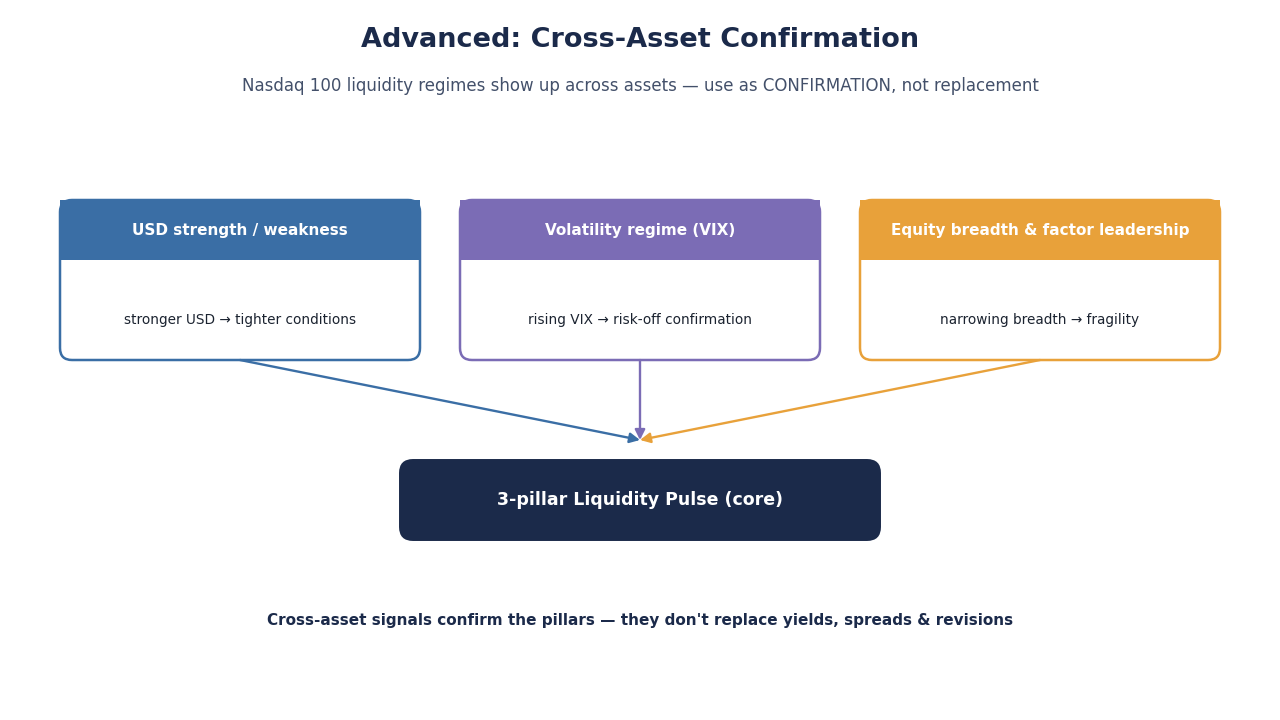
Tambahkan konfirmasi cross-asset
Rezim likuiditas Nasdaq 100 sering tampak pada:
- kekuatan/kelemahan
USD - pergeseran rezim volatilitas (
VIX) - keluasan pasar dan kepemimpinan faktor
Gunakan ini sebagai konfirmasi, bukan pengganti 3 pilar.
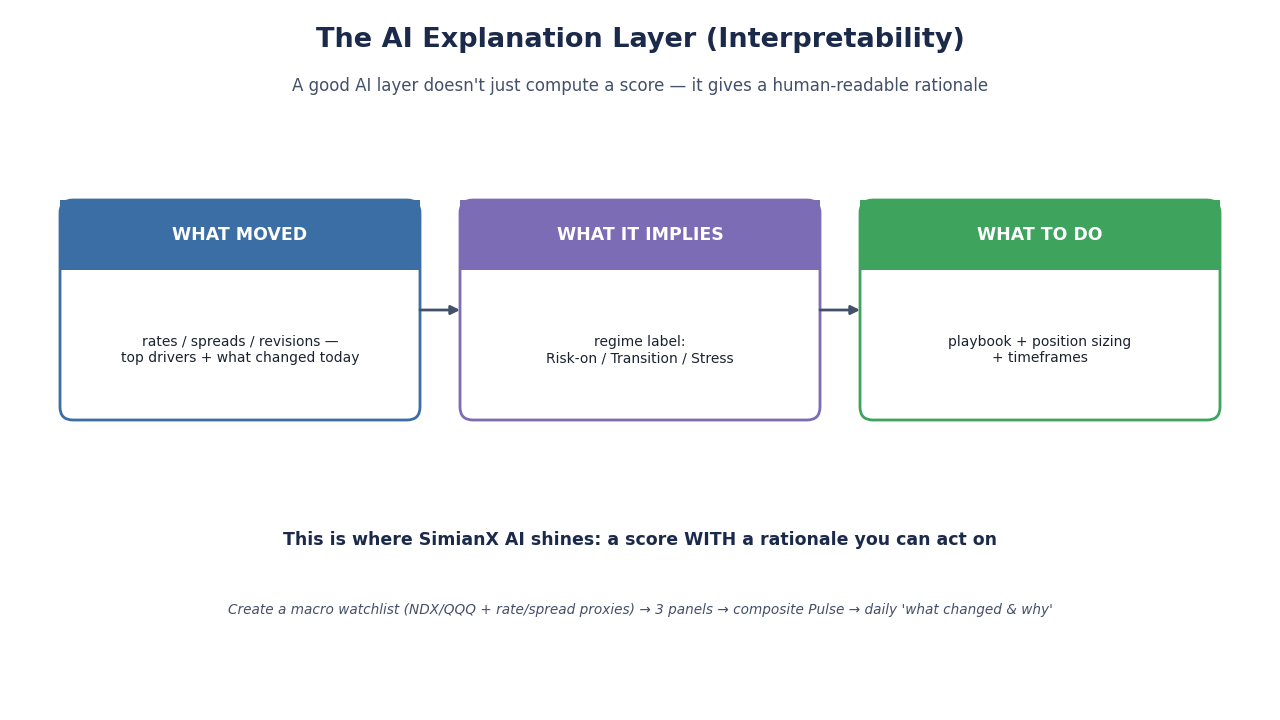
Tambahkan lapisan penjelasan AI (interpretabilitas)
Lapisan AI yang baik harus menghasilkan:
- apa yang bergerak (suku bunga/spread/revisi)
- apa implikasinya (rezim)
- apa yang harus dilakukan (playbook + ukuran posisi)
Di sinilah SimianX AI bersinar: model tidak hanya menghitung skor—ia memberi Anda alasan yang dapat dibaca manusia untuk ditindaklanjuti.
Cara membangun skor Nasdaq 100 Liquidity Pulse di SimianX AI
Untuk mengoperasionalkan kerangka:
- Buat watchlist makro seputar
NDX,QQQ, plus proxy suku bunga/spread. - Konfigurasikan tiga panel pemantauan (Suku Bunga / Kredit / Revisi).
- Definisikan Pulse komposit dengan transformasi konsisten (impuls 20d + normalisasi).
- Minta SimianX merangkum delta harian: apa yang berubah dan mengapa.
- Ikat aturan eksekusi Anda ke rezim (ukuran, stop, hedge, periode holding).
FAQ tentang Nasdaq 100 Liquidity Pulse
Apa cara terbaik melacak Nasdaq 100 Liquidity Pulse setiap hari?
Lacak satu variabel per pilar: imbal hasil 10 tahun, spread high-yield, dan keluasan revisi laba. Perbarui skor komposit sederhana dan perhatikan apakah sedang naik atau turun, bukan hanya levelnya.
Bagaimana imbal hasil Treasury memengaruhi valuasi Nasdaq 100?
Imbal hasil memengaruhi tingkat diskonto yang dipakai untuk arus kas masa depan. Imbal hasil yang lebih tinggi (terutama imbal hasil riil) menekan saham pertumbuhan berdurasi panjang, sementara imbal hasil yang turun biasanya menopang multiple.
Apakah spread kredit mendahului penurunan (drawdown) saham?
Bisa. Pelebaran spread mencerminkan premi risiko yang naik dan kondisi pendanaan yang lebih ketat, yang sering bersamaan dengan tekanan di pasar saham—terutama jika revisi laba juga melemah.
Apa itu revisi ekspektasi laba dan mengapa penting?
Itu adalah pembaruan proyeksi analis (sering kali EPS). Revisi penting karena mewakili ekspektasi yang berubah, yang dapat memicu penilaian ulang bahkan sebelum laba yang dilaporkan berubah.
Bisakah SimianX AI mengotomatiskan alur Liquidity Pulse ini?
Bisa—SimianX AI memampatkan suku bunga, spread, dan revisi menjadi skor Pulse yang dapat ditafsirkan, menjelaskan pendorongnya, dan menyelaraskan sikap trading dengan pergeseran rezim lewat alur dashboard yang dapat diulang.
Kesimpulan
Nasdaq 100 Liquidity Pulse memberi Anda cara terstruktur untuk membaca "cuaca finansial" pasar memakai tiga pilar yang konsisten penting: imbal hasil Treasury (tingkat diskonto), spread kredit (premi risiko), dan revisi ekspektasi laba (momentum arus kas). Ketika ketiganya selaras, rezim menjadi lebih jelas; ketika berpencar, Pulse membantu Anda mengukur risiko dan menghindari percaya diri berlebih. Jika Anda ingin mengoperasionalkan kerangka ini dengan penjelasan AI, kompresi sinyal harian, dan dashboard siap-keputusan, jelajahi SimianX AI dan bangun alur Liquidity Pulse Anda sendiri dari pilar-pilar yang sama.
Bacaan Terkait
- Dashboard Risiko Saham AS: Sinyal AI Breadth & Spreads
- S&P 500 Radar Risiko: Sinyal AI Breadth & Revisi 2026
- Wall Street Drawdown Watch: Peringatan 10% & Tail 40%
- Penyebab Saham AS dan Kripto Anjlok Bersamaan, Februari 2026
- S&P 500 ke 7000: sinyal momentum, likuiditas & valuasi
- Buku Panduan Rotasi Sektor S&P 500 dengan Sinyal AI