
 โดย Muke
สัญญาณเรดาร์ความเสี่ยง AI จากความกว้างของตลาด, การปรับประมาณการกำไร, และออปชันสกิว
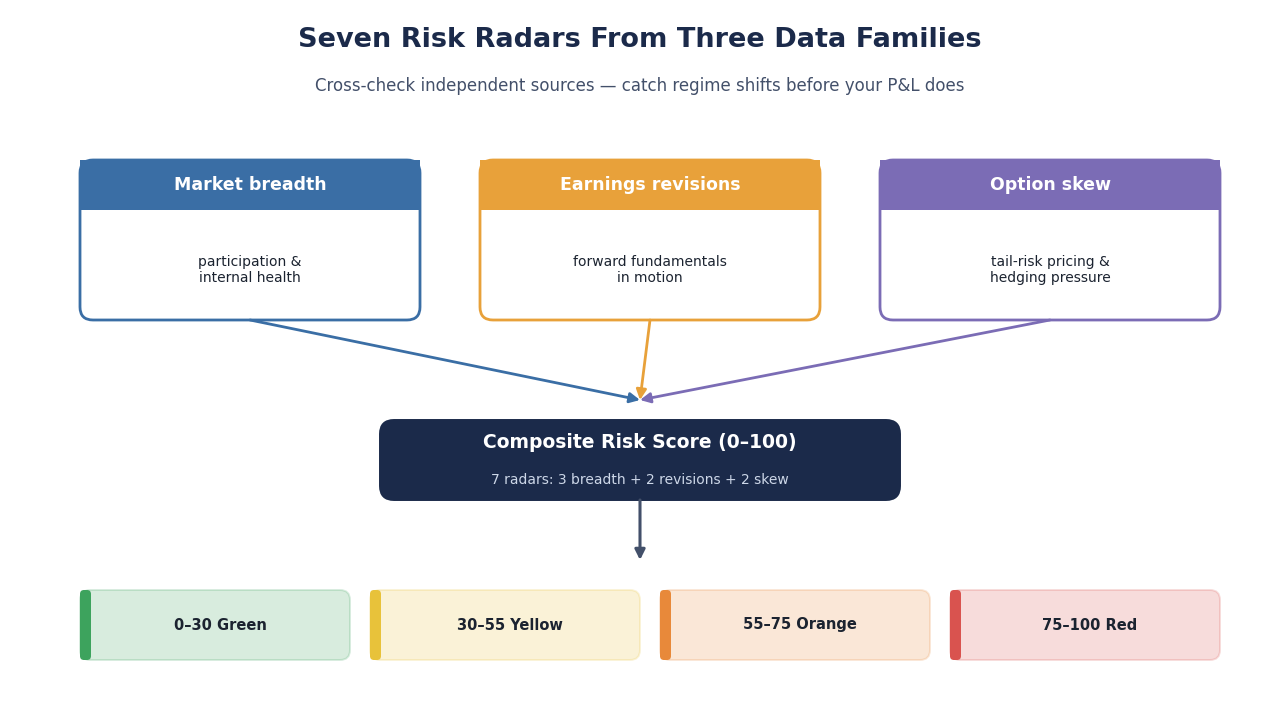
หากคุณทำการซื้อขายหรือจัดสรรในตลาดหุ้นสมัยใหม่ คุณอาจรู้สึกถึงการกระชาก: ดัชนีดูดี ข่าวดูมีเสียงดัง และความเสี่ยง “จู่ๆ” ก็พุ่งสูงขึ้น ปัญหาคือไม่ใช่เพราะตลาดไม่สามารถคาดเดาได้—แต่เพราะคนส่วนใหญ่ติดตามความเสี่ยงด้วย เครื่องมือที่น้อยเกินไป งานวิจัยนี้เสนอ เรดาร์ความเสี่ยงที่ใช้งานได้จริงเจ็ดตัว ที่สร้างจาก สัญญาณเรดาร์ความเสี่ยง AI จากความกว้างของตลาด, การปรับประมาณการกำไร, และออปชันสกิว—สามกลุ่มข้อมูลที่มักเปิดเผยการเปลี่ยนแปลงระบอบ ก่อนที่ P&L ของคุณจะทำ
นี่คือที่ที่ SimianX AI เข้ากันได้อย่างเป็นธรรมชาติ: แทนที่จะทำให้คุณจมอยู่ในตัวชี้วัด กระบวนการทำงานหลายทางเข้าสามารถสรุป ทำไม สถานการณ์ถึงเปลี่ยนแปลงและเปลี่ยนเป็นการแจ้งเตือนที่พร้อมสำหรับการตัดสินใจ (เราจะแสดงคู่มือการดำเนินการแบบทีละขั้นตอนที่คุณสามารถทำภายในกระบวนการทำงานแบบแดชบอร์ด)
ทำไม “เรดาร์เจ็ดตัว” ถึงดีกว่า “ตัวชี้วัดเวทมนตร์หนึ่งตัว”
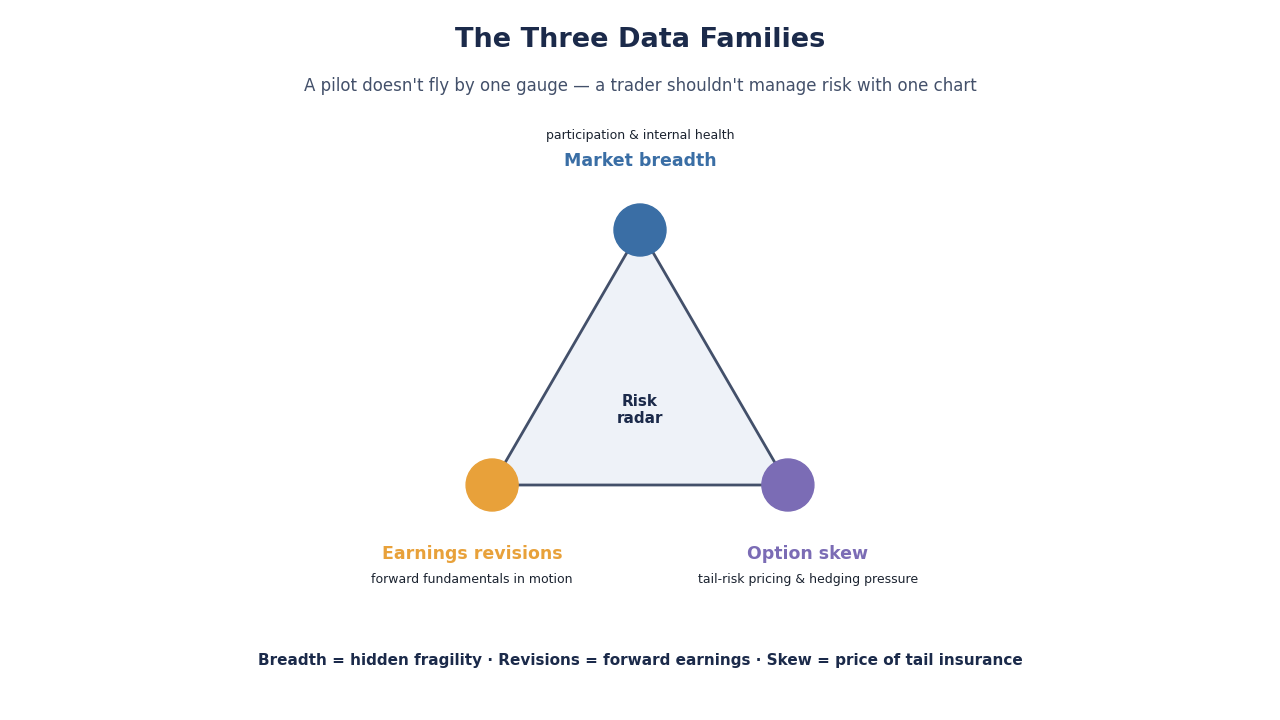
ตัวชี้วัดเดียวล้มเหลวด้วยเหตุผลที่คาดเดาได้สามประการ:
- การพึ่งพาระบอบ: สิ่งที่ได้ผลในช่วงการลดอัตราเงินเฟ้ออาจล้มเหลวในช่วงการช็อกเงินเฟ้อหรือความผันผวนของอัตรา
- การไม่ตรงกันของเวลา: ความผันผวนมักเพิ่มขึ้น หลังจาก ความเสียหายเริ่มขึ้น
- การบิดเบือน: กระแส, การกระจุกตัว, และการจัดตำแหน่งออปชันสามารถปกปิดจุดอ่อนภายใน
ระบบเรดาร์แตกต่างออกไป: มัน ตรวจสอบข้อมูลจากแหล่งที่มาอิสระ เพื่อที่คุณจะไม่ไว้วางใจเลนส์เดียวมากเกินไป
นักบินไม่ได้บินโดยใช้มาตรวัดเพียงตัวเดียว นักเทรดไม่ควรจัดการความเสี่ยงด้วยกราฟเพียงตัวเดียว
สามกลุ่มข้อมูล (และสิ่งที่พวกเขาวัดจริงๆ)
- ความกว้างของตลาด = การมีส่วนร่วมและสุขภาพภายใน (มี หุ้นจำนวนมาก ที่ขับเคลื่อนการเคลื่อนไหว หรือมีเพียงไม่กี่ตัว?)
- การปรับประมาณการกำไร = พื้นฐานข้างหน้าในขบวนการ (ความคาดหวังดีขึ้นหรือเสื่อมถอย?)
- Option skew = การตั้งราคาและแรงกดดันการป้องกันความเสี่ยงจากความเสี่ยงที่เกิดขึ้น (นักลงทุนกำลังจ่ายเงินเพื่อป้องกันการล่มสลายหรือไม่?)
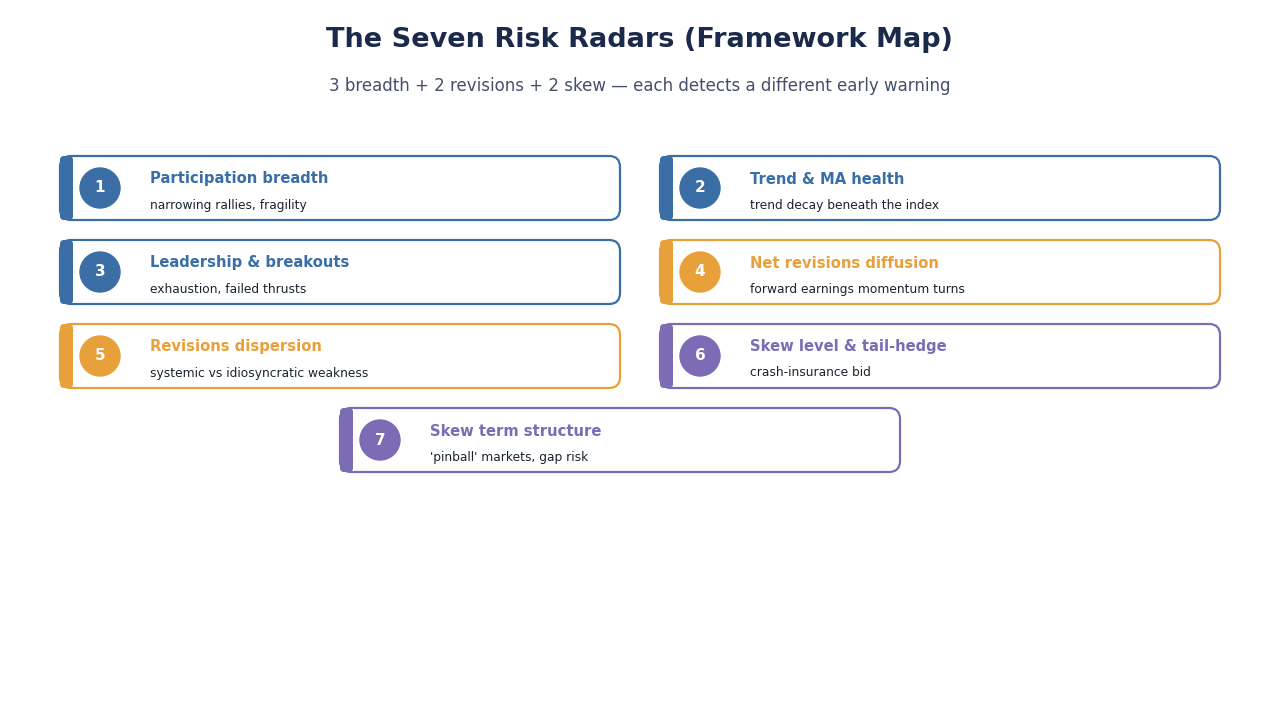
เรดาร์เจ็ดตัวด้านล่างถูกจัดกลุ่มเป็น 3 เรดาร์ความกว้าง + 2 เรดาร์การปรับปรุง + 2 เรดาร์ความเบี่ยงเบน
เรดาร์ความเสี่ยงหลักเจ็ดตัว (แผนที่กรอบงาน)
นี่คือระบบทั้งหมดในมุมมองเดียว
| เรดาร์ # | ชื่อ | กลุ่มข้อมูล | สิ่งที่ตรวจจับได้เร็วที่สุด | การใช้งานที่ดีที่สุด |
|---|---|---|---|---|
| 1 | ความกว้างของการเข้าร่วม | ความกว้าง | การฟื้นตัวที่แคบลง, ความเปราะบาง | ลดเบตาก่อนที่รอยแตกจะขยาย |
| 2 | ความกว้างของแนวโน้ม & สุขภาพค่าเฉลี่ยเคลื่อนที่ | ความกว้าง | การเสื่อมสภาพของแนวโน้มใต้ดัชนี | เปลี่ยนจาก “ติดตามแนวโน้ม” เป็น “เลือกสรร” |
| 3 | ความเป็นผู้นำ & ความกว้างของการแตกออก | ความกว้าง | ความเหนื่อยล้า, การผลักดันที่ล้มเหลว | สังเกตการทำจุดสูงสุด / การหมุนเวียนในช่วงปลาย |
| 4 | การกระจายการปรับปรุงสุทธิ | การปรับปรุง | โมเมนตัมรายได้ข้างหน้าเปลี่ยน | ลดความเสี่ยงในวงจร; หลีกเลี่ยง “กับดักหลายเท่า” |
| 5 | การกระจายการปรับปรุง & ความเครียดในการชี้แนะ | การปรับปรุง | ความอ่อนแอเชิงระบบกับความอ่อนแอเฉพาะตัว | ตัดสินใจว่ามันเป็น “เฉพาะภาค” หรือ “มหภาค” |
| 6 | ระดับความเบี่ยงเบน & ความต้องการการป้องกันหาง | ความเบี่ยงเบน | การเสนอราคาประกันการล่มสลาย | ป้องกันแต่เนิ่นๆ; ขนาดความเสี่ยงภายใต้แรงกดดันหาง |
| 7 | โครงสร้างระยะเวลาความเบี่ยงเบน & ความเสี่ยงช็อกแกมมา | ความเบี่ยงเบน | ตลาด “ปิงปอง”, ความเสี่ยงช่องว่าง | ลดการใช้เลเวอเรจ; วางแผนการป้องกันเหตุการณ์ |
เอกสารที่เหลือจะอธิบายแต่ละเรดาร์ด้วย:
- สิ่งที่ต้องวัด
- วิธีการให้คะแนน
- วิธีการตีความ
- กับดักทั่วไป
- คู่มือการดำเนินการ
- วิธีการนำไปใช้ใน SimianX AI
เรดาร์ 1 — ความกว้างของการเข้าร่วม (สัญญาณเตือน “การรวมตัวที่ซ่อนอยู่”)
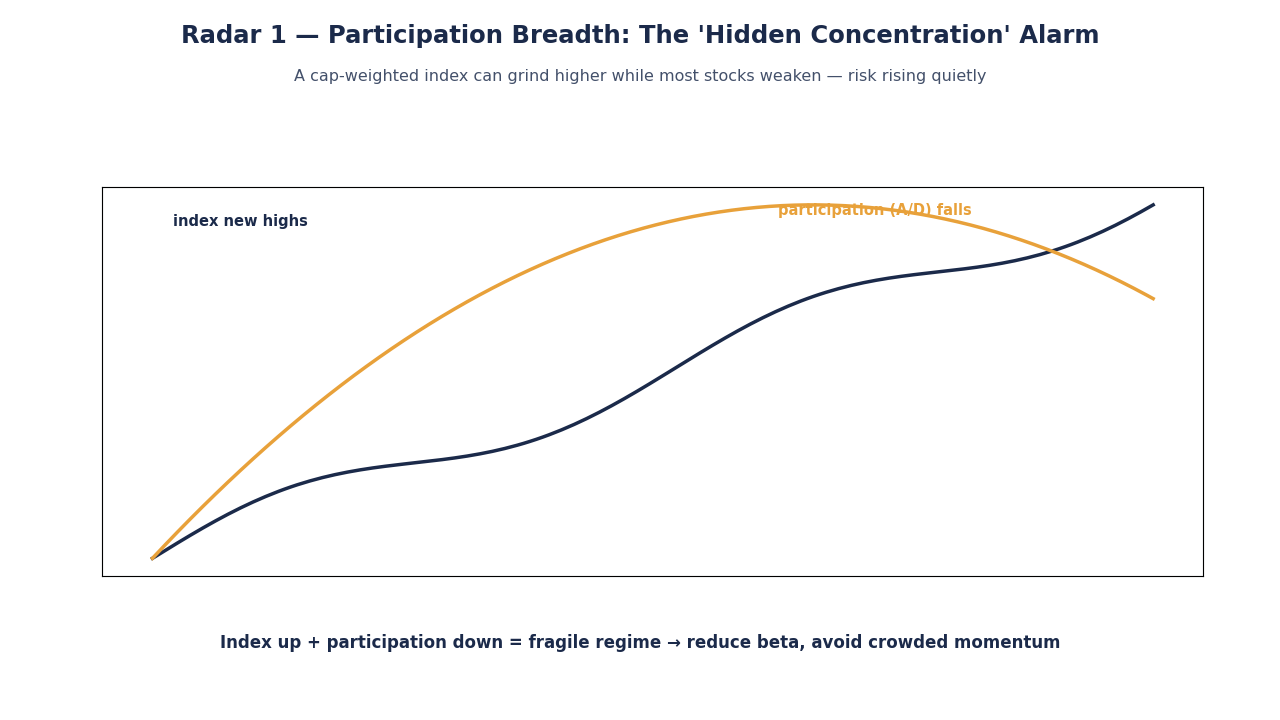
คำถามหลัก: การปรับตัวขึ้นเกิดจากหุ้นจำนวนมากหรือเพียงไม่กี่ตัว?
สิ่งที่ต้องวัด (ชุดข้อมูลขั้นต่ำ)
ใช้ 2–4 เมตริกที่แสดงมุมมองที่แตกต่างกัน:
- แนวโน้มการเพิ่ม/ลด (A/D): มีหุ้นที่เพิ่มขึ้นมากกว่าที่ลดลงหรือไม่?
- % ของหุ้นที่อยู่เหนือ MA ที่สำคัญ (เช่น 50 วัน): แนวโน้มระยะกลางมีความแข็งแกร่งกว้างขวางเพียงใด?
- การแสดงผลแบบเท่ากันกับการแสดงผลตามมูลค่าตลาด: หุ้นเฉลี่ยสามารถตามทันได้หรือไม่?
- การมีส่วนร่วมของภาคส่วน: หุ้นที่มีวัฏจักรยืนยันหรือไม่ หรือผู้นำเป็นการป้องกัน?
ทำไมมันถึงสำคัญ: ดัชนีที่มีน้ำหนักตามมูลค่าตลาดสามารถปรับตัวสูงขึ้นแม้ว่าหุ้นส่วนใหญ่จะอ่อนแอลง ความแตกต่างนี้เป็นรูปแบบ “ความเสี่ยงกำลังเพิ่มขึ้นอย่างเงียบๆ” แบบคลาสสิก
การให้คะแนน (วิธีการเปอร์เซ็นไทล์ที่ง่าย)
แปลงแต่ละเมตริกเป็นเปอร์เซ็นไทล์เมื่อเปรียบเทียบกับประวัติศาสตร์ (เช่น 3–5 ปีที่ผ่านมา):
- 0–20 = การมีส่วนร่วมที่อ่อนแอมาก
- 20–40 = อ่อนแอ
- 40–60 = เป็นกลาง
- 60–80 = แข็งแรง
- 80–100 = แข็งแกร่งมาก
จากนั้นเฉลี่ยเป็น คะแนนการมีส่วนร่วม.
กฎการตีความ (กลยุทธ์ที่สามารถนำไปใช้ได้)
- ดัชนีขึ้น + การมีส่วนร่วมลง = ระบอบที่เปราะบาง → ลดเบต้า, หลีกเลี่ยงโมเมนตัมที่แออัด.
- การมีส่วนร่วมขึ้น + ดัชนีขึ้น = แนวโน้มที่แข็งแรงขึ้น → ความมั่นใจในการทะลุผ่านที่สูงขึ้น.
- การมีส่วนร่วมถูกชะล้าง = โอกาสทางยุทธวิธี เฉพาะเมื่อ การปรับปรุง/การเบี่ยงเบนยืนยัน.
ความกว้างไม่ใช่ “สัญญาณซื้อ.” มันคือ สัญญาณสภาพความเสี่ยง.
กับดักทั่วไป
- ตอบสนองเกินจริงต่อความสุดขีดในวันเดียว (ความกว้างมีเสียงรบกวน).
- สับสน “การนำที่แคบ” กับ “การล่มสลายทันที” (ความแคบสามารถคงอยู่).
- มองข้ามขอบเขตเวลา (ความกว้างรายวันสำหรับนักเทรดรายวัน; ความกว้างรายสัปดาห์สำหรับนักลงทุน).
ตัวอย่างจริงของสัญญาณเตือนนี้ ดูได้ที่ แนสแด็กขึ้นแต่หุ้นส่วนใหญ่ลง: สถิติวันตลาดขึ้นแบบแคบ ปี 2019–2026 วันที่ 19 ตุลาคม 2026 แนสแด็กขึ้น 1.11% ขณะที่หุ้นลงใน NYSE มีมากกว่าหุ้นขึ้น 1,761 ต่อ 945
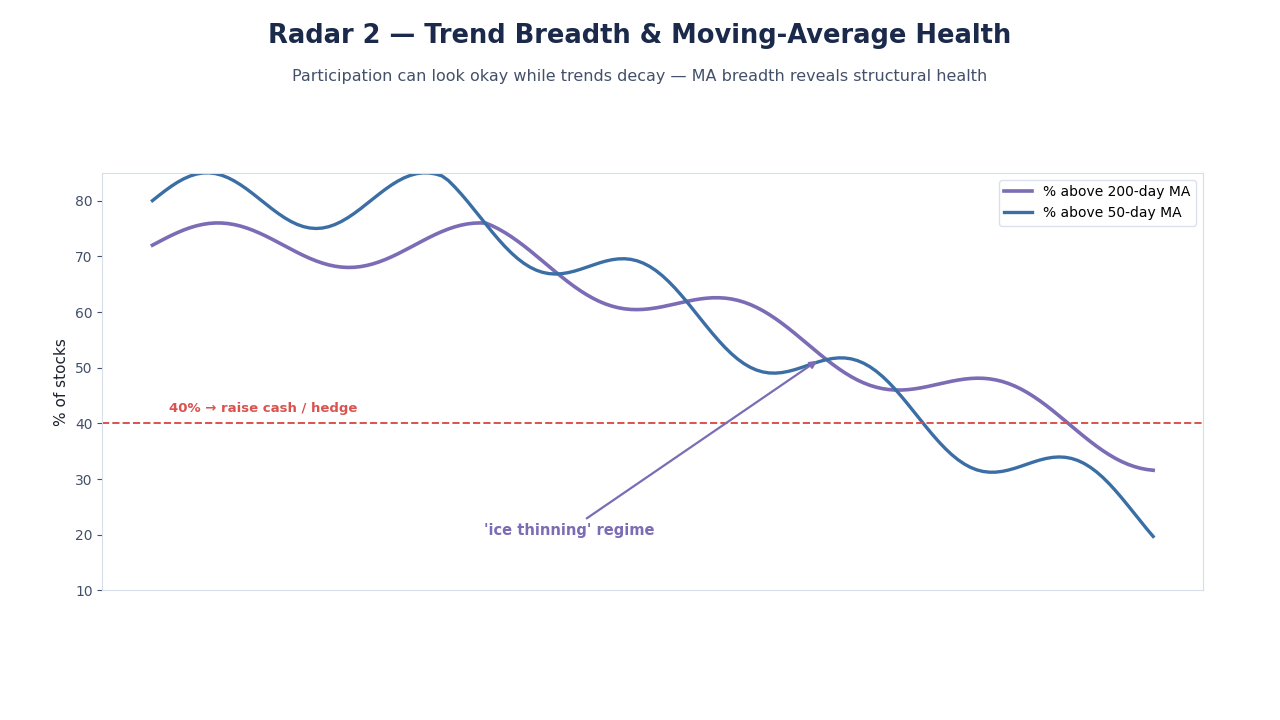
เรดาร์ 2 — ความกว้างของแนวโน้ม & สุขภาพของค่าเฉลี่ยเคลื่อนที่ (ตัวตรวจจับ “การเสื่อมถอยของแนวโน้ม”)
คำถามหลัก: แนวโน้มกำลังแตกหักอยู่ใต้ผิวหรือไม่?
หากเรดาร์ 1 เกี่ยวกับการมีส่วนร่วม เรดาร์ 2 เกี่ยวกับ ความสมบูรณ์ของแนวโน้ม.
สิ่งที่ต้องวัด
- % ที่สูงกว่า 200-day MA (สุขภาพระยะยาว)
- % ที่สูงกว่า 50-day MA (สุขภาพระยะกลาง)
- ระยะห่างจาก MA (ยืดออกเทียบกับแตกหัก)
- ตัวเลือก: โมเมนตัมความกว้าง (อัตราการเปลี่ยนแปลงของข้างต้น)
ทำไมเรดาร์นี้ถึงแตกต่าง
การเข้าร่วมอาจดู “โอเค” ในขณะที่แนวโน้มกำลังเสื่อมถอย โดยเฉพาะในช่วงการหมุนเวียน ความกว้างของค่าเฉลี่ยเคลื่อนที่บอกคุณว่า ตลาดมีสุขภาพ เชิงโครงสร้าง หรือไม่
สัญญาณที่ใช้ได้จริง
- % ที่ลดลงเหนือ 200DMA ขณะที่ดัชนีคงอยู่ = ระบอบ “น้ำแข็งบางลง”
- การล่มสลายอย่างรวดเร็วใน % ที่สูงกว่า 50DMA = ความเสียหายภายใน → คาดหวังการรวมกลุ่มของความผันผวน
- การฟื้นตัวในความกว้างของ MA หลังจากการยอมจำนน = ความเสี่ยงอาจกลายเป็นไม่สมมาตร (การตั้งค่าทางยุทธวิธีระยะยาว)
ชุดกฎขั้นต่ำที่คุณสามารถทดสอบย้อนหลังได้
- หาก % ที่สูงกว่า 200DMA < 40% → เพิ่มเงินสด / ป้องกันฐาน
- หาก % ที่สูงกว่า 50DMA ลดลง > 20 จุดใน < 2 สัปดาห์ → ลดเลเวอเรจ, รัดจุดหยุด
- หาก % ที่สูงกว่า 50DMA ฟื้นตัว > 15 จุด และการปรับปรุงมีเสถียรภาพ → พิจารณาความเสี่ยงทางยุทธวิธี
เรดาร์ 3 — ความเป็นผู้นำ & ความกว้างของการเบรก (เรดาร์ “การหมดแรง / การผลักดันที่ล้มเหลว”)
คำถามหลัก: ความเป็นผู้นำกำลังขยายตัวอยู่หรือไม่—หรือการเบรกกำลังล้มเหลว?
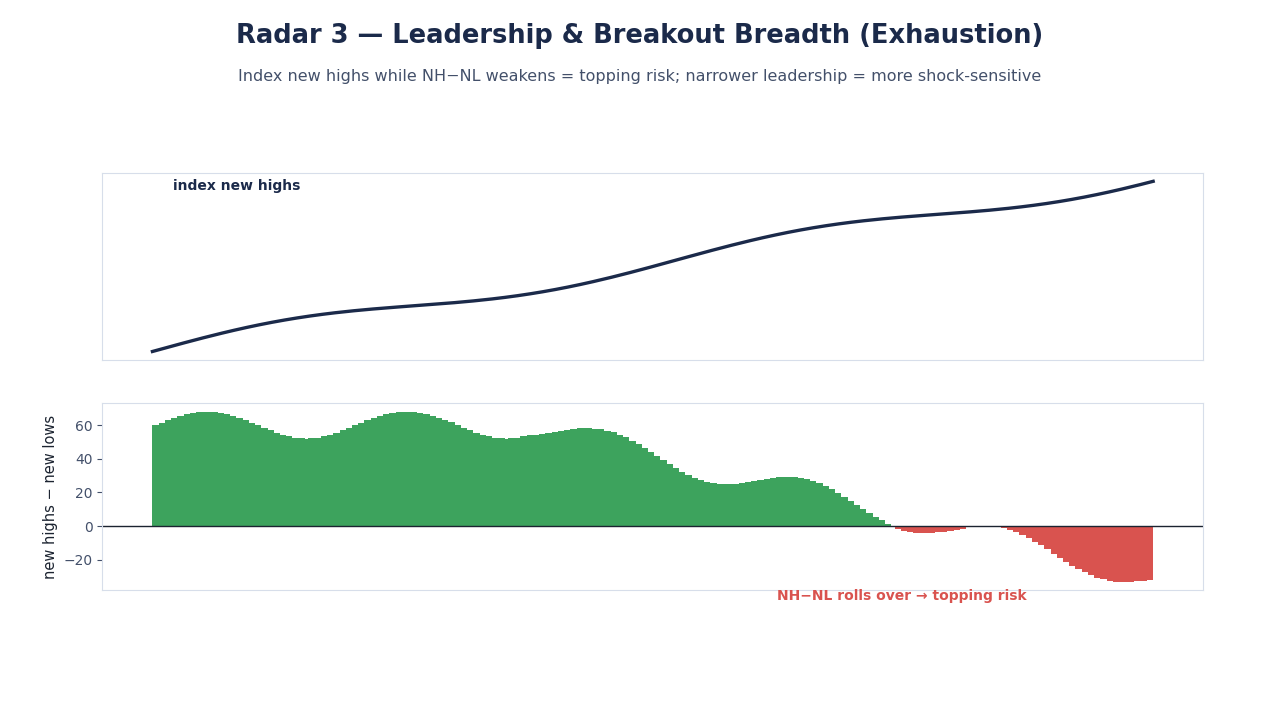
เรดาร์นี้มุ่งเน้นไปที่ พลศาสตร์ของจุดสูงสุดใหม่/จุดต่ำใหม่ และพฤติกรรม “การผลักดันความกว้าง”
สิ่งที่ต้องวัด
- จุดสูงสุดใหม่ลบจุดต่ำใหม่ (NH–NL)
- อัตราความสำเร็จของการเบรก (จำนวนหุ้นที่อยู่เหนือระดับการเบรก)
- การหมุนเวียนความเป็นผู้นำของภาค (สมดุลระหว่างวัฏจักรและการป้องกัน)
- ความผันผวนของความเป็นผู้นำ (ความเร็วที่ผู้นำเปลี่ยนแปลง)
สัญญาณที่คุณกำลังมองหา
- ดัชนีทำจุดสูงสุดใหม่แต่ NH–NL อ่อนแอ = ความเสี่ยงในการทำจุดสูงสุดเพิ่มขึ้น
- ภาคที่ป้องกันมากขึ้นนำ ขณะที่ดัชนียังคงแข็งแกร่ง = ระบอบความเสี่ยงกำลังเปลี่ยนแปลง
- การเบรกล้มเหลวอย่างรวดเร็ว = การติดตามแนวโน้มสูญเสียขอบ; การย้อนกลับสู่ค่าเฉลี่ยครอบงำ
วิธีการดำเนินการ
- ในการหดตัวของความเป็นผู้นำ: เปลี่ยนจาก “เบต้า” เป็น “คุณภาพ + ความได้เปรียบเฉพาะตัว”
- ลดขนาดตำแหน่งในช่วงที่ราคาผ่าน; ต้องการระดับการยกเลิกที่เข้มงวดมากขึ้น
- หากการเบี่ยงเบนเพิ่มขึ้นพร้อมกัน ให้ถือว่าการพุ่งที่ล้มเหลวเป็น คำเตือนความเสี่ยงจากหาง ไม่ใช่ “การเคลื่อนไหวปกติ”
เมื่อความเป็นผู้นำแคบลง ตลาดจะ ไวต่อแรงกระแทกมากขึ้น
เรดาร์ 4 — การแพร่กระจายการปรับปรุงสุทธิ (เรดาร์ “โมเมนตัมกำไรข้างหน้า”)
คำถามหลัก: นักวิเคราะห์กำลังเพิ่มหรือลดความคาดหวังเกี่ยวกับกำไรข้างหน้า—โดยรวม?
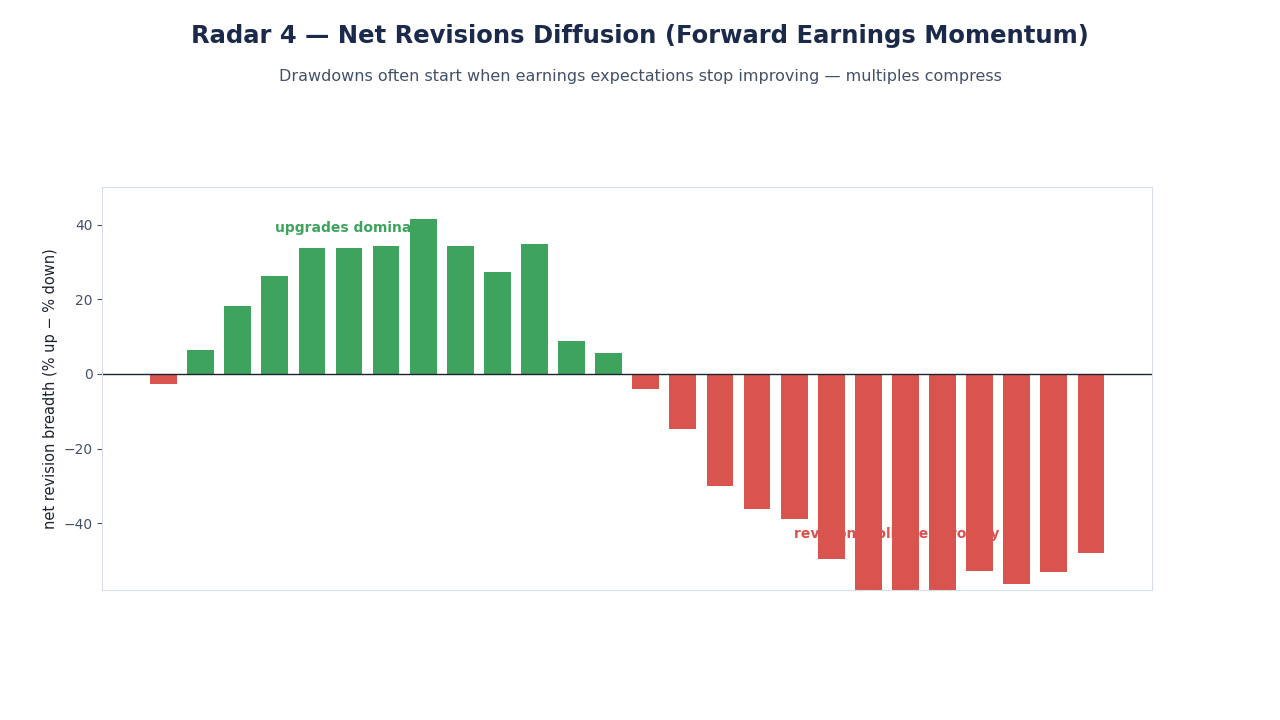
ราคาสามารถแยกออกจากปัจจัยพื้นฐานชั่วคราว แต่ระบอบระยะกลางมักติดตามความคาดหวังเกี่ยวกับกำไร การแพร่กระจายการปรับปรุง (การปรับปรุงขึ้น vs การปรับปรุงลง) ให้คุณอ่านได้ เร็วกว่า EPS ที่ล่าช้า
สิ่งที่ต้องวัด
- ความกว้างของการปรับปรุงสุทธิ = (% การปรับปรุงขึ้น − % การปรับปรุงลง)
- โมเมนตัม EPS ข้างหน้า = การเปลี่ยนแปลงใน EPS ของ 12 เดือนถัดไปในช่วง 3–6 เดือน
- การปรับปรุงระดับภาค = วงจรเศรษฐกิจเริ่มลดลงหรือไม่?
ทำไมเรดาร์นี้ถึงสำคัญสำหรับความเสี่ยง
การลดลงหลายครั้งไม่เริ่มต้นเมื่อกำไร “แย่” แต่เริ่มเมื่อความคาดหวังเกี่ยวกับกำไรหยุดปรับปรุง เมื่อการปรับปรุงลดลงอย่างกว้างขวาง หลายเท่าก็สามารถบีบตัวแม้ว่าจะดูว่าเศรษฐกิจ “ดี”
วิธีการให้คะแนน (แข็งแกร่งและง่าย)
- แปลงความกว้างของการปรับปรุงสุทธิเป็น z-score เทียบกับ 3–5 ปี
- แผนที่ไปที่ 0–100:
- z < −1.0 → 80–100 ความเสี่ยง (การปรับปรุงแย่ลง)
- −1.0 ถึง 0 → 60–80
- 0 ถึง +1.0 → 30–60
- > +1.0 → 0–30 ความเสี่ยง (การปรับปรุงดีขึ้น)
การตีความที่ใช้ได้จริง
- ความกว้างอ่อนแอก่อน การปรับปรุงตามมา: ระบอบความเสี่ยงจะกลายเป็นถาวรเมื่อการปรับปรุงได้รับการยืนยัน
- การปรับปรุงดีขึ้นในขณะที่ความกว้างอ่อนแอ: อาจเป็นการหมุนเวียน; หลีกเลี่ยงการป้องกันเกิน
- การปรับปรุงลง + การเบี่ยงเบนขึ้น: กลุ่ม “ความเสี่ยงต่ำ” ที่มีความเชื่อมั่นสูงสุด
Radar 5 — การกระจายการปรับปรุงและความเครียดในการชี้นำ (ตัวแบ่ง “ระบบ vs เอกลักษณ์”)
คำถามหลัก: การปรับปรุงมุ่งเน้นอยู่ในบางภาคส่วนหรือกระจายไปทั่วตลาด?
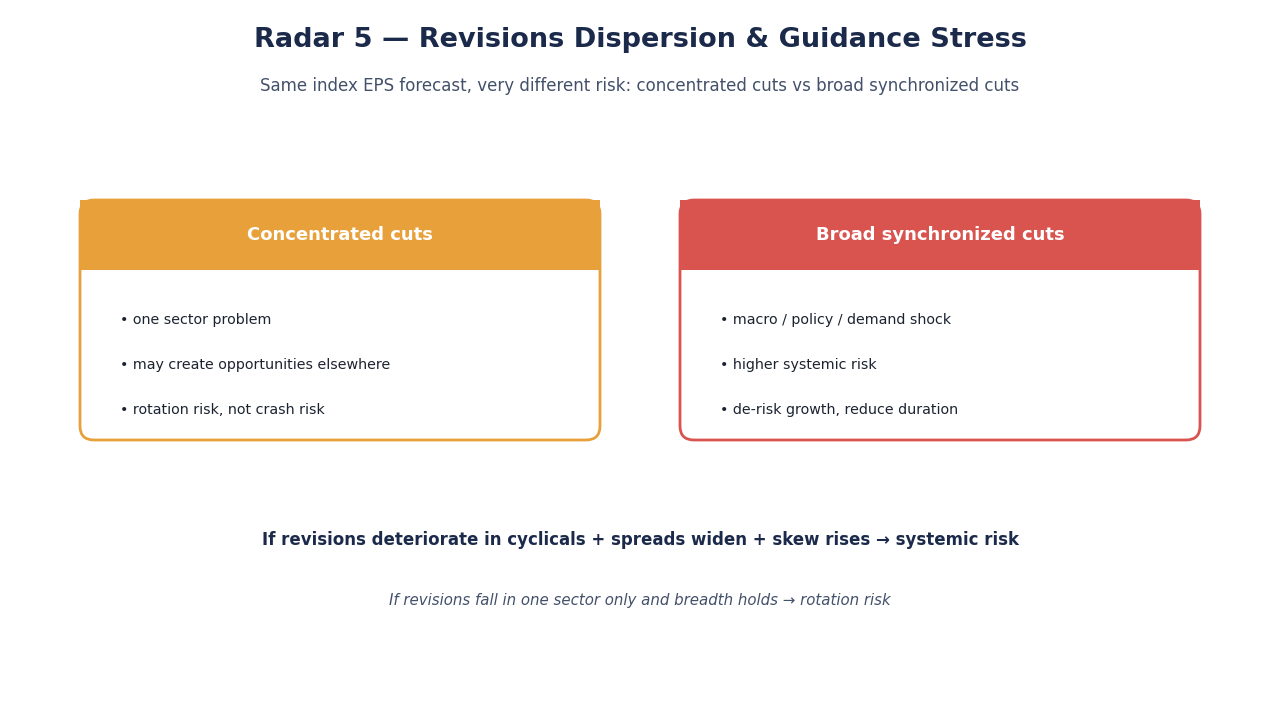
สองตลาดสามารถมีการคาดการณ์ EPS ระดับดัชนีเดียวกัน แต่มีโปรไฟล์ความเสี่ยงที่แตกต่างกันโดยสิ้นเชิง
สิ่งที่ต้องวัด
- การกระจายของการปรับปรุง ในภาคส่วน/อุตสาหกรรม
- ความสมดุลของการชี้นำ (จำนวนการชี้นำเชิงบวก vs เชิงลบ)
- ตัวชี้วัดความเครียดของมาร์จิ้น (การปรับปรุงลงที่มุ่งเน้นในกลุ่มที่ไวต่อมาร์จิ้น)
ทำไมการกระจายจึงเป็นสัญญาณความเสี่ยง
- การตัดที่มุ่งเน้น = ปัญหาภาคส่วน (อาจสร้างโอกาสในที่อื่น)
- การตัดที่กว้างและประสานกัน = ช็อกทางเศรษฐกิจ/นโยบาย/ความต้องการ → ความเสี่ยงระบบที่สูงขึ้น
ต้นไม้การตัดสินใจที่ง่าย
- หาก การปรับปรุงแย่ลงในสินค้าหมุนเวียน + สเปรดกว้างขึ้น + สเกวร์เพิ่มขึ้น → ความเสี่ยงระบบ
- หาก การปรับปรุงแย่ลงในภาคส่วนเดียวเท่านั้น และความกว้างยังคงอยู่ → ความเสี่ยงการหมุนเวียน ไม่ใช่ความเสี่ยงการล่มสลาย
- หาก การชี้นำเปลี่ยนเป็นเชิงลบอย่างกว้างขวาง → ลดความเสี่ยงจากการเติบโต; ลดระยะเวลา
กับดักทั่วไป
- การมองการคาดการณ์ EPS ระดับดัชนีอย่างผิวเผิน (การมุ่งเน้นอาจซ่อนจุดอ่อน)
- การมองข้ามผลกระทบลำดับที่สอง (การตัดในภาคส่วนหนึ่งอาจกระทบซัพพลายเออร์/ลูกค้าถัดไป)
Radar 6 — ระดับสเกวร์และความต้องการการป้องกันหาง (เรดาร์ “การประกันการล่มสลาย”)
คำถามหลัก: ตลาดกำลังจ่ายเงินเพื่อการป้องกันด้านลบหรือไม่?
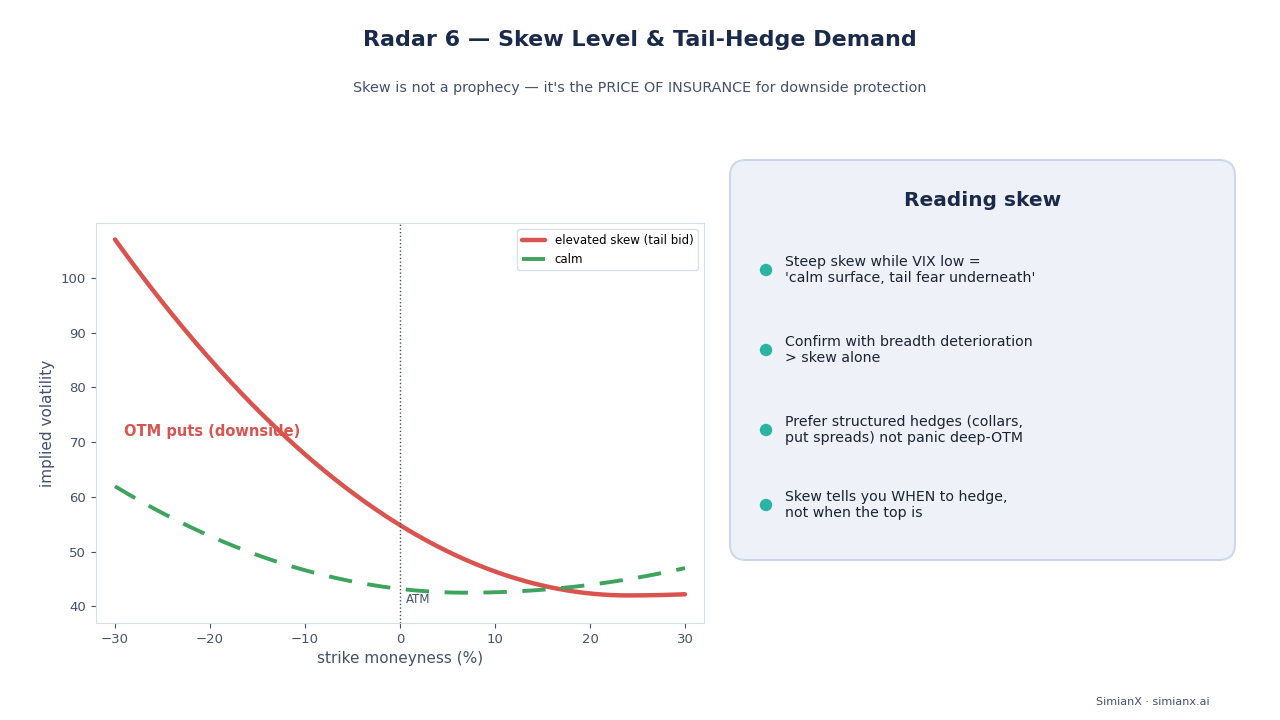
สเกวร์ของออปชันจับราคาสัมพัทธ์ของทางเลือกด้านลบกับด้านบวก—โดยเฉพาะ การขายออปชันที่อยู่นอกเงิน (OTM) เมื่อสเกวร์ชันขึ้น ตลาดมักจะส่งสัญญาณถึงความกังวลที่เพิ่มขึ้นเกี่ยวกับผลลัพธ์หาง
สิ่งที่ต้องวัด (ชุดปฏิบัติ)
- ดัชนีการวางออปชั่นแบบสกิว (เช่น การกลับความเสี่ยง 25-delta หรือการกระจาย IV ของ put-call)
- มาตรวัดความเสี่ยงแบบสกิว (เมื่อมีให้ใช้)
- อัตราส่วน put/call (เฉพาะบริบท) (หลีกเลี่ยงการเชื่อมั่นมากเกินไป)
การตีความ
- สกิวเพิ่มขึ้นในขณะที่ VIX ต่ำ อาจหมายถึง: “พื้นผิวที่สงบ ความกลัวที่ซ่อนอยู่ด้านล่าง”
- สกิวแบนในช่วงการขาย อาจเกิดขึ้นเพราะความผันผวนที่ ATM ระเบิดเร็วกว่า OTM (ความแตกต่างที่สำคัญ)
- สกิวพุ่ง + ความกว้างลดลง เป็นสัญญาณที่มีความหมายมากกว่าสกิวเพียงอย่างเดียว
วิธีการดำเนินการ (ความเสี่ยง การป้องกัน การวางตำแหน่ง)
- ลดเลเวอเรจและทำให้ความเสี่ยงด้านล่างแน่นขึ้นหากสกิวชันสูงขึ้นอย่างต่อเนื่อง
- พิจารณา การป้องกันแบบมีโครงสร้าง (collars, put spreads) แทนที่จะซื้อ OTM ที่ลึกด้วยความตื่นตระหนก
- ใช้สกิวเพื่อกำหนด เมื่อใด ที่การป้องกันกลายเป็นสิ่งจำเป็น—ไม่ใช่เพื่อ “คาดการณ์จุดสูงสุด”
สกิวไม่ใช่การพยากรณ์ มันคือ ราคาแห่งการประกันภัย
เรดาร์ 7 — โครงสร้างระยะเวลาสกิว & ความเสี่ยงจากการช็อกแกมมา (เรดาร์ “ตลาดปิงปอง”)
คำถามหลัก: พลศาสตร์ของออปชั่นมีแนวโน้มที่จะขยายการเคลื่อนไหวหรือไม่?
แม้ว่าคุณจะไม่ซื้อขายออปชั่น การวางตำแหน่งของดีลเลอร์และโครงสร้างระยะเวลาอาจมีอิทธิพลต่อความผันผวนที่เกิดขึ้นจริงและพฤติกรรมระหว่างวัน เรดาร์นี้มุ่งเน้นไปที่ วิธีที่ตลาดอาจเคลื่อนไหว ไม่เพียงแต่ ที่ไหน
สิ่งที่ต้องวัด
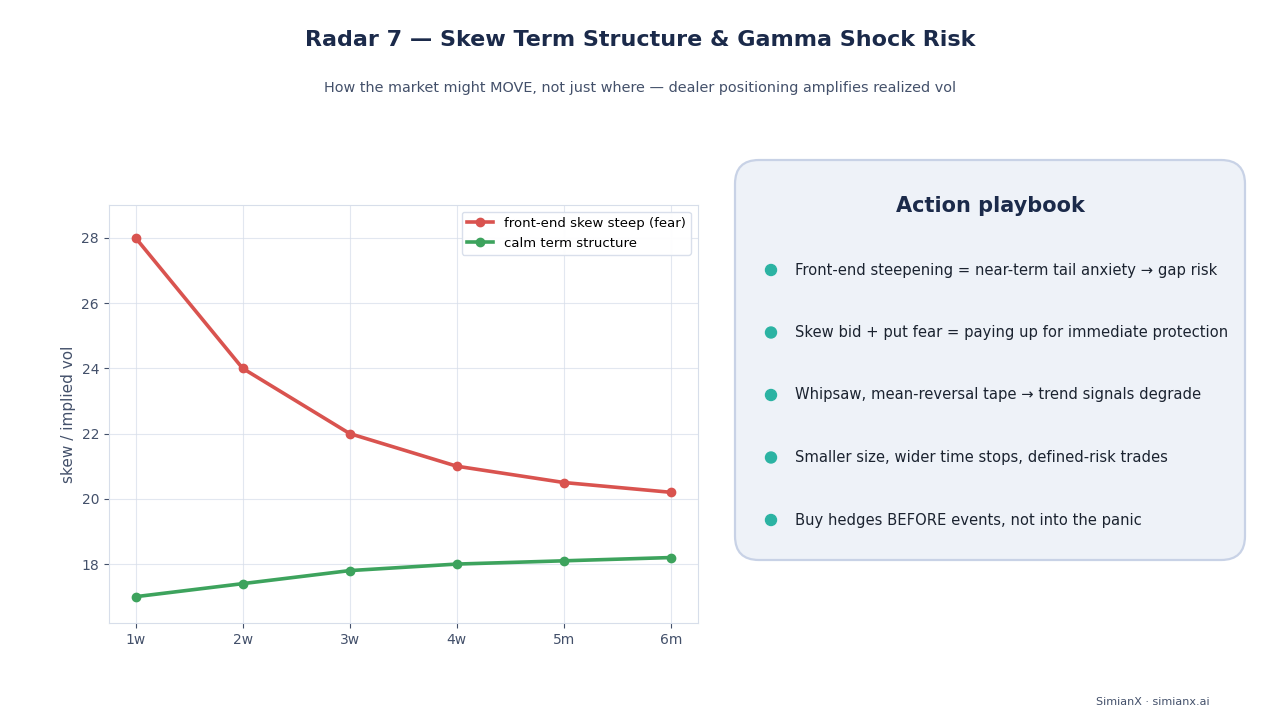
- สกิวตามอายุ (ระยะสั้น vs 1–3 เดือน)
- สกิวที่ขับเคลื่อนด้วยเหตุการณ์ (ผลประกอบการ, CPI, Fed)
- “ตัวแทนความไวต่อแกมมา” (การเคลื่อนไหวที่รวดเร็ว, การกลับตัว, การกลับสู่ค่าเฉลี่ยระหว่างวัน)
สิ่งที่สัญญาณหมายถึงในทางปฏิบัติ
- สกิวด้านหน้าเพิ่มขึ้น = ความวิตกกังวลด้านหางในระยะสั้น → ระวังความเสี่ยงจากช่องว่าง
- การกลับด้านของโครงสร้างระยะเวลาในช่วงความกลัว = ผู้ค้าใช้เงินมากขึ้นเพื่อการป้องกันทันที
- เทปที่ผันผวนและมีการกลับตัวสูง อาจสะท้อนถึงการไหลของการป้องกัน; สัญญาณแนวโน้มเสื่อมสภาพ
แผนการดำเนินการ
- ใช้ขนาดที่เล็กลง หยุดเวลาที่กว้างขึ้น (หรือระยะเวลาถือที่สั้นลง)
- ชอบการซื้อขายที่มีความเสี่ยงที่กำหนดหากความผันผวนของความผันผวนเพิ่มขึ้น
- สำหรับนักลงทุน: ปรับสมดุลการป้องกันความเสี่ยง ก่อน เหตุการณ์เมื่อสัญญาณความเบี้ยวเพิ่มขึ้น
สัญญาณเรดาร์ความเสี่ยง AI ลดการขาดทุนอย่างไร (โดยไม่ทำให้ผลตอบแทนลดลง)?
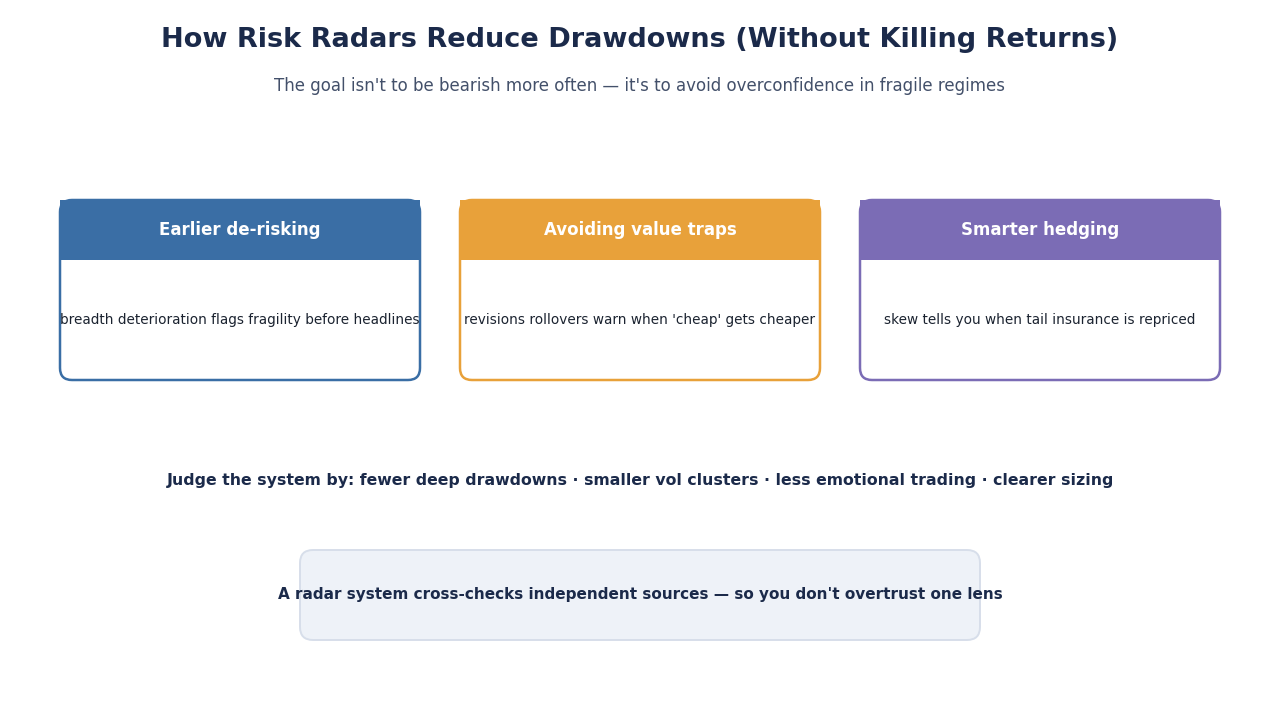
เป้าหมายไม่ใช่การเป็น “หมี” บ่อยขึ้น เป้าหมายคือ หลีกเลี่ยงการมั่นใจเกินไปในระบอบที่เปราะบาง
ระบบเรดาร์ที่ใช้งานได้จริงลดการขาดทุนผ่านกลไกสามประการ:
- การลดความเสี่ยงแต่เนิ่นๆ: สัญญาณการเสื่อมถอยของความกว้างชี้ให้เห็นถึงความเปราะบางก่อนที่ข่าวจะออก
- หลีกเลี่ยงกับดักมูลค่า: การปรับปรุงการหมุนเวียนเตือนเมื่อ “ถูก” อาจจะถูกลงไปอีก
- การป้องกันความเสี่ยงที่ชาญฉลาด: ความเบี้ยวบอกคุณเมื่อการประกันความเสี่ยงจากหางกำลังถูกปรับราคาใหม่
ระบบที่ดีควรได้รับการประเมินจาก:
- การขาดทุนลึกที่น้อยลง,
- กลุ่มความผันผวนที่เล็กลง,
- พฤติกรรมที่ดีขึ้น (การซื้อขายที่มีอารมณ์น้อยลง),
- และกฎการกำหนดขนาดที่ชัดเจน
การสร้างคะแนนรวม (ดัชนี “สภาพอากาศความเสี่ยง” ที่ทำซ้ำได้)
เพื่อทำให้เรดาร์เจ็ดตัวทำงานได้ คุณต้องการ คะแนนรวมเดียว พร้อม คำอธิบาย
ขั้นตอนทีละขั้น (7 ขั้นตอน)
- เลือกจักรวาล:
SPX,NDX, หรือชุดหุ้นในพอร์ตของคุณ - เลือกเมตริกต่อเรดาร์ (ให้แน่น—หลีกเลี่ยงการบวมของตัวชี้วัด)
- ปรับมาตรฐานแต่ละเมตริก (เปอร์เซ็นไทล์หรือ z-scores)
- ปรับเสียงรบกวน (การซื้อขาย 10–20 วัน หรือรายสัปดาห์สำหรับนักลงทุน)
- สร้าง คะแนนเรดาร์ (0–100 ความเสี่ยง)
- น้ำหนักเข้าสู่ คะแนนความเสี่ยงรวม
- แผนที่ไปยังระบอบ + การกระทำ
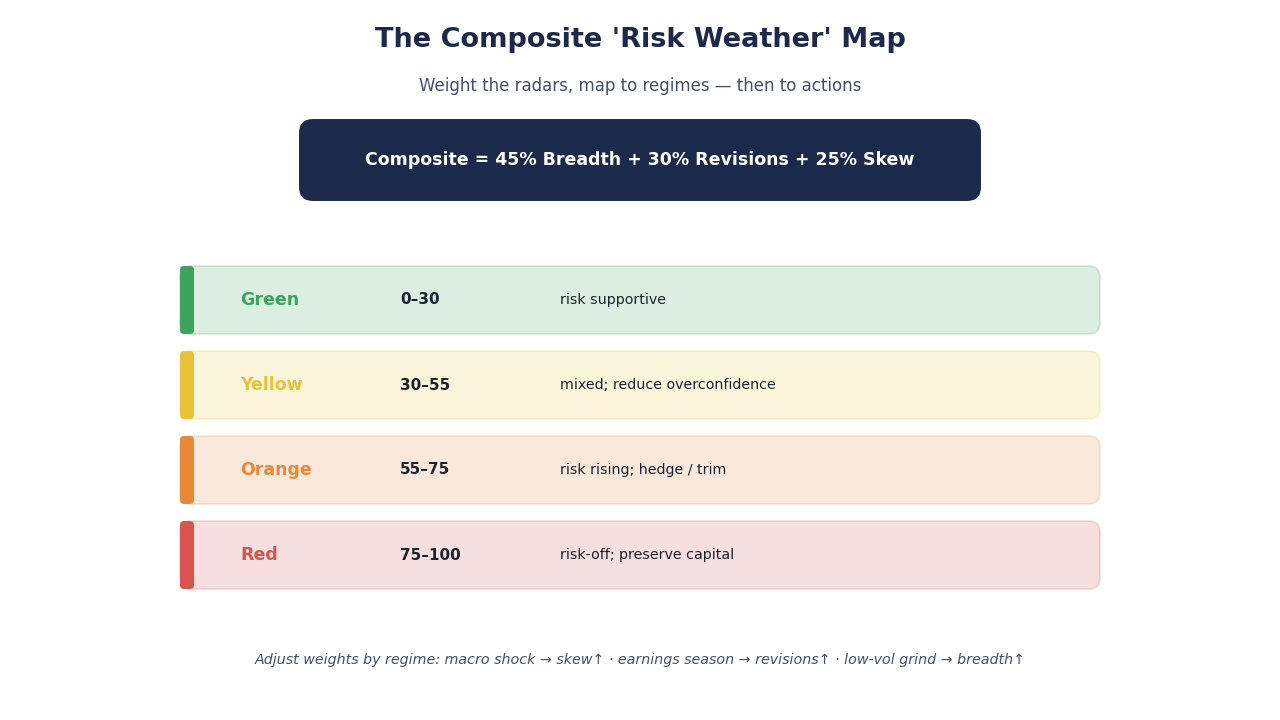
น้ำหนักเริ่มต้น (ง่าย, สามารถป้องกันได้)
- เรดาร์ความกว้าง (1–3): 45%
- เรดาร์การปรับปรุง (4–5): 30%
- เรดาร์ความเบี้ยว (6–7): 25%
ปรับตามระบอบ:
- ช็อกแมโคร/อัตรา → เพิ่มน้ำหนักความเบี้ยว
- ฤดูกาลรายได้ → เพิ่มน้ำหนักการปรับปรุง
- การบดความผันผวนต่ำ → ความกว้างของการเข้าร่วมจะมีความสำคัญมากขึ้น
แผนที่ระบอบ (ตัวอย่าง)
- 0–30: เขียว (สนับสนุนความเสี่ยง)
- 30–55: เหลือง (ผสม; ลดความมั่นใจเกินไป)
- 55–75: ส้ม (ความเสี่ยงเพิ่มขึ้น; ป้องกัน/ตัดแต่ง)
- 75–100: แดง (ปิดความเสี่ยง; รักษาทุน)
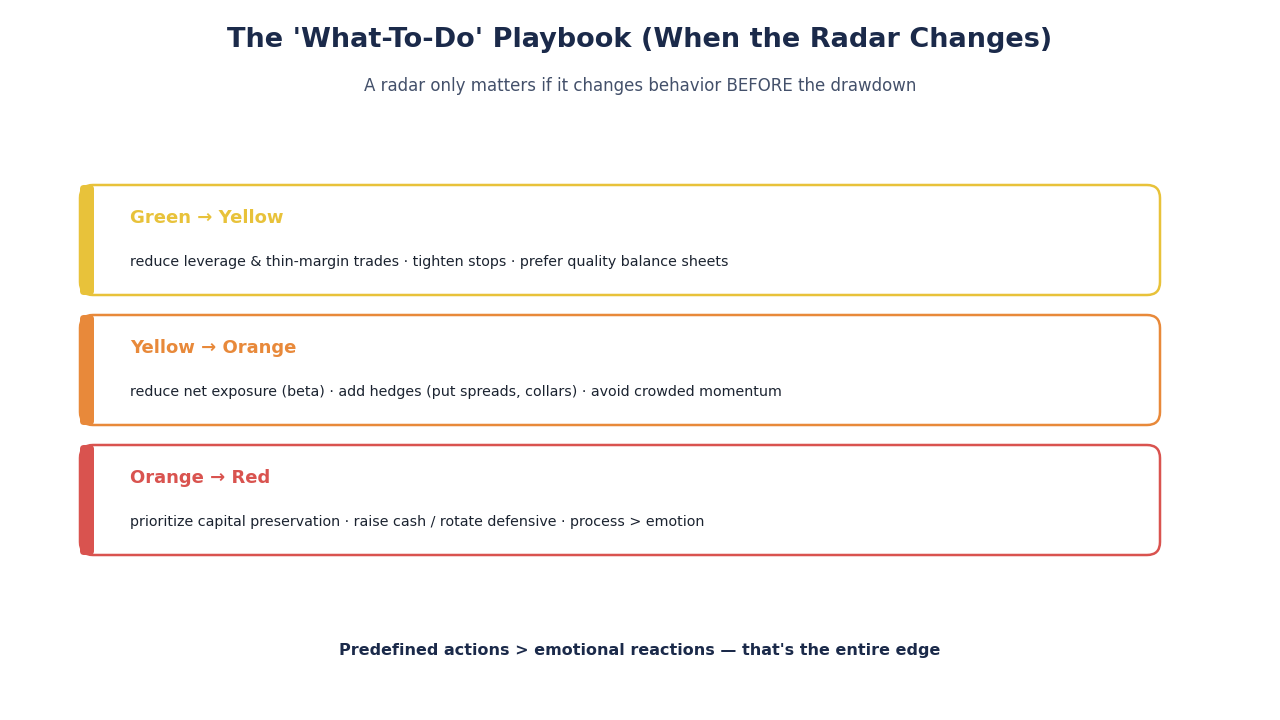
คู่มือ “สิ่งที่ต้องทำ” ที่ใช้ได้จริง (เมื่อเรดาร์เปลี่ยน)
เรดาร์มีความสำคัญก็ต่อเมื่อมันเปลี่ยนพฤติกรรมของคุณ ก่อน การลดลง
เมื่อเขียว → เหลือง
- ลดเลเวอเรจและการซื้อขายที่มีมาร์จิ้นบาง
- รัดการหยุด; ลดระยะเวลาถือครอง
- ชอบงบดุลที่มีคุณภาพและการสนับสนุนการปรับปรุงที่สม่ำเสมอ
เมื่อเหลือง → ส้ม
- ลดการเปิดรับสุทธิ (เบต้า)
- เพิ่มการป้องกัน (สเปรดพุตดัชนี, คอลลาร์)
- หลีกเลี่ยงโมเมนตัมที่แออัดหากการเข้าร่วมกำลังแคบลง
เมื่อส้ม → แดง
- ให้ความสำคัญกับการรักษาทุน
- เพิ่มเงินสดหรือหมุนเวียนไปที่การป้องกัน
- หลีกเลี่ยงชื่อที่ไม่มีสภาพคล่อง; ลดความเสี่ยงจากช่องว่าง
- มุ่งเน้นที่กระบวนการ: การกระทำที่กำหนดไว้ล่วงหน้า > การตอบสนองทางอารมณ์
วิธีการปฏิบัติการเจ็ดเรดาร์ใน SimianX AI (แผนผังการทำงาน)
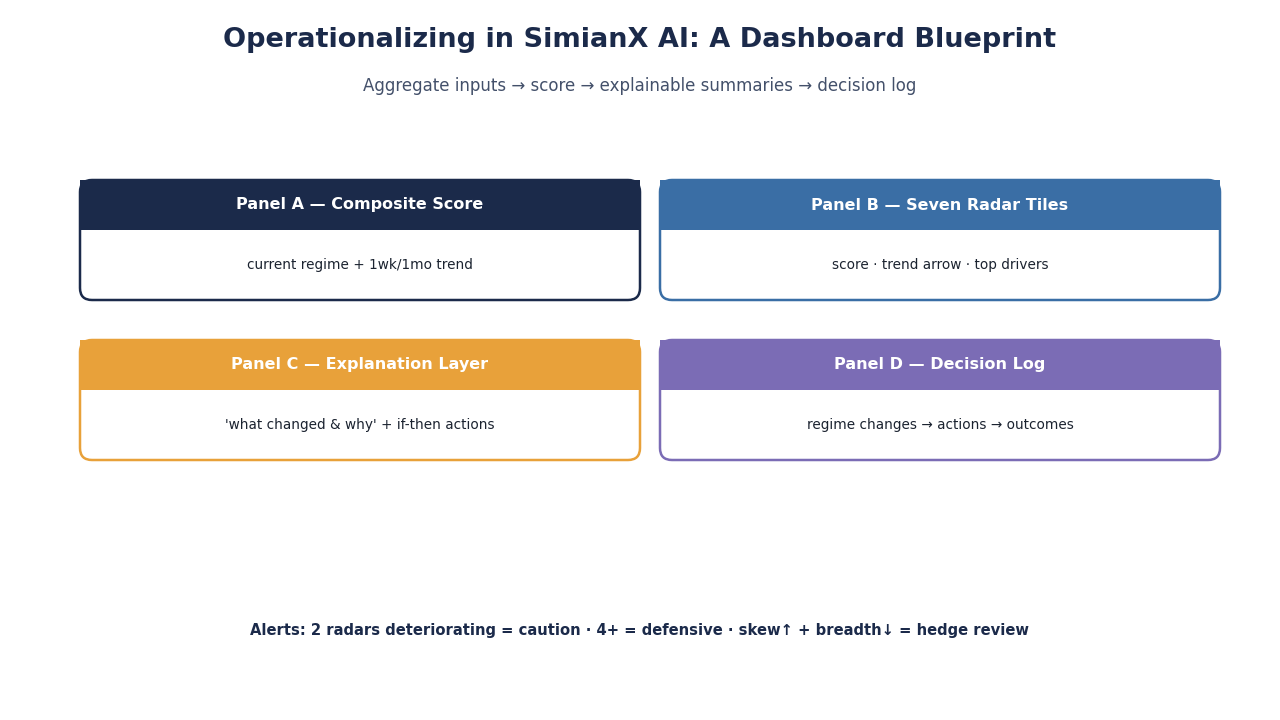
คุณสามารถนำไปใช้เป็นกระบวนการทำงานประจำวัน/ประจำสัปดาห์ภายใน SimianX AI ซึ่งระบบจะรวบรวมข้อมูล, ให้คะแนน และสร้างสรุปที่สามารถอธิบายได้
รูปแบบแดชบอร์ดที่ใช้ได้จริง
แผง A — คะแนนความเสี่ยงรวม
- ระบอบปัจจุบัน (เขียว/เหลือง/ส้ม/แดง)
- แนวโน้มความเสี่ยงใน 1 สัปดาห์และ 1 เดือน
แผง B — เจ็ดเรดาร์
- เรดาร์แต่ละอันมี: คะแนน, ลูกศรแนวโน้ม, ตัวขับเคลื่อนหลัก
แผง C — ชั้นการอธิบาย
- สรุปในภาษาธรรมชาติ: “มีอะไรเปลี่ยนแปลงและทำไม?”
- การกระทำ “ถ้า-แล้ว” ที่ตรงกับสไตล์กลยุทธ์ของคุณ
แผง D — บันทึกการตัดสินใจ
- ติดตาม: การเปลี่ยนแปลงระบอบ → การกระทำ → ผลลัพธ์
ขั้นตอนการดำเนินการ (รายการตรวจสอบที่สามารถคัดลอกได้)
- กำหนดเมตริก สำหรับแต่ละเรดาร์ (2–4 ต่อเรดาร์)
- ตั้งค่าขีดจำกัด เป็นช่วง (หลีกเลี่ยงการปรับให้เข้ากับตัวเลขที่แน่นอน)
- สร้างการแจ้งเตือน:
- “เรดาร์สองตัวเสื่อมลง” = ระมัดระวัง
- “เรดาร์สี่ตัวขึ้นไปเสื่อมลง” = ป้องกัน
- “การเบี่ยงเบนเพิ่มขึ้น + ความกว้างลดลง” = ทบทวนการป้องกันความเสี่ยง
- ทดสอบพฤติกรรม:
- ไม่ใช่ “การคาดการณ์ที่สมบูรณ์แบบ” แต่ลดการขาดทุน + ปรับปรุงคุณภาพการตัดสินใจ
ทำไม AI ถึงช่วยที่นี่ (เวอร์ชันที่ไม่โอ้อวด)
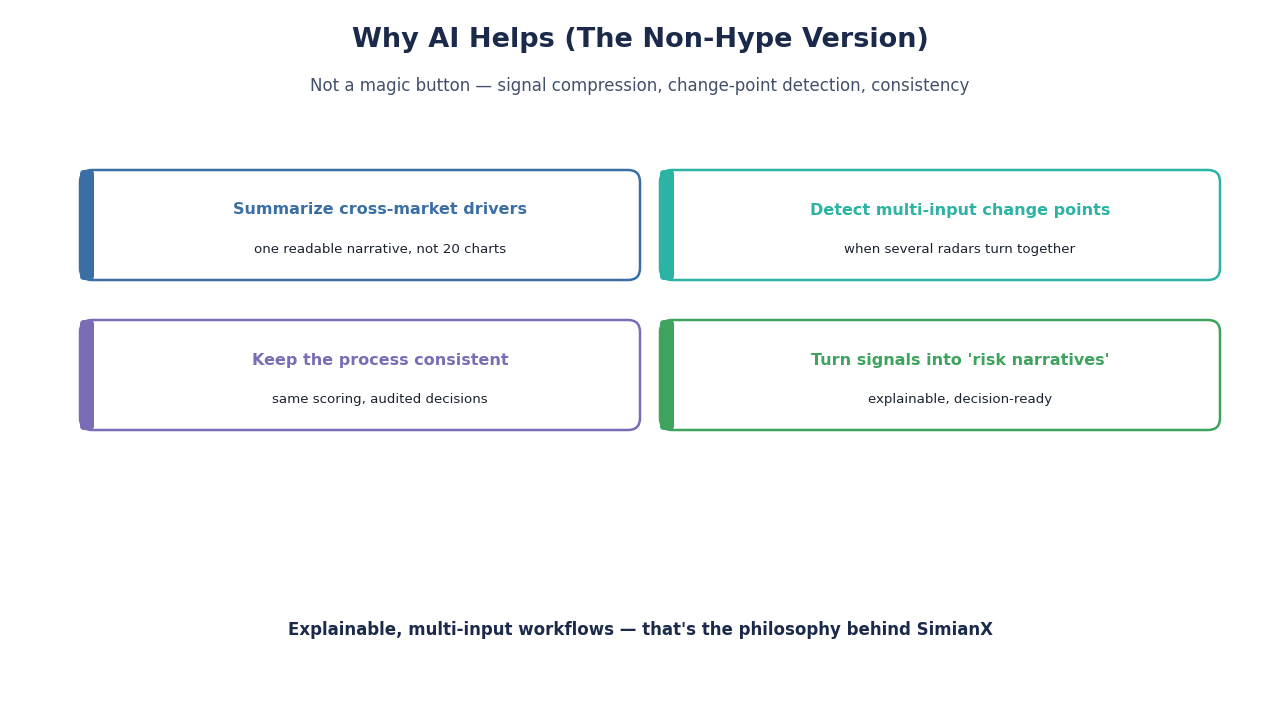
AI ไม่ควรเป็นปุ่มวิเศษ ข้อดีที่แท้จริงของมันคือ:
- สรุปปัจจัยข้ามตลาด,
- ตรวจจับจุดเปลี่ยนหลายจุด,
- รักษากระบวนการตัดสินใจของคุณให้สอดคล้อง,
- และเปลี่ยนสัญญาณให้เป็น “เรื่องราวความเสี่ยง” ที่อ่านได้
นี่คือปรัชญาที่อยู่เบื้องหลังการทำงานที่สามารถอธิบายได้และหลายจุดป้อนข้อมูล และทำไม SimianX จึงสามารถเป็นบ้านที่เหมาะสมสำหรับระบบนี้
ตารางการวัดที่กระชับ (คู่มือการสร้างอย่างรวดเร็ว)
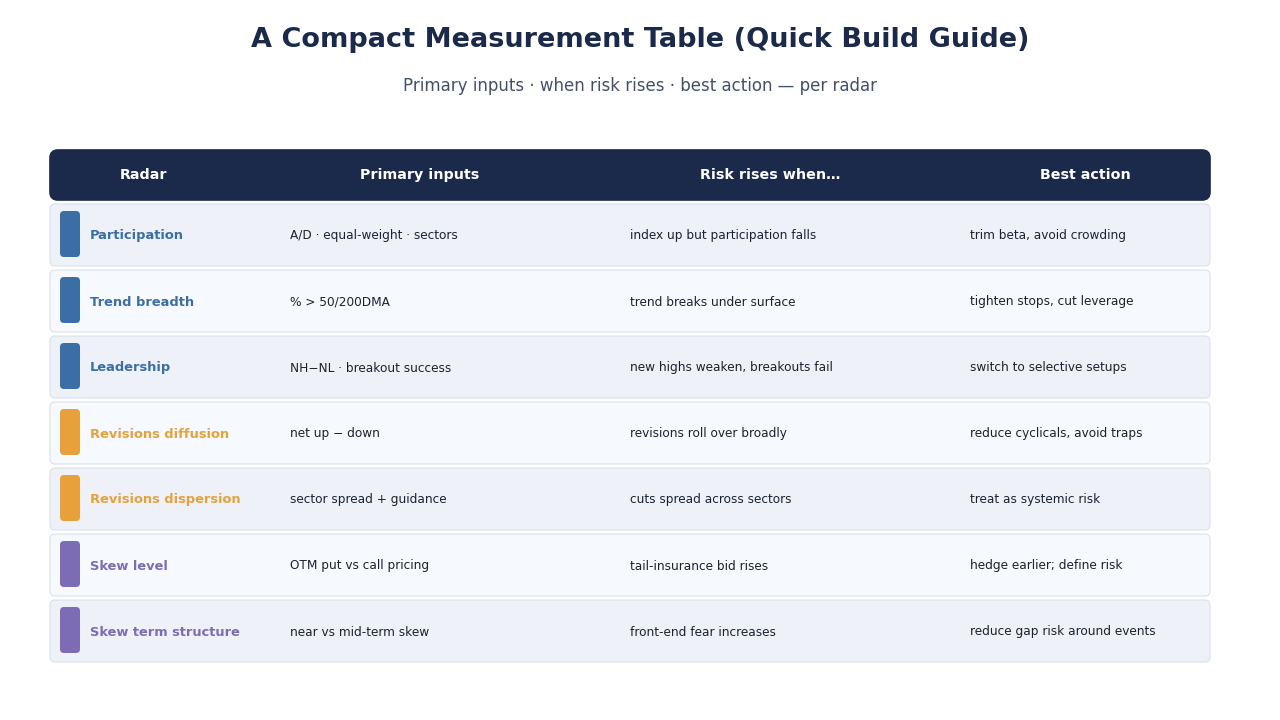
ใช้สิ่งนี้เป็นรายการตรวจสอบการสร้าง
| เรดาร์ | ข้อมูลนำหลัก | ความเสี่ยงเพิ่มขึ้นเมื่อ… | การกระทำที่ดีที่สุด |
|---|---|---|---|
| ความกว้างของการมีส่วนร่วม | A/D, น้ำหนักเท่ากัน, การมีส่วนร่วมตามภาค | ดัชนีเพิ่มขึ้นแต่การมีส่วนร่วมลดลง | ตัดเบต้า, หลีกเลี่ยงการแออัด |
| ความกว้างของแนวโน้ม | % > 50DMA/200DMA | แนวโน้มแตกใต้พื้นผิว | รัดจุดหยุด, ลดเลเวอเรจ |
| ความกว้างของการเป็นผู้นำ | NH–NL, ความสำเร็จในการแตกออก | จุดสูงใหม่อ่อนแอ, การแตกออกล้มเหลว | เปลี่ยนไปใช้การตั้งค่าแบบเลือก |
| การแพร่กระจายการปรับปรุง | การอัปเกรดสุทธิ-การลดระดับ | การปรับปรุงลดลงอย่างกว้างขวาง | ลดสินทรัพย์ที่เป็นวัฏจักร; หลีกเลี่ยงกับดัก |
| การกระจายการปรับปรุง | การกระจายภาค + คำแนะนำ | ลดการกระจายทั่วทั้งภาค | ถือเป็นความเสี่ยงระบบ |
| ระดับการเบี่ยงเบน | การตั้งราคา OTM put กับ call | การเสนอราคาประกันภัยหางเพิ่มขึ้น | ป้องกันความเสี่ยงล่วงหน้า; กำหนดความเสี่ยง |
| โครงสร้างระยะเบี่ยงเบน | เบี่ยงเบนระยะใกล้กับระยะกลาง | ความกลัวที่ด้านหน้าเพิ่มขึ้น | ลดความเสี่ยงจากช่องว่างรอบเหตุการณ์ |
คำถามที่พบบ่อยเกี่ยวกับสัญญาณเรดาร์ความเสี่ยง AI จากความกว้างของตลาด การปรับปรุงผลประกอบการ และการเบี่ยงเบนของออปชัน
สัญญาณเรดาร์ความเสี่ยง AI ในตลาดหุ้นคืออะไร?
พวกเขาคือ ตัวบ่งชี้หลายช่องทาง ที่รวมการมีส่วนร่วมภายใน (ความกว้าง) พื้นฐานในอนาคต (การปรับปรุงผลประกอบการ) และการตั้งราคาเสี่ยงหาง (การเบี่ยงเบนของออปชัน) เข้าด้วยกันเป็นมุมมองแบบระบอบของสภาพความเสี่ยง
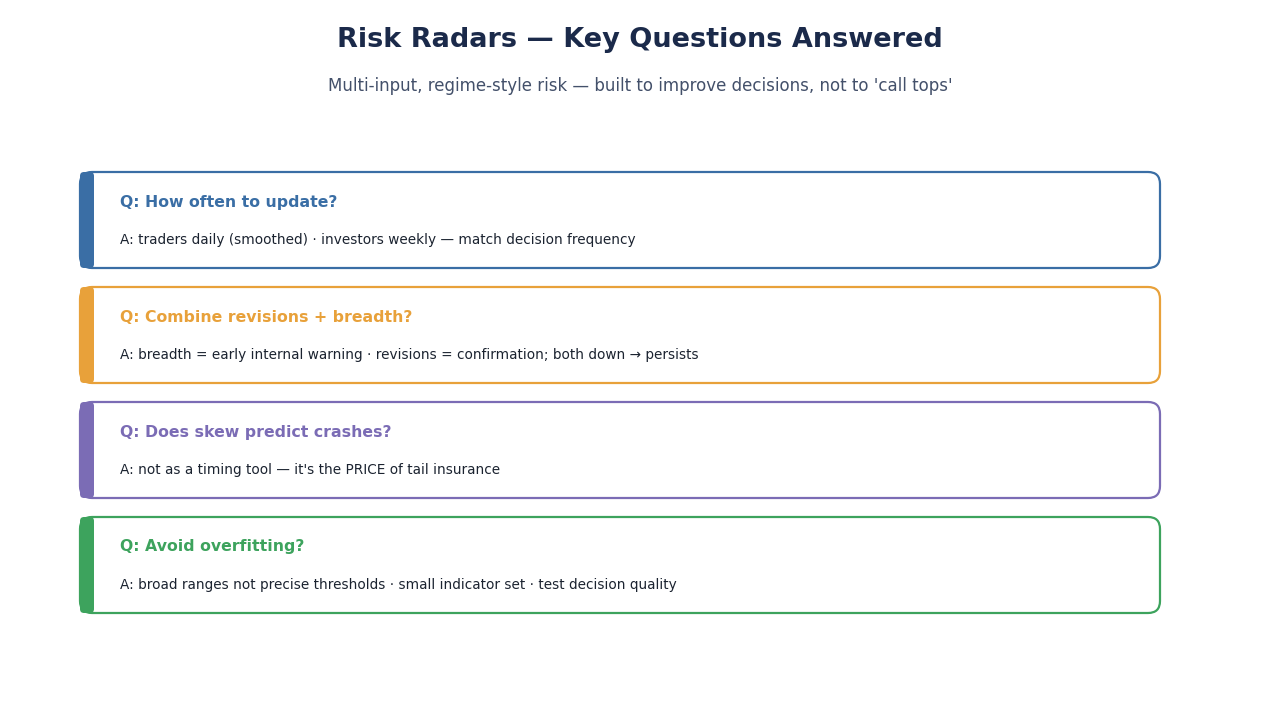
ควรอัปเดตความกว้างของตลาดและเรดาร์การเบี่ยงเบนของออปชันบ่อยแค่ไหน?
เทรดเดอร์มักจะอัปเดตทุกวันพร้อมการปรับเรียบ; นักลงทุนมักจะอัปเดตทุกสัปดาห์ จังหวะที่เหมาะสมตรงกับความถี่ในการตัดสินใจของคุณ—เร็วเกินไปสร้างเสียงรบกวน ช้าเกินไปพลาดการเปลี่ยนแปลงระบอบ
วิธีที่ดีที่สุดในการรวมการปรับปรุงผลประกอบการกับความกว้างคืออะไร?
ใช้ ความกว้าง เป็นการเตือนภายในล่วงหน้าและ การปรับปรุง เป็นการยืนยันการเปลี่ยนแปลงโมเมนตัมพื้นฐาน หากทั้งสองอย่างเสื่อมสภาพร่วมกัน ระบอบความเสี่ยงมักจะดำเนินต่อไปนานขึ้น
การเบี่ยงเบนของออปชันคาดการณ์การล่มสลายได้หรือไม่?
ไม่สามารถเชื่อถือได้ในฐานะเครื่องมือในการกำหนดเวลา การเบี่ยงเบนควรตีความว่าเป็น ราคาของประกันภัยหาง—วิธีการดูเมื่อผู้เข้าร่วมตลาดจ่ายมากขึ้นเพื่อการป้องกันด้านลบ
ฉันจะสร้างแดชบอร์ดความเสี่ยงตลาด AI โดยไม่ทำให้เกิดการฟิตเกินไปได้อย่างไร?
ใช้ช่วงกว้างแทนที่จะเป็นเกณฑ์ที่แม่นยำ รักษาชุดตัวบ่งชี้ให้เล็กและทดสอบว่าระบบช่วยปรับปรุงการตัดสินใจ (การควบคุมการลดลง วินัยในการป้องกันความเสี่ยง) ไม่ใช่ว่ามัน “เรียกจุดสูงสุด”
สรุป
กระบวนการจัดการความเสี่ยงที่มีความยืดหยุ่นไม่พึ่งพาเพียงตัวชี้วัดเดียว มันจะตรวจสอบ เรดาร์หลักเจ็ดตัว ที่สร้างจากข้อมูลสามกลุ่มที่ทรงพลัง: ความกว้างของตลาด, การปรับปรุงกำไร, และ การเบี่ยงเบนของออปชั่น ความกว้างเผยให้เห็นความเปราะบางที่ซ่อนอยู่ การปรับปรุงแสดงให้เห็นว่าพื้นฐานในอนาคตกำลังดีขึ้นหรือเสื่อมถอย และการเบี่ยงเบนบอกคุณเมื่อการตั้งราคาความเสี่ยงที่อยู่ปลายหางกำลังเปลี่ยนแปลงอยู่ใต้ผิว
หากคุณต้องการนำสิ่งนี้ไปปฏิบัติในกระบวนการทำงานประจำวันที่สามารถอธิบายได้—การให้คะแนน, ระบอบ, การแจ้งเตือน, และบันทึกการตัดสินใจ—สำรวจ SimianX AI และนำระบบเรดาร์เจ็ดตัวไปใช้เป็นแดชบอร์ด “สภาพอากาศความเสี่ยง” ที่คุณสามารถไว้วางใจได้ในช่วงเวลาที่กดดัน
อ่านเพิ่มเติม
- แนสแด็กขึ้นแต่หุ้นส่วนใหญ่ลง: สถิติวันตลาดขึ้นแบบแคบ ปี 2019–2026
- S&P 500 Radar ความเสี่ยง: AI Breadth, Revisions, Spreads
- Nasdaq 100 Liquidity Pulse: Yields, Spreads, Revisions ครบ
- Dow Jones นบจังหวะความเสี่ยง: AI Breadth, VIX, Spreads
- Dashboard ความเสี่ยงหุ้นสหรัฐ: AI Signals Breadth, Spreads
- เฝ้าระวังการปรับฐานวอลล์สตรีท: เตือน 10% และเทลริสก์ 40%
- ทำไมหุ้นสหรัฐและคริปโตร่วงพร้อมกันเดือน ก.พ. 2026: AI และดอกเบี้ย
แหล่งอ้างอิง
- FRED — เครดิตสเปรดและอัตราผลตอบแทน
- CBOE — ดัชนีความผันผวน VIX
- Investopedia — Market Breadth
- Nasdaq — ตลาดหลักทรัพย์และข้อมูลตลาด
- Investopedia — เส้น Advance/Decline
- Investopedia — ค่าเฉลี่ยเคลื่อนที่ (200 วัน)
- Investopedia — ประมาณการกำไร
- Investopedia — Volatility Skew
- Investopedia — อัตราส่วน Put/Call
- Investopedia — Gamma (ออปชั่น)