
AI से तकनीकी, फंडामेंटल और सेंटिमेंट सिग्नल को मिलाना
स्टॉक निवेश की अराजक दुनिया में, जहां बाजार की भावना रातोंरात बदल सकती है, वित्तीय मूलभूत बातें त्रैमासिक रूप से विकसित होती हैं, और तकनीकी पैटर्न मिलीसेकंड में उभरते हैं, निवेशकों को लंबे समय से एक गंभीर दुविधा का सामना करना पड़ा है: एक-आयामी विश्लेषण पर भरोसा करें और संभावित अंधेरे बिंदुओं का जोखिम उठाएं, या कई उपकरणों को सम्हालें और जानकारी के अधिभार का खतरा लें। दशकों तक, तकनीकी व्यापारी मूल्य चार्टों का गहन अध्ययन करते रहे, मौलिक विश्लेषक बैलेंस शीट का विश्लेषण करते रहे, और भावनात्मक निगरानी करने वाले समाचार हेडलाइन्स पर नजर रखते रहे—हर कोई अपने अलग अलग क्षेत्र में काम करता रहा। आज, आर्टिफिशियल इंटेलिजेंस (AI) इन बाधाओं को तोड़ रहा है, तकनीकी, मौलिक और भावनात्मक विश्लेषण को एक एकीकृत, डेटा-आधारित ढांचे में जोड़ रहा है। ऑल-इन-वन स्टॉक विश्लेषण प्लेटफ़ॉर्म का उदय निवेश को एक खंडित कला से सटीक विज्ञान में बदल चुका है, जिससे शुरुआती और अनुभवी दोनों निवेशकों को समग्र अंतर्दृष्टि मिल रही है, जिसे कोई एकल मानव या अलग उपकरण कभी प्रदान नहीं कर सकता।
1. सिलोइड स्टॉक विश्लेषण की सीमाएँ
AI के त्रिफ्यूज़न दृष्टिकोण के क्रांतिकारी प्रभाव को समझने के लिए, हमें पहले पारंपरिक एक-आयामी विश्लेषण की खामियों को मानना होगा। तकनीकी विश्लेषण, जो मूल्य रुझानों, वॉल्यूम पैटर्न और मूविंग एवरेज या RSI जैसे संकेतकों पर केंद्रित है, अल्पकालिक गति की पहचान करने में उत्कृष्ट है, लेकिन यह बाजार को प्रभावित करने वाली खबरों या किसी कंपनी के वित्तीय स्वास्थ्य को ध्यान में नहीं रख पाता। CFA संस्थान के 2024 के एक अध्ययन में पाया गया कि केवल तकनीकी रणनीतियाँ कमाई में कमी या नियामक बदलावों से उत्पन्न होने वाले प्रमुख मूल्य उलटफेरों का 47% चूक जाती हैं। इसके विपरीत, मौलिक विश्लेषण—जो वित्तीय विवरण, P/E अनुपात और राजस्व वृद्धि पर ध्यान केंद्रित करता है—कंपनी के मूल्य का दीर्घकालिक दृष्टिकोण प्रदान करता है, लेकिन वास्तविक समय की बाजार भावना या अल्पकालिक तकनीकी ब्रेकआउट को पकड़ने में पीछे रहता है। जहां तक भावनात्मक विश्लेषण का सवाल है, यह निवेशक की मनोस्थिति में बदलाव का पता लगा सकता है, लेकिन यह स्टॉक के अंतर्निहित मूल्य या तकनीकी समर्थन स्तर के संदर्भ से वंचित होता है, जिससे बाजार में अस्थिरता के दौरान गलत संकेत मिल सकते हैं।
सबसे बुरा, इन तीन आयामों को मैन्युअली एकीकृत करना अधिकांश निवेशकों के लिए व्यावहारिक नहीं है। एक अकेले विश्लेषक को 500,000+ दैनिक समाचार लेख, 10+ वर्षों का मूल्य डेटा, और प्रति स्टॉक 100+ वित्तीय मीट्रिक प्रोसेस करना होगा—स्वचालन के बिना यह असंभव कार्य है। यह विखंडन महंगे गलतियों की ओर ले जाता है: जेपी मॉर्गन द्वारा 2023 में किए गए एक सर्वेक्षण में पाया गया कि 62% रिटेल निवेशकों ने एक ही विश्लेषण विधि पर अत्यधिक भरोसा करने के कारण पैसा खोया, जबकि 38% महत्वपूर्ण चेतावनी संकेतों को चूक गए, जिन्हें तकनीकी, मौलिक और भावना डेटा को क्रॉस-रेफरेंस करके उजागर किया जा सकता था।
2.एआई तकनीकी विश्लेषण: मानव पैटर्न पहचान से आगे
एआई तकनीकी विश्लेषण उपकरण ने निवेशकों द्वारा मूल्य कार्रवाई की व्याख्या करने के तरीके को फिर से परिभाषित किया है, मशीन लर्निंग (ML) और कंप्यूटर विज़न का उपयोग करके विशाल डेटा सेट को असाधारण गति और सटीकता के साथ प्रोसेस और विश्लेषण किया जाता है। मानव व्यापारियों के विपरीत, जो केवल कुछ चार्ट पैटर्न (जैसे, हेड-एंड-शोल्डर्स, कप-एंड-हैंडल) पहचान सकते हैं, एआई मॉडल को भविष्य की चालों की भविष्यवाणी करने वाले जटिल, सूक्ष्म पैटर्न पहचानने के लिए लाखों ऐतिहासिक मूल्य चार्ट पर प्रशिक्षित किया गया है।

3.एआई कैसे तकनीकी विश्लेषण को बदलता है
आधुनिक एआई तकनीकी उपकरण तीन मुख्य तकनीकों का उपयोग करते हैं:
टाइम-सीरीज़ पूर्वानुमान: एल्गोरिदम जैसे LSTM (लॉन्ग शॉर्ट-टर्म मेमोरी) नेटवर्क अनुक्रमिक मूल्य डेटा का विश्लेषण करके रुझानों का पता लगाते हैं और भविष्य के मूल्य बिंदुओं की 72% सटीकता के साथ भविष्यवाणी करते हैं, जैसा कि Best Stock AI द्वारा 2025 में किए गए बैकटेस्ट में पाया गया। ये मॉडल बदलती बाजार परिस्थितियों के अनुसार वास्तविक समय में अनुकूलित होते हैं, जबकि स्थिर संकेतक जैसे MACD या Bollinger Bands स्थिर रहते हैं।
कंप्यूटर विज़न: एआई इमेज रिकॉग्निशन का उपयोग करके कैंडलस्टिक चार्ट्स को स्कैन करता है, उन पैटर्न्स की पहचान करता है जिन्हें मानवीय आंखें शायद मिस कर दें—जैसे माइक्रो-रिवर्सल्स या वॉल्यूम स्पाइक जो बड़े मूव्स से पहले होते हैं। उदाहरण के लिए, Simply Wall St का एआई टूल स्वचालित रूप से "हिडन अक्यूमुलेशन" पैटर्न को फ़्लैग करता है, जहां संस्थागत निवेशक चुपचाप शेयर खरीदते हैं बिना वॉल्यूम अलर्ट ट्रिगर किए।
रीयल-टाइम डेटा इंटीग्रेशन: एआई तकनीकी टूल्स लाइव मार्केट डेटा के साथ सिंक होते हैं, 10+ सालों की ऐतिहासिक कीमतों और रीयल-टाइम ट्रेड्स को प्रोसेस करते हैं ताकि सिग्नल मिलीसेकंड में अपडेट हो सकें। यह मैनुअल तकनीकी विश्लेषण से जुड़ी देरी को समाप्त करता है, जिससे निवेशक ब्रेकआउट या ब्रेकडाउन पर मार्केट एडजस्ट होने से पहले कार्रवाई कर सकते हैं।
Case in Point: एआई तकनीकी विश्लेषण कार्य में
सोचिए 2025 में NVIDIA (NVDA) के रैली को। फरवरी 2025 में, पारंपरिक तकनीकी टूल्स ने स्टॉक के छह हफ्तों में 50% बढ़ने के बाद संभावित पुलबैक का संकेत दिया। हालांकि, Trade Ideas के AI-पावर्ड स्कैनर जैसे एआई तकनीकी विश्लेषण टूल्स ने "मोमेंटम कंटिन्यूएशन" पैटर्न का पता लगाया—जिसमें बढ़ती RSI, बढ़ता वॉल्यूम और 50-दिन की मूविंग एवरेज के साथ संरेखण शामिल था—जिसे मानव विश्लेषकों ने अनदेखा किया। एआई टूल ने रीयल-टाइम ऑर्डर फ्लो डेटा को भी क्रॉस-रेफरेंस किया, संस्थागत खरीद दबाव की पहचान की, जिससे यह पुष्टि हुई कि ट्रेंड जारी रहेगा। जिन्होंने एआई सिग्नल का पालन किया, उन्हें अगले महीने अतिरिक्त 35% लाभ हुआ, जबकि जो पारंपरिक तकनीकी विश्लेषण पर भरोसा करते थे, उन्होंने बहुत जल्दी बाहर निकल लिया।
4. एआई फंडामेंटल एनालिसिस: वित्तीय इनसाइट्स का ऑटोमेशन
फंडामेंटल एनालिसिस—वैल्यू इन्वेस्टिंग की रीढ़—परंपरागत रूप से श्रम-गहन प्रक्रिया रही है, जिसमें निवेशकों को हजारों पेजों के वित्तीय रिपोर्ट्स, अर्निंग ट्रांस्क्रिप्ट्स और इंडस्ट्री डेटा को छांटना पड़ता है। एआई फंडामेंटल एनालिसिस इसे बदल देता है, प्राकृतिक भाषा प्रसंस्करण (NLP) और मशीन लर्निंग का उपयोग करके डेटा एक्सट्रैक्शन, विश्लेषण और एनॉमली डिटेक्शन को स्वचालित करता है, और जटिल वित्तीय डेटा को क्रियान्वयन योग्य इनसाइट्स में बदल देता है।
फंडामेंटल एनालिसिस में एआई की शक्ति
AI तीन प्रमुख तरीकों से बुनियादी विश्लेषण को पुनर्परिभाषित करता है:
NLP-संचालित वित्तीय दस्तावेज़ विश्लेषण: AI BERT जैसे NLP मॉडल का उपयोग करके 10-K फ़ाइलिंग, अर्निंग कॉल ट्रांसक्रिप्ट, और निवेशक प्रस्तुतियों को स्कैन करता है, महत्वपूर्ण मेट्रिक्स (जैसे, राजस्व वृद्धि, लाभ मार्जिन, ऋण स्तर) 98% सटीकता के साथ निकालता है। उदाहरण के लिए, Best Stock AI का प्लेटफ़ॉर्म ऑटोमैटिकली अर्निंग कॉल्स को पार्स करता है ताकि प्रबंधन के स्वर की पहचान की जा सके—“सप्लाई चेन सीमाएं” या “मजबूत मांग” जैसी वाक्यांशों को चिह्नित करके भविष्य के प्रदर्शन का आकलन किया जा सके।
वित्तीय विसंगति का पता लगाना: AI एल्गोरिदम किसी कंपनी के वित्तीय डेटा की तुलना उद्योग समकक्ष और ऐतिहासिक रुझानों से करता है, और बढ़ाए गए राजस्व, छिपे हुए ऋण, या अस्थिर वृद्धि दर जैसी लाल झंडियों का पता लगाता है। 2024 में, AI उपकरणों ने WeWork की अनियमित राजस्व मान्यता प्रथाओं को कंपनी के वित्तीय पुन: विवरण से तीन महीने पहले ही चिन्हित किया, जिससे निवेशकों को 40% स्टॉक गिरावट से बचाया गया।
डायनामिक मूल्यांकन मॉडल: AI डिस्काउंटेड कैश फ्लो (DCF) मॉडल, P/E अनुपात, और तुलनीय कंपनी विश्लेषण का उपयोग करके किसी स्टॉक का उचित मूल्य निर्धारित करता है, बाजार की स्थिति और उद्योग रुझानों के अनुसार समायोजन करता है। Simply Wall St का AI दृश्य “मूल्यांकन हीटमैप” उत्पन्न करता है जो दिखाता है कि कोई स्टॉक अपने समकक्षों की तुलना में अधिक मूल्यवान है या कम मूल्यवान, जिससे जटिल मूल्यांकन नौसिखिया निवेशकों के लिए सुलभ हो जाता है।
उदाहरण के लिए: AI बुनियादी विश्लेषण छिपी हुई मूल्य को उजागर करता है
2025 में, एआई फंडामेंटल एनालिसिस टूल्स ने रिटेल सेक्टर में एक छिपी हुई कीमती खोज की: डॉलर ट्री (DLTR)। पारंपरिक विश्लेषकों ने कंपनी की फ्लैट सैम-स्टोर सेल्स पर ध्यान केंद्रित किया और इसके सुधारते प्रॉफिट मार्जिन और रणनीतिक लागत-कटौती उपायों को अनदेखा किया। हालांकि, एआई टूल्स ने डॉलर ट्री की 10-Q फाइलिंग्स, एर्निंग्स ट्रांसक्रिप्ट्स, और सप्लाई चेन डेटा को प्रोसेस किया, यह पता लगाया कि कंपनी ने इन्वेंट्री लागत को 12% तक कम किया और अपने हाई-मार्जिन प्राइवेट-लेबल उत्पादों का विस्तार किया। एआई ने इंडस्ट्री डेटा का भी क्रॉस-रेफरेंस किया, यह नोट करते हुए कि डॉलर ट्री ग्रामीण बाजारों में मुद्रास्फीति के बीच अपने साथियों की तुलना में बेहतर प्रदर्शन कर रहा था। इस समग्र फंडामेंटल एनालिसिस के आधार पर, एआई प्लेटफॉर्म्स ने DLTR खरीदने की सिफारिश की, जो कंपनी की उम्मीदों से बेहतर एर्निंग्स के कारण छह महीनों में 28% तक बढ़ गया।
5. स्टॉक्स के लिए एआई न्यूज़ सेंटिमेंट: मार्केट मूड को मापना
मार्केट सेंटिमेंट—अक्सर निवेशकों के "भय और लालच" के रूप में वर्णित—स्टॉक की कीमतों पर गहरा प्रभाव डालता है, फिर भी इसे मापना लंबे समय से सबसे कठिन कारक रहा है। स्टॉक्स के लिए एआई न्यूज़ सेंटिमेंट इसे बदलता है, NLP और मशीन लर्निंग का उपयोग करके समाचार लेखों, सोशल मीडिया, और निवेशक फोरम्स से लाखों डेटा पॉइंट्स का विश्लेषण करता है, और गुणात्मक सेंटिमेंट को मात्रात्मक स्कोर में परिवर्तित करता है।
एआई सेंटिमेंट एनालिसिस का विज्ञान
एआई सेंटिमेंट एनालिसिस तीन मुख्य घटकों पर आधारित है:
मल्टी-सोर्स डेटा कलेक्शन: एआई टूल्स हर दिन 500,000+ स्रोतों से डेटा स्क्रैप करते हैं, जिनमें वित्तीय समाचार (ब्लूमबर्ग, रॉयटर्स), सोशल मीडिया (ट्विटर/X, रेडिट का r/wallstreetbets), और गूगल ट्रेंड्स शामिल हैं। उदाहरण के लिए, CSDN के शोध से पता चलता है कि ट्विटर और रेडिट सेंटिमेंट डेटा छोटे समय के स्टॉक मूवमेंट्स की 65% सटीकता के साथ भविष्यवाणी कर सकते हैं, विशेष रूप से मीम स्टॉक्स और टेक कंपनियों के लिए।
उन्नत NLP सेंटिमेंट स्कोरिंग: HuggingFace के ट्रांसफॉर्मर जैसे AI मॉडल टेक्स्ट को सेंटिमेंट स्कोर (उदाहरण के लिए, अत्यधिक नकारात्मक के लिए -1, अत्यधिक सकारात्मक के लिए +1) प्रदान करते हैं, जिसमें व्यंग्य, संदर्भ और उद्योग विशेष शब्दावली को ध्यान में रखा जाता है। उदाहरण के लिए, एक ट्वीट जैसे “Great, Apple just missed earnings—NOT” को सही तरीके से नकारात्मक के रूप में वर्गीकृत किया जाता है, जबकि पारंपरिक सेंटिमेंट टूल इसे सकारात्मक समझ सकते हैं।
सेंटिमेंट-ट्रेंड सहसंबंध: AI सेंटिमेंट स्कोर को ऐतिहासिक मूल्य डेटा के साथ जोड़कर कारण-और-प्रभाव संबंधों की पहचान करता है। उदाहरण के लिए, किसी बायोटेक कंपनी के दवा परीक्षण के बारे में सकारात्मक खबरों में अचानक 300% की वृद्धि मूल्य रैली से पहले हो सकती है, जबकि किसी बैंक की स्थिरता के बारे में नकारात्मक सोशल मीडिया सेंटिमेंट में वृद्धि बिक्री का संकेत दे सकती है।
**
**
6.उदाहरण के रूप में: AI सेंटिमेंट विश्लेषण बाजार की प्रतिक्रियाओं की भविष्यवाणी करता है
2025 का क्षेत्रीय बैंक संकट AI सेंटिमेंट विश्लेषण की शक्ति का एक स्पष्ट उदाहरण है। मार्च 2025 में, AI टूल्स ने First Republic Bank (FRC) के बारे में Twitter और Reddit पर नकारात्मक सेंटिमेंट में वृद्धि का पता लगाया, जिसमें “तरलता की समस्याएँ” और “जमा निकासी” के उल्लेख 48 घंटे में 500% बढ़ गए। जबकि पारंपरिक विश्लेषक First Republic के मजबूत पूंजी अनुपात (एक मूलभूत मीट्रिक) पर ध्यान केंद्रित कर रहे थे, AI सेंटिमेंट टूल्स ने नकारात्मक सेंटिमेंट को तकनीकी डेटा के साथ क्रॉस-रेफरेंस किया—मुख्य समर्थन स्तरों से नीचे टूटने की पहचान की—और बिक्री चेतावनी जारी की। एक सप्ताह के भीतर, First Republic का स्टॉक 60% गिर गया क्योंकि जमाकर्ताओं ने फंड निकाला, जिससे AI की भविष्यवाणी सत्यापित हुई।
7.एकीकृत स्टॉक विश्लेषण प्लेटफ़ॉर्म: AI तीन आयामों को कैसे जोड़ता है
सामान्य स्टॉक विश्लेषण में AI की असली क्रांति व्यक्तिगत तकनीकी, मौलिक, या भावनात्मक उपकरणों में नहीं बल्कि ऐसे ऑल-इन-वन प्लेटफ़ॉर्म में निहित है जो इन तीनों आयामों को एकीकृत निर्णय-निर्माण ढांचे में सम्मिलित करते हैं। ये प्लेटफ़ॉर्म AI का उपयोग करके अंतर्दृष्टियों को पार-पुष्टि (cross-validate) करते हैं, भार (weights) को गतिशील रूप से समायोजित करते हैं, और ऐसे कार्यकारी सुझाव उत्पन्न करते हैं जो सभी बाजार कारकों को ध्यान में रखते हैं।

8. एकीकरण तंत्र: AI तीन विश्लेषणों को कैसे जोड़ता है
ऑल-इन-वन AI प्लेटफ़ॉर्म तीन-चरणीय एकीकरण प्रक्रिया का उपयोग करते हैं:
पार-पुष्टि (Cross-Validation): AI तकनीकी, मौलिक, और भावनात्मक विश्लेषण से मिली अंतर्दृष्टियों की तुलना करके विरोधाभासों को समाप्त करता है। उदाहरण के लिए, अगर तकनीकी विश्लेषण एक खरीद का संकेत देता है (बुलिश कप-एंड-हैंडल पैटर्न के आधार पर), लेकिन मौलिक विश्लेषण में गिरती हुई आय दिखाई देती है और भावनात्मक विश्लेषण में नकारात्मक खबरें दिखाई देती हैं, तो AI इस असंगति को फ़्लैग करता है और गहन विश्लेषण करता है—संभवतः यह पता चलता है कि तकनीकी पैटर्न एक “हेड फेक” है।
गतिशील भार आवंटन (Dynamic Weight Allocation): AI प्रत्येक विश्लेषण आयाम का भार बाजार की स्थितियों के आधार पर समायोजित करता है। बुल मार्केट में, तकनीकी विश्लेषण (गति) को अधिक महत्व दिया जाता है (40%), जबकि बीयर मार्केट में, मौलिक विश्लेषण (मूल्य) और भावनात्मक विश्लेषण (जोखिम) को प्राथमिकता दी जाती है। उदाहरण के लिए, 2025 के टेक रैली के दौरान, Simply Wall St का AI तकनीकी गति को 40% भार, मौलिक को 30%, और भावनाओं को 30% भार दिया—विकास के लिए अनुकूलित। बाद में सुधार के दौरान, भार बदलकर 20% तकनीकी, 45% मौलिक, और 35% भावनात्मक कर दिया गया—सुरक्षा को प्राथमिकता देते हुए।
रीयल-टाइम अनुकूलन: एआई अपने एकीकरण मॉडल को समय के साथ परिष्कृत करने के लिए पुनर्बलन अध्ययन का उपयोग करता है, पिछले सफलताओं और असफलताओं से सीखते हुए। उदाहरण के लिए, यदि प्लेटफ़ॉर्म का स्टॉक खरीदने का सुझाव नकारात्मक समाचार के प्रभाव को कम आंका जाने के कारण असफल हो जाता है, तो एआई भविष्य में समान स्टॉक्स के लिए सेंटीमेंट विश्लेषण का वजन समायोजित करता है।
9. उदाहरण: एकीकृत एआई प्लेटफ़ॉर्म का कार्यान्वयन
आइए देखें कि एक एकीकृत प्लेटफ़ॉर्म जैसे Best Stock AI ने 2025 के मध्य में टेस्ला (TSLA) का विश्लेषण कैसे किया:
प्रौद्योगिकी विश्लेषण: एआई ने बुलिश मूविंग एवरेज क्रॉसओवर (50-दिन 200-दिन से ऊपर) और बढ़ते वॉल्यूम का पता लगाया, जो संवेग का संकेत था।
मूलभूत विश्लेषण: एआई ने टेस्ला की Q2 आय रिपोर्ट को पार्स किया, जिसमें 15% की वृद्धि के साथ वाहन डिलीवरी और 20% की कमी के साथ उत्पादन लागत की सूचना दी, लेकिन यह भी लाभ मार्जिन में गिरावट के बारे में चिंता को झलकाता है।
सेंटीमेंट विश्लेषण: एआई ने 10,000+ समाचार लेखों और सोशल मीडिया पोस्ट्स का विश्लेषण किया, जिसमें टेस्ला के नए साइबरट्रक लॉन्च के बारे में सकारात्मक भावना पाई गई, लेकिन यूरोप में नियामक जांच को लेकर नकारात्मक भावना पाई गई।
एआई प्लेटफ़ॉर्म ने इन जानकारीयों का क्रॉस-वैलिडेशन किया: तकनीकी बुलिश सिग्नल को मजबूत डिलीवरी (मूलभूत) और सकारात्मक उत्पाद भावना द्वारा समर्थन प्राप्त था, लेकिन मार्जिन की चिंता और नियामक जोखिमों से संतुलित था। इसने वजन निर्धारित किए: 35% तकनीकी, 40% मूलभूत, 25% भावना। अंतिम सिफारिश: "होल्ड विद ए बुलिश बायस—पुलबैक पर 198 पर खरीदें और 18% तक रैली होने का अनुमान।"
10. प्रदर्शन डेटा: एकीकरण का प्रमाण
एकीकृत एआई प्लेटफ़ॉर्म, एकल-आयामी उपकरणों की तुलना में, तीसरे पक्ष के डेटा के अनुसार, एक बड़ा अंतराल बनाते हैं:
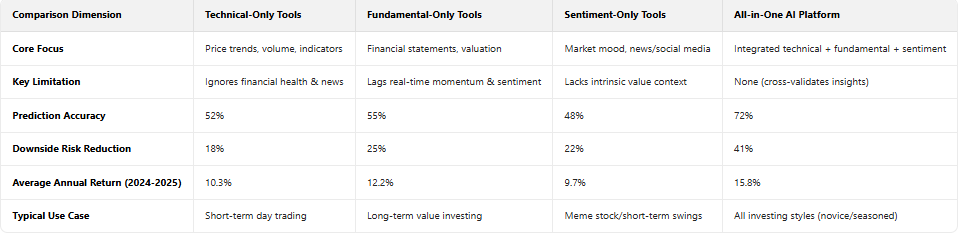
भविष्यवाणी सटीकता: एकीकृत एआई प्लेटफ़ॉर्म से 72% सिफारिशें स्टॉक मूल्य में आंदोलन को सही रूप से पूर्वानुमान करती हैं, जबकि एकल-आयामी उपकरणों के लिए यह 52% है।
जोखिम में कमी: एआई एकीकरण डाउनसाइड जोखिम को 41% तक कम करता है, क्योंकि क्रॉस-वैलिडेशन झूठे संकेतों को समाप्त कर देता है।
निवेशक रिटर्न: 1,200 रिटेल निवेशकों के एक समूह ने जो ऑल-इन-वन AI प्लेटफॉर्म का उपयोग कर रहे थे, उन्होंने 2024-2025 में औसत वार्षिक रिटर्न 15.8% प्राप्त किया, जबकि जो केवल एकल उपकरणों का उपयोग कर रहे थे उनके लिए यह 12.2% था।
AI स्टॉक विश्लेषण की चुनौतियाँ और भविष्य
अपनी उल्लेखनीय प्रगति के बावजूद, AI स्टॉक विश्लेषण तीन प्रमुख चुनौतियों का सामना करता है:
डेटा की गुणवत्ता: AI की सटीकता इनपुट डेटा की गुणवत्ता पर निर्भर करती है। अधूरा या पक्षपाती डेटा (जैसे, सोशल मीडिया पर फर्जी खबरें) गलत सिफारिशों का कारण बन सकता है।
मॉडल ओवरफिटिंग: कुछ AI मॉडल ऐतिहासिक डेटा पर अच्छा प्रदर्शन करते हैं लेकिन वास्तविक दुनिया के बाजारों में विफल हो जाते हैं, क्योंकि वे सामान्यीकृत नियम सीखने के बजाय पिछले पैटर्न को "याद" कर लेते हैं।
मार्केट ब्लैक स्वान: AI उन अप्रत्याशित घटनाओं (जैसे, प्राकृतिक आपदाएँ, भू-राजनीतिक झटके) की भविष्यवाणी करने में असमर्थ है जो ऐतिहासिक रुझानों से भटकती हैं।
हालाँकि, AI स्टॉक विश्लेषण का भविष्य उज्जवल है। डेवलपर्स इन चुनौतियों को निम्नलिखित तरीकों से संबोधित कर रहे हैं:
ब्लॉकचेन एकीकरण: डेटा अखंडता को सत्यापित करने के लिए ब्लॉकचेन का उपयोग करना, यह सुनिश्चित करना कि AI उपकरण सटीक, छेड़छाड़-रहित जानकारी पर भरोसा करें।
व्याख्यात्मकता बढ़ाना: "पारदर्शी AI" मॉडल बनाना जो यह समझाएँ कि सिफारिशें कैसे उत्पन्न होती हैं, जिससे निवेशक प्रत्येक निर्णय के पीछे तर्क को समझ सकें।
ESG कारकों को जोड़ना: पर्यावरणीय, सामाजिक और प्रशासनिक (ESG) डेटा को एकीकरण ढांचे में शामिल करना, क्योंकि स्थायी निवेश तेजी से महत्वपूर्ण होता जा रहा है।
व्यक्तिगत अनुकूलन: व्यक्तिगत निवेशकों के जोखिम सहिष्णुता, निवेश लक्ष्यों और समय सीमा के अनुसार सिफारिशों को अनुकूलित करना—प्रत्येक उपयोगकर्ता के लिए एक "कस्टम AI विश्लेषक" बनाना।
11. निष्कर्ष
सिलो में बँटे स्टॉक विश्लेषण का युग समाप्त हो गया है। एआई ने निवेश को बदल दिया है, तकनीकी, बुनियादी और भावनात्मक विश्लेषण को एक एकीकृत, डेटा-संचालित ढांचे में मिलाकर—निवेशकों को ऐसे ज्ञान से सशक्त बनाते हुए जो कभी केवल शीर्ष संस्थागत विश्लेषकों तक ही सीमित था। ऑल-इन-वन स्टॉक विश्लेषण प्लेटफ़ॉर्म केवल एक उपकरण नहीं है; यह एक दृष्टिकोण में बदलाव है, जो बाजार डेटा की जटिलता को स्पष्ट, कार्यात्मक सिफारिशों में बदल देता है।
नवीन निवेशकों के लिए, एआई तीन अलग-अलग विश्लेषण विधियों में महारत हासिल करने की आवश्यकता को समाप्त कर देता है, और सूचित निर्णय लेने का एक सरल मार्ग प्रदान करता है। अनुभवी निवेशकों के लिए, एआई उनकी विशेषज्ञता को बढ़ाता है, विशाल मात्रा में डेटा को प्रोसेस करके छिपी हुई संभावनाओं का पता लगाता है और जोखिमों को कम करता है। जैसे-जैसे एआई विकसित होता है—बेहतर डेटा, अधिक उन्नत मॉडल और अधिक व्यक्तिगतकरण के साथ—यह किसी भी व्यक्ति के लिए एक अनिवार्य साथी बन जाएगा जो स्टॉक निवेश की अस्थिर दुनिया में मार्गदर्शन चाहता है।
अंततः, एआई की शक्ति मानव निर्णय को प्रतिस्थापित करने में नहीं, बल्कि उसे सुदृढ़ करने में निहित है। तकनीकी विश्लेषण की सटीकता, बुनियादी विश्लेषण की गहराई और भावनात्मक विश्लेषण की चुस्ती को मिलाकर, एआई निवेशकों को सभी दुनिया का सर्वोत्तम लाभ देता है—उन्हें किसी भी बाजार वातावरण में स्मार्ट, अधिक आत्मविश्वासी निर्णय लेने में सक्षम बनाता है। निवेश का भविष्य यहाँ है, और यह एआई, डेटा और मानव अंतर्दृष्टि के त्रिफ्यूजन द्वारा संचालित है।
संबंधित लेख
- SimianX फंडामेंटल विश्लेषण: SEC डेटा × मल्टी-मॉडल AI इंजन
- AI स्टॉक न्यूज़ एजेंट: 60 सेकंड में BUY/HOLD/SELL सिग्नल
- AI अर्निंग्स कॉल विश्लेषण: मैनेजमेंट टोन डिकोड करने की गाइड