
 By Muke
Original Market Insights Formed by Self-Organizing Encrypted Intelligent Networks
Original market insights formed by self-organizing encrypted intelligent networks represent a fundamental shift in how financial intelligence is generated, validated, and acted upon. Instead of relying on centralized analysts or monolithic models, these systems emerge from distributed, autonomous AI agents that collaborate under cryptographic constraints. Platforms like SimianX AI are exploring this frontier, where intelligence is no longer designed top-down but emerges bottom-up from encrypted coordination across networks.
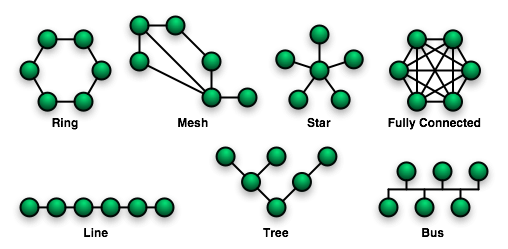
From Centralized Analysis to Emergent Market Intelligence
Traditional market research follows a linear pipeline: data collection → model inference → human interpretation. This structure introduces bottlenecks, bias, and latency. In contrast, self-organizing encrypted intelligent networks operate as adaptive ecosystems, continuously generating original market insights without a single point of control.
Key characteristics include:
- Decentralization: No central authority defines the final market view.
- Self-organization: Agents dynamically specialize and reconfigure.
- Encryption-first design: Data and signals are protected by cryptographic guarantees.
- Emergence: Insights arise from collective interaction, not explicit programming.
Market intelligence becomes an emergent property of the system, not a predefined output.
Original market insights in this context are not forecasts copied from historical correlations, but novel interpretations generated by agent-level disagreement, negotiation, and convergence.
Architecture of Self-Organizing Encrypted Intelligent Networks
At a systems level, these networks resemble biological swarms more than traditional software stacks.
Core Architectural Layers
| Layer | Role in Insight Formation |
|---|---|
| Encrypted Data Fabric | Protects raw signals and agent communication |
| Autonomous AI Agents | Analyze, predict, and challenge local market hypotheses |
| Incentive & Reputation Layer | Rewards accuracy, novelty, and robustness |
| Consensus & Divergence Engine | Allows multiple truths to coexist and compete |
| Emergent Insight Interface | Surfaces high-confidence, non-obvious signals |
Each agent may focus on a different market microstructure—liquidity flows, volatility regimes, on-chain behavior, or macro correlations—yet no agent has global visibility.
- Agents observe encrypted signals.
- Agents form local hypotheses.
- Hypotheses propagate through encrypted channels.
- Conflicts trigger deeper analysis.
- Consensus or persistent divergence generates insight.
This process enables original market insights that centralized systems often miss.
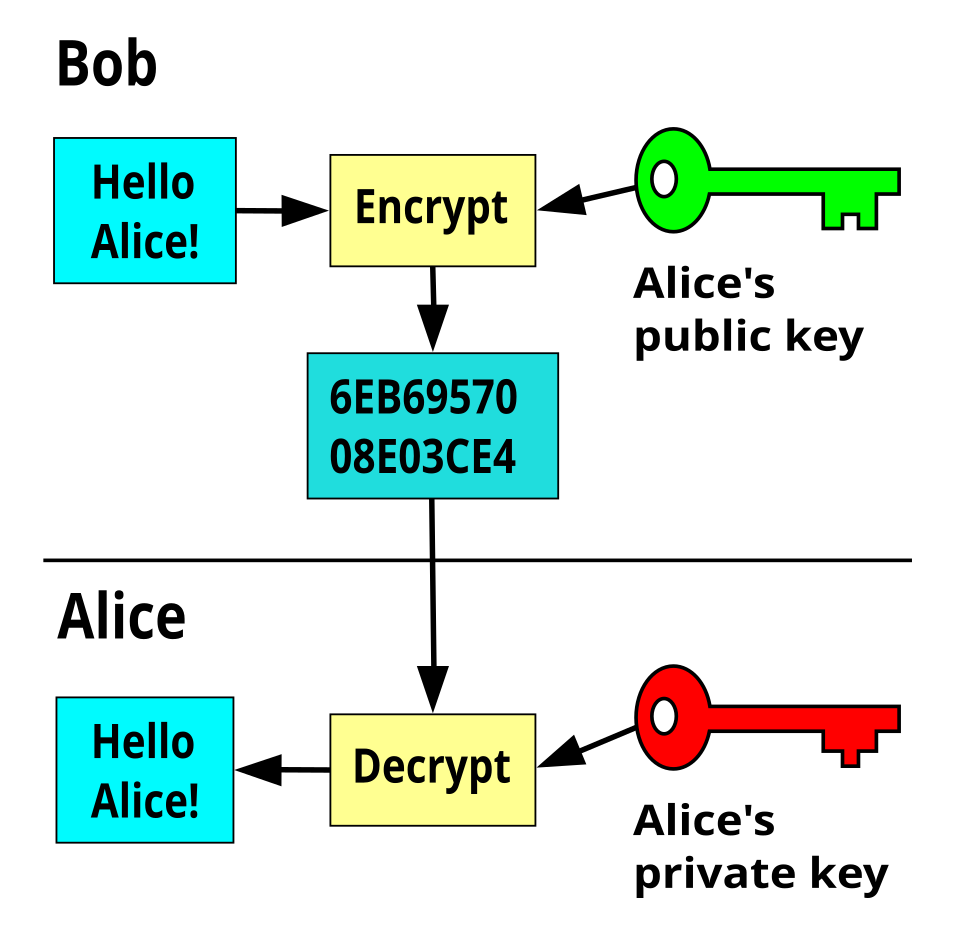
Why Encryption Is Essential for Original Market Insights
Encryption is not merely a privacy feature—it is a structural enabler of intelligence.
Encryption Enables:
- Truthful signaling: Agents cannot manipulate shared data.
- Adversarial resistance: Malicious actors are isolated.
- Regulatory safety: Sensitive financial data remains protected.
- Epistemic diversity: Agents reason independently without data leakage.
Without encryption, dominant agents or data sources would overpower others, collapsing diversity and reducing originality.
Original insights require protected disagreement.
This is why self-organizing encrypted intelligent networks consistently outperform open, unprotected agent systems in volatile markets.
How Do Self-Organizing Encrypted Networks Generate Original Market Insights?
A Question of Emergence, Not Prediction
How do self-organizing encrypted intelligent networks generate original market insights?
They do so by maintaining unresolved tension between competing models longer than centralized systems allow. Instead of forcing early convergence, the network preserves minority signals until evidence accumulates.
Key mechanisms include:
- Delayed consensus: Prevents premature agreement.
- Agent specialization: Encourages deep, narrow expertise.
- Cryptographic verification: Ensures signal integrity.
- Dynamic weighting: Shifts influence based on regime changes.
SimianX AI applies these principles to on-chain and market data, allowing users to observe not just what the market is doing, but why different intelligences disagree about it.
Comparison: Centralized AI vs Self-Organizing Encrypted Networks
| Dimension | Centralized AI Models | Self-Organizing Encrypted Networks |
|---|---|---|
| Insight Source | Single model | Collective emergence |
| Bias Risk | High | Distributed |
| Adaptability | Slow | High |
| Originality | Limited | Strong |
| Security | Moderate | Cryptographically enforced |
Centralized models optimize for efficiency. Self-organizing encrypted systems optimize for discovery.
Practical Market Applications
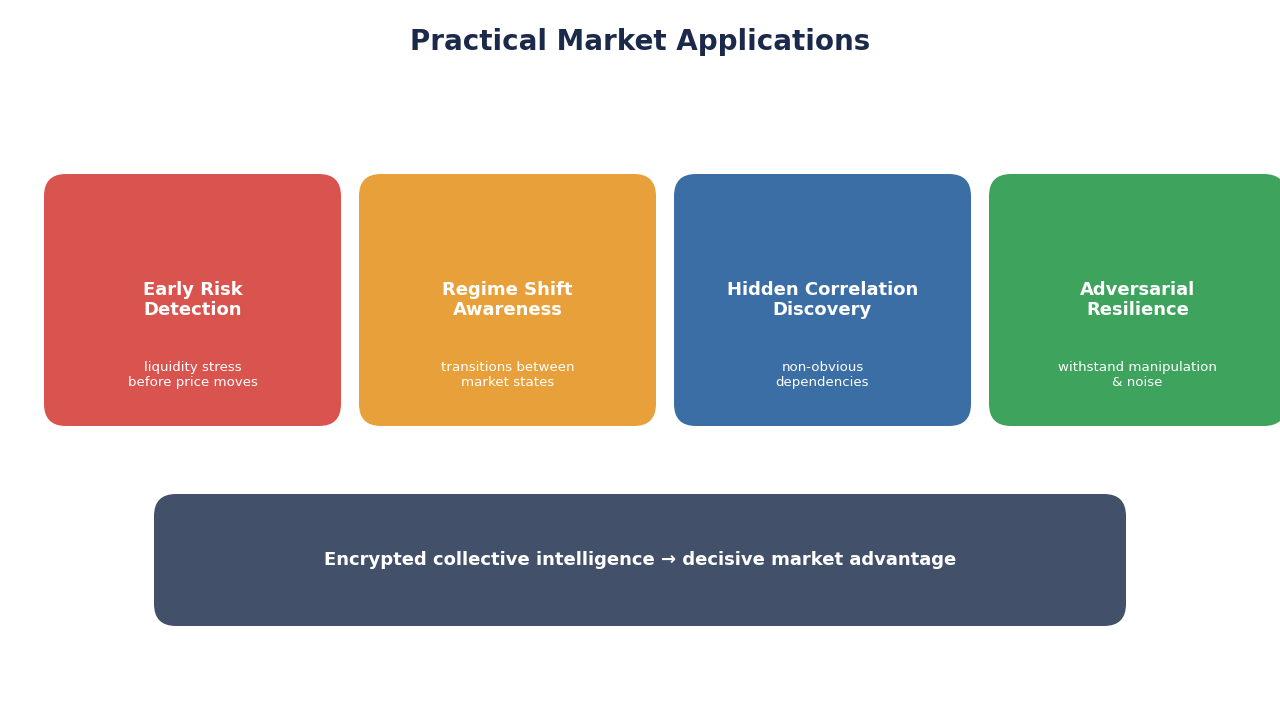
These networks are already reshaping how market participants operate:
- Early risk detection: Identifying liquidity stress before price moves.
- Regime shift awareness: Detecting transitions between market states.
- Hidden correlation discovery: Surfacing non-obvious dependencies.
- Adversarial resilience: Withstanding manipulation and noise.
In decentralized finance and crypto markets—where transparency and attack surfaces coexist—original market insights derived from encrypted collective intelligence offer a decisive advantage.
SimianX AI integrates these systems to help researchers, traders, and protocols interpret markets as living systems, not static datasets.
Implications for the Future of Market Intelligence
Self-organizing encrypted intelligent networks suggest a future where:
- Markets are interpreted by ecosystems of intelligences
- Insight quality depends on diversity, not dominance
- Trust is enforced by cryptography, not authority
- Intelligence evolves continuously with the market itself
This paradigm challenges the idea that better data or bigger models alone produce better insight. Instead, structure, incentives, and protection determine intelligence quality.
FAQ About Original Market Insights and Encrypted Intelligent Networks
What are original market insights in decentralized AI systems?
They are novel, non-obvious interpretations of market behavior that emerge from collective agent interaction rather than predefined models or historical templates.
Why are self-organizing encrypted networks better than single AI models?
Because they preserve diversity, resist manipulation, and adapt faster to regime changes while maintaining data integrity through encryption.
How does encryption improve market intelligence quality?
Encryption prevents data leakage, manipulation, and dominance, allowing agents to reason independently and honestly.
Can these systems be used outside crypto markets?
Yes. Any complex, adversarial environment—energy markets, supply chains, or macroeconomics—can benefit from this approach.
Conclusion
Original market insights formed by self-organizing encrypted intelligent networks represent a new epistemology of finance—one where intelligence is grown, not programmed. By combining decentralization, cryptography, and autonomous AI agents, these systems unlock insights that centralized models systematically overlook.
As markets become more complex and adversarial, tools like SimianX AI provide a critical advantage: the ability to observe emergent intelligence in real time. To explore how this paradigm can reshape your market research and decision-making, visit SimianX AI and experience the next generation of market intelligence.
Emergent Cognition and Insight Stabilization in Self-Organizing Encrypted Intelligent Networks
8. From Signal Aggregation to Cognitive Emergence
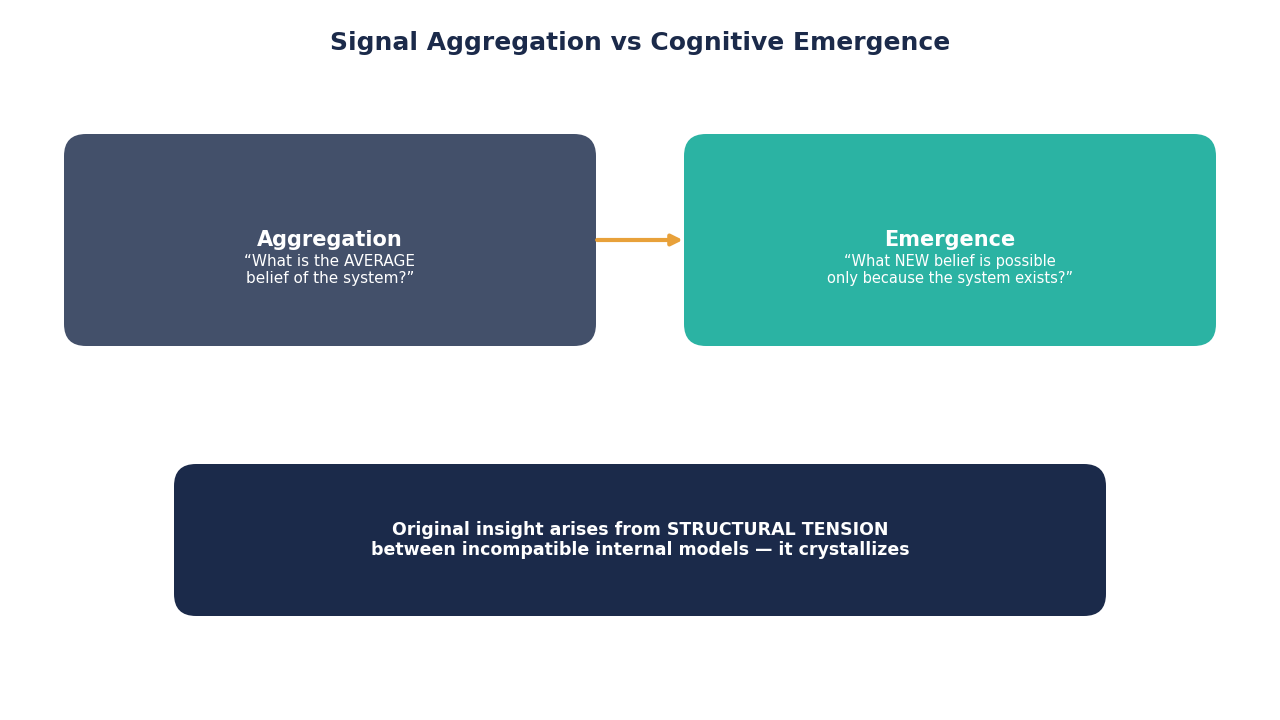
A critical distinction must be made between signal aggregation and cognitive emergence. Traditional ensemble models aggregate predictions. Self-organizing encrypted intelligent networks, by contrast, generate cognition.
Aggregation answers:
What is the average belief of the system?
Emergence answers:
What new belief becomes possible only because the system exists?
Original market insights do not arise from averaging forecasts. They arise from structural tension between incompatible internal models.
Insight as a Phase Transition
In these networks, insight formation resembles a phase transition rather than a computation:
- Below a critical interaction threshold → fragmented opinions
- Near the threshold → unstable oscillations
- Beyond the threshold → coherent but novel market interpretation
This explains why insights often appear suddenly, not gradually.
Insight is not computed; it crystallizes.
9. The Role of Disagreement Persistence
One of the most counterintuitive design principles of self-organizing encrypted intelligent networks is the intentional preservation of disagreement.
Why Disagreement Matters
Centralized systems minimize error variance. These networks maximize epistemic coverage.
Disagreement is not noise—it is latent information.
| Type of Disagreement | Insight Potential |
|---|---|
| Random noise | Low |
| Structured disagreement | High |
| Persistent minority belief | Extremely high |
Original market insights often originate from agents that remain wrong the longest—until they are suddenly right.
Cryptographic Isolation Enables Honest Dissent
Encryption ensures:
- No agent can see global consensus too early
- Minority models cannot be suppressed
- Strategic conformity is impossible
This creates what can be called cryptographically enforced intellectual independence.
10. Insight Formation as a Market of Hypotheses
Self-organizing encrypted intelligent networks behave like internal prediction markets, but without explicit pricing.
Each hypothesis competes for:
- Attention
- Replication
- Influence
- Longevity
Hypothesis Fitness Function
Fitness is not accuracy alone. It is multidimensional:
- Predictive usefulness
- Robustness across regimes
- Resistance to adversarial noise
- Explanatory compression
- Transferability
The best insights are those that survive hostile futures.
SimianX AI operationalizes this by tracking hypothesis survival curves, not just hit rates.
11. Temporal Intelligence: Anticipation Without Prediction
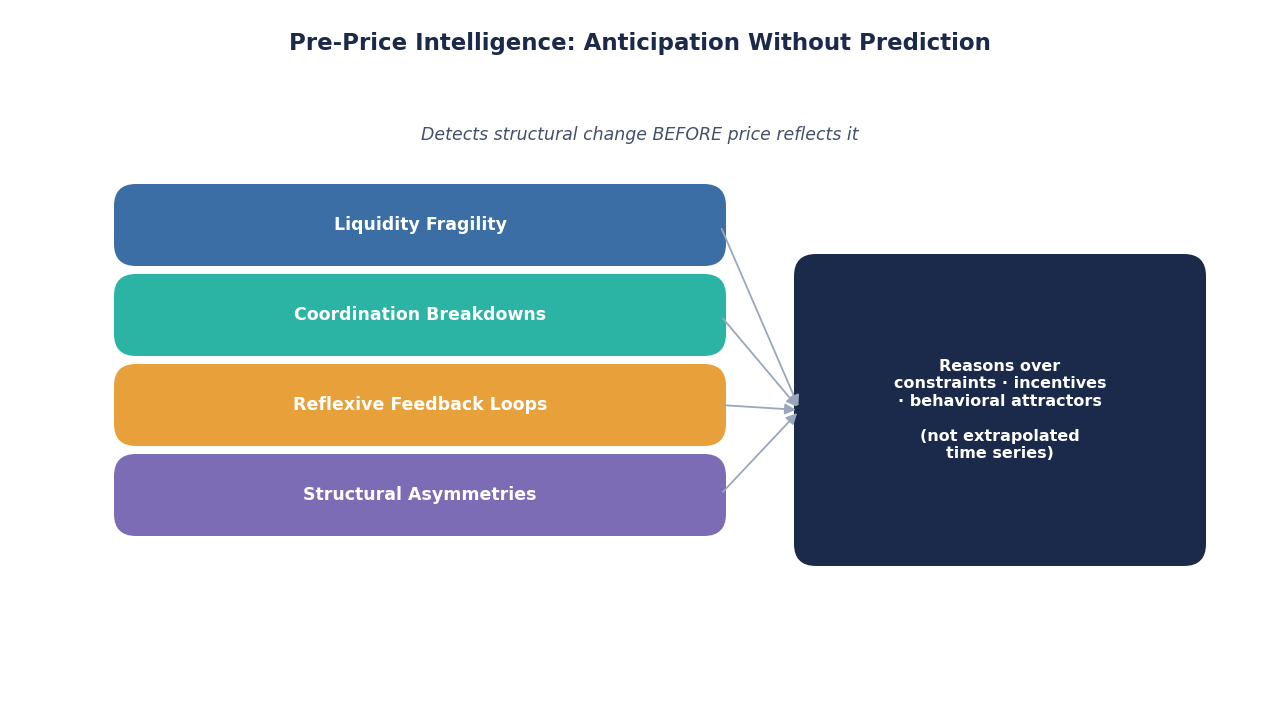
Original market insights differ from forecasts. Forecasts answer what will happen. Insights answer what is becoming possible.
Pre-Price Intelligence
These networks frequently detect:
- Liquidity fragility
- Coordination breakdowns
- Reflexive feedback loops
- Structural asymmetries
Before price reflects them.
This is possible because agents reason over:
- Constraints
- Incentives
- Behavioral attractors
Rather than extrapolated time series.
12. Regime Awareness Through Structural Memory
Unlike monolithic models that overwrite parameters, self-organizing networks accumulate structural memory.
Each regime leaves behind:
- Agent specializations
- Communication topologies
- Weight distributions
When a similar regime reappears, the system reactivates dormant structures.
The network remembers shapes of markets, not prices.
This is a key reason original market insights improve over time instead of decaying.
13. Security, Adversarial Resistance, and Insight Integrity
Markets are adversarial environments. Any intelligence system that ignores this is fragile by design.
Threat Models Addressed
Self-organizing encrypted intelligent networks are resistant to:
- Data poisoning
- Model inversion
- Signal spoofing
- Strategic herding
- Narrative attacks
Encryption ensures that manipulation cannot propagate cheaply.
| Attack Vector | Centralized AI | Encrypted Swarm |
|---|---|---|
| Poisoning | High impact | Localized |
| Herding | Systemic | Contained |
| Spoofing | Effective | Expensive |
Original insights survive precisely because they are hard to falsify at scale.
14. Epistemic Humility and Multi-Truth Coexistence
One of the deepest philosophical implications of these systems is the rejection of single-truth outputs.
Self-organizing encrypted intelligent networks support:
- Multiple simultaneous explanations
- Conditional truths
- Scenario-dependent validity
This is essential in markets where:
- Outcomes are path-dependent
- Agents react to beliefs
- Truth changes when believed
A market insight that cannot coexist with alternatives is dangerous.
SimianX AI surfaces distributions of belief, not singular answers.
15. Implications for Financial Decision-Making
Original market insights reshape decision-making across roles:
For Traders
- Shift from signal chasing to regime navigation
- Focus on fragility and asymmetry
For Protocol Designers
- Detect incentive misalignment early
- Stress-test governance assumptions
For Risk Managers
- Monitor systemic tension instead of volatility
- Identify nonlinear failure modes
These insights are qualitative in nature but quantitative in consequence.
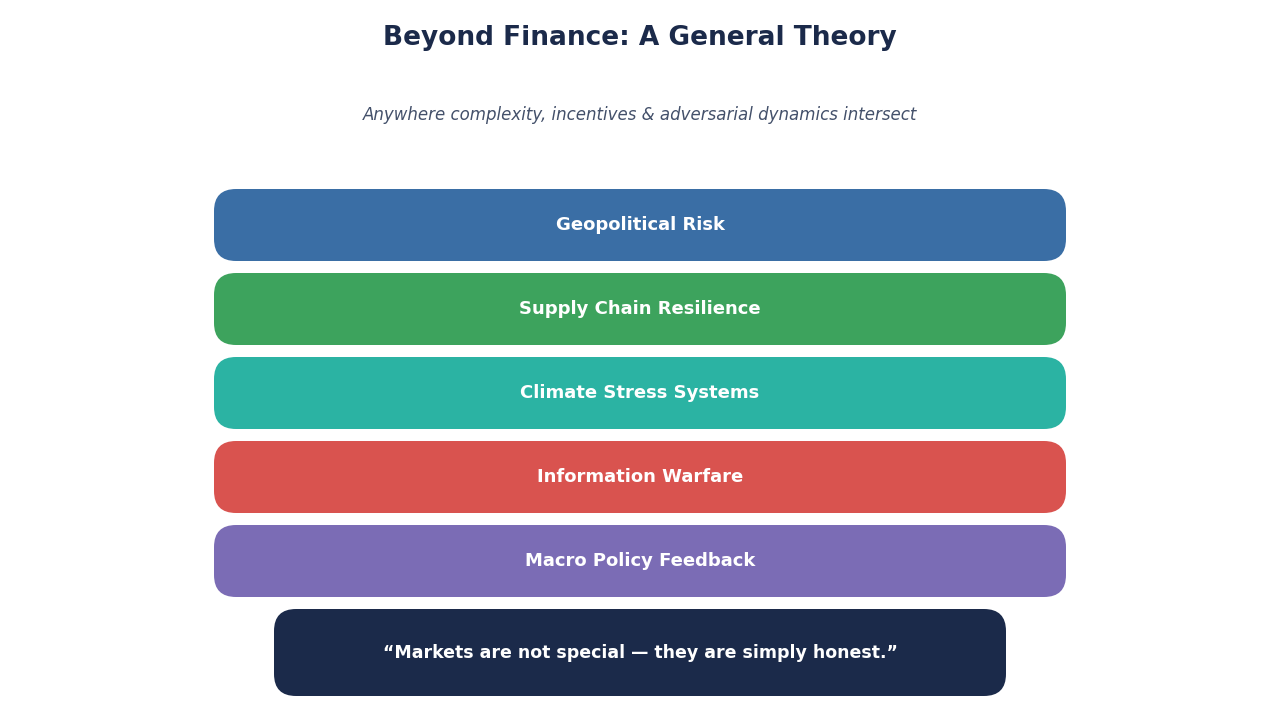
16. Beyond Finance: A General Theory of Collective Intelligence
While markets are the proving ground, the framework generalizes.
Applicable domains include:
- Geopolitical risk
- Supply chain resilience
- Climate stress systems
- Information warfare
- Macro policy feedback loops
Anywhere complexity, incentives, and adversarial dynamics intersect.
Markets are not special. They are simply honest.
17. Limitations and Open Research Questions
Despite their promise, these systems face unresolved challenges:
- Interpretability of emergent insights
- Governance of autonomous intelligence
- Calibration of incentive layers
- Computational overhead
- Ethical containment
These are not engineering problems alone—they are civilizational design questions.
18. Conclusion: Insight as a Living Process
Original market insights formed by self-organizing encrypted intelligent networks represent a departure from predictive arrogance toward adaptive epistemology.
They acknowledge:
- Uncertainty as structural
- Disagreement as valuable
- Security as foundational
- Intelligence as emergent
Rather than asking markets for answers, these systems listen for patterns of becoming.
SimianX AI stands at this frontier—transforming encrypted collective intelligence into actionable understanding for those navigating complex financial systems.
The future of market intelligence will not belong to the fastest model or the biggest dataset—but to the systems that can think together without thinking alike.
Related Reading
- Cognitive Market Predictions: Autonomous Encrypted AI
- Crypto Intelligence: Decentralized Cognitive Prediction
- Emerging Encrypted Prediction: Cooperative Multi-Agent AI
- Crypto Market Analysis with Multi-Agent AI: Real-Time
- Predicting Crypto Market Trends with Collective AI
- Synthetic Prediction Engines in Decentralized Crypto
- Market Early-Warning Intelligence from Distributed AI Swarms
- Time-Series Models vs LLMs for Crypto: Why Hybrid Wins
- SimianX Crypto Leaderboard