
 Par Muke
Impact de l'IPC américain sur les fluctuations des prix des cryptomonnaies : Paris sur les taux d'intérêt et cadres de trading
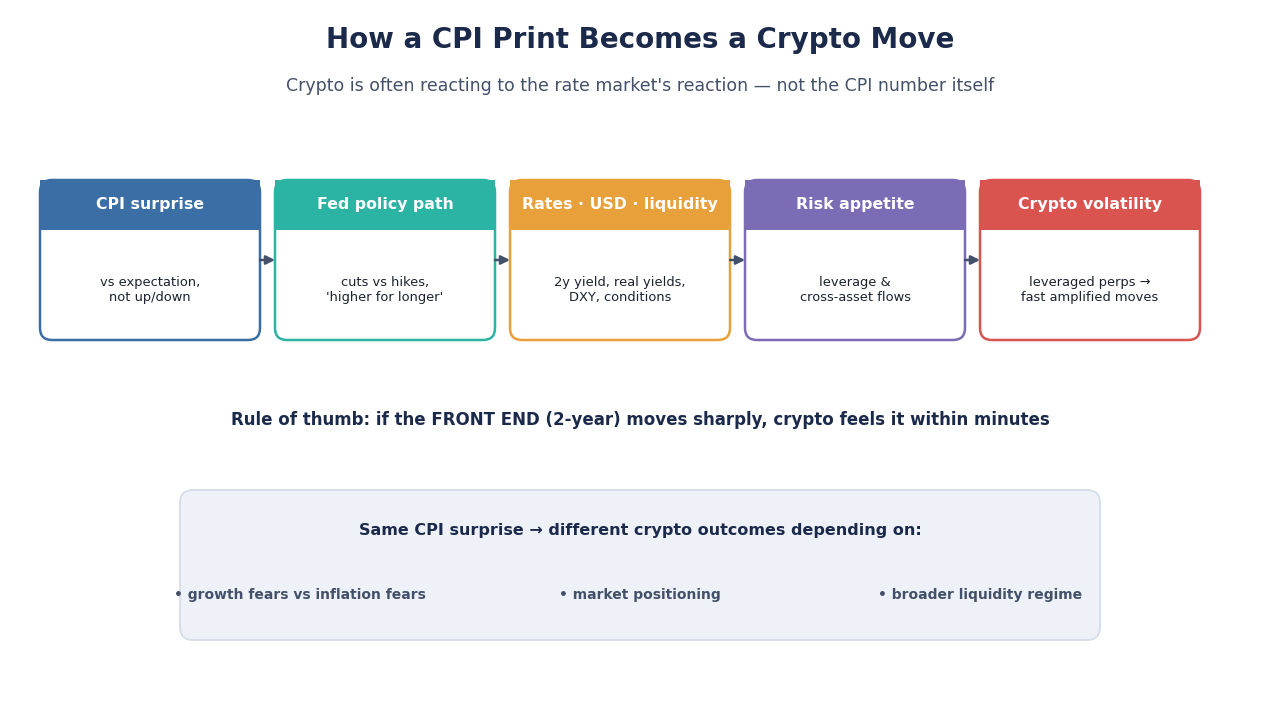
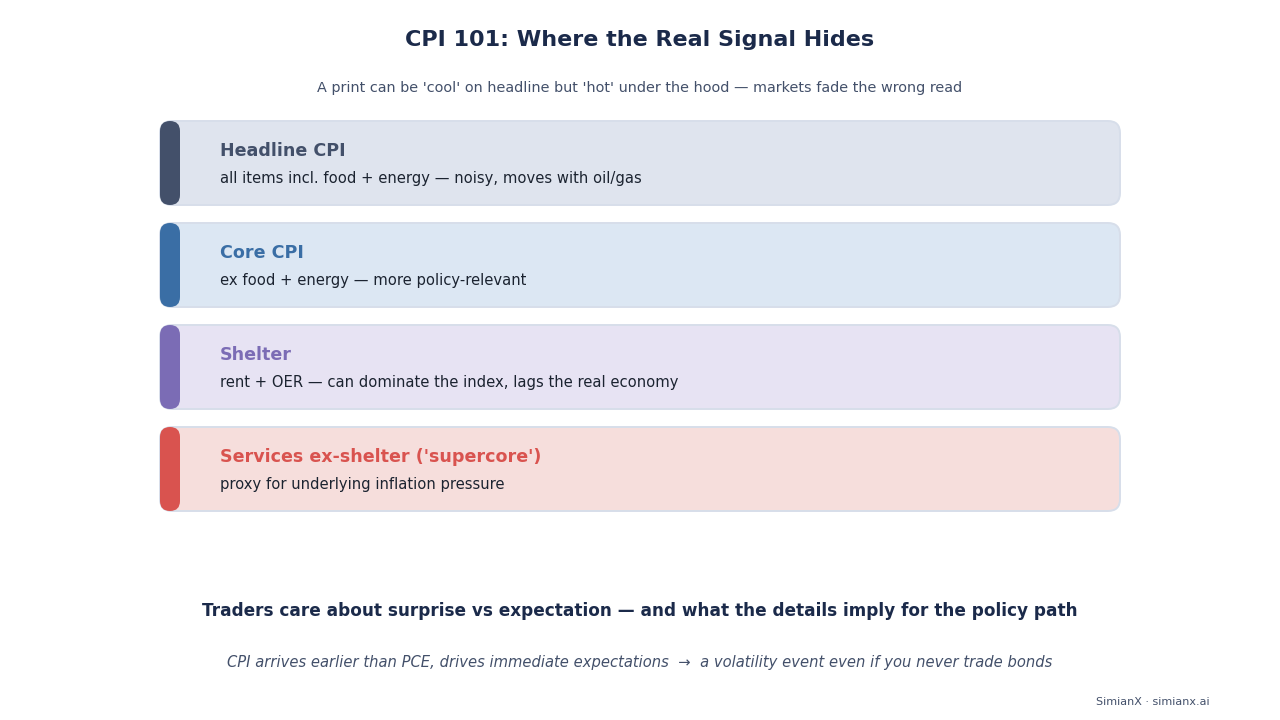
Lorsque les traders parlent de "vagues de choc de l'IPC", ils décrivent en réalité une réaction en chaîne : données d'inflation → attentes concernant les taux d'intérêt → conditions de liquidité → appétit pour le risque → volatilité des cryptomonnaies. Si vous avez déjà vu le BTC fluctuer de 2 à 5 % en quelques minutes après une publication de données à 8h30, heure de l'Est, vous avez ressenti comment le macro influence désormais la microstructure.
Cette recherche décompose les mécanismes derrière l'impact de l'IPC américain sur les fluctuations des prix des cryptomonnaies : comment les marchés des taux se re-prixent, pourquoi les cryptomonnaies réagissent de la manière dont elles le font, et comment construire un manuel de jeu répétable (au lieu de parier sur des gros titres). Nous montrerons également comment SimianX AI peut vous aider à préparer l'événement, à tester des scénarios et à convertir le chaos en un plan que vous pouvez exécuter.
Pourquoi l'IPC peut faire bouger les cryptomonnaies plus que les "nouvelles sur les cryptos"
Les cryptomonnaies sont mondiales, mais elles sont évaluées en dollars et de plus en plus négociées comme un actif à risque à beta élevé. L'IPC est l'un des moyens les plus rapides de faire bouger le "prix dollar de l'argent", il peut donc ignorer les récits spécifiques aux tokens à court terme.
La chaîne IPC → Taux → Liquidité → Cryptos (en termes simples)
- Surprises de l'IPC modifient la perception du marché concernant la persistance de l'inflation.
- Cela change les attentes concernant le chemin de politique de la Fed (baisses contre hausses, "plus longtemps à un niveau élevé", timing).
- Les attentes en matière de taux re-prixent les rendements des Treasuries, les rendements réels, le dollar, et les conditions financières.
- Les conditions financières influencent l'appétit pour le risque, l'effet de levier, et les flux entre actifs.
- Les cryptomonnaies—en particulier les marchés perpétuels à effet de levier—traduisent cela en mouvements rapides et amplifiés.
Point clé à retenir : Les cryptomonnaies réagissent souvent à la réaction du marché des taux—et non au chiffre de l'IPC lui-même.
Règle d'or : Si l'extrémité avant de la courbe des taux (par exemple, “2 ans”) bouge fortement, la crypto le ressent généralement en quelques minutes.
CPI 101 pour les traders : ce qui compte (et ce qui est du bruit)
La plupart des gros titres du CPI concernent “la hausse ou la baisse”. Les traders se soucient de la surprise par rapport aux attentes et de ce que la surprise implique pour la trajectoire de la politique.
Composantes principales vs de base vs “collantes”
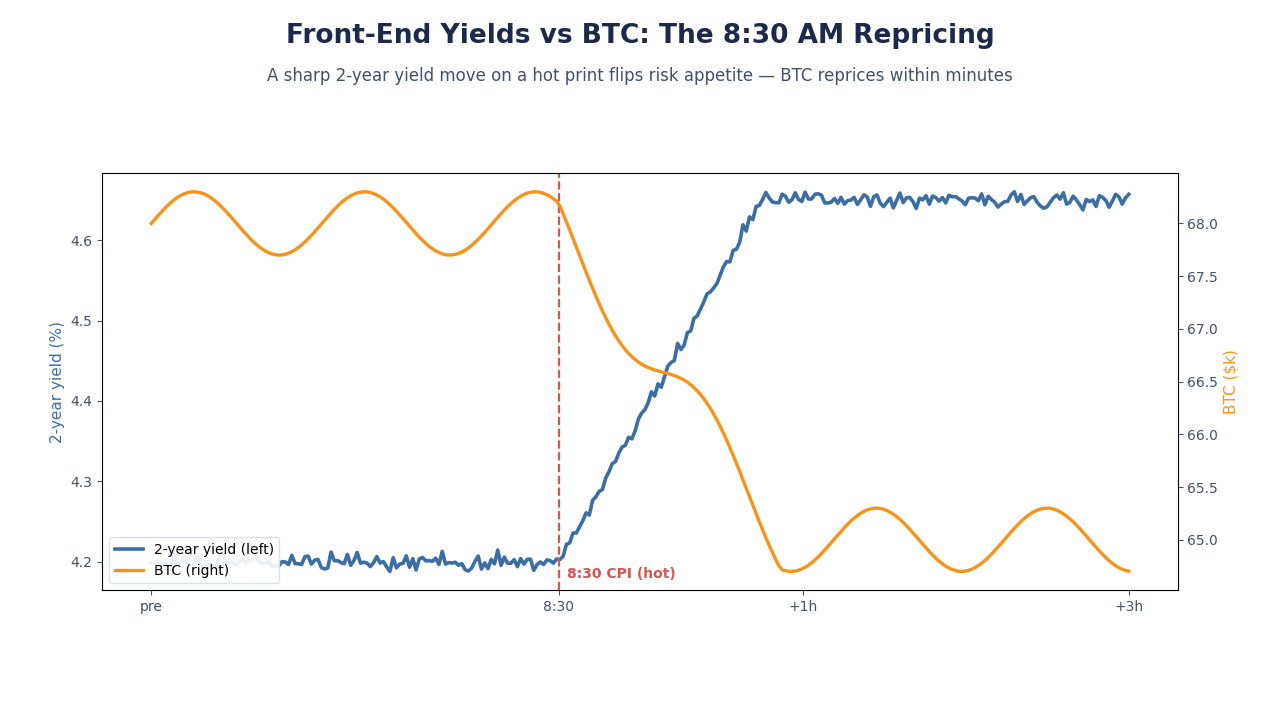
- CPI principal inclut tout (nourriture + énergie). Il évolue avec le pétrole/le gaz et peut être bruyant.
- CPI de base exclut la nourriture + l'énergie. Il est souvent plus pertinent pour la politique.
- Abri (loyer + loyer équivalent des propriétaires) peut dominer l'indice et être en retard par rapport à l'économie réelle.
- Services hors abri (parfois appelés “supercore” dans le jargon du marché) sont surveillés comme un proxy pour la pression inflationniste sous-jacente.
Pourquoi “les détails” comptent plus que le chiffre global
Un chiffre CPI peut être “froid” au niveau du titre mais “chaud” sous le capot. Les marchés vont souvent atténuer le mouvement initial une fois que les traders analysent :
- l'accélération/décélération de l'abri,
- l'élan de l'inflation des services,
- la désinflation des biens par rapport à la réaccélération,
- les bizarreries saisonnières et les effets de base.
Si le marché lit “titre froid, cœur collant,” le premier mouvement peut s'inverser.
CPI vs PCE : pourquoi les traders s'obsèdent encore sur le CPI
Même si les décideurs politiques mettent l'accent sur l'inflation PCE, le CPI :
- arrive plus tôt,
- influence les attentes immédiates,
- fixe le ton pour le réajustement macro de la semaine,
- est fortement échangé par les bureaux macro et de taux systématiques.
C'est pourquoi le CPI est souvent un événement de volatilité pour la crypto, même si vous ne tradez jamais des obligations.
Comment les “paris sur les taux d'intérêt” sont réellement tarifés
Lorsque vous entendez "les chances de réduction des taux ont augmenté", c'est une abréviation pour décrire comment les marchés des dérivés réévaluent le chemin de politique attendu. Pour les traders de crypto, le point important est : les taux sont un marché, pas une déclaration.
Marchés clés qui transmettent les ondes de choc de l'IPC
- Futures sur les fonds fédéraux / futures sur les taux à court terme : évaluent le taux de politique attendu à des dates futures.
- OIS (swaps d'index à un jour) : une autre façon d'évaluer les chemins de politique attendus.
- Courbe des Trésors (2 ans/5 ans/10 ans) : reflète les attentes + la prime de terme.
- Rendements réels (basés sur les TIPS) : corrèlent souvent avec les évaluations des actifs à risque.
- Indice du dollar (DXY) : reflète la demande mondiale pour le USD et les différentiels de taux.
Pourquoi le court terme est le plus important pour la crypto
Le "court terme" (maturités courtes) est le plus sensible aux attentes de politique de la Fed. L'IPC est une entrée directe dans ces attentes, donc il a tendance à bouger :
- rendements à 2 ans,
- probabilités de timing de réduction des taux,
- primes de risque pour les actifs à bêta élevé.
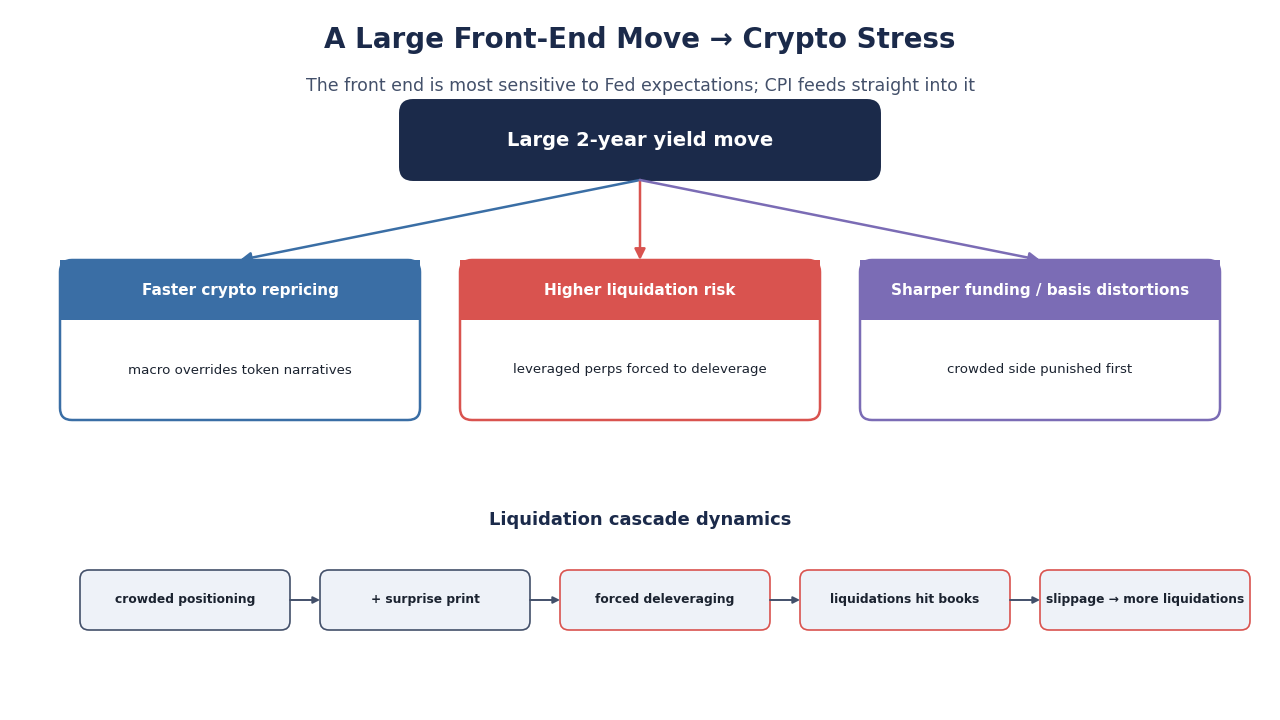
Traduction pratique pour le trading : Si vous voyez un grand mouvement à court terme, attendez-vous à :
- une réévaluation plus rapide de la crypto,
- un risque de liquidation plus élevé,
- des distorsions de base/financement plus marquées.
Pourquoi les fluctuations de la crypto peuvent être violentes autour de l'IPC
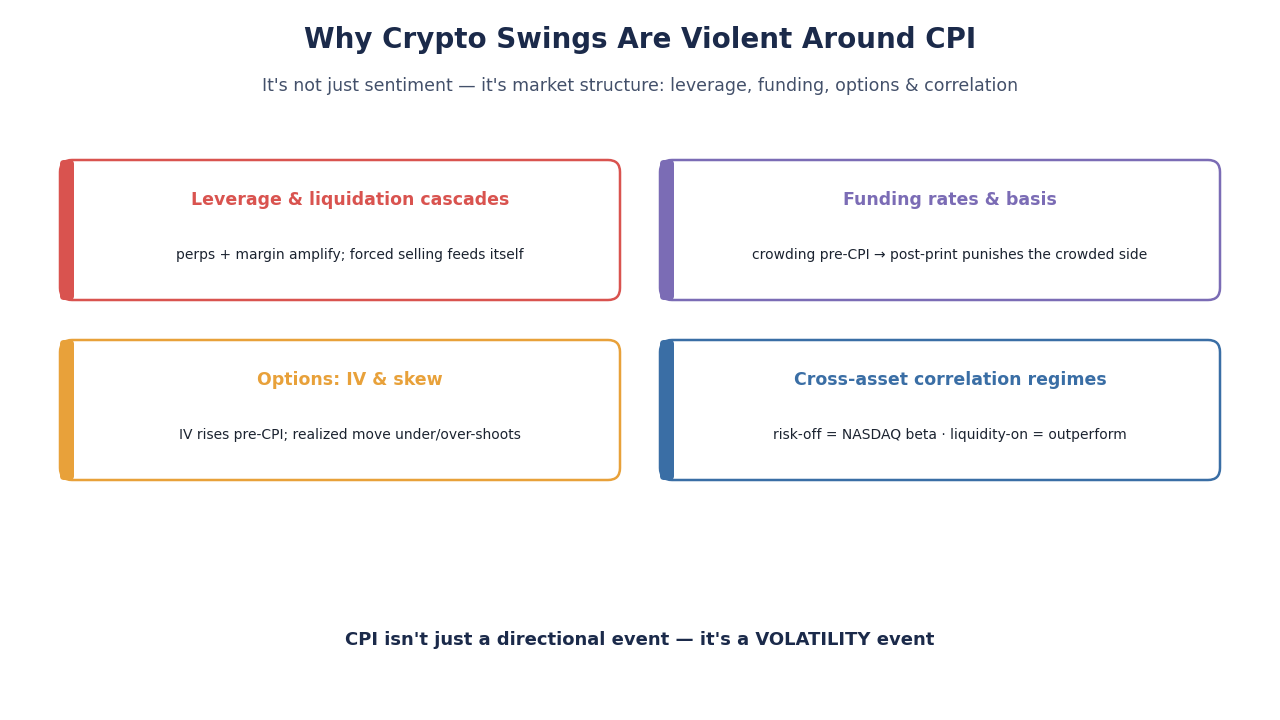
La réaction de la crypto n'est pas seulement "le sentiment macro". C'est aussi la structure du marché.
1) Effet de levier et cascades de liquidation
Les contrats à terme perpétuels et le trading sur marge amplifient les mouvements :
- positionnement encombré + impression surprise → désendettement forcé,
- les liquidations frappent les carnets de commandes → glissement → plus de liquidations.
2) Taux de financement et dynamiques de base
Lorsque les traders s'accumulent dans une direction avant l'IPC :
- le financement peut devenir tendu,
- la base peut s'élargir,
- le mouvement post-impression punit souvent d'abord le côté encombré.
3) Options : volatilité implicite et biais
Avant l'IPC :
- la volatilité implicite augmente souvent,
- les traders achètent de la protection ou des straddles,
- le “mouvement réalisé” peut sous-estimer ou surestimer ce que les options ont prix.
L'IPC n'est pas seulement un événement directionnel—c'est un événement de volatilité.
4) Régimes de corrélation entre actifs
Dans les régimes de risque, la crypto peut se négocier comme le NASDAQ beta.
Dans les régimes de liquidité, la crypto peut surperformer de manière spectaculaire.
Ainsi, la même surprise de l'IPC peut produire différents résultats en crypto selon :
- les craintes de croissance contre les craintes d'inflation,
- le positionnement du marché,
- le régime de liquidité plus large.
Comment l'IPC américain impacte-t-il les fluctuations de prix de la crypto dans différents scénarios ?
Au lieu de deviner la direction, construisez une matrice de scénarios. Votre travail consiste à définir :
- ce que vous attendez que les taux fassent,
- ce que cela implique pour le USD et la liquidité,
- comment le positionnement en crypto pourrait amplifier ou atténuer le mouvement.
Manuel de scénarios IPC (niveau élevé)
Voici un cadre—pas une promesse. Les marchés peuvent “changer” en fonction du positionnement et des détails de second ordre.
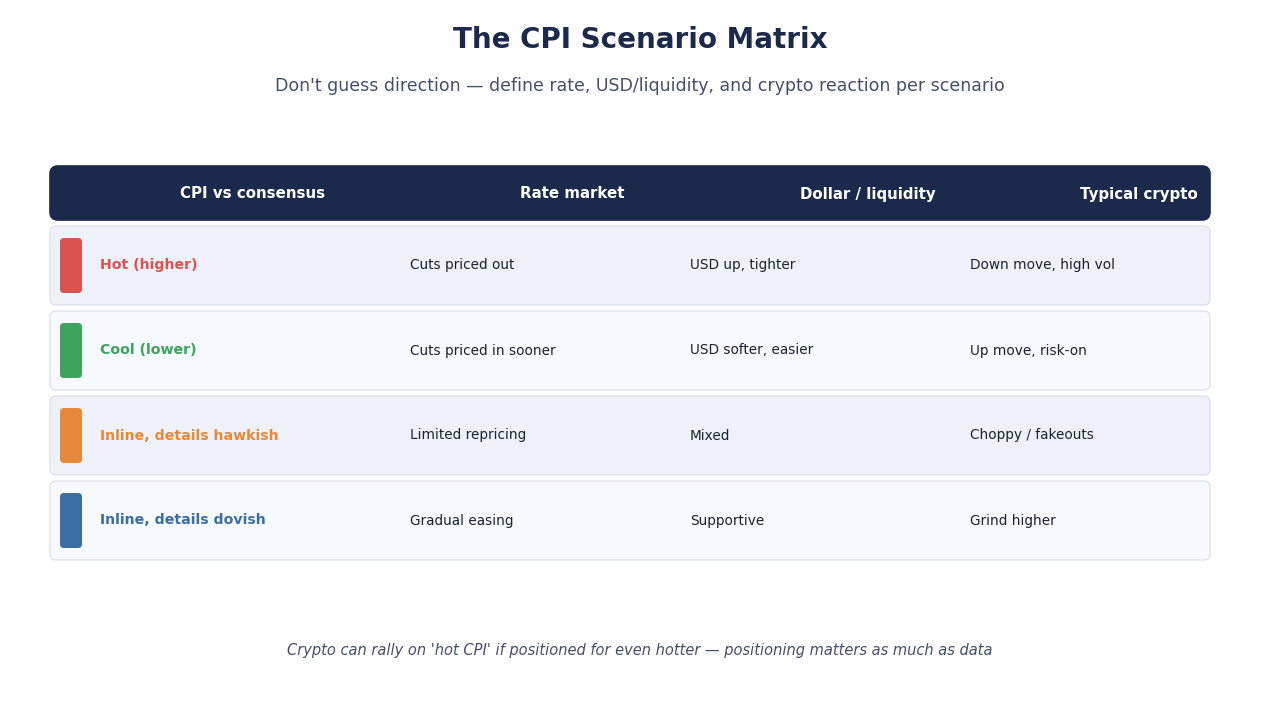
| Résultat IPC vs Consensus | Réaction probable du marché des taux | Dollar / Liquidité | Comportement typique de la crypto | Ce qu'il faut surveiller |
|---|---|---|---|---|
| Chaud (plus élevé que prévu) | Coupures exclues / chemin plus élevé | USD en hausse, conditions plus strictes | Mouvement à la baisse, volatilité plus élevée | Pic des rendements à 2 ans, retournements de financement |
| Froid (plus bas que prévu) | Coupures intégrées plus tôt | USD plus faible, conditions plus faciles | Mouvement à la hausse, risque accru | Baisse des rendements à 2 ans, croissance de l'OI |
| Aligné mais détails restrictifs | Réévaluation limitée des coupures | Mixte | Choppy / faux signaux | services de base, abri |
| Aligné mais détails accommodants | Assouplissement progressif | Favorable | Progression à la hausse | largeur, demande au comptant contre perpétuelle |
Important : La crypto peut augmenter sur un “IPC chaud” si le marché était positionné pour un IPC encore plus chaud, ou si les flux de risque dominent. C'est pourquoi le positionnement compte autant que les données.
Liste de contrôle pré-CPI : ce que les pros font avant l'annonce
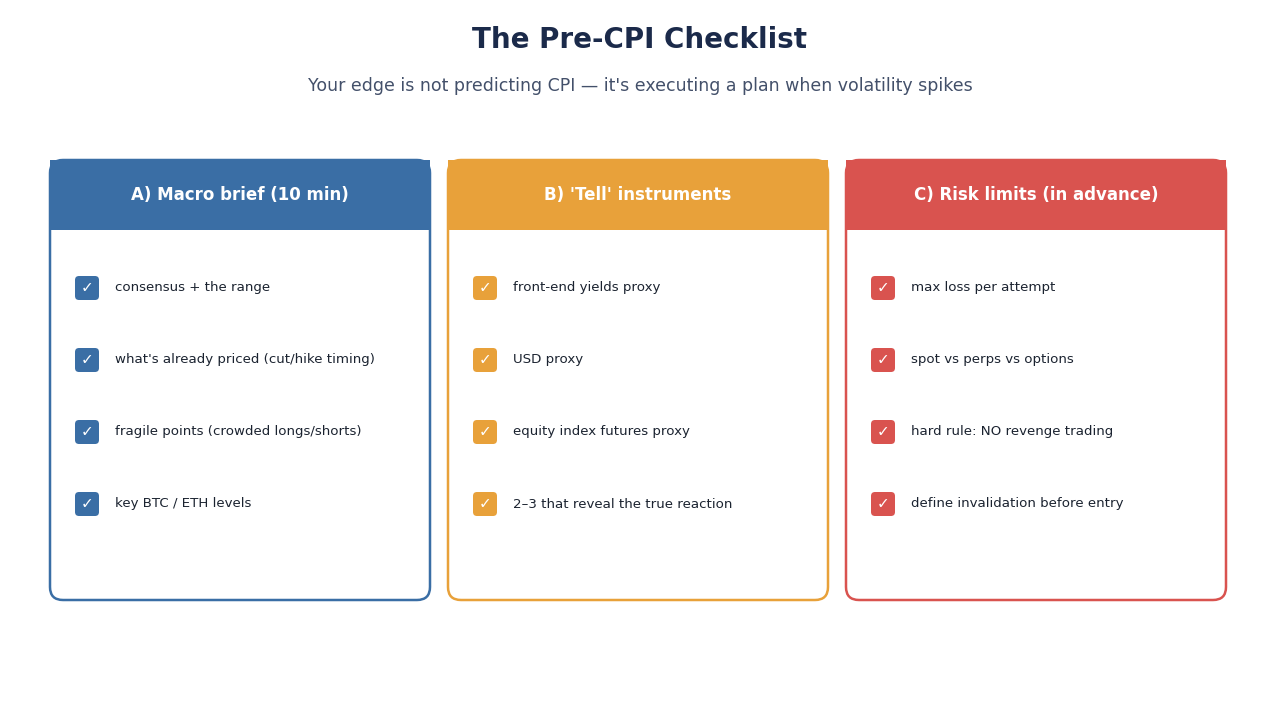
A) Construisez votre “brief macro” en 10 minutes
- Quel est le consensus et la plage ?
- Que prix le marché anticipe-t-il déjà (timing des baisses/hausses) ?
- Où sont les points fragiles (longs/courts encombrés) ?
- Quels sont les niveaux clés pour
BTC/ETH?
B) Identifiez les instruments “tell”
Choisissez 2–3 instruments qui révèlent la véritable réaction macro :
- proxy des rendements à court terme (attentes de taux courts),
- proxy USD,
- proxy des contrats à terme sur indices boursiers.
C) Définissez vos limites de risque à l'avance
Le CPI est l'endroit où les traders échouent en improvisant. Définissez :
- perte maximale par tentative,
- si vous allez trader au comptant, des perpétuels ou des options,
- une règle stricte pour pas de trading de revanche.
Votre avantage n'est pas de prédire le CPI. C'est d'exécuter un plan lorsque la volatilité augmente.
Cadres de trading pour les jours de CPI (sans jeu)
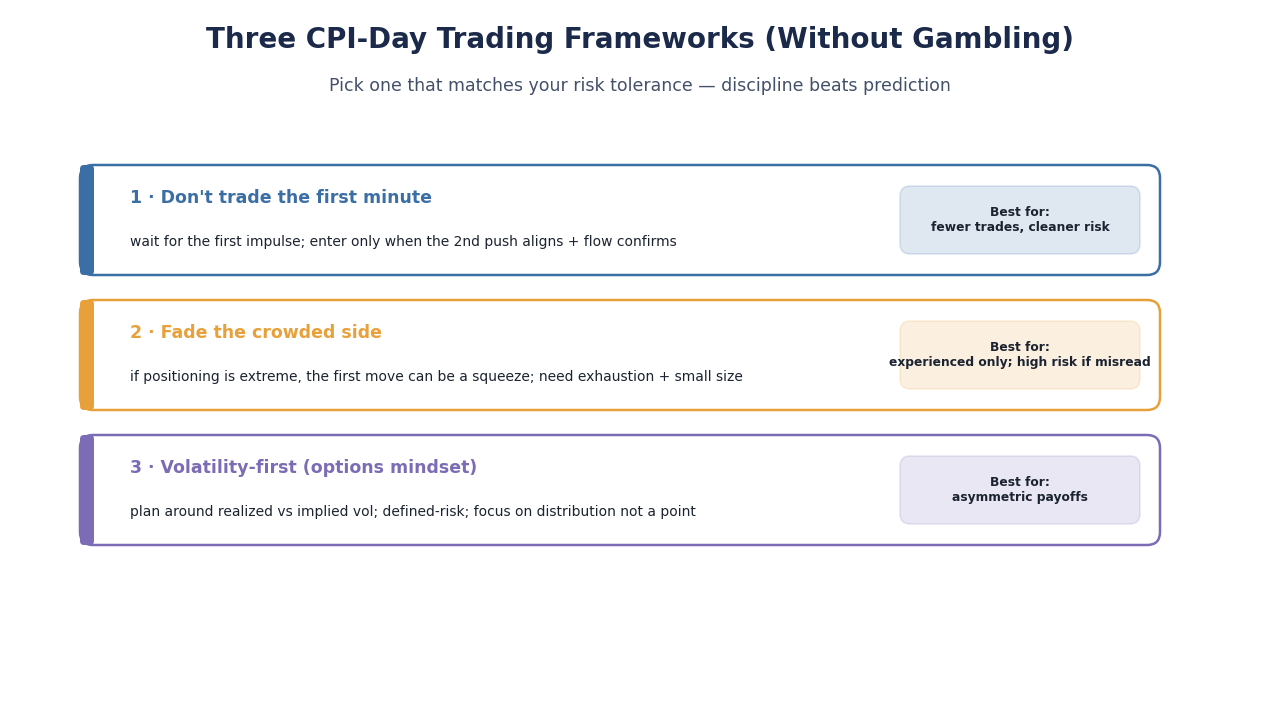
Voici des approches structurées utilisées par des traders disciplinés. Choisissez celle qui correspond à votre tolérance au risque.
Cadre 1 : “Ne tradez pas la première minute”
Objectif : éviter le premier mouvement erratique et trader la direction confirmée.
- Attendez le premier élan.
- Observez si le prix reste au-dessus/en dessous du niveau clé.
- Entrez uniquement lorsque :
- le financement/le flux confirme,
- la liquidité se stabilise,
- le deuxième mouvement s'aligne avec le premier.
Meilleur pour : les traders qui souhaitent moins de transactions avec un risque plus clair.
Cadre 2 : “Fadez le côté encombré”
Si le positionnement est extrême avant le CPI, le premier mouvement peut être un squeeze.
Vous pouvez fadez uniquement si vous avez :
- des preuves claires d'épuisement,
- un niveau d'invalidation défini,
- une petite taille.
Meilleur pour : les traders expérimentés ; risque élevé en cas de mauvaise interprétation.
Cadre 3 : Volatilité d'abord (mentalité d'options)
Traitez l'IPC comme un événement de volatilité :
- planifiez autour de la volatilité réalisée vs implicite,
- utilisez des structures à risque défini (ou simulez-les avec de petites tailles de spot + des stops),
- concentrez-vous sur la distribution et non sur la prédiction à un point unique.
Meilleur pour : les traders qui souhaitent des rendements asymétriques.
Un plan d'exécution étape par étape que vous pouvez réutiliser
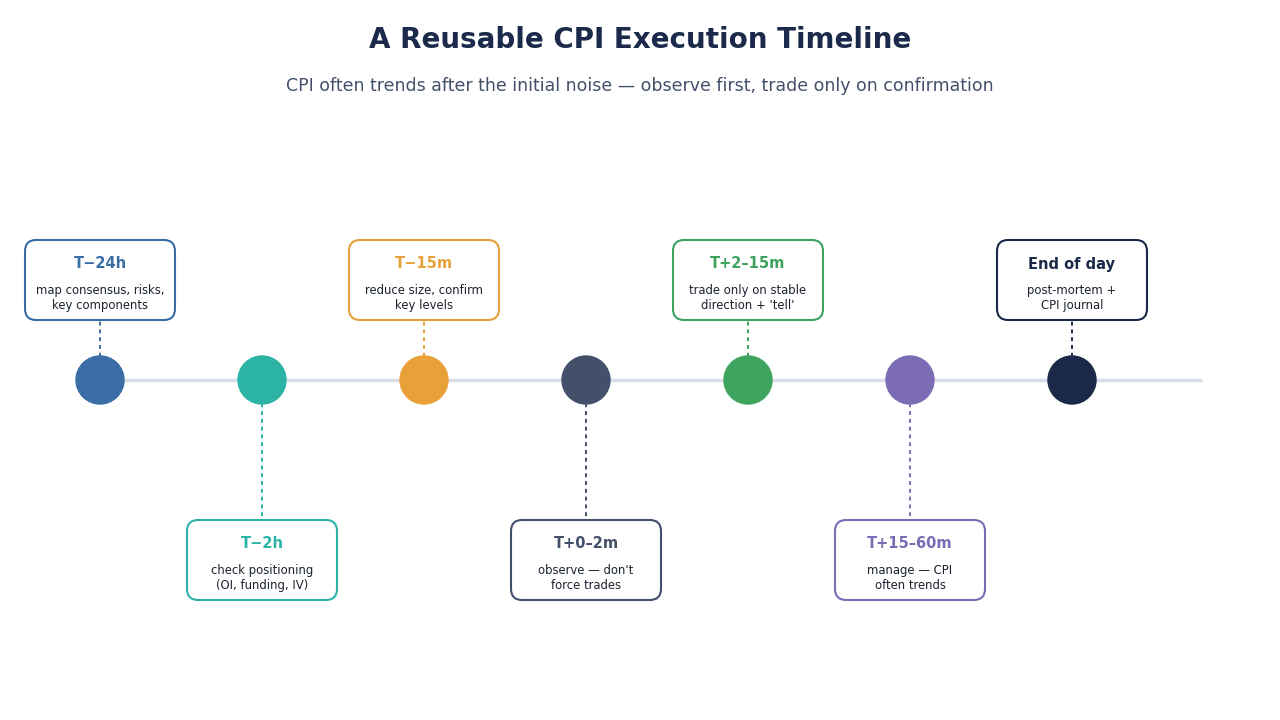
- T-24h : Cartographiez le consensus, les risques et les composants clés (titre/noyau/abri).
- T-2h : Vérifiez les proxys de positionnement (OI, financement, IV des options si disponible).
- T-15m : Réduisez la taille, élargissez la bande passante mentale, confirmez les niveaux clés.
- T+0–2m : Observez—ne forcez pas les trades.
- T+2–15m : Tradez uniquement si le marché montre une direction stable + confirmez dans vos instruments “tell”.
- T+15–60m : Gérez—l'IPC a souvent tendance à évoluer après le bruit initial.
- Fin de journée : Post-mortem : qu'est-ce qui a bougé en premier, qu'est-ce qui a confirmé, qu'est-ce qui a échoué.
Habitude : Tenez un “journal de l'IPC”—votre avantage se renforce grâce à la révision.
Comment utiliser SimianX AI pour les ondes de choc de l'IPC (flux de travail pratique)
Les événements macroéconomiques sont désordonnés car vous devez synthétiser :
- l'interprétation des données,
- les implications des taux,
- la structure technique,
- les contrôles de risque,
- et le sentiment du marché—tout cela en même temps.
C'est là que SimianX AI peut aider en transformant l'événement IPC en un flux de travail structuré plutôt qu'en un jeu de devinettes.
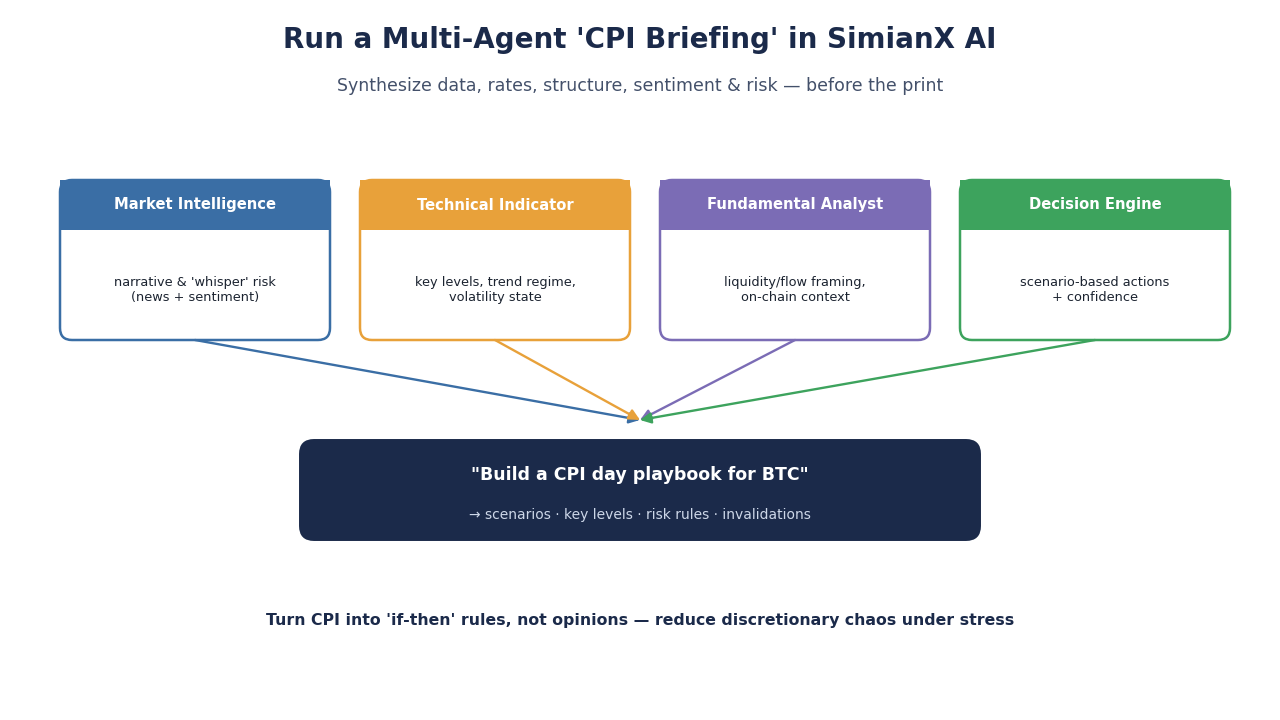
1) Exécutez un “briefing IPC” multi-agents (avant l'impression)
Utilisez l'Équipe de Commande d'Analyse en Temps Réel Crypto pour générer un plan court :
- Intelligence de Marché (Actualités & Sentiment) : quelle est la narration et le risque de “chuchotement” ?
- Indicateur Technique (Analyse Technique) : niveaux clés, régime de tendance, état de volatilité.
- Analyste Fondamental : encadrement de liquidité/flux, contexte on-chain (si pertinent).
- Moteur de Décision (Signaux de Trading) : actions basées sur des scénarios et confiance.
Essayez un prompt comme :
Construisez un playbook pour le jour du CPI pour BTC : scénarios, niveaux clés, règles de risque et invalidations.
Commencez ici : SimianX AI
2) Transformez le CPI en règles "si-alors" (pas d'opinions)
Demandez à SimianX de produire un tableau de règles simple :
| Si le CPI est… | Et que les taux font… | Alors je fais… | Contrôle du risque |
|---|---|---|---|
| Froid | rendements front-end en baisse | chercher une cassure + un retest long | petite taille, stop défini |
| Chaud | les rendements explosent | éviter de tenter de rattraper un couteau qui tombe ; attendre une base | stop temporel + perte maximale |
| Mixte | taux en dents de scie | rester en retrait ou trader des plages | réduire l'effet de levier |
Le but est de réduire le chaos discrétionnaire sous stress.
3) Utilisez des Pilotes Automatiques pour un suivi répétable
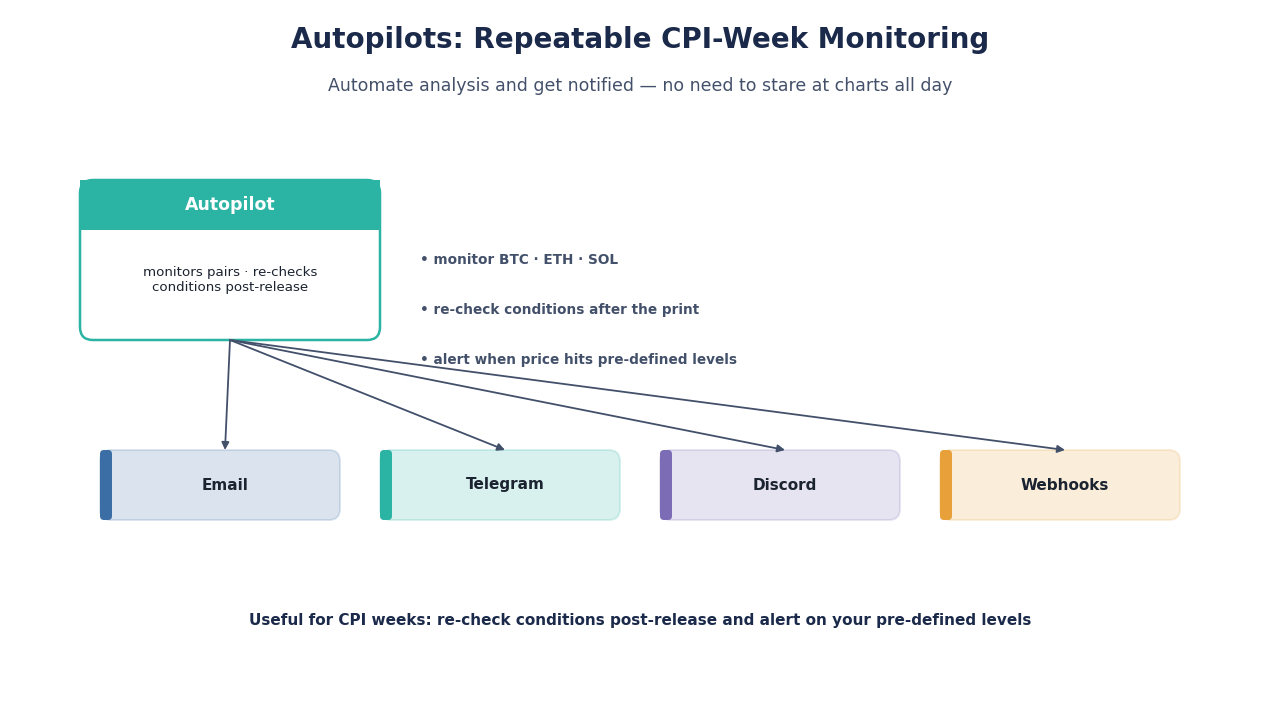
Si vous ne voulez pas fixer des graphiques toute la journée, les Pilotes Automatiques peuvent automatiser l'analyse et vous notifier par Email/Telegram/Discord/Webhooks. C'est utile pour les semaines de CPI car cela peut :
- surveiller plusieurs paires (
BTC,ETH,SOL),
- vérifier à nouveau les conditions après la publication,
- alerter lorsque le prix atteint les niveaux que vous avez prédéfinis.
Explorez : Pilotes Automatiques
4) Choisissez des modèles avec des preuves (Classement)
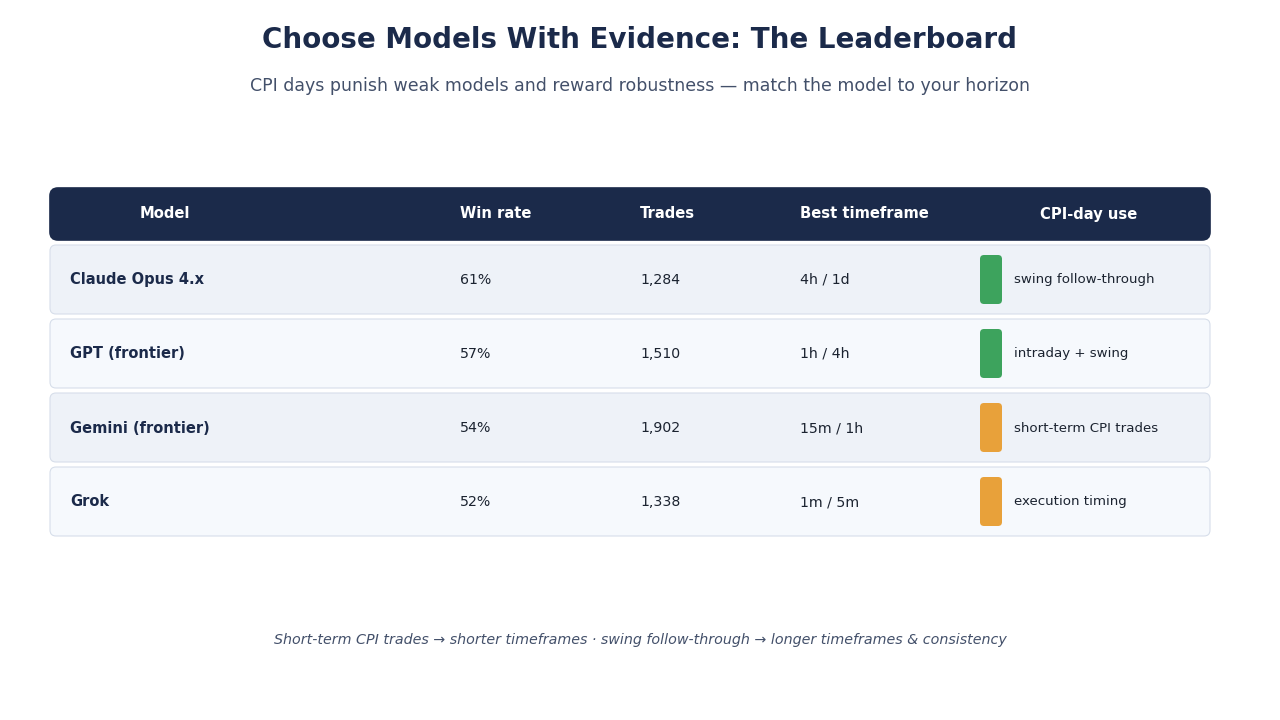
Les jours de CPI punissent les modèles faibles et récompensent la robustesse. Le Classement des Modèles AI Crypto de SimianX vous aide à comparer les performances à travers les périodes et à sélectionner un modèle qui correspond à votre horizon.
Explorez : Classement des Modèles AI Crypto
Utilisation pratique :
- trades CPI à court terme → concentrez-vous sur des périodes plus courtes,
- suivi des swings → vérifiez les périodes plus longues et la cohérence.
Règles de gestion des risques qui comptent le plus les jours de CPI
Gardez ces éléments non négociables
- Utilisez une taille plus petite que la normale (le CPI peut sauter à travers les stops).
- Évitez le sur-leveraging dans les perpétuels lorsque le financement est tendu.
- Définissez un niveau d'invalidation avant l'entrée.
- Utilisez un stop temporel : si le trade ne fonctionne pas rapidement, coupez-le.
- Ne "moyennez pas à la baisse" dans une cascade de liquidation entraînée par le macro.
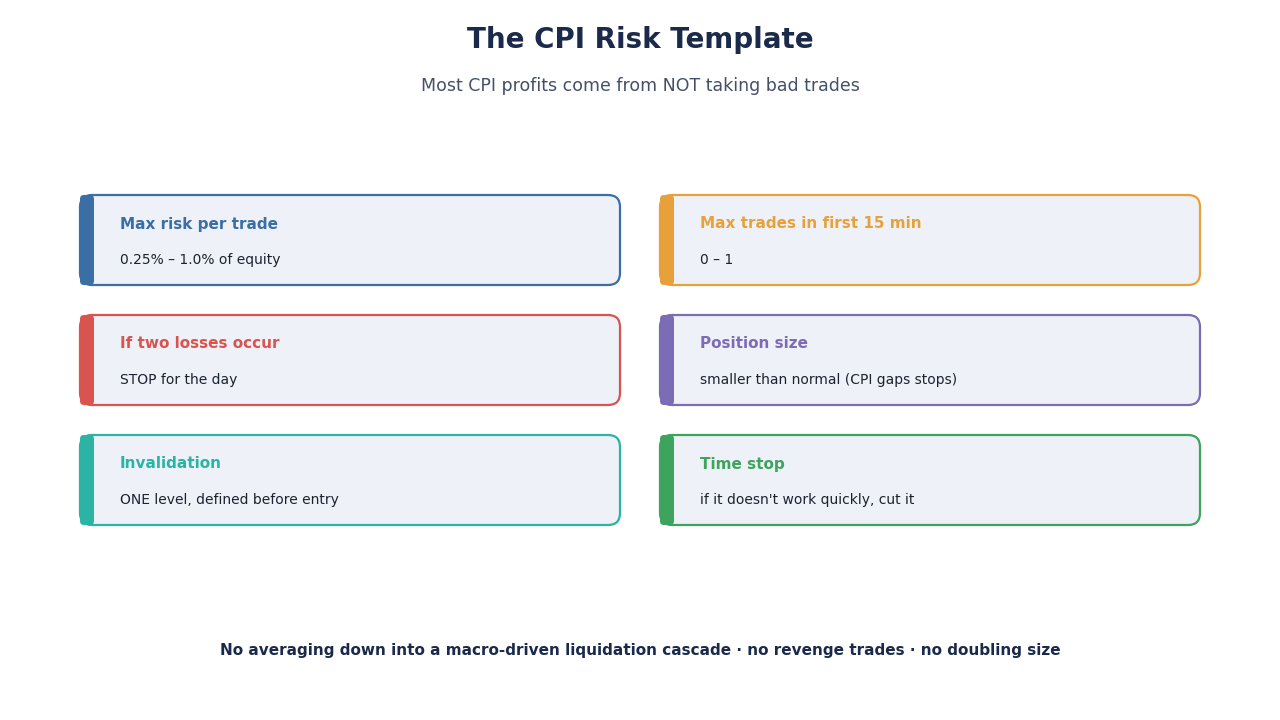
Un modèle de risque CPI simple (copier/coller)
- Risque max par trade :
0.25%–1.0%des fonds propres (choisissez votre chiffre)
- Max trades dans les 15 premières minutes :
0–1
- Si deux pertes se produisent : arrêtez pour la journée
- Pas de trades de revanche, pas de doublement de taille
Réalité : La plupart des profits du CPI proviennent de ne pas prendre de mauvais trades.
Erreurs courantes que les traders commettent lorsque le CPI frappe
- Trader le titre, ignorer le positionnement
- Supposer que la crypto doit réagir "de la même manière que la dernière fois"
- Trop faire confiance à la première bougie
- Laisser les mèches de liquidation déclencher des entrées émotionnelles
- Traiter le CPI comme une certitude directionnelle plutôt que comme une distribution de résultats
Vous n'avez pas besoin d'avoir raison sur le CPI. Vous devez avoir raison sur votre risque.
FAQ sur l'impact du CPI américain sur les fluctuations des prix de la crypto
À quelle heure est la publication du CPI pour les traders de crypto ?
Le CPI est généralement publié à 8h30, heure de l'Est à la date prévue. Vérifiez toujours le calendrier économique car les jours fériés et les publications spéciales peuvent modifier les horaires.
Comment le CPI affecte-t-il le prix du Bitcoin dans les 5 premières minutes ?
Bitcoin peut bouger brusquement car les taux et les attentes en USD se réajustent instantanément, et la structure à effet de levier de la crypto amplifie ce mouvement à travers des liquidations et des changements de financement. Le premier impulsion est souvent bruyante—de nombreux traders attendent une confirmation.
Comment trader le jour du CPI en crypto sans se faire piéger ?
Utilisez un plan : réduisez la taille, évitez la première minute, tradez seulement après confirmation, et fixez des limites de perte strictes. Traitez le CPI comme un événement de volatilité et privilégiez la survie plutôt que de "capturer le mouvement".
Le CPI de base est-il plus important que le CPI global pour la crypto ?
Souvent oui, car l'inflation de base peut influencer les attentes concernant le chemin de la politique plus directement. Mais les marchés peuvent toujours réagir au CPI global si des chocs énergétiques ou des surprises généralisées modifient le récit.
Les altcoins réagissent-ils différemment que le BTC autour du CPI ?
De nombreux altcoins se comportent comme des versions à bêta plus élevé du BTC, donc ils peuvent osciller plus violemment. La liquidité est plus faible, les écarts se creusent plus rapidement, et les cascades de liquidation peuvent être plus sévères—donc la taille et le contrôle des risques comptent encore plus.
Conclusion
Les ondes de choc du CPI ne déplacent pas la crypto par magie—elles la déplacent à travers des paris sur les taux d'intérêt, un réajustement de la liquidité, et une structure de marché alimentée par l'effet de levier. Les traders les plus cohérents traitent le CPI comme un processus répétable : ils cartographient des scénarios, surveillent les marchés "indicatifs", ne tradent que lorsque les conditions sont confirmées, et limitent les risques sans pitié.
Si vous voulez une manière plus rapide et plus structurée de gérer la volatilité du CPI, utilisez SimianX AI pour construire votre briefing avant impression, convertir des scénarios en règles si-alors, et surveiller les conditions post-publication avec des flux de travail automatisés. Explorez et testez votre manuel de jeu CPI sur SimianX AI.
Lecture Liée
- Open interest crypto : ce que signale vraiment sa hausse
- Trader un Crypto Bear Market : le Playbook 2026 Complet
- L'IA Corrige Données Prix Crypto Retardées/Inexactes
- Bitcoin après chaque baisse de la Fed : référence 2019-2026
- Pourquoi la Bourse américaine et la crypto ont chuté en 2026
- Radar Levier Crypto : Funding, OI, Liquidations AI