
 लेखक: Marcus Reeve
उल्टा यील्ड कर्व और अमेरिकी मंदियाँ: एक संदर्भ तालिका
संक्षिप्त उत्तर: 15 अक्टूबर 2026 तक अमेरिकी यील्ड कर्व उल्टा नहीं है: 10 साल घटा 2 साल का अंतर +0.33 प्रतिशत अंक और 10 साल घटा 3 महीने का अंतर +0.82 है। 2022–24 का उल्टाव सितंबर 2024 में समाप्त हुआ, और अक्टूबर 2026 तक कोई मंदी घोषित नहीं हुई है।
अक्टूबर 2026 अद्यतन: मौजूदा अंतर, उल्टाव और सामान्य होने की सटीक तिथियाँ, और 2022–24 का प्रसंग जोड़ा गया।
उल्टा यील्ड कर्व वित्त का सबसे अधिक देखा जाने वाला मंदी संकेत है: अमेरिकी ट्रेज़री कर्व का निरंतर उल्टाव आधी सदी से अधिक समय तक हर अमेरिकी मंदी से पहले आया है। इसने झूठे अलार्म भी दिए हैं, जिनमें सबसे ताज़ा 2022–24 का उल्टाव है, जो अब तक का सबसे लंबा है और अक्टूबर 2026 तक उसके बाद कोई मंदी नहीं आई। पर "कर्व उल्टा हो गया" वहीं है जहाँ अधिकांश कवरेज रुक जाती है—और ठीक वहीं उपयोगी काम शुरू होता है। यह एक संपूर्ण, दोबारा इस्तेमाल होने योग्य संदर्भ है कि उल्टाव वास्तव में क्या है, 1970 के दशक से हर "उल्टाव-से-मंदी" episode और उसका अग्रिम समय, संकेत क्यों काम करता है, और इसका सबसे गलत समझा गया हिस्सा: खतरा आम तौर पर कर्व के सामान्य होने के बाद आता है, न कि जब वह उल्टा रहता है।
इसे जानबूझकर सदाबहार (कभी पुराना न पड़ने वाला) बनाया गया है। यहाँ कोई समाप्त होने वाला पूर्वानुमान नहीं है—केवल ऐतिहासिक रिकॉर्ड, इसके पीछे का तंत्र, और कर्व को बाकी वृहद चित्र के साथ AI संकेतों से ट्रैक करने का एक पारदर्शी तरीका। यदि आप किसी रिजीम बदलाव पर कार्रवाई के लिए साथी ढाँचा चाहते हैं, तो इसे S&P 500 सेक्टर रोटेशन प्लेबुक के साथ जोड़ें।
उल्टे यील्ड कर्व का वास्तव में क्या अर्थ है
यील्ड कर्व अमेरिकी ट्रेज़री की यील्ड को छोटी से लंबी परिपक्वता तक खींचता है। सामान्यतः यह ऊपर की ओर ढलता है: ऋणदाता पैसे को दस साल बाँधने के लिए तीन महीने की तुलना में अधिक माँगते हैं। उल्टाव तब होता है जब यह पलट जाता है—अल्पकालिक यील्ड दीर्घकालिक से ऊपर चली जाती है—और यह एक विशिष्ट संदेश ले जाता है। निवेशक कह रहे होते हैं कि उन्हें उम्मीद है कि फेडरल रिज़र्व भविष्य में दरें घटाएगा (जो लंबी यील्ड को नीचे खींचता है) क्योंकि उन्हें अर्थव्यवस्था के कमज़ोर होने की उम्मीद है। बॉन्ड बाज़ार, असल में, आँकड़ों में दिखने से पहले ही एक मंदी की कीमत लगा रहा होता है।
दो स्प्रेड चर्चा पर हावी रहते हैं:
- 10 साल घटा 2 साल (10y–2y): लोकप्रिय मानक, अधिकांश बाज़ार टिप्पणियों में उद्धृत।
- 10 साल घटा 3 महीने (10y–3m): वह स्प्रेड जिस पर न्यूयॉर्क फेड का मंदी-संभावना मॉडल बना है, और जिसे अकादमिक शोध (Estrella–Mishkin) ने सबसे विश्वसनीय पाया।
ये आमतौर पर सहमत होते हैं, पर हमेशा एक ही क्षण में नहीं—जो स्वयं एक उपयोगी बारीकी है, नीचे चर्चित।
1978 से हर "उल्टाव-से-मंदी" episode
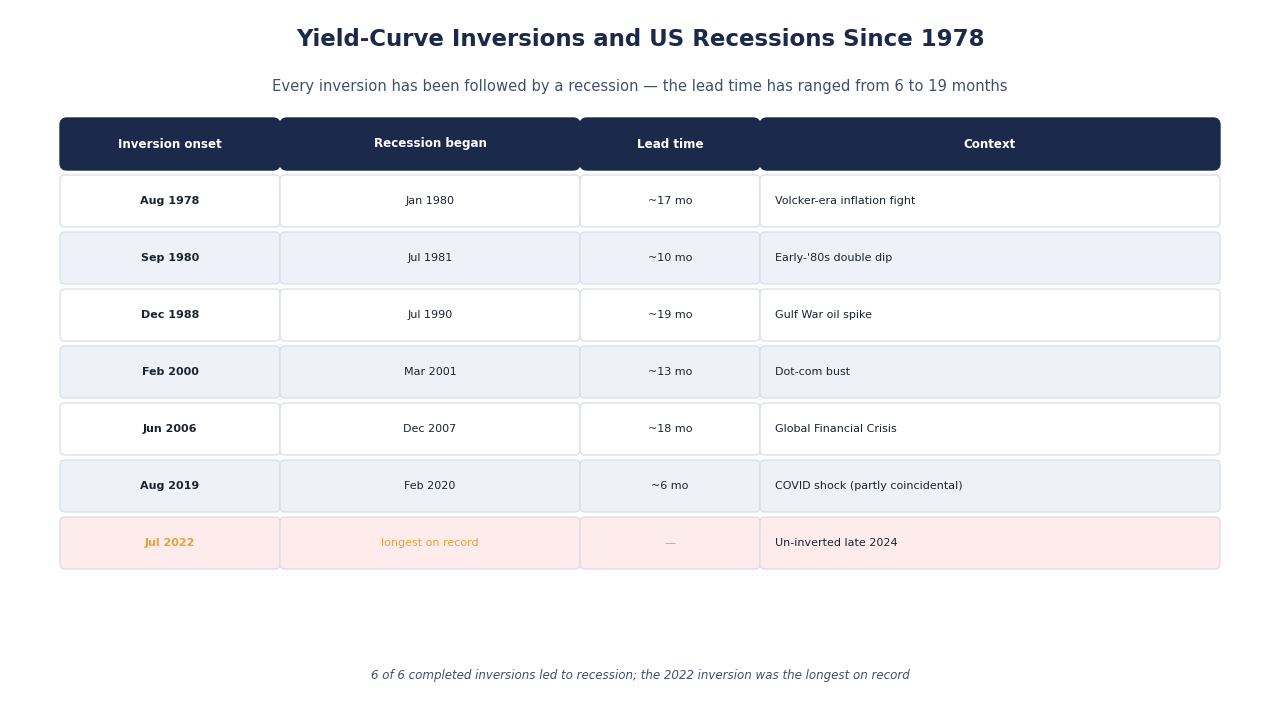
नीचे की तालिका 1978 से हर 10y–2y उल्टाव को उसके बाद NBER द्वारा तिथि-निर्धारित मंदी से जोड़ती है। तिथियाँ FRED की 10y–2y शृंखला के दैनिक समापन मान हैं; "अंतिम उल्टा समापन" वह आख़िरी दिन है जब अंतर शून्य से नीचे था, जिसके बाद कर्व धनात्मक बना रहा।
| उल्टाव की शुरुआत | अंतिम उल्टा समापन | मंदी की शुरुआत | उल्टाव → मंदी | धनात्मक कर्व → मंदी | संदर्भ |
|---|---|---|---|---|---|
| 18 अग 1978 | 1 मई 1980 | जन 1980 | ~17 माह | कर्व के उल्टा रहते ही शुरू हुई | वोल्कर युग की मुद्रास्फीति लड़ाई |
| 12 सित 1980 | 5 नव 1981 | जुल 1981 | ~10 माह | कर्व के उल्टा रहते ही शुरू हुई | 80 के दशक की शुरुआती दोहरी गिरावट का दूसरा चरण |
| 13 दिस 1988 | 29 मार 1990 | जुल 1990 | ~19 माह | ~3 माह | खाड़ी युद्ध के तेल झटके से बढ़ी |
| 26 मई 1998 | 27 जुल 1998 | कोई नहीं | — | — | छोटा और उथला (निचला स्तर −0.07); कोई मंदी नहीं |
| 2 फर 2000 | 28 दिस 2000 | मार 2001 | ~13 माह | ~2 माह | डॉट-कॉम का फूटना |
| 8 जून 2006* | 5 जून 2007 | दिस 2007 | ~18 माह | ~6 माह | वैश्विक वित्तीय संकट |
| 27 अग 2019 | 29 अग 2019 | फर 2020 | ~6 माह | ~5 माह | कोविड झटका; समय आंशिक रूप से संयोग |
| 6 जुल 2022* | 5 सित 2024 | अक्टूबर 2026 तक घोषित नहीं | — | 25+ माह, कोई मंदी नहीं | दर्ज इतिहास का सबसे लंबा उल्टाव |
\* शून्य से नीचे की छोटी गिरावटें पहले भी आईं (27 दिसंबर 2005 और 1 अप्रैल 2022); दिखाई गई तिथियाँ निरंतर उल्टाव की शुरुआत हैं।
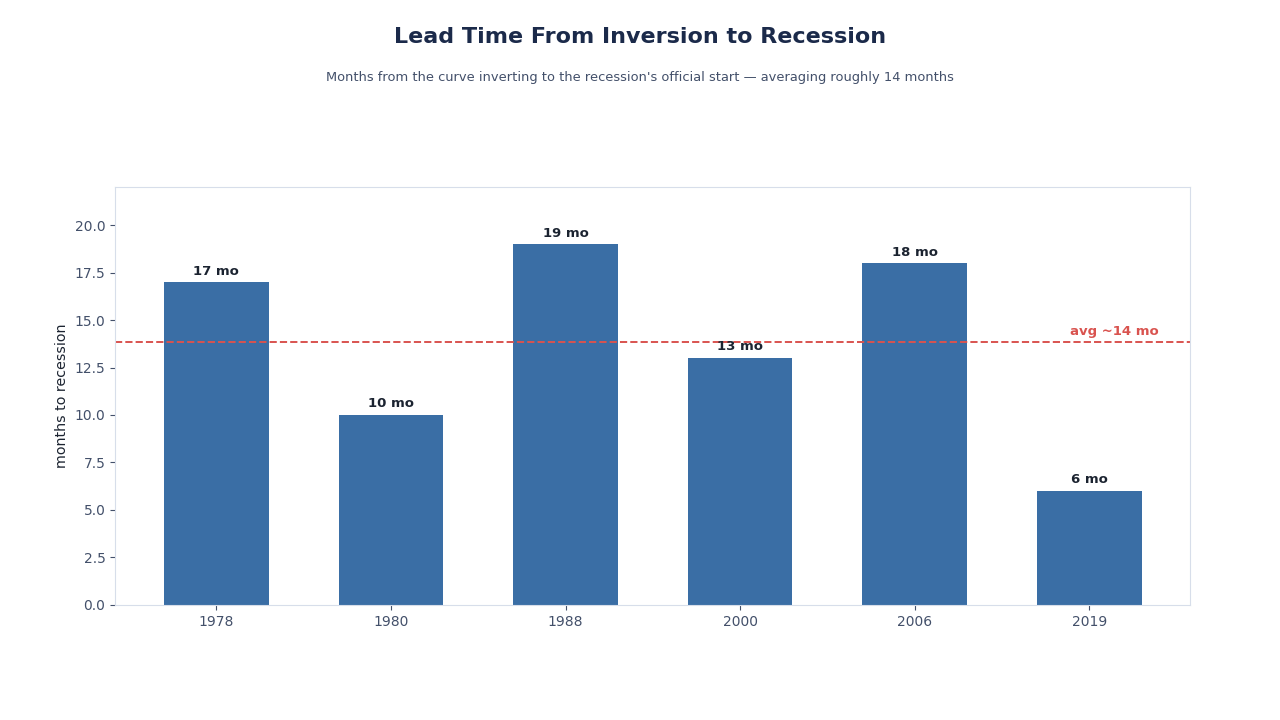
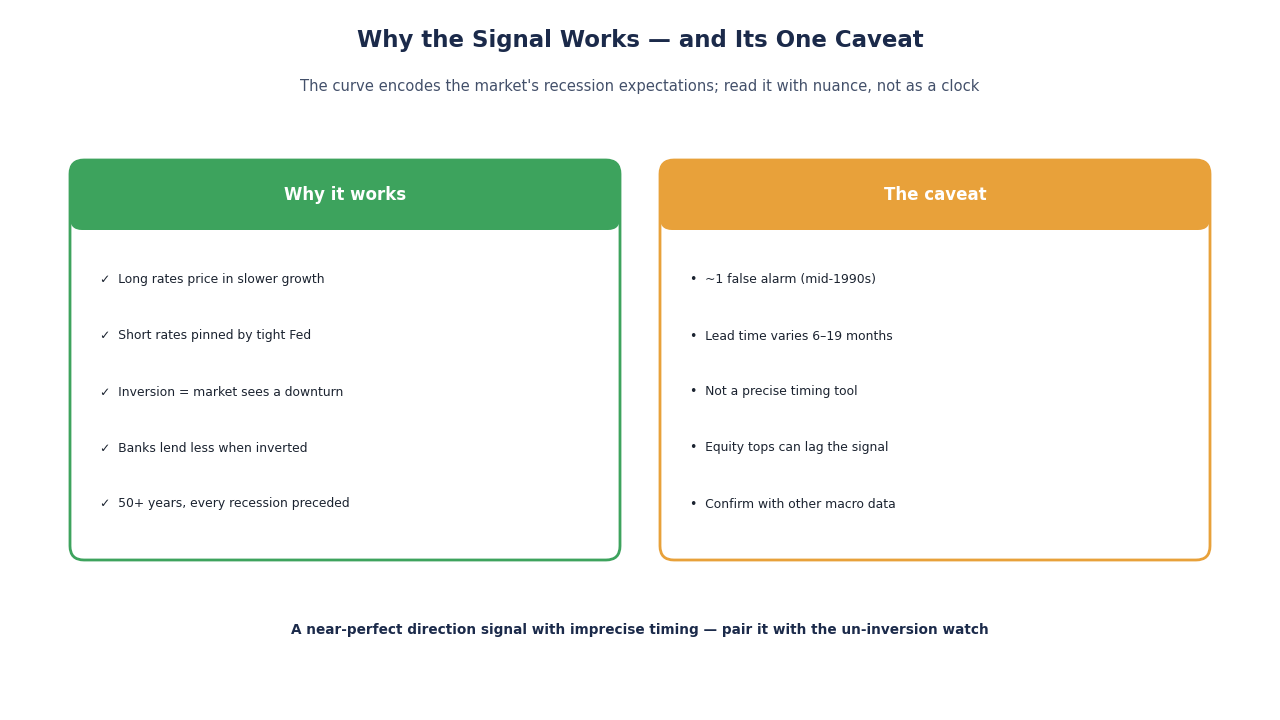
कुछ बातें उभरती हैं। अग्रिम समय लंबा और परिवर्तनशील है: उल्टाव की शुरुआत से मंदी की शुरुआत तक 6 से 19 माह, छह मंदियों में औसतन लगभग 14 माह—यही कारण है कि उल्टाव एक चेतावनी है, ट्रिगर नहीं। 2019 का episode तारांकित है: कर्व सही उल्टा हुआ, पर जो मंदी आई वह एक महामारी थी, ऋण चक्र नहीं। और 2022 का उल्टाव दर्ज इतिहास का सबसे लंबा था (6 जुलाई 2022 से 5 सितंबर 2024, 792 कैलेंडर दिन) और 1981 के बाद सबसे गहरा, जो 3 जुलाई 2023 को −1.08 अंक तक पहुँचा (रिकॉर्ड मार्च 1980 का −2.41 है)। यह सितंबर 2024 में समाप्त हुआ, उसके बाद के 25 महीनों में NBER ने कोई मंदी घोषित नहीं की, और यही इसे संकेत की सीमाओं को समझने का सबसे शिक्षाप्रद प्रसंग बनाता है।
यील्ड कर्व अभी कहाँ है (अक्टूबर 2026)
15 अक्टूबर 2026 को ट्रेज़री पार यील्ड कर्व ने 10-वर्षीय यील्ड 5.10%, 2-वर्षीय 4.77% और 3-माह के बिल को 4.28% पर दिखाया। इससे 10y–2y अंतर +0.33 और 10y–3m अंतर +0.82 प्रतिशत अंक बनता है, जो FRED की 10y–3m शृंखला से मेल खाता है। 10y–3m अंतर 18 अक्टूबर 2022 से 12 दिसंबर 2024 तक उल्टा रहा (निचला स्तर 4 मई 2023 को −1.89), फ़रवरी से अक्टूबर 2025 के बीच कभी-कभार फिर हल्का शून्य से नीचे गया (निचला स्तर −0.27), और तब से धनात्मक है। कर्व अब ऊपर की ओर ढलान वाला है जबकि फेड दरें बढ़ा रहा है: उसने सितंबर 2026 में अपनी लक्ष्य सीमा 3.75–4.00% कर दी (देखें फ़ेड ब्याज दर फ़ैसला: ताज़ा FOMC नतीजा और सभी फ़ैसलों का इतिहास)।
एकमात्र झूठा अलार्म—और बारीकियाँ क्यों मायने रखती हैं
उल्टे कर्व की प्रतिष्ठा एक प्रसिद्ध शर्त पर टिकी है: 1960 के दशक के मध्य के उल्टाव के बाद तीव्र मंदी आई पर NBER की आधिकारिक मंदी नहीं आई। वह झूठा सकारात्मक ही कारण है कि सतर्क विश्लेषक पूर्णता का दावा करने के बजाय कर्व के रिकॉर्ड को "पचास से अधिक वर्षों में एक झूठा अलार्म" बताते हैं। 10y–2y पैमाने पर मई–जुलाई 1998 में भी एक छोटा और उथला उल्टाव हुआ जिसके बाद मंदी नहीं आई, और 2022–24 के उल्टाव के बाद भी अक्टूबर 2026 तक कोई मंदी नहीं आई। एक संदर्भ संपत्ति को अपनी त्रुटि-सीमा बतानी चाहिए; ये तीन प्रसंग वही त्रुटि-सीमा हैं।
सबक यह नहीं कि संकेत अविश्वसनीय है; यह है कि कोई भी एकल संकेतक पर्याप्त नहीं। उल्टाव मंदी की सशर्त संभावना बढ़ाता है; इसकी गारंटी नहीं देता। ठीक इसीलिए यह अकेले इस्तेमाल होने के बजाय संकेतों की एक टोकरी में आता है।
संकेत क्यों काम करता है: तंत्र
उल्टा कर्व जादू नहीं—यह अर्थव्यवस्था पर एक वास्तविक दबाव का वर्णन करता है।
- बैंक ऋण सिकुड़ता है। बैंक छोटा उधार लेते हैं और लंबा देते हैं; उनका शुद्ध ब्याज मार्जिन दोनों का अंतर है। जब वह अंतर उल्टा होता है, ऋण देना कम लाभकारी हो जाता है, तो साख कसती है—और कसी साख वृद्धि को धीमा करती है। JPM और BAC जैसे कर्व-संवेदनशील शेयर इसे सीधे महसूस करते हैं।
- नीति संरचना से ही प्रतिबंधात्मक है। कर्व इसलिए उल्टा होता है क्योंकि फेड ने मुद्रास्फीति से लड़ने हेतु छोटी दरें ऊपर धकेली हैं जबकि लंबा सिरा अंततः आने वाली मंदी की कीमत लगाता है। उल्टाव लगभग परिभाषा से ही तंग नीति का संकेत है।
- अपेक्षाएँ प्रतिपुष्टि करती हैं। एक बार कंपनियाँ और बाज़ार उल्टाव को मंदी चेतावनी के रूप में पढ़ लें, वे भर्ती और पूँजीगत व्यय घटाते हैं—जो ठीक उसी मंदी को लाने में मदद कर सकता है जिसकी कर्व ने आशंका जताई थी।
यह वही "रिजीम इंजन" है जो सेक्टर नेतृत्व को चलाता है। उल्टाव जिस वृहद पृष्ठभूमि का वर्णन करता है, वही वह input है जिसे एक रिजीम मॉडल संभावनाओं में बदलता है—इस संदर्भ और एक क्रियाशील रोटेशन ढाँचे के बीच का पुल।
सबसे गलत समझा हिस्सा: काटता उल्टाव नहीं, सामान्यीकरण है
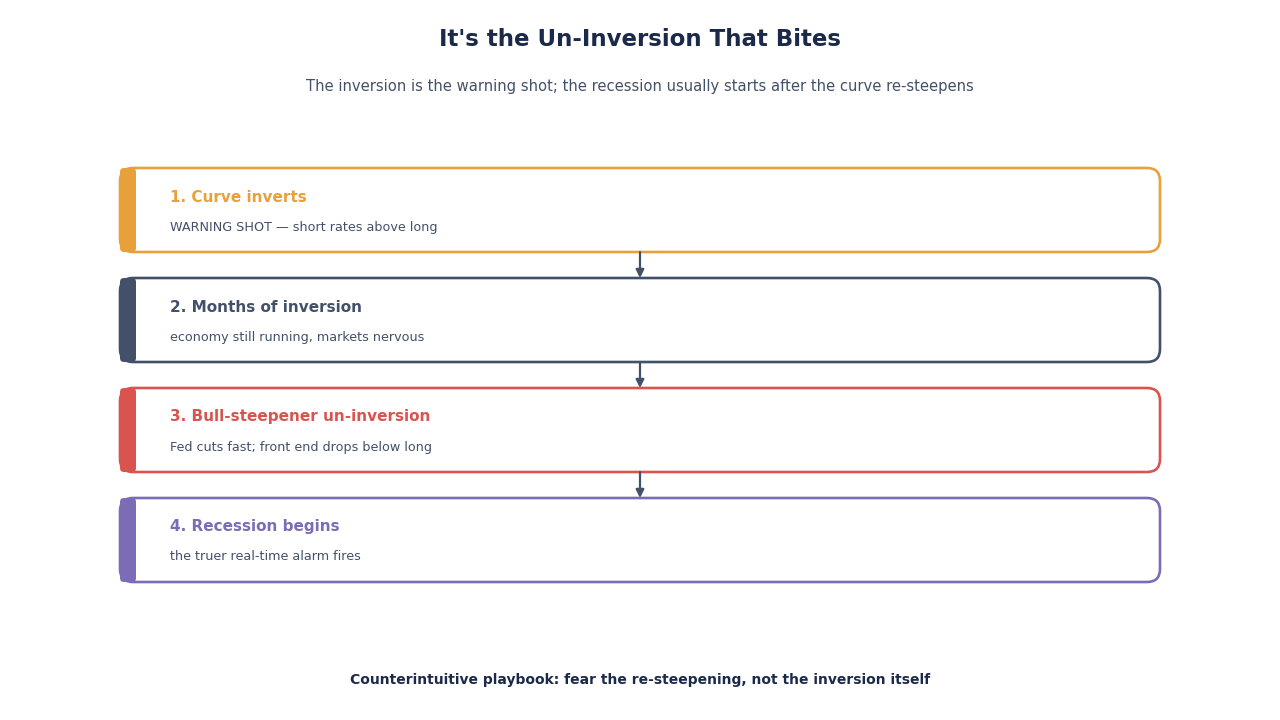
यहाँ वह विवरण है जो अधिकांश सुर्खियाँ चूक जाती हैं। 1978 के बाद की छह मंदियों में से चार (1990, 2001, 2007 और 2020) में मंदी 10y–2y कर्व के फिर से धनात्मक होने के 2 से 6 माह बाद शुरू हुई; 1980 और 1981 में यह कर्व के उल्टा रहते ही शुरू हो गई थी। सामान्य क्रम यह है कि फेड, अर्थव्यवस्था को कमज़ोर होते देखकर, छोटी दरें तेज़ी से घटाने लगता है और अगला सिरा वापस लंबे सिरे से नीचे गिर जाता है। वह "बुल स्टीपनिंग" सामान्यीकरण अक्सर उल्टाव स्वयं की तुलना में अधिक सच्चा वास्तविक-समय अलार्म रहा है।
तो प्लेबुक प्रतिसहज है: उल्टाव चेतावनी फायर है, उल्टाव के महीने तैयारी की खिड़की हैं, और तीव्र सामान्यीकरण समय समाप्त होने का संकेत है। जो निवेशक कर्व के सामान्य होते ही ढीला पड़ जाता है, वह चार्ट उल्टा पढ़ रहा है।
AI संकेतों से कर्व कैसे ट्रैक करें
कर्व एक input है; एक मंदी नाउकास्ट कई को मिलाता है। पिछड़ते GDP आँकड़ों की प्रतीक्षा के बजाय, एक पारदर्शी मॉडल कर्व को समयानुकूल शृंखलाओं—बेरोज़गारी दावे, क्रेडिट स्प्रेड, PMI, बेरोज़गारी रुझान—के साथ आज की एक व्याख्या-योग्य मंदी संभावना में मोड़ देता है। लक्ष्य कभी "क्रैश" चिल्लाता ब्लैक बॉक्स नहीं; यह एक ऐसी संभावना है जिसे आप चुनौती दे सकते हैं, जिसके पीछे के फीचर सामने रहते हैं।
SimianX पर यह एक साप्ताहिक आदत जैसा दिखता है:
- वृहद पृष्ठभूमि पढ़ें। अमेरिकी शेयर अवलोकन पर रिजीम और संकेत संदर्भ से शुरू करें—कर्व उस मोज़ेक की एक टाइल है।
- कर्व की दिशा देखें, सिर्फ़ स्तर नहीं। गहराई से उल्टा पर तीव्र होता कर्व, अब भी उल्टे हो रहे कर्व से अलग संदेश है। लाइव बाज़ार संदर्भ स्टॉक कमांड रूम में बहता है।
- प्रतिक्रिया पहले से लिखें। "बढ़ती मंदी संभावना" को एक रक्षात्मक झुकाव से मैप करें—आवश्यक उपभोक्ता, यूटिलिटीज और स्वास्थ्य जैसे PG, NEE और UNH की ओर—और एक SimianX ऑटोपायलट को ट्रिगर पर नज़र रखने दें, ताकि एक धीमा संकेत रोज़ स्क्रीन घूरने की माँग न करे।
उल्टाव और शेयर बाज़ार: शेयरों का समय
निवेशकों की सबसे महँगी गलतियों में से एक है उस दिन शेयर बेचना जिस दिन कर्व उल्टा होता है। इतिहास कहता है यह बहुत जल्दी है। चूँकि मंदी तक का अग्रिम समय लंबा है, शेयर अक्सर पहले उल्टाव के बाद कई महीनों—कभी एक साल से कहीं अधिक—तक चढ़ते रहे हैं, मंदी के और निकट पहुँचकर अंततः शीर्ष बनाने से पहले। 2006 का उल्टाव पाठ्यपुस्तक मामला है: S&P 500 एक साल से अधिक बाद, 2007 के अंत तक नई ऊँचाइयाँ बनाता रहा, इससे पहले कि वैश्विक वित्तीय संकट का मंदी-बाज़ार शुरू हो।
सार दिशा का नहीं, क्रम का है। उल्टाव आपको बताता है कि चक्र बूढ़ा हो रहा है और मंदी-बाज़ार की संभावना बढ़ रही है—न कि शीर्ष बन चुका है। इसीलिए ऐतिहासिक रूप से समझदार प्रतिक्रिया है गुणवत्ता ऊपर उठाना और संकेत के परिपक्व होते ही क्रमशः रक्षात्मक झुकना, न कि एक घबराई चाल में बाहर निकलना। जो निवेशक उल्टाव को चल पड़ी घड़ी मानता है, न कि बज चुका अलार्म, वह चक्र-अंत की तेज़ी पकड़ता है और फिर भी गिरावट के लिए तैयार रहता है। यहाँ के समय को 1929 से हर S&P 500 मंदी-बाज़ार में गहराई-और-अवधि के रिकॉर्ड के साथ जोड़ें और आपके पास चित्र के दोनों आधे होंगे: जोखिम कब बढ़ता है, और ऐतिहासिक रूप से वह कितना गहरा गिरा।
निवेशक उल्टाव के साथ वास्तव में क्या करते हैं
चूँकि अग्रिम समय लंबा है, उल्टाव "सब बेच दो" का सायरन नहीं। ऐतिहासिक रूप से समझदार प्रतिक्रियाएँ सभी क्रमिक हैं:
- गुणवत्ता ऊपर उठाएँ। चक्र के बूढ़े होते ही सट्टा वृद्धि के बजाय बैलेंस-शीट मज़बूती और टिकाऊ नकदी प्रवाह को वरीयता दें।
- समय के साथ रक्षात्मक झुकें। मंदी का चरण ऐतिहासिक रूप से आवश्यक उपभोक्ता, यूटिलिटीज और स्वास्थ्य को अनुकूल रहा है—वही रक्षात्मक जिन्हें रोटेशन घड़ी चक्र-अंत में इंगित करती है।
- पुनर्प्राप्ति पैटर्न का सम्मान करें। बाज़ार आगे देखते हैं और अक्सर मंदी के दौरान ही तल बना चुके होते हैं, अर्थव्यवस्था के मुड़ने से बहुत पहले। उन शेयर गिरावटों के कितने गहरे और कितने लंबे चलने के पूरे रिकॉर्ड के लिए, 1929 से हर S&P 500 मंदी-बाज़ार देखें।
- एक लिखी हुई जोखिम सीढ़ी रखें। जब अंततः सामान्यीकरण आता है, पहले से तय नियम घबराहट के फ़ैसलों को हराते हैं।
कर्व पढ़ने का एक हल किया उदाहरण
मान लें 10y–2y स्प्रेड आठ माह से उल्टा है और अब तीव्र होने लगा है, जबकि बेरोज़गारी दावे ऊपर खिसक रहे हैं और हाई-यील्ड क्रेडिट स्प्रेड चौड़े हो रहे हैं। अलग-थलग पढ़ें तो "कर्व सामान्य हो रहा है" अच्छी ख़बर लगती है। संदर्भ में पढ़ें तो उल्टा: बढ़ते दावों और चौड़े स्प्रेड के साथ एक बुल-स्टीपनिंग सामान्यीकरण ही क्लासिक चक्र-अंत का हस्तांतरण है। सही कार्रवाई सामान्यीकरण का जश्न मनाना नहीं, बल्कि रक्षात्मक झुकाव की पुष्टि और जोखिम सीढ़ी को तैयार करना है। यही इस तरह के एक संदर्भ का पूरा मूल्य है—यह आपको एक ख़तरनाक संकेत को आश्वस्त करने वाला संकेत पढ़ने से रोकता है।
अक्सर पूछे जाने वाले प्रश्न
क्या यील्ड कर्व अभी उल्टा है?
नहीं। 15 अक्टूबर 2026 को 10-वर्षीय ट्रेज़री यील्ड 5.10%, 2-वर्षीय 4.77% और 3-माह की 4.28% थी, इसलिए 10y–2y अंतर +0.33 अंक और 10y–3m अंतर +0.82 था। 10y–2y अंतर 6 सितंबर 2024 से धनात्मक है।
क्या उल्टा यील्ड कर्व हमेशा मंदी का संकेत होता है?
नहीं। निरंतर उल्टाव पचास से अधिक वर्षों से हर अमेरिकी मंदी से पहले आया है, पर झूठे अलार्म भी रहे हैं: 1960 के दशक का मध्य, 1998 की छोटी गिरावट, और 2022–24 का उल्टाव, जिसके बाद अक्टूबर 2026 तक मंदी नहीं आई। यह संभावना बढ़ाता है; यह कोई टाइमर नहीं है।
यील्ड कर्व उल्टा होने के कितने समय बाद मंदी शुरू होती है?
1978 के बाद की छह मंदियों में, 10y–2y अंतर के पहली बार उल्टा होने के 6 से 19 माह बाद, औसतन लगभग 14 माह। यही परिवर्तनशीलता कारण है कि उल्टाव को कार्रवाई का क्षण नहीं, तैयारी की खिड़की माना जाता है।
2022 का यील्ड कर्व उल्टाव कब समाप्त हुआ?
10y–2y अंतर का शून्य से नीचे अंतिम समापन 5 सितंबर 2024 को हुआ, उस निरंतर उल्टाव के बाद जो 6 जुलाई 2022 को शुरू हुआ था और दर्ज इतिहास में सबसे लंबा है। 10y–3m अंतर दिसंबर 2024 तक उल्टा रहा और 2025 में कभी-कभार फिर हल्का शून्य से नीचे गया।
कौन-सा यील्ड अंतर सबसे विश्वसनीय मंदी संकेत है?
शोध और न्यूयॉर्क फेड 10 साल घटा 3 महीने के अंतर को वरीयता देते हैं, जबकि बाज़ार टिप्पणी आमतौर पर 10 साल घटा 2 साल उद्धृत करती है। ये आमतौर पर सहमत रहते हैं; जब अलग हों, तो 10y–3m का अकादमिक रिकॉर्ड अधिक मज़बूत है।
लोग क्यों कहते हैं कि सामान्यीकरण उल्टाव से अधिक ख़तरनाक है?
क्योंकि 1978 के बाद की छह में से चार मंदियों में गिरावट कर्व के फिर से धनात्मक होने के 2 से 6 माह बाद शुरू हुई। तेज़ सामान्यीकरण का आम तौर पर मतलब है कि फेड कमज़ोर होती अर्थव्यवस्था के जवाब में तेज़ी से दरें घटा रहा है। फिर भी 1980 और 1981 में मंदी कर्व के उल्टा रहते ही शुरू हुई थी।
AI संकेत मंदी के जोखिम पर नज़र रखने में कैसे मदद करते हैं?
एक मॉडल कर्व को बेरोज़गारी दावों, क्रेडिट अंतर और PMI जैसे समय पर आने वाले आँकड़ों के साथ मिलाकर एक व्याख्या-योग्य, साप्ताहिक मंदी संभावना बना सकता है और प्रतिक्रिया को स्वचालित कर सकता है। यही SimianX ऑटोपायलट के पीछे का विचार है; हर टियर में क्या शामिल है, यह मूल्य निर्धारण में देखें।
संबंधित पठन
- S&P 500 सेक्टर रोटेशन प्लेबुक — रिजीम बदलने के बाद कैसे स्थिति लें
- 1929 से हर S&P 500 मंदी-बाज़ार — गहराई और अवधि का रिकॉर्ड
- अमेरिकी शेयर अवलोकन — पूरे बाज़ार में AI विश्लेषण
- SimianX ऑटोपायलट — वृहद निगरानी स्वचालित करें
- 1980 से फेड का हर ब्याज दर कटौती चक्र: शेयर, बॉन्ड, सोना — फेड के ढील शुरू करने के बाद क्या हुआ
- 1983 से Fed की हर ब्याज दर वृद्धि साइकिल: S&P 500 और चिप शेयर — सख़्ती का वह दौर जो आम तौर पर उल्टाव से पहले आता है
- 1973 से अमेरिका की हर मंदी में सोना: सुरक्षित निवेश स्कोरकार्ड — हर मंदी में सोने का रिपोर्ट कार्ड
- फ़ेड ब्याज दर फ़ैसला: ताज़ा FOMC नतीजा और सभी फ़ैसलों का इतिहास — मौजूदा नीतिगत दर
- और संदर्भ तालिकाएँ: फेड की ब्याज दर के चक्र, यील्ड कर्व और FOMC की तारीख़ें विषय केंद्र
उल्टे यील्ड कर्व ने अपनी प्रतिष्ठा कमाई है, पर यह उस निवेशक को पुरस्कृत करता है जो इसे एक-शब्द की सुर्खी के बजाय पूरा पढ़ता है। जानिए यह क्या मापता है, इसके लंबे और परिवर्तनशील अग्रिम समय का सम्मान करें, उस एकमात्र झूठे अलार्म को याद रखें, और सबसे बढ़कर सामान्यीकरण पर नज़र रखें—जिस क्षण कर्व सामान्य होता है, वह ऐतिहासिक रूप से वह क्षण है जब समय समाप्त होता है, न कि जब जोखिम टल जाता है। इसे हर सप्ताह एक ही तरह ट्रैक करें—हाथ से या SimianX से—और बाज़ारों का सबसे अधिक देखा जाने वाला मंदी संकेत एक ऐसा उपकरण बन जाता है जिसे आप वास्तव में इस्तेमाल कर सकते हैं, बजाय उस सुर्खी के जिस पर आप बस प्रतिक्रिया देते हैं।