
Промежуточные выборы в США 2026: двенадцать акций и их политические рычаги
Списки акций в год выборов обычно сводятся к рефлексу «красные против синих». Этот список — нет. 3 ноября избиратели выберут всех 435 членов Палаты представителей и решат судьбу 35 сенатских выборов — 33 обычных кампании класса II плюс две дополнительные. Президент Дональд Трамп остается на посту независимо от результата. Следовательно, вопрос для инвестирования более узкий: Укрепит ли Конгресс, ограничит или будет расследовать повестку администрации?
Это исследование, актуальное на 12 августа 2026 года, превращает этот вопрос в список сценариев для наблюдения. Оно отделяет политическую экспозицию от фундаментальных показателей компании и определяет индикаторы, которые могут подтвердить — или опровергнуть — каждый тезис. Инвесторы могут использовать SimianX AI для мониторинга отчетности, новостей, фундаментальных показателей и рыночных сигналов по тикерам, но ни одна модель не может сделать неопределенные выборы или рискованные акции определенными.
Основной вывод: Демократическая Палата представителей с республиканским Сенатом является наиболее полезным базовым сценарием, но наибольшие бета-торги сосредоточены вокруг менее вероятных объединенных исходов. Размер позиции должен отражать эту асимметрию.
Каков базовый сценарий промежуточных выборов 2026 года?
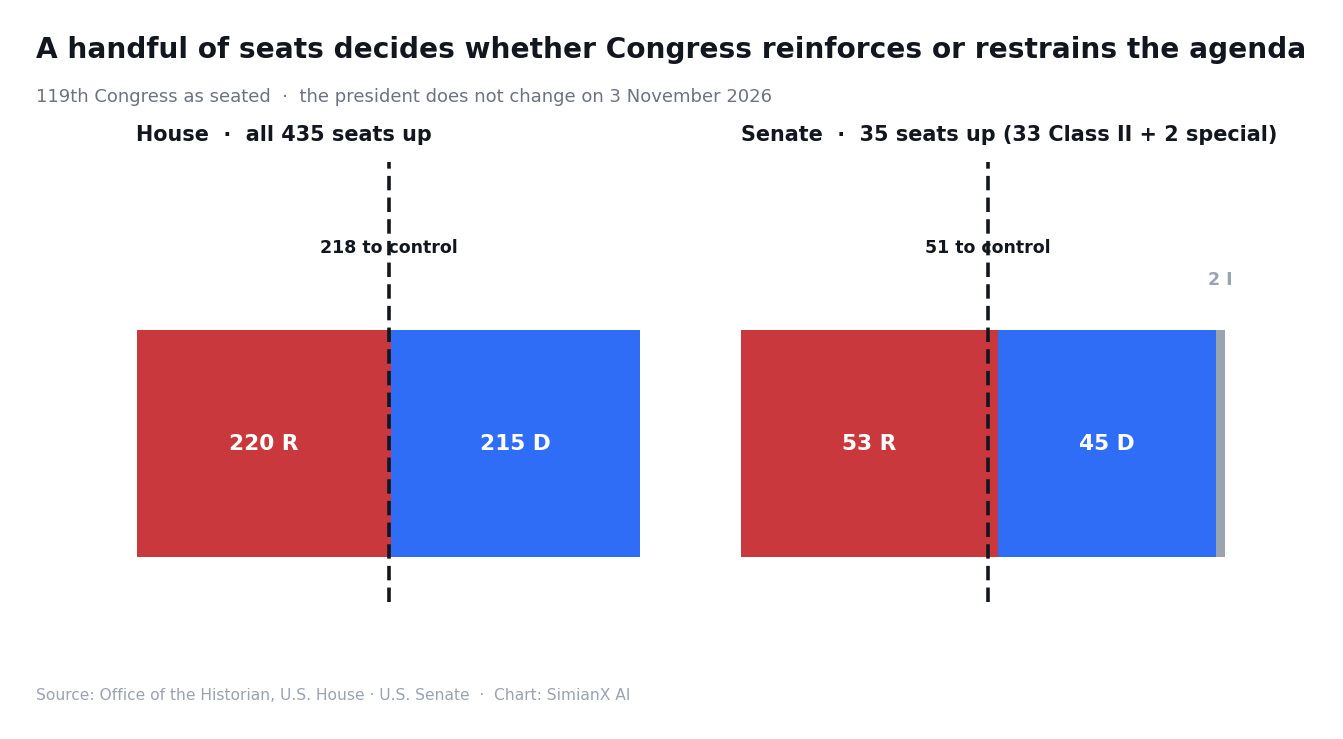
В настоящее время республиканцы занимают пост президента и располагают узким большинством в обеих палатах Конгресса. Официальная история Палаты представителей фиксирует 119-й Конгресс, начинающийся с 220 республиканцев и 215 демократов, в то время как Сенат насчитывает 53 республиканца, 45 демократов и двух независимых. Контроль достаточно близок, чтобы небольшое изменение мест имело значение, особенно в Палате (История Палаты, Сенат США).
Непартийный анализ Cook Political Report за июль оценил шансы демократов в диапазоне возможных исходов выборов в Палату представителей, подчеркивая, что республиканская перекройка округов создала эффективную подушку и что путь для Республиканской партии остается. Анализ Сената Cook последовательно описывал путь демократов как более сложный, поскольку демократам необходимо несколько побед на карте, содержащей множество мест, занимаемых республиканцами в штатах, выигранных Трампом (перспектива Палаты представителей Cook, анализ Сената Cook).
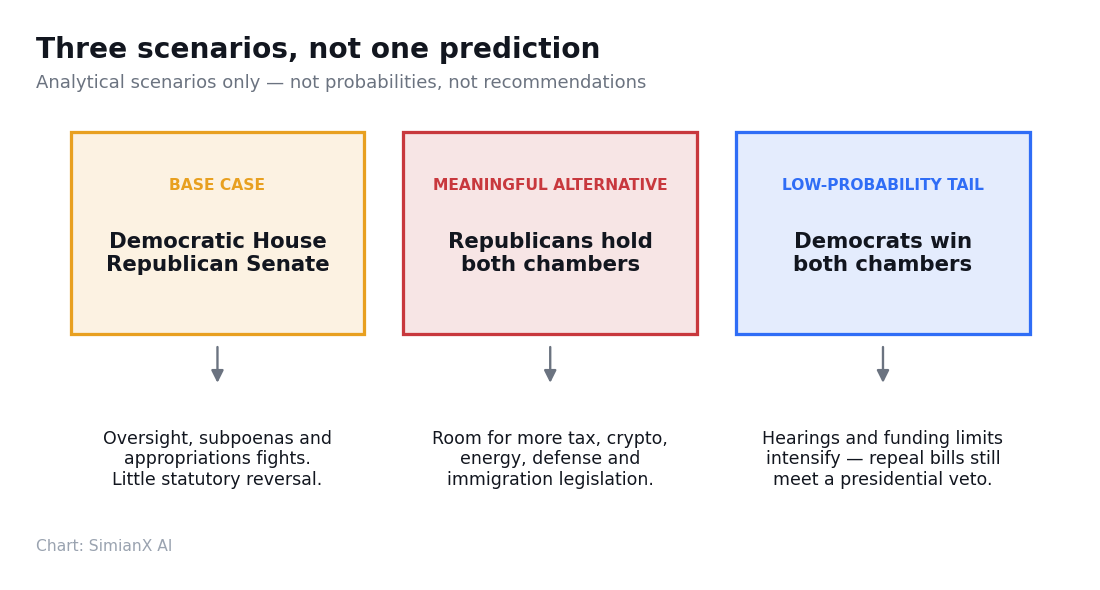
Это поддерживает три сценария, а не одно предсказание:
| Сценарий | Рабочая интерпретация | Широкие политические последствия |
|---|---|---|
| Демократическая Палата / Республиканский Сенат | Базовый случай | Больше контроля и конфликтов по ассигнованиям; масштабная отмена законов маловероятна |
| Республиканцы сохраняют обе палаты | Значительная альтернатива | Более широкий спектр для дополнительного налогообложения, расходов, криптовалюты, энергетики, обороны и иммиграционного законодательства |
| Демократы выигрывают обе палаты | Низкая вероятность, высокое влияние | Слушания и ограничения финансирования усиливаются; законопроекты об отмене могут пройти Конгресс, но все равно столкнутся с президентским вето |
Это аналитические сценарии, а не вероятности или рекомендации. Перекройка округов, качество кандидатов, явка, экономические данные, геополитические события и внезапные скандалы могут изменить карту.
Почему Конгресс важен, но обычно меньше, чем доходы
Промежуточные выборы меняют Конгресс, а не исполнительную власть. Новое большинство может писать ассигнования, контролировать повестки комитетов, выдавать судебные повестки, блокировать законодательство и — в Сенате — влиять на назначения. Оно не может просто отменить уже принятые законы или аннулировать подписанные контракты. Для отмены, как правило, требуется согласие обеих палат и подпись президента или преодоление вето двумя третями голосов.
Это различие имеет решающее значение, поскольку многие чувствительные к рынку политики уже стали законом. Закон о примирении 2025 года, Публичный закон 119-21, изменил правила Medicaid, налогообложения, иммиграции и энергетики. Его энергетические положения прекращают или уменьшают несколько стимулов для чистой энергии, сохраняя при этом важные льготы, подлежащие срокам и правилам соответствия. Ожидается, что его положения в области здравоохранения снизят федеральные расходы на здравоохранение и оставят 10 миллионов человек без страховки в 2034 году по сравнению с предыдущей базой (Исследовательская служба Конгресса — налоги, CRS—здравоохранение).
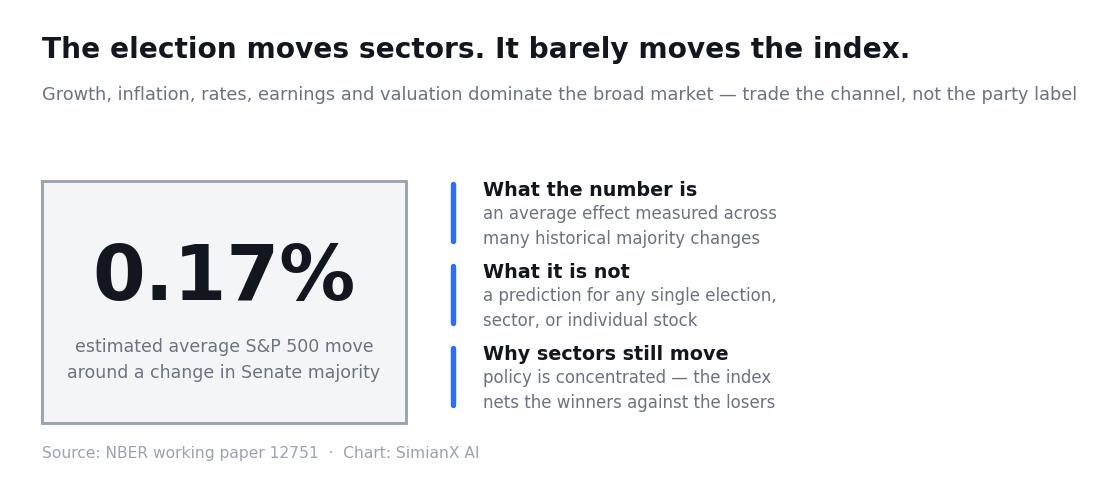
Исторические рыночные данные также говорят против того, чтобы торговать всем портфелем по партийным меткам. Исследование NBER оценило, что изменение большинства в Сенате изменило S&P 500 всего на 0.17% вокруг выборов, которые оно изучало. J.P. Morgan Asset Management утверждает, что экономическая обстановка имеет большее значение, чем политический контроль, и U.S. Bank также не находит конфигурации, которая надежно доминирует над долгосрочными доходами (NBER, J.P. Morgan Asset Management, U.S. Bank).
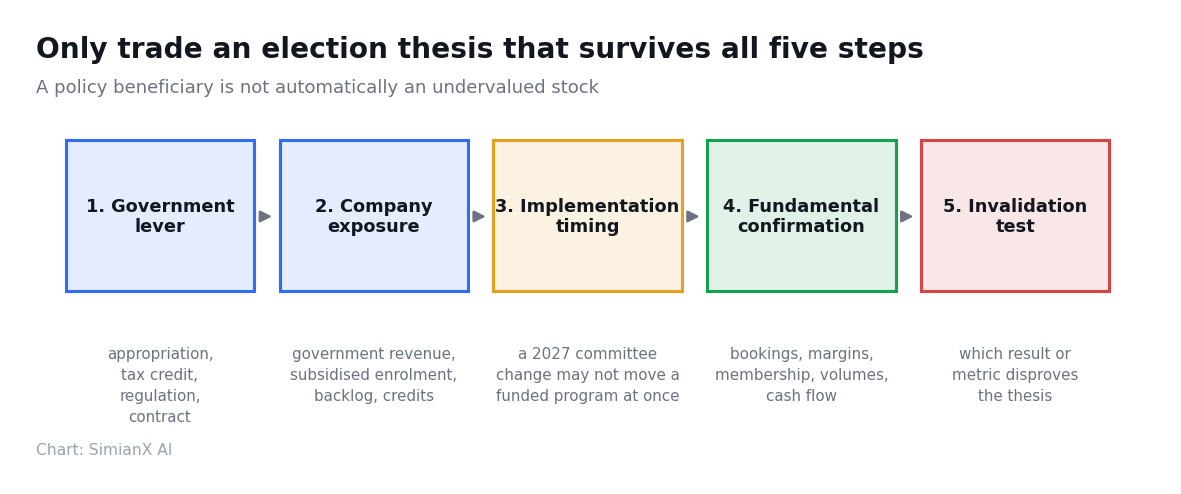
Индекс чаще двигают ожидания по ставкам, а не Конгресс: наша живая карта рыночного прайсинга снижения ставки ФРС в 2026 году отслеживает именно эту переменную. Используйте выборный тезис, только если он проходит через видимый канал прибыли:
- Определите рычаг правительства: ассигнование, налоговый кредит, регулирование, контракт или надзор.
- Измерьте подверженность компании: государственные доходы, число застрахованных по субсидиям, портфель заказов или поступления от продажи налоговых кредитов.
- Проверьте время реализации: изменение в комитете в 2027 году может не повлиять на финансируемую программу на четыре года немедленно.
- Требуйте фундаментального подтверждения: новые заказы, маржа, число участников, объемы или денежный поток должны подтверждать нарратив.
- Определите условие опровержения: знайте, какой результат или метрика компании опровергает тезис.
Двенадцать акций одним взглядом
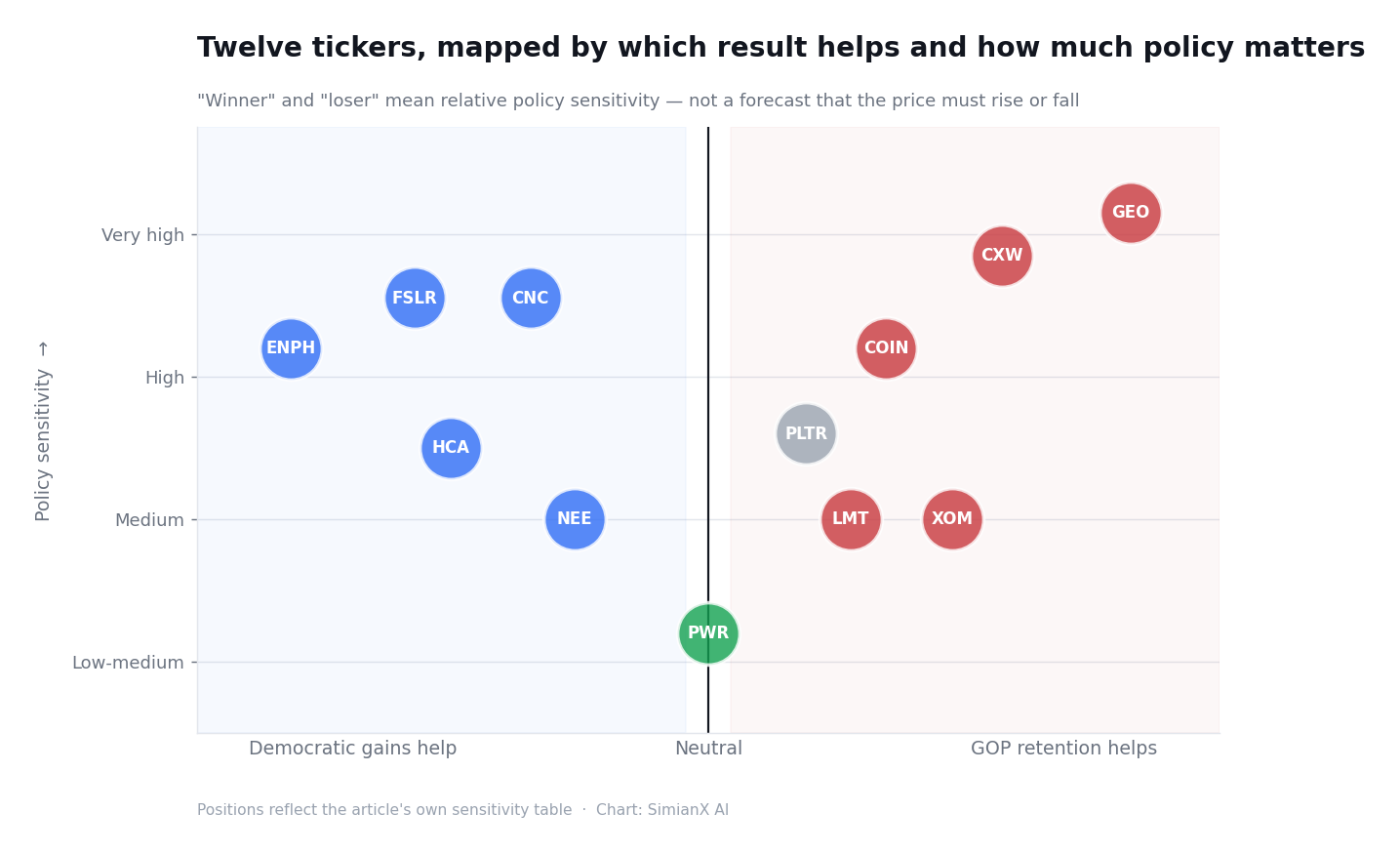
«Победитель» и «проигравший» ниже относятся к относительной чувствительности к политике, а не к прогнозу, что цена акций должна вырасти или упасть. Оценка, ставки, товары, исполнение и ожидания, уже заложенные в цену, могут затмить эффект политики.
| Тикер | Компания | Более благоприятная политическая обстановка | Чувствительность к политике | Основная метрика для наблюдения |
|---|---|---|---|---|
FSLR | First Solar | Демократические успехи / разделенное правительство | Высокая | поступления по 45X, новые заказы, защита торговли |
NEE | NextEra Energy | Демократические успехи; также диверсифицированная | Средняя | портфель проектов ВИЭ, проекты с закрепленным налоговым статусом |
ENPH | Enphase Energy | Демократические успехи | Высокая | спрос на жилье в США, тарифы, 45X наличных |
CNC | Centene | Демократические успехи | Высокая | членство в Medicaid и Marketplace, HBR |
HCA | HCA Healthcare | Демократические успехи | Средне-высокая | число незастрахованных пациентов, структура плательщиков, выплаты Medicaid |
GEO | GEO Group | Конгресс Республиканской партии | Очень высокая | заполняемость ICE и рост контрактов |
CXW | CoreCivic | Конгресс Республиканской партии | Очень высокая | доходы ICE, использование новых мест |
COIN | Coinbase | Конгресс Республиканской партии | Высокая | объем торгов, балансы USDC, законодательство |
XOM | Exxon Mobil | Конгресс Республиканской партии | Средняя | цены на нефть, производство, регулирующие расходы |
LMT | Lockheed Martin | Конгресс Республиканской партии или разделенное правительство | Средняя | ассигнования, присуждаемые контракты, реализация портфеля заказов |
PLTR | Palantir | Конгресс Республиканской партии или разделенное правительство | Средне-высокая | рост правительства США, контроль за закупками |
PWR | Quanta Services | Любая партия / развитие сетевой инфраструктуры | Низкая-средняя | портфель электросетевых заказов, капитальные расходы коммунальных служб, нагрузка на дата-центры |
Потенциальные победители, если демократы получат власть
1. First Solar (FSLR): хеджирование политики чистой энергии
First Solar является самым очевидным бенефициаром демократических успехов в группе, но тезис более тонкий, чем "демократы любят солнечную энергию". Компания производит тонкопленочные модули в Соединенных Штатах, не зависит от китайских цепочек поставок кристаллического кремния и выигрывает от торговых барьеров и стимулов для внутреннего производства, которые также могут быть привлекательны для республиканцев.
Ее прогноз на 2026 год явно зависит от кредитов на производство по Разделу 45X и от политической и торговой среды. Руководство прогнозировало 390 миллионов до 425 миллионов долларов кредитов 45X за один квартал и утверждало, что недавние изменения в политике укрепили ее конкурентные позиции (Результаты First Solar).
Чтение выборов: Демократический контроль хотя бы одной палаты снижает вероятность очередного отката в области чистой энергии и может поддержать усилия по продлению или восстановлению кредитов. Полный демократический Конгресс будет самым сильным относительным результатом. Риски включают задержки в проектах, концентрацию клиентов, падение цен на модули или оценку, которая уже учитывает поддержку политики.
2. NextEra Energy (NEE): диверсифицированная чистая энергия, а не чистая ставка на выборы
NextEra сочетает регулируемую Florida Power & Light с крупным разработчиком возобновляемых источников энергии и хранения. Ее подразделение Energy Resources вошло в 2026 год с крупнейшим в своей истории портфелем заказов на ВИЭ и накопители, включая проекты в области ветровой, солнечной энергии и аккумуляторов, подходящие для получения налоговых кредитов (Презентация для инвесторов NextEra).
Чтение выборов: Успехи демократов могут повысить уверенность в долгосрочных возобновляемых стимулах и поддержке разрешений. Тем не менее, большая часть портфеля NextEra на ближайшую перспективу уже законтрактована или закреплена по правилам safe harbor, а регулируемый коммунальный бизнес, газ, атомная генерация и передача диверсифицируют тезис. Процентные ставки, выполнение слияний, государственные регуляторы и финансирование проектов могут иметь большее значение, чем Конгресс.
3. Enphase Energy (ENPH): высокая бета-экспозиция к жилой солнечной энергии
Enphase является более волатильным инструментом политики. Ее микроинверторы и батареи связаны с экономикой жилой солнечной энергии, где важны налоговые кредиты, тарифы, финансовое состояние установщиков и потребительское кредитование. Компания согласилась продать до 150 миллионов долларов налоговых кредитов на передовое производство 2026 года, при этом сообщив, что взаимные тарифы снизили маржу первого квартала 2026 года на 4,3 процентных пункта (Enphase 8-K, Результаты Enphase за Q1).
Чтение выборов: Успехи демократов могут повысить опционную стоимость восстановления потребительских стимулов или предотвращения дальнейшего сокращения. Но Конгресс не может устранить высокие затраты на заимствование или слабый спрос в Европе и США. ENPH лучше рассматривать как высокобета-индикатор политики, а не как прокси чистой энергии с гарантированным ростом.
4. Centene (CNC): чувствительность к покрытию Medicaid и ACA
Centene является крупнейшей организацией по управлению Medicaid и крупнейшим страховщиком на рынке медицинского страхования, что делает федеральную политику покрытия необычайно важной. Его прогноз на середину 2026 года включает примерно 88 миллиардов долларов Medicaid и 34,5 миллиарда долларов коммерческих премий и доходов от услуг. Компания также предупредила, что оценка медицинских затрат и корректировка рисков на рынке могут резко повлиять на прибыльность (Centene guidance, Centene 10-K).
Выводы по выборам: Демократическая Палата может настаивать на более сильных субсидиях ACA, защите Medicaid и агрессивном контроле за реализацией закона 2025 года. Полная победа демократов увеличит законодательные возможности, хотя вето Трампа останется серьезным препятствием. Противовесом является серьезный специфический риск для компании: участники с более тяжелыми заболеваниями, недостаточные тарифы штатов и неблагоприятная корректировка рисков могут сделать рост числа участников убыточным.
5. HCA Healthcare (HCA): сохранение покрытия поддерживает структуру плательщиков
Больницы предпочитают застрахованных пациентов незастрахованным. Во втором квартале 2026 года HCA сообщила о сдвиге в структуре плательщиков в сторону большего объема незастрахованных, в первую очередь от пациентов, которые потеряли покрытие на бирже. Она также признала около 400 миллионов долларов дополнительной выгоды от программ дополнительных выплат Medicaid (HCA Q2 results, HCA preview).
Чтение выборов: Успехи демократов улучшат перспективы расширения или восстановления покрытия, что положительно скажется на структуре плательщиков и сборах. Однако HCA — не просто ставка на демократов: возмещение Medicaid может быть ниже коммерческих ставок, государственные программы оплаты варьируются, а затраты на труд, использование и ценообразование в больницах являются более значительными факторами дохода.
Потенциальные победители, если республиканцы сохранят контроль над Конгрессом
6. GEO Group (GEO): максимальная чувствительность к иммиграционной политике
GEO в этом списке наиболее прямо завязана на сохранение контроля республиканцами. Выручка за первый квартал 2026 года выросла на 17%, скорректированный EBITDA вырос на 32%, и руководство заявило, что контракты на 2025 год представляют собой до 520 миллионов долларов в дополнительной годовой выручке. Новые объекты ICE, транспортировка и услуги по розыску лиц способствовали расширению (результаты GEO за Q1).
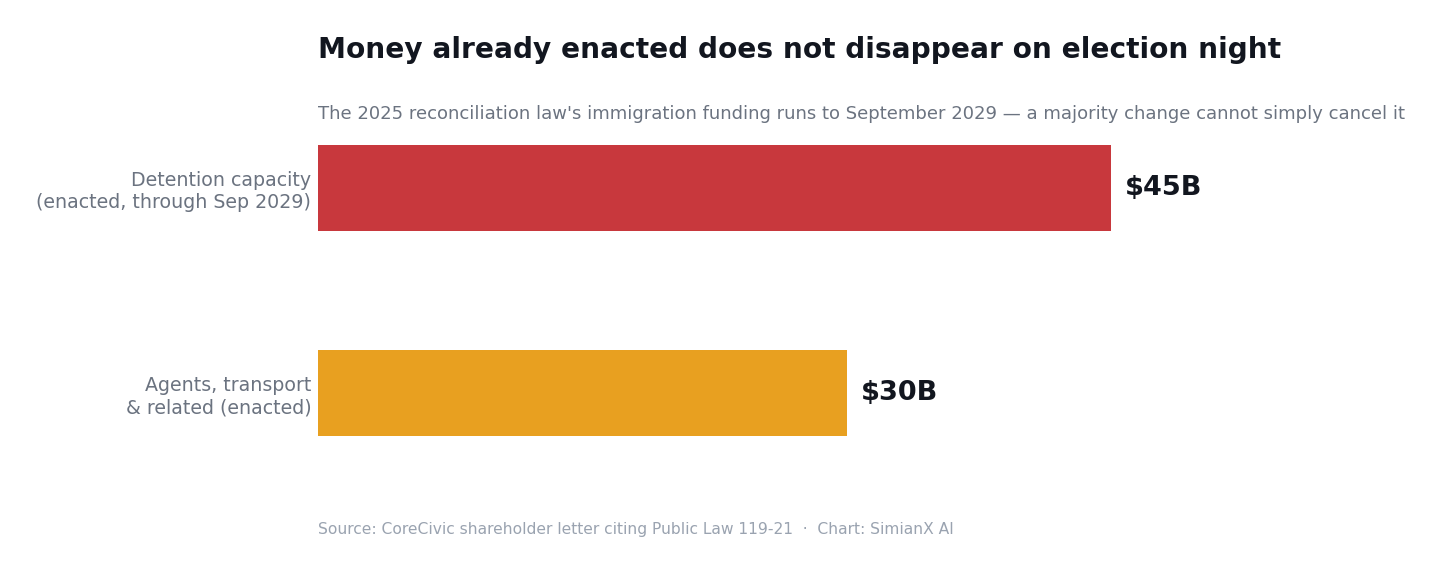
Чтение выборов: Республиканский Конгресс с большей вероятностью защитит ассигнования на исполнение и расширит совместимые программы. Контроль демократов повысит риск заголовков, слушаний, закупок и будущего финансирования. Временная оговорка имеет решающее значение: обязательное финансирование, уже принятое, и многолетние контракты не исчезают в ночь выборов. Заполняемость, затраты на персонал, кредитное плечо, судебные разбирательства и исполнение контрактов остаются решающими.
7. CoreCivic (CXW): вторая высокобета-ставка на сектор содержания под стражей
Выручка CoreCivic за четвертый квартал 2025 года от ICE составила 244,7 миллиона долларов, что более чем вдвое превышает показатели за аналогичный период предыдущего года. Ожидалось, что новые и реактивированные объекты будут вносить значительный ежегодный доход по мере стабилизации заполняемости в 2026 году (результаты CoreCivic за FY2025).
Годовой отчет компании говорит, что закон 2025 года предоставил 45 миллиардов долларов на мощности для задержания и еще 30 миллиардов долларов на агентов, транспорт и связанные с этим мероприятия, с доступными средствами до сентября 2029 года (письмо акционерам CoreCivic).
Чтение выборов: Удержание Республиканской партии снижает риск продления и ассигнований; успехи Демократической партии увеличивают надзор и возможность будущих ограничений. Поскольку большая часть финансирования уже является обязательной, CXW является лучшим тестом на будущее использование и контракты, чем на немедленную отмену.
8. Coinbase (COIN): регуляторный импульс против риска надзора
Coinbase выигрывает от законодательной ясности, но его экономика по-прежнему сильно зависит от цен на криптовалюту и активности. Закон GENIUS вступил в силу в июле 2025 года и установил регулируемую структуру для платежных стейблкоинов с резервами один к одному и требованиями к раскрытию информации (Congress.gov). В первом квартале 2026 года Coinbase сообщил о доле криптоторговли в 8,6%, более 19 миллиардов долларов средних USDC, хранящихся в его продуктах, и быстром росте производных финансовых инструментов и рынков предсказаний (Coinbase Q1).
Чтение выборов: Конгресс от Республиканской партии, вероятно, сохранит самый дружелюбный путь к дополнительному законодательству о рыночной структуре. Демократическая палата может привести к более строгому контролю, хотя про-крипто взгляды пересекают партийные границы, и принятый закон о стейблкоинах остается. Цены на биткойн, волатильность, объемы розничной торговли, конкуренция, кибербезопасность и проценты, полученные на резервах, могут доминировать в электоральном эффекте.
9. Exxon Mobil (XOM): меньший законодательный риск, больший риск товарных рынков
Exxon является традиционным бенефициаром удержания Республиканской партии, поскольку контроль Республиканцев снижает вероятность новых федеральных налогов на климат, ограничений или отмены субсидий, направленных на углеводороды. Налоговый закон 2025 года уже улучшил условия для некоторых затрат на бурение и экономику улавливания углерода. Сам Exxon определяет экологическое регулирование, налоги и государственную политику как потенциально важные для капитальных затрат, прибыли и конкурентоспособности (Exxon 2025 10-K).
Чтение выборов: Контроль Республиканцев постепенно положителен; контроль Демократов добавляет риск расследований и законодательных заголовков. Тем не менее, цены на нефть и газ, маржи переработки, рост производства, выполнение проектов в Гайане и распределение капитала являются гораздо более мощными переменными. XOM — скромный политический хедж, а не чистая ставка на промежуточные выборы.
10. Lockheed Martin (LMT): оборонные бюджеты требуют двухпартийных голосов
Lockheed завершил 2025 год с 193,6 миллиарда долларов невыполненных заказов, создавая видимость за пределами одного цикла ассигнований (Годовой отчет Lockheed Martin за 2025 год). Республиканцы, как правило, выступают за увеличение расходов на оборону, в то время как разделенное правительство все еще может принимать пакеты национальной безопасности за счет двухпартийных коалиций.
Чтение выборов: Удержание Республиканской партии является самым чистым сигналом финансирования, но базовое разделение Конгресса не обязательно должно быть медвежьим. Демократическая волна может изменить состав программ или усилить контроль за подрядчиками. Правительственные закрытия, продолжающиеся резолюции, фиксированные цены контрактов, ограничения поставок и эффективность программ являются более непосредственными рисками, чем контроль партии.
Разделенное правительство и наблюдение за межпартийными вопросами
11. Palantir (PLTR): рост встречает проверку закупок
Palantir охватывает оборону, разведку, гражданское правительство и коммерческий ИИ. В 2025 году доходы правительства выросли на 53% до $2.40 миллиарда, включая $1.9 миллиарда от клиентов правительства США; коммерческие доходы росли еще быстрее (Palantir 2025 10-K).
Чтение выборов: Конгресс Республиканской партии может быть более поддерживающим в вопросах обороны, границ и федерального развертывания ИИ. Демократическая Палата может расследовать закупки, наблюдение, использование иммиграции или управление данными. Тем не менее двухпартийный спрос на оборонные технологии и большой коммерческий двигатель делают эту метку неоднозначной. Наибольший риск может заключаться в ожиданиях: великолепная компания может быть плохими акциями, если ее оценка предполагает безупречное выполнение.
12. Quanta Services (PWR): ставка на «кирки и лопаты»
Quanta является наименее партийным названием и, следовательно, полезным противовесом в портфеле. Коммунальные службы должны строить линии передачи, подстанции, соединения генерации, укрепление от штормов и инфраструктуру электроснабжения центров обработки данных при почти любом Конгрессе. Его портфель заказов за первый квартал 2026 года достиг $48.47 миллиарда, увеличившись на 10.2% с конца года, поскольку коммунальные службы продолжали многолетние программы модернизации и надежности (Quanta 10-Q).
Чтение выборов: Демократы могут предпочитать возобновляемые источники энергии, передачу и устойчивость; республиканцы могут предпочитать газовую генерацию, производство и надежность. Quanta может обслуживать обе стороны. Задержки в разрешениях, ограничения по рабочей силе, концентрация клиентов, выполнение проектов, приобретения и оценка - это реальные важные моменты. PWR не защищен от выборов, но его путь доходов менее зависит от одной политической коалиции.
Какие акции на промежуточных выборах 2026 года могут стать неудачниками?
Одни и те же компании меняют роли в зависимости от противоположного результата. Чистый способ выразить риск - через полярность политики:
- Преимущества демократов: относительный попутный ветер для
FSLR,NEE,ENPH,CNCиHCA; относительное противодействие дляGEO,CXWи потенциальноPLTR.
- Сохранение республиканцев: относительный попутный ветер для
GEO,CXW,COIN,XOMиLMT; относительное противодействие для высокобета чистой энергии.
- Разделенный Конгресс: благоприятствует бизнесу с утвержденным финансированием, долговременными контрактами или двупартийным спросом — особенно
PWR, и в меньшей степениLMT,FSLRиNEE.
Эта карта намеренно условна. Например, First Solar может превзойти ожидания при республиканцах, потому что внутреннее производство и тарифы защищают его; Coinbase может чувствовать себя хорошо при демократах, если активность в криптовалюте возрастет; HCA может вырасти, несмотря на сокращение покрытия, если возмещение и объемы окажутся положительными.
Бенефициар политики не является автоматически недооцененной акцией, а проигравший в политике не является автоматически короткой позицией. Рынок торгует разрывом между ожиданиями и реальностью.
Как составить список акций для наблюдения на выборах 2026 года
Практический рабочий процесс более ценен, чем статический список:
- Установите веса сценариев, а не уверенности. Обновляйте их после первичных выборов, решений по перераспределению, дебатов и качественного опроса.
- Отслеживайте палату, которая контролирует рычаг. Законопроекты о доходах вносятся в Палате представителей; подтверждения — это территория Сената; ассигнования требуют обеих палат.
- Отделите уже принятые деньги от ежегодного финансирования. Многолетние иммиграционные и налоговые положения закона 2025 года сложнее нарушить, чем однолетнее агентское ассигнование.
- Создайте панель мониторинга по компаниям. Отслеживайте новые заказы `FSLR`, HBR `CNC`, заполняемость `GEO`, объемы `COIN`, реализацию портфеля заказов `LMT` и электросетевой портфель `PWR`.
- Проведите стресс-тестирование вторичных эффектов. Более широкое покрытие может увеличить членство страховщиков, но утяжелить структуру заболеваемости; тарифы могут защитить отечественные заводы, но повысить стоимость компонентов.
- Перепроверьте оценку. Сравните форвардные мультипликаторы, доходность свободного денежного потока, кредитное плечо и консенсусные пересмотры перед тем, как действовать.
- Оцените политический риск консервативно. Ценовые гэпы на событиях, оспариваемые результаты и быстрые изменения нарратива делают концентрированные позиции по опционам особенно опасными.
Вот где SimianX AI может быть практически полезен: его многоагентный рабочий процесс может назначить отдельных агентов для фундаментальных факторов, технических аспектов, новостей и рисков, а затем сохранить бычий и медвежий сценарии для каждой акции. Используйте платформу для ускорения сбора доказательств — не для передачи суждений. Проверяйте существенные утверждения по документам, поданным в SEC, и официальным источникам.
Катализаторы для мониторинга до и после Дня выборов
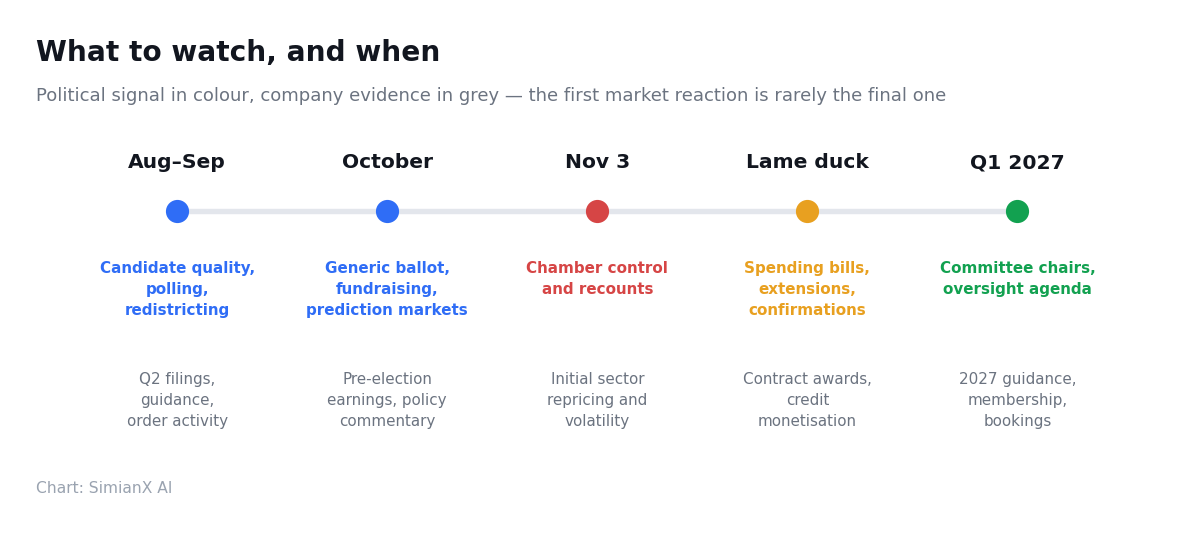
| Период | Политический сигнал | Доказательства компании |
|---|---|---|
| Август–сентябрь | Качество кандидатов, опросы, перераспределение | Отчеты за 2 квартал, обновленные прогнозы, активность заказов |
| Октябрь | Обобщенный опрос о партийных предпочтениях, сбор средств, рынки прогнозов | Доотчетные комментарии менеджмента по прибыли и политике |
| С 3 ноября | Контроль палаты и пересчеты | Первоначальная переоценка сектора и волатильность |
| Сессия «хромой утки» | Законы о расходах, продления, утверждения кандидатур | Присуждение контрактов и монетизация налоговых кредитов |
| I квартал 2027 | Председатели комитетов и повестка надзора | Прогнозы на 2027 год, число участников, новые заказы, заполняемость |
Не стоит предполагать, что первая реакция рынка окончательна — тот же вывод наша справочная таблица по акциям в военное время делает по двенадцати конфликтам. Акции могут вырасти на заголовке, а затем развернуться, когда инвесторы осознают, что вето, флибустьер в Сенате, существующий контракт или задержка реализации ослабляют влияние на прибыль.
Часто задаваемые вопросы о победителях и проигравших на фондовом рынке на промежуточных выборах 2026 года
Как промежуточные выборы 2026 года повлияют на фондовый рынок?
Результат может повлиять на политику в секторах, ассигнования, расследования и вероятность законодательных инициатив, но рост, инфляция, процентные ставки, прибыль и оценки обычно имеют большее значение для широкого рынка. Наибольшее влияние должно проявиться в компаниях с измеримым воздействием государственной политики.
Какие акции выиграют, если демократы победят в Палате представителей в 2026 году?
Компании в области чистой энергии и медицинского страхования, такие как FSLR, NEE, ENPH, CNC и HCA, могут получить относительную поддержку. Победа в Палате в основном изменяет надзор и переговорную силу; это не дает демократам одностороннего контроля над законодательством.
Какие акции выиграют, если республиканцы сохранят контроль над Конгрессом?
GEO, CXW, COIN, XOM и LMT имеют определенные каналы в области иммиграции, криптовалют, энергетики или обороны. Исполнение компанией и оценка все еще могут перевесить политический ветер в спину.
Всегда ли акции оборонных компаний выигрывают при республиканцах?
Нет. Оборонные бюджеты часто получают двухпартийную поддержку, а портфели заказов рассчитаны на годы. Структура программ, затраты по контрактам, цепочки поставок, иностранный спрос и время ассигнований могут иметь большее значение, чем партия большинства.
Является ли разделенное правительство благоприятным для акций?
История смешанная и не устанавливает надежное торговое правило. Застой может снизить неопределенность в политике, но он также может привести к закрытиям, фискальным противостояниям и задержкам в ассигнованиях; экономические основы остаются более важными.
Заключение
Лучший способ использовать этот список наблюдения — обращаться с ним как с условной исследовательской картой. Базовый сценарий с Демократической палатой и Республиканским сенатом благоприятствует надзору, переговорам и политической инерции. Единый контроль Республиканцев наиболее поддерживает подрядчиков по иммиграции, дополнительное законодательство о криптовалютах, углеводороды и оборону. Демократическая волна создает наибольшую возможность для чистой энергии и медицинского страхования — но президентское вето ограничивает немедленные законодательные изменения.
Сосредоточьтесь на измеримых каналах передачи: денежный поток от налоговых кредитов, число застрахованных, заполняемость ICE, портфель госзаказов, объемы криптовалют и заказы на сетевое строительство. И требуйте подтверждения в прибыли, прежде чем превращать политический тезис в сделку. Чтобы организовать эти сигналы и бросить вызов своим предположениям с помощью нескольких аналитических перспектив, исследуйте SimianX AI — и рассматривайте каждый вывод как поддержку исследования, а не как персонализированный финансовый совет.
Читайте также
- Снижение ставки ФРС 2026: карта рыночного ценообразования
- Руководство по секторальной ротации S&P 500 с ИИ-сигналами
- Buy the Invasion 2026: 9 из 12 войн дали ралли S&P 500.
- Раскрытие Трампа 2026: покупка Nvidia, продажа Microsoft
- Волатильность нефти трясёт акции США: сектор-карта на $10
Раскрытие информации: Эта статья предназначена только для информационных и образовательных целей. Это не инвестиционный, юридический или налоговый совет. Ценные бумаги могут потерять в цене, политические прогнозы могут быть неверными, а прошлые результаты не гарантируют будущие результаты.