 By Muke
Circle OCC Approval 2026: USDC’s Banking Breakthrough and USDT Risk
The Circle OCC approval 2026 is more than another positive headline for the crypto industry. On July 10, Circle received final approval from the Office of the Comptroller of the Currency to establish Circle National Trust, a federally chartered national trust bank.
The decision gives the infrastructure surrounding USDC a clearer federal regulatory foundation at the same time that foreign stablecoin issuers face stricter requirements under the GENIUS Act. For investors, exchanges and digital-asset treasuries, the central question is no longer simply whether USDC or USDT is larger. It is whether regulatory access, reserve transparency and redemption infrastructure are becoming competitive advantages.
This research from SimianX AI examines what Circle actually received, what it means for USDC, why it increases pressure on Tether, and what conditions would be required for a genuine USDT blow-up.
What Happened in the Circle OCC Approval 2026?
Circle announced on July 10, 2026 that the OCC had granted final approval to establish First National Digital Currency Bank, N.A., which will operate publicly as Circle National Trust.
The approval completed a process that began with Circle’s application in June 2025 and preliminary conditional approval in December 2025. Circle National Trust will operate under direct OCC supervision and initially provide fiduciary digital-asset custody services for Circle and its affiliates. Reserve management for USDC is described as a future capability, rather than an activity that begins automatically on day one.
The biggest change is not that USDC suddenly became a bank deposit. The change is that part of its supporting infrastructure now sits inside a federally supervised trust-bank framework.
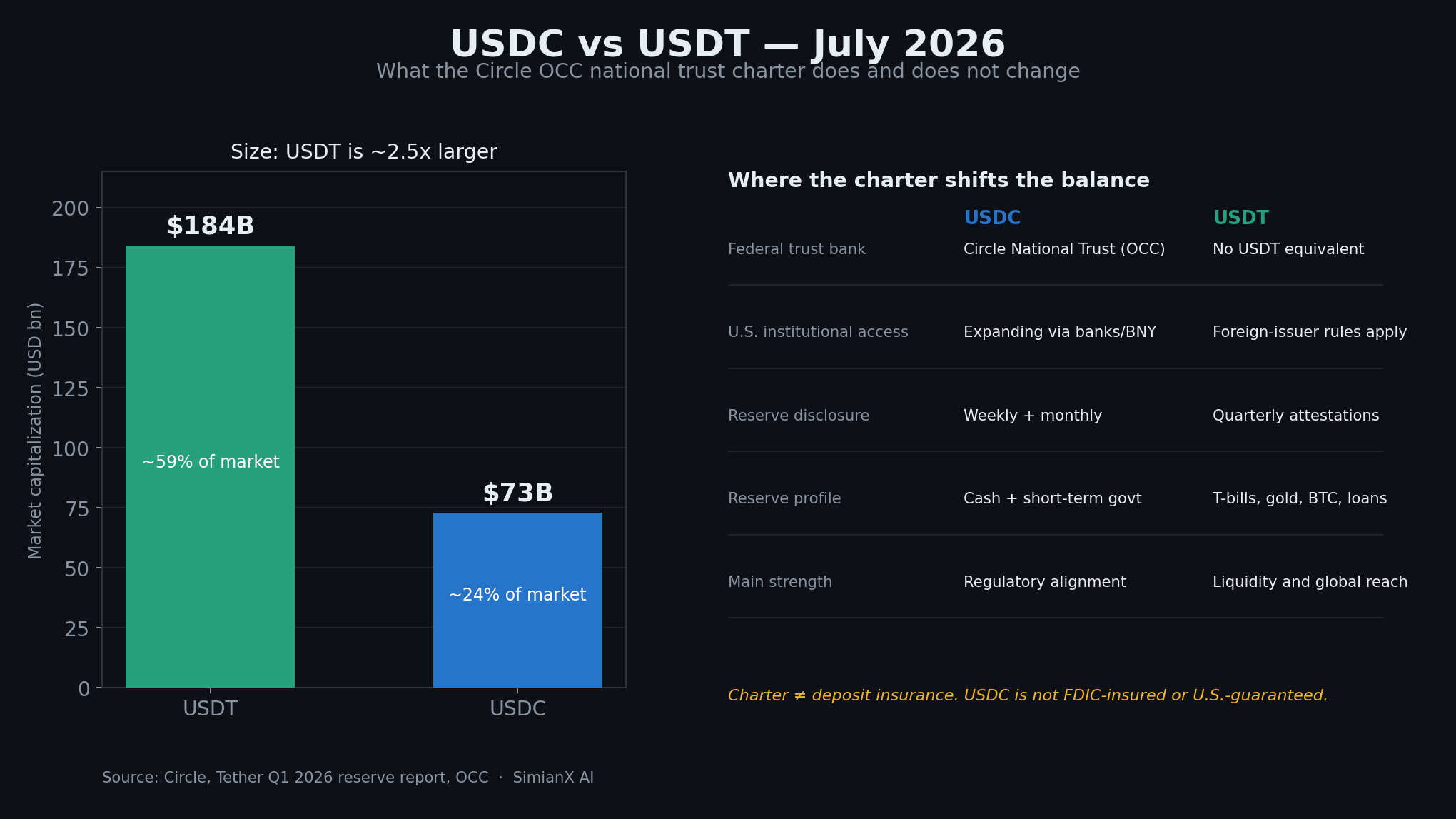
Circle National Trust is a specialized trust bank, not a conventional commercial bank. According to Circle:
- It will not accept ordinary customer deposits.
- It will not use customer funds to make loans.
- It will initially provide custody services within the Circle ecosystem.
- It may eventually provide custody to a limited number of banks and regulated institutions.
- It is expected, over time, to manage USDC reserve assets under OCC supervision.
Assets held in custody are intended to be segregated from Circle’s corporate assets. However, the charter does not make USDC legal tender, FDIC-insured or guaranteed by the United States government.
What Does Circle OCC Approval Mean for USDC Holders?
For an ordinary USDC holder, the token still functions as a dollar-backed stablecoin issued through Circle’s regulated affiliates. The approval does not immediately change the smart contract, the token ticker or the one-dollar redemption promise.
Its importance is structural:
- Federal supervision becomes part of the USDC infrastructure.
- Institutional custody can move inside a national trust bank.
- Future reserve management can be placed under OCC oversight.
- Circle gains a clearer path toward GENIUS Act compliance.
- Banks have a federally regulated counterparty for selected digital-asset activities.
That matters because large financial institutions do not evaluate a stablecoin solely by its blockchain speed or market capitalization. They examine the issuer, reserve custody, redemption rights, regulatory jurisdiction, bankruptcy protections and operational controls.
Why Circle’s Banking Breakthrough Changes the USDC vs USDT Race
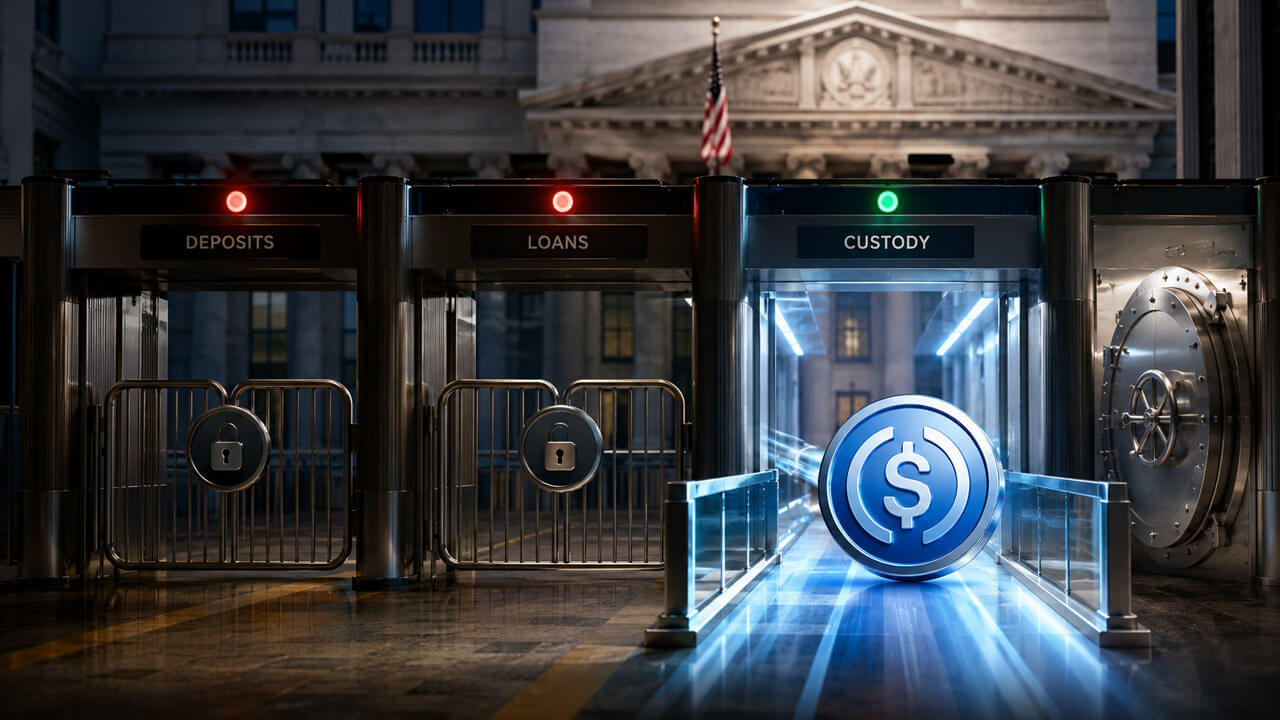
USDT remained the dominant stablecoin in July 2026, with approximately $184 billion in market capitalization compared with roughly $73 billion for USDC. Tether represented close to 59% of the stablecoin market, while USDC held around 24%.
USDT therefore has a powerful network advantage:
- More trading pairs on international exchanges
- Greater adoption in emerging markets
- Deep liquidity on centralized and decentralized venues
- Extensive use as crypto collateral
- Strong distribution on networks such as Tron and Ethereum
Circle is not defeating that network effect overnight. Instead, the OCC charter strengthens USDC in the segment where regulatory certainty is part of the product.
| Category | USDC after OCC approval | USDT in 2026 |
|---|---|---|
| Primary positioning | Regulated payment and settlement infrastructure | Global crypto-dollar liquidity |
| Federal trust bank | Circle National Trust approved | No equivalent USDT trust-bank charter |
| U.S. institutional access | Expanding through Circle, BNY and banking partners | More dependent on foreign-issuer compliance |
| Reserve disclosure | Weekly holdings and monthly third-party assurance | Daily circulation data and quarterly reserve attestations |
| Reserve profile | Primarily cash and short-term government instruments | Treasuries plus gold, bitcoin, loans, equities and other investments |
| U.S. strategy | USDC under Circle’s regulated ecosystem | Separate USA₮ product issued by Anchorage Digital Bank |
| Main strength | Regulatory alignment and institutional integration | Liquidity, global adoption and market dominance |
| Main vulnerability | Interest-rate exposure and previous banking concentration | Regulatory segmentation and more complex reserve composition |
Circle currently states that most USDC reserves are invested in the Circle Reserve Fund, an SEC-registered government money market fund managed by BlackRock, with BNY acting as a major custodian. Reserve holdings are disclosed weekly, while a Big Four accounting firm provides monthly assurance that reserves meet or exceed USDC in circulation.
That disclosure model does not eliminate risk. USDC temporarily depegged during the 2023 Silicon Valley Bank failure after Circle disclosed that $3.3 billion of its reserves were held at the failed institution. The incident demonstrated that a transparent stablecoin can still experience bank, custody and liquidity risk.
What transparency does provide is a clearer map of where that risk is located.
What the Circle OCC Approval Does Not Mean
The announcement can easily be overstated. Four distinctions are essential.
1. USDC Did Not Become an Insured Bank Deposit
A national trust bank charter is not the same as a full-service banking charter. Circle National Trust does not plan to take deposits or engage in conventional lending. USDC remains a digital asset and is not protected by ordinary deposit insurance.
2. Circle National Trust Is Not Immediately Managing Every USDC Reserve
Circle’s announcement says reserve management is planned as a future capability. At launch, the bank’s central function is fiduciary custody for Circle and its affiliates.
3. Federal Supervision Does Not Remove Blockchain Risk
Users can still face:
- Smart-contract vulnerabilities
- Wallet compromise
- Exchange insolvency
- Bridge failures
- Chain congestion
- Frozen or sanctioned addresses
- Secondary-market pricing deviations
Issuer quality is only one layer of stablecoin risk.
4. An OCC Charter Does Not Guarantee USDC Market-Share Growth
USDT has deeper international liquidity and remains embedded across crypto trading infrastructure. Institutional legitimacy may help USDC, but adoption still depends on distribution, fees, integrations and global demand.
Why USDT Blow-Up Risk Is Rising—but Is Not the Base Case
The phrase USDT blow-up should be defined carefully. It does not mean a brief move to $0.998 on one exchange. A genuine blow-up would involve impaired redemptions, a prolonged loss of the dollar peg, material reserve losses or a collapse of market confidence that spreads through exchanges and DeFi.
Circle’s OCC approval increases the relative risk around USDT because it raises the regulatory standard against which major stablecoins are compared. It does not prove that Tether is insolvent.
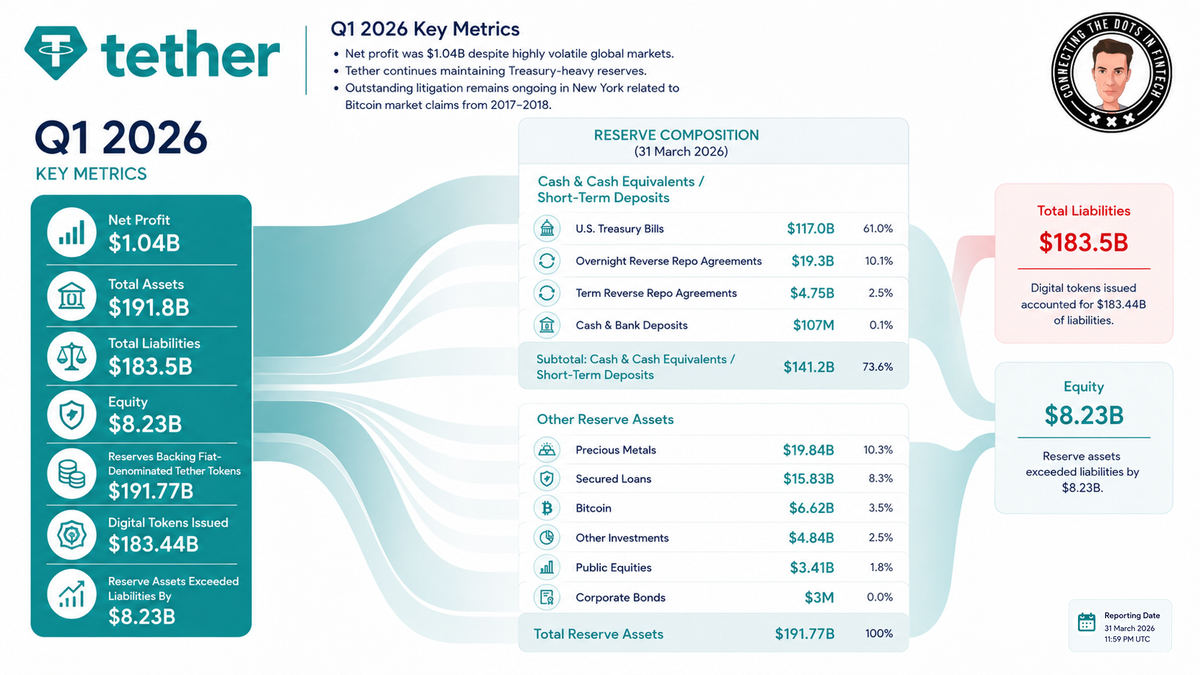
Tether’s own first-quarter 2026 report showed:
| Tether reserve category | March 31, 2026 value | Share of reported assets |
|---|---|---|
| Treasury bills, repos, cash and short-term deposits | $141.22B | 73.64% |
| Physical gold | $19.84B | 10.34% |
| Secured loans | $15.83B | 8.25% |
| Bitcoin | $6.62B | 3.45% |
| Other investments | $4.84B | 2.53% |
| Public equities | $3.41B | 1.78% |
| Corporate bonds | $3.0M | Less than 0.01% |
| Total assets | $191.77B | 100% |
The same report listed approximately $183.54 billion in liabilities and an $8.23 billion excess-reserve buffer. About 74% of reported assets were therefore held in Treasury bills, repurchase agreements, cash or short-term deposits.
Those figures support the argument that Tether is considerably more liquid than it was during earlier periods of reserve controversy. Tether also processed more than $20 billion of redemptions during the 2022 crypto crisis, according to the company, without permanently losing the peg.
The vulnerabilities are more nuanced:
- Roughly 26% of reported assets were outside the cash-equivalent category.
- Gold and bitcoin can experience rapid market-value changes.
- Secured loans depend on collateral quality and liquidation mechanisms.
- “Other investments” provide less public detail than Treasury holdings.
- Direct redemption is subject to verification, minimum sizes, fees and Tether’s terms.
- The reserve report represents a specific point in time rather than continuous assurance.
- Tether’s first full financial-statement audit had been engaged but not yet publicly completed as of July 2026.
BDO’s Q1 assurance report states that its conclusion covered the reserve report as of March 31, 2026. It also notes that valuations assume normal trading conditions and may not reflect extraordinary illiquidity involving important custodians or counterparties.
Tether announced in March 2026 that it had formally engaged an unnamed Big Four firm to conduct its first full independent financial-statement audit. Completion of that audit would address an important source of market uncertainty, but an engagement announcement is not the same as a published final audit.
How the GENIUS Act Increases Pressure on USDT
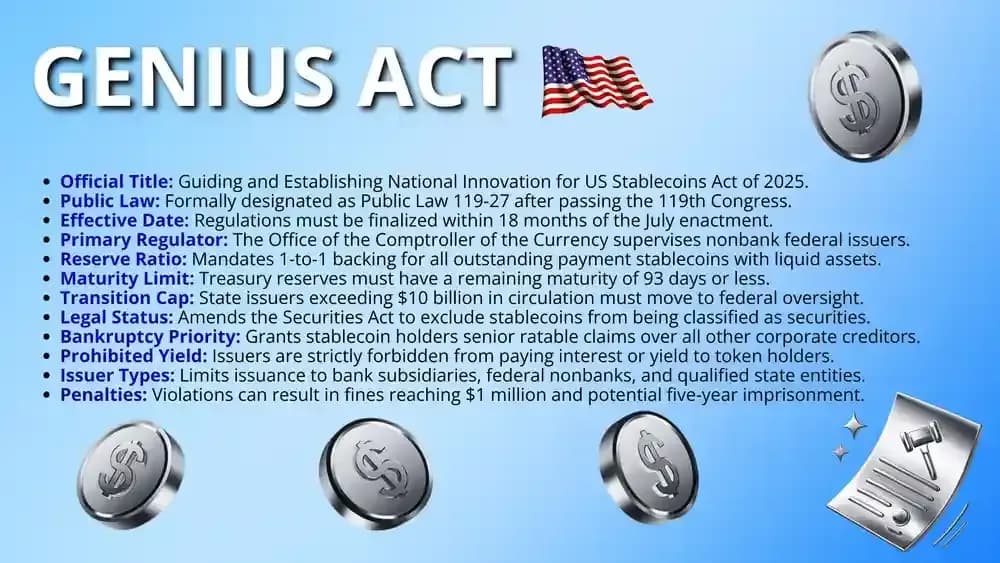
The GENIUS Act established a federal framework for payment stablecoins in the United States. Its effective date is the earlier of:
- 18 months after its July 18, 2025 enactment, or
- 120 days after federal regulators publish final implementing regulations.
The OCC’s 2026 proposal addresses reserve assets, redemptions, liquidity, audits, supervision, risk management and foreign stablecoin issuers. It also restricts U.S. digital-asset service providers from offering foreign-issued payment stablecoins unless those issuers meet the applicable requirements.
Under the proposed framework, a foreign issuer seeking U.S. access could be required to:
- Register with the OCC.
- Operate under a comparable foreign regulatory framework.
- Provide regulators with access to relevant books and records.
- Demonstrate sufficient reserves for U.S. customers.
- Hold specified liquidity in U.S. financial institutions.
- Report U.S. customer liabilities and reserve composition monthly.
- Consent to U.S. jurisdiction for enforcement purposes.
The proposed rules specifically identify cross-border reserve transfers and timely U.S. customer redemptions as issues that regulators expect foreign issuers to address.
This creates three possible paths for USDT:
- Compliance: Tether registers and adapts USDT to the foreign-issuer framework.
- Segmentation: USDT remains dominant internationally but loses distribution on regulated U.S. platforms.
- Substitution: U.S. users move toward USDC, bank-issued stablecoins or Tether’s separate USA₮ product.
Tether’s January 2026 launch of USA₮ suggests that it anticipated this regulatory divide. USA₮ is issued by Anchorage Digital Bank and was designed specifically for the U.S. federal stablecoin framework, while USDT continues serving the global market.
USA₮ is evidence that Tether has a compliance strategy. It is also evidence that Tether does not assume the existing USDT structure will automatically fit every U.S. requirement.
Could USDT Actually Blow Up After Circle’s OCC Approval?
Circle’s charter alone cannot cause a USDT collapse. A genuine failure would probably require several shocks to occur together.
Trigger 1: Regulatory Distribution Shock
Major exchanges, payment companies or custodians could restrict USDT for U.S. customers if Tether failed to obtain the required foreign-issuer status.
A distribution restriction would not directly destroy reserves, but it could reduce liquidity, fragment markets and create a discount on U.S.-facing venues.
Trigger 2: Accelerating Redemptions
Falling confidence would need to move from secondary-market selling into primary redemptions. The most important indicator would be whether verified customers could continue redeeming large amounts near par.
Trigger 3: Reserve-Liquidity Pressure
Treasury bills and overnight repos should generally be highly liquid. Stress would become more serious if redemptions forced rapid sales of gold, bitcoin, public equities, secured loans or less transparent investments.
Trigger 4: Exchange and DeFi Contagion
USDT is used as collateral, settlement currency and quote currency across the crypto ecosystem. A sustained discount could trigger:
- Leveraged-position liquidations
- Automated market-maker imbalance
- Lending-protocol bad debt
- Exchange withdrawal pressure
- Flight into USDC, fiat or Treasury-backed tokens
- Forced selling of
BTC,ETHand altcoins
| Scenario | Expected outcome | Relative likelihood |
|---|---|---|
| Orderly compliance | USDT meets foreign-issuer rules and remains globally dominant | Highest |
| U.S. market segmentation | USDC and USA₮ gain U.S. share while USDT remains offshore-focused | High |
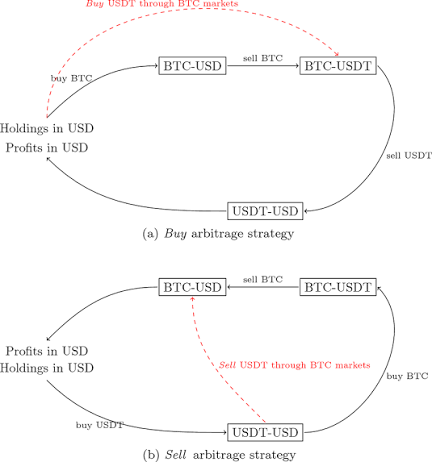
| Temporary depeg | Regulation or market panic pushes USDT below $1 before arbitrage restores the peg | Moderate tail risk |
| Severe redemption crisis | Redemptions expose liquidity, custody or asset-quality problems | Low but systemic |
| Full USDT blow-up | Redemption failure and reserve impairment cause a prolonged collapse | Lowest, highest impact |
The base case is therefore competitive fragmentation, not immediate insolvency. But USDT’s size makes even a low-probability failure systemically important. At roughly $184 billion, Tether was more than 2.5 times the size of USDC in July 2026.
What Circle’s Approval Means for CRCL, Bitcoin and Crypto Markets
Circle shares closed July 10 at approximately $66.14, up about 5% for the session after trading as high as $73.63. The reaction showed that investors viewed the charter as strategically valuable, although it does not necessarily create substantial revenue immediately.
For CRCL, the long-term opportunity includes:
- Institutional custody revenue
- Deeper banking integrations
- Increased USDC circulation
- Stronger competitive positioning under the GENIUS Act
- Potential future reserve-management capabilities
- More payment, settlement and tokenization partnerships
The risks remain significant. Circle’s economics are sensitive to short-term interest rates, USDC circulation and revenue-sharing arrangements. A trust-bank charter strengthens the moat, but it does not remove competition from Tether, banks, payment companies or other regulated issuers.
For Bitcoin and the broader crypto market, the approval is structurally constructive because it connects blockchain settlement to regulated financial infrastructure. However, a rotation from USDT into USDC does not automatically produce new crypto demand. It may simply transfer stablecoin balances from one issuer to another.
The bearish scenario appears if USDT selling becomes a scramble for fiat liquidity. In that case, traders may initially sell crypto assets to obtain dollars rather than rotate smoothly into USDC.
How to Monitor USDT Blow-Up Risk in Real Time
Investors should not wait for a social-media rumor to decide whether a stablecoin is safe. A practical monitoring system combines issuer data, regulation, market prices and on-chain liquidity.
1. Track the Peg Across Multiple Markets
Monitor:
USDT/USDUSDT/USDCUSDT/DAI- Centralized-exchange prices
- Decentralized-exchange prices
- Regional price premiums and discounts
A one-minute deviation on a small venue is less meaningful than a persistent discount across several liquid exchanges.
2. Monitor Supply Contraction
Rapid burns or falling circulating supply can indicate large redemptions. Supply contraction is not automatically bearish—successful redemptions can demonstrate reserve strength—but the speed and market context matter.
3. Measure Liquidity Depth
Track how much USDT can be sold before creating:
- 10-basis-point slippage
- 50-basis-point slippage
- 1% slippage
Falling liquidity may reveal stress before the headline price moves sharply.
4. Follow Reserve and Audit Developments
Key questions include:
- Has the full Big Four audit been completed?
- Is the excess-reserve buffer increasing or decreasing?
- Are secured loans and other investments shrinking?
- Is the Treasury share of reserves rising?
- Have custody or banking counterparties changed?
5. Watch GENIUS Act Implementation
The critical events are not only laws being signed. Traders should track final rules, effective dates, OCC registrations and exchange support decisions.
6. Monitor Crypto Collateral Contagion
A USDT event becomes systemic when it affects funding rates, open interest, liquidation volumes, lending-protocol utilization and stablecoin pools simultaneously.
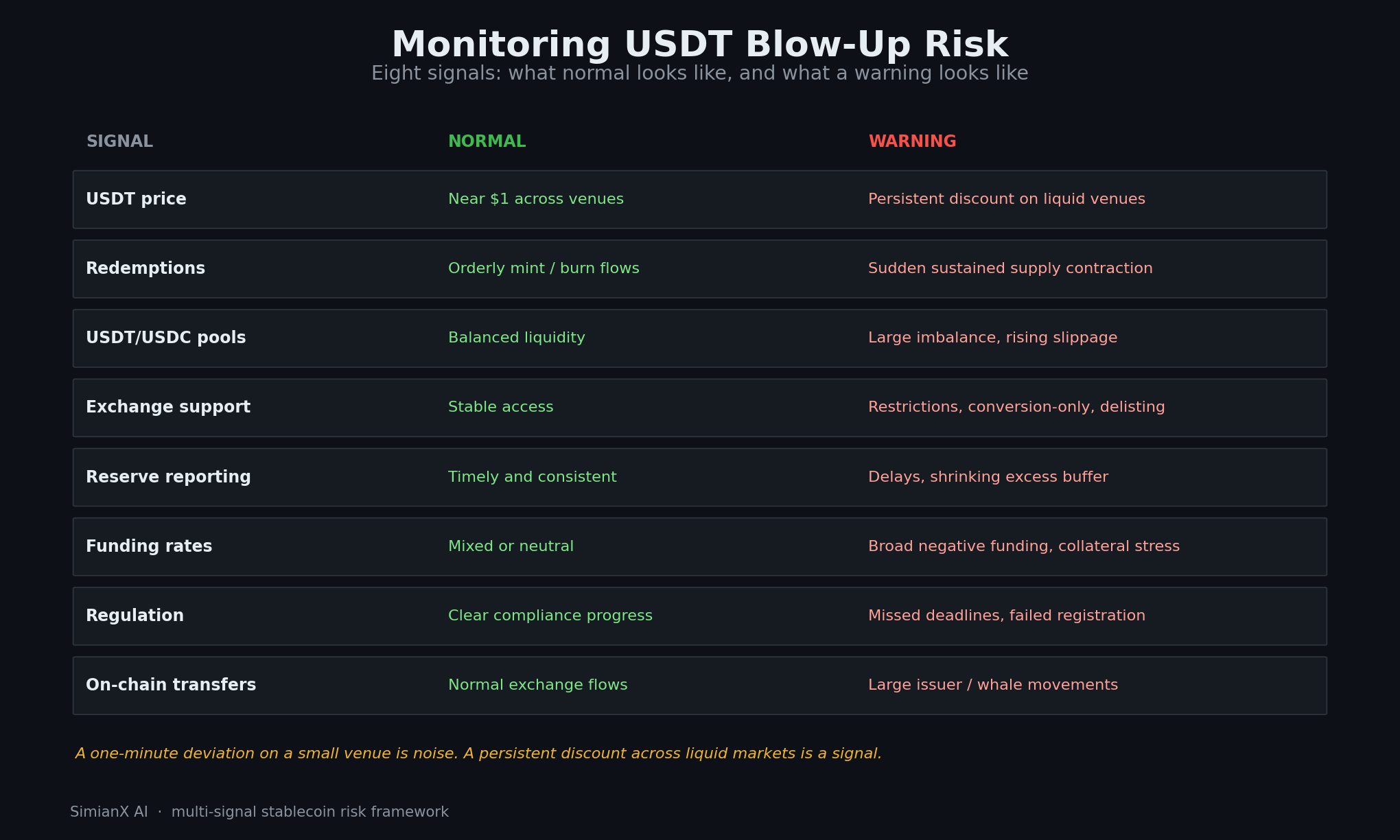
| Signal | Normal condition | Warning condition |
|---|---|---|
| USDT price | Near $1 across venues | Persistent discount across liquid markets |
| Redemption activity | Orderly mint and burn flows | Sudden sustained supply contraction |
| USDT/USDC pools | Balanced liquidity | Large imbalance and increasing slippage |
| Exchange support | Stable access | Restrictions, conversion-only mode or delisting |
| Reserve reporting | Timely and consistent | Delays, unexplained changes or shrinking buffer |
| Funding rates | Mixed or neutral | Broad negative funding and collateral stress |
| Regulation | Clear compliance progress | Missed deadlines or failed registration |
| On-chain transfers | Normal exchange flows | Large issuer, exchange or whale movements |
SimianX AI can help structure this process by separating technical price action, on-chain liquidity, fundamental reserve information, regulatory news and final risk decisions instead of treating every stablecoin rumor as an isolated signal.
Readers can also compare the wider market structure in Stablecoins 2026: Visa, Stripe and the USDT vs USDC Race, review historical failures in Every Major Stablecoin Depeg, and study early-warning indicators in AI Early-Warning for DeFi Liquidity Risks.
A Practical Stablecoin Risk Framework for Investors
The safest approach is not to predict one dramatic collapse. It is to reduce dependence on a single issuer, exchange or redemption rail.
A practical five-step framework:
- Separate trading liquidity from treasury reserves.
Funds needed for active crypto trading may require different stablecoins from capital held for several months.
- Diversify issuers and custody venues.
Holding two stablecoins on one exchange does not eliminate exchange risk.
- Understand direct redemption access.
Retail holders may depend on exchanges, while qualified institutional users may have direct issuer or banking access.
- Set predefined depeg thresholds.
Decide what action to take at $0.995, $0.98 and $0.95 before volatility begins.
- Monitor causes, not only prices.
A temporary liquidity imbalance requires a different response from a confirmed reserve impairment or regulatory shutdown.
Stablecoins should be evaluated like financial infrastructure. The relevant questions are: Who issues the liability? What assets support it? Who holds those assets? Who can redeem directly? What happens during a legal, banking or market shock?
FAQ About Circle OCC Approval 2026
What does Circle OCC approval mean for USDC?
It allows Circle to establish a federally supervised national trust bank focused initially on fiduciary digital-asset custody. The charter also creates a pathway for future USDC reserve management under OCC oversight, but USDC does not become an insured bank deposit.
Is USDC safer than USDT after Circle’s bank approval?
USDC now has a stronger U.S. regulatory and institutional-custody framework. USDT remains larger and has demonstrated substantial redemption capacity, so “safer” depends on whether the main concern is regulation, global liquidity, reserve composition or direct redemption access.
Could USDT lose its peg because of the GENIUS Act?
The Act itself does not automatically break the peg. Risk would rise if regulatory restrictions reduced exchange access, caused market fragmentation and triggered redemptions faster than liquidity could be delivered.
Is Tether fully backed in 2026?
Tether’s Q1 2026 assurance report showed assets exceeding liabilities by approximately $8.23 billion. However, investors should distinguish a point-in-time reserve attestation from a completed full financial-statement audit and continue monitoring reserve composition and redemption performance.
How can investors monitor stablecoin depeg risk?
Track prices across multiple exchanges, redemption-related supply changes, liquidity-pool imbalance, reserve reports, regulatory status, funding rates and collateral liquidations. A multi-signal approach is more reliable than reacting to one price print or social-media post.
Conclusion
The Circle OCC approval 2026 marks a genuine breakthrough for regulated digital-dollar infrastructure. Circle National Trust gives USDC a federally supervised custody layer, a clearer institutional pathway and the potential for future reserve management under OCC oversight.
It also changes the competitive environment for Tether. USDT remains the largest and most liquid stablecoin, backed primarily by Treasury-related assets and supported by a significant reported reserve buffer. A USDT collapse is not the base case.
The more realistic near-term risk is regulatory segmentation: USDC and USA₮ gaining access to regulated U.S. finance while USDT becomes increasingly concentrated in offshore trading and emerging-market use. A true blow-up would require regulatory pressure to combine with redemption stress, reserve-liquidity problems and crypto-market contagion.
Investors should focus less on dramatic predictions and more on measurable signals. Explore SimianX AI to monitor stablecoin prices, market liquidity, on-chain activity, regulatory catalysts and decision-level risk through a structured multi-agent research process.
Related Reading
- Stablecoins 2026: Visa, Stripe & the USDT vs USDC Race
- Every Major Stablecoin Depeg: A Complete Reference Table
- AI Early-Warning for DeFi Liquidity and Depeg Risks 2026
- Securitize NYSE Debut 2026: Tokenized Stocks Hit Wall Street
- DTCC Tokenized Securities Pilot 2026: Wall Street On-Chain
- Securitize Stock 2026: SECZ Tokenized Shares Guide
References
- OCC — the U.S. national bank regulator that granted the charter
- Circle — USDC issuer: reserve reports and disclosures
- Tether Transparency — Tether reserve attestations and Q1 2026 report
- GENIUS Act (S.1582) — the federal payment-stablecoin framework
- BlackRock — manager of the SEC-registered Circle Reserve Fund
- BNY — principal custodian of USDC reserves
- Anchorage Digital — issuer of Tether’s U.S. product USA₮
- FDIC — U.S. deposit insurance — what USDC is not covered by
- BDO — auditor of Tether’s quarterly assurance report
- SimianX Crypto Leaderboard — live AI model performance across crypto markets