 लेखक: Muke
टिम कुक से जॉन टर्नस तक: Apple में असल में क्या बदला
टिम कुक ने Apple के मुख्य कार्यकारी अधिकारी का पद छोड़ दिया है और इसके साथ ही वह पंद्रह साल का कार्यकाल पूरा हुआ जिसने कंपनी को दुनिया के सबसे मूल्यवान कारोबारों में से एक बना दिया। जॉन टर्नस ने 1 सितंबर 2026 को कमान संभाली और कुक कार्यकारी अध्यक्ष की भूमिका में चले गए। यह अचानक हुई विदाई नहीं थी: Apple के निदेशक मंडल ने टर्नस को 17 अप्रैल को ही नियुक्त कर दिया था और उत्तराधिकार की घोषणा 20 अप्रैल 2026 को अमेरिकी प्रतिभूति एवं विनिमय आयोग में दाखिल फ़ॉर्म 8-K के ज़रिए की थी। पहले निदेशक मंडल के अध्यक्ष रहे आर्ट लेविंसन उसी तारीख से प्रमुख स्वतंत्र निदेशक बन गए।
यह संक्रमण एक महत्वपूर्ण क्षण पर आया है। Apple अत्यधिक लाभदायक, वित्तीय रूप से मजबूत और उपभोक्ताओं के दैनिक जीवन में गहराई से अंतर्निहित है। फिर भी कंपनी जनरेटिव AI की दौड़ में Microsoft, Alphabet, Amazon, Meta और OpenAI की तुलना में धीमी दिखाई दी है। उन्नत Siri सुविधाओं में देरी ने विश्वास को नुकसान पहुँचाया, जबकि Apple के बड़े भाषा मॉडल के प्रति सतर्क दृष्टिकोण ने यह सवाल उठाया कि क्या यह अगले कंप्यूटिंग युग में प्रभावशाली रह सकता है।
जॉन टर्नस एक असाधारण मंच विरासत में लेते हैं—लेकिन एक असामान्य रूप से कठिन रणनीतिक चुनौती भी। क्या एक कार्यकारी जो हार्डवेयर इंजीनियरिंग के लिए सबसे अधिक जाना जाता है, Apple की AI वापसी का नेतृत्व कर सकता है, आईफोन फ्रैंचाइज़ी की रक्षा कर सकता है और अगली प्रमुख उत्पाद श्रेणी बना सकता है?
इसका उत्तर इस पर निर्भर करता है कि क्या टर्नस Apple की पारंपरिक ताकतों को सिलिकॉन, सॉफ़्टवेयर एकीकरण, गोपनीयता और औद्योगिक डिज़ाइन के साथ एक तेज़ और अधिक महत्वाकांक्षी AI ऑपरेटिंग मॉडल में जोड़ सकते हैं।
Apple में टिम कुक के साथ क्या हुआ?
Apple ने अप्रैल 2026 में घोषणा की कि टिम कुक सीईओ से कार्यकारी अध्यक्ष के रूप में संक्रमण करेंगे और जॉन टर्नस 1 सितंबर को उनके उत्तराधिकारी होंगे। बोर्ड ने कहा कि उत्तराधिकार एक दीर्घकालिक योजना प्रक्रिया के बाद हुआ और सर्वसम्मति से टर्नस को अगला सीईओ चुना गया। Apple की आधिकारिक उत्तराधिकार घोषणा
Cook ने 1998 में Apple में शामिल हुए और 2011 में CEO बने, Steve Jobs के उत्तराधिकारी के रूप में। उनका कार्यकाल संचालन अनुशासन, आपूर्ति श्रृंखला अनुकूलन, भौगोलिक विस्तार और iPhone को हार्डवेयर, सॉफ़्टवेयर और सेवाओं के व्यापक पारिस्थितिकी तंत्र में परिवर्तित करने द्वारा परिभाषित किया गया।
Apple के संक्रमण की घोषणा के अनुसार, कंपनी की वार्षिक आय वित्तीय 2011 में लगभग $108 बिलियन से बढ़कर वित्तीय 2025 में $416 बिलियन से अधिक हो गई। Apple का बाजार पूंजीकरण लगभग $350 बिलियन से बढ़कर उसी अवधि में लगभग $4 ट्रिलियन हो गया।
Cook की उपलब्धियों में शामिल हैं:
- Apple की सेवाओं के व्यवसाय का विस्तार, जिसमें App Store, iCloud, Apple Music, Apple TV+ और भुगतान उत्पाद शामिल हैं।
- Apple सिलिकॉन विकास को इन-हाउस ले जाना और Mac को Intel प्रोसेसर से दूर करना।
- एक अत्यधिक कुशल वैश्विक निर्माण और लॉजिस्टिक्स प्रणाली का निर्माण करना।
- Apple के खुदरा, सदस्यता और वित्तीय-सेवाओं के पारिस्थितिकी तंत्र का विस्तार करना।
- उच्च मार्जिन और विशाल मुक्त नकद प्रवाह बनाए रखना।
- Apple की गोपनीयता और सुरक्षा स्थिति को मजबूत करना।
हालांकि, Cook की विरासत अब Apple के AI प्रदर्शन से निकटता से जुड़ी हुई है। Apple ने Apple Intelligence को महत्वपूर्ण अपेक्षाओं के साथ पेश किया, लेकिन उन्नत Siri सुविधाएँ विलंबित हो गईं। कंपनी ने अंततः Siri की वास्तुकला को फिर से बनाया बजाय इसके कि केवल विरासत सहायक में वृद्धिशील सुविधाएँ जोड़ी जाएं। उस निर्णय से अंतिम उत्पाद में सुधार हो सकता है, लेकिन इसने निष्पादन और आंतरिक समन्वय में कमजोरियों को भी उजागर किया।
Apple की अपनी वार्षिक रिपोर्टें इस दौर के दोनों छोर सटीक रूप से दर्ज करती हैं: शुद्ध बिक्री वित्त वर्ष 2011 में 108.25 अरब डॉलर और वित्त वर्ष 2025 में 416.16 अरब डॉलर रही; शुद्ध लाभ 25.92 अरब डॉलर से बढ़कर 112.01 अरब डॉलर हुआ, जबकि शोध एवं विकास व्यय 2.43 अरब डॉलर से बढ़कर 34.55 अरब डॉलर पहुँच गया। ये आँकड़े Apple द्वारा दाखिल फ़ॉर्म 10-K वार्षिक रिपोर्टों से लिए गए हैं।
| कुक का दौर, शुरू से अंत तक | वित्त वर्ष 2011 | वित्त वर्ष 2025 | कितने गुना |
|---|---|---|---|
| शुद्ध बिक्री | 108.25 अरब डॉलर | 416.16 अरब डॉलर | 3.8 गुना |
| शुद्ध लाभ | 25.92 अरब डॉलर | 112.01 अरब डॉलर | 4.3 गुना |
| शोध एवं विकास | 2.43 अरब डॉलर | 34.55 अरब डॉलर | 14.2 गुना |
| परिचालन से नकदी प्रवाह | 37.53 अरब डॉलर | 111.48 अरब डॉलर | 3.0 गुना |
Cook Apple को एक असाधारण आर्थिक मशीन के साथ छोड़ते हैं, लेकिन Ternus का मूल्यांकन इस बात से किया जाएगा कि क्या वह मशीन एक नया तकनीकी प्लेटफ़ॉर्म खड़ा कर सकती है।
John Ternus कौन हैं?
पचास वर्षीय जॉन टर्नस पच्चीस साल से Apple में हैं और 2021 से मुख्य कार्यकारी अधिकारी बनने तक हार्डवेयर इंजीनियरिंग के वरिष्ठ उपाध्यक्ष रहे। वह iPhone, iPad, Mac, Apple Watch, AirPods और Apple Vision Pro जैसे उत्पादों के लिए ज़िम्मेदार इंजीनियरिंग टीमों का नेतृत्व करते हैं। Apple की वेबसाइट पर जॉन टर्नस की प्रोफ़ाइल
Ternus ने 2001 में Apple के उत्पाद डिज़ाइन संगठन में शामिल हुए और कई प्रमुख उत्पाद संक्रमणों में एक केंद्रीय व्यक्ति बन गए। Apple ने उन्हें iPad पीढ़ियों, पहले AirPods, iPhone 12 परिवार और Mac कंप्यूटरों में Apple सिलिकॉन के संक्रमण पर नेतृत्व के लिए श्रेय दिया है।
उनकी पृष्ठभूमि महत्वपूर्ण है क्योंकि Apple की AI रणनीति केवल चैटबॉट्स तक सीमित नहीं है। Apple चाहता है कि बुद्धिमत्ता उपकरणों, ऑपरेटिंग सिस्टम, अनुप्रयोगों और सेवाओं में गहराई से एकीकृत हो। इससे हार्डवेयर-सॉफ्टवेयर समन्वय महत्वपूर्ण हो जाता है।
Ternus कई प्रासंगिक ताकतें लाते हैं:
गहरी उत्पाद जानकारी
वह Apple की इंजीनियरिंग संस्कृति, विकास प्रक्रियाओं और गुणवत्ता मानकों को समझते हैं। उन्होंने कई उत्पाद श्रेणियों में काम किया है और जानते हैं कि जटिल तकनीकी क्षमताओं को उपभोक्ता उत्पादों में कैसे बदलना है।
Apple सिलिकॉन विशेषज्ञता
Apple के कस्टम चिप्स उपकरण-आधारित AI के लिए एक आधार प्रदान करते हैं। न्यूरल प्रोसेसिंग, मेमोरी बैंडविड्थ, पावर दक्षता और गोपनीयता सभी आंशिक रूप से सिलिकॉन डिज़ाइन पर निर्भर करते हैं। Ternus को इस आर्किटेक्चर का प्रबंधन करने का प्रत्यक्ष अनुभव है।
क्रॉस-फंक्शनल विश्वसनीयता
एक क्लाउड या AI कंपनी से भर्ती किए गए बाहरी व्यक्ति के विपरीत, Ternus के पास पहले से ही Apple के हार्डवेयर, सॉफ्टवेयर और संचालन संगठनों के बीच संबंध हैं। इससे उन्हें AI विकास को पुनर्गठित करना आसान हो सकता है बिना व्यापक कंपनी को अस्थिर किए।
उत्पाद-प्रथम अभिविन्यास
Ternus कार्यान्वयन और हार्डवेयर लॉन्च के साथ जुड़े हुए हैं, न कि वित्तीय इंजीनियरिंग या कॉर्पोरेट डीलमेकिंग के साथ। यह मूल्यवान हो सकता है यदि Apple को स्मार्ट चश्मे, AI-सक्षम पहनने योग्य, रोबोटिक्स या एक नए डिजाइन किए गए घरेलू प्लेटफ़ॉर्म जैसे नए उपकरणों को तेज़ी से लाने की आवश्यकता हो।
उनकी मुख्य कमजोरी भी स्पष्ट है: उन्होंने पहले कभी एक वैश्विक सेवाओं के व्यवसाय का संचालन नहीं किया है, Apple की सबसे बड़ी साझेदारियों को CEO के रूप में बातचीत नहीं की है या सार्वजनिक रूप से कंपनी-व्यापी AI रणनीति को स्पष्ट नहीं किया है।
Apple को AI वापसी की आवश्यकता क्यों है
Apple जनरेटिव-AI बूम से पहले कृत्रिम बुद्धिमत्ता से अनुपस्थित नहीं था। कंपनी ने वर्षों से फोटोग्राफी, फेस ID, कीबोर्ड भविष्यवाणी, स्वास्थ्य सुविधाओं, खोज, सिफारिशों और कंप्यूटेशनल फोटोग्राफी में मशीन लर्निंग का उपयोग किया है।
समस्या यह है कि अब बाजार AI का मूल्यांकन एक अलग दृष्टिकोण से करता है। निवेशक और उपभोक्ता लगातार अपेक्षा करते हैं:
- प्राकृतिक भाषा सहायक जो बहु-चरण कार्यों को पूरा कर सकें।
- सिस्टम जो व्यक्तिगत संदर्भ को समझते हैं।
- AI एजेंट जो अनुप्रयोगों के साथ बातचीत करते हैं।
- जनरेटिव इमेज, वीडियो और ऑडियो उपकरण।
- फाउंडेशन मॉडल के चारों ओर निर्मित डेवलपर प्लेटफार्म।
- AI हार्डवेयर जो लोगों के कंप्यूटर उपयोग करने के तरीके को बदलता है।
Apple की पहली प्रमुख प्रतिक्रिया Apple Intelligence थी, जिसे ऑन-डिवाइस मॉडल और प्राइवेट क्लाउड कंप्यूट के संयोजन के चारों ओर डिज़ाइन किया गया था। WWDC26 में, Apple ने iPhone, iPad, Mac, Apple Watch और Vision Pro के लिए Apple Intelligence और Siri AI की एक नई पीढ़ी पेश की। Apple का WWDC26 Apple Intelligence घोषणा
Apple की रणनीति हाइपरस्केलर्स के दृष्टिकोण से भिन्न है:
| कंपनी | प्राथमिक AI लाभ | मुख्य मुद्रीकरण मार्ग |
|---|---|---|
| Microsoft | एंटरप्राइज सॉफ़्टवेयर और Azure अवसंरचना | कोपायलट सदस्यता, क्लाउड खपत और एंटरप्राइज अनुबंध |
| Alphabet | Gemini मॉडल, खोज वितरण और डेटा केंद्र | खोज, क्लाउड और AI सदस्यता |
| Amazon | AWS अवसंरचना और रिटेल डेटा | क्लाउड सेवाएँ, विज्ञापन और वाणिज्य |
| Meta | विशाल उपयोगकर्ता नेटवर्क और सिफारिश प्रणाली | विज्ञापन और संलग्नता |
| Apple | उपकरण पारिस्थितिकी तंत्र, स्वयं डिज़ाइन की गई चिप और गोपनीयता | हार्डवेयर अपग्रेड, सेवाएँ और पारिस्थितिकी तंत्र से जुड़ाव |
Apple को हर बेंचमार्क जीतने की आवश्यकता नहीं है। इसे AI को इस तरह से उपयोगी बनाना है कि ग्राहक Apple के उपकरणों को प्राथमिकता दें, डेवलपर्स Apple के प्लेटफार्मों के लिए निर्माण करें और प्रतिस्पर्धी समग्र अनुभव को आसानी से दोहरा न सकें।
यह एक संकीर्ण, पर फिर भी बेहद चुनौतीपूर्ण लक्ष्य है।
क्या Siri AI Apple की प्रतिष्ठा को सुधार सकता है?
Siri Apple के AI निष्पादन का सबसे स्पष्ट परीक्षण है। सहायक 2011 में लॉन्च हुआ, लेकिन इसकी क्षमताएँ अक्सर Google Assistant, ChatGPT, Claude, Gemini और अन्य आधुनिक प्रणालियों के पीछे रह गई हैं।
Apple की देर से आई Siri सुविधाओं से अपेक्षा की गई थी कि वे:
- व्यक्तिगत संदर्भ की बेहतर समझ।
- ऐप्स के बीच जानकारी का उपयोग करने की क्षमता।
- अधिक प्राकृतिक बातचीत।
- बहु-चरण कार्य पूरा करने में सुधार।
- उपयोगकर्ता की स्क्रीन पर प्रदर्शित चीजों के प्रति अधिक जागरूकता।
- अधिक विश्वसनीय फॉलो-अप प्रश्न और क्रियाएँ।
Apple ने अंततः Siri AI को एक अधिक सक्षम सहायक के रूप में प्रस्तुत किया जो एक नई फाउंडेशन-मॉडल आर्किटेक्चर पर आधारित है। कंपनी का कहना है कि इसके AI मॉडल ऑपरेटिंग सिस्टम में एकीकृत हैं और गोपनीयता को केंद्र में रखकर डिज़ाइन किए गए हैं। Apple फाउंडेशन मॉडल्स अनुसंधान
अवसर महत्वपूर्ण है। Siri पहले से ही सैकड़ों मिलियन उपकरणों में वितरित है। यदि Apple विश्वसनीयता में सुधार कर सकता है, तो यह तुरंत AI को एक विशाल स्थापित आधार के सामने रख सकता है।
लेकिन वितरण अपनाने के समान नहीं है। उपयोगकर्ता केवल तब अपनी आदतें बदलेंगे जब Siri AI लगातार उपयोगी कार्यों को पूरा करे। एक खराब लॉन्च इस धारणा को मजबूत कर सकता है कि Apple पीछे है, जबकि एक मजबूत लॉन्च कहानी को तेजी से बदल सकता है।
सबसे महत्वपूर्ण उत्पाद मेट्रिक्स में शामिल होंगे:
- साप्ताहिक सक्रिय Siri उपयोगकर्ता।
- कार्य-पूर्णता दरें।
- प्रारंभिक प्रयोग के बाद उपयोगकर्ता बनाए रखना।
- तीसरे पक्ष के डेवलपर्स द्वारा ऐप-इरादा उपयोग।
- विलंबता और विश्वसनीयता।
- गोपनीयता संतोष।
- अंतरराष्ट्रीय उपलब्धता, विशेष रूप से यूरोपीय संघ में।
Apple की AI आर्किटेक्चर: गोपनीयता बनाम पैमाना
Apple का AI मॉडल एक हाइब्रिड आर्किटेक्चर पर जोर देता है:
- छोटे मॉडल सीधे संगत उपकरणों पर चलते हैं।
- अधिक मांग वाले अनुरोधों को प्राइवेट क्लाउड कंप्यूट के माध्यम से संसाधित किया जाता है।
- सिस्टम डेटा रखरखाव को न्यूनतम करने और उपयोगकर्ता की गोपनीयता की रक्षा करने का प्रयास करता है।
- डेवलपर्स Apple के फाउंडेशन मॉडल्स तक फ्रेमवर्क और एपीआई के माध्यम से पहुँच सकते हैं।
इस दृष्टिकोण के कई लाभ हैं। डिवाइस पर प्रोसेसिंग लेटेंसी को कम कर सकती है, गोपनीयता में सुधार कर सकती है और बाहरी क्लाउड प्रदाताओं पर निर्भरता को कम कर सकती है। Apple ऑपरेटिंग सिस्टम, हार्डवेयर, एप्लिकेशन फ्रेमवर्क और वितरण चैनल पर भी नियंत्रण रखता है।
हालांकि, इस रणनीति की सीमाएँ हैं। फ्रंटियर मॉडल को विशाल कंप्यूटिंग संसाधनों, बड़े प्रशिक्षण डेटा सेट और निरंतर मॉडल अपडेट की आवश्यकता होती है। Apple को डेटा-सेंटर क्षमता पर अधिक खर्च करने की आवश्यकता हो सकती है या बाहरी मॉडल प्रदाताओं के साथ साझेदारी करनी पड़ सकती है।
कंपनी की रिपोर्ट की गई साझेदारी चर्चाएँ और बाहरी AI मॉडलों पर निर्भरता ने एक रणनीतिक तनाव पैदा किया है। किसी अन्य कंपनी के मॉडल को लाइसेंस देना या एकीकृत करना उत्पाद वितरण को तेज कर सकता है, लेकिन यह Apple के मूल बुद्धिमत्ता परत पर नियंत्रण को कम कर सकता है।
Apple की AI चुनौती केवल एक बेहतर मॉडल बनाना नहीं है। यह तय करना है कि कौन सी बुद्धिमत्ता स्वामित्व, लाइसेंस, स्थानीय रूप से एम्बेडेड या क्लाउड के माध्यम से वितरित की जानी चाहिए।
वित्तीय स्थिति जो टर्नस विरासत में लेते हैं
Apple वित्तीय शक्ति की स्थिति से नेतृत्व संक्रमण में प्रवेश करता है। वित्तीय वर्ष 2026 के तीसरे तिमाही में, Apple ने $109.4 बिलियन की राजस्व रिपोर्ट की, जो वर्ष दर वर्ष 16% बढ़ी। iPhone, Mac और सेवाओं ने जून तिमाही में राजस्व रिकॉर्ड हासिल किए, और सकल मार्जिन 50.1% था, जिसमें टैरिफ रिफंड से सकारात्मक प्रभाव शामिल था। Apple वित्तीय Q3 2026 परिणाम
व्यापार कई प्रमुख श्रेणियों में विविधितापूर्ण बना हुआ है:
- iPhone हार्डवेयर।
- Mac कंप्यूटर।
- iPad टैबलेट।
- पहनने योग्य, होम और सहायक उपकरण।
- सेवाएँ।
सेवाएँ विशेष रूप से महत्वपूर्ण हैं क्योंकि वे आवर्ती राजस्व उत्पन्न करती हैं और पारिस्थितिकी तंत्र में लॉक-इन को गहरा करती हैं। ऐप स्टोर कमीशन, सदस्यताएँ, क्लाउड स्टोरेज, विज्ञापन और भुगतान सेवाएँ ग्राहक जीवनकाल मूल्य को बढ़ा सकती हैं, भले ही हार्डवेयर प्रतिस्थापन चक्र धीमा हो जाए।
Apple के पास AI निवेश को वित्तीय स्थिरता को खतरे में डाले बिना वित्तपोषित करने की क्षमता भी है। यह अनुसंधान और विकास का विस्तार कर सकता है, स्टार्टअप्स का अधिग्रहण कर सकता है, सर्वर बना सकता है, रणनीतिक घटक खरीद सकता है और नए उत्पादों को सब्सिडी दे सकता है।
मुद्दा यह नहीं है कि क्या Apple AI निवेश का खर्च उठा सकता है। मुद्दा यह है कि क्या प्रबंधन पर्याप्त आक्रामकता से निवेश करेगा और पूंजी को कुशलता से आवंटित करेगा।
Microsoft, Alphabet, Amazon और Meta की तुलना में, Apple AI बुनियादी ढांचे पर खर्च में अपेक्षाकृत संयमित रहा है। इससे मार्जिन की रक्षा हुई है, लेकिन यह कंपनी को भागीदारों पर निर्भर छोड़ सकता है और मॉडल विकास में पीछे भी कर सकता है।
वह तिमाही जो कुक सौंपकर गए
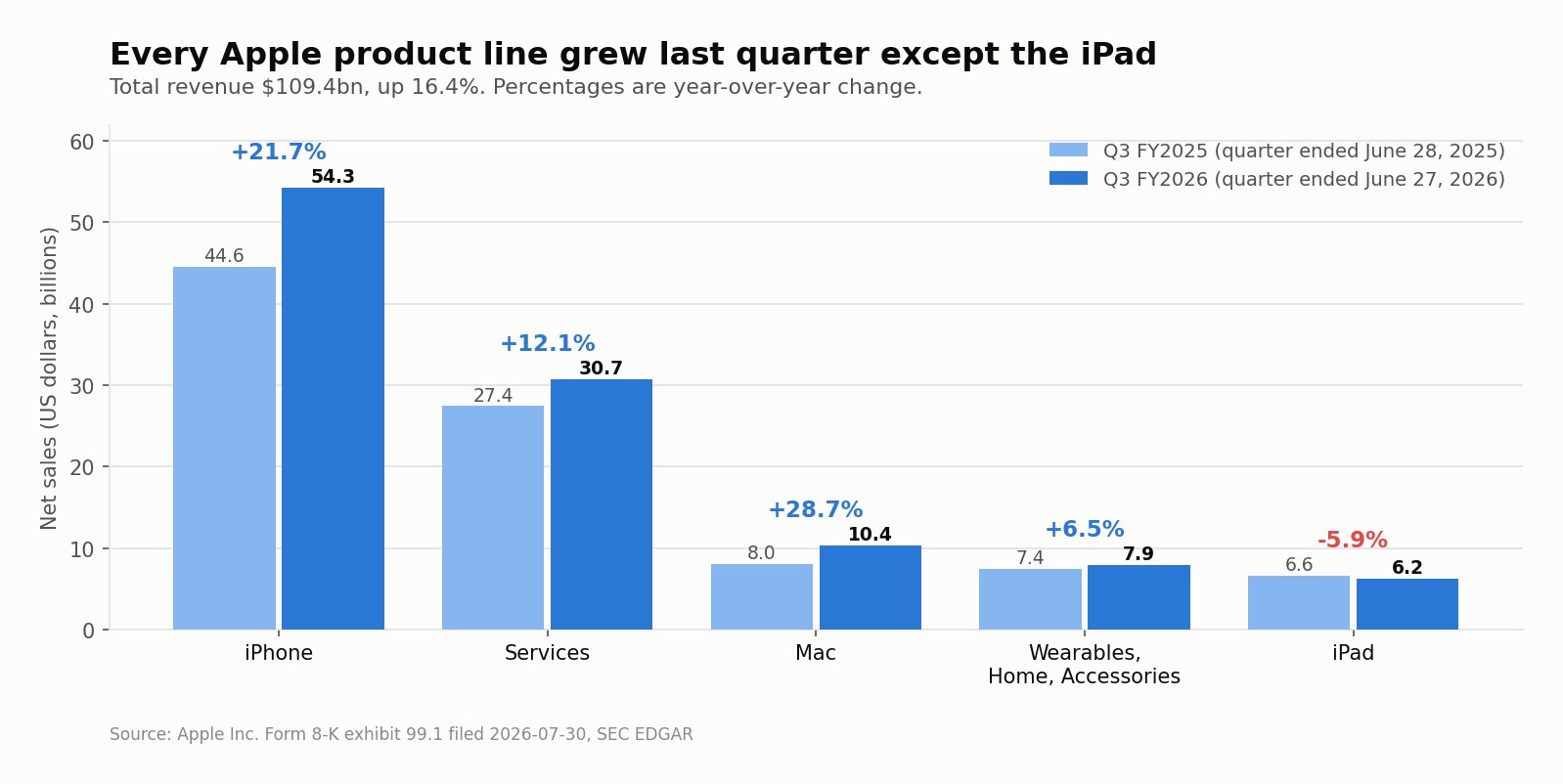
जून तिमाही आखिरी पूरी तिमाही थी जिसे कुक ने मुख्य कार्यकारी अधिकारी के रूप में प्रस्तुत किया। iPad को छोड़कर हर उत्पाद श्रेणी बढ़ी, और ग्रेटर चाइना — जो वर्षों तक Apple के भौगोलिक नक्शे की सबसे कमज़ोर कड़ी रहा — 22.4% बढ़कर 18.82 अरब डॉलर पर पहुँच गया।
| श्रेणी | वित्त वर्ष 2025 की तीसरी तिमाही | वित्त वर्ष 2026 की तीसरी तिमाही | बदलाव |
|---|---|---|---|
| iPhone | 44.58 अरब डॉलर | 54.25 अरब डॉलर | +21.7% |
| सेवाएँ | 27.42 अरब डॉलर | 30.74 अरब डॉलर | +12.1% |
| Mac | 8.05 अरब डॉलर | 10.35 अरब डॉलर | +28.7% |
| पहनने योग्य उपकरण, घरेलू उत्पाद और सहायक सामग्री | 7.40 अरब डॉलर | 7.88 अरब डॉलर | +6.5% |
| iPad | 6.58 अरब डॉलर | 6.19 अरब डॉलर | −5.9% |
| कुल शुद्ध बिक्री | 94.04 अरब डॉलर | 109.42 अरब डॉलर | +16.4% |
वित्त वर्ष 2026 के पहले नौ महीनों में Apple ने 117.00 अरब डॉलर का परिचालन नकदी प्रवाह अर्जित किया, संपत्ति एवं उपकरणों पर 6.80 अरब डॉलर खर्च किए, 62.09 अरब डॉलर के शेयर वापस खरीदे और 11.78 अरब डॉलर लाभांश बाँटा। नकदी और विपणन योग्य प्रतिभूतियाँ 146.52 अरब डॉलर थीं, जबकि ब्याज वाला कर्ज़ 84.34 अरब डॉलर — यानी लगभग 62 अरब डॉलर की शुद्ध नकदी। यही वह बैलेंस शीट है जो टर्नस को मिली है, और यही वजह है कि Apple में AI का सवाल खर्च उठा पाने का नहीं, बल्कि पूँजी के बँटवारे का है।
जॉन टर्नस के पहले पांच रणनीतिक परीक्षण
1. Siri AI को विश्वसनीयता से वितरित करें
टर्नस को यह सुनिश्चित करना चाहिए कि Siri AI रोलआउट समर्थित उपकरणों और भाषाओं में काम करता है। Apple एक और अत्यधिक प्रचारित देरी का खर्च नहीं उठा सकता।
2. मॉडल रणनीति को स्पष्ट करें
निवेशकों को यह समझने की आवश्यकता है कि क्या Apple आंतरिक रूप से बड़े मॉडल बनाने का इरादा रखता है, भागीदारी पर निर्भर है, AI कंपनियों का अधिग्रहण करता है या एक हाइब्रिड दृष्टिकोण अपनाता है।
3. Apple सिलिकॉन को AI प्लेटफॉर्म में बदलें
Apple के चिप्स पहले से ही डिवाइस पर इनफेरेंस के लिए मजबूत हैं। टर्नस इसे और आगे बढ़ा सकता है, AI प्रदर्शन को आईफोन, मैक और भविष्य के उत्पादों के लिए एक केंद्रीय बिक्री बिंदु बनाकर।
4. एक नई AI-नेटिव डिवाइस श्रेणी बनाएं
अगला प्रमुख Apple उत्पाद एक और पारंपरिक आईफोन नहीं हो सकता। स्मार्ट चश्मे, AI ईयरबड्स, घरेलू रोबोट, स्वास्थ्य उपकरण या एक पुनः डिज़ाइन किया गया घरेलू हब महत्वपूर्ण विकास के रास्ते बन सकते हैं।
5. डेवलपर अर्थशास्त्र में सुधार करें
Apple इंटेलिजेंस अधिक मूल्यवान होगा यदि डेवलपर्स आसानी से एप्लिकेशन में AI सुविधाएँ बना सकें। कंपनी को स्पष्ट एपीआई, मजबूत मॉडल प्रदर्शन और आकर्षक आर्थिक प्रोत्साहन प्रदान करने चाहिए, जबकि ऐप स्टोर नीति चिंताओं का प्रबंधन करना चाहिए।
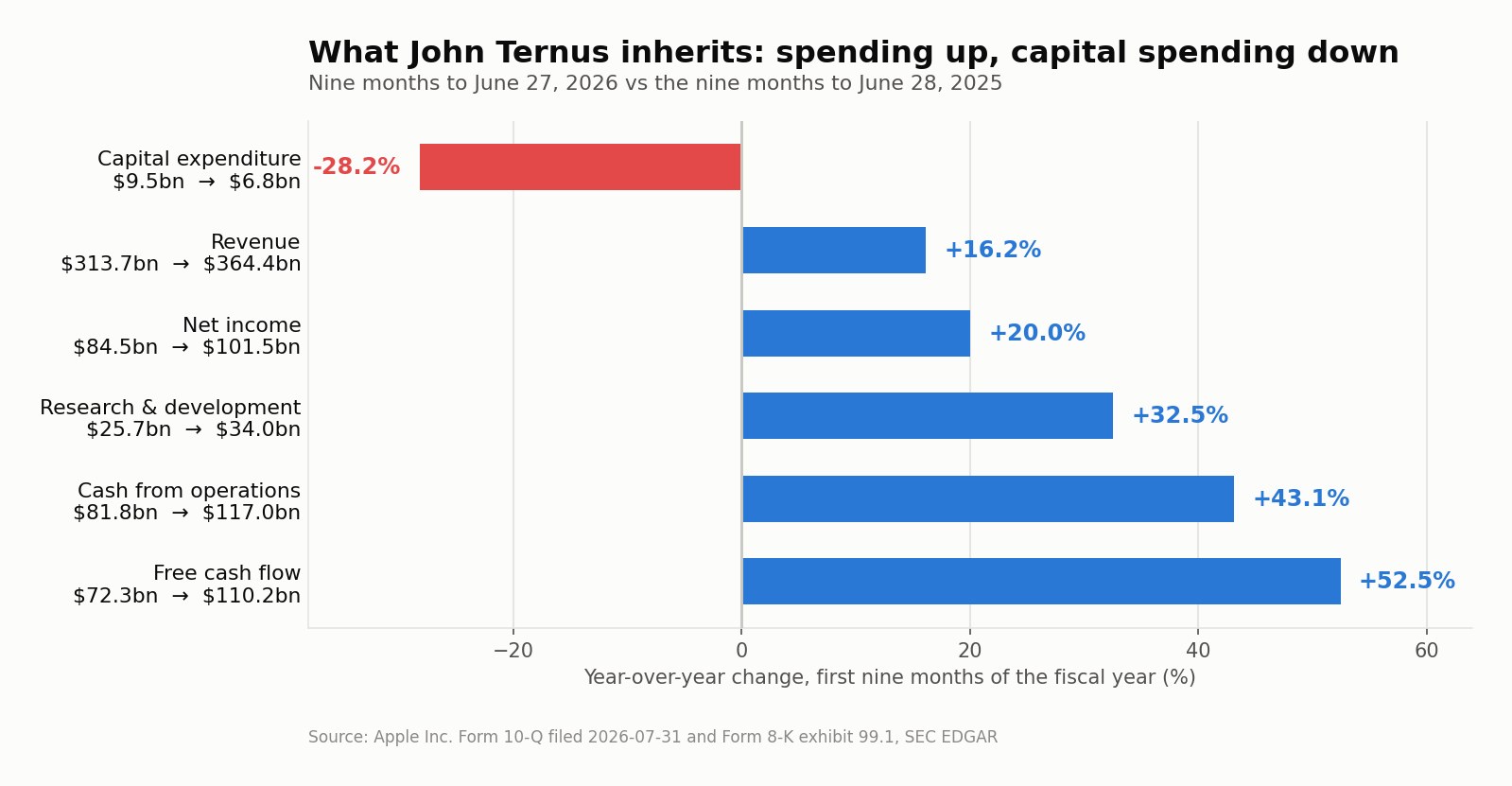
टर्नस उलटफेर: शोध खर्च ऊपर, पूँजीगत खर्च नीचे
Apple की AI रणनीति समझने का सबसे भरोसेमंद तरीका उसके लॉन्च कार्यक्रम नहीं, बल्कि उसका नकदी प्रवाह विवरण है — और वहाँ जो तस्वीर उभरती है वह बाकी हर बड़ी AI कहानी के ठीक उलट है।
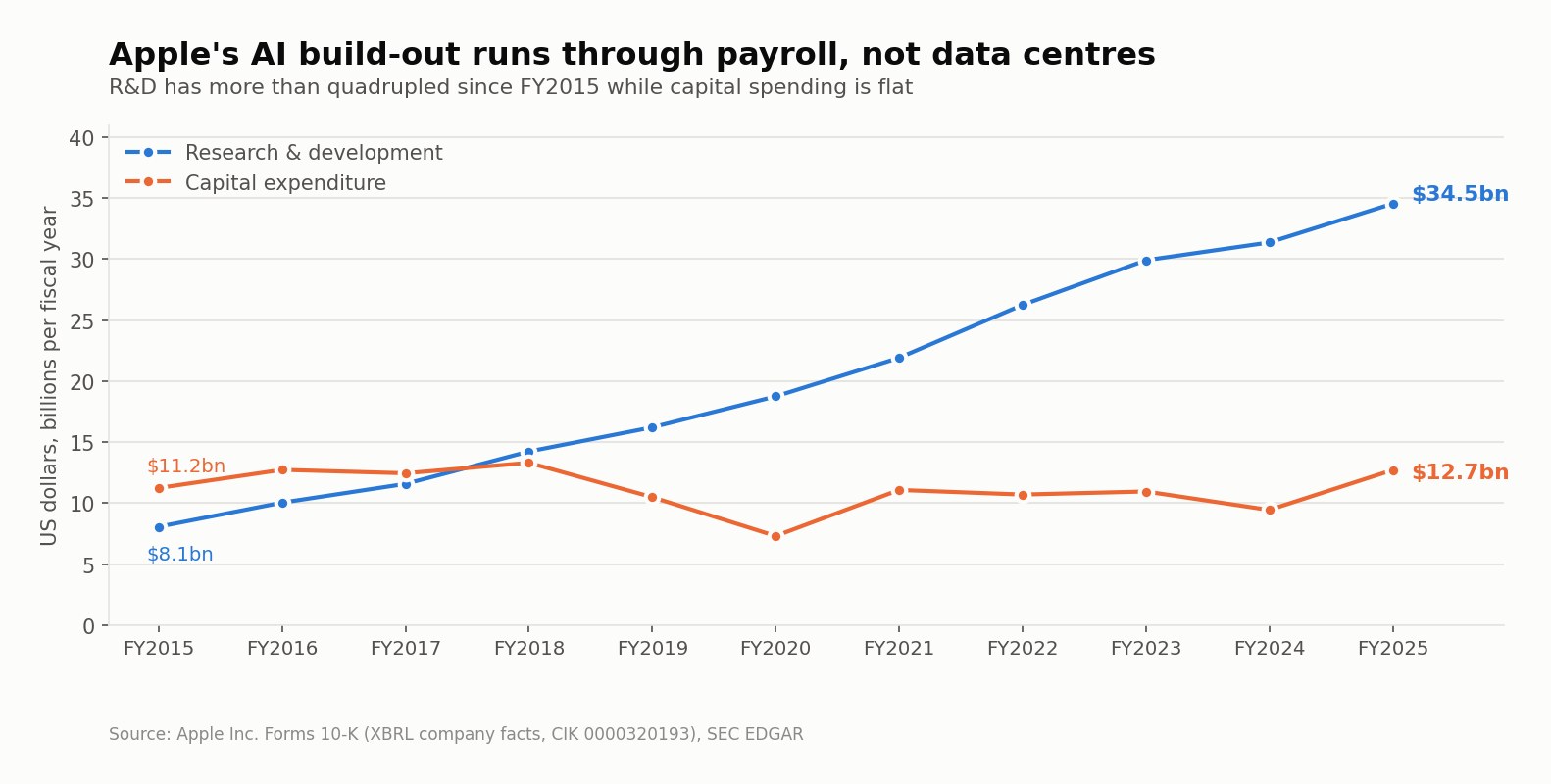
वित्त वर्ष 2026 के पहले नौ महीनों में Apple ने शोध एवं विकास पर 34.04 अरब डॉलर खर्च किए, जो एक साल पहले के 25.68 अरब डॉलर से 32.5% अधिक है। नौ महीने का यह आँकड़ा पूरे वित्त वर्ष 2025 के 34.55 अरब डॉलर के शोध खर्च से आधा अरब डॉलर से भी कम पीछे है। इन्हीं नौ महीनों में संपत्ति एवं उपकरणों की खरीद पर भुगतान 28.2% घटकर 9.47 अरब डॉलर से 6.80 अरब डॉलर रह गया।
| वित्त वर्ष के पहले नौ महीने | 2025 | 2026 | बदलाव |
|---|---|---|---|
| राजस्व | 313.70 अरब डॉलर | 364.36 अरब डॉलर | +16.2% |
| शुद्ध लाभ | 84.54 अरब डॉलर | 101.46 अरब डॉलर | +20.0% |
| शोध एवं विकास | 25.68 अरब डॉलर | 34.04 अरब डॉलर | +32.5% |
| पूँजीगत व्यय | 9.47 अरब डॉलर | 6.80 अरब डॉलर | −28.2% |
| परिचालन से नकदी प्रवाह | 81.75 अरब डॉलर | 117.00 अरब डॉलर | +43.1% |
| मुक्त नकदी प्रवाह | 72.28 अरब डॉलर | 110.20 अरब डॉलर | +52.5% |
इसे टर्नस उलटफेर कहा जा सकता है: Apple कृत्रिम बुद्धिमत्ता का विस्तार वेतन और चिप डिज़ाइन के रास्ते कर रही है, कंक्रीट, ज़मीन और बिजली अनुबंधों के रास्ते नहीं। वित्त वर्ष 2015 के बाद से शोध खर्च चार गुना से अधिक बढ़ा है, जबकि पूँजीगत व्यय एक दशक से 7 से 13 अरब डॉलर के दायरे में ही टिका है।
Apple और उसके प्रतिस्पर्धियों के बीच यही सबसे तीखा अंतर है, और ऊपर दी गई तालिका इसे पूरी तरह नहीं दिखा पाती। Amazon की AI कहानी दरअसल सैकड़ों अरब डॉलर के पूँजीगत खर्च की कहानी है; Microsoft में Azure के मार्जिन का सवाल और Alphabet का अपने पूँजीगत खर्च का बचाव दोनों एक ही बहस हैं कि कोई क्लाउड कारोबार कितना मूल्यह्रास सह सकता है। और Meta ने अपनी मौजूदा ज़रूरत से ज़्यादा कंप्यूट क्षमता बना ली है। Apple के पास इसके बराबर कोई मद ही नहीं है, क्योंकि वह किसी को क्लाउड क्षमता बेचती ही नहीं।
यह उलटफेर दोनों तरफ काटता है। इसने Apple के मार्जिन और मुक्त नकदी प्रवाह को असाधारण स्तर पर बनाए रखा है — 50.1% सकल मार्जिन और नौ महीनों में 110.20 अरब डॉलर की मुक्त नकदी किसी सचमुच संकटग्रस्त कंपनी के आँकड़े नहीं होते। लेकिन इसका मतलब यह भी है कि अग्रिम पंक्ति के मॉडल प्रशिक्षित करने की अपनी क्षमता Apple के पास प्रतिद्वंद्वियों से कहीं कम है, और यही कारण है कि साझेदारी और लाइसेंस के सवाल Siri से चिपके रहते हैं। टर्नस को हाइपरस्केलर कंपनियों से ज़्यादा खर्च करने की ज़रूरत नहीं है। उन्हें यह साबित करना है कि डेटा सेंटर के बजाय इंजीनियर खरीदने वाली कंपनी भी अग्रिम पंक्ति की बुद्धिमत्ता दे सकती है — और यह कि नीचे लगे चिप बनाने वाली TSMC पर निर्भरता बेड़ी नहीं, ताकत बनी हुई है।
Apple के निदेशक मंडल ने असल में किस चीज़ का भुगतान किया
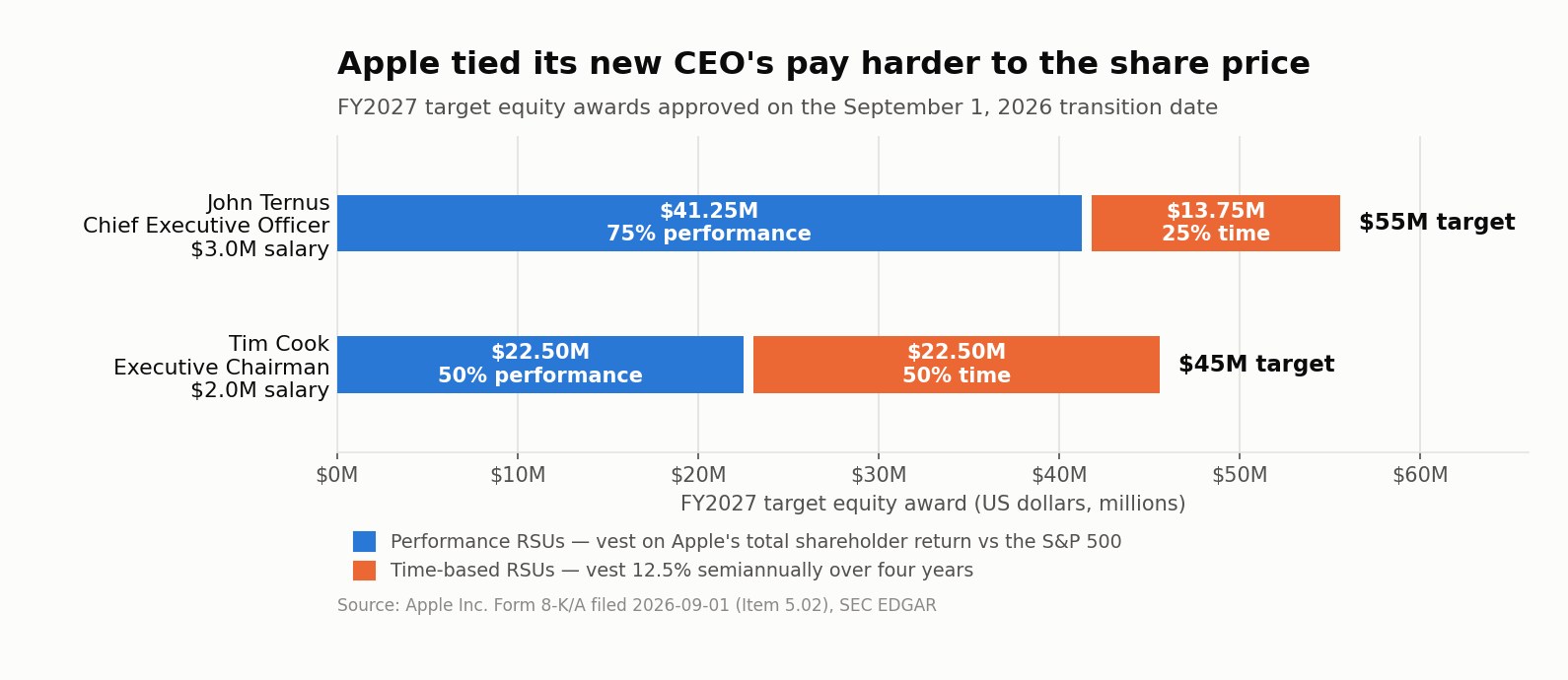
कार्यकारी वेतन-भत्ता वह सबसे ठोस संकेत है जो कोई निदेशक मंडल भेज सकता है, और Apple ने ब्यौरा ठीक उसी दिन सार्वजनिक किया जिस दिन कमान बदली। 1 सितंबर 2026 को अमेरिकी प्रतिभूति एवं विनिमय आयोग में दाखिल फ़ॉर्म 8-K/A में दोनों की नई शर्तें दर्ज हैं।
टर्नस का वेतन बढ़ाकर 30 लाख डॉलर कर दिया गया। वेतन समिति ने वित्त वर्ष 2026 में उनके मुख्य कार्यकारी अधिकारी के रूप में काम की अवधि के अनुपात में प्रतिबंधित स्टॉक इकाइयाँ दीं, जिनका लक्ष्य मूल्य 25 लाख डॉलर है, और वित्त वर्ष 2027 में दिए जाने वाले 5.5 करोड़ डॉलर लक्ष्य मूल्य के वार्षिक इक्विटी पुरस्कार को मंज़ूरी दी। इसमें 75% प्रदर्शन-आधारित इकाइयाँ हैं, जो S&P 500 की बाकी कंपनियों की तुलना में Apple के कुल शेयरधारक प्रतिफल के आधार पर निहित होती हैं; बाकी 25% समय के आधार पर, चार साल में हर छमाही 12.5% की दर से निहित होती हैं।
कार्यकारी अध्यक्ष के रूप में कुक की शर्तें हैं: 26 सितंबर 2026 से 20 लाख डॉलर वार्षिक वेतन और वित्त वर्ष 2027 के लिए 4.5 करोड़ डॉलर लक्ष्य मूल्य का इक्विटी पुरस्कार — जिसमें प्रदर्शन-आधारित और समय-आधारित हिस्से बराबर-बराबर हैं।
| जॉन टर्नस (मुख्य कार्यकारी अधिकारी) | टिम कुक (कार्यकारी अध्यक्ष) | |
|---|---|---|
| वार्षिक वेतन | 30 लाख डॉलर | 20 लाख डॉलर |
| वित्त वर्ष 2026 की आनुपातिक स्टॉक इकाइयाँ | लक्ष्य 25 लाख डॉलर | — |
| वित्त वर्ष 2027 इक्विटी पुरस्कार का लक्ष्य मूल्य | 5.5 करोड़ डॉलर | 4.5 करोड़ डॉलर |
| प्रदर्शन-आधारित हिस्सा | 75% | 50% |
| समय-आधारित हिस्सा | 25% | 50% |
| प्रदर्शन का पैमाना | S&P 500 के मुकाबले शेयरधारक प्रतिफल | S&P 500 के मुकाबले शेयरधारक प्रतिफल |
असल बात यही असमानता है। Apple के निदेशक मंडल ने नए मुख्य कार्यकारी अधिकारी के इक्विटी पुरस्कार का तीन-चौथाई हिस्सा इस बात से बाँधा है कि Apple का शेयर S&P 500 की बाकी कंपनियों के मुकाबले कैसा प्रदर्शन करता है — जबकि विदा हो रहे मुखिया के लिए यह आधा ही था। कुल शेयरधारक प्रतिफल वही पैमाना है जिसे वेतन के साथ मिलाकर बताना अमेरिकी नियामक अनिवार्य करता है, और Apple वर्षों से इसे प्रदर्शन मानक के रूप में इस्तेमाल करती आई है; इसकी प्रक्रिया कंपनी के वार्षिक प्रॉक्सी विवरण में दर्ज है।
निवेशक के लिए यह ढाँचा एक पढ़ी जा सकने वाली प्रतिबद्धता है। यह बताता है कि निदेशक मंडल टर्नस को राजस्व के पड़ावों या उत्पाद लॉन्च की गिनती से नहीं, बल्कि तुलनात्मक बाज़ार प्रदर्शन से आँकना चाहता है; और यह भी कि अगर Apple बस सूचकांक के बराबर चलती रही जबकि प्रतिद्वंद्वी AI में तेज़ी से आगे बढ़ते रहे, तो उनका अपना नतीजा सबसे खराब होगा। यह नहीं बताता कि Siri काम करेगी या नहीं। यह ज़रूर बताता है कि Apple के निदेशक जोखिम कहाँ देख रहे हैं।
Apple की AI वापसी के लिए जोखिम
नेतृत्व परिवर्तन Apple के संरचनात्मक जोखिमों को समाप्त नहीं करता है।
संगठनात्मक जटिलता
Apple की कार्यात्मक संरचना गुणवत्ता की रक्षा कर सकती है लेकिन निर्णय लेने की प्रक्रिया को भी धीमा कर सकती है। AI विकास के लिए तेज़ प्रयोग, बार-बार मॉडल अपडेट और विफलता के लिए सहिष्णुता की आवश्यकता होती है।
प्रतिभा प्रतिस्पर्धा
AI शोधकर्ताओं और इंजीनियरों की भर्ती OpenAI, Anthropic, Google, Meta और वेंचर-फंडेड स्टार्टअप आक्रामक रूप से कर रहे हैं। Apple को आकर्षक मुआवजा, शोध स्वतंत्रता और एक स्पष्ट तकनीकी मिशन प्रदान करना चाहिए।
बाहरी मॉडलों पर निर्भरता
यदि Apple किसी अन्य कंपनी के मॉडल पर बहुत अधिक निर्भर करता है, तो यह रणनीतिक नियंत्रण खो सकता है और अप्रत्याशित लागत या उत्पाद सीमाओं का सामना कर सकता है।
गोपनीयता प्रतिबंध
गोपनीयता एक प्रतिस्पर्धात्मक लाभ है, लेकिन कठोर डेटा नियंत्रण प्रशिक्षण डेटा और व्यक्तिगतकरण को सीमित कर सकते हैं। Apple को उपयोगकर्ता विश्वास को कमजोर किए बिना संदर्भ जागरूकता में सुधार करने के तरीके खोजने चाहिए।
नियमन
डिजिटल मार्केट्स एक्ट और अन्य नियम इंटरऑपरेबिलिटी, डिफ़ॉल्ट सहायक, ऐप वितरण और डेटा उपयोग को प्रभावित कर सकते हैं। Apple ने पहले ही यूरोपीय संघ में कुछ AI सुविधाओं को स्थगित कर दिया है, नियामक अनिश्चितता का हवाला देते हुए, जबकि यूरोपीय अधिकारियों ने विवाद किया कि क्या डीएमए ने रोलआउट को रोका। यूरोपीय संघ में Siri AI विवाद पर एपी रिपोर्ट
हार्डवेयर निर्भरता
यहां तक कि एक सफल AI रणनीति तुरंत एक नई राजस्व धारा उत्पन्न नहीं कर सकती है। Apple अभी भी आईफोन बिक्री पर भारी निर्भर है, और AI सुविधाओं को अपग्रेड या पारिस्थितिकी तंत्र की भागीदारी में बदलना चाहिए।
Apple स्टॉक के लिए संक्रमण का क्या अर्थ है?
Apple के पैमाने वाली कंपनी में नेतृत्व परिवर्तन मूल्यांकन को प्रभावित कर सकता है, भले ही निकट-अवधि की कमाई स्थिर रहे।
बाजार प्रारंभ में निरंतरता को पुरस्कृत कर सकता है। टर्नस एक अंदरूनी व्यक्ति है, Apple की संस्कृति को समझता है और पारिस्थितिकी तंत्र को अनावश्यक रूप से बाधित करने का कोई जनादेश नहीं है। उनकी नियुक्ति अचानक रणनीतिक टूटने के जोखिम को कम करती है।
साथ ही, निवेशक यह प्रमाण मांग सकते हैं कि Apple AI में अधिक प्रतिस्पर्धी बन रहा है। एक सफल Siri AI रिलीज, मजबूत डेवलपर अपनाना या एक विश्वसनीय AI हार्डवेयर रोडमैप Apple के मूल्यांकन को बढ़ा सकता है।
एक निराशाजनक रोलआउट का विपरीत प्रभाव हो सकता है। यदि AI सुविधाएं सीमित, प्रमुख बाजारों में अनुपलब्ध या बाहरी प्रदाताओं पर निर्भर रहती हैं, तो निवेशक यह निष्कर्ष निकाल सकते हैं कि Apple की सेवाएं और हार्डवेयर व्यवसाय परिपक्व हैं न कि संरचनात्मक रूप से बढ़ते हुए।
एक उपयोगी परिदृश्य ढांचा है:
| परिदृश्य | AI परिणाम | व्यावसायिक प्रभाव | बाजार प्रतिक्रिया |
|---|---|---|---|
| मंदी का परिदृश्य | Siri AI निराश करता है और Apple भागीदारों पर निर्भर रहता है | धीमे अपग्रेड और कमजोर नवाचार धारणा | मल्टीपल संकुचन |
| आधार परिदृश्य | Siri धीरे-धीरे सुधारता है और AI पारिस्थितिकी तंत्र की स्थिरता का समर्थन करता है | स्थिर आईफोन और सेवाओं की वृद्धि | मूल्यांकन व्यापक रूप से स्थिर |
| तेजी का परिदृश्य | Apple उपयोगी एजेंट प्रदान करता है और AI-नैटिव उपकरण लॉन्च करता है | नया अपग्रेड चक्र और उच्च सेवा सहभागिता | प्रीमियम वृद्धि गुणांक |
निवेशकों को सुर्खियों पर निर्भर रहने के बजाय परिचालन साक्ष्यों पर नज़र रखनी चाहिए। प्रमुख संकेतकों में आईफोन अपग्रेड दरें, सेवाओं की वृद्धि, AI फीचर सहभागिता, डेवलपर अपनाना, सकल-मार्जिन प्रवृत्तियाँ और अनुसंधान एवं विकास व्यय शामिल हैं।
SimianX AI निवेशकों को इन संकेतों की निगरानी करने में मदद कर सकता है, वित्तीय विवरण विश्लेषण, तकनीकी संकेतकों, वास्तविक समय की समाचार और भावना दृष्टिकोण को मिलाकर। इसका मल्टी-एजेंट प्लेटफॉर्म विभिन्न विश्लेषणात्मक दृष्टिकोण प्रदान करने के लिए डिज़ाइन किया गया है, लेकिन इसे एक शोध सहायता के रूप में माना जाना चाहिए—व्यावसायिक वित्तीय सलाह के विकल्प के रूप में नहीं। SimianX AI का अन्वेषण करें
निवेशकों को जॉन टर्नस का मूल्यांकन कैसे करना चाहिए?
एक नए सीईओ का पहला वर्ष केवल स्टॉक-कीमत प्रदर्शन के आधार पर नहीं आंका जाना चाहिए। Apple के उत्पाद चक्र, आपूर्ति श्रृंखला प्रतिबद्धताएँ और सॉफ़्टवेयर विकास समयरेखा कई वर्षों में फैली होती हैं।
एक अधिक संतुलित मूल्यांकन ढांचा पूछता है:
- क्या टर्नस ने AI निष्पादन गति में सुधार किया?
- क्या Apple ने समय पर वादे किए गए फीचर्स प्रदान किए?
- क्या AI ने उपकरण सहभागिता बढ़ाई?
- क्या डेवलपर्स ने Apple के बुद्धिमत्ता ढांचे को अपनाया?
- क्या Apple ने व्यक्तिगतकरण में सुधार करते हुए गोपनीयता को बनाए रखा?
- क्या कंपनी ने एक विश्वसनीय नए उत्पाद श्रेणी का परिचय दिया?
- क्या निवेश बढ़ने के साथ-साथ मार्जिन स्वस्थ रहे?
- क्या टर्नस ने एक स्पष्ट दीर्घकालिक रणनीति का संचार किया?
टर्नस को स्टीव जॉब्स या टिम कुक की नकल करने की आवश्यकता नहीं है। उनका काम AI-चालित प्रौद्योगिकी उद्योग के लिए उपयुक्त नेतृत्व मॉडल बनाना है।
यह अधिक खुलापन, तेज अधिग्रहण, अधिक शोध व्यय और हर विशेषता के पूर्ण होने से पहले उत्पाद लॉन्च करने की इच्छा की आवश्यकता हो सकती है। फिर भी, Apple को उन गुणों को बनाए रखना चाहिए जो इसे सफल बनाते हैं: एकीकृत डिज़ाइन, विश्वसनीयता, गोपनीयता, आपूर्ति श्रृंखला उत्कृष्टता और अनुशासित निष्पादन।
टिम कुक की विदाई और जॉन टर्नस से जुड़े आम सवाल
टिम कुक ने Apple के मुख्य कार्यकारी अधिकारी का पद क्यों छोड़ा?
Apple ने घोषणा की कि कुक कार्यकारी अध्यक्ष बनेंगे और जॉन टर्नस 1 सितंबर, 2026 को सीईओ बनेंगे। कुक Apple के साथ जुड़े रहते हैं, लेकिन टर्नस अब दिन-प्रतिदिन के नेतृत्व के लिए जिम्मेदार हैं।
जॉन टर्नस कौन हैं और उनके पास क्या अनुभव है?
जॉन टर्नस पच्चीस साल से Apple में हैं और पहले हार्डवेयर इंजीनियरिंग के वरिष्ठ उपाध्यक्ष थे। उन्होंने प्रमुख Apple उत्पादों के लिए जिम्मेदार टीमों का नेतृत्व किया और Apple सिलिकॉन में संक्रमण में महत्वपूर्ण भूमिका निभाई।
क्या जॉन टर्नस Apple की AI वापसी का नेतृत्व कर सकते हैं?
टर्नस के पास हार्डवेयर, सिलिकॉन और उत्पाद एकीकरण में मजबूत विशेषज्ञता है, जो Apple की AI रणनीति के लिए महत्वपूर्ण हैं। उन्हें अभी भी सॉफ्टवेयर निष्पादन, AI प्रतिभा बनाए रखना, मॉडल साझेदारियों और डेवलपर अपनाने को मजबूत करने की आवश्यकता होगी।
Apple की विलंबित Siri AI सुविधाओं का क्या हुआ?
Apple ने उन्नत Siri क्षमताओं में देरी की और बाद में सहायक को एक नए फाउंडेशन-मॉडल आर्किटेक्चर के चारों ओर पुनर्निर्मित किया। WWDC26 में, Apple ने Apple इंटेलिजेंस की अगली पीढ़ी के हिस्से के रूप में Siri AI पेश किया, हालांकि उपलब्धता डिवाइस और क्षेत्र के अनुसार भिन्न होती है।
क्या टिम कुक के संक्रमण के बाद Apple का स्टॉक खरीदने लायक है?
उत्तर मूल्यांकन, जोखिम सहिष्णुता और Apple के AI निष्पादन में विश्वास पर निर्भर करता है। निवेशकों को निर्णय लेने से पहले Siri AI अपनाने, आईफोन अपग्रेड प्रवृत्तियों, सेवाओं की वृद्धि, अनुसंधान और विकास व्यय, मार्जिन और AI-नेटिव हार्डवेयर की दिशा में प्रगति की निगरानी करनी चाहिए।
निष्कर्ष
टिम कुक का प्रस्थान कॉर्पोरेट इतिहास के सबसे सफल सीईओ युगों में से एक के अंत को चिह्नित करता है। वह Apple को एक शक्तिशाली पारिस्थितिकी तंत्र, असाधारण नकद उत्पादन, मजबूत मार्जिन और एक वैश्विक ग्राहक आधार के साथ छोड़ते हैं। लेकिन अगले दशक की परिभाषा आपूर्ति-श्रृंखला दक्षता से कम और कृत्रिम बुद्धिमत्ता से अधिक होगी।
जॉन टर्नस एक तार्किक उत्तराधिकारी हैं क्योंकि Apple का AI अवसर मूल रूप से एक उत्पाद-एकीकरण चुनौती है। कंपनी को उपकरणों, ऑपरेटिंग सिस्टम और सेवाओं के अंदर सक्षम बुद्धिमत्ता को स्थापित करना होगा जबकि गोपनीयता, बैटरी जीवन, विश्वसनीयता और डिज़ाइन गुणवत्ता को बनाए रखते हुए।
उनकी संभावनाएँ निष्पादन पर निर्भर करेंगी। यदि Siri AI वास्तव में उपयोगी बन जाती है, Apple इंटेलिजेंस डेवलपर का ध्यान आकर्षित करता है और नए AI-नेटिव उपकरण उभरते हैं, तो टर्नस Apple की वर्तमान कमजोरी को एक प्रमुख रणनीतिक लाभ में बदल सकते हैं। यदि देरी जारी रहती है और Apple बाहरी मॉडलों पर निर्भर रहता है, तो कंपनी निवेशकों को यह समझाने में संघर्ष कर सकती है कि वह AI युग को आकार दे रही है न कि इसके प्रति प्रतिक्रिया कर रही है।
सबसे उचित निष्कर्ष न तो बिना शर्त आशावाद है और न ही तात्कालिक निराशावाद। जॉन टर्नस के पास Apple AI वापसी का नेतृत्व करने के लिए तकनीकी और उत्पाद पृष्ठभूमि है, लेकिन उन्हें यह साबित करना होगा कि Apple बिना उस अनुशासन को खोए तेजी से आगे बढ़ सकता है जिसने इसे सफल बनाया।
निवेशक SimianX AI का उपयोग Apple की फाइलिंग, आय, बाजार की भावना और तकनीकी प्रवृत्तियों को ट्रैक करने के लिए कर सकते हैं क्योंकि संक्रमण विकसित होता है। किसी भी निवेश अनुसंधान प्लेटफॉर्म की तरह, उपयोगकर्ताओं को महत्वपूर्ण तथ्यों को स्वतंत्र रूप से सत्यापित करना चाहिए और निवेश निर्णय लेने से पहले एक योग्य वित्तीय सलाहकार से परामर्श करना चाहिए।
संबंधित लेख
- एप्पल Q3 2026 नतीजे: क्या वृद्धि AI देरी की भरपाई करेगी?
- Microsoft Q4 नतीजे 2026: Azure ग्रोथ बनाम AI कैपेक्स जोखिम
- Alphabet Q2 नतीजे 2026: क्या Gemini, Cloud capex सही ठहराएँगे?
- Amazon Q2 आय 2026: क्या AWS ग्रोथ $200B AI कैपेक्स सही ठहराएगी?
- Meta कंप्यूट 2026: क्या अतिरिक्त एआई क्षमता राजस्व बढ़ा सकती है?
- TSMC स्टॉक 2026: वह चिप फाउंड्री जिसे Nvidia बदल नहीं सकता
- Nvidia Hugging Face सौदा 2026: राजस्व से 86 गुना ऊंचा दाम
- क्या जेनसन हुआंग एआई बबल फुला रहे हैं? एनवीडिया की पड़ताल
- MongoDB शेयर 18% क्यों गिरा: CEO का Meta जाना और 7 बड़ी गिरावटें
संदर्भ
- Apple Inc., फ़ॉर्म 8-K, 20 अप्रैल 2026 — मुख्य कार्यकारी अधिकारी उत्तराधिकार योजना (मद 5.02)
- Apple Inc., फ़ॉर्म 8-K/A, 1 सितंबर 2026 — मुख्य कार्यकारी अधिकारी और कार्यकारी अध्यक्ष का वेतन-भत्ता
- Apple Inc., फ़ॉर्म 8-K संलग्नक 99.1, 30 जुलाई 2026 — वित्त वर्ष 2026 की तीसरी तिमाही के नतीजे
- Apple Inc., फ़ॉर्म 10-K वार्षिक रिपोर्टें — SEC EDGAR
- Apple Inc., 2026 प्रॉक्सी विवरण (फ़ॉर्म DEF 14A) — कार्यकारी वेतन-भत्ता
- अमेरिकी प्रतिभूति एवं विनिमय आयोग — «Pay Versus Performance» अंतिम नियम और कुल शेयरधारक प्रतिफल
- Apple न्यूज़रूम — टिम कुक कार्यकारी अध्यक्ष बनेंगे, जॉन टर्नस मुख्य कार्यकारी अधिकारी
- Apple न्यूज़रूम — WWDC26 में Apple Intelligence और Siri AI की नई पीढ़ी
- Apple न्यूज़रूम — वित्त वर्ष 2026 की तीसरी तिमाही के नतीजे
- Apple नेतृत्व — जॉन टर्नस
- Apple Machine Learning Research — Apple के बुनियादी मॉडल
- Associated Press — Siri AI की उपलब्धता को लेकर यूरोपीय संघ का विवाद
- यूरोपीय आयोग — डिजिटल मार्केट्स एक्ट
- SimianX — AAPL शेयर विश्लेषण
- SimianX — AI लाइव कमांड रूम