
Trump, Warsh, at ang Fed meeting sa Hulyo 28-29: ano ba talaga ang nakataya
Pinagsabay ni Pangulong Trump ang hindi pangkaraniwang mainit na papuri sa Chair ng Federal Reserve na si Kevin Warsh at ang kasing-lantad na panawagan na agad magbaba ng interes ang sentral na bangko — isang mahirap na timpla ng suporta at presyon para sa isang chair na siya mismo ang nagnomina.
Magpupulong ang Federal Open Market Committee sa **Hulyo 28-29, 2026**. Ang target range ng federal funds ay nasa 3.50% hanggang 3.75%, hindi nagbabago mula Disyembre 2025 at nanatili nang walang tutol sa unang pulong ni Warsh noong Hunyo.
May dalawang bagay na nagpapahirap basahin ang desisyong ito kumpara sa karaniwang pulong.
Una, ilang linggo pa lamang ang nakalipas nang maging hawkish ang komite. Tulad ng tinalakay sa unang pulong ni Warsh sa Fed, ang dot plot ng Hunyo ay lumipat mula sa pagpapahiwatig ng pagbabawas tungo sa pagpapahiwatig ng pagtaas bago matapos ang 2026 — kaya bumagsak ang stocks noong araw ng kanyang unang press conference kahit hindi nagbago ang interes.
Pangalawa, ang datos ng implasyon ay gumalaw na pabaligtad. Ipinakita ng ulat ng CPI para sa Hulyo na bumagal ang headline inflation sa 3.5% taon-taon, tulong na rin ng malaking pagbaba ng presyo ng gasolina.
Ang pulong na ito ay wala ring bagong Summary of Economic Projections, kaya walang bagong dot plot. Ang pahayag at ang press conference ni Warsh ang magdadala ng buong senyales.
Ang kombinasyong iyan — presyong pulitikal, hawkish na proyeksyon noong Hunyo, mas mahinang headline inflation, at walang bagong tuldok — ang dahilan kung bakit maaaring mas nakasalalay ang reaksyon ng merkado sa kung paano ipapaliwanag ng Fed ang desisyon kaysa sa mismong ginawa nito.
Tinatalakay ng mga sumusunod na bahagi kung ano ang ibig sabihin nito para sa bonds, pautang sa bahay, bangko, konsyumer, AI at teknolohiyang stocks, ang dolyar, at ang pandaigdigang merkado, at nagtatapos sa isang scenario framework at 72-oras na playbook para sa mismong pulong.
Ang Politikal na Presyon ay Maaaring Magbago ng mga Merkado Kahit Walang Pagbawas ng Rate
Hindi kailangang manalo si Trump ng agarang pagbawas ng rate para ang kanyang pampublikong kampanya ay makaapekto sa mga pamilihan sa pananalapi.
Maaaring baguhin ng mga komento ng Pangulo kung paano iniinterpret ng mga mamumuhunan ang hinaharap na reaksyon ng Federal Reserve. Kapag paulit-ulit na sinasabi ni Trump na ang mga rate ay hindi kinakailangang mataas, nagsisimulang magtanong ang mga mangangalakal kung ang politikal na presyon ay maaaring makaapekto sa mga hinaharap na appointment, dinamika ng komite, estratehiya sa komunikasyon, o ang threshold na kinakailangan para sa pagpapagaan.
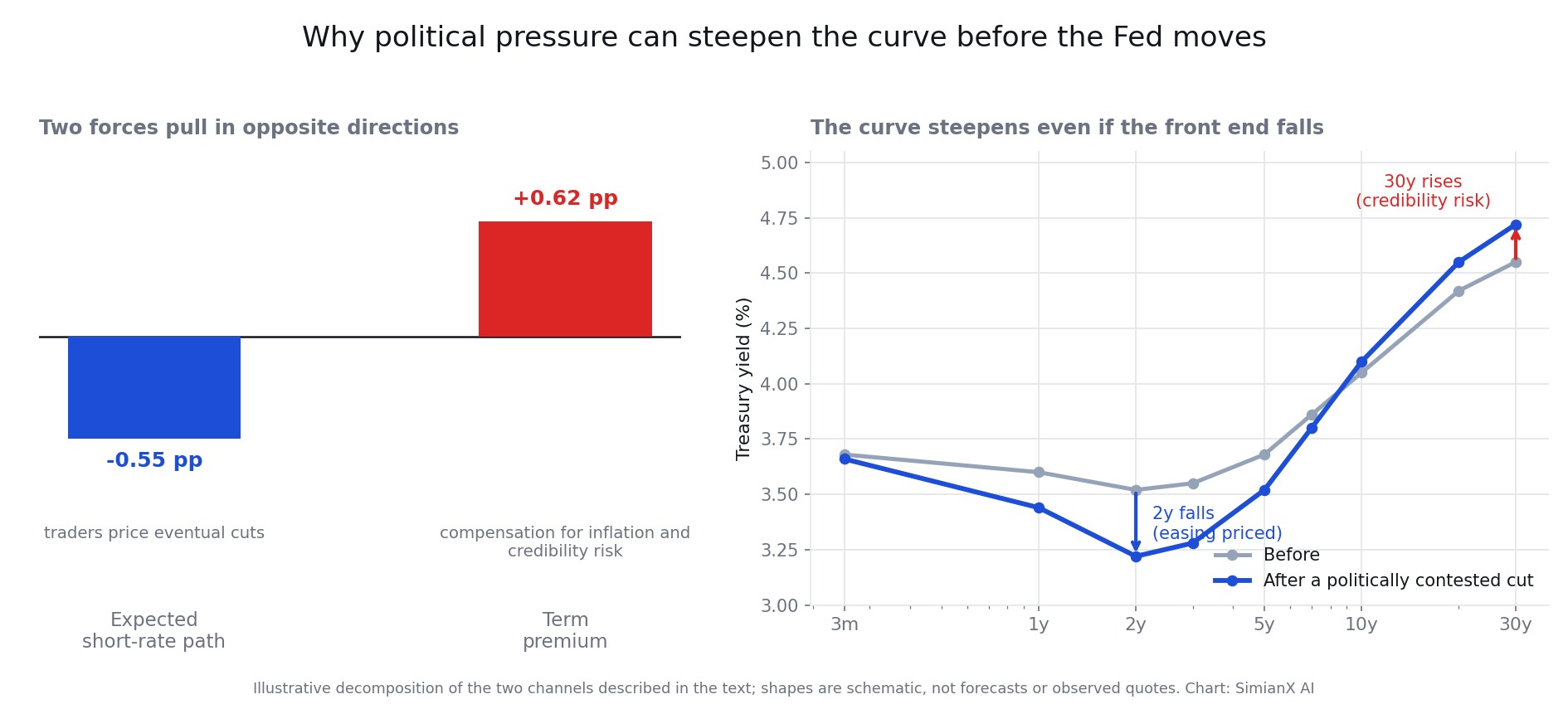
Ang hindi tiyak na ito ay maaaring makaapekto sa term premium—ang karagdagang kabayaran na hinihingi ng mga mamumuhunan para sa paghawak ng mas mahabang termino ng mga bono ng gobyerno sa halip na paulit-ulit na mamuhunan sa mga panandaliang seguridad.
Ang isang politikal na nakikipagtunggaling kapaligiran ng patakaran sa pananalapi ay maaaring magdulot ng dalawang magkasalungat na galaw:
- Ang mga inaasahan para sa mga hinaharap na panandaliang rate ay maaaring bumaba dahil inaasahan ng mga mamumuhunan ang mga darating na pagbawas.
- Ang mga yield sa pangmatagalang termino ay maaaring manatiling mataas dahil hinihingi ng mga mamumuhunan ang proteksyon laban sa implasyon, pagpapalawak ng fiscal, o mahina na kredibilidad ng sentral na bangko.
Ito ang dahilan kung bakit ang kampanya ng presyon ni Trump ay maaaring magpataas ng yield curve kahit bago pa man baguhin ng Fed ang kanyang benchmark rate.
Halimbawa, ang yield ng dalawang taong Treasury ay maaaring bumaba habang ang mga mangangalakal ay nagpepresyo ng mas nakakaaliw na landas ng patakaran, habang ang yield ng sampung taon o tatlumpung taon ay nananatiling matatag o tumataas. Ang ganitong galaw ay magmumungkahi na inaasahan ng mga mamumuhunan ang mas mababang panandaliang rate ngunit hindi gaanong tiwala na ang implasyon ay mananatiling kontrolado sa mahabang panahon.
Ang politikal na presyon ay maaaring gawing mas maamo ang inaasahang landas ng Fed habang sabay na ginagawang mas mapanganib ang mga bono ng mahabang tagal.
Mahalaga ang pagkakaibang ito para sa halos bawat pangunahing klase ng asset.
- Mga stock ng Teknolohiya ay sensitibo sa mga tunay na yield at mga rate ng diskwento.
- Mga Bangko ay naaapektuhan ng slope ng yield curve.
- Mga Bumibili ng Bahay ay higit na umaasa sa mga yield ng pangmatagalang bono kaysa sa federal funds rate.
- Ginto at Bitcoin ay maaaring tumugon sa mga alalahanin tungkol sa kredibilidad ng pera.
- Ang dolyar ng U.S. ay sumasalamin sa parehong pagkakaiba ng mga rate ng interes at tiwala sa mga institusyon ng Amerika.
Dapat iwasan ng mga mamumuhunan ang pagbawas sa desisyon ng Hulyo sa isang simpleng pormula tulad ng pagbawas ng rate = bullish o pagpapanatili ng rate = bearish.
Ang komposisyon ng reaksyon ng merkado ay magbubunyag ng higit pa kaysa sa headline na desisyon lamang.
Bakit ang Pagbawas ng Rate ng Fed ay Hindi Magagarantiya ng Mas Mababang Rate ng Mortgage
Isa sa mga pinakakaraniwang hindi pagkakaintindihan tungkol sa patakaran ng Federal Reserve ay ang ideya na ang isang pagbawas ng rate ay awtomatikong nagdudulot ng pantay na pagbaba sa mga rate ng mortgage.
Direktang kinokontrol ng Fed ang isang saklaw ng rate ng interes sa maikling panahon. Ang mga rate ng mortgage na tatlumpung taon, sa kabaligtaran, ay naaapektuhan ng mas mahabang mga ani ng Treasury, mga securities na nakabatay sa mortgage, mga inaasahan sa implasyon, mga gastos sa pagpopondo ng bangko, panganib sa kredito, at demand ng mamumuhunan.
Maaaring magdulot ang isang pagbawas ng rate sa Hulyo ng pagbaba sa mga gastos sa pangungutang sa maikling panahon nang hindi nagbibigay ng makabuluhang ginhawa sa mga potensyal na bumibili ng bahay.
Isaalang-alang ang tatlong posibleng kinalabasan.
| Aksyon ng Fed | Reaksyon ng sampung taong Treasury | Posibleng epekto sa rate ng mortgage |
|---|---|---|
| Dovish na pagbawas na may mas mababang inaasahan sa implasyon | Bumaba ang ani ng sampung taon | Malamang na bumaba ang mga rate ng mortgage |
| Politikal na kontrobersyal na pagbawas | Tumaas ang ani ng sampung taon | Maaaring manatiling mataas o tumaas ang mga rate ng mortgage |
| Pagbawas na dulot ng resesyon | Malaking bumaba ang ani ng sampung taon | Bumaba ang mga rate ng mortgage, ngunit maaaring manatiling mahina ang demand sa pabahay |
Ang pinaka-kanais-nais na senaryo sa pabahay ay isang pagbawas ng rate na sinasamahan ng nakakumbinsing ebidensya na ang implasyon ay patuloy na bumababa.
Sa ilalim ng senaryong iyon:
- Maaaring bumaba ang mga ani ng Treasury.
- Maaaring makakuha ng mas malakas na demand ang mga securities na nakabatay sa mortgage.
- Maaaring maging mas abot-kaya ang mga buwanang bayad sa pabahay.
- Maaaring makabawi ang aktibidad sa refinancing.
- Maaaring makinabang ang mga tagabuo ng bahay mula sa pinabuting kumpiyansa ng mga mamimili.
Gayunpaman, ang isang pagbawas na tila maaga ay maaaring magkaroon ng kabaligtaran na epekto.
Kung ang mga namumuhunan sa bono ay magpasya na ang Fed ay nagpapagaan bago kontrolin ang implasyon, maaaring tumaas ang mga yield sa pangmatagalang panahon. Ang mga nagpapautang ng mortgage ay magkakaroon ng kaunting dahilan upang bawasan ang mga rate, kahit na ang federal funds rate ay bumaba.
Magiging sanhi ito ng isang hindi komportableng kinalabasan sa politika: Maaaring makuha ni Trump ang pagbawas ng rate na kanyang hiniling habang ang mga sambahayan ay patuloy na humaharap sa mga mahal na mortgage.
Ano ang Dapat Bantayan ng mga Mamumuhunan sa Pabahay?
Ang mga mamumuhunan na nag-evaluate ng mga tagabuo ng bahay, mga real estate investment trusts, mga bangko, o mga kumpanya ng mortgage ay dapat bantayan ang higit pa sa anunsyo ng patakaran ng Fed.
Ang mga pinaka-kapaki-pakinabang na tagapagpahiwatig ay kinabibilangan ng:
- Ang ten-year Treasury yield
- Mga spread ng mortgage-backed securities
- Lingguhang dami ng aplikasyon ng mortgage
- Mga rate ng pagkansela ng tagabuo ng bahay
- Imbentaryo ng pabahay
- Kakayahang bumili ng umiiral na bahay
- Mga pamantayan sa pagpapautang ng bangko
- Mga inaasahan ng mamimili para sa mga rate ng mortgage
Ang isang tunay na pagpapabuti sa patakaran sa pabahay ay nangangailangan ng mas mababang mga gastos sa pangmatagalang financing, hindi lamang isang mas mababang overnight rate.
Paano Maaaring Makaapekto ang Pagbawas ng Rate sa Hulyo sa mga Bangko at Kondisyon ng Kredito
Ang mga bangko ay nahaharap sa isang mas kumplikadong relasyon sa mga rate ng interes kaysa sa inaasahan ng maraming mamumuhunan.
Ang mas mataas na mga rate ay maaaring suportahan ang kita sa pagpapautang, ngunit maaari rin itong tumaas ang mga gastos sa deposito, humina ang demand para sa pautang, bawasan ang mga halaga ng bond-portfolio, at itaas ang mga default ng nangutang. Ang mas mababang mga rate ay maaaring magbigay ng ginhawa sa mga nangutang habang pinipisil ang mga margin ng interes na kinikita ng mga bangko.
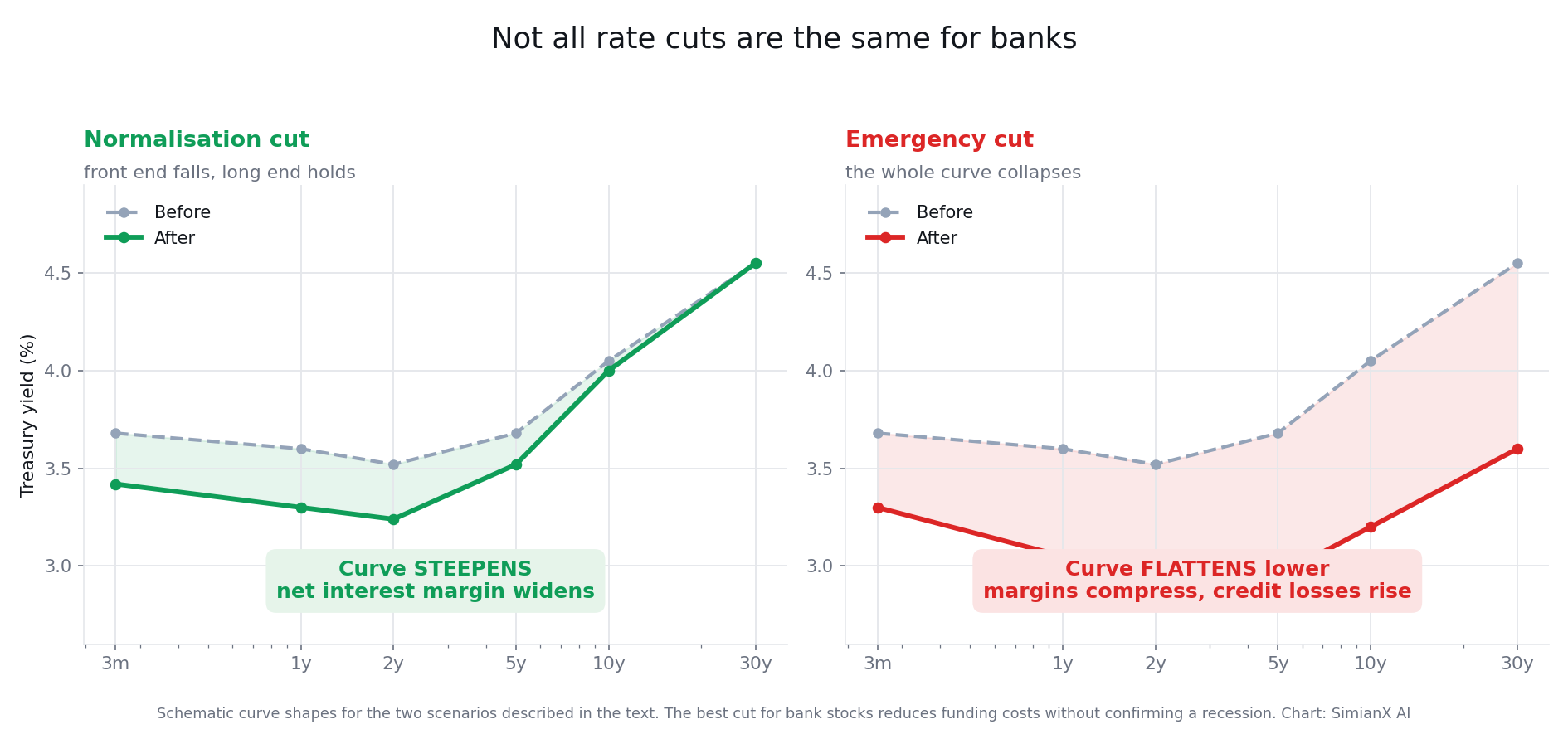
Ang epekto ng pagbawas ng rate sa Hulyo ay nakasalalay nang husto sa yield curve at kondisyon ng siklo ng kredito.
Isang Bullish na Senaryo para sa mga Bangko
Maaaring makinabang ang mga bangko kung ang Fed ay magbawas ng mga rate habang ang mga yield sa mas mahabang panahon ay unti-unting bumababa.
Ito ay magbubunga ng isang mas matarik na yield curve, na nagpapahintulot sa mga bangko na pondohan ang kanilang sarili sa mas mababang mga rate sa maikling panahon habang patuloy na nagpapautang sa medyo kaakit-akit na mga rate sa mas mahabang panahon.
Ang mga karagdagang benepisyo ay maaaring kabilang ang:
- Mas mababang kumpetisyon sa deposito
- Nabawasang presyon sa mga borrower na may floating-rate
- Mas malakas na aktibidad sa refinancing
- Mas kaunting pagkaantala sa mga komersyal na pautang
- Pinabuting isyu sa kapital na merkado
- Mas mataas na demand para sa mga mortgage at mga pautang sa negosyo
Ang mga rehiyonal na bangko na may makabuluhang exposure sa komersyal na real estate ay maaaring makatanggap ng partikular na ginhawa kung ang mas mababang gastos sa pangungutang ay magbabawas ng presyon sa refinancing.
Isang Bearish na Senaryo para sa mga Bangko
Ang kinalabasan ay magiging hindi kanais-nais kung ang pagbawas ng rate ay nag-signify ng mabilis na pagd deteriorate ng ekonomiya.
Ang pagbagsak ng mga rate ay hindi lubos na makakapag-offset:
- Tumataas na kawalan ng trabaho
- Mahinang pamumuhunan ng negosyo
- Mas mataas na pagkaantala sa mga credit card
- Pagkalugi sa komersyal na real estate
- Bumababang demand sa pautang
- Mas mahigpit na pamantayan sa underwriting
Maaaring mahirapan din ang mga stock ng bangko kung ang buong yield curve ay bumagsak nang matindi at ang net interest margins ay bumaba.
Dapat pag-iba-ibahin ng mga mamumuhunan ang isang normalization cut, na sumasalamin sa pagbuti ng inflation, at isang emergency cut, na sumasalamin sa stress ng ekonomiya.
Ang pinakamahusay na pagbawas ng rate para sa mga stock ng bangko ay isa na nagbabawas ng presyon sa pondo nang hindi kinukumpirma ang isang recession.
Ang pulong sa Hulyo ay maaaring hindi makapagbigay ng sapat na ebidensya upang matukoy kung aling kapaligiran ang umuunlad. Ang tono ng press conference ni Warsh ay samakatuwid ay mahalaga tulad ng desisyon mismo.
Ang Epekto sa mga Mamimili: Mga Credit Card, Auto Loans, at Gastusin ng Sambayanan
Ang mas mababang federal funds rate ay sa huli ay magbabawas ng ilang gastos sa pangungutang ng mga mamimili, ngunit ang paglipat ay magiging hindi pantay.
Ang mga rate ng credit card at ilang variable-rate na pautang ay may posibilidad na tumugon nang medyo mabilis sa mga pagbabago sa mga short-term benchmark. Ang mga fixed-rate na auto loans at mortgages ay nakasalalay sa mas malawak na kumbinasyon ng mga yield ng merkado, mga kondisyon ng kredito, at mga pagtatasa ng panganib ng nagpapautang.
Isang quarter-point na pagbawas ng rate ay hindi biglang magbabago sa mga pananalapi ng sambahayan. Ang kahalagahan nito ay higit na sikolohikal at direksyonal.
Maaari itong magpahiwatig na:
- Ang tuktok ng mga gastos sa pangungutang ay lumipas na.
- Ang hinaharap na refinancing ay maaaring maging mas kaakit-akit.
- Ang mga kondisyon sa pagpopondo ng korporasyon ay maaaring unti-unting bumuti.
- Ang mga mamimili ay maaaring makaranas ng mas kaunting presyon mula sa variable-rate na utang.
- Ang mga pamilihan sa pananalapi ay maaaring makatanggap ng karagdagang suporta sa likwididad.
Gayunpaman, ang mas mababang rate ay maaari ring hikayatin ang pangungutang sa isang panahon kung kailan ang mga balanse ng sambahayan ay nananatiling mahina.
Ang praktikal na epekto ay nakasalalay sa kung ang paglago ng sahod, employment, at tunay na disposable income ay nananatiling malusog. Ang mga mamimili ay malamang na hindi magpapataas ng paggastos nang agresibo dahil lamang sa isang beses na pagbawas ng Fed kung sila ay nag-aalala tungkol sa mga tanggalan, presyo ng pagkain, gastos sa seguro, o kakayahang bumili ng bahay.
Ginagawa nitong mahalaga ang data ng mga mamimili pagkatapos ng pagpupulong.
Dapat sundan ng mga mamumuhunan:
- Mga benta sa tingi
- Tunay na personal na paggastos sa pagkonsumo
- Mga rate ng pagka-delinquent sa credit card
- Mga default sa auto-loan
- Kumpiyansa ng mga mamimili
- Mga rate ng personal na pagtitipid
- Paglago ng revolving credit
- Mga survey sa pagpapautang ng bangko
Kung ang isang pagbawas ng rate ay sinusundan ng mas malakas na paggastos nang walang muling pagtaas ng implasyon, ang naratibong soft-landing ay magkakaroon ng kredibilidad.
Kung ang paggastos ay bumilis habang ang pangunahing implasyon ay nananatiling matigas, maaaring mabilis na magsisi ang Fed sa pagpapadali.
Ang AI Productivity Thesis sa Likod ng Debate sa Patakaran ni Warsh
Ang pananaw ni Warsh sa artipisyal na intelihensiya at produktibidad ay maaaring maging isa sa mga nagtatakdang ideya ng kanyang pamumuno.
Ang pangunahing argumento ay ang malalaking pamumuhunan sa imprastruktura ng AI, software, automation, mga sistema ng enerhiya, at mga data center ay maaaring magpataas ng dami ng output na kayang iprodyus ng ekonomiya ng U.S. gamit ang parehong dami ng paggawa at kapital.
Kung tumaas ang produktibidad, maaaring magawa ng mga kumpanya na:
- Magprodyus ng mas maraming kalakal at serbisyo
- Taasan ang sahod nang hindi agad itinaas ang mga presyo
- Protektahan ang mga margin ng kita
- Palawakin ang kapasidad
- Bawasan ang mga gastos sa administrasyon
- Pahusayin ang kahusayan ng supply-chain
Maaari itong pahintulutan ang ekonomiya na lumago nang mas mabilis nang hindi nagiging sanhi ng parehong presyon ng implasyon na karaniwang kasama ng malakas na demand.
Mahalaga ang implikasyon ng patakaran.
Kung ang produktibong kapasidad ng ekonomiya ay lumalaki nang mas mabilis kaysa sa inaasahan ng mga tradisyonal na modelo, maaaring hindi kailangan manatiling mataas ang mga rate ng interes upang kontrolin ang implasyon.
Gayunpaman, naglalaman ang tesis ng produktibidad ng mahahalagang panganib.
Maaaring Tumagal ng Taon Bago Lumitaw ang mga Pagbabalik ng Produktibidad
Maaaring gumastos ang mga kumpanya ng napakalaking halaga sa imprastruktura ng AI bago makamit ang nasusukat na benepisyo sa pananalapi.
Kadalasan, nangangailangan ang proseso ng:
- Pagbili ng mga chips at server
- Pagtatayo ng mga data center
- Pag-secure ng kuryente at pagpapalamig
- Pagsasama ng mga modelo ng AI sa umiiral na software
- Pagsasaayos ng mga proseso ng negosyo
- Pagsasanay sa mga empleyado
- Pamamahala ng cybersecurity at pagsunod
- Pagtukoy sa mga kapaki-pakinabang na kaso ng paggamit
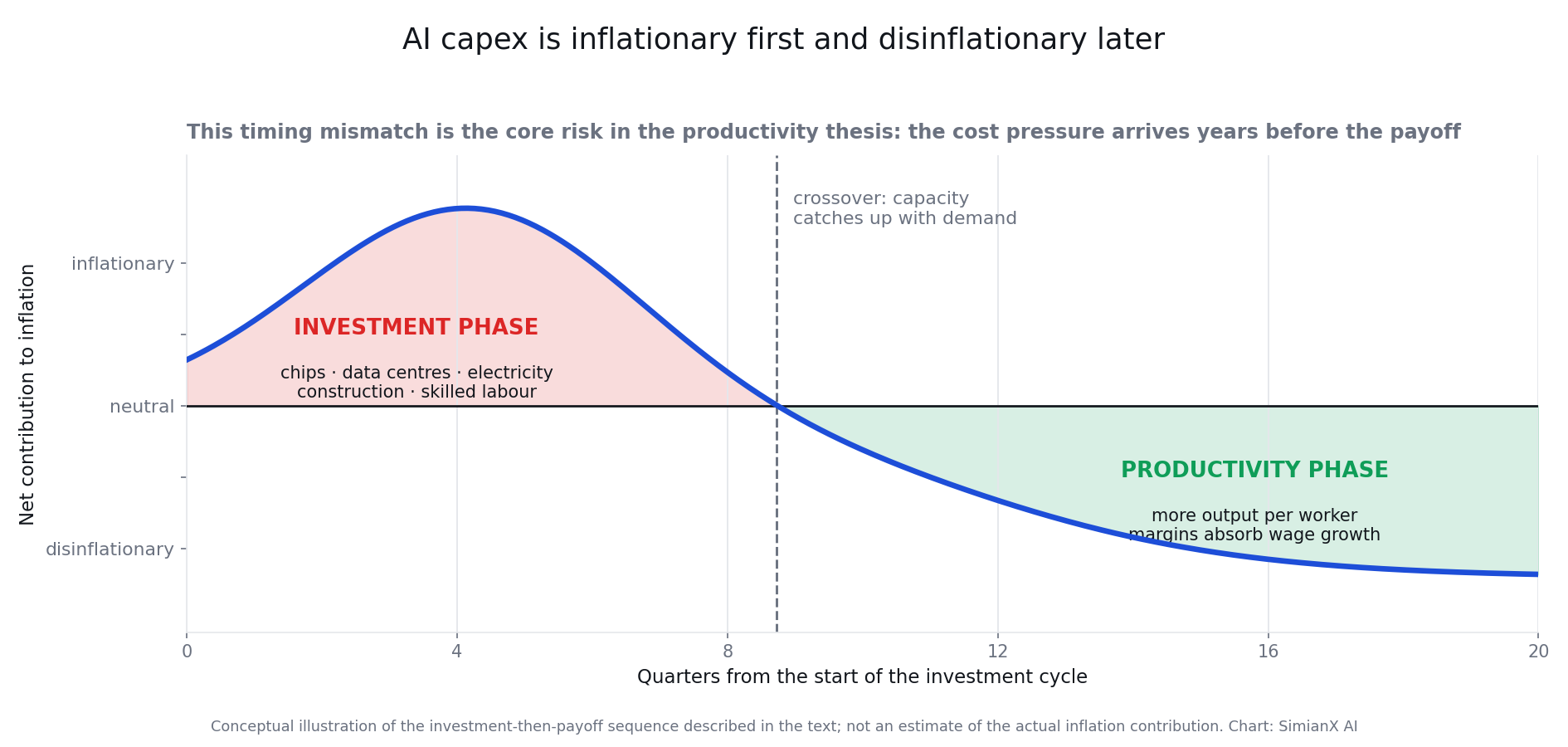
Sa panahon ng yugto ng pamumuhunan, maaaring tumaas ang demand para sa kagamitan, skilled labor, konstruksyon, kuryente, at financing bago ito makabuo ng makabuluhang pagtitipid sa gastos.
Nagiging sanhi ito ng potensyal na hindi pagkakatugma sa oras.
Maaaring inflationary ang pamumuhunan sa AI sa maikling termino ngunit disinflationary sa mahabang termino.
Maaaring Tumaas ang Gastos sa Kuryente at Imprastruktura Dahil sa AI
Ang pagpapalawak ng mga data center ay lumilikha ng karagdagang demand para sa:
- Paggawa ng kuryente
- Kagamitan sa transmisyon
- Natural gas
- Backup power
- Mga sistema ng pagpapalamig
- Lupaing industriyal
- Labor sa konstruksyon
- Tanso at iba pang materyales
Maaaring tumaas ang mga presyur na ito sa mga rehiyon kung saan ang imprastruktura ay limitado na.
Samakatuwid, dapat paghiwalayin ni Warsh ang mga pagpapabuti sa produktibidad na nagpapalawak ng supply at mga pamumuhunan na pansamantalang nagpapalubha sa kakulangan ng yaman.
Maaaring Hindi Pantay ang mga Benepisyo ng Produktibidad
Ang malalaking kumpanya ng teknolohiya na may sariling data, malaking kapasidad sa computing, at matibay na balanse ng pananalapi ay maaaring makamit ang mga benepisyo ng AI nang mas mabilis kaysa sa mas maliliit na kumpanya.
Kung ang mga pagtaas sa produktibidad ay nakatuon sa isang limitadong bilang ng mga kumpanya, ang kabuuang epekto ng implasyon ay maaaring mas maliit kaysa sa ipinapahiwatig ng mga optimistikong forecast.
Dapat subaybayan ng mga mamumuhunan ang aktwal na mga sukatan ng operasyon sa halip na umasa lamang sa mga anunsyo ng gastusin sa kapital.
Ang mga kapaki-pakinabang na tagapagpahiwatig ay kinabibilangan ng:
- Kita mula sa mga produktong AI
- Produktibidad bawat empleyado
- Mga pagbabago sa gross-margin
- Pagtanggap ng customer
- Mga gastos sa inference
- Paggamit ng data center
- Pagkakaroon ng kuryente
- Bawi sa na-invest na kapital
Makatutulong ang SimianX AI sa mga mamumuhunan na ihambing ang macro productivity narrative sa kita ng kumpanya, gastusin sa kapital, at panganib sa pagtataya.
Ano ang Maaaring Ibig Sabihin ng Mas Mababang Rate para sa AI at mga Teknolohiya ng Stock
Maaaring isa ang sektor ng AI sa pinakamalaking agarang benepisyaryo ng isang dovish na sorpresa sa Hulyo.
Maraming kumpanya ng teknolohiya ang pinapahalagahan batay sa mga kita na inaasahang mangyari sa loob ng ilang taon sa hinaharap. Kapag bumaba ang mga rate ng interes, ang mga hinaharap na cash flow ay nagiging mas mahalaga sa mga tuntunin ng kasalukuyang halaga.
Ngunit ang laki ng benepisyo ay nakasalalay sa kalidad ng kumpanya.
Mga Pinuno sa AI Infrastructure na Kumikita
Ang mga kumpanya na may malakas na cash flow, nangingibabaw na posisyon sa merkado, at nakikitang demand para sa AI ay maaaring makinabang mula sa parehong mas mababang discount rate at patuloy na paglago ng kita.
Maaaring paboran ng merkado ang mga negosyo na kasangkot sa:
- Advanced na semiconductors
- Cloud computing
- Networking ng data center
- Optical communications
- Paggawa ng kuryente
- Kagamitan sa kuryente
- Mga sistema ng paglamig
- Software ng enterprise AI
Maaaring maipaliwanag ng mga kumpanyang ito ang mga premium na pagtataya kung ang paggastos sa AI ay nagiging matibay na kita.
Mga Spekulatibong Kumpanya ng Teknolohiya
Unprofitable software at mga kumpanya ng AI sa maagang yugto ay maaaring makaranas ng mas malaking porsyentong pagtaas kaagad pagkatapos ng isang dovish na desisyon dahil ang kanilang mga valuation ay mas sensitibo sa mga rate ng interes.
Gayunpaman, ang mga pagtaas na iyon ay maaaring mabilis na bumalik kung:
- Ang paglago ng kita ay hindi nakakaakit
- Ang pagpopondo ay nananatiling mahirap
- Ang pagdami ng bahagi ay tumataas
- Ang mga gastos sa pagkuha ng customer ay tumataas
- Ang kumpetisyon sa AI ay nagpapababa ng kapangyarihan sa pagpepresyo
- Ang mga yield ng long-term Treasury ay hindi bumababa
Ang mas mababang rate ng patakaran ay hindi nag-aalis ng mga mahihinang modelo ng negosyo.
Ang pagbagsak ng mga rate ay maaaring suportahan ang mga multiple ng valuation, ngunit tanging ang kita ang makakapagpanatili sa mga ito.
Dapat paghiwalayin ng mga mamumuhunan ang mga kumpanya na ang exposure sa AI ay nagbubunga ng nasusukat na mga resulta sa pananalapi mula sa mga kumpanya na pangunahing gumagamit ng wika ng AI sa mga presentasyon sa mamumuhunan.
Paano Maaaring Makaapekto ang Pagsisikap ni Trump na Bawasan ang Rate sa U.S. Dollar
Ang mga inaasahan sa rate ng interes ay isang pangunahing tagapag-drive ng mga pamilihan ng pera.
Kung lahat ay pantay, ang mas mababang mga rate sa U.S. ay nagpapababa ng bentahe sa yield ng mga asset na nakadollar. Maaaring gawing hindi gaanong kaakit-akit ang dolyar kumpara sa mga pera na inilabas ng mga central bank na nagpapanatili ng mas mataas na mga rate.
Samakatuwid, ang isang dovish na sorpresa mula sa Fed ay maaaring magpahina sa DXY dollar index.
Ang mas malambot na dolyar ay maaaring makinabang:
- Mga multinational na kumpanya ng U.S.
- Mga asset sa umuusbong na merkado
- Mga kalakal na nakapresyo sa dolyar
- Ginto
- Bitcoin at iba pang mga asset na sensitibo sa panganib
- Mga banyagang nanghihiram na may utang na nakadollar
Gayunpaman, ang mga reaksyon ng pera ay hindi kailanman natutukoy ng Fed lamang.
Maaaring manatiling malakas ang dolyar kung ang iba pang mga pangunahing central bank ay mas mabilis na nagbabawas ng mga rate, kung ang geopolitical risk ay nagpapataas ng demand para sa mga ligtas na asset, o kung ang ekonomiya ng U.S. ay patuloy na mas mahusay kaysa sa ibang mga rehiyon.
Ang isang politikal na kontrobersyal na pagbawas ay maaari ring lumikha ng mga nakikipagkumpitensyang puwersa.
Maaaring unang humina ang dolyar dahil sa mas mababang inaasahan sa rate, ngunit ang pinansyal na stress o pandaigdigang pag-iwas sa panganib ay maaaring lumikha ng muling demand para sa likwididad ng dolyar.
Dapat ihambing ng mga mamumuhunan:
- Ang inaasahang landas ng patakaran ng Fed
- Mga inaasahan ng European Central Bank
- Patakaran ng Bank of Japan
- Mga hula sa pandaigdigang paglago
- Mga pagkakaiba sa tunay na interes na rate
- Volatility ng pamilihan ng Treasury
- Pandaigdigang demand para sa mga asset ng U.S.
Ang mahalagang tanong ay hindi lamang kung ang Fed ay magbabawas. Ito ay kung ang Fed ay magiging mas mapagbigay kumpara sa natitirang bahagi ng mundo.
Pandaigdigang Spillovers Mula sa Desisyon ng Fed noong Hulyo
Ang patakaran ng Federal Reserve ay nakakaapekto sa mga ekonomiya na lampas sa Estados Unidos.
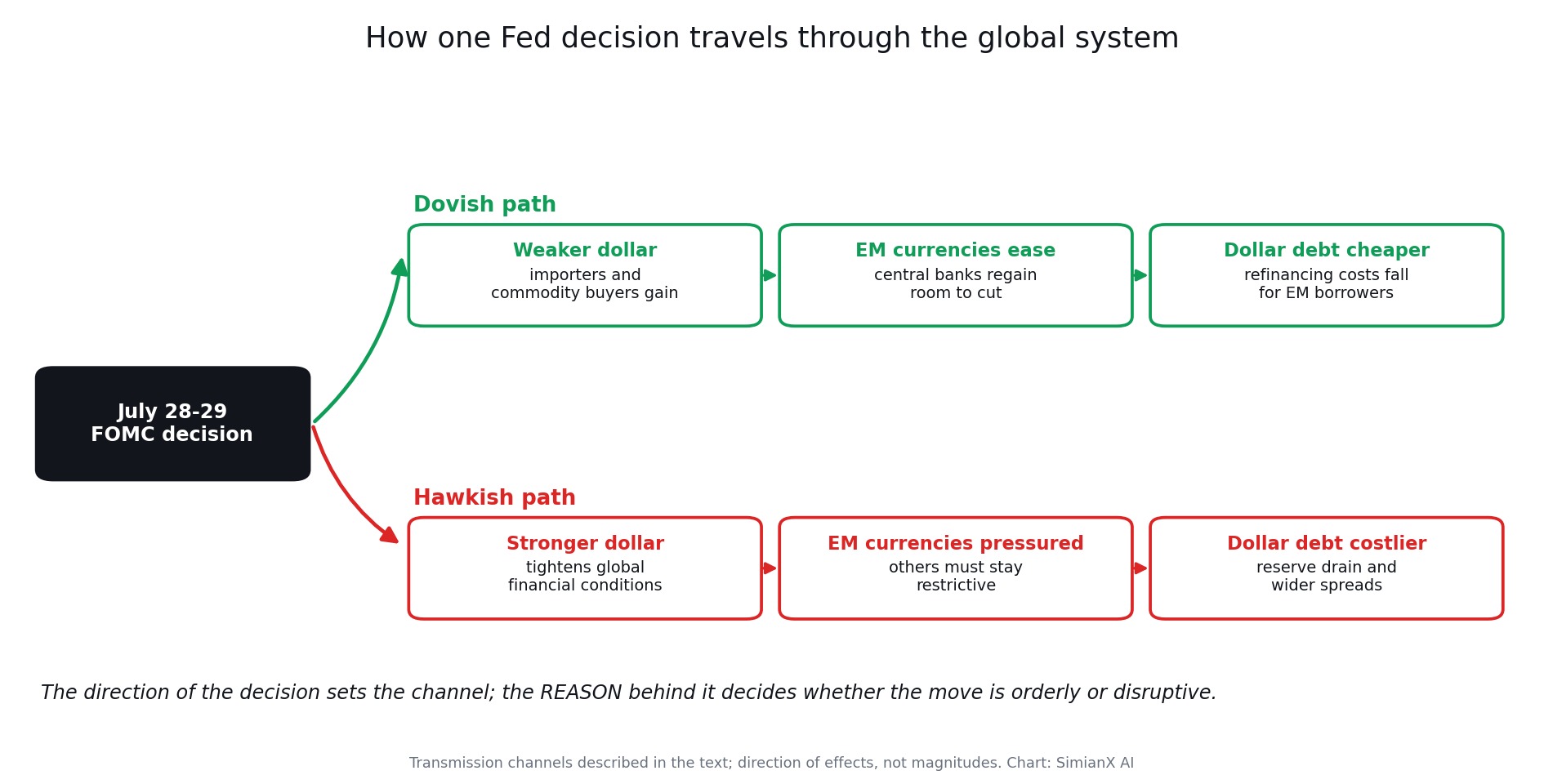
Ang mas mababang landas ng patakaran ng U.S. ay maaaring magpababa ng presyon sa mga pera ng umuusbong na merkado at bigyan ang mga banyagang sentral na bangko ng higit na kakayahang suportahan ang lokal na paglago.
Ang mga bansa na may makabuluhang utang na nakadollar ay maaaring makinabang mula sa:
- Mas mababang gastos sa refinancing
- Mas mahina na dolyar
- Pinabuting pagpasok ng kapital
- Mas mataas na presyo ng kalakal
- Nabawasang presyon sa mga banyagang reserbang pera
Sa kabaligtaran, ang isang hindi inaasahang pagtaas ng Fed ay maaaring magpatibay sa dolyar at pilitin ang ibang mga sentral na bangko na panatilihin ang mga restriktibong patakaran kahit na ang kanilang sariling mga ekonomiya ay bumabagal.
Ang pandaigdigang epekto ay magiging partikular na mahalaga para sa:
- Mga umuusbong na merkado na labis na nalubog sa utang
- Mga nag-e-export ng kalakal
- Mga supply chain ng teknolohiya sa Asya
- Mga tagagawa sa Europa
- Mga pandaigdigang bangko
- Mga kumpanya na may makabuluhang kita mula sa ibang bansa
Ang isang pagbawas noong Hulyo ay maaari ring suportahan ang mga pandaigdigang pamilihan ng equity sa pamamagitan ng pagpapabuti ng pandaigdigang likwididad. Gayunpaman, ang benepisyong iyon ay magiging mas mahina kung ang pagbawas ay itinuturing na patunay na ang ekonomiya ng U.S. ay papasok sa isang pagbagsak.
Samakatuwid, ang mga pandaigdigang mamumuhunan ay dapat suriin ang parehong direksyon ng patakaran at ang dahilan sa likod nito.
Isang Balangkas ng Portfolio para sa Pulong ng Fed noong Hulyo
Sa halip na gumawa ng isang agresibong hula, ang mga mamumuhunan ay maaaring maghanda ng mga portfolio para sa maraming kinalabasan.
| Asset o sektor | Mapagbigay na pagbawas | Mapagbigay na hawak | Mapagmatyag na hawak | Hindi inaasahang pagtaas |
|---|---|---|---|---|
| Teknolohiyang may mahabang tagal | Malakas na positibo | Katamtamang positibo | Negatibo | Malakas na negatibo |
| Maikling-term na Treasuries | Positibo | Positibo | Bahagyang negatibo | Negatibo |
| Pangmatagalang Treasuries | Nakadepende sa kredibilidad | Positibo | Halo-halo | Sa simula negatibo |
| Dolyar ng U.S. | Negatibo | Bahagyang negatibo | Positibo | Malakas na positibo |
| Ginto | Positibo | Katamtamang positibo | Halo-halo | Sa simula negatibo |
| Bitcoin | Positibo ngunit pabagu-bago | Positibo | Negatibo | Malakas na negatibo |
| Mga Bangko | Nakadepende sa yield curve | Halo-halo | Halo-halo | Nakadepende sa panganib sa kredito |
| Mga Tagapagpatayo ng Bahay | Positibo kung bumababa ang mahabang yield | Katamtamang positibo | Negatibo | Negatibo |
| Mga stock ng Enerhiya | Nakadepende higit sa langis | Neutral | Neutral | Halo-halo |
Ang balangkas na ito ay hindi isang prediksyon ng garantisadong kita. Ito ay isang paraan upang matukoy ang mga variable na mahalaga.
Mga Tanong na Dapat Itanong Bago Kumuha ng Posisyon
- Ang kalakalan ba ay batay sa desisyon ng patakaran o sa press conference?
- Ang merkado ba ay nagpepresyo na ng inaasahang kinalabasan?
- Ang posisyon ba ay nakadepende sa maikling-term o pangmatagalang yield?
- Ano ang mangyayari kung ang unang reaksyon ng merkado ay bumaligtad?
- Ang kalakalan ba ay sensitibo sa susunod na PCE o paglabas ng empleyo?
- Ang posisyon ba ay may tiyak na exit point?
- Ang inaasahang gantimpala ba ay sapat na malaki upang bigyang-katwiran ang panganib ng kaganapan?
Ang mga pagpupulong ng Fed ay maaaring magdulot ng mabilis na pagbabago ng presyo, mas mababang likididad, mas malawak na spread, at matitinding pagbabalik. Ang laki ng posisyon ay maaaring mas mahalaga kaysa sa tiyak na prediksyon.
Isang 72-Oras na Playbook ng Pagpupulong ng Fed
Maaaring hatiin ng mga mamumuhunan ang kaganapan sa tatlong yugto.
Yugto Isa: Bago ang Desisyon
Bago ang anunsyo:
- Suriin ang mga probabilidad na ipinahiwatig ng merkado.
- Itala ang yield ng dalawang taon at sampung taon na Treasury.
- Tandaan ang antas ng dolyar, ginto, Bitcoin, at mga pangunahing equity index.
- Tukuyin ang mga inaasahang konsensus.
- Bawasan ang mga posisyon na hindi makatiis ng pabagu-bagong kondisyon.
- Tukuyin ang mga bullish, neutral, at bearish na senaryo.
The goal is to avoid inventing a strategy after prices begin moving.
Phase Two: The Announcement and Press Conference
Immediately after the decision:
- Basahin ang anunsyo ng rate.
- Ihambing ang pahayag sa nakaraang bersyon.
- Suriin ang boto.
- Tukuyin ang anumang pagtutol.
- Panuorin ang unahan ng Treasury curve.
- Maghintay para sa press conference ni Warsh.
- Suriin kung ang paunang paggalaw ng presyo ay nakumpirma sa lahat ng asset.
Isang rally sa stock market na sinamahan ng bumabagsak na short-term yields at matatag na long-term yields ay magiging mas kapani-paniwala kaysa sa isang rally na sinamahan ng matinding pagtaas sa ten-year yield.
Phase Three: The Following Data Releases
The first reaction may change when investors receive additional inflation and employment information.
After the meeting, monitor:
- PCE inflation
- Paglago ng payroll
- Kawalan ng trabaho
- Paglago ng sahod
- Benta ng tingi
- Inaasahan ng mga mamimili
- Presyo ng enerhiya
- Mga talumpati ng Fed
Isang dovish na interpretasyon ay maaaring mabilis na magbago kung ang mga sumusunod na datos ay nagpapakita ng muling pagtaas ng inflation.
SimianX AI can support this process by organizing macro releases, market responses, technical conditions, and asset-specific implications in a consistent research framework.
What Could Invalidate the July Rate-Cut Thesis?
Investors should define the evidence that would prove their original view wrong.
The case for lower rates would weaken if:
- Ang Core PCE inflation ay bumilis
- Ang inflation sa tirahan ay bumalik
- Ang presyo ng enerhiya ay patuloy na tumataas
- Ang paglago ng sahod ay lumalakas nang walang pagbuti sa produktibidad
- Ang paggastos ng mga mamimili ay nananatiling hindi pangkaraniwan na malakas
- Ang mga inaasahan sa inflation ay nagiging hindi gaanong nakatali
- Ang merkado ng trabaho ay nananatiling masikip
- Ang mga kondisyon sa pananalapi ay bumabagal nang masyadong mabilis
- Ang long-term yields ay tumataas dahil sa mga alalahanin sa kredibilidad
By contrast, the case for eventual easing would strengthen if:
- Ang Core inflation ay bumagal sa loob ng ilang magkakasunod na buwan
- Ang disinflation sa tirahan ay nagiging persistent
- Ang paglago ng trabaho ay unti-unting bumabagal
- Ang paglago ng sahod ay nagiging katamtaman
- Patuloy na bumubuti ang produktibidad
- Nanatiling matatag ang mga inaasahan sa inflation
- Bumabagal ang pangangailangan ng mga mamimili nang hindi bumabagsak
- Unti-unting bumababa ang mga pangmatagalang yield
Isang solong paglabas ng CPI, pahayag ng pangulo, o pulong ng Fed ay hindi makakapag-ayos ng buong debate sa patakaran.
Ang direksyon ng mga interest rate ay matutukoy ng pinagsamang interaksyon ng inflation, employment, produktibidad, patakarang pampinansyal, presyo ng enerhiya, at mga kondisyong pinansyal.
Ang Mas Malaking Aral sa Pamumuhunan
Ang salungatan sa pagitan ng kahilingan ni Trump para sa mas mababang rate at responsibilidad ni Warsh na panatilihin ang katatagan ng presyo ay naglalarawan ng mas malawak na prinsipyo sa pamumuhunan:
Tumugon ang mga merkado sa mga institusyon, insentibo, at kredibilidad—hindi lamang sa mga estadistikang pang-ekonomiya.
Dalawang magkaparehong pagbawas ng rate ay maaaring magdulot ng ganap na magkaibang resulta.
Ang isang pagbawas ay maaaring magpahayag ng tiwala na ang inflation ay bumababa at ang patakaran ay maaaring maging normal nang ligtas. Ang isa pa ay maaaring magpahayag ng takot, pampulitikang presyon, o humihinang disiplina ng institusyon.
Ang una ay maaaring magpababa ng mga yield sa buong curve at suportahan ang mga risk asset.
Ang pangalawa ay maaaring magpababa ng mga short-term rate habang pinapataas ang panganib ng inflation sa pangmatagalan, na nagdudulot ng pagkasira sa mga bono, pera, equities, commodities, at crypto.
Samakatuwid, dapat suriin ng mga mamumuhunan ang apat na antas ng bawat pangunahing desisyon ng Fed:
- Ang aksyon: Nagbawas ba ang Fed, humawak, o nagtaas ng mga rate?
- Ang paliwanag: Bakit ginawa ng mga tagapagpatupad ng patakaran ang pagpili na iyon?
- Ang kredibilidad: Mukhang pare-pareho ba ang desisyon sa datos?
- Ang kumpirmasyon ng merkado: Paano tumugon ang mga yield, dolyar, inaasahan sa inflation, at mga risk asset?
Ang balangkas na iyon ay mas kapaki-pakinabang kaysa sa pagsubok na makipagkalakalan sa headline nang hiwalay.
Maaaring ipagpatuloy ni Trump ang pagtawag para sa makabuluhang mas mababang mga rate. Maaaring ipagpatuloy ni Warsh ang pagbibigay-diin sa produktibidad, repormang institusyonal, at katatagan ng presyo. Maaaring manatiling nahahati ang komite.
Ang pagkakataon para sa mga mamumuhunan ay nakasalalay sa pag-unawa kung paano nagbabago ang mga nakikipagkumpitensyang puwersa sa pamamahagi ng mga posibleng kinalabasan—at pagpoposisyon para sa mga senaryo sa halip na umasa sa isang solong hula.
Kaugnay na Babasahin
- Unang FOMC ni Warsh: dot plot lumipat sa pagtaas ng interes
- Ulat CPI Hulyo 2026: Bumaba ang Implasyon, Fed Nag-aalangan
- July CPI Preview 2026: Mananatili bang Hawkish ang Fed?
- AI Rally Stress Test: Kita ng Nvidia vs 5% na Yield 2026
- Magnificent 7 sa 2026: Bigat at Concentration Risk
- Bawat Tech Bubble Mula 1929: Paghambing sa AI Cycle ng 2026
- Bitcoin Lagpas $66K Muli: Kaya ba ng ETF Inflows ang $70K?
- S&P 500 papuntang 7000: Momentum, Liquidity, Valuation
Mga Sanggunian
- Federal Reserve — opisyal na kalendaryo ng FOMC, pahayag at press conference
- Federal Reserve H.15 — opisyal na araw-araw na serye ng Treasury yields sa buong curve
- New York Fed — ACM term premia estimates, ang sukatang tinalakay sa itaas
- Bureau of Labor Statistics — ang CPI release na tinutugunan ng Fed at ng merkado
- Bureau of Economic Analysis — ang PCE price index, ang paboritong sukatan ng inflation ng Fed
- Freddie Mac PMMS — ang lingguhang survey ng 30-taong mortgage rate
- Investopedia — paano basahin ang yield curve at bakit mahalaga ang slope nito