
1991 Gulf War: Countdown to Desert Storm
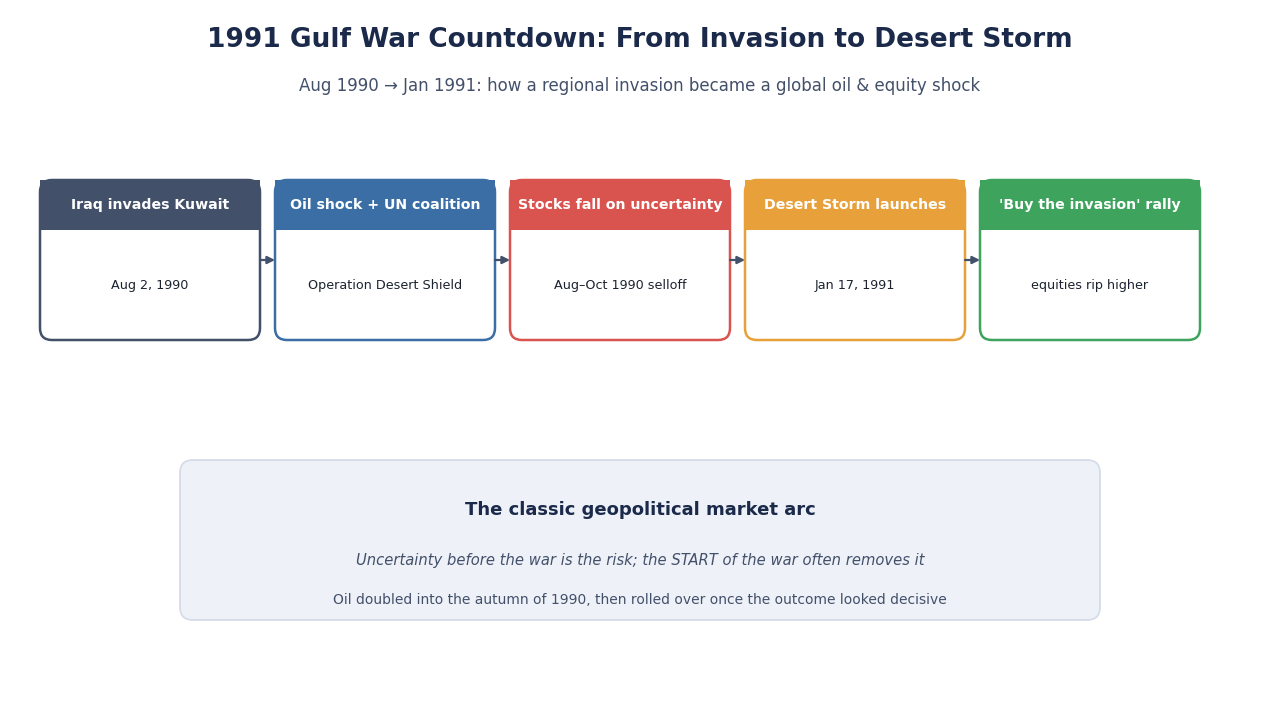
The 1991 Gulf War countdown to Desert Storm represents one of the most important geopolitical build-ups of the late 20th century. From Iraq’s invasion of Kuwait in August 1990 to the launch of Operation Desert Storm in January 1991, the world watched tensions escalate across diplomacy, military deployment, and global financial markets.
Understanding how geopolitical crises evolve before war provides valuable lessons for investors, historians, and analysts alike. Today, platforms such as SimianX AI help analysts interpret complex geopolitical developments and connect them to financial markets using AI-driven intelligence.
The events leading up to the Gulf War reveal how energy security, international alliances, economic sanctions, and military mobilization combine to shape the global landscape before conflict erupts.
The Strategic Background Before the Gulf War
To understand the countdown to Operation Desert Storm, it is essential to examine the geopolitical landscape of the late 1980s.
The Cold War was ending, and the United States had emerged as the dominant global power. Meanwhile, Iraq—under the leadership of Saddam Hussein—was struggling financially after the costly Iran–Iraq War (1980–1988).
Iraq faced enormous debts, particularly to neighboring Kuwait and Saudi Arabia.
Several factors drove Iraq toward confrontation:
- Massive war debt exceeding $80 billion
- Declining oil prices reducing Iraqi revenue
- Accusations that Kuwait was overproducing oil
- Disputes over oil fields along the Iraq–Kuwait border
Iraq accused Kuwait of "economic warfare" by exceeding OPEC quotas and driving oil prices down.
For Saddam Hussein, the solution appeared simple: control Kuwait's oil reserves and erase the debt problem.
Iraq’s Invasion of Kuwait (August 1990)
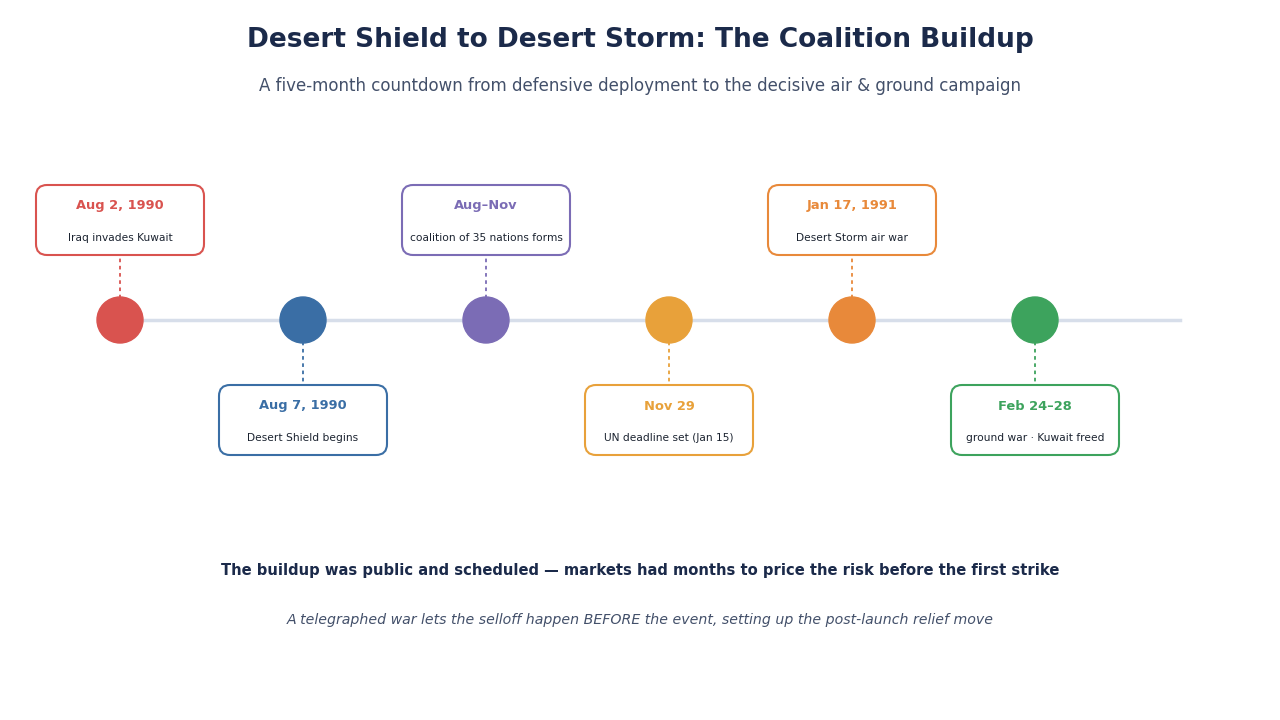
On August 2, 1990, Iraqi forces launched a rapid invasion of Kuwait.
Within hours:
- Iraqi troops captured Kuwait City
- Kuwait’s government fled into exile
- Iraqi forces seized control of one of the world's largest oil reserves
The invasion shocked the international community.
The implications were enormous:
- Iraq would control 20% of global oil reserves
- The Persian Gulf energy supply could be destabilized
- Regional security was threatened
Immediate Global Reaction
The response from the international community was swift.
The United Nations Security Council passed several resolutions condemning Iraq and imposing economic sanctions.
Key responses included:
- UN Resolution 660 condemning the invasion
- Economic sanctions imposed on Iraq
- Diplomatic pressure demanding Iraqi withdrawal
However, Saddam Hussein refused to retreat.
The Formation of the Coalition
As the crisis intensified, the United States began assembling a global coalition to confront Iraq.
President George H. W. Bush led diplomatic efforts to unite dozens of countries against Iraq’s occupation of Kuwait.
Ultimately, 34 nations joined the coalition, including:
- United States
- United Kingdom
- France
- Saudi Arabia
- Egypt
- Canada
- Australia
The coalition represented one of the largest multinational military alliances since World War II.
The Gulf War coalition demonstrated the post–Cold War international order led by the United States.
Operation Desert Shield: The Military Buildup
In August 1990, the United States launched Operation Desert Shield.
This operation focused on defending Saudi Arabia and preparing for potential military action.
Within months, the coalition deployed:
- Over 700,000 coalition troops
- Hundreds of fighter aircraft
- Aircraft carriers in the Persian Gulf
- Advanced missile defense systems
Why Saudi Arabia Was Critical
Saudi Arabia was the next likely target after Kuwait.
If Iraq captured Saudi oil fields, Saddam Hussein would control over 40% of global oil reserves.
That scenario would fundamentally reshape global power.
Protecting Saudi Arabia became the coalition’s top priority.
Economic Warfare: Sanctions Against Iraq
Before launching military operations, the international community attempted to force Iraq out of Kuwait through economic sanctions.
The United Nations imposed sweeping restrictions:
- Oil export bans
- Trade embargoes
- Financial asset freezes
The sanctions were designed to cripple Iraq’s economy.
However, Saddam Hussein refused to withdraw.
Sanctions alone were unlikely to succeed quickly.
| Sanction Type | Intended Effect |
|---|---|
| Oil embargo | Reduce Iraqi revenue |
| Trade restrictions | Cut off imports |
| Financial freezes | Limit Iraqi global transactions |
| Military embargo | Prevent weapons imports |
Oil Markets During the Gulf War Crisis
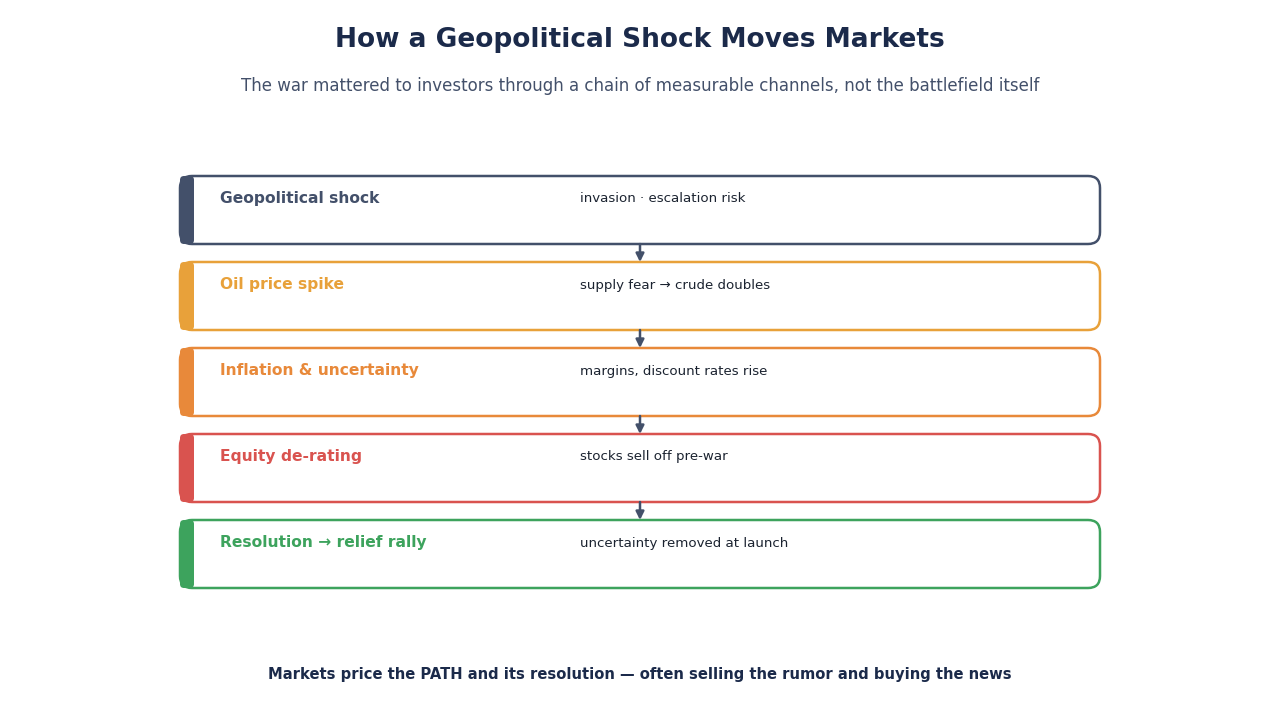
One of the most immediate global effects of the Gulf crisis was volatility in oil markets.
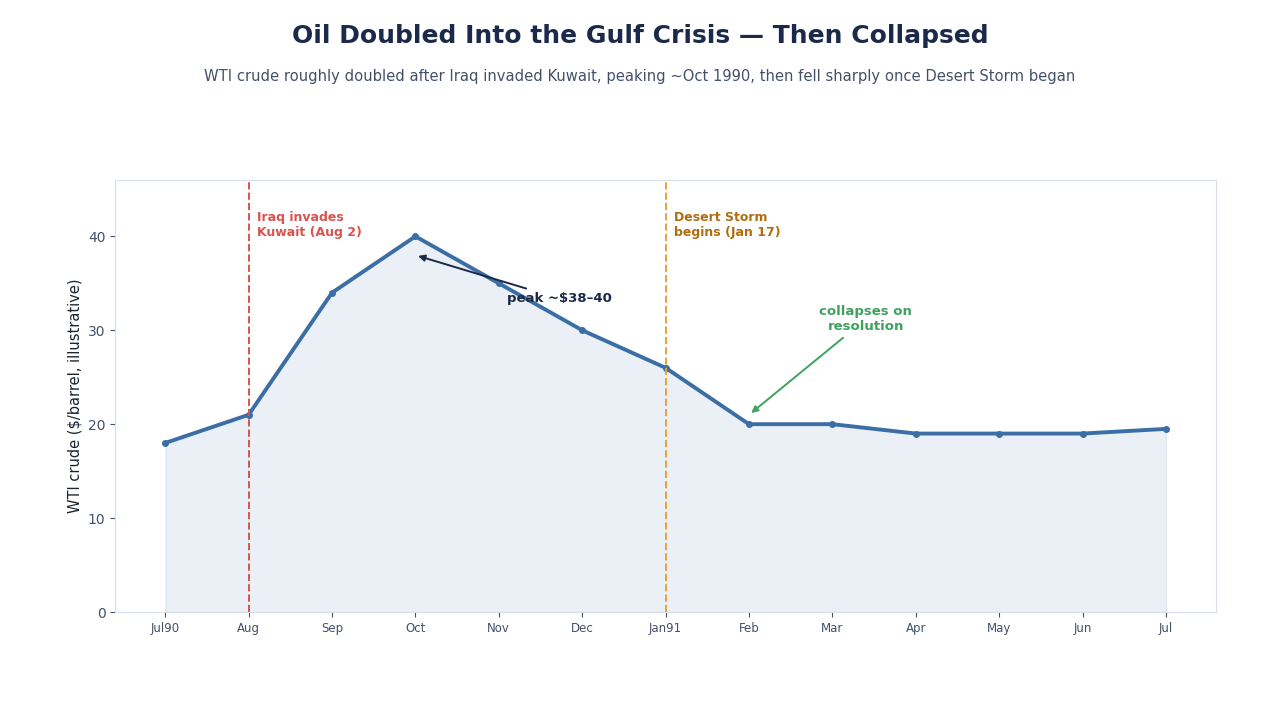
Oil prices surged dramatically after the invasion of Kuwait.
Key developments included:
- Oil prices doubled within months
- Energy security became a major concern
- Global markets reacted to geopolitical risk
Investors feared disruptions to Persian Gulf oil supplies.
Financial markets tend to react strongly when energy supplies appear threatened.
Financial Market Reactions
The crisis created uncertainty across financial markets.
Typical reactions included:
- Stock market volatility
- Rising defense sector stocks
- Oil and energy companies gaining value
- Investor demand for safe-haven assets
Today, platforms such as SimianX AI help analyze these types of geopolitical shocks by integrating macro signals, news flows, and market data into unified AI trading intelligence.
Diplomacy Before the War
Throughout late 1990 and early 1991, diplomats attempted to avoid war.
Negotiations occurred through:
- United Nations mediation
- Arab League diplomacy
- Back-channel negotiations
However, Saddam Hussein remained unwilling to withdraw from Kuwait.
The United Nations issued a final ultimatum:
Iraq must withdraw by January 15, 1991.
If Iraq failed to comply, military action would follow.
January 1991: The Final Countdown
By January 1991, it had become clear that war was likely.
Coalition forces were fully deployed across the region.
Military planners prepared a massive air campaign designed to destroy Iraqi military capabilities.
The strategy involved:
- Precision air strikes
- Suppression of Iraqi air defenses
- Destruction of command centers
- Targeting Iraqi infrastructure
Operation Desert Storm Begins
On January 17, 1991, the coalition launched Operation Desert Storm.
The first phase was a devastating air campaign.
Within hours:
- Cruise missiles struck Baghdad
- Stealth aircraft attacked strategic targets
- Iraqi command systems were disrupted
The scale and technological sophistication of the campaign shocked the world.
It was one of the first wars broadcast live on global television.
Technological Warfare in the Gulf War
The Gulf War marked a turning point in military technology.
Key innovations included:
- Stealth aircraft
- Precision-guided munitions
- Satellite navigation
- Real-time battlefield intelligence
These technologies dramatically increased the effectiveness of coalition forces.
The war became known as the first high-tech war of the modern era.
| Technology | Impact |
|---|---|
| Stealth bombers | Evaded radar |
| GPS navigation | Improved targeting |
| Smart bombs | Increased strike accuracy |
| Satellite intelligence | Real-time battlefield awareness |
Ground War and Liberation of Kuwait
After weeks of air strikes, coalition forces launched a ground offensive.
The operation lasted only 100 hours.
Coalition forces quickly overwhelmed Iraqi defenses.
Key outcomes included:
- Liberation of Kuwait
- Destruction of Iraqi armored divisions
- Collapse of Iraqi military command
On February 28, 1991, a ceasefire was declared.
The war had lasted just over a month.
How the Gulf War Influenced Global Markets
The Gulf War provides a classic example of how markets react to geopolitical crises.
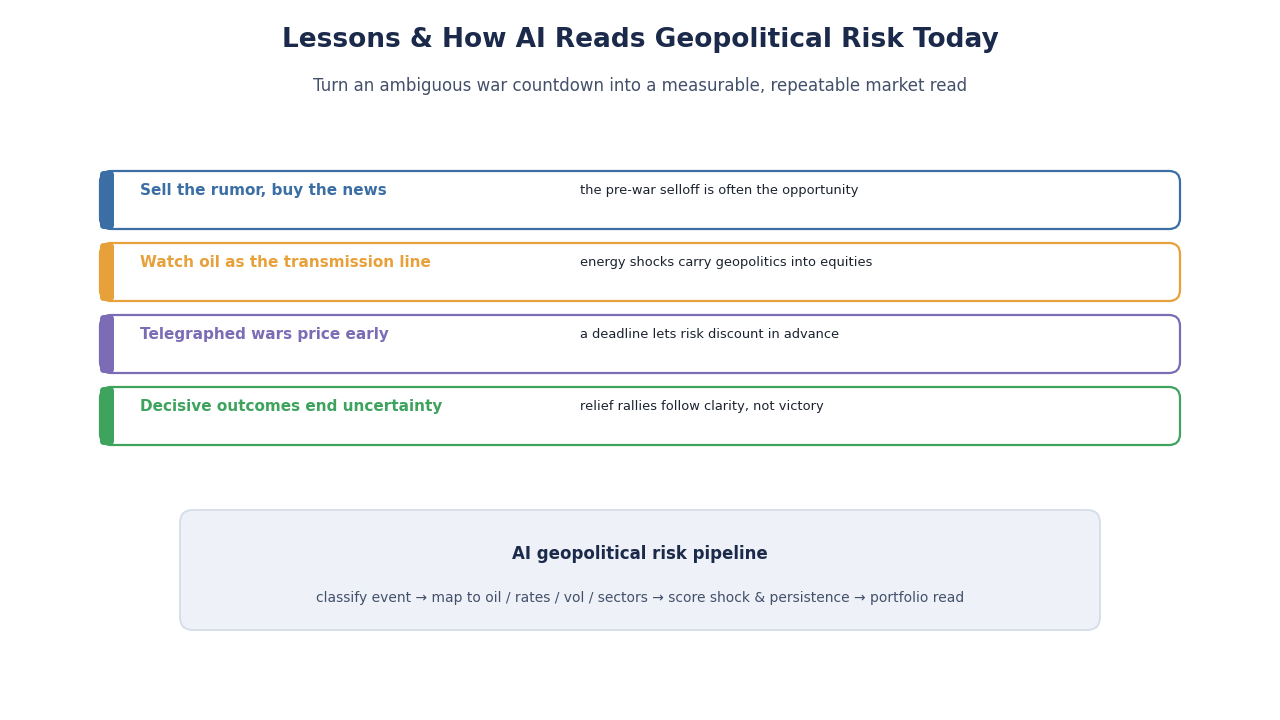
Markets often follow a pattern:
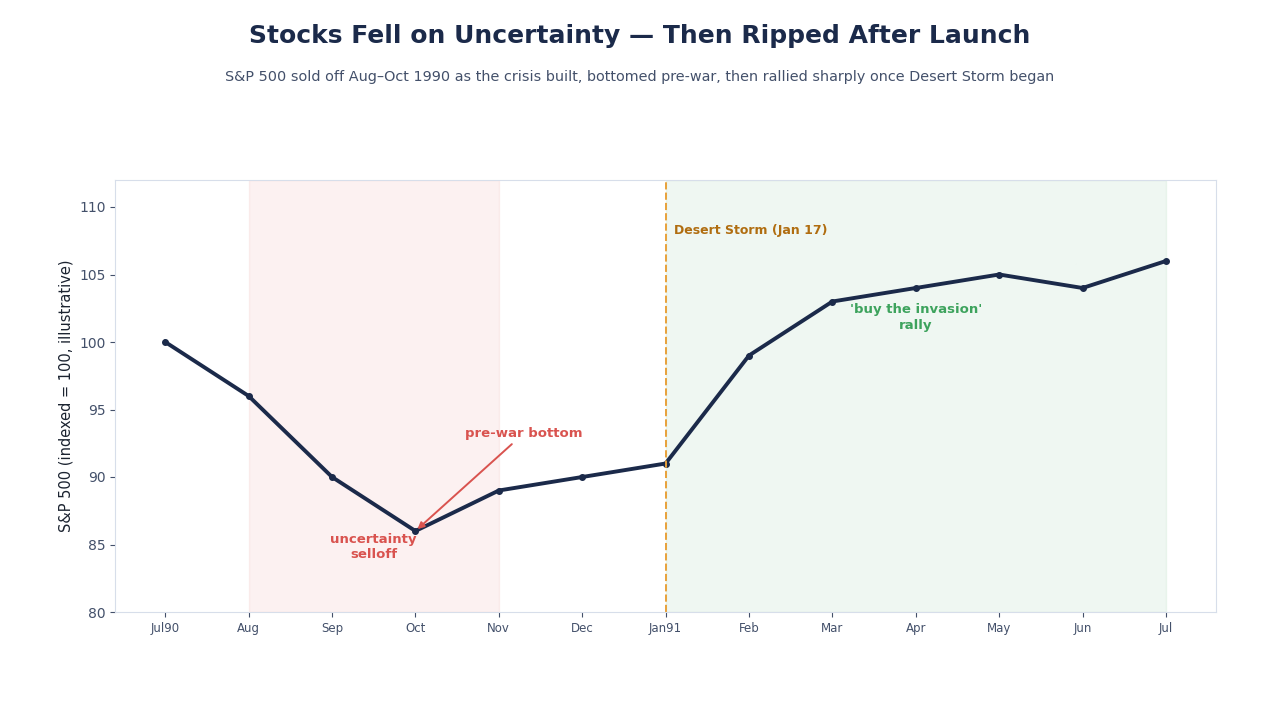
- Rising uncertainty before conflict
- Market volatility during escalation
- Relief rally once conflict begins
During the Gulf War:
- Markets initially fell during the crisis
- Stocks recovered once Desert Storm began
- Oil prices stabilized after coalition success
This phenomenon is often summarized as:
Markets hate uncertainty more than conflict itself.
How AI Platforms Analyze Geopolitical Risk Today
Modern investors face similar geopolitical risks.
Examples include:
- Russia-Ukraine conflict
- Middle East tensions
- Taiwan Strait risks
Today, tools like SimianX AI help investors analyze these events using AI-driven systems.
SimianX integrates:
- macroeconomic indicators
- geopolitical news signals
- technical market data
- AI multi-agent analysis
Why AI Matters for Geopolitical Analysis
Traditional analysis often struggles to process massive information flows.
AI platforms offer advantages:
- real-time data aggregation
- pattern recognition
- automated risk detection
- scenario forecasting
These capabilities help traders interpret complex global events faster.
Lessons From the Gulf War Countdown
The events before Operation Desert Storm offer valuable lessons.
Key Takeaways
- Energy security drives geopolitical conflict
- Economic sanctions often fail without military pressure
- Global alliances shape conflict outcomes
- Markets react strongly to uncertainty
The Gulf War also demonstrated the growing role of technology in warfare.
FAQ About the 1991 Gulf War Countdown to Desert Storm
What caused the 1991 Gulf War?
The Gulf War began after Iraq invaded Kuwait in August 1990. Iraq claimed Kuwait was overproducing oil and harming its economy, but the invasion was widely seen as an attempt to control Kuwait’s oil reserves.
How long did the Gulf War last?
The main combat phase lasted about six weeks. Operation Desert Storm began on January 17, 1991, and the ground war ended on February 28, 1991.
How did the Gulf War affect oil prices?
Oil prices spiked dramatically after Iraq invaded Kuwait due to fears of supply disruption. Prices later stabilized once coalition forces secured Gulf energy infrastructure.
How do geopolitical wars impact stock markets?
Wars often cause short-term market volatility due to uncertainty. However, markets sometimes recover quickly once conflict begins and uncertainty declines.
Can AI predict market reactions to wars?
AI systems cannot predict wars with certainty, but platforms like SimianX AI can analyze geopolitical signals, market data, and macro trends to help investors understand potential risk scenarios.
Conclusion
The 1991 Gulf War countdown to Desert Storm remains one of the most important geopolitical crises of the modern era. Iraq’s invasion of Kuwait triggered a global response that reshaped Middle East politics, energy security, and international military strategy.
For investors and analysts, the Gulf War also provides a powerful case study of how geopolitical shocks influence financial markets.
In today's complex world, understanding these dynamics is more important than ever. Platforms like SimianX AI help traders and researchers interpret geopolitical developments, monitor global risk signals, and make more informed market decisions.
Whether studying historical conflicts or analyzing modern geopolitical tensions, AI-driven intelligence platforms are becoming essential tools for navigating global uncertainty.
Related Reading
- Buy the Invasion Pattern: Iraq 2003 S&P 500 +15% Rally
- Yom Kippur War 1973: Oil 4x, 2-Year Global Stock Crash
- Gulf of Tonkin 1964: Small Event, Decade-Long Market Impact
- Russia-Ukraine War Stock Impact: Sectors, VIX, Risk Plan
- Iran-US War Impact on Stocks: AI Risk Signals Live
- 7 AI Risk Radars for Equities: Breadth, Revisions, Skew