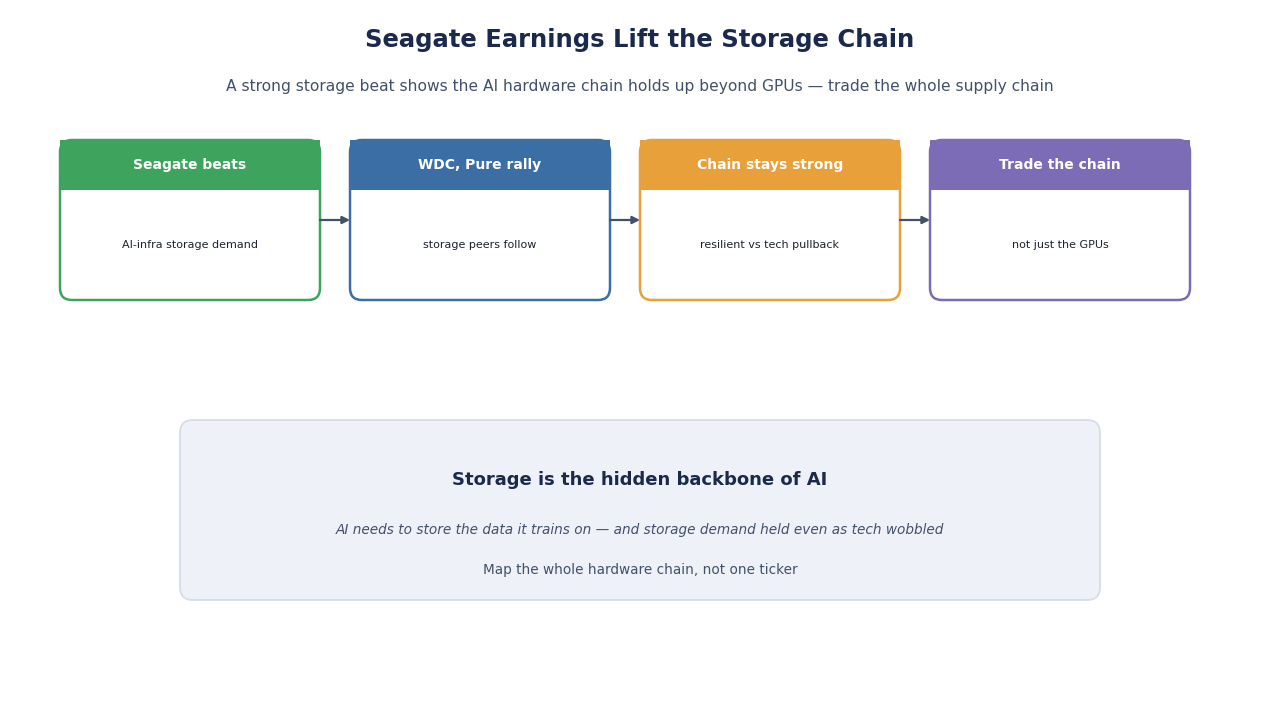
एआई हार्डवेयर श्रृंखला अभी भी ताकत दिखा रही है: सीगेट की कमाई ने तकनीकी गिरावट के बीच स्टोरेज स्टॉक्स को बढ़ावा दिया
एआई हार्डवेयर श्रृंखला अभी भी ताकत दिखा रही है: सीगेट की कमाई ने तकनीकी गिरावट के बीच स्टोरेज स्टॉक्स को बढ़ावा दिया कहानी आज के बाजार में सबसे महत्वपूर्ण विषयों में से एक बनती जा रही है। जबकि प्रमुख एआई शेयर हाल ही में मूल्यांकन दबाव का सामना कर रहे हैं, बुनियादी ढांचा—विशेष रूप से डेटा स्टोरेज और मेमोरी सिस्टम—असाधारण लचीलापन दिखाना जारी रखता है।
SimianX AI जैसे प्लेटफार्म निवेशकों को इन परिवर्तनों की व्याख्या करने में मदद करने में तेजी से महत्वपूर्ण होते जा रहे हैं, वास्तविक समय के डेटा, भावना विश्लेषण, और मल्टी-एजेंट एआई अंतर्दृष्टियों को मिलाकर यह पता लगाने के लिए कि सतही अस्थिरता के नीचे असली ताकत कहां है।
एआई हार्डवेयर श्रृंखला: क्यों स्टोरेज छिपा हुआ रीढ़ है
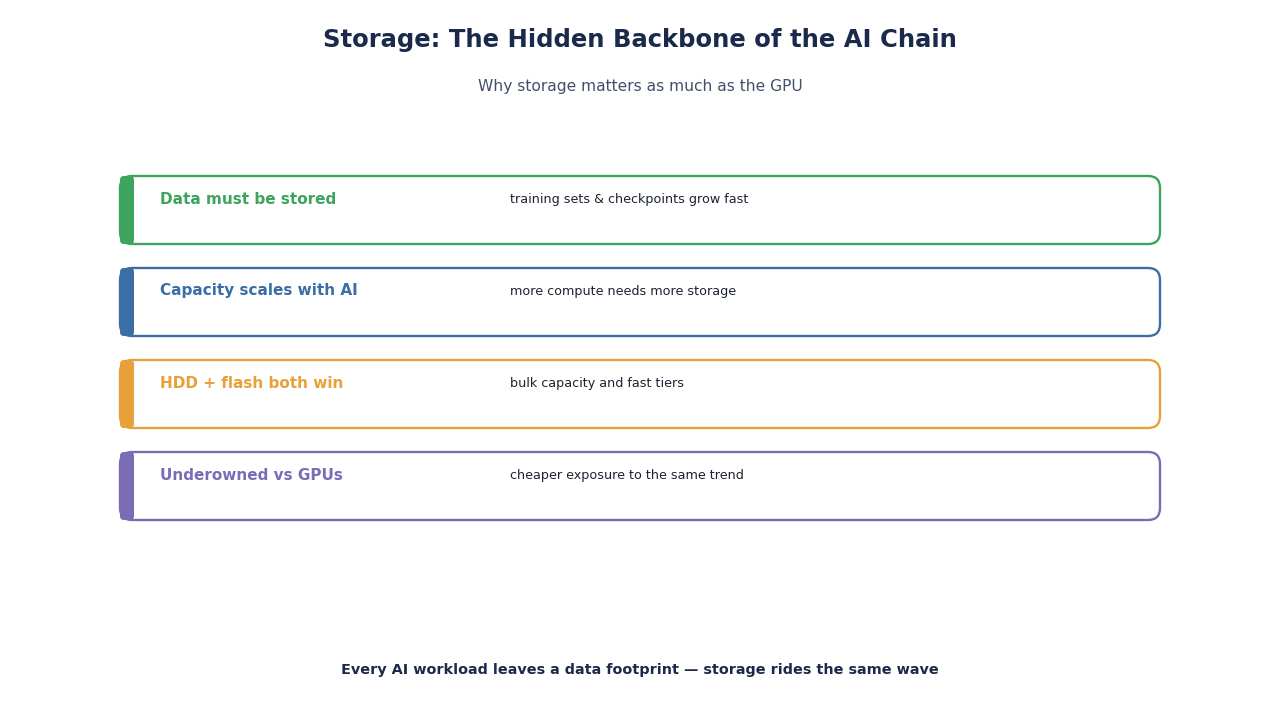
जब एआई की बात आती है, तो अधिकांश निवेशक तुरंत जीपीयू और एनविडिया जैसी कंपनियों के बारे में सोचते हैं। हालाँकि, एआई हार्डवेयर सप्लाई चेन कहीं अधिक व्यापक है—और स्टोरेज शायद इसका सबसे कम आंका गया स्तंभ है।
“एआई केवल गणना नहीं करता—यह विशाल डेटा सेट को संग्रहीत, पुनः प्राप्त और उनसे सीखता है, जिससे स्टोरेज इंफ्रास्ट्रक्चर आवश्यक हो जाता है।”
एआई हार्डवेयर श्रृंखला के प्रमुख घटक
- गणना परत: जीपीयू, टीपीयू (जैसे, एनविडिया, एएमडी)
- मेमोरी परत: डीआरएएम, एचबीएम (माइक्रोन, एसके हाइनिक्स)
- स्टोरेज परत: एचडीडी, एसएसडी (सीगेट, वेस्टर्न डिजिटल)
- नेटवर्किंग परत: उच्च गति इंटरकनेक्ट (ब्रॉडकॉम, एरिस्टा)
स्टोरेज का महत्व पहले से कहीं अधिक क्यों है:
- एआई मॉडल को प्रशिक्षण के लिए विशाल डेटा सेट की आवश्यकता होती है।
- इनफेरेंस सिस्टम संरचित डेटा की तेज़ पुनर्प्राप्ति पर निर्भर करते हैं।
- एंटरप्राइज एआई अपनाने से दीर्घकालिक स्टोरेज मांग बढ़ रही है।
| खंड | एआई पारिस्थितिकी तंत्र में भूमिका | वृद्धि चालक |
|---|---|---|
| गणना | मॉडल प्रशिक्षण | एआई मॉडल जटिलता |
| मेमोरी | तेज डेटा पहुंच | वास्तविक समय अनुमान |
| भंडारण | डेटा संरक्षण और स्केलिंग | विस्फोटक डेटा मात्रा |
| नेटवर्किंग | डेटा स्थानांतरण | वितरित एआई सिस्टम |
सीगेट की कमाई: सतह के नीचे एक संकेत
सीगेट की नवीनतम कमाई रिपोर्ट ने एक स्पष्ट संदेश दिया: एआई भंडारण की मांग मजबूत बनी हुई है, जबकि व्यापक तकनीकी शेयर अस्थिरता का सामना कर रहे हैं।
सीगेट से मुख्य निष्कर्ष
- राजस्व मार्गदर्शन ने अपेक्षाओं को पार किया
- लाभ का दृष्टिकोण वॉल स्ट्रीट की भविष्यवाणियों को मात दी
- एआई-संबंधित भंडारण के लिए मजबूत उद्यम मांग
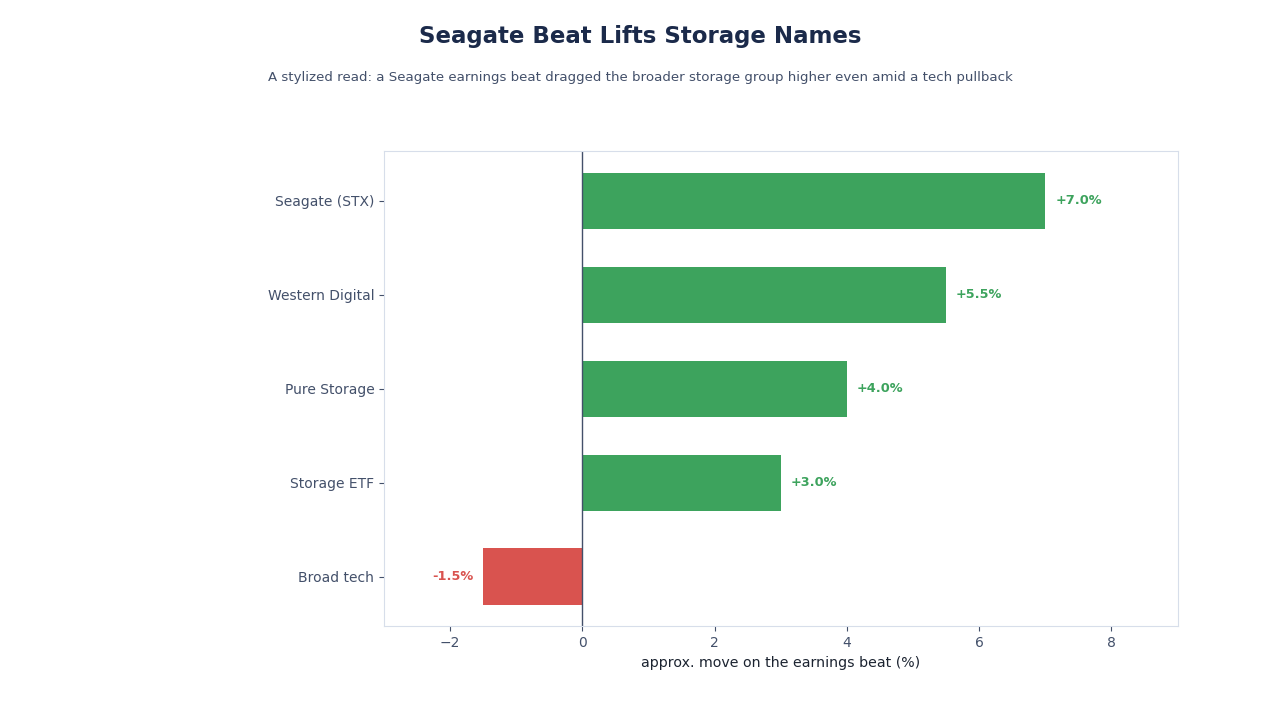
इसने एक पोस्ट-मार्केट रैली को प्रेरित किया, जिसने न केवल सीगेट को बल्कि निम्नलिखित को भी उठाया:
- वेस्टर्न डिजिटल
- सैंडिस्क
- माइक्रोन
यह क्यों महत्वपूर्ण है
बाजार एक सूक्ष्म लेकिन शक्तिशाली संकेत भेज रहा है:
जबकि एआई “हाइप स्टॉक्स” में सुधार हो सकता है, एआई अवसंरचना की मांग संरचनात्मक है, चक्रीय नहीं।
बाजार व्याख्या ढांचा
एक संरचित दृष्टिकोण का उपयोग करते हुए (जैसे कि SimianX AI में), हम इसे तोड़ सकते हैं:
- अल्पकालिक संकेत: मूल्यांकन संकुचन द्वारा प्रेरित तकनीकी वापसी
- मध्यमकालिक संकेत: एआई अवसंरचना खेलों में रोटेशन
- दीर्घकालिक प्रवृत्ति: डेटा भंडारण और गणना क्षमता के लिए निरंतर मांग
बाजार में गिरावट के दौरान एआई हार्डवेयर श्रृंखला की ताकत का विश्लेषण कैसे करें
चरण-दर-चरण ढांचा
- कमाई के संकेतों को ट्रैक करें
- उन कंपनियों की तलाश करें जैसे सीगेट जो अपेक्षाओं को पार कर रही हैं
- दूसरे क्रम के प्रभावों की पहचान करें
- भंडारण की मांग बढ़ रही है → निरंतर एआई तैनाती का संकेत
- पूंजी व्यय प्रवृत्तियों की निगरानी करें
- क्लाउड प्रदाता एआई अवसंरचना पर खर्च बढ़ा रहे हैं
- आपूर्ति श्रृंखला संरेखण का मूल्यांकन करें
- क्या मेमोरी, स्टोरेज, और कंप्यूट सभी एक साथ बढ़ रहे हैं?
देखने के लिए प्रमुख संकेतक
- डेटा सेंटर कैपेक्स वृद्धि
- स्टोरेज मूल्य निर्धारण प्रवृत्तियाँ
- एंटरप्राइज एआई अपनाने की दरें
- क्लाउड अवसंरचना विस्तार
| संकेतक | बुलिश सिग्नल | बेयरिश सिग्नल |
|---|---|---|
| स्टोरेज मांग | बढ़ती एंटरप्राइज ऑर्डर | कमजोर उपभोक्ता मांग |
| एआई मॉडल वृद्धि | बड़े डेटा सेट की आवश्यकता | मॉडल ऑप्टिमाइजेशन प्लेटो |
| क्लाउड खर्च | बढ़ा हुआ एआई कैपेक्स | बजट में कटौती |
यह निवेशकों के लिए क्या मतलब रखता है?
एआई हाइप स्टॉक्स और एआई अवसंरचना स्टॉक्स के बीच का भिन्नता अधिक स्पष्ट होती जा रही है।
रणनीतिक अंतर्दृष्टियाँ
- रोटेशन अवसर: निवेशक कम कीमत वाली अवसंरचना खेलों की ओर बढ़ सकते हैं
- स्थिरता लाभ: स्टोरेज मांग एआई सॉफ़्टवेयर हाइप चक्रों की तुलना में कम अस्थिर है
- प्रारंभिक चक्र स्थिति: स्टोरेज अक्सर पूर्ण एआई मुद्रीकरण से पहले बढ़ता है
सिमियनएक्स एआई निर्णय लेने में कैसे सुधार करता है
सिमियनएक्स एआई एक मल्टी-एजेंट विश्लेषण प्रणाली प्रदान करता है जो निवेशकों की मदद करता है:
- तकनीकी संकेतकों को मौलिक संकेतों के साथ मिलाना
- बाजार की भावना और पूंजी प्रवाह का विश्लेषण करना
- स्टोरेज जैसे छिपे हुए ताकत वाले क्षेत्रों की पहचान करना
उदाहरण के लिए:
- संकेतक एजेंट स्टोरेज स्टॉक्स में मूल्य गति को ट्रैक करता है
- इंटेलिजेंस एजेंट आय की भावना का विश्लेषण करता है
- मौलिक एजेंट दीर्घकालिक एआई मांग का मूल्यांकन करता है
- निर्णय एजेंट सभी संकेतों को क्रियाशील अंतर्दृष्टियों में संश्लेषित करता है
यह दृष्टिकोण व्यापारियों को पुलबैक पर भावनात्मक रूप से प्रतिक्रिया करने से बचने की अनुमति देता है और इसके बजाय संरचनात्मक प्रवृत्तियों पर ध्यान केंद्रित करने की अनुमति देता है।
हार्डवेयर चेन अवसरों की पहचान के लिए एआई उपकरणों का उपयोग कैसे करें
व्यावहारिक कार्यप्रवाह
- कमाई के प्रदर्शन को स्कैन करने के लिए SimianX AI जैसे प्लेटफार्मों का उपयोग करें
- AI-संबंधित क्षेत्रों (स्टोरेज, सेमीकंडक्टर्स) के लिए फ़िल्टर करें
- समय सीमा (1D, 1W, 1M) के बीच प्रदर्शन की तुलना करें
- ऑन-चेन या मैक्रो संकेतों (क्रिप्टो-AI ओवरलैप के लिए) के साथ मान्य करें
उदाहरण रणनीति
- तकनीकी बिक्री के दौरान प्रदर्शन करने वाले स्टोरेज स्टॉक्स की पहचान करें
- बढ़ते संस्थानिक प्रवाह के साथ पुष्टि करें
- पुलबैक समेकन चरणों के दौरान स्थिति में प्रवेश करें
“सर्वश्रेष्ठ AI व्यापार अक्सर सबसे स्पष्ट नामों में नहीं होते—बल्कि उस बुनियादी ढांचे में होते हैं जो चुपचाप क्रांति को शक्ति प्रदान कर रहा है।”
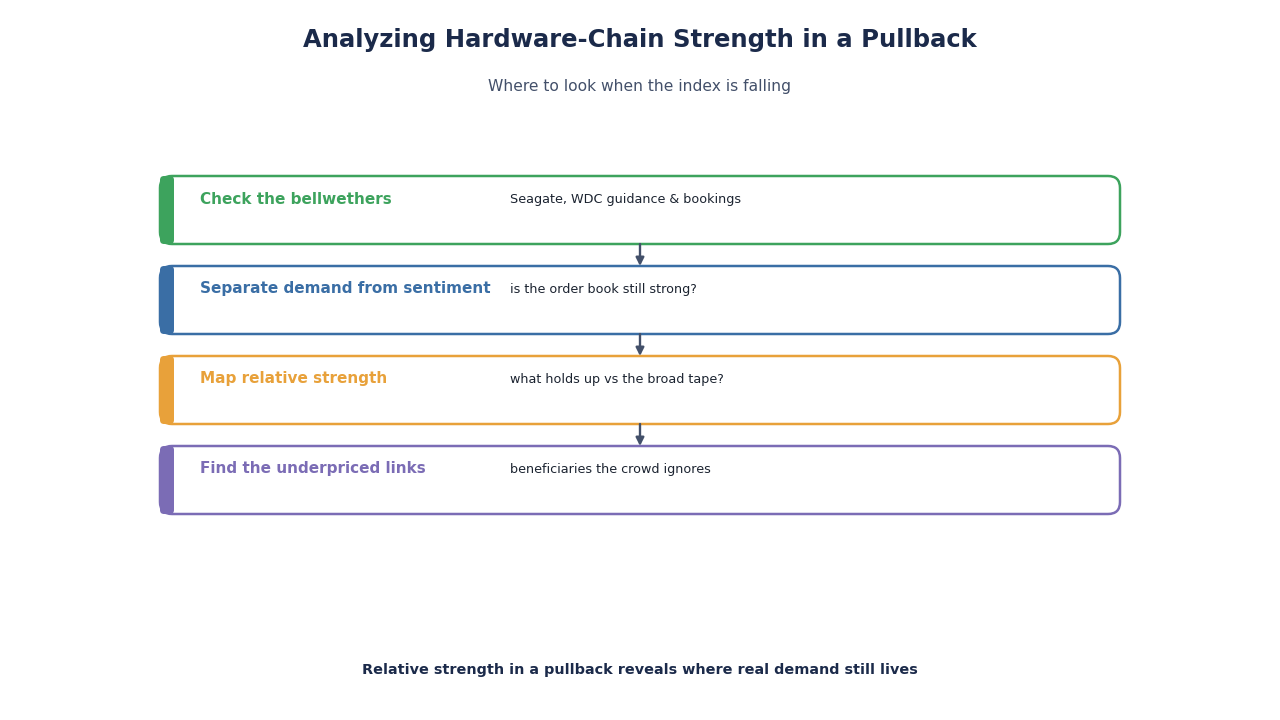
तकनीकी पुलबैक के बावजूद AI स्टोरेज की मांग को क्या चला रहा है?
प्रमुख चालक
- प्रशिक्षण डेटा आवश्यकताओं का विस्फोट
- उद्यम AI अपनाने की वृद्धि
- क्लाउड और एज कंप्यूटिंग का विस्तार
- वास्तविक समय अनुमान प्रणाली की बढ़ती आवश्यकता
संरचनात्मक बनाम चक्रीय मांग
| मांग प्रकार | विवरण | उदाहरण |
|---|---|---|
| संरचनात्मक | दीर्घकालिक AI अपनाना | डेटा सेंटर का विस्तार |
| चक्रीय | अल्पकालिक तकनीकी भावना | स्टॉक मार्केट पुलबैक |
मुख्य निष्कर्ष: स्टोरेज की मांग संरचनात्मक है, अटकलों पर आधारित नहीं।
AI हार्डवेयर चेन ताकत और स्टोरेज स्टॉक्स के बारे में अक्सर पूछे जाने वाले प्रश्न
AI मार्केट पुलबैक के दौरान स्टोरेज स्टॉक्स को क्या चला रहा है?
स्टोरेज स्टॉक्स AI डेटा बुनियादी ढांचे की निरंतर मांग से लाभ उठा रहे हैं। यहां तक कि जब AI शेयरों में गिरावट आती है, कंपनियों को अभी भी विशाल डेटा सेट को स्टोर और प्रोसेस करने की आवश्यकता होती है, जो दीर्घकालिक वृद्धि का समर्थन करता है।
Seagate की कमाई AI हार्डवेयर चेन पर कैसे प्रभाव डालती है?
Seagate के मजबूत लाभ संकेत देते हैं कि स्टोरेज समाधानों की निरंतर मांग है, यह पुष्टि करते हुए कि AI अवसंरचना में निवेश मजबूत बना हुआ है, भले ही व्यापक तकनीकी कमजोरी हो।
AI हार्डवेयर सप्लाई चेन में स्टोरेज क्यों महत्वपूर्ण है?
AI सिस्टम प्रशिक्षण और अनुमान के लिए विशाल डेटा सेट पर निर्भर करते हैं। स्केलेबल स्टोरेज समाधानों के बिना, AI विकास गंभीर रूप से सीमित होगा।
AI हार्डवेयर चेन के अवसरों का प्रभावी ढंग से विश्लेषण कैसे करें?
लाभ डेटा, बाजार की भावना और अवसंरचना प्रवृत्तियों को मिलाकर एक बहु-स्तरीय दृष्टिकोण का उपयोग करें। SimianX AI जैसे उपकरण इन संकेतों को स्पष्ट अंतर्दृष्टियों के लिए एकीकृत कर सकते हैं।
क्या स्टोरेज स्टॉक्स AI सॉफ़्टवेयर कंपनियों से बेहतर निवेश हैं?
ज़रूरी नहीं कि बेहतर हों, लेकिन अक्सर अधिक स्थिर होते हैं। स्टोरेज कंपनियाँ दीर्घकालिक अवसंरचना मांग से लाभान्वित होती हैं, जबकि AI सॉफ़्टवेयर फर्में हाइप चक्रों के प्रति अधिक संवेदनशील हो सकती हैं।
निष्कर्ष
AI हार्डवेयर चेन अभी भी ताकत दिखाती है: Seagate के लाभ ने तकनीकी खींचतान के बीच स्टोरेज स्टॉक्स को बढ़ावा दिया विषय बाजार की गतिशीलता में एक महत्वपूर्ण बदलाव को उजागर करता है। जबकि शीर्ष AI स्टॉक्स में उतार-चढ़ाव हो सकता है, AI क्रांति की नींव—स्टोरेज, मेमोरी, और अवसंरचना—मजबूत और बढ़ती हुई बनी हुई है।
निवेशकों के लिए, यह सतही उतार-चढ़ाव से परे देखने और संरचनात्मक विजेताओं पर ध्यान केंद्रित करने का एक शक्तिशाली अवसर प्रस्तुत करता है। SimianX AI जैसे उपकरणों का लाभ उठाकर, आप बाजार के संकेतों में गहरी अंतर्दृष्टि प्राप्त कर सकते हैं, उभरती प्रवृत्तियों की पहचान कर सकते हैं, और अधिक सूचित, डेटा-संचालित निर्णय ले सकते हैं।
एक बाजार में जो शोर से संचालित है, स्पष्टता अल्फा है—और AI-संचालित विश्लेषण लाभ है।
गहरा विश्लेषण: AI हार्डवेयर चेन का संरचनात्मक विकास
यह पूरी तरह से समझने के लिए कि AI हार्डवेयर चेन अभी भी बाजार की अस्थिरता के बावजूद ताकत दिखाती है, हमें दूर से देखने की आवश्यकता है और यह जांचने की आवश्यकता है कि पूरा पारिस्थितिकी तंत्र कैसे विकसित हो रहा है। जो हम देख रहे हैं वह केवल स्टोरेज स्टॉक्स में एक चक्रीय सुधार नहीं है—यह एक बहु-दशक अवसंरचना निर्माण है जो कृत्रिम बुद्धिमत्ता द्वारा संचालित है।
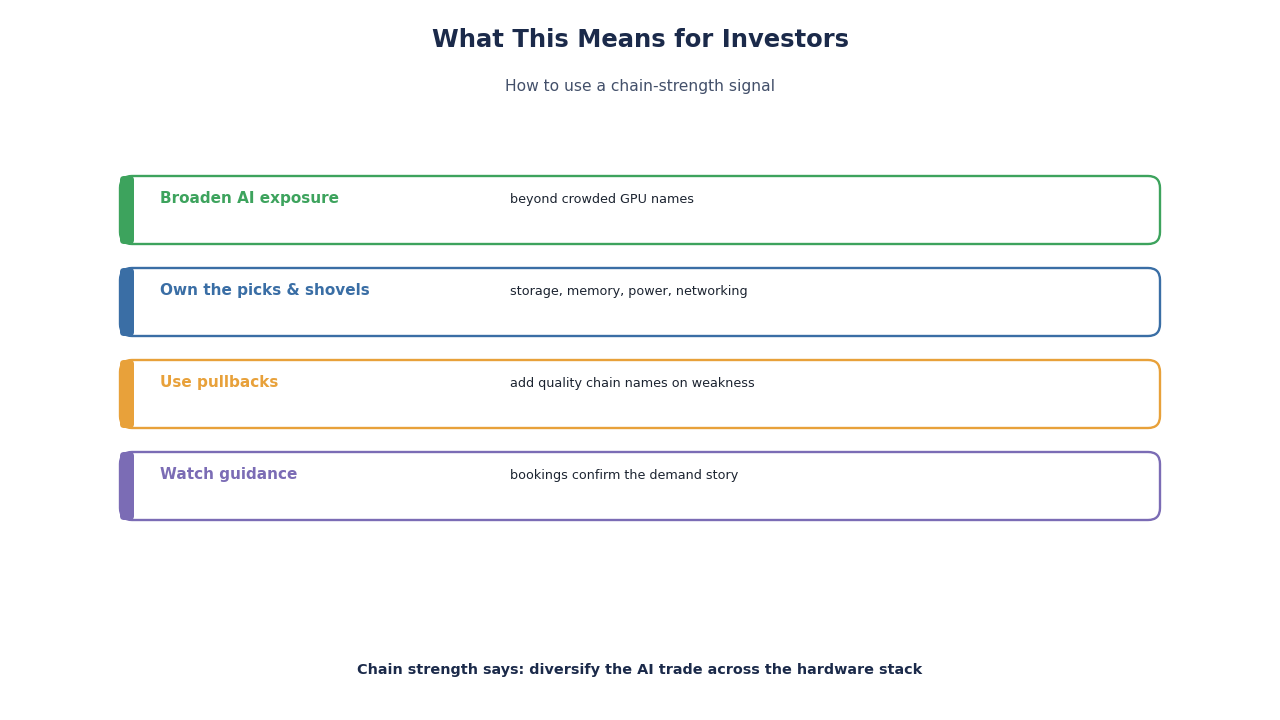
क्लाउड कंप्यूटिंग से एआई इन्फ्रास्ट्रक्चर तक
पिछला दशक क्लाउड कंप्यूटिंग के विस्तार द्वारा परिभाषित किया गया था। AWS, Azure, और Google Cloud जैसे हाइपरस्केलर्स ने SaaS और डिजिटल परिवर्तन का समर्थन करने के लिए कंप्यूट और स्टोरेज में भारी निवेश किया।
अब, यह पैराजाइम बदल रहा है:
- क्लाउड-प्रथम से → एआई-प्रथम की ओर
- डेटा संग्रहण से → डेटा बुद्धिमत्ता की ओर
- केंद्रीकृत प्रसंस्करण से → वितरित एआई सिस्टम की ओर
यह संक्रमण उच्च-क्षमता, स्केलेबल, और कुशल स्टोरेज सिस्टम की मांग को नाटकीय रूप से बढ़ाता है।
“एआई क्लाउड कंप्यूटिंग को प्रतिस्थापित नहीं कर रहा है—यह इसके इन्फ्रास्ट्रक्चर की आवश्यकताओं को गुणात्मक रूप से बढ़ा रहा है।”
डेटा विस्फोट समस्या
एआई मॉडल—विशेष रूप से बड़े भाषा मॉडल (LLMs)—की आवश्यकता होती है:
- प्रशिक्षण डेटा के पेटाबाइट्स
- निरंतर अपडेट और फाइन-ट्यूनिंग
- अनुपालन और पुनः प्रशिक्षण के लिए दीर्घकालिक संग्रहण
यह स्टोरेज के लिए एक संयोजक मांग वक्र बनाता है।
उदाहरण: डेटा वृद्धि बनाम स्टोरेज की जरूरतें
| वर्ष | वैश्विक डेटा निर्मित | स्टोरेज मांग वृद्धि |
|---|---|---|
| 2020 | ~64 ज़ेटाबाइट्स | मध्यम |
| 2023 | ~120 ज़ेटाबाइट्स | उच्च |
| 2026E | 180+ ज़ेटाबाइट्स | विस्फोटक |
इसका अर्थ स्पष्ट है:
भले ही एआई स्टॉक मूल्यांकन में उतार-चढ़ाव हो, भौतिक इन्फ्रास्ट्रक्चर की मांग लगातार बढ़ती जा रही है।
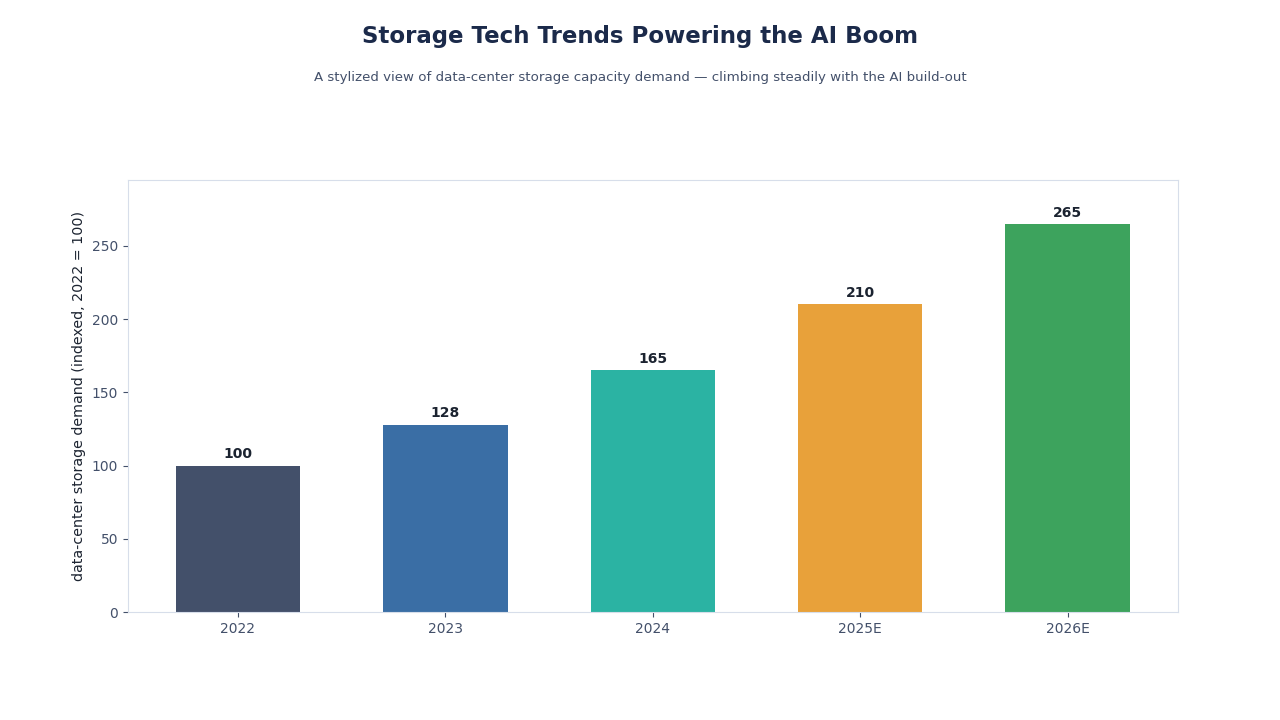
एआई बूम को शक्ति देने वाले स्टोरेज प्रौद्योगिकी रुझान
विश्लेषण की अगली परत यह है कि स्टोरेज प्रौद्योगिकी स्वयं एआई की मांगों को पूरा करने के लिए कैसे विकसित हो रही है।
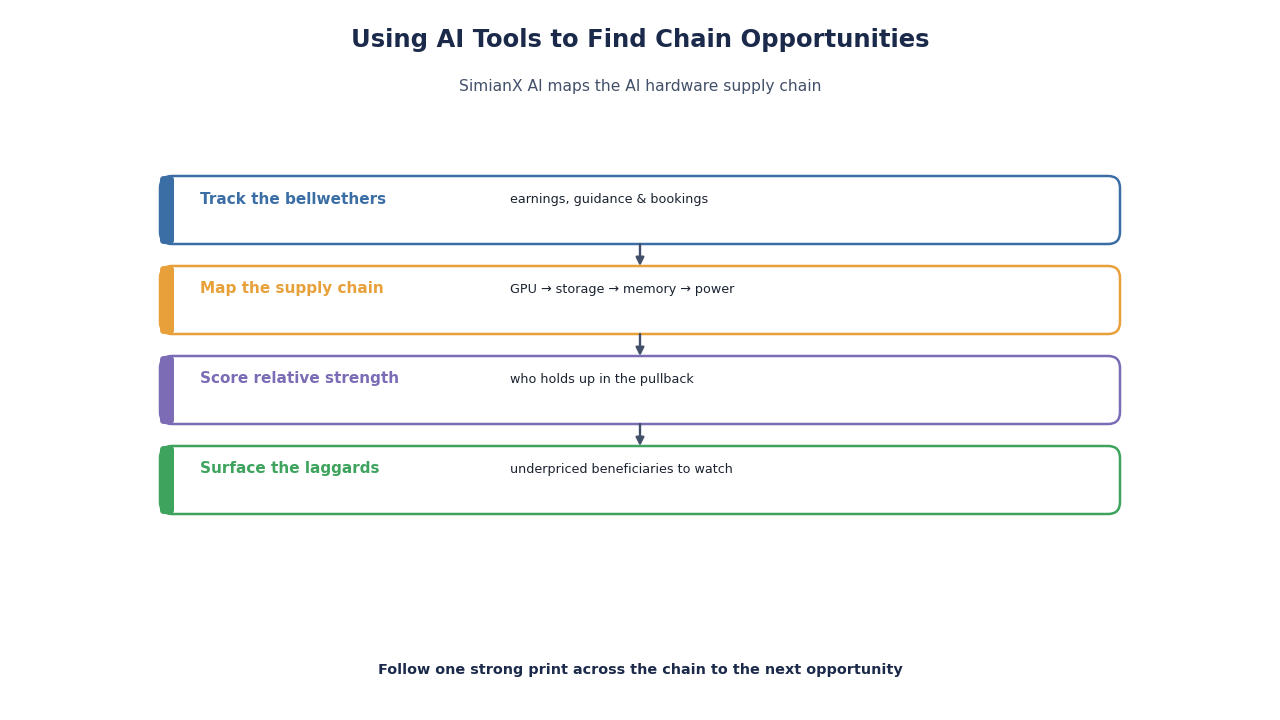
एआई युग में HDD बनाम SSD
प्रचलित धारणा के विपरीत, HDDs अप्रचलित नहीं हैं। वास्तव में, Seagate जैसी कंपनियाँ निम्नलिखित से लाभ उठा रही हैं:
- लागत-कुशल थोक भंडारण
- ठंडी डेटा और AI प्रशिक्षण डेटा सेट के लिए आदर्श
- SSDs की तुलना में प्रति TB कम लागत
इस बीच, SSDs पर हावी हैं:
- वास्तविक समय की अनुमान कार्यभार
- उच्च गति डेटा पहुंच
- एज AI सिस्टम
हाइब्रिड स्टोरेज आर्किटेक्चर
आधुनिक AI सिस्टम स्तरीय भंडारण रणनीतियों पर निर्भर करते हैं:
- गर्म भंडारण (SSD): वास्तविक समय AI अनुमान
- गर्म भंडारण (हाइब्रिड): बार-बार एक्सेस किए जाने वाले डेटा सेट
- ठंडा भंडारण (HDD): प्रशिक्षण अभिलेखागार और बैकअप
यह स्तरित दृष्टिकोण सुनिश्चित करता है:
- लागत अनुकूलन
- प्रदर्शन दक्षता
- स्केलेबिलिटी
उभरती प्रौद्योगिकियाँ
- HAMR (हीट-असिस्टेड मैग्नेटिक रिकॉर्डिंग)
- DNA भंडारण (प्रायोगिक)
- AI-ऑप्टिमाइज्ड स्टोरेज आर्किटेक्चर
“AI का भविष्य केवल तेज चिप्स नहीं है—बल्कि स्मार्ट स्टोरेज है।”
पूंजी प्रवाह: स्मार्ट पैसा कहाँ जा रहा है
AI हार्डवेयर श्रृंखला की ताकत की पुष्टि करने वाले सबसे महत्वपूर्ण संकेतों में से एक पूंजी आवंटन है।
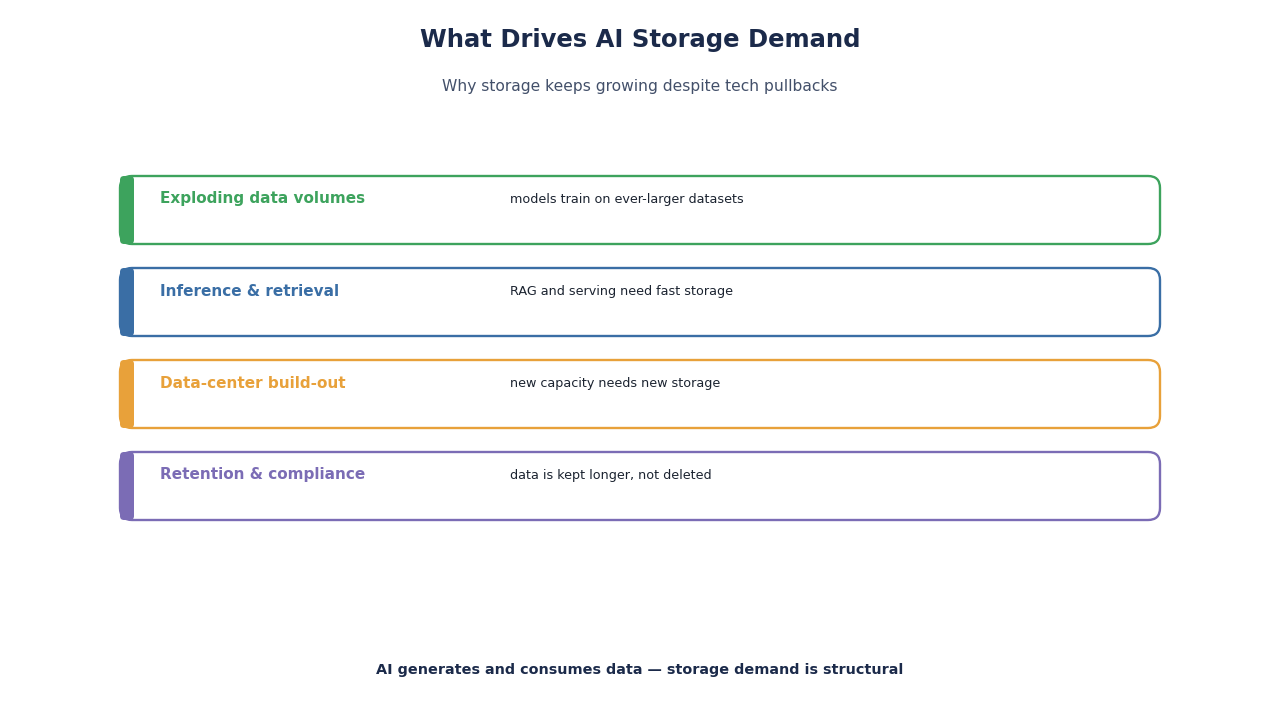
अवसंरचना में संस्थानिक रोटेशन
तकनीकी खींचतान के दौरान, संस्थानिक निवेशक अक्सर निम्नलिखित में रोटेट होते हैं:
- सेमीकंडक्टर उपकरण कंपनियाँ
- मेमोरी और भंडारण प्रदाता
- डेटा सेंटर REITs
क्यों?
क्योंकि ये खंड निम्नलिखित प्रदान करते हैं:
- अधिक पूर्वानुमानित नकद प्रवाह
- कम मूल्यांकन जोखिम
- AI विकास के लिए प्रत्यक्ष एक्सपोजर
SimianX AI के साथ पूंजी प्रवाह की व्याख्या करना
SimianX AI का उपयोग करके, निवेशक ट्रैक कर सकते हैं:
- भंडारण स्टॉक्स में असामान्य वॉल्यूम स्पाइक्स
- कमाई के बीट और पूंजी प्रवाह के बीच संबंध
- मल्टी-टाइमफ्रेम मोमेंटम शिफ्ट्स
उदाहरण के लिए:
- Seagate वॉल्यूम में वृद्धि + सकारात्मक कमाई भावना
- AI सॉफ़्टवेयर स्टॉक्स में कमजोर प्रदर्शन के साथ मिलकर
→ रोटेशन, AI से निकासी नहीं का संकेत देता है
मैक्रो वातावरण: क्यों एआई अवसंरचना लचीली है
मैक्रो पृष्ठभूमि निवेशक व्यवहार को आकार देने में एक महत्वपूर्ण भूमिका निभाती है।
ब्याज दरें और एआई निवेश
उच्च ब्याज दरों के माहौल में भी:
- एआई अवसंरचना खर्च मजबूत बना हुआ है
- हाइपरस्केलर्स आक्रामक रूप से निवेश करना जारी रखते हैं
- सरकारें एआई को रणनीतिक प्रौद्योगिकी के रूप में समर्थन देती हैं
भू-राजनीतिक कारक
एआई अब एक राष्ट्रीय प्राथमिकता है:
- अमेरिका-चीन तकनीकी प्रतिस्पर्धा
- सेमीकंडक्टर आपूर्ति श्रृंखला का पुनःस्थापन
- डेटा संप्रभुता नियम
ये बल स्थानीयकृत डेटा भंडारण अवसंरचना की मांग बढ़ाते हैं।
ऊर्जा और एआई डेटा केंद्र
एआई डेटा केंद्र ऊर्जा-गहन होते हैं, जिसके परिणामस्वरूप:
- कुशल भंडारण प्रणालियों में निवेश
- हरित डेटा केंद्र समाधानों में वृद्धि
परिदृश्य विश्लेषण: अगला क्या होता है?
इस शोध को बढ़ाने के लिए, हमें एआई हार्डवेयर श्रृंखला के लिए भविष्य के परिदृश्यों का अन्वेषण करने की आवश्यकता है।
परिदृश्य 1: एआई का निरंतर विस्तार (बुल केस)
- विभिन्न उद्योगों में एआई अपनाना तेज होता है
- डेटा उत्पादन में विस्फोट होता है
- भंडारण कंपनियों को निरंतर राजस्व वृद्धि दिखाई देती है
निहितार्थ: भंडारण स्टॉक्स व्यापक तकनीक से बेहतर प्रदर्शन करते हैं
परिदृश्य 2: एआई हाइप सुधार (बेस केस)
- एआई मूल्यांकन सामान्य होते हैं
- अवसंरचना की मांग स्थिर रहती है
- एआई क्षेत्रों में घुमाव जारी रहता है
निहितार्थ: भंडारण एक रक्षात्मक एआई खेल बना रहता है
परिदृश्य 3: मैक्रो झटका (बियर केस)
- वैश्विक मंदी आईटी खर्च को कम करती है
- एआई निवेश अस्थायी रूप से धीमा होता है
निहितार्थ: अल्पकालिक दबाव, दीर्घकालिक सुरक्षित
“यहां तक कि मंदी के परिदृश्यों में, एआई अवसंरचना की मांग विलंबित होती है—नष्ट नहीं होती।”
उन्नत ढांचा: हार्डवेयर श्रृंखलाओं का मल्टी-एजेंट एआई विश्लेषण
यहीं पर सिमियनएक्स एआई विशेष रूप से शक्तिशाली बनता है।
सिमियनएक्स एआई बाजार को कैसे तोड़ता है
SimianX एक मल्टी-एजेंट आर्किटेक्चर का उपयोग करता है:
1. संकेत एजेंट
- तकनीकी संकेतों को ट्रैक करता है
- स्टोरेज स्टॉक्स में ट्रेंड रिवर्सल की पहचान करता है
2. इंटेलिजेंस एजेंट
- कमाई की भावना की निगरानी करता है
- समाचार-प्रेरित गति का पता लगाता है
3. फंडामेंटल एजेंट
- दीर्घकालिक मांग ड्राइवरों का मूल्यांकन करता है
- एआई अवसंरचना वृद्धि का विश्लेषण करता है
4. निर्णय एजेंट
- सभी संकेतों का संश्लेषण करता है
- क्रियाशील ट्रेडिंग अंतर्दृष्टि प्रदान करता है
व्यावहारिक उदाहरण
इस सेटअप की कल्पना करें:
- सीगेट की कमाई ने उम्मीदों को पार किया
- माइक्रोन मजबूत DRAM मांग दिखा रहा है
- एनवीडिया पीछे हट रहा है
पारंपरिक निवेशक भ्रमित हो सकते हैं।
SimianX एआई व्याख्या करता है:
→ बुलिश अवसंरचना डाइवर्जेंस सिग्नल
क्रॉस-मार्केट प्रभाव: क्रिप्टो, एआई, और स्टोरेज
एक अक्सर अनदेखा कोण यह है कि एआई अवसंरचना क्रिप्टो मार्केट्स को कैसे प्रभावित करती है।
प्रमुख ओवरलैप
- एआई डेटा सेंटर और क्रिप्टो माइनिंग अवसंरचना साझा करते हैं
- ऑन-चेन डेटा वृद्धि के साथ स्टोरेज की मांग बढ़ती है
- विकेंद्रीकृत स्टोरेज प्रोजेक्ट्स प्रासंगिकता प्राप्त करते हैं
उभरती हुई कथा
- एआई + ब्लॉकचेन का समागम
- विकेंद्रीकृत एआई प्रशिक्षण डेटा सेट
- टोकनाइज्ड स्टोरेज नेटवर्क
यह बाजारों में नई निवेश संभावनाएं उत्पन्न करता है।
एआई हार्डवेयर ट्रेंड्स पर आधारित सामरिक ट्रेडिंग रणनीतियाँ
रणनीति 1: कमाई की गति खेल
- मजबूत मार्गदर्शन वाली स्टोरेज कंपनियों की पहचान करें
- पुष्टि ब्रेकआउट के बाद स्थिति में प्रवेश करें
रणनीति 2: रोटेशन कैप्चर
- अधिक मूल्यांकन वाले एआई सॉफ़्टवेयर को शॉर्ट करें
- कम मूल्यांकन वाली अवसंरचना को लॉन्ग करें
रणनीति 3: मल्टी-टाइमफ्रेम संरेखण
SimianX एआई का उपयोग करते हुए:
- 1D ट्रेंड: बुलिश
- 4H ट्रेंड: समेकन
- 1H ट्रेंड: ब्रेकआउट
→ उच्च-प्रायिकता एंट्री सेटअप
जोखिम कारक जिन पर ध्यान दें
यहां तक कि मजबूत विषयों में भी जोखिम होते हैं।
प्रमुख जोखिम
- स्टोरेज आपूर्ति में अधिक क्षमता
- HDD/SSD बाजारों में मूल्य निर्धारण दबाव
- अपेक्षा से धीमी AI अपनाने की प्रक्रिया
- डेटा उपयोग पर नियामक सीमाएँ
जोखिम न्यूनीकरण
- हार्डवेयर खंडों में विविधता लाना
- आय के रुझानों पर करीबी नज़र रखना
- वास्तविक समय सिग्नल मान्यता के लिए AI उपकरणों का उपयोग करना
व्यवहारिक अंतर्दृष्टि: अधिकांश निवेशक इस प्रवृत्ति को क्यों चूकते हैं
कई निवेशक स्टोरेज स्टॉक्स को नजरअंदाज करने का कारण:
- हेडलाइन AI नामों पर ध्यान केंद्रित करना
- उच्च-विकास कथाओं की ओर पूर्वाग्रह
- अवसंरचना के महत्व का कम आकलन
“सबसे बड़े अवसर अक्सर वहीं होते हैं जहाँ ध्यान सबसे कम होता है।”
दीर्घकालिक दृष्टिकोण: AI अवसंरचना का अगला दशक
आगे देखते हुए, AI हार्डवेयर श्रृंखला संभवतः में विकसित होगी:
- पूरी तरह से एकीकृत AI अवसंरचना पारिस्थितिकी तंत्र
- स्वायत्त डेटा केंद्र अनुकूलन
- AI-प्रबंधित स्टोरेज आवंटन
मेगा प्रवृत्तियाँ
- गुणात्मक डेटा वृद्धि
- AI-नैटिव उद्यम
- एज कंप्यूटिंग का विस्तार
निवेश सिद्धांत
सबसे मजबूत अवसर होंगे:
- कंपनियाँ जो डेटा स्केलेबिलिटी को सक्षम करती हैं
- मूल्य निर्धारण शक्ति वाले अवसंरचना प्रदाता
- प्लेटफ़ॉर्म जो AI-चालित विश्लेषण को एकीकृत करते हैं
अंतिम रणनीतिक निष्कर्ष
मुख्य अंतर्दृष्टियाँ
- AI में गिरावट सेक्टरों में समान नहीं है
- स्टोरेज की मांग संरचनात्मक और तेज़ी से बढ़ रही है
- Seagate की आय वास्तविक मांग, न कि प्रचार की पुष्टि करती है
- अवसंरचना खेल असामान्य अवसर प्रदान करते हैं
कार्य योजना
- स्टोरेज और मेमोरी की आय की निगरानी करें
- पूंजी रोटेशन संकेतों को ट्रैक करें
- मान्यता के लिए SimianX AI जैसे AI उपकरणों का उपयोग करें
- दीर्घकालिक अवसंरचना प्रवृत्तियों पर ध्यान केंद्रित करें
विस्तारित निष्कर्ष
इस शोध की निरंतरता एक महत्वपूर्ण सत्य को मजबूत करती है:
AI क्रांति केवल बुद्धिमत्ता के बारे में नहीं है—यह अवसंरचना के बारे में है।
जबकि बाजार में उतार-चढ़ाव हो सकता है और भावना बदल सकती है, AI की नींव—डेटा भंडारण, प्रसंस्करण, और स्केलेबिलिटी—मजबूत और अनिवार्य बनी हुई है।
Seagate से संकेत अकेला नहीं है। यह एक व्यापक पैटर्न का हिस्सा है:
- मजबूत अवसंरचना की मांग
- रणनीतिक पूंजी आवंटन
- दीर्घकालिक तकनीकी परिवर्तन
निवेशकों के लिए, अवसर इन संकेतों को जल्दी पहचानने और निर्णायक रूप से कार्य करने में है।
SimianX AI जैसे प्लेटफार्मों का लाभ उठाकर, आप तक पहुँच प्राप्त करते हैं:
- बहु-आयामी बाजार विश्लेषण
- वास्तविक समय में संकेतों की व्याख्या
- संरचित निर्णय लेने के ढांचे
एक ऐसी दुनिया में जहाँ AI हर उद्योग को फिर से आकार दे रहा है, जो लोग हार्डवेयर श्रृंखला को समझते हैं उनके पास निर्णायक बढ़त होगी।
और जैसा कि यह शोध दिखाता है, अनिश्चितता के समय में भी:
सबसे मजबूत प्रवृत्तियाँ अक्सर सबसे कम स्पष्ट होती हैं—और सबसे शक्तिशाली।
संबंधित लेख
- AI स्टॉक बूम: Nvidia की अगुवाई में चिप सुपरसाइकल अभी तेज़ी से
- AI खर्च में उछाल: TSMC आउटलुक से Nvidia की मांग की पुष्टि
- AI स्टॉक्स में गिरावट: OpenAI शंका और बिग-टेक अर्निंग्स वीक
- Micron (MU): क्यों HBM3e इसे 2026 का AI मेमोरी दांव बनाता है
- AI चिप स्टॉक्स मज़बूत बने: AMD, Intel डेटा सेंटर को बढ़ावा
- ब्रॉडकॉम कमाई पूर्वावलोकन 2026: एआई एएसआईसी बैकलॉग और AVGO स्टॉक