
The 2019 Saudi Aramco Attack: How Drone Strikes Disrupted Global Oil Markets
The 2019 Saudi Aramco attack marked one of the most significant geopolitical shocks to global energy markets in modern history. On September 14, 2019, coordinated drone and missile strikes hit Saudi Arabia’s critical oil processing facilities, instantly disrupting supply and sending oil prices soaring. For traders, analysts, and institutions using platforms like SimianX AI, this event became a case study in how geopolitical risk can rapidly reshape global markets.
Understanding the mechanics, market reactions, and long-term implications of this attack is essential for anyone navigating energy markets, equities, or macro-driven trading strategies.
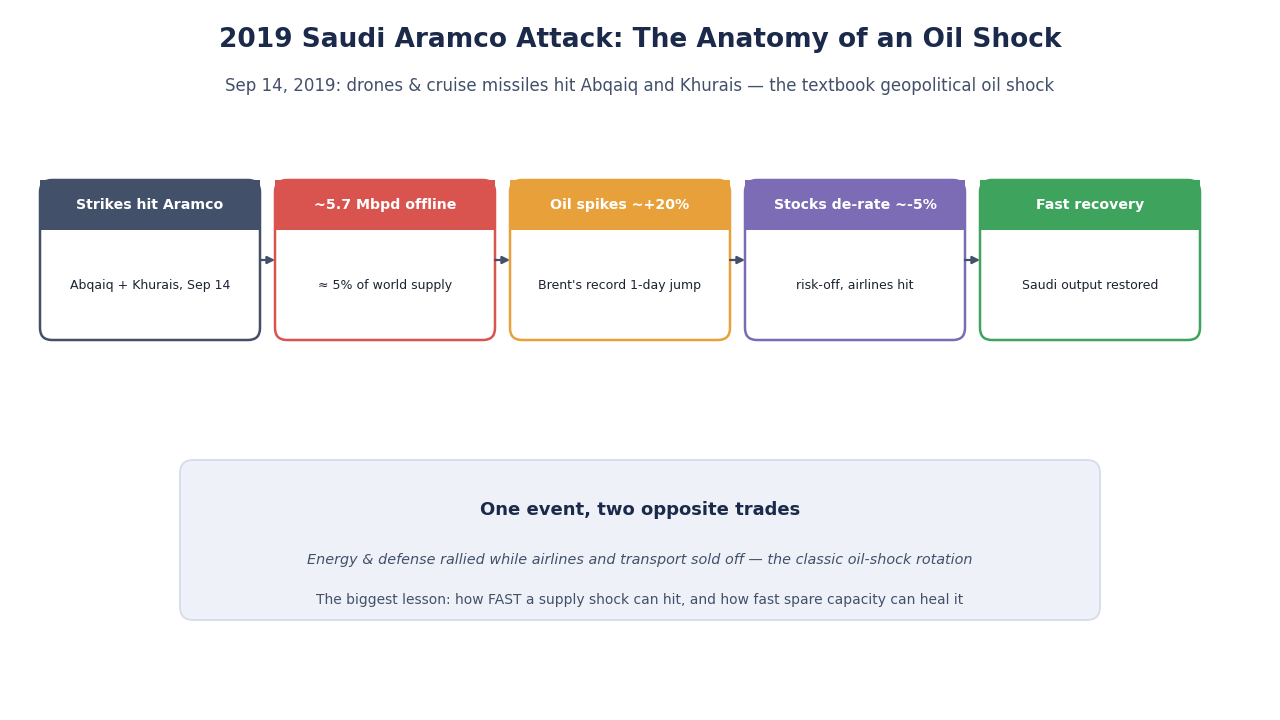
The Anatomy of the 2019 Saudi Aramco Attack
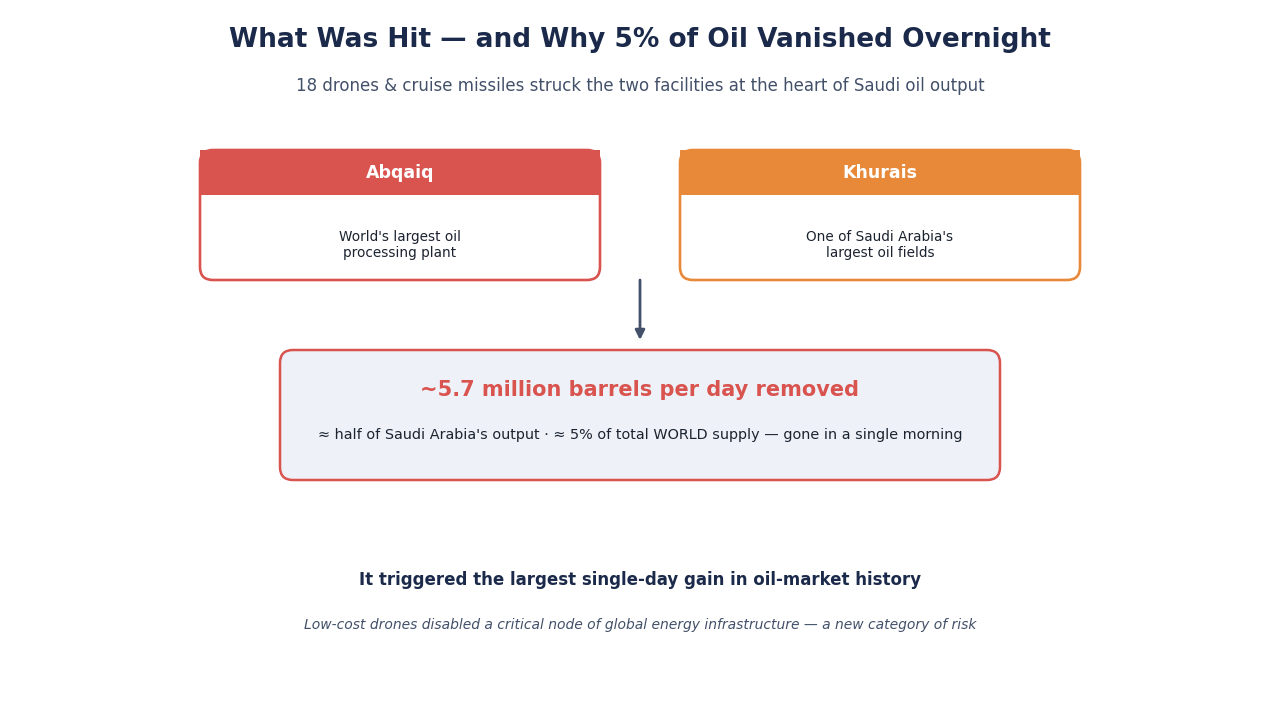
The attacks targeted two major facilities:
- Abqaiq oil processing plant (the world’s largest)
- Khurais oil field
These facilities are central to Saudi Arabia’s oil infrastructure, processing millions of barrels per day.
The strikes temporarily removed ~5.7 million barrels per day from global supply — about 5% of worldwide production.
Key characteristics of the attack:
- Use of low-cost drones and cruise missiles
- Precision targeting of critical chokepoints
- Minimal warning, high impact
- Attribution disputes (Iran vs proxy actors)
This event exposed a critical vulnerability: modern energy infrastructure can be disrupted asymmetrically at relatively low cost.
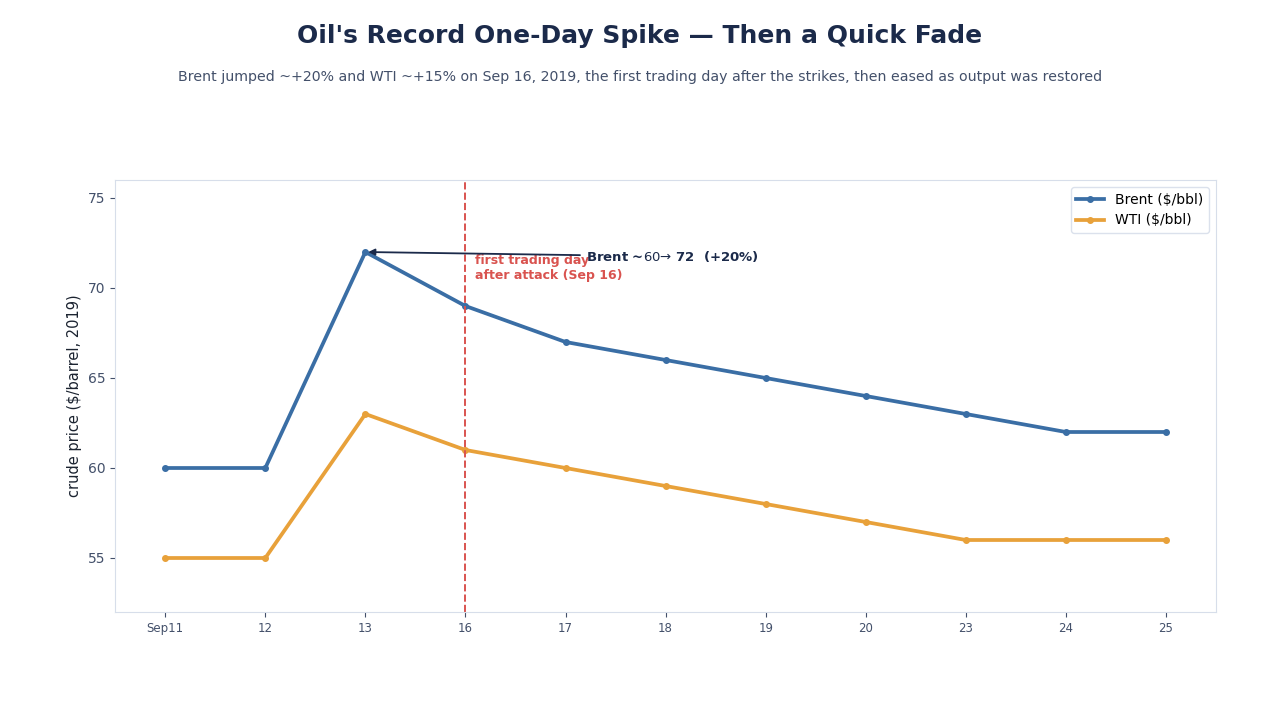
Immediate Market Reaction: Oil Price Shock
Within hours of the attack:
- Brent crude surged nearly 20% intraday
- WTI crude experienced one of its largest single-day gains in history
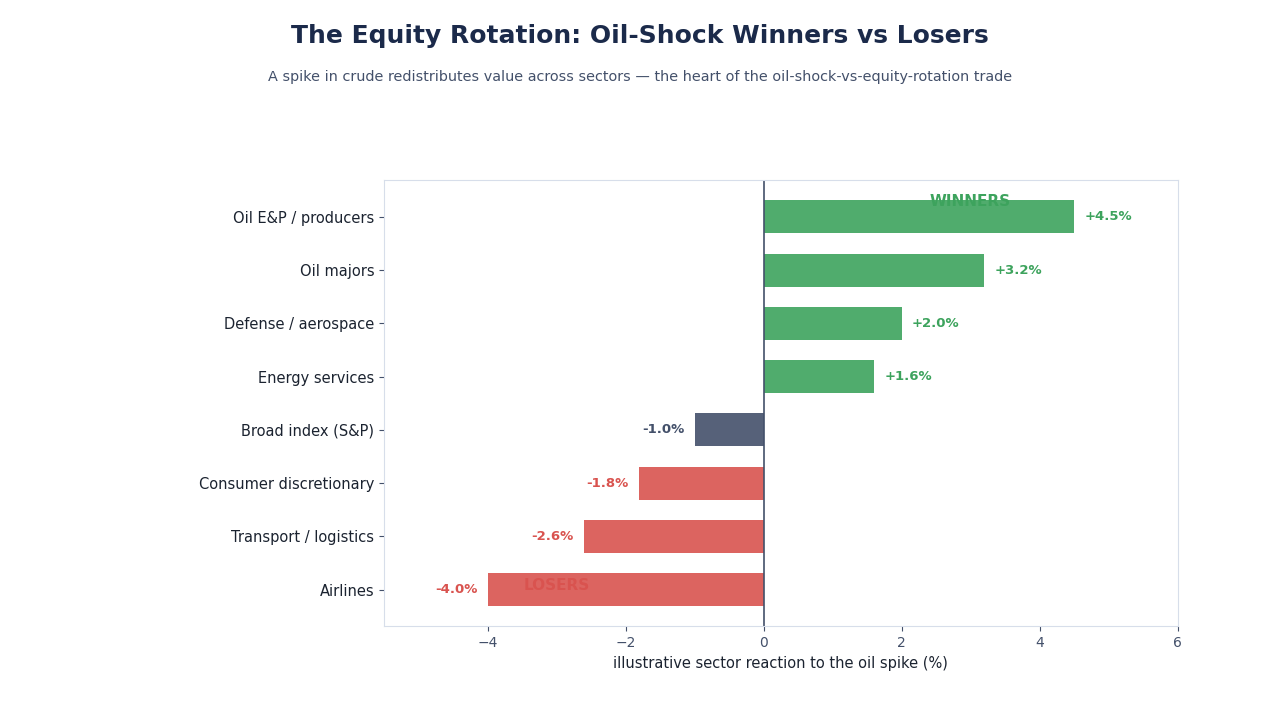
- Energy equities rallied sharply
- Airline and transport stocks declined
Price Movement Snapshot
| Asset | Pre-Attack | Post-Attack Spike | % Change |
|---|---|---|---|
| Brent Crude | ~$60 | ~$72 | +20% |
| WTI Crude | ~$55 | ~$63 | +15% |
| Saudi Aramco (IPO pending) | N/A | Sentiment boost | — |
This volatility highlights why real-time AI-driven platforms like SimianX AI are essential — they can detect early signals, correlate geopolitical data, and adjust trading strategies dynamically.
Why Did the Oil Market React So Strongly?
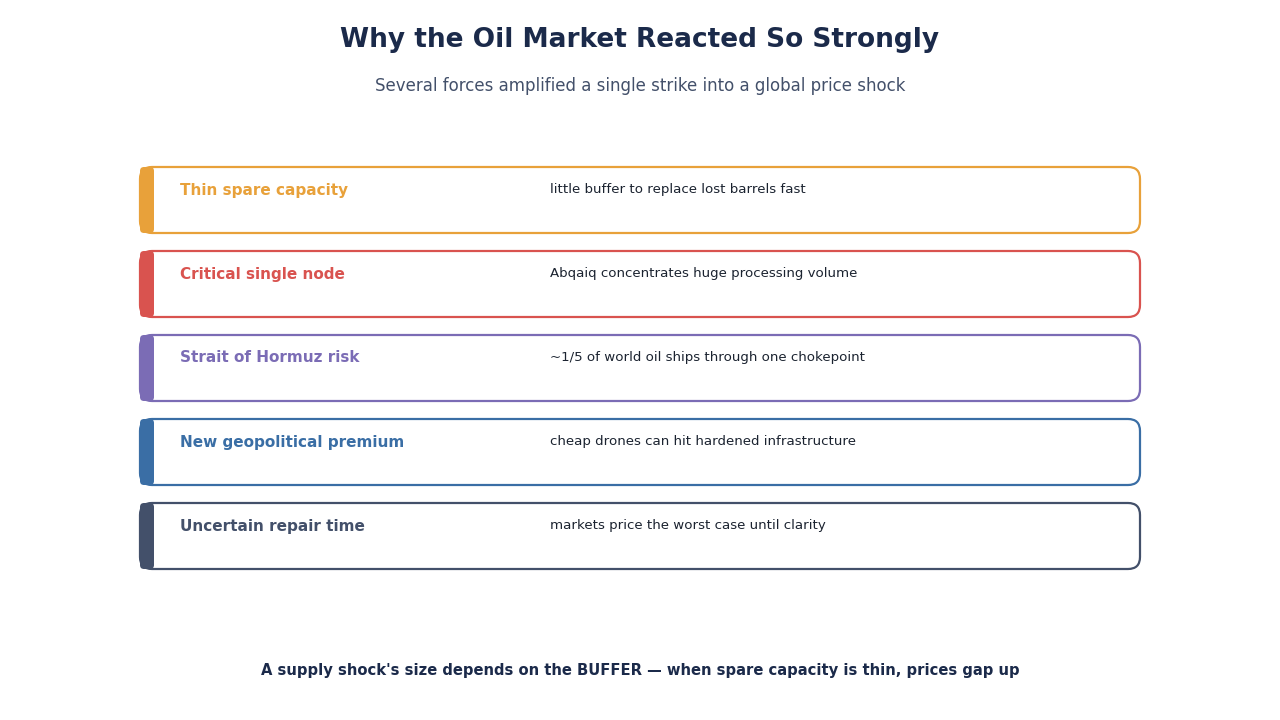
The magnitude of the reaction wasn’t just about lost supply — it was about uncertainty.
Key Drivers:
1. Supply Shock
- Immediate removal of 5% of global oil output
- No precedent for such a sudden disruption
2. Strategic Vulnerability
- Attack revealed that even heavily defended infrastructure is vulnerable
- Increased perceived risk premium
3. Escalation Risk
- Fear of broader conflict in the Middle East
- Potential for retaliation or war
4. Market Positioning
- Many traders were short oil before the attack
- Forced covering amplified price spikes
Markets don’t just react to events — they react to unexpected changes in risk perception.
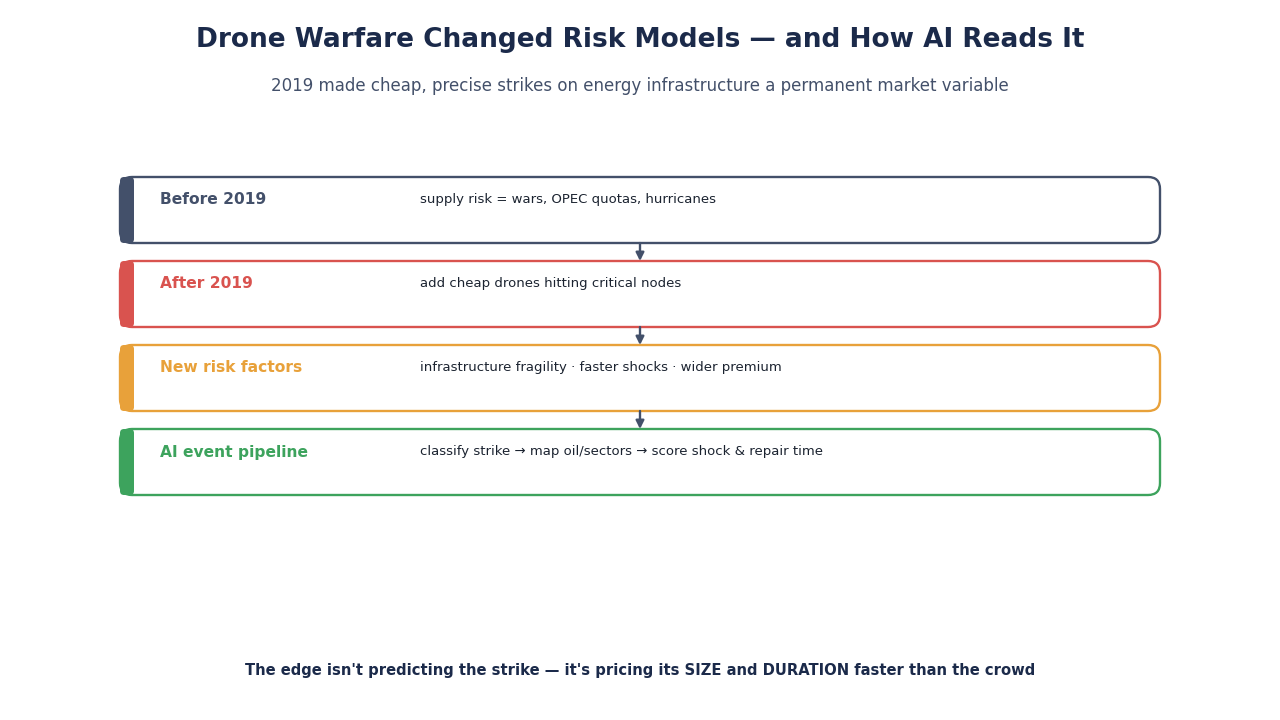
How Drone Warfare Changed Energy Market Risk Models
The 2019 Saudi Aramco attack fundamentally altered how analysts model risk.
Before 2019:
- Focus on traditional warfare
- Emphasis on state-level conflict
- Infrastructure assumed relatively secure
After 2019:
- Rise of asymmetric warfare models
- Increased importance of non-state actors
- Recognition of low-cost, high-impact threats
New Risk Factors Introduced:
- Drone swarm attacks
- Cyber-physical hybrid threats
- Precision targeting of bottlenecks
- Rapid supply disruption scenarios
Using tools like SimianX AI, traders can now integrate:
- Real-time news sentiment
- Geopolitical event tracking
- Cross-asset correlations
- Volatility regime shifts
What Were the Long-Term Impacts on Global Oil Markets?
While prices initially spiked, they stabilized relatively quickly due to:
- Saudi Arabia restoring production faster than expected
- Strategic reserves being deployed
- Market confidence returning
However, the structural impacts remained significant.
Long-Term Effects:
- Increased geopolitical risk premium in oil pricing
- Greater investment in infrastructure security
- Shift toward diversification of supply chains
- Acceleration of energy transition narratives
Market Behavior Evolution
| Factor | Pre-2019 | Post-2019 |
|---|---|---|
| Risk Pricing | Low | Elevated |
| Volatility Sensitivity | Moderate | High |
| Event-Driven Trading | Secondary | Primary driver |
How Did Stocks React to the Aramco Attack?
The equity market reaction was more nuanced than oil.
Winners:
- Oil & gas companies (ExxonMobil, Chevron)
- Defense contractors
- Energy infrastructure firms
Losers:
- Airlines (fuel cost spike)
- Logistics companies
- Emerging market equities sensitive to oil imports
Key Insight:
The attack reinforced that macro shocks create sector rotation opportunities, not just directional moves.
This is where SimianX AI’s multi-agent system becomes valuable:
- Market Intelligence Agent detects macro signals
- Decision Agent reallocates portfolios
- Indicator Agent confirms technical momentum
How Traders Can Use Events Like This Today
Understanding events like the 2019 Saudi Aramco attack is not just historical — it’s actionable.
Practical Strategy Framework:
1. Monitor Early Signals
- Geopolitical tensions
- Military activity
- Energy infrastructure vulnerabilities
2. Track Cross-Market Reactions
- Oil → equities → currencies → bonds
3. Use Multi-Timeframe Analysis
- Short-term spikes (1m–1h)
- Medium-term trends (1d–1w)
4. Apply Risk Management
- Dynamic stop-loss
- Volatility-adjusted position sizing
Example Workflow (Using SimianX AI)
- Detect news event via AI feed
- Analyze sentiment + probability of escalation
- Identify correlated assets (oil, defense stocks)
- Execute trade with risk parameters
- Monitor real-time adjustments
| Step | SimianX Feature |
|---|---|
| Detection | AI News Copilot |
| Analysis | Multi-Agent Engine |
| Execution | Trading Signals |
| Monitoring | Command Room Dashboard |
How Did the 2019 Saudi Aramco Attack Change Oil Trading Strategies?
The 2019 Saudi Aramco attack changed oil trading strategies by shifting focus toward:
- Event-driven trading
- Real-time data integration
- AI-assisted decision-making
Key Strategic Shifts:
- From fundamentals-only → geo + technical + AI hybrid
- From reactive trading → predictive modeling
- From static risk models → adaptive frameworks
With platforms like SimianX AI, traders can:
- Simulate geopolitical scenarios
- Backtest historical shock events
- Optimize strategies across volatility regimes
FAQ About 2019 Saudi Aramco Attack
What caused the 2019 Saudi Aramco attack?
The attack was carried out using drones and missiles targeting Saudi oil infrastructure. While Yemen’s Houthi rebels claimed responsibility, many analysts attributed it to Iranian involvement due to the sophistication and precision of the strikes.
How did the Aramco attack affect oil prices?
Oil prices surged dramatically, with Brent crude rising nearly 20% intraday. This was one of the largest single-day increases in oil market history, driven by supply disruption and geopolitical uncertainty.
Why is the Aramco attack important for traders?
It demonstrated how quickly geopolitical events can impact markets. Traders now incorporate real-time news, risk modeling, and AI tools to respond faster and manage volatility effectively.
How can AI help analyze events like the Aramco attack?
AI platforms like SimianX AI can process news, detect sentiment shifts, and correlate market movements instantly. This enables traders to act faster and make more informed decisions during high-impact events.
Conclusion
The 2019 Saudi Aramco attack was more than a geopolitical incident — it was a turning point in how markets perceive risk, volatility, and infrastructure vulnerability. The drone strikes exposed the fragility of global energy systems and triggered one of the most dramatic oil price shocks in recent history.
For modern traders and analysts, the key takeaway is clear: markets are increasingly driven by fast-moving, unpredictable events. Successfully navigating this environment requires tools that can process complexity in real time.
This is where SimianX AI becomes essential. By combining multi-agent intelligence, real-time data, and advanced analytics, SimianX empowers users to detect, analyze, and act on global market disruptions with precision.
If you want to stay ahead of the next market-moving event, start leveraging AI-driven insights today.
SEO strategy and structure aligned with SimianX AI content framework
Related Reading
- Yom Kippur War 1973: Oil 4x, 2-Year Global Stock Crash
- 1991 Gulf War Countdown: Oil Doubles, Pre-Storm Stock Setup
- Iran-US War Impact on Stocks: AI Risk Signals Live
- Buy the Invasion Pattern: Iraq 2003 S&P 500 +15% Rally
- Russia-Ukraine War Stock Impact: Sectors, VIX, Risk Plan
- 7 AI Risk Radars for Equities: Breadth, Revisions, Skew