
 By Muke
S&P 500, Nasdaq and Dow React to Iran Tensions, Oil Prices and Fed Rate Cut Bets
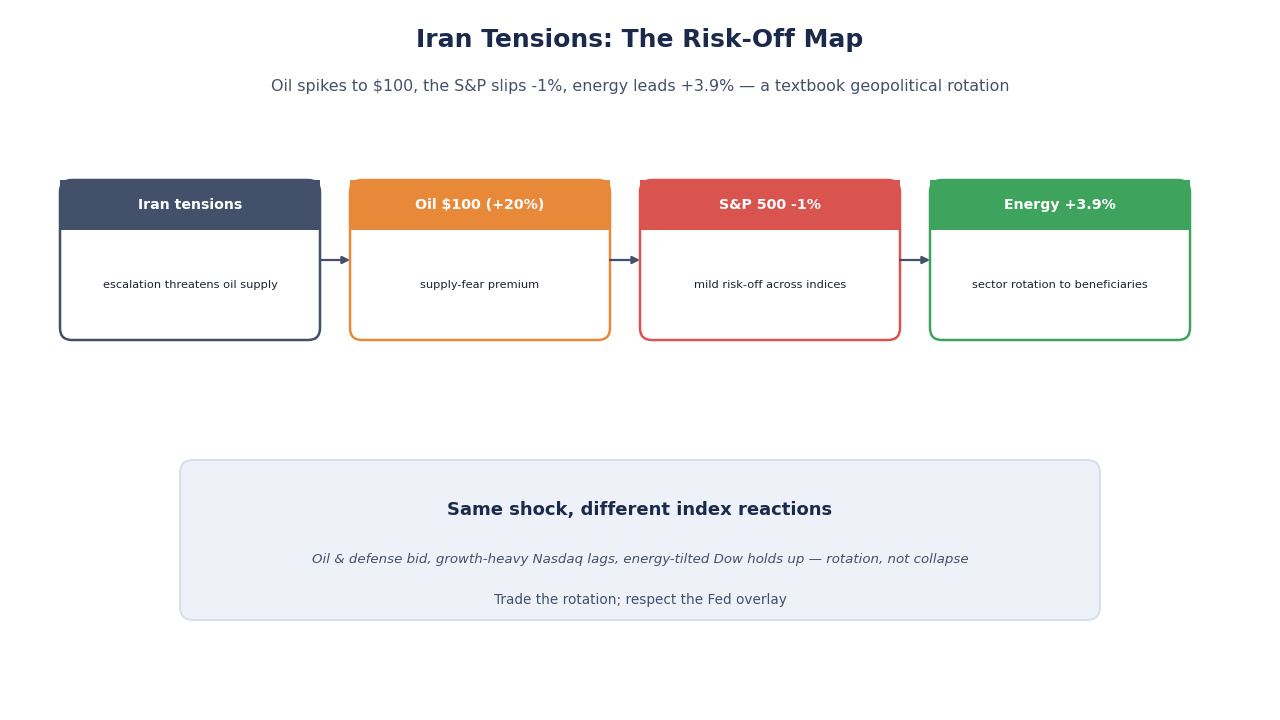
The S&P 500, Nasdaq, and Dow reaction to Iran tensions, oil prices, and Fed rate cut bets has become one of the most critical macro narratives shaping markets in 2026. As geopolitical risks rise, oil surges, and central bank expectations shift, investors are navigating a highly complex environment.
In this context, platforms like SimianX AI are increasingly valuable—helping traders synthesize macro signals, sentiment shifts, and technical indicators into actionable decisions.
The Core Drivers: Iran Tensions, Oil, and the Fed
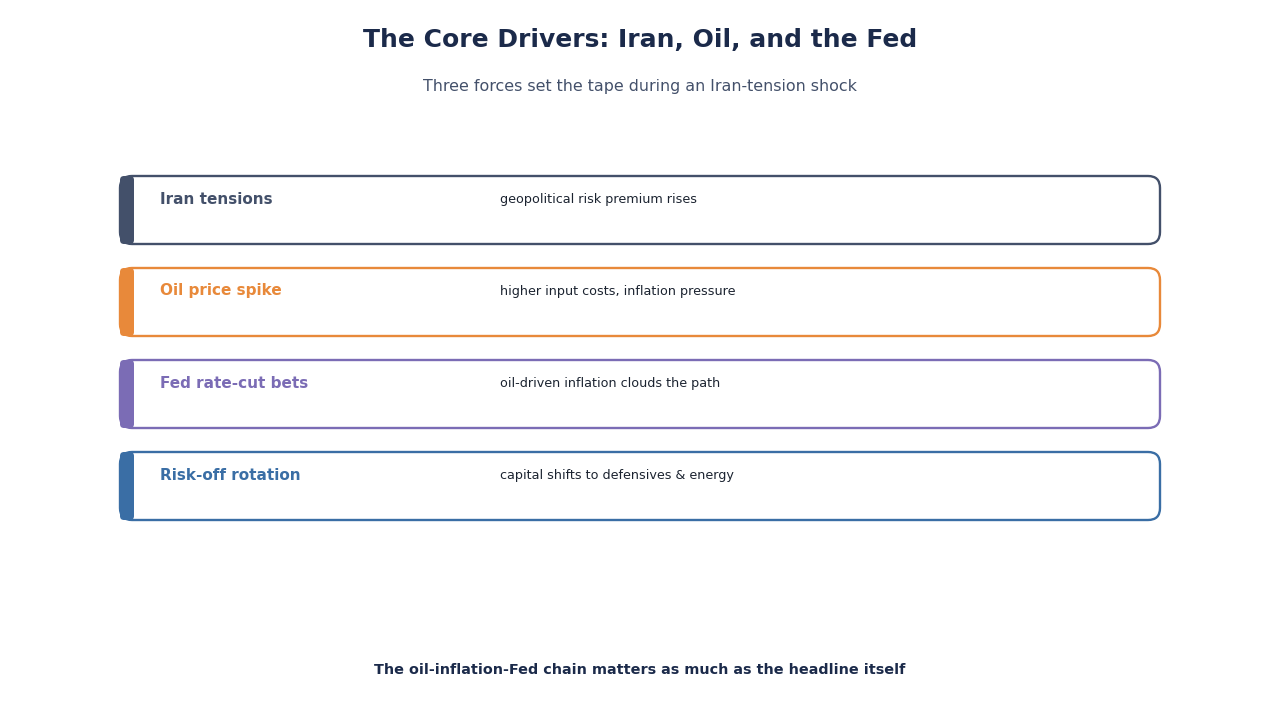
The current market environment is dominated by three interconnected forces:
1. Iran Tensions → Geopolitical Risk Premium
Recent escalation between the U.S. and Iran—especially around the Strait of Hormuz—has injected risk-off sentiment into global markets.
Oil supply disruption fears are driving volatility across equities, currencies, and commodities.
- U.S. stock futures (S&P 500, Nasdaq, Dow) dropped over 1% after failed Iran talks
- Dow futures fell nearly 500 points amid blockade concerns
- S&P 500 has already declined ~3.9% since the conflict began
Geopolitics now directly feeds into equity risk premiums, especially in sectors like tech, energy, and industrials.
2. Oil Prices → Inflation Shock
Oil is the transmission channel from geopolitics to macroeconomics.
- Oil surged above $100/barrel after tensions escalated
- Supply disruptions could flip the oil market into a deficit
- The Strait of Hormuz disruption impacts ~20% of global oil supply
Why this matters:
| Impact Area | Effect |
|---|---|
| Inflation | Energy costs push CPI higher |
| Consumers | Lower spending power |
| Corporates | Margin compression |
| Fed Policy | Delayed rate cuts |
Rising oil prices are effectively a tax on the global economy.
3. Fed Rate Cut Bets → Market Expectations Reset
Before the conflict, markets expected aggressive Fed rate cuts in 2026. Now:
- Rate cuts are likely delayed to later in the year
- Inflation risks are forcing a more hawkish stance
- Central banks globally are reconsidering easing cycles
This creates a double pressure on equities:
- Higher discount rates (bad for tech/Nasdaq)
- Slower economic growth (bad for cyclicals/Dow)
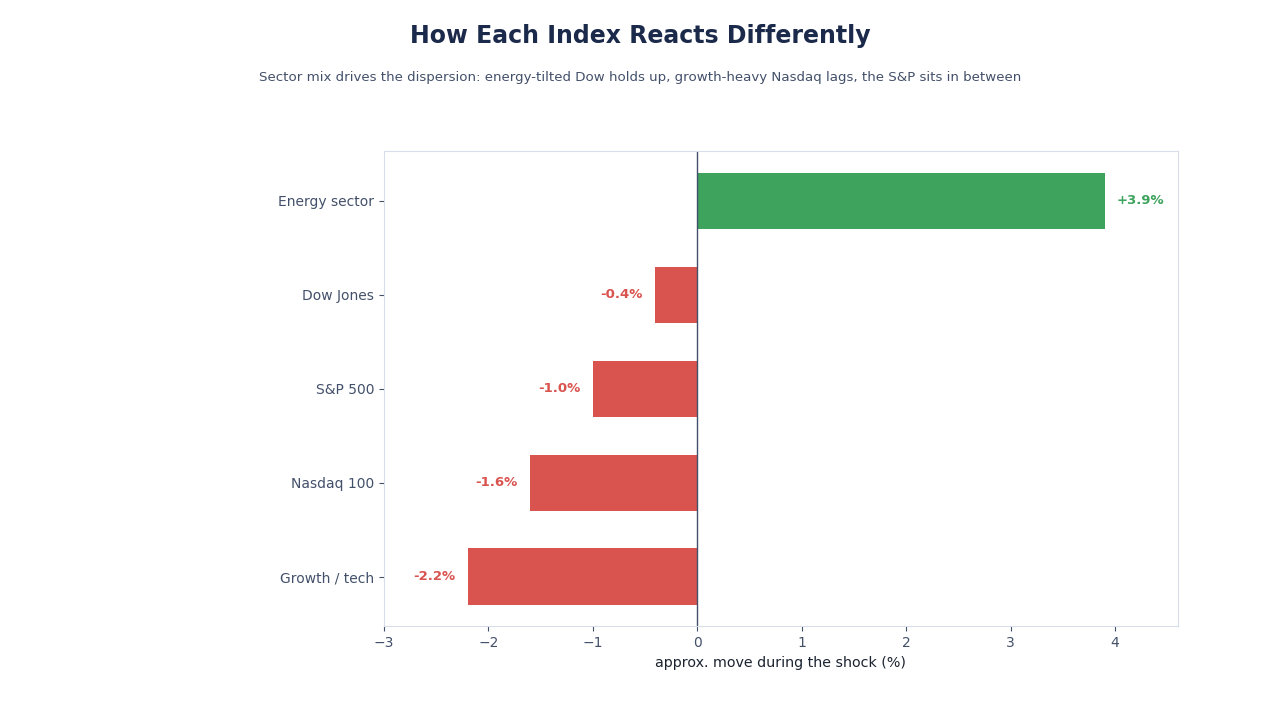
How Each Index Reacts Differently
S&P 500: Broad Market Sensitivity
The S&P 500 reflects aggregate economic expectations:
- Sensitive to both earnings growth and macro shocks
- Supported by strong earnings forecasts (~19% growth in 2026)
- But capped by oil-driven inflation fears
Key takeaway:
The S&P 500 is caught between earnings optimism and macro risk.
Nasdaq: Most Vulnerable to Rate Shifts
The Nasdaq is heavily influenced by:
- Interest rates
- Growth expectations
- Tech valuations
When rate cuts are delayed:
- Future cash flows are discounted more heavily
- High-growth tech stocks sell off faster
The Nasdaq is effectively a leveraged bet on Fed policy.
Dow Jones: Defensive but Not Immune
The Dow includes:
- Industrials
- Financials
- Energy companies
Relative advantages:
- Energy stocks benefit from rising oil
- More value-oriented than Nasdaq
But risks remain:
- Global slowdown hurts industrial demand
- Consumer weakness impacts earnings
Market Regime Shift: From Liquidity to Risk Management
The current environment signals a shift:
| Previous Regime | Current Regime |
|---|---|
| Rate cuts expected | Rate cuts delayed |
| Low inflation | Rising inflation |
| Liquidity-driven rally | Risk-driven volatility |
| Tech leadership | Mixed leadership |
This transition is critical for traders.
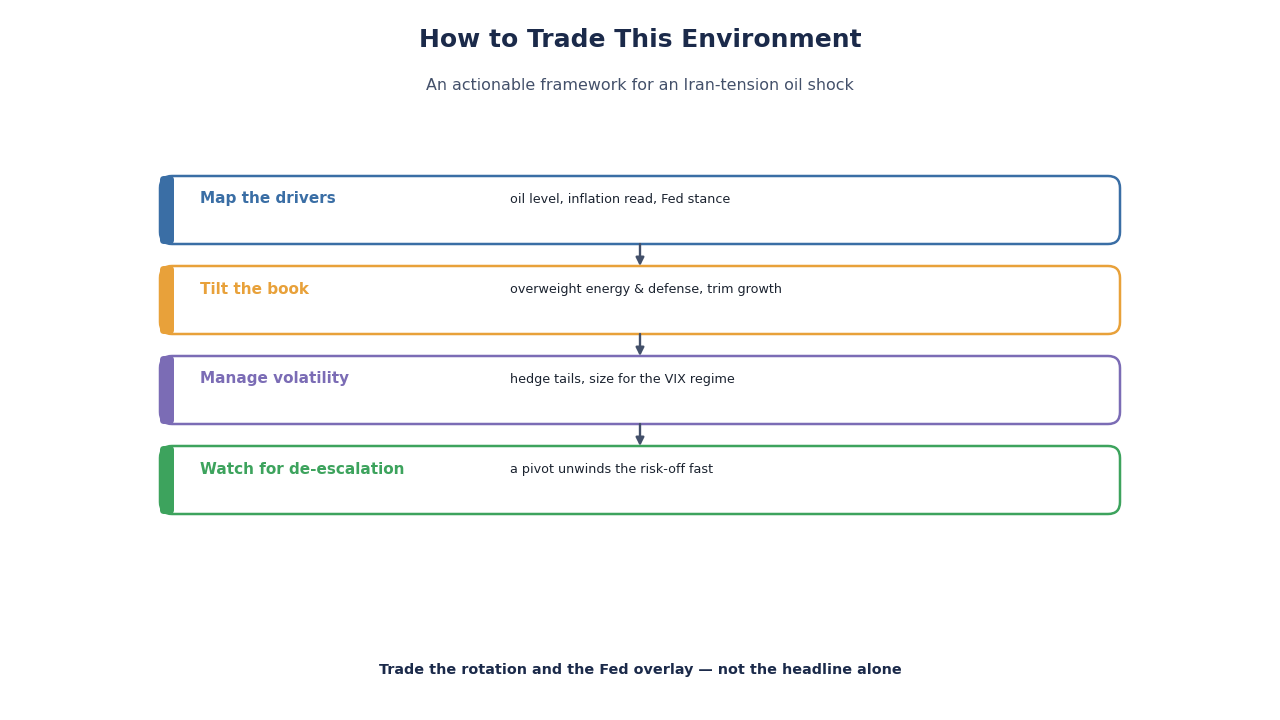
How to Trade This Environment (Actionable Framework)
Using a structured approach—like the one embedded in SimianX AI multi-agent system—is essential.
Step-by-Step Framework
- Macro Layer (Fundamental Agent)
- Track oil prices
- Monitor Fed expectations
- Assess geopolitical escalation risk
- Sentiment Layer (Intelligence Agent)
- News flow on Iran conflict
- Market positioning shifts
- Volatility spikes
- Technical Layer (Indicator Agent)
- EMA / RSI / MACD signals
- Key support & resistance levels
- Decision Layer (Decision Agent)
- Combine conflicting signals
- Output bias + risk + confidence
This structured workflow prevents emotional trading during high volatility.
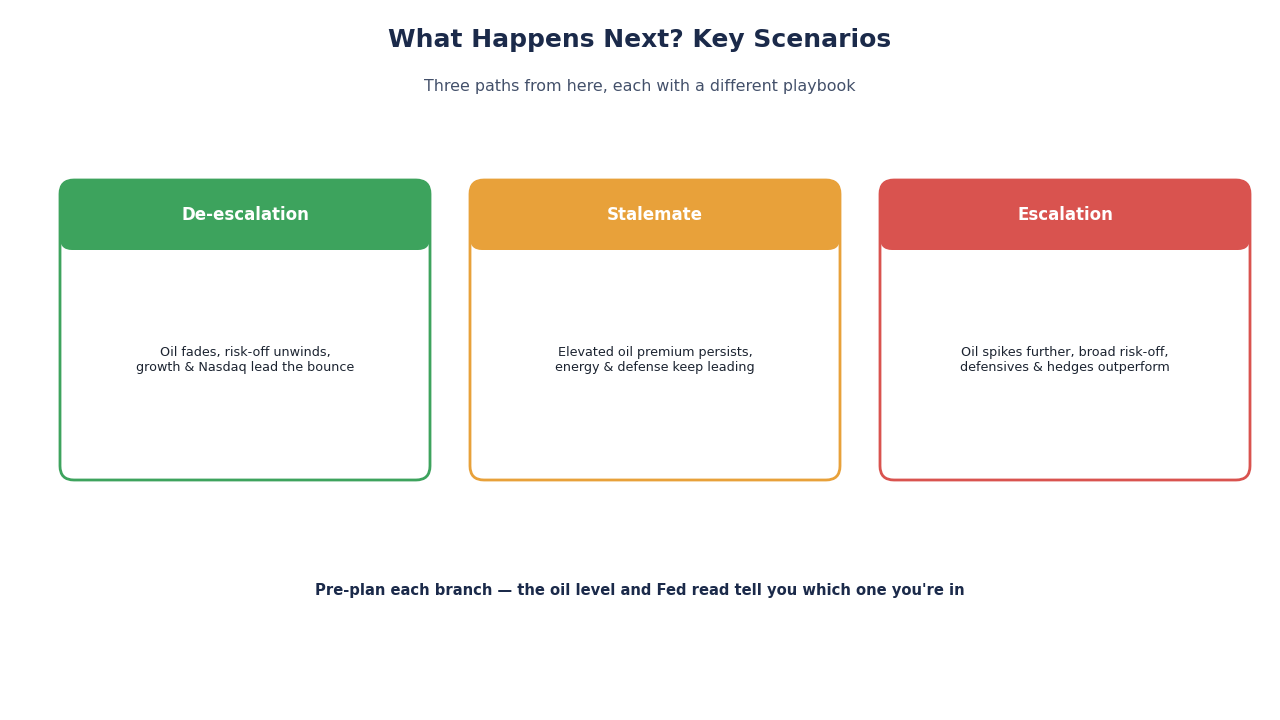
What Happens Next? Key Scenarios
Scenario 1: De-escalation (Bullish)
- Oil stabilizes below $90
- Fed resumes rate cut path
- Stocks rally sharply
Scenario 2: Prolonged Conflict (Neutral/Volatile)
- Oil stays ~$90–110
- Fed delays cuts
- Range-bound market
Scenario 3: Escalation (Bearish)
- Oil spikes >$120
- Inflation surge
- Equity drawdown
Markets are now trading probabilities, not certainties.
How do S&P 500, Nasdaq and Dow react to Iran tensions and oil prices?
The reaction is a chain effect:
- Iran tensions → oil spikes
- Oil spikes → inflation rises
- Inflation rises → Fed delays rate cuts
- Higher rates → stock valuations compress
This explains why all three indices initially sell off simultaneously, but then diverge based on sector composition.
Practical Strategy for Traders and Investors
Key principles:
- Don’t fight macro trends
- Watch oil as the leading indicator
- Track Fed expectations daily
- Use multi-signal confirmation
Tactical moves:
- Reduce exposure to high-duration tech during rate spikes
- Hedge with energy stocks or commodities
- Focus on risk-adjusted positioning
FAQ About S&P 500, Nasdaq and Dow Reaction to Iran Tensions
What happens to stocks when oil prices rise sharply?
Higher oil prices increase inflation and reduce consumer spending, which typically leads to stock market declines, especially in growth sectors like tech.
Why does the Nasdaq fall more than the Dow?
The Nasdaq is more sensitive to interest rates. When Fed rate cuts are delayed, growth stock valuations compress faster than value stocks.
Will the Fed still cut rates in 2026?
Rate cuts are still expected, but likely delayed due to inflation pressures from energy prices.
How does geopolitical risk affect stock markets?
Geopolitical tensions increase uncertainty, causing investors to shift to safer assets, leading to equity sell-offs and volatility spikes.
What sectors benefit from Iran tensions?
Energy and defense sectors typically benefit, while tech, consumer discretionary, and airlines often underperform.
Conclusion
The S&P 500, Nasdaq, and Dow reaction to Iran tensions, oil prices, and Fed rate cut bets reflects a complex macro environment where geopolitics, inflation, and monetary policy are tightly intertwined.
- Oil is the key transmission channel
- The Fed is the valuation driver
- Geopolitics is the volatility trigger
In such conditions, relying on fragmented signals is no longer enough.
With tools like SimianX AI, traders can integrate macro, sentiment, and technical data into a unified decision-making process—helping navigate volatility with discipline and clarity.
Advanced Macro Transmission: From Oil Shock to Equity Repricing
To fully understand the S&P 500, Nasdaq, and Dow reaction to Iran tensions, oil prices, and Fed rate cut bets, we need to go deeper into the macro transmission chain that drives large-scale market repricing.
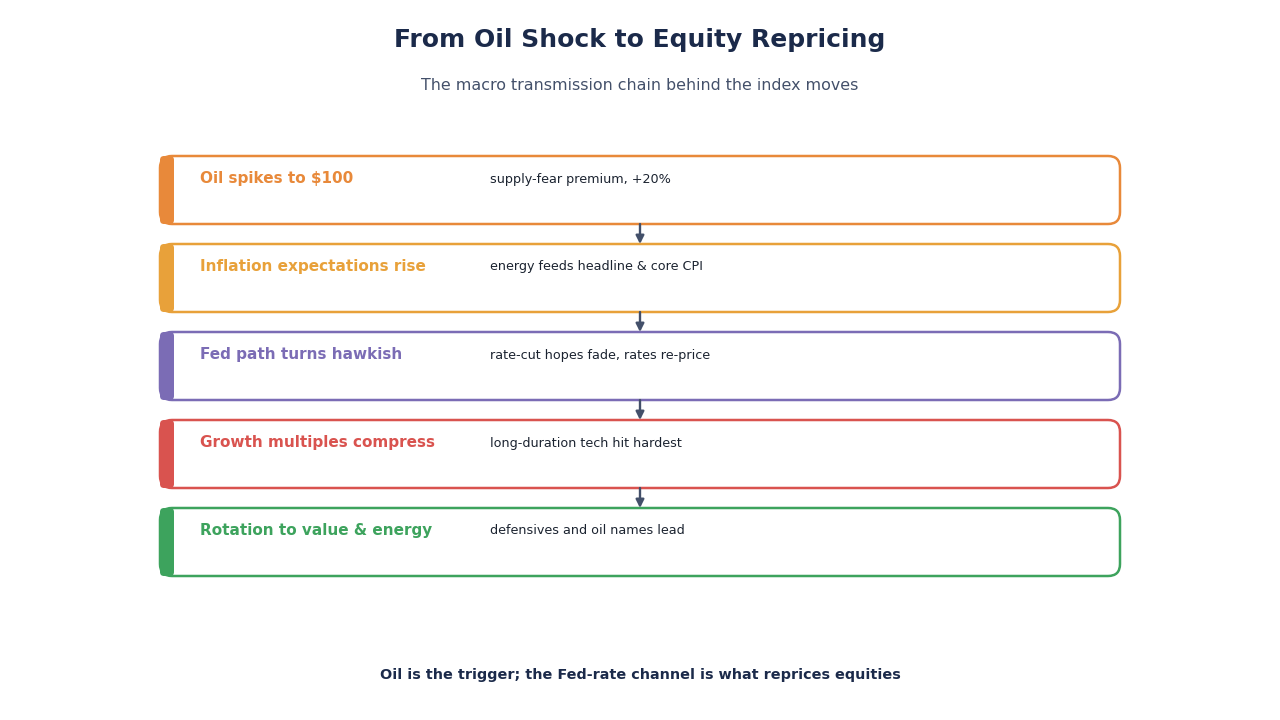
The Full Chain Reaction Model
| Stage | Trigger | Market Impact | Asset Response |
|---|---|---|---|
| 1 | Geopolitical Shock | Risk premium rises | Equities ↓ |
| 2 | Oil Supply Disruption | Energy prices ↑ | Oil ↑, Inflation ↑ |
| 3 | Inflation Expectations | CPI expectations ↑ | Bonds ↓ |
| 4 | Fed Policy Reaction | Rate cuts delayed | Yields ↑ |
| 5 | Valuation Adjustment | Discount rates ↑ | Nasdaq ↓ |
| 6 | Growth Impact | Consumption ↓ | S&P 500 ↓ |
| 7 | Capital Rotation | Defensive sectors ↑ | Dow mixed |
This chain explains why markets react instantly to headlines—even before actual economic data changes.
Liquidity vs Inflation: The Core Market Battle
The current market is not just about geopolitics—it’s about a fundamental conflict between liquidity and inflation.
Liquidity-Driven Bull Case
- Fed cuts rates
- Liquidity expands
- Risk assets rally
- Nasdaq leads
Inflation-Driven Bear Case
- Oil pushes inflation higher
- Fed delays cuts
- Real yields rise
- Valuations compress
The Key Indicator: Real Yields
Real yields (10Y Treasury yield – inflation expectations) are critical:
- Rising real yields → bearish for equities
- Falling real yields → bullish for growth stocks
The Nasdaq is essentially a real yield proxy in disguise.
Historical Parallels: How Markets Reacted Before
To better contextualize current events, let’s compare historical geopolitical shocks.
Case Study Comparison
| Event | Drawdown | Bottom | Recovery | Oil Impact |
|---|---|---|---|---|
| Gulf War 1990 | -16% | 3 months | 6 months | High |
| Iraq War 2003 | -14% pre-war | Immediate rally | Fast | Moderate |
| Syria Strike 2017 | -1.2% | 2 days | 5 days | Low |
| Iran Tensions 2026 | -3% (so far) | TBD | TBD | Rising |
Markets often bottom before clarity emerges, especially when policy response becomes predictable.
Sector-Level Impact Breakdown
Different sectors react very differently to oil and rate shocks.
Winners
- Energy (XLE) → direct benefit from oil price increases
- Defense stocks → higher military spending expectations
- Utilities → defensive rotation
Losers
- Technology (Nasdaq-heavy) → rate-sensitive
- Consumer discretionary → hit by higher fuel costs
- Airlines & logistics → margin pressure
Tactical Trading Strategies in High Volatility
1. Volatility-Based Positioning
- Use VIX spikes as entry signals
- Avoid chasing momentum during headline-driven moves
2. Oil as Leading Indicator
- If oil breaks key resistance → risk-off accelerates
- If oil stabilizes → equities recover
3. Multi-Timeframe Confirmation
Using SimianX AI:
- 1m / 5m → short-term sentiment
- 15m / 1h → intraday direction
- 1d → macro trend confirmation
Multi-timeframe alignment significantly increases win rate.
How SimianX AI Helps Navigate This Market
In volatile macro environments, decision quality matters more than prediction accuracy.
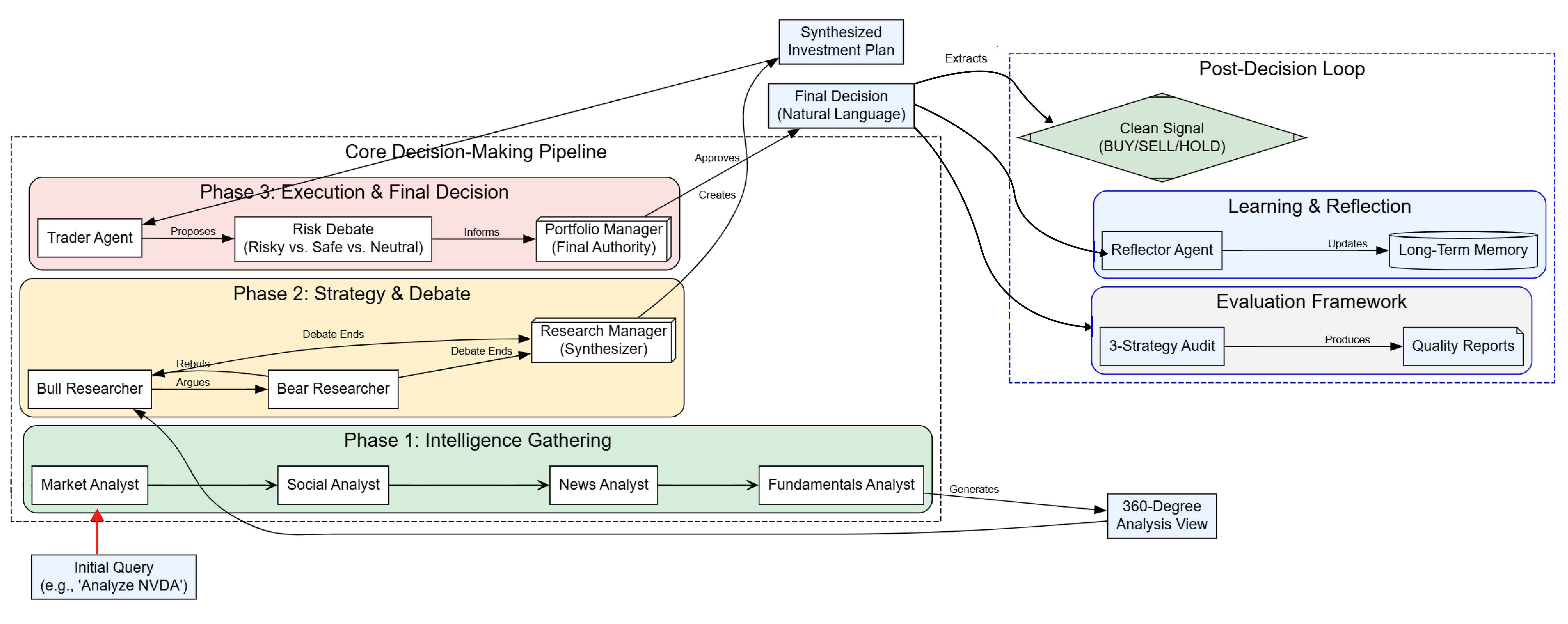
SimianX Multi-Agent Framework
1. Indicator Agent
- EMA / RSI / MACD alignment
- Identifies momentum shifts
2. Intelligence Agent
- Real-time news (Iran, oil, Fed)
- Sentiment analysis
3. Fundamental Agent
- Oil supply dynamics
- Inflation expectations
- Fed policy outlook
4. Decision Agent
- Outputs:
- Market bias (bullish/bearish)
- Key levels
- Risk factors
- Confidence score
Why This Matters
Traditional traders:
- Overreact to headlines
- Ignore cross-market signals
SimianX users:
- Follow structured, data-driven workflows
- Avoid emotional decisions
- Improve consistency
The edge is not prediction—it’s process discipline.
Deep Dive: Nasdaq Sensitivity to Fed Expectations
The Nasdaq deserves special focus due to its extreme sensitivity to interest rates.
Valuation Compression Model
When rates rise:
- Discount rate ↑
- Future earnings ↓ (present value)
- Price-to-earnings multiples ↓
Example:
| Scenario | Discount Rate | Valuation |
|---|---|---|
| Low rate | 2% | High P/E |
| High rate | 5% | Lower P/E |
Key Nasdaq Signals to Watch
- 10Y Treasury yield
- Fed funds futures
- Inflation breakevens
Oil Shock Scenarios and Market Outcomes
Scenario Analysis Table
| Oil Price | Inflation | Fed Response | Market Outcome |
|---|---|---|---|
| $80 | Stable | Cuts likely | Bullish |
| $100 | Rising | Delay cuts | Volatile |
| $120+ | Spike | No cuts / hikes | Bearish |
Oil above $120 is historically associated with recession risk.
Market Psychology: Fear vs Opportunity
Markets are driven by narratives, not just data.
Fear Phase
- Headlines dominate
- Volatility spikes
- Retail panic selling
Stabilization Phase
- Institutions accumulate
- Volatility declines
- Correlations normalize
Opportunity Phase
- Strong rebounds
- Leadership rotation
- Trend formation
Risk Management Framework
Key Rules
- Never overleverage during geopolitical events
- Use stop-loss based on volatility
- Diversify across asset classes
Risk Metrics to Track
| Metric | Importance |
|---|---|
| VIX | Volatility gauge |
| Oil price | Inflation driver |
| Treasury yields | Rate expectations |
| Credit spreads | Stress indicator |
Integrating Macro + Technical + Sentiment
The biggest mistake traders make is focusing on only one dimension.
The 3-Layer Model
- Macro → Direction
- Technical → Timing
- Sentiment → Entry
SimianX AI integrates all three layers into a single decision output.
Future Outlook: What Could Change the Narrative?
Bullish Catalysts
- Iran de-escalation
- Oil price stabilization
- Fed signals rate cuts
Bearish Catalysts
- Escalation into broader conflict
- Oil supply disruption
- Inflation re-acceleration
Institutional Positioning: What Smart Money Is Doing
- Increasing exposure to energy and commodities
- Reducing duration risk (tech)
- Holding higher cash levels
Long-Term Implications for Markets
Even after tensions fade:
- Markets may remain more macro-sensitive
- Volatility regimes could stay elevated
- AI-driven trading systems will gain importance
Extended FAQ
How long do geopolitical shocks affect stocks?
Typically short-term (days to weeks), but can extend if oil supply is impacted.
Is this a buying opportunity?
Depends on oil stability and Fed expectations. Blind dip buying is risky.
What is the best indicator right now?
Oil prices combined with Fed expectations.
How should beginners trade this market?
Focus on risk management and avoid overtrading.
Conclusion
The ongoing reaction of the S&P 500, Nasdaq, and Dow to Iran tensions, oil prices, and Fed rate cut bets highlights a critical shift in market dynamics.
This is no longer a simple bull market—it is a macro-driven, event-sensitive environment where:
- Oil dictates inflation
- Inflation dictates the Fed
- The Fed dictates valuations
In such a landscape, success depends on structured decision-making, not intuition.
That’s where SimianX AI becomes essential.
By combining:
- Real-time intelligence
- Multi-agent analysis
- Clear decision outputs
Related Reading
- Iran War Impact: Stocks Risk-Off, Oil $100-$120, VIX Spike
- Trump Iran Ultimatum: Oil $110 Spike, Stocks +2% Pivot
- Second Lebanon War 2006: Oil $78 Spike, Stocks Resilient
- U.S. Strike on Iran General: Stocks Down, Oil +4% Shock
- 2019 Saudi Aramco Drone Strike: Oil +20%, Stocks -5%
- Iran-US War Impact on Stocks: AI Risk Signals