
Cuộc Bầu Cử Giữa Nhiệm Kỳ 2026 và Cổ Phiếu Chăm Sóc Sức Khỏe: Cách UNH, HUM và CVS Có Thể Phản Ứng
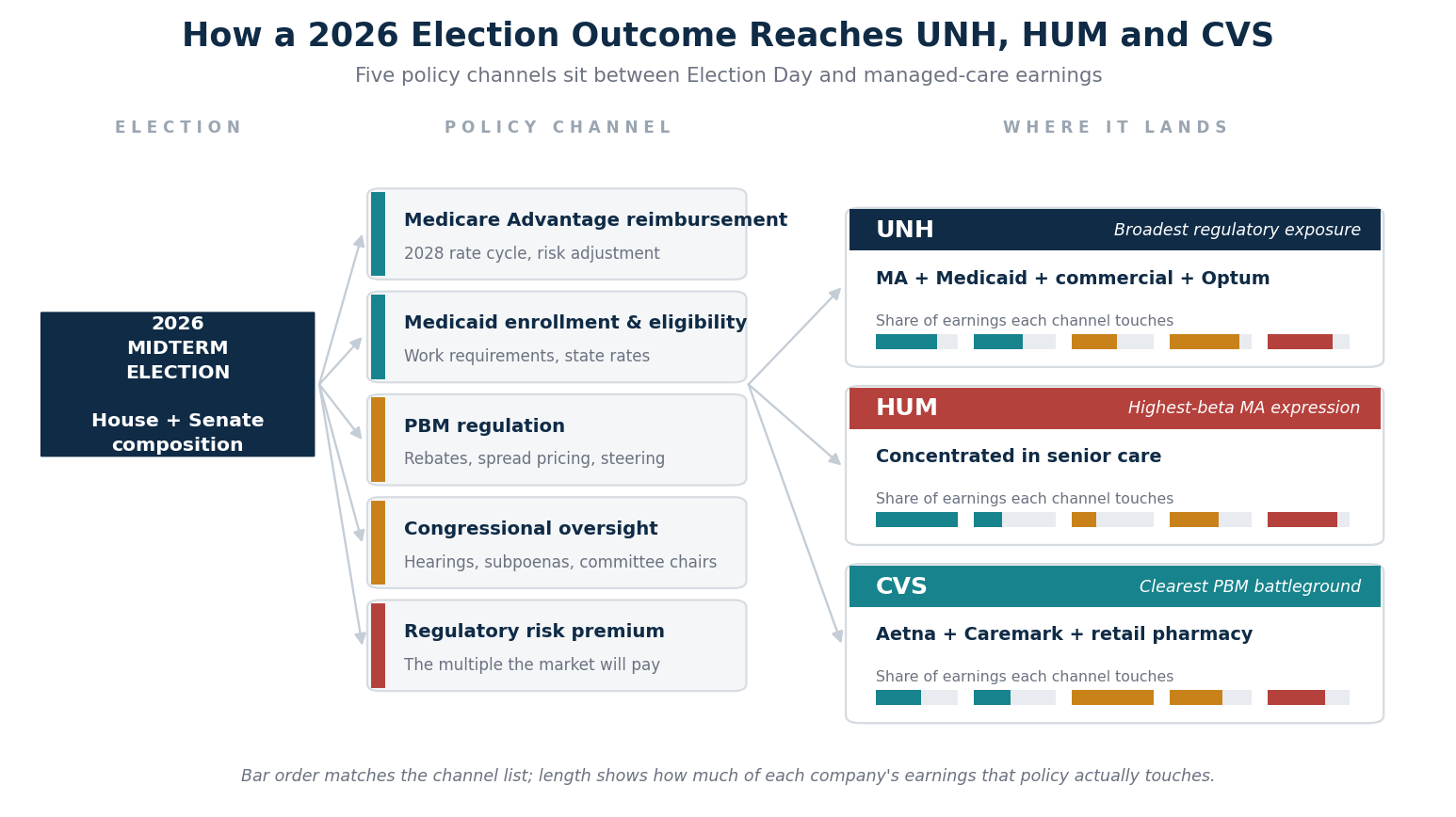
Cuộc tranh luận về cuộc bầu cử giữa nhiệm kỳ 2026 và cổ phiếu chăm sóc sức khỏe không phải là một giao dịch đơn giản theo hướng lạc quan của Đảng Cộng hòa và bi quan của Đảng Dân chủ. Đối với UnitedHealth Group (UNH), Humana (HUM) và CVS Health (CVS), kết quả sẽ có ý nghĩa qua nhiều kênh khác nhau: hoàn trả Medicare Advantage, đăng ký Medicaid, quy định về quản lý lợi ích dược phẩm, giám sát của Quốc hội và sự sẵn sàng của thị trường để trả tiền cho lợi nhuận có liên quan đến chính trị.
Tính đến ngày 14 tháng 8 năm 2026, kết quả bầu cử có khả năng xảy ra nhất là Hạ viện do Đảng Dân chủ kiểm soát kết hợp với Thượng viện do Đảng Cộng hòa kiểm soát, mặc dù cả hai viện vẫn có thể tranh chấp. Kết quả đó sẽ tạo ra một chính phủ chia rẽ dưới thời Tổng thống Donald Trump, hạn chế các luật quan trọng nhưng tăng cường các cuộc điều tra của Quốc hội và sự biến động tiêu đề.
Các nhà đầu tư có thể sử dụng SimianX AI để theo dõi những yếu tố này cùng với giá trực tiếp, hồ sơ SEC, chỉ số kỹ thuật và tin tức công ty. Chìa khóa là coi cuộc bầu cử như một chất xúc tác trong khuôn khổ lợi nhuận lớn hơn, chứ không phải là một sự thay thế cho phân tích cơ bản.
Kết luận chính:
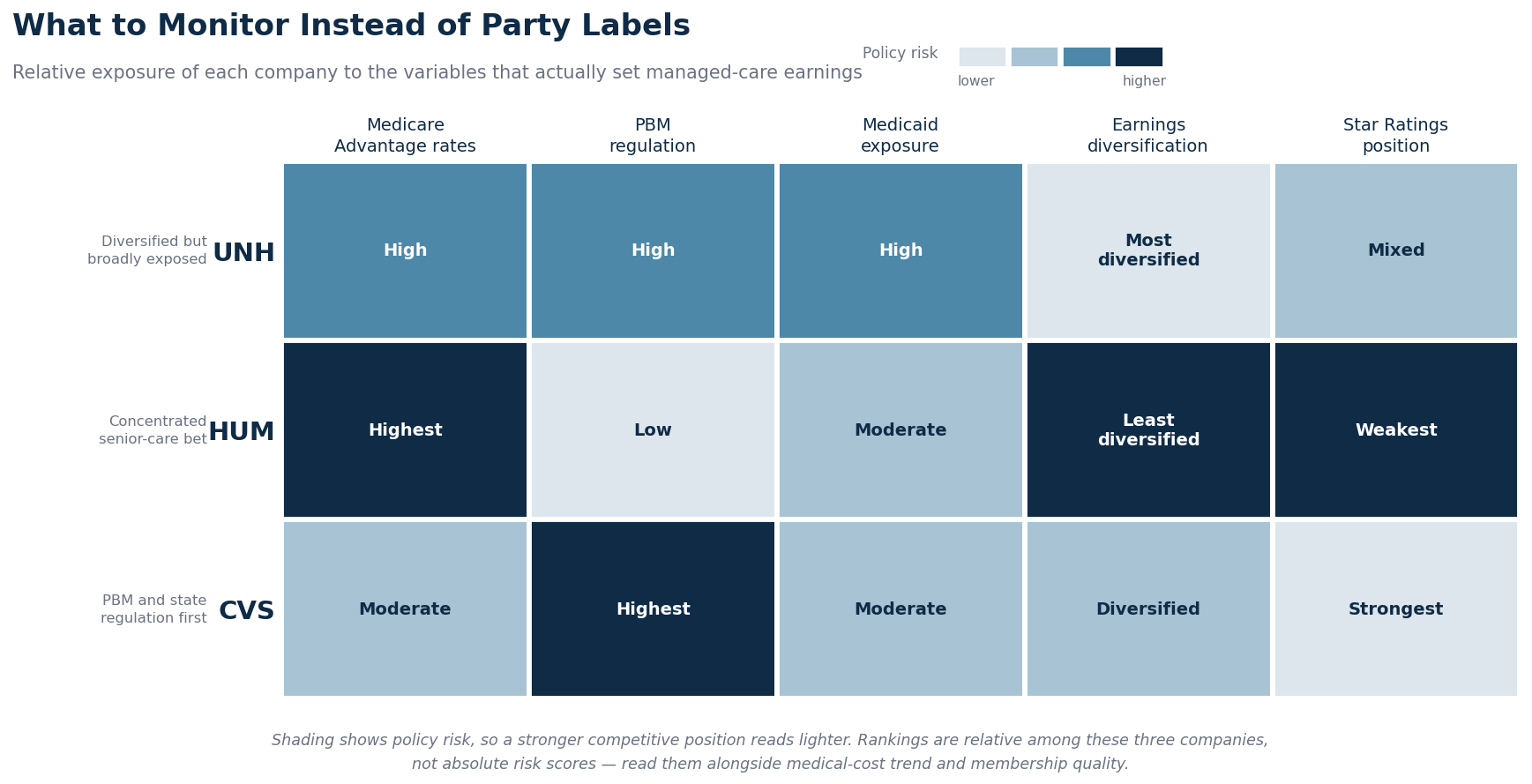
HUMcó độ nhạy trực tiếp lớn nhất đối với chính sách Medicare Advantage,UNHđối mặt với mức độ chịu tác động pháp lý rộng nhất, vàCVSlà chiến trường cải cách PBM rõ ràng nhất.
Ngày nghiên cứu: 14 tháng 8 năm 2026. Bài viết này chỉ mang tính thông tin và không cấu thành lời khuyên đầu tư cá nhân.
Cơ Sở Chính Trị Năm 2026 Mà Các Nhà Đầu Tư Nên Sử Dụng
Đảng Cộng hòa hiện đang nắm giữ 53 ghế Thượng viện, trong khi Đảng Dân chủ và các độc lập hợp tác với họ kiểm soát 47 ghế. Do đó, Đảng Dân chủ cần có một sự gia tăng ròng bốn ghế để đạt được 51 ghế vì lá phiếu phá thế hòa của phó tổng thống vẫn thuộc về Đảng Cộng hòa.
Trong Hạ viện, Đảng Cộng hòa nắm giữ 218 ghế, Đảng Dân chủ 212, và một độc lập nắm giữ một ghế khác, với bốn ghế trống. Đảng Dân chủ cần có sự tăng trưởng ròng ba ghế để đạt được đa số 218 ghế.
Một đánh giá vào tháng Tám được báo cáo bởi Axios minh họa trường hợp cơ bản đang nổi lên:
- Nhà phân tích Cook Political Report David Wasserman dự đoán khoảng 15 ghế tăng thêm cho Đảng Dân chủ trong Hạ viện.
- Nhà phân tích chính trị Josh Kraushaar dự đoán sự tăng trưởng của Đảng Dân chủ từ 15 đến 20 ghế Hạ viện.
- Các ước tính của họ về Thượng viện ngụ ý rằng Đảng Dân chủ có thể tăng thêm hai hoặc ba ghế - chưa đủ để kiểm soát.
- Tuy nhiên, các chiến lược gia của Đảng Cộng hòa vẫn phải đối mặt với môi trường Hạ viện khó khăn, dù việc phân chia lại đơn vị bầu cử có lợi cho đảng này.
Những dự báo này không phải là đảm bảo. Chất lượng ứng cử viên, tỷ lệ cử tri, điều kiện kinh tế, các câu chuyện về chăm sóc sức khỏe phát sinh muộn và các vụ kiện về phân chia lại đơn vị bầu cử vẫn có thể thay đổi bản đồ.
Tại sao chính phủ chia rẽ là kịch bản thị trường quan trọng nhất
Một Hạ viện do Đảng Dân chủ và một Thượng viện do Đảng Cộng hòa có thể tạo ra nhiều giám sát hơn là lập pháp. Các ủy ban Hạ viện có thể điều tra mã hóa Medicare Advantage, từ chối yêu cầu, tích hợp theo chiều dọc và các thực tiễn của PBM. Tuy nhiên, Thượng viện có thể chặn các dự luật Hạ viện quyết liệt, trong khi Tổng thống Trump sẽ giữ quyền phủ quyết đối với các dự luật đến bàn làm việc của ông.
Sự phân biệt này quan trọng vì một cuộc bầu cử quốc hội không thay thế nhánh hành pháp. Chính quyền Trump sẽ tiếp tục kiểm soát Bộ Y tế và Dịch vụ Nhân sinh, Trung tâm Dịch vụ Medicare & Medicaid, Bộ Tư pháp và Ủy ban Thương mại Liên bang cho đến năm 2028.
Do đó, các cuộc bầu cử giữa kỳ ảnh hưởng đến:
- Xác suất rằng luật chăm sóc sức khỏe mới sẽ đến tay tổng thống.
- Các khoản chi tiêu và đàm phán ngân sách của quốc hội.
- Lãnh đạo ủy ban, trát đòi và phiên điều trần công khai.
- Áp lực chính trị xung quanh các quy tắc Medicare Advantage trong tương lai.
- Phí rủi ro quy định áp dụng cho các định giá chăm sóc quản lý.
Các cuộc bầu cử không tự động đảo ngược những quy định mà CMS đã hoàn tất.
Medicare Advantage Là Chất Xúc Tác Chia Sẻ Lớn Nhất
Medicare Advantage, hay MA, là lựa chọn kế hoạch tư nhân thay thế cho Medicare truyền thống. Chính phủ trả cho các công ty bảo hiểm một khoản tiền điều chỉnh theo rủi ro cho mỗi thành viên, trong khi các Xếp hạng Star dựa trên chất lượng có thể tạo ra các khoản thưởng bổ sung.
Những thay đổi nhỏ trong việc hoàn trả có thể tạo ra những thay đổi lớn trong lợi nhuận vì bảo hiểm y tế là một ngành có doanh thu cao, biên lợi nhuận thấp. Nếu một công ty bảo hiểm nhận được 1.000 đô la doanh thu phí hàng tháng và chi 900 đô la cho chăm sóc y tế, một thay đổi khiêm tốn trong việc hoàn trả hoặc sử dụng có thể làm thay đổi đáng kể lợi nhuận còn lại.
Quyết định thanh toán năm 2027 đã hoàn tất
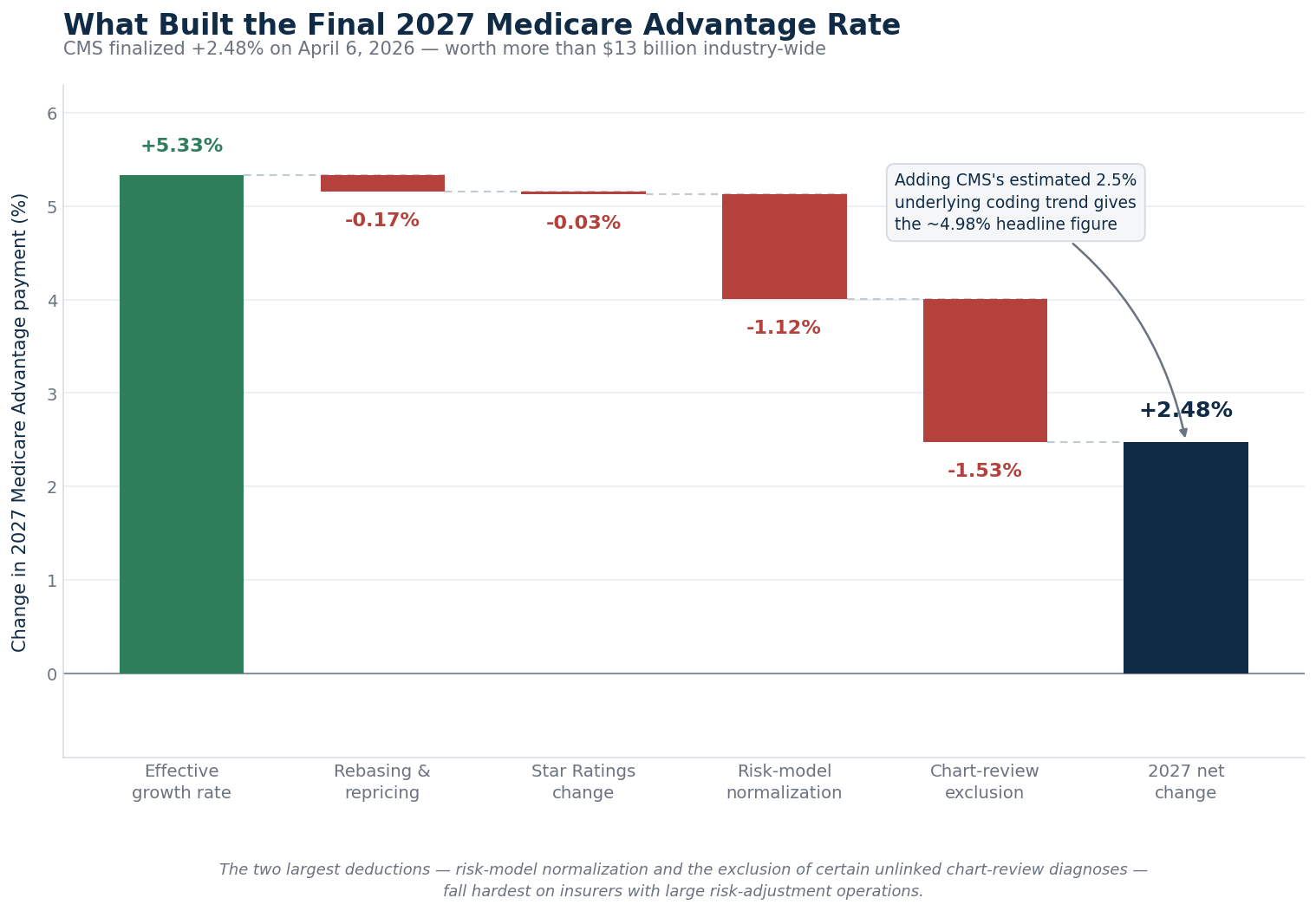
Cuộc bầu cử không thể trực tiếp viết lại các mức Medicare Advantage áp dụng trong năm dương lịch 2027. Vào ngày 6 tháng 4 năm 2026, CMS đã hoàn tất mức tăng thanh toán trung bình 2,48%, trị giá hơn 13 tỷ đô la trên toàn ngành.
Tính cả xu hướng điểm rủi ro cơ bản 2,5% mà CMS ước tính, cơ quan này mô tả mức tăng dự kiến tổng thể là khoảng 4,98%.
Các chi tiết ít hào phóng hơn so với tiêu đề:
| Thành phần thanh toán 2027 | Tác động ước tính |
|---|---|
| Tỷ lệ tăng trưởng thực tế | +5,33% |
| Định giá lại và điều chỉnh giá | -0,17% |
| Thay đổi Xếp hạng Star | -0,03% |
| Chuẩn hóa mô hình rủi ro | -1,12% |
| Loại trừ một số chẩn đoán từ các đợt rà soát hồ sơ bệnh án không liên kết | -1,53% |
| Thay đổi tổng thể trước xu hướng mã hóa | +2,48% |
Việc loại trừ các chẩn đoán từ một số đợt rà soát hồ sơ bệnh án không liên kết đặc biệt quan trọng với những công ty có hoạt động điều chỉnh rủi ro quy mô lớn. Nó giảm khả năng tạo ra các khoản thanh toán cao hơn từ các chẩn đoán không liên quan đến các cuộc gặp lâm sàng đủ điều kiện.
Khi CMS lần đầu tiên đề xuất tăng chỉ 0,09% vào tháng 1 năm 2026, cổ phiếu bảo hiểm y tế đã giảm mạnh. Axios đã báo cáo sự sụt giảm trong ngày khoảng 19% cho Humana và 11% cho CVS. Quyết định cuối cùng, thuận lợi hơn, sau đó đã giúp ngành này phục hồi.
Sự kiện đó chứng minh một điểm quan trọng:
Quy trình tỷ lệ hàng năm của CMS có thể làm biến động những cổ phiếu này hơn cả Ngày Bầu cử.
Cuộc bầu cử giữa nhiệm kỳ năm 2026 có thể ảnh hưởng đến chính sách MA trong tương lai như thế nào?
Bài kiểm tra lớn đầu tiên sau bầu cử sẽ là chu kỳ thanh toán Medicare Advantage cho năm 2028. CMS thường công bố thông báo trước vào đầu năm và thông báo cuối cùng vào mùa xuân.
Một Quốc hội Cộng hòa có thể hỗ trợ sự ổn định của chương trình, nhưng các nhà đầu tư không nên giả định rằng điều đó sẽ đảm bảo hoàn trả hào phóng. Chính quyền Cộng hòa đã đề xuất bản cập nhật hạn chế ban đầu cho năm 2027, siết chặt cách xử lý các chẩn đoán từ rà soát hồ sơ bệnh án và nhấn mạnh độ chính xác của thanh toán.
Một Hạ viện Dân chủ có thể gia tăng áp lực xung quanh:
- Các khoản thanh toán quá mức được cho là của Medicare Advantage.
- Các thực hành mã hóa điều chỉnh rủi ro.
- Phê duyệt trước và từ chối yêu cầu.
- Độ tin cậy của Xếp hạng Star.
- Sở hữu bác sĩ, nhà thuốc và PBM của công ty bảo hiểm.
- Sự khác biệt giữa chi tiêu Medicare truyền thống và MA.
Medicare Advantage cũng có một sự bảo vệ chính trị quan trọng: khoảng một nửa số người thụ hưởng Medicare sử dụng các kế hoạch tư nhân, và các lợi ích bổ sung về nha khoa, thị lực và các lợi ích khác rất phổ biến với người cao tuổi. Việc giảm lợi ích đáng kể có thể trở nên rõ ràng trong thời gian đăng ký hàng năm ngay trước một cuộc bầu cử.
Các nhà đầu tư nên theo dõi điều gì thay vì nhãn đảng phái?
Tập trung vào những biến số có thể đo lường này:
- Các cập nhật thanh toán MA tạm thời và cuối cùng cho năm 2028.
- Xu hướng chi phí y tế liên quan đến giá kế hoạch.
- Xếp hạng Star xác định tiền thưởng chất lượng.
- Tăng trưởng hoặc thu hẹp thành viên MA.
- Giảm quyền lợi và rút khỏi các quận.
- Quy tắc điều chỉnh rủi ro và xem xét hồ sơ.
- Thay đổi yêu cầu phê duyệt trước.
- Nhận xét của nhà bảo hiểm về biên lợi nhuận MA có thể đạt được.
UNH: Đa dạng hóa giúp ích, nhưng rủi ro pháp lý rất rộng
UnitedHealth Group kết hợp bảo hiểm UnitedHealthcare với nền tảng dịch vụ y tế Optum. Optum bao gồm lợi ích dược phẩm, cung cấp dịch vụ chăm sóc, phân tích và hoạt động công nghệ.
Cấu trúc này mang lại cho UNH sự đa dạng hóa thu nhập hơn so với Humana - nhưng cũng đặt nó vào trung tâm của hầu hết các cuộc tranh luận chính sách chăm sóc quản lý lớn.
Vị trí hoạt động của UnitedHealth trước cuộc bầu cử
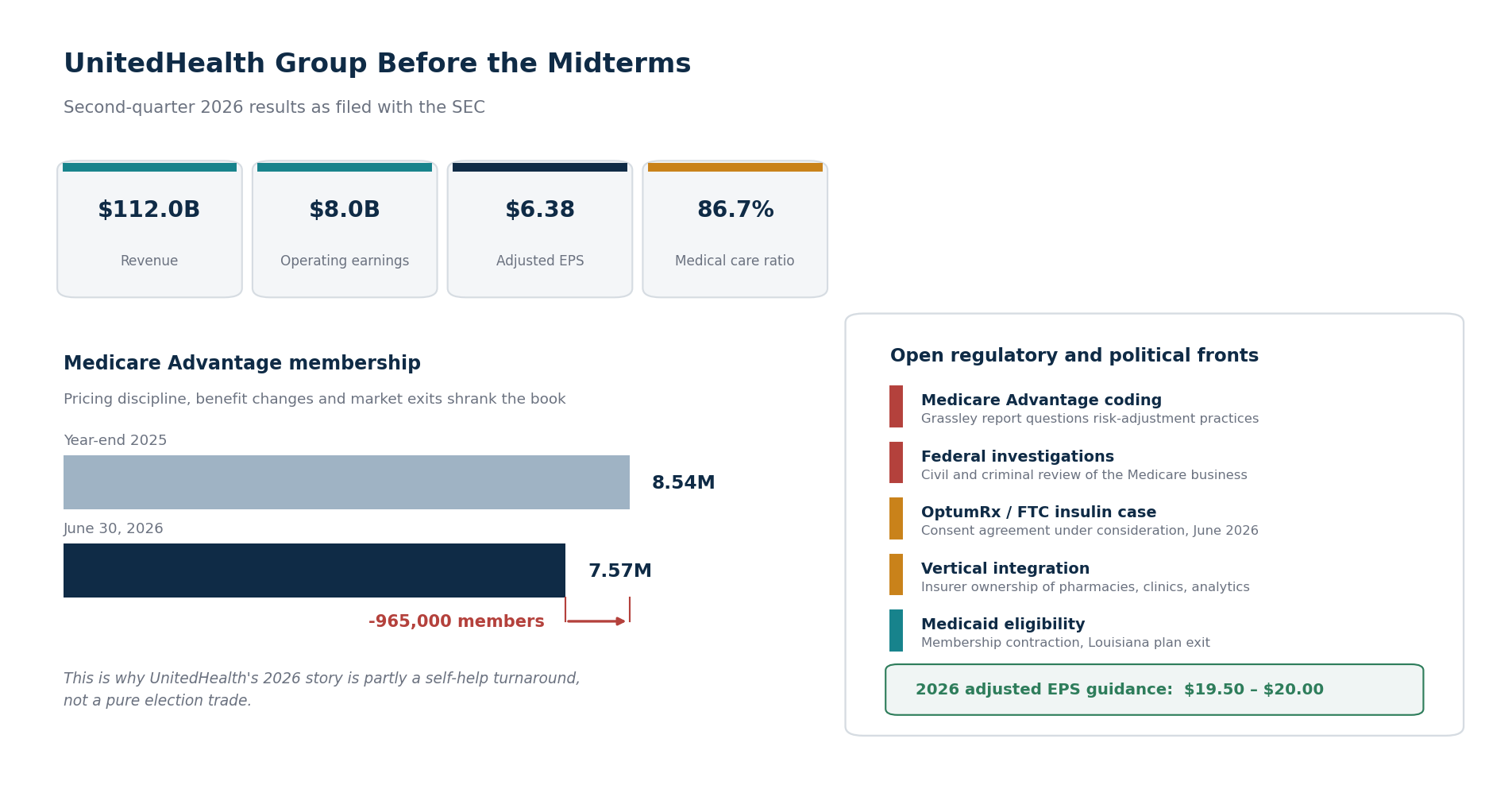
Theo kết quả nộp SEC quý 2 năm 2026, UnitedHealth đã báo cáo:
- Doanh thu 112,0 tỷ đô la.
- Lợi nhuận hoạt động 8,0 tỷ đô la.
- EPS điều chỉnh 6,38 đô la.
- Tỷ lệ chi phí y tế 86,7%.
- Hướng dẫn EPS điều chỉnh năm 2026 là 19,50 đến 20,00 đô la.
- Khoảng 48,5 triệu người được phục vụ bởi UnitedHealthcare.
- Thành viên Medicare Advantage khoảng 7,57 triệu tính đến ngày 30 tháng 6.
Sự ghi danh MA đã giảm khoảng 965.000 thành viên so với cuối năm 2025. Sự thu hẹp này phản ánh kỷ luật giá cả, thay đổi quyền lợi và rút khỏi thị trường nhằm cải thiện lợi nhuận sau áp lực sử dụng và tài trợ tăng cao.
Điều này khiến luận điểm hiện tại về UnitedHealth phần nào là một quá trình tự cải tổ, thay vì một giao dịch thuần túy ăn theo bầu cử.
Kịch bản bầu cử lạc quan cho UNH
Một Hạ viện và Thượng viện do Đảng Cộng hòa kiểm soát có thể làm giảm khả năng có các luật pháp quyết liệt nhắm vào tích hợp theo chiều dọc. Sự kiểm soát liên tục của Đảng Cộng hòa cũng có thể giảm rủi ro về một cuộc tái cấu trúc pháp lý toàn diện đối với Medicare Advantage hoặc Optum.
Các tác động tích cực tiềm năng bao gồm:
- Tăng cường sự tự tin vào độ bền của biên lợi nhuận của UnitedHealthcare.
- Xác suất thấp hơn về việc lập pháp tách biệt các nhà bảo hiểm, PBM và nhà cung cấp.
- Chính sách phân bổ và thuế chăm sóc sức khỏe có thể dự đoán hơn.
- Giảm rủi ro rằng các chủ tịch ủy ban Đảng Dân chủ chiếm ưu thế trong các cuộc điều tra của Quốc hội.
Kịch bản bầu cử tiêu cực cho UNH
Một Hạ viện do Đảng Dân chủ kiểm soát có thể tăng cường các phiên điều trần công khai về mã hóa Medicare Advantage, từ chối, quyền sở hữu Optum và tích hợp theo chiều dọc. Văn phòng Thượng nghị sĩ Chuck Grassley đã công bố một báo cáo đặt câu hỏi về các thực tiễn điều chỉnh rủi ro của UnitedHealth, cho thấy rằng sự giám sát không chỉ thuộc về Đảng Dân chủ.
UnitedHealth cũng xác nhận rằng họ đã hợp tác với các cuộc điều tra dân sự và hình sự của liên bang liên quan đến các khía cạnh của doanh nghiệp Medicare của mình. Công ty đã bác bỏ các cáo buộc về hành vi sai trái và viện dẫn bằng chứng kiểm toán có lợi, nhưng cuộc điều tra tạo ra một rủi ro đặc thù mà không có kết quả bầu cử nào hoàn toàn loại bỏ được.
Đơn vị OptumRx của công ty vẫn tham gia vào quy trình PBM của FTC. Vào tháng 6 năm 2026, FTC và bên bị yêu cầu phía Optum đã xin thêm thời gian để xem xét một thỏa thuận dàn xếp được đề xuất, theo hồ sơ vụ án của cơ quan này.
Phán quyết bầu cử UNH: sự đa dạng hóa và cải thiện thực hiện có thể làm giảm bớt áp lực lên cổ phiếu, nhưng các tiêu đề chính trị có thể trì hoãn sự phục hồi định giá. Một Hạ viện do Đảng Dân chủ kiểm soát có thể sẽ là tiêu cực theo tiêu đề, trong khi một chiến thắng áp đảo của Đảng Cộng hòa có thể chỉ tích cực vừa phải thay vì mang tính chuyển đổi.
HUM: Giao dịch Bầu cử Medicare Advantage Có Beta Cao Nhất
Humana là công ty có sự tiếp xúc trực tiếp nhất với Medicare Advantage trong ba công ty này. Doanh thu bảo hiểm, các phòng khám CenterWell, hoạt động chăm sóc sức khỏe tại nhà và các doanh nghiệp dược phẩm của nó đều gắn liền với việc chăm sóc người cao tuổi.
Sự tập trung này tạo ra cơ hội tăng trưởng khi tỷ lệ MA, mức sử dụng và Xếp hạng Star cải thiện. Nó cũng tạo ra sự giảm sút lớn hơn nhiều khi các khoản thanh toán của chính phủ không đạt kỳ vọng.
Vị trí của Humana trước kỳ bầu cử giữa nhiệm kỳ
Kết quả quý hai năm 2026 của Humana bao gồm:
- EPS theo GAAP là 5,73 USD và EPS điều chỉnh là 7,61 USD.
- Tỷ lệ chi trả quyền lợi bảo hiểm quý hai là 91,2%.
- Dự báo tỷ lệ chi trả quyền lợi cả năm là 92,75%, cộng trừ 25 điểm cơ bản.
- Dự báo EPS điều chỉnh cả năm là ít nhất 9,00 USD.
- Dự kiến số thành viên MA cá nhân tăng khoảng 25% so với năm 2025.
- Tăng trưởng bệnh nhân chăm sóc chính cho người cao tuổi của CenterWell từ đầu năm đến nay khoảng 27%.
Tuy nhiên, Humana vẫn dự kiến sẽ gặp khó khăn lớn về lợi nhuận trong năm 2026 do sự sụt giảm Xếp hạng Star trước đó. Chỉ khoảng 20% thành viên được kỳ vọng sẽ có trong các hợp đồng được đánh giá bốn sao hoặc cao hơn theo các đánh giá năm 2026, so với mức cao hơn nhiều trong các năm trước.
Bởi vì các kế hoạch thường cần ít nhất bốn sao để kiếm được tiền thưởng chất lượng, việc phục hồi các đánh giá là trung tâm cho việc phục hồi biên lợi nhuận dài hạn của Humana.
Tại sao HUM có thể biến động nhiều nhất vào đêm bầu cử
Humana có ít sự đa dạng để bù đắp cho một sự thay đổi tiêu cực trong kinh tế MA. Do đó, giá cổ phiếu của nó có xu hướng phản ứng mạnh mẽ với:
- Thông báo về tỷ lệ MA.
- Xếp hạng Star.
- Xu hướng sử dụng y tế.
- Thay đổi các lợi ích bổ sung.
- Quy tắc điều chỉnh rủi ro.
- Các đề xuất chính trị ảnh hưởng đến các kế hoạch Medicare tư nhân.
Một chiến thắng của Đảng Cộng hòa có thể ban đầu hỗ trợ HUM bằng cách giảm xác suất của các luật pháp thù địch. Tuy nhiên, sự tập trung của chính quyền vào độ chính xác của thanh toán có nghĩa là việc Đảng Cộng hòa nắm quyền không phải là một luận điểm tăng giá vô điều kiện.
Một Quốc hội do Đảng Dân chủ kiểm soát có thể tạo ra một đợt bán tháo ban đầu mạnh mẽ hơn ở Humana so với UNH hoặc CVS vì các nhà đầu tư có thể định giá việc giám sát MA nghiêm ngặt hơn. Tuy nhiên, ngay cả khi Quốc hội do Đảng Dân chủ thống nhất cũng sẽ phải đối mặt với quyền phủ quyết của tổng thống, khiến một cuộc cải tổ lập pháp tức thời khó có khả năng xảy ra.
Phán quyết bầu cử HUM: Humana là biểu hiện có beta cao nhất của chính sách Medicare Advantage. Nó cung cấp tiềm năng phục hồi lớn nhất nếu những lo ngại về chính sách giảm bớt, nhưng nó cũng có nguy cơ giảm giá tập trung nhất nếu việc hoàn trả năm 2028, Xếp hạng Star hoặc mức sử dụng không đạt yêu cầu.
CVS: Cải cách PBM có thể quan trọng hơn tín hiệu MA của cuộc bầu cử
CVS Health kết hợp bảo hiểm Aetna, CVS Caremark, các hiệu thuốc bán lẻ và tài sản cung cấp dịch vụ chăm sóc sức khỏe. Sự đa dạng này làm cho phương trình chính trị trở nên phức tạp hơn.
CVS có thể hưởng lợi từ việc cải thiện biên lợi nhuận của Aetna trong khi đồng thời đối mặt với quy định về các thực tiễn kinh doanh của Caremark và các hạn chế của tiểu bang ảnh hưởng đến hoạt động của hiệu thuốc.
Nền tảng hoạt động trước bầu cử của CVS
Trong kết quả quý đầu tiên năm 2026, CVS đã báo cáo:
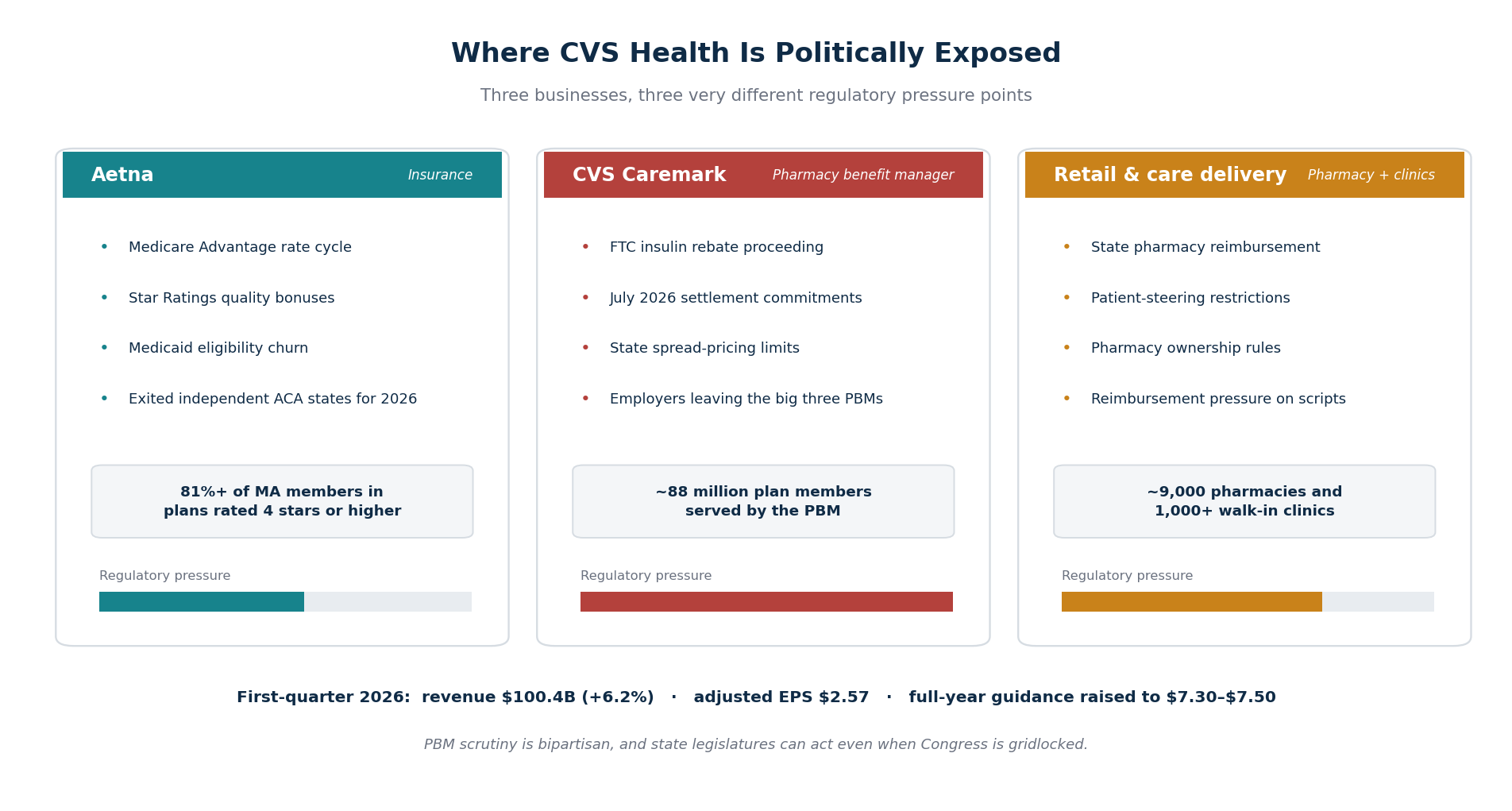
- Doanh thu 100,4 tỷ USD, tăng 6,2%.
- EPS GAAP 2,30 USD.
- EPS điều chỉnh 2,57 USD.
- Dự báo EPS điều chỉnh cả năm tăng lên 7,30 đến 7,50 USD.
- Dự báo dòng tiền hoạt động tối thiểu 9,5 tỷ USD.
Tính đến ngày 31 tháng 3, CVS cho biết họ đang vận hành khoảng 9.000 hiệu thuốc bán lẻ, hơn 1.000 phòng khám không hẹn trước và chăm sóc ban đầu, và một PBM phục vụ khoảng 88 triệu thành viên kế hoạch.
Xếp hạng Star của Aetna là một lợi thế so sánh. Hơn 81% thành viên MA của họ được báo cáo là trong các kế hoạch được xếp hạng bốn sao hoặc cao hơn cho năm 2026, với hơn 63% trong các kế hoạch 4,5 sao.
CVS cũng đã quyết định rút khỏi các bang mà Aetna độc lập điều hành các kế hoạch thị trường cá nhân ACA bắt đầu từ năm 2026. Do đó, việc hết hạn các khoản trợ cấp ACA nâng cao quan trọng hơn đối với CVS như một vấn đề chính trị và hệ thống hơn là một rủi ro thu nhập trực tiếp lớn.
Vấn đề PBM lưỡng đảng
Sự giám sát PBM không theo một ranh giới đảng phái rõ ràng. Cả Đảng Cộng hòa lẫn Đảng Dân chủ đều đã chỉ trích các thông lệ chiết khấu (rebate), định giá chênh lệch (spread pricing), mức bồi hoàn cho nhà thuốc và tích hợp theo chiều dọc.
FTC đã cáo buộc rằng ba PBM lớn nhất—bao gồm Caremark và OptumRx—đã sử dụng các thực hành hoàn tiền không cạnh tranh hoặc không công bằng làm tăng giá danh nghĩa insulin. Caremark đã đạt được thỏa thuận với FTC vào tháng 7 năm 2026 yêu cầu các thay đổi nhằm tăng cường tính minh bạch, giảm chi phí cho bệnh nhân và cải thiện cách đối xử với các hiệu thuốc cộng đồng.
Hành động của các bang tạo ra một rủi ro bổ sung. Nhiều bang đã xem xét hoặc ban hành các hạn chế về bồi thường PBM, định hướng bệnh nhân và quyền sở hữu hiệu thuốc. Những chính sách này có thể ảnh hưởng đến CVS ngay cả khi Quốc hội vẫn bế tắc.
Trong khi đó, các doanh nghiệp sử dụng lao động đang đánh giá lại quan hệ với PBM hiện tại. Một cuộc khảo sát vào tháng 8 được Axios báo cáo cho thấy 46% doanh nghiệp được khảo sát đã sử dụng một PBM ngoài ba PBM lớn nhất, tăng từ 37% một năm trước.
Phán quyết bầu cử của CVS: một chiến thắng của đảng Cộng hòa có thể giảm rủi ro cấu trúc liên bang, nhưng cải cách PBM lưỡng đảng và quy định của bang sẽ vẫn tồn tại. Một Hạ viện do đảng Dân chủ kiểm soát có thể ban đầu tiêu cực do các phiên điều trần và đề xuất cải cách. Việc thực hiện mạnh mẽ hơn của Aetna và Xếp hạng Star cao có thể bù đắp một phần áp lực đó.
Medicaid và Chính sách ACA: Quan trọng, nhưng Phân bổ Không Đều
Luật hòa giải năm 2025 đã thay đổi đáng kể điều kiện đủ điều kiện Medicaid. CMS đã ban hành một quy định tạm thời yêu cầu một số người lớn phải chứng minh 80 giờ làm việc, giáo dục hoặc hoạt động cộng đồng đủ điều kiện mỗi tháng. Các bang thường phải thực hiện yêu cầu này trước ngày 1 tháng 1 năm 2027, mặc dù một số có thể thực hiện sớm hơn.
Văn phòng Ngân sách Quốc hội ước tính rằng những thay đổi về Medicaid trong luật sẽ làm giảm số lượng người tham gia xuống 12,9 triệu vào năm 2034, bao gồm khoảng 1,5 triệu hồ sơ trùng lặp, và tăng số lượng người không có bảo hiểm lên 7,5 triệu.
Điều này có thể ảnh hưởng đến các công ty bảo hiểm theo hai cách cạnh tranh:
- Tiêu cực: số lượng người tham gia Medicaid quản lý giảm, làm giảm doanh thu từ phí bảo hiểm.
- Có thể tích cực: mức thanh toán của các bang rốt cuộc có thể tăng lên khi nhóm thành viên còn lại có tình trạng bệnh nặng hơn.
- Tiêu cực về mặt vận hành: sự thay đổi điều kiện đủ điều kiện làm tăng chi phí hành chính và khiến việc dự đoán rủi ro y tế trở nên khó khăn hơn.
UnitedHealth đã báo cáo sự thu hẹp số lượng thành viên Medicaid liên quan đến yêu cầu đủ điều kiện và việc rút lui khỏi một kế hoạch ở Louisiana. Humana đang mở rộng một cách chọn lọc, bao gồm một hợp đồng Medicaid toàn bang Illinois dự kiến sẽ bắt đầu vào tháng 1 năm 2027. CVS cũng có sự tiếp xúc với Medicaid thông qua Aetna.
Việc hết hạn các khoản tín dụng thuế bảo hiểm ACA nâng cao đã trở thành một vấn đề lớn trong chiến dịch. KFF ước tính rằng số người tham gia Marketplace thực tế bình quân mỗi tháng có thể giảm từ 22,3 triệu năm 2025 xuống khoảng 16,5–17,5 triệu năm 2026. Phí bảo hiểm bình quân mà người tham gia phải trả đã tăng khoảng 58%, trong khi mức khấu trừ bình quân trên Marketplace tăng 37% lên 3.786 đô la.
Những phát triển này có thể giúp đỡ Đảng Dân chủ về mặt chính trị, nhưng tác động trực tiếp đến thu nhập của UNH, HUM và CVS nhỏ hơn so với các công ty bảo hiểm tập trung vào Marketplace của ACA.
Ma trận Kịch bản Bầu cử 2026 cho UNH, HUM và CVS
| Kết quả bầu cử | Diễn giải chính sách | UNH phản ứng | HUM phản ứng | CVS phản ứng |
|---|---|---|---|---|
| Hạ viện Dân chủ, Thượng viện Cộng hòa | Trường hợp cơ sở: bế tắc cộng thêm sự giám sát nhiều hơn từ Hạ viện | Hỗn hợp đến hơi tiêu cực | Trung lập đến hơi tiêu cực | Hơi tiêu cực |
| Hạ viện và Thượng viện Cộng hòa | Liên tục chính sách; rủi ro chia tách lập pháp thấp hơn | Hơi tích cực | Tích cực nhất trong ba | Trung lập đến hơi tích cực |
| Hạ viện và Thượng viện Dân chủ | Nhiều cuộc điều tra và dự luật cải cách, nhưng quyền phủ quyết của tổng thống vẫn còn | Ban đầu tiêu cực | Tiêu cực nhất về nỗi lo MA | Tiêu cực về nỗi lo PBM |
| Đảng Cộng hòa giành thêm ghế ngoài dự kiến | Phí bảo hiểm rủi ro quy định có thể giảm | Tích cực | Phản ứng tích cực mạnh có thể xảy ra | Tích cực, nhưng rủi ro PBM tiểu bang vẫn còn |
| Làn sóng Dân chủ bất ngờ | Thị trường bắt đầu phản ánh chính sách MA và PBM khắt khe hơn cho năm 2028 | Tiêu cực | Độ nhạy giảm mạnh nhất | Tiêu cực |
| Không có kết quả rõ ràng hoặc đếm phiếu bị trì hoãn | Sự không chắc chắn vẫn tồn tại; các yếu tố cơ bản tạm thời thứ yếu | Biến động | Rất biến động | Biến động |
Bảng này mô tả tâm lý ban đầu có khả năng xảy ra, chứ không phải dự báo lợi nhuận dài hạn. Phản ứng cuối cùng của cổ phiếu sẽ phụ thuộc vào mức độ mà định giá đã phản ánh trước tháng 11.
Nhà đầu tư nên phân tích các cổ phiếu chăm sóc sức khỏe này như thế nào từng bước?
Một quy trình có kỷ luật đáng tin cậy hơn so với việc giao dịch dựa trên tiêu đề chiến dịch:
- Tách biệt các quy tắc đã hoàn thiện khỏi chính sách tương lai. Cập nhật thanh toán MA năm 2027 đã hoàn thiện; câu hỏi nhạy cảm với bầu cử liên quan là điều gì sẽ xảy ra vào năm 2028 và xa hơn.
- Lập bản đồ mức độ chịu tác động của từng công ty. Humana về cơ bản là một luận điểm đầu tư vào MA. UnitedHealth kết hợp MA, Medicaid, bảo hiểm thương mại và Optum. CVS kết hợp Aetna, Caremark và nhà thuốc bán lẻ.
- Theo dõi tỷ lệ chi phí y tế. Một cuộc bầu cử thuận lợi không thể cứu vãn một công ty bảo hiểm đã định giá thấp hơn mức tăng trưởng thực tế trong chi phí bệnh viện, bác sĩ và thuốc.
- Theo dõi Xếp hạng Star. Doanh thu thưởng chất lượng có thể quan trọng hơn so với ngôn từ chung của Quốc hội.
- Theo dõi chất lượng thành viên, không chỉ tăng trưởng. Việc đăng ký nhanh chóng có thể gây hại nếu các thành viên mới tạo ra các yêu cầu y tế vượt quá giả định.
- Theo dõi sự giữ chân khách hàng PBM. Các quy tắc minh bạch và việc doanh nghiệp đổi nhà cung cấp có thể ảnh hưởng đến Caremark và OptumRx ngay cả khi không có luật mới.
- So sánh hướng dẫn công ty với dòng tiền. EPS điều chỉnh nên được kiểm tra so với việc tạo ra tiền hoạt động, phát triển dự trữ và yêu cầu vốn.
- Sử dụng kích thước vị thế cho sự không chắc chắn chính trị. Dự đoán bầu cử và các diễn giải quy định có thể thay đổi đột ngột.
Một danh sách theo dõi thực tế SimianX AI có thể đặt UNH, HUM và CVS cùng nhau, sau đó theo dõi các điều chỉnh thu nhập, hồ sơ SEC, tâm lý tin tức trực tiếp, khối lượng và phản ứng kỹ thuật xung quanh mỗi yếu tố chính sách.
Cùng khung phân tích này áp dụng cho một ngành khác được trình bày trong Cổ phiếu quốc phòng có tăng sau bầu cử giữa kỳ 2026?, còn Bầu cử giữa kỳ Mỹ 2026: 12 cổ phiếu, ba kịch bản Quốc hội mở rộng ra danh sách cổ phiếu lớn hơn với ba kịch bản Quốc hội tương tự.
Ngày quan trọng sau cuộc bầu cử giữa nhiệm kỳ năm 2026
| Thời gian | Yếu tố tiềm năng |
|---|---|
| Tháng 10 năm 2026 | Xếp hạng Star Medicare mới và chuẩn bị đăng ký hàng năm |
| 15 tháng 10–7 tháng 12 | Kỳ đăng ký hàng năm của Medicare |
| Ngày 3 tháng 11 năm 2026 | Ngày bầu cử giữa nhiệm kỳ liên bang |
| Ngày 1 tháng 1 năm 2027 | Thời hạn chung cho việc thực hiện yêu cầu công việc Medicaid |
| Ngày 3 tháng 1 năm 2027 | Quốc hội mới bắt đầu |
| Đầu năm 2027 | Thông báo trước dự kiến của CMS cho các khoản thanh toán MA năm 2028 |
| Mùa xuân năm 2027 | Thông báo tỷ lệ MA năm 2028 cuối cùng dự kiến |
| Trong suốt năm 2027 | Các phiên điều trần của Quốc hội, việc thực hiện PBM và các thách thức pháp lý của bang |
Điều gì có thể khiến luận điểm bầu cử sai?
Một số phát triển phi chính trị có thể áp đảo kết quả bầu cử:
- Sự sử dụng bệnh nhân nội trú hoặc ngoại trú cao hơn dự kiến.
- Chi phí thuốc chuyên biệt và GLP-1 tăng nhanh.
- Phát triển dự trữ thuận lợi hoặc không thuận lợi.
- Thay đổi Xếp hạng Star.
- Các cuộc điều tra hoặc thỏa thuận cụ thể của công ty.
- Thiết kế quyền lợi quá quyết liệt làm tổn hại tỷ lệ giữ chân khách hàng.
- Các tranh chấp hợp đồng nhà cung cấp không mong đợi.
- Giành được hoặc mất khách hàng PBM.
- Thay đổi lãi suất và thị trường tín dụng.
- Định giá toàn thị trường cổ phiếu bị thu hẹp.
Dữ liệu lịch sử cũng lập luận chống lại việc coi các cuộc bầu cử giữa nhiệm kỳ là quyết định. Đánh giá của BlackRock cho thấy rằng lĩnh vực chăm sóc sức khỏe lịch sử trung bình đạt tỷ suất lợi nhuận 10,7% trong các năm bầu cử giữa nhiệm kỳ, nhưng kết quả của các lĩnh vực này thì phân tán và không nhất quán theo một kịch bản đảng phái đơn giản. Morgan Stanley cũng kết luận rằng các cuộc bầu cử giữa nhiệm kỳ thường chỉ có tác động khiêm tốn đến thị trường rộng.
Hiệu suất trong quá khứ không đảm bảo kết quả tương tự vào năm 2026.
Câu hỏi thường gặp về các cuộc bầu cử giữa nhiệm kỳ năm 2026 và cổ phiếu chăm sóc sức khỏe
Các cuộc bầu cử giữa nhiệm kỳ năm 2026 sẽ ảnh hưởng đến cổ phiếu UnitedHealth như thế nào?
Một Hạ viện do Đảng Dân chủ kiểm soát có thể tăng cường giám sát Medicare Advantage, OptumRx và tích hợp theo chiều dọc, tạo ra rủi ro tiêu đề cho UNH. Một chiến thắng của Đảng Cộng hòa có thể giảm thiểu phí rủi ro lập pháp, nhưng việc thực hiện chi phí y tế, chính sách CMS và các cuộc điều tra liên bang vẫn quan trọng hơn đối với giá trị lâu dài.
Humana có phải là giao dịch chăm sóc sức khỏe tốt nhất cho cuộc bầu cử năm 2026 không?
Humana là cổ phiếu nhạy cảm nhất trong ba cổ phiếu đối với chính sách Medicare Advantage, vì vậy nó có thể mang lại sự phục hồi mạnh mẽ nhất nếu nỗi lo về hoàn trả giảm. Sự tập trung này cũng khiến HUM trở thành lựa chọn rủi ro nhất nếu Xếp hạng Star, mức sử dụng hoặc chính sách thanh toán năm 2028 không đạt yêu cầu.
Một chiến thắng của Đảng Cộng hòa có tự động giúp cổ phiếu Medicare Advantage không?
Không. Kiểm soát của Đảng Cộng hòa có thể giảm khả năng thông qua các luật pháp quyết liệt, nhưng chính quyền Cộng hòa cũng đã thắt chặt các quy tắc điều chỉnh rủi ro và ban đầu đề xuất một bản cập nhật thanh toán hạn chế cho năm 2027. Các nhà đầu tư nên đánh giá các quyết định cụ thể của CMS thay vì giả định rằng mọi kết quả từ Đảng Cộng hòa đều tích cực.
Liệu kiểm soát của Đảng Dân chủ có thể chia tách CVS hoặc UnitedHealth không?
Một Quốc hội Dân chủ có thể giới thiệu các luật về tích hợp theo chiều dọc hoặc PBM nghiêm ngặt hơn và tiến hành các phiên điều trần rộng rãi. Tuy nhiên, Tổng thống Trump có thể phủ quyết luật, và việc vượt qua một sự phủ quyết yêu cầu sự ủng hộ hai phần ba trong cả hai viện, khiến cho việc chia tách bắt buộc trở nên khó khăn mà không có sự ủng hộ rộng rãi từ lưỡng đảng.
Cổ phiếu nào có rủi ro quy định PBM lớn nhất?
CVS có sự tiếp xúc trực tiếp rõ ràng nhất vì Caremark là trung tâm của mô hình kinh doanh tích hợp của nó và CVS cũng sở hữu các hiệu thuốc bán lẻ. UnitedHealth đối mặt với sự tiếp xúc đáng kể thông qua OptumRx, trong khi quy mô PBM của Humana nhỏ hơn.
Kết luận
Mối quan hệ giữa cuộc bầu cử giữa nhiệm kỳ năm 2026 và cổ phiếu chăm sóc sức khỏe nên được phân tích thông qua việc truyền tải chính sách, không phải qua các khuôn mẫu của đảng.
HUMlà giao dịch Medicare Advantage có beta cao nhất.
UNHcó thu nhập đa dạng nhất nhưng có sự tiếp xúc quy định và điều tra rộng nhất.
CVSkết hợp cơ hội Aetna đang cải thiện với các rủi ro PBM và quy định của bang quan trọng một cách bất thường.
- Một Hạ viện Dân chủ và Thượng viện Cộng hòa là trường hợp cơ sở hiện tại, ngụ ý sự bế tắc, nhiều giám sát và xác suất hạn chế của các luật chăm sóc sức khỏe toàn diện.
- Bản cập nhật thanh toán MA năm 2027 đã được hoàn thiện, vì vậy động lực hoàn trả lớn nhất sau cuộc bầu cử sẽ là quy trình tỷ lệ CMS năm 2028.
- Chi phí y tế, Xếp hạng Star, hiệu quả kinh tế của tệp hội viên và việc giữ chân khách hàng PBM rốt cuộc có thể quan trọng hơn kết quả bầu cử.
Các nhà đầu tư muốn theo dõi những yếu tố kích thích này theo thời gian thực có thể sử dụng SimianX AI để so sánh các yếu tố cơ bản của công ty, các công bố của SEC, tin tức trực tiếp, tín hiệu kỹ thuật và phân tích đa tác nhân cho UNH, HUM và CVS. Xây dựng luận điểm trước Ngày Bầu cử, xác định bằng chứng có thể làm vô hiệu hóa nó, và cập nhật vị thế khi chính sách trở nên có thể đo lường thay vì khi lời nói vận động tranh cử trở nên ồn ào hơn.
Đọc Thêm
- Cổ phiếu quốc phòng có tăng sau bầu cử giữa kỳ 2026?
- Bầu cử giữa kỳ Mỹ 2026: 12 cổ phiếu, ba kịch bản Quốc hội
- Năm bầu cử tổng thống và S&P 500: Dữ liệu 1928–2024
Nguồn tham khảo
- CMS — công bố mức chi trả Medicare Advantage và Part D năm 2027
- CMS — dữ liệu hiệu quả Xếp hạng Star của Part C và D
- Medicare.gov — trang chính thức của chương trình Medicare
- SEC EDGAR — báo cáo kết quả quý 2/2026 của UnitedHealth
- UnitedHealth Group — trang doanh nghiệp
- Humana — trang doanh nghiệp
- CVS Health — trang doanh nghiệp
- FTC — vụ việc chiết khấu insulin của Caremark và OptumRx
- U.S. Senate — báo cáo về điều chỉnh rủi ro trong Medicare Advantage
- CBO — ước tính phạm vi bao phủ và số người tham gia Medicaid
- KFF — số người tham gia, phí và mức khấu trừ Marketplace ACA 2026
- BlackRock — bầu cử giữa kỳ và hiệu suất thị trường
- Morgan Stanley — tác động của bầu cử giữa kỳ Mỹ 2026 tới thị trường