7월 30일 실적 발표가 증명해야 할 것: 아이폰, 서비스, 시리
애플 2026년 3분기 실적 보고서는 강력한 아이폰 수요와 높은 마진의 서비스 성장이 투자자들이 애플의 최신 인공지능 제품이 더 많은 사용자에게 도달하기를 기다리는 동안 회사의 실적 모멘텀을 유지할 수 있는지를 시험할 것입니다.
애플은 2026년 7월 30일, 미국 시장이 마감된 후 2026 회계연도 3분기 실적을 발표할 예정이며, 컨퍼런스 콜은 태평양 표준시 기준 오후 2시에 시작됩니다. 월스트리트는 또 다른 두 자릿수 매출 성장 분기를 예상하고 있지만, 긍정적인 주식 반응을 위한 기준은 단순히 컨센서스 추정치를 초과하는 것보다 높을 수 있습니다.
SimianX AI를 사용하는 투자자들에게 중심 질문은 애플이 강력한 분기를 생산할 수 있는지가 아닙니다. 그것은 아이폰 업그레이드, 서비스 수익화, 탄력적인 마진, 자사주 매입의 조합이 Siri AI가 측정 가능한 상업적 촉매제가 될 때까지 AAPL을 지원할 수 있는가입니다.
애플 2026년 3분기 실적 미리보기: 월스트리트는 무엇을 기대하고 있나?
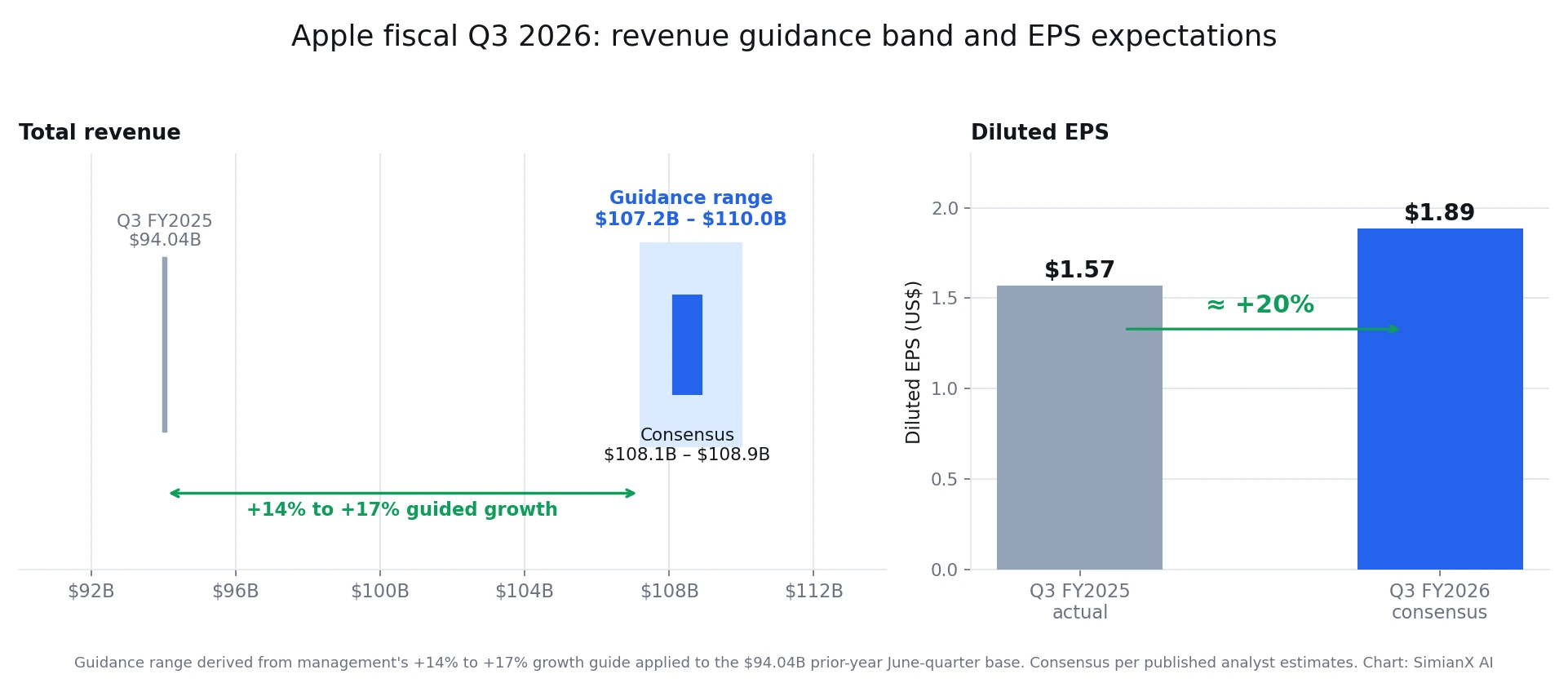
애플은 6월 분기에 비정상적으로 강한 모멘텀을 가지고 진입합니다. 경영진은 공급 제약에 대한 기대를 반영한 후에도 총 매출이 전년 대비 14%에서 17% 증가할 것이라고 이전에 안내했습니다.
현재 애널리스트 추정치는 일반적으로 해당 범위의 중간에 위치합니다:
| 지표 | 2026 회계연도 3분기 예상 | 2025 회계연도 3분기 비교 | 대략적인 성장 |
|---|---|---|---|
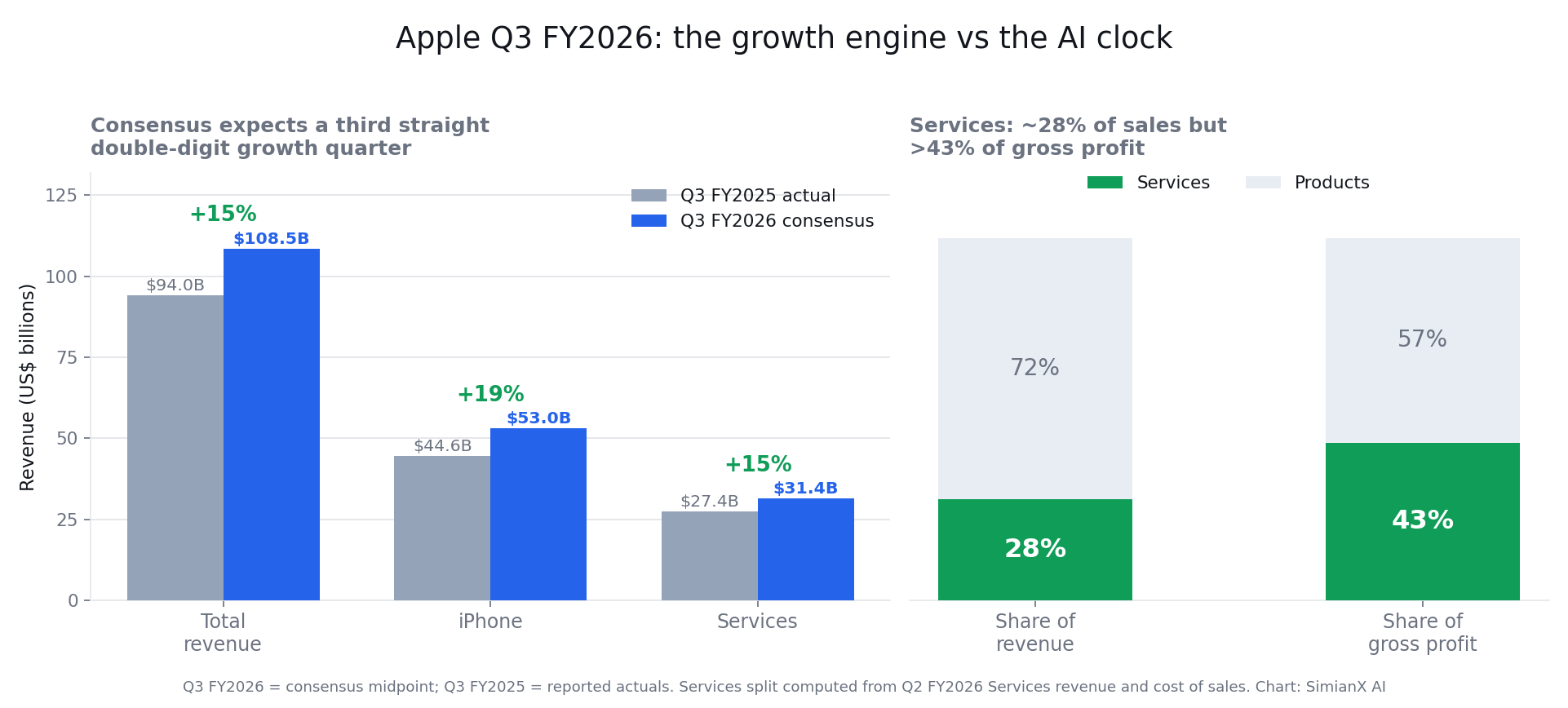
| 총 매출 | $108.1B–$108.9B | $94.0B | 15%–16% |
| 희석 EPS | $1.88–$1.89 | $1.57 | 약 20% |
| 아이폰 매출 | $53.0B | $44.6B | 약 19% |
| 서비스 매출 | $31.4B | $27.4B | 약 15% |
| 총 마진 | 47.5%–48.5% 가이드라인 | 46.5% | 전년 대비 증가 |
애플의 가이던스는 전년 6월 분기 매출 940억 달러를 기준으로 약 1,072억~1,100억 달러의 매출 범위를 시사합니다. 애플은 또한 통합 매출총이익률 47.5%~48.5%, 영업비용 188억~191억 달러를 제시했습니다.
주요 수익 기준: 약 1,080억 달러의 실적은 발표된 컨센서스를 충족할 수 있지만, 더 강한 주식 반응을 위해서는 확실한 9월 분기 가이드와 iPhone의 모멘텀이 지속 가능하다는 증거가 필요할 것입니다.
따라서 투자자들은 보고서를 세 가지 단계로 분석해야 합니다:
- 헤드라인 숫자: 수익, EPS, 및 총 이익률이 기대치와 비교되는지.
- 성장 품질: iPhone, 서비스 및 중국이 모두 기여했는지 여부.
- 미래 전망: 구성 요소 비용, 제품 타이밍 또는 AI 지출이 다음 분기 예측을 약화시키는지 여부.
Apple의 3월 분기가 높은 기준을 설정하다
Apple의 회계 연도 두 번째 분기는 회사의 가장 강력한 3월 분기 성과 중 하나를 기록했습니다. 매출은 1,111.8억 달러에 도달했으며, 이는 약 16.6%의 성장을 나타내고, 희석 EPS는 22% 증가하여 $2.01에 달했습니다.
성장은 하나의 작은 제품 카테고리에 의존하기보다는 광범위하게 이루어졌습니다:
| 회계 연도 Q2 지표 | 2026 결과 | 2025 결과 | 전년 대비 변화 |
|---|---|---|---|
| 총 수익 | $111.18B | $95.36B | +16.6% |
| iPhone 수익 | $56.99B | $46.84B | +21.7% |
| 서비스 수익 | $30.98B | $26.65B | +16.3% |
| 중화권 수익 | $20.50B | $16.00B | +28.1% |
| 총 이익 | $54.78B | $44.87B | +22.1% |
| 연구 및 개발 | $11.42B | $8.55B | +33.6% |
Apple은 이 기간을 총 수익, iPhone 수익 및 EPS에 대한 최고의 3월 분기로 설명했으며, 서비스는 또 다른 기록을 세웠습니다. 이 회사는 또한 활성 장치의 설치 기반에 대한 새로운 최고치를 보고했습니다.
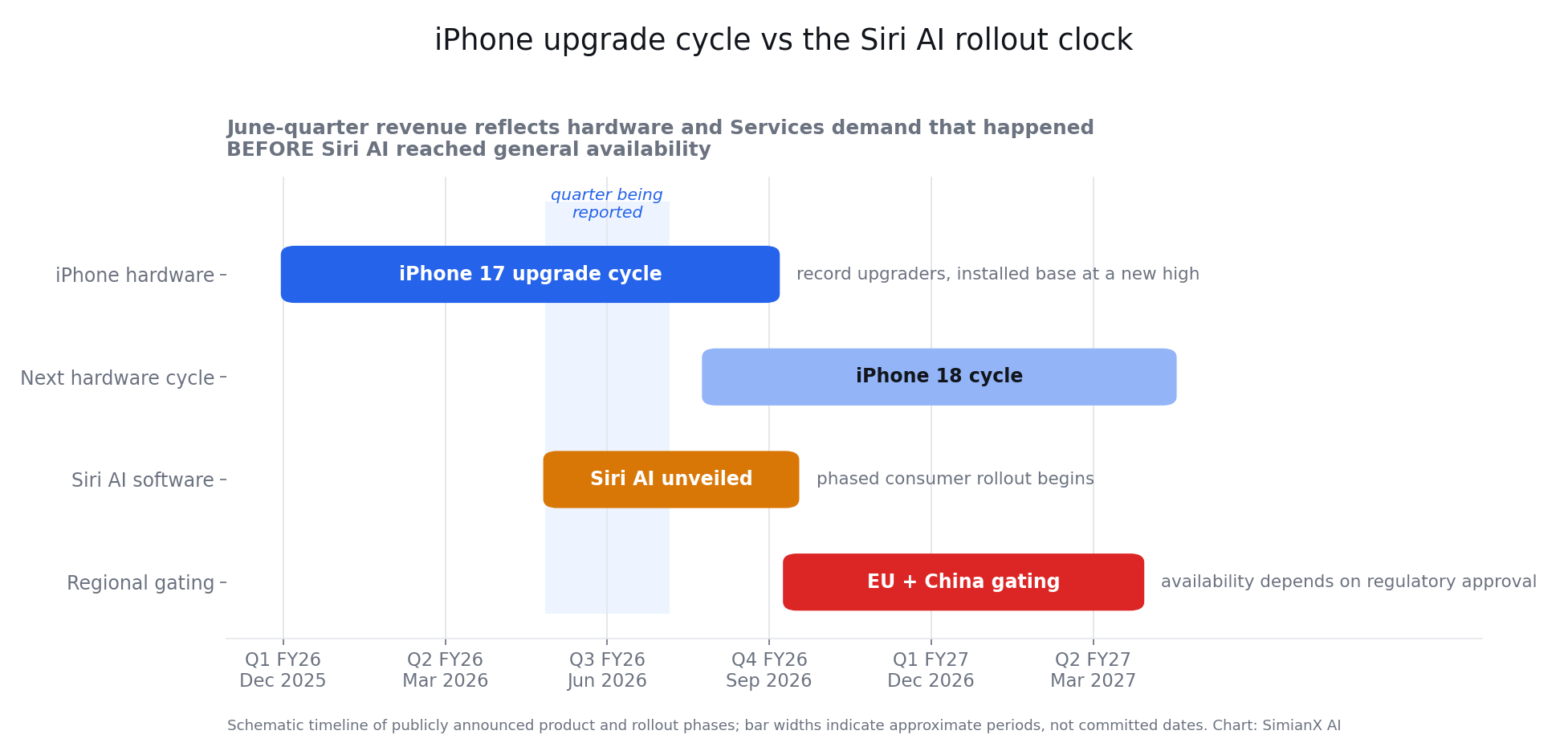
가장 중요한 숫자는 iPhone 수익의 22% 성장일 수 있습니다. 이는 Siri AI가 광범위하게 사용 가능해지기 전에 iPhone 17 주기가 의미 있는 업그레이드 수요를 생성하고 있음을 나타냅니다.
이 구분은 Apple의 단기 하드웨어 모멘텀이 AI 기반 업그레이드 내러티브에 전적으로 의존하지 않음을 시사하기 때문에 중요합니다.
중화권 매출은 약 28% 증가하여 Apple 투자 논문의 가장 지속적인 우려 중 하나를 반전시켰습니다. 투자자들은 이제 반등이 일시적인 비교, 프로모션 주기 또는 제품 출시 효과를 반영하는 것이 아니라 6월 분기에도 계속되었음을 확인하고 싶어할 것입니다.
Apple의 연구 및 개발 지출도 30% 이상 증가했습니다. 이 지출은 AI를 넘어서는 것이지만, 그 증가는 Apple이 여러 클라우드 중심 경쟁업체가 발표한 거대한 데이터 센터 자본 지출 예산을 피했음에도 불구하고 대규모로 투자하고 있음을 보여줍니다.
아이폰 성장이 2026년 3분기 실적을 떠받칠 수 있을까?
단기적인 대답은 아마도 그렇다입니다. Apple이 현재의 530억 달러 iPhone 컨센서스에 근접한 결과를 제공하고 9월 분기에 대한 신중한 전망을 피한다면 말입니다.
530억 달러의 iPhone 결과는 2025 회계 연도 Q3에서 보고된 445.8억 달러에서 약 19%의 성장을 나타냅니다. 이는 또한 iPhone 17 가족이 3월 분기를 넘어 모멘텀을 유지했음을 확인할 것입니다.
여러 요인이 긍정적인 사례를 뒷받침합니다:
- Apple은 iPhone 업그레이더에 대한 3월 분기 기록을 보고했습니다.
- 활성 iPhone 설치 기반이 새로운 최고치에 도달했습니다.
- 여러 지리적 시장에서 수요가 개선되었습니다.
- 중국은 이전 분기에 강력한 성장으로 돌아왔습니다.
- Apple의 생태계는 프리미엄 가격 책정 및 고객 유지를 계속 지원합니다.
그러나 투자자들은 수익 성장과 단위 성장을 분리해야 합니다. 더 높은 아이폰 수익은 더 많은 유닛, 강력한 프로 모델 믹스, 가격 책정 및 지리적 믹스의 조합에서 올 수 있습니다.
고품질 결과에는 업그레이드 활동과 설치된 기반이 모두 확장되고 있음을 보여주는 경영진의 논평이 포함되어야 합니다.
주요 단기 위험 요소는 다음과 같습니다:
- 고급 프로세서, 맥 또는 기타 구성 요소에 영향을 미치는 공급 제약.
- 메모리 및 구성 요소 비용 인플레이션.
- 관세 불확실성과 국제 무역 정책의 변화.
- 예외적으로 강한 3월 분기 수요에 따른 어려운 비교.
- 소비자들이 향후 제품 출시를 앞두고 구매를 연기하는 것.
경영진의 이전 6월 분기 가이던스는 명시적으로 제한된 공급을 포함했습니다. 따라서 구성 요소 가용성에 전적으로 책임이 있는 수익 미달은 실행에 대한 의문을 제기할 것이며, 특히 경영진이 이미 이러한 제한을 예측에 포함시켰다면 더욱 그렇습니다.
아이폰 성장이 애플 Q3 2026 실적에서 AI 지연을 상쇄할 수 있을까?
6월 분기 자체에 대해, 아이폰 성장은 시리 AI의 제한된 재정 기여를 상쇄할 수 있습니다. 이 분기는 주로 애플의 최신 시리 경험이 일반 가용성에 도달하기 전에 발생한 하드웨어 및 서비스 활동을 반영합니다.
더 어려운 질문은 2027 회계 연도에 관한 것입니다. 투자자들은 현재 AI가 업그레이드 주기를 강화하고, 생태계 참여를 증가시키며, 애플의 프리미엄 가치를 방어할 것으로 기대하고 있습니다.
강력한 아이폰 판매는 지연된 AI 수익화에 대한 우려를 미룰 수 있지만, 애플이 경쟁력 있는 어시스턴트를 제공해야 할 필요성을 영구적으로 제거할 수는 없습니다.
Q3 실적 질문은 애플이 AI 없이 성장할 수 있는가입니다. 장기적인 가치 평가 질문은 AI가 그 성장을 연장할 수 있는가입니다.
서비스는 애플의 가장 중요한 마진 완충제가 될 수 있습니다
서비스는 애플의 하드웨어 경제보다 경제성이 훨씬 강력해짐에 따라 점점 더 중요해지고 있습니다.
3월 분기 동안 서비스는 309.8억 달러의 매출을 창출했습니다. 애플이 보고한 서비스 매출원가 72.2억 달러를 기준으로, 이 부문은 약 237.5억 달러의 매출총이익을 냈습니다.
이는 서비스가 수익의 약 28%를 차지하지만, 전체 회사 총 이익의 43% 이상을 차지한다는 것을 의미합니다. 이는 애플의 공개된 재무 제표를 기반으로 한 계산입니다.
서비스의 총 마진은 70% 이상으로, 제품의 약 37%와 비교됩니다. 이러한 차이는 하드웨어 부품 비용이 상승하더라도 지속적인 서비스 성장이 애플의 통합 마진을 보호할 수 있음을 의미합니다.
이 부문에는 다음과 같은 비즈니스가 포함됩니다:
- 앱 스토어
- iCloud 및 iCloud+
- 애플 뮤직
- 애플 TV
- 애플케어
- 광고
- 결제 및 라이센스 계약
- 애플의 설치 기반과 연결된 기타 구독 서비스
월스트리트는 2026 회계연도 3분기 서비스 매출이 약 314억 달러에 이를 것으로 예상하고 있으며, 이는 전년 대비 약 14.5% 성장한 수치입니다. 이 수준을 초과하는 결과는 제품 총 마진이 압박을 받을 경우 특히 중요할 수 있습니다.
여전히 위험 요소가 존재합니다. 앱 스토어의 성장 둔화는 성장을 제한할 수 있지만, iCloud, 구독 서비스, 광고 및 라이센스의 강세가 이를 상쇄할 수 있습니다.
투자자들은 서비스 성장의 구성에 대한 세부 정보를 주의 깊게 들어야 합니다. 반복적인 구독 수익과 높은 iCloud 채택은 유리한 환율 변동이나 변동성이 큰 라이센스 지급에 의해 발생하는 수익보다 더 지속 가능하다고 여겨질 수 있습니다.
서비스는 또한 애플이 AI를 수익화하는 첫 번째 간접적인 방법 중 하나가 될 수 있습니다. 일부 서버 의존적인 Apple Intelligence 기능은 결국 사용 한도가 포함될 수 있으며, 증가된 접근은 더 높은 가치의 iCloud+ 플랜과 함께 제공될 수 있습니다.
그 구조는 AI 사용과 구독 수익 간의 연결을 생성할 수 있지만, 애플은 아직 별도의 AI 수익 수치를 제공하지 않았습니다.
애플의 AI 지연이 단기 수익 문제인가?
애플은 WWDC 2026에서 개인 맥락 이해, 화면 인식, 웹 지식 및 더 깊은 시스템 전반의 행동을 강조하는 재설계된 Siri AI를 공개했습니다.
그러나 소비자 출시 일정은 애플의 제품 전략에서 가장 면밀히 주시되는 요소 중 하나로 남아 있습니다.
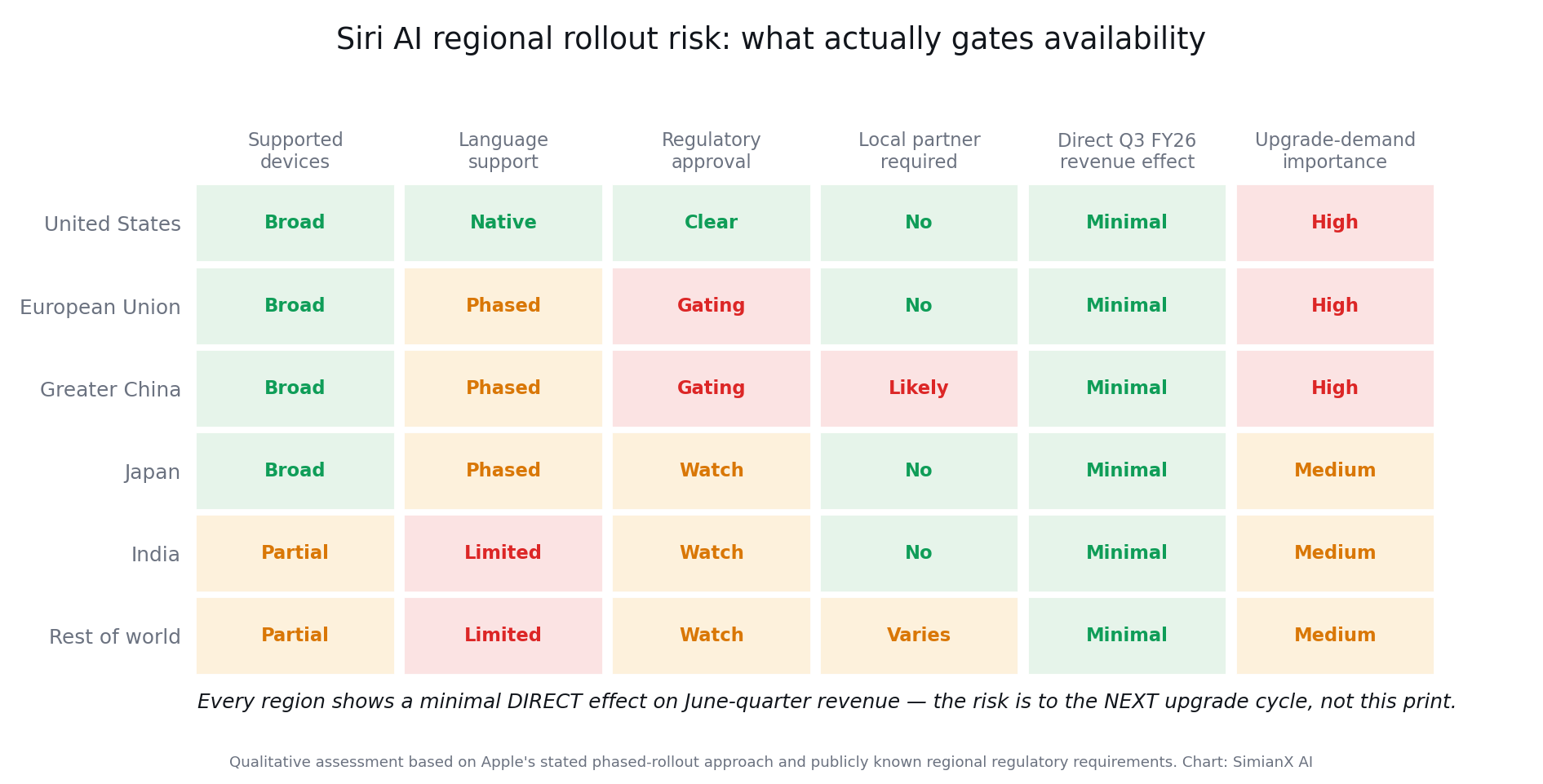
가용성은 전략적으로 중요한 지역에서 제한되거나 지연될 수 있습니다:
- Siri AI는 처음에 모든 애플 기기에서 사용할 수 없을 수 있습니다.
- 유럽 연합의 가용성은 규제 준수에 영향을 받을 수 있습니다.
- 중국의 가용성은 현지 규제 승인 및 파트너십에 따라 달라질 수 있습니다.
- 초기 액세스는 지원되는 기기와 언어로 제한될 수 있습니다.
- 일부 기능은 하나의 완전한 출시가 아닌 단계적으로 도착할 수 있습니다.
이러한 제약은 2026 회계연도 3분기 매출의 문제는 아닙니다, 왜냐하면 월스트리트는 6월 분기에서 의미 있는 직접 Siri AI 수익을 기대하지 않기 때문입니다. 대신 이것은 제품 신뢰성과 평가 문제입니다.
재무적 영향은 여러 간접 경로를 통해 발전합니다:
| AI 요소 | 단기 수익 효과 | 장기적 중요성 |
|---|---|---|
| Siri AI 베타 타이밍 | 제한된 Q3 효과 | 제품 신뢰성에 영향 |
| 중국 가용성 | Q3에 대한 직접적인 영향 없음 | 주요 시장에서 업그레이드 수요에 영향을 줄 수 있음 |
| EU 지연 | 현재 수익에 미미한 영향 | 글로벌 규모 및 채택 제한 |
| AI 인프라 비용 | 높은 R&D 및 운영 비용 | 마진에 압박을 가할 수 있음 |
| AI 연계 기기 요구 사항 | 출시 전 제한적 | 향후 업그레이드를 가속화할 수 있음 |
| iCloud+ 통합 | 초기 단계 기여 | 가능한 서비스 수익화 |
강세 해석은 애플이 가장 큰 독립 AI 인프라 플랫폼을 운영할 필요가 없다는 것입니다. 애플은 장치 경험을 제어하고, 효율적인 온디바이스 모델을 사용하며, 적절한 경우 클라우드 또는 외부 기술에 의존할 수 있습니다.
약세 해석은 애플의 출시가 여전히 단편적이며 경쟁자들이 그들의 어시스턴트를 더 빠르게 개선하고 있다는 것입니다. 그런 시나리오에서는 증가하는 R&D 지출이 성장 생성보다는 방어적으로 보일 것입니다.
독자들은 Apple WWDC 2026, Siri AI, 및 AAPL 투자 논문과의 제품 로드맵을 비교할 수 있습니다.
투자자들이 애플의 실적 발표에서 주의 깊게 들어야 할 사항은 무엇인가요?
실적 발표는 숫자를 제공하겠지만, 경영진의 논평이 투자자들이 이번 분기를 지속 가능한 것으로 볼지 여부를 결정할 수 있습니다.
1. 아이폰 수요는 여전히 업그레이드에 의해 주도되고 있나요?
경영진은 3월 분기의 기록적인 업그레이드 활동이 6월에도 계속되었는지 명확히 해야 합니다.
프로 모델 믹스, 전환자, 설치 기반 성장 및 지역 수요에 대한 논평은 투자자들이 사이클의 내구성을 평가하는 데 도움이 될 것입니다.
2. 중국은 회복세를 유지했나요?
중화권 매출은 직전 분기에 급증했습니다. 투자자들은 그 회복세가 계속되었는지, 애플이 과도한 할인이나 채널 프로모션에 의존하지 않고 수요를 얻고 있는지 알고 싶어할 것입니다.
3. 서비스는 15% 안팎의 성장률을 유지할 수 있을까요?
314억 달러에 근접하거나 이를 웃도는 서비스 실적은 마진 논리를 지지할 것입니다. 투자자들은 또한 App Store 성장, iCloud, 구독, 광고 및 라이센스에 대한 논평을 주의 깊게 살펴봐야 합니다.
4. 부품 비용 인플레이션은 얼마나 심각한가요?
Apple은 3월 분기에서 강력한 마진을 보고한 후, 순차적인 총 마진 범위를 낮출 것이라고 안내했습니다.
핵심 문제는 압박이 일시적인 것인지, 아니면 다음 아이폰 출시 주기까지 계속될 가능성이 있는지입니다.
5. 다음 측정 가능한 Siri AI 이정표는 무엇인가요?
AI에 대한 흥미로운 일반적인 발언은 투자자들을 만족시키지 못할 수 있습니다.
더 가치 있는 정보는 다음을 포함할 것입니다:
- 베타 타이밍
- 지원되는 지역
- 호환 가능한 장치
- 개발자 피드백
- 채택 지표
- 중국 및 유럽 연합의 가용성
6. AI에 다른 지출 모델이 필요할까요?
Apple의 연구 및 개발 비용은 이전 분기에 크게 증가했습니다.
투자자들은 운영 비용이 계속 빠르게 상승할 것인지, 그리고 Apple이 개인 클라우드 컴퓨팅, AI 인프라 또는 제3자 모델 접근에 더 많은 지출을 예상하는지를 판단해야 합니다.
7. 9월 분기 전망은 무엇을 의미하나요?
향후 가이던스는 6월 분기의 모멘텀이 다음 제품 주기로 이어지는지를 결정할 것입니다.
강력한 Q3 실적과 조심스러운 Q4 가이던스가 결합되면 여전히 부정적인 주식 반응을 초래할 수 있습니다.
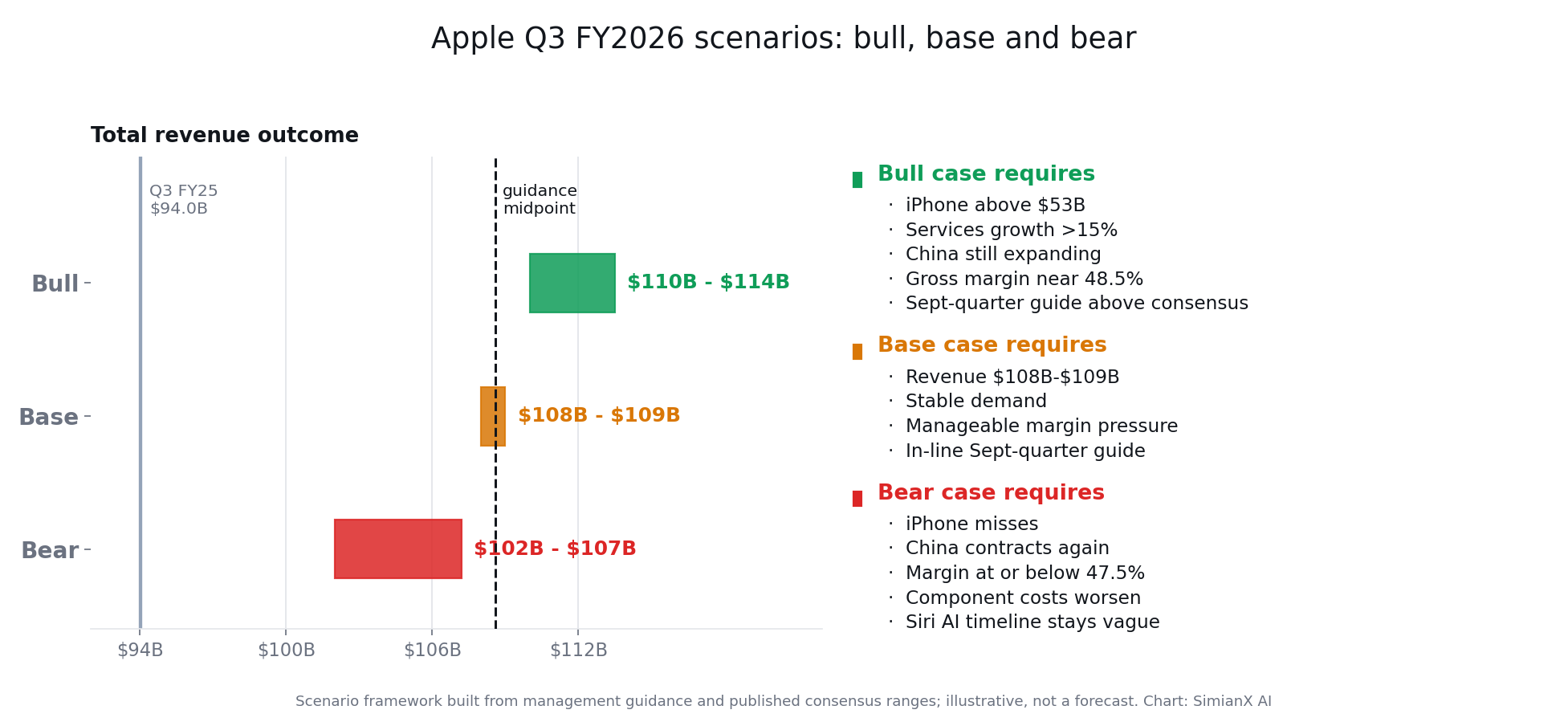
Apple Q3 실적 강세, 기준, 약세 시나리오
| 시나리오 | 실적 결과 | 경영진 코멘트 | 잠재적 해석 |
|---|---|---|---|
| 강세 시나리오 | 수익 $110B 이상 및 EPS 합의치 이상 | 강력한 아이폰 업그레이드, 서비스 가속화, 그리고 탄력적인 마진 | 성장은 AI 롤아웃 기간을 연결할 만큼 충분히 넓습니다 |
| 기준 시나리오 | 수익 약 $108B–$109B | 안정적인 수요와 관리 가능한 마진 압박 | 펀더멘털은 견고하지만, 많은 강세가 이미 예상될 수 있습니다 |
| 약세 시나리오 | 가이던스 중간값 이하의 수익 | 중국이 둔화되거나, 비용이 상승하거나, 향후 가이던스가 실망스러움 | 전통적인 성장이 약화됨에 따라 AI 지연이 더 중요해집니다 |
기준 시나리오는 주식에 가장 도전적인 시나리오일 수 있습니다.
애플이 무난한 성장을 발표하더라도, 기대와 밸류에이션이 이미 높은 국면에서는 주가 반응이 미지근할 수 있습니다.
투자자들은 이미 Apple의 지속 가능한 생태계, 미래 제품 및 궁극적인 AI 실행에 상당한 가치를 부여하고 있습니다. 프리미엄 평가에서, 강력한 미래 예상 없이 헤드라인 수익 초과 달성은 주식의 수익 배수를 확장하기에 충분하지 않을 수 있습니다.
수익 발표 후 AAPL 분석 방법
규율 있는 수익 발표 후 프로세스는 첫 번째 헤드라인에만 반응하지 않아야 합니다.
- 수익 및 EPS를 컨센서스와 비교하십시오.
서프라이즈가 진정한 운영 강도, 낮은 세율 또는 자사주 매입에서 비롯되었는지 확인하십시오.
- iPhone과 서비스 성과를 분리하십시오.
두 사업 부문 모두에서의 광범위한 초과 달성은 일시적인 항목에 의해 지배되는 결과보다 더 설득력이 있습니다.
- 마진 품질을 계산하십시오.
통합 총 마진, 제품 마진 및 서비스 믹스를 확인하십시오.
- 지리적 성과를 검토하십시오.
중화권과 미주 지역에 특히 주의하십시오.
- 경영진의 언어를 평가하십시오.
수요, 공급, 관세, AI 이정표 및 비용에 대한 자신감의 변화를 찾아보십시오.
- 미래 가이던스를 검토하십시오.
다음 분기 전망을 기존 애널리스트 기대치와 비교하십시오.
- 가격 확인을 기다리십시오.
초기 시간 외 이동은 애널리스트가 컨퍼런스 콜을 처리하고 추정치를 업데이트한 후에 반전될 수 있습니다.
여기서 SimianX AI는 투자자들이 수익 발표를 기술 지표, 뉴스 심리, 재무 펀더멘털 및 다중 에이전트 위험 분석과 결합할 수 있도록 도와줍니다. 단일 강세 또는 약세 헤드라인에 의존하지 않고 말입니다.
SimianX AAPL 분석 페이지는 수익 보고서를 둘러싼 변화하는 시장 신호를 추적하는 데 사용할 수 있습니다.
애플 수익 논문의 주요 위험
애플이 강력한 3분기 실적을 보고하더라도, 투자자들은 회사의 다음 성장 단계에 대한 위험을 간과해서는 안 됩니다.
AI 실행 위험
애플은 자사의 AI 전략이 제품 시연 및 제한된 미리보기 이상의 성과를 낼 수 있음을 증명해야 합니다.
지연이 반복되면 Apple Intelligence에 대한 소비자 신뢰가 약해질 수 있으며, AI를 업그레이드의 이유로 자리매김하는 것을 더 어렵게 만들 수 있습니다.
가치 평가 위험
애플의 가치는 회복력 있는 성장, 강력한 마진, 성공적인 AI 실행에 대한 기대를 반영합니다.
수익 추정치가 더 이상 상승하지 않으면, 주가는 매출의 큰 감소 없이도 배수 축소를 경험할 수 있습니다.
중국 위험
중국은 애플의 가장 중요한 시장이자 제조 지역 중 하나입니다.
소비자 수요의 둔화, 강력한 국내 경쟁, 규제 제한 또는 지정학적 긴장은 판매와 생산 모두에 영향을 미칠 수 있습니다.
서비스 규제
앱 스토어와 애플의 결제 정책은 규제 및 법적 도전에 노출되어 있습니다.
수수료 구조, 기본 애플리케이션 또는 결제 규칙의 변경은 서비스 부문의 수익성을 감소시킬 수 있습니다.
마진 압박
높은 메모리 가격, 고급 칩 비용, 관세 및 AI 인프라 비용은 총 마진과 운영 마진에 압박을 가할 수 있습니다.
서비스 성장은 완충 역할을 할 수 있지만, 모든 비용 인플레이션의 원인을 상쇄하지는 못할 수 있습니다.
2026년 3분기 실적을 강세로 이끌 조건은?
진정으로 강세를 보이는 보고서는 작은 수익 초과 달성을 넘는 것이 필요할 것입니다.
가장 강력한 조합은 다음을 포함할 것입니다:
- 예상 범위의 상단을 초과하는 수익
- 아이폰 수익 530억 달러 이상
- 서비스 성장 15% 이상
- 중화권에서의 지속적인 성장
- 가이던스 상단 근처의 총 마진
- 예상보다 나은 9월 분기 가이던스
- 명확한 시리 AI 출시 이정표
- AI 지출이 재정적으로 규율을 유지하고 있다는 증거
이 시나리오에서 투자자들은 애플의 기존 사업이 다음 세대 AI 제품을 개발하는 동안 수익을 지원할 만큼 빠르게 성장하고 있다고 결론지을 수 있습니다.
애플 Q3 2026 실적을 비관적으로 만드는 요소는 무엇인가?
보고서는 여러 경고 신호가 함께 나타날 경우 부정적으로 해석될 수 있습니다:
- 아이폰 수익이 예상보다 낮아짐
- 중화권이 다시 역성장으로 돌아섬
- 서비스 성장률이 실질적으로 둔화됨
- 총 이익률이 가이드라인 하단에 접근하거나 그 이하로 떨어짐
- 경영진이 악화되는 부품 비용을 강조함
- 9월 분기 가이드라인이 예상에 미치지 못함
- 시리 AI 일정이 모호함
- 운영 비용이 수익보다 빠르게 상승함
단일 약한 지표는 관리 가능할 수 있습니다. 하드웨어 성장 둔화, 서비스 약화, 마진 압박, 불확실한 AI 진행 상황의 조합은 투자 논리에 더 심각한 도전을 초래할 것입니다.
애플 Q3 2026 실적에 대한 FAQ
애플은 2026년 Q3 실적을 언제 발표하나요?
애플은 2026년 7월 30일 목요일에 미국 주식 시장이 마감된 후 2026 회계 연도 Q3 실적을 발표할 것으로 예상됩니다.
투자자들은 애플의 공식 투자자 관계 웹사이트를 통해 최종 날짜와 컨퍼런스 콜 일정을 확인해야 합니다.
애플 Q3 2026 수익 추정치는 얼마인가요?
현재 애널리스트의 예상은 일반적으로 애플의 2026 회계 연도 Q3 수익을 1,080억 달러에서 1,090억 달러 근처로 보고 있습니다.
이는 전년 대비 약 15%에서 16%의 성장률을 나타내며, 합의 추정치는 실적 발표 전에 변경될 수 있습니다.
애플 Q3 2026에서 예상되는 아이폰 수익은 얼마인가요?
애널리스트의 예상은 아이폰 수익을 530억 달러 근처로 보고 있습니다.
그 수준의 결과는 강력한 전년 대비 성장을 나타내며, 현재의 업그레이드 주기가 6월 분기 동안 견고하게 유지되었음을 시사합니다.
애플 서비스가 시리 AI 지연을 상쇄할 수 있나요?
서비스는 반복적인 수익과 하드웨어보다 상당히 높은 총 마진을 제공하기 때문에 단기 재무 위험의 일부를 상쇄할 수 있습니다.
그러나 서비스는 애플이 전 세계 기기 기반에서 경쟁력 있는 AI 경험을 제공할 수 있는지에 대한 장기적인 전략적 질문을 완전히 해결할 수는 없습니다.
시리 AI 지연이 애플의 수익에 이미 영향을 미치고 있는가?
재설계된 시리 AI가 분기 동안 널리 사용 가능하지 않았기 때문에 2026 회계연도 3분기에 미치는 직접적인 영향은 제한적일 것입니다.
더 큰 위험은 향후 업그레이드 수요, 국제적 가용성, 개발 비용, 그리고 투자자들이 광범위한 채택을 기다리는 동안 애플에 프리미엄 가치를 계속 부여할 것인지에 관한 것입니다.
결론
애플의 2026년 3분기 실적 구도는 “AI 지연”이라는 문구가 암시할 수 있는 것보다 근본적으로 더 강력합니다.
애플은 강력한 아이폰 모멘텀, 확장하는 서비스 수익, 개선되는 중국 사업, 그리고 주당 수익을 계속 지원하는 자본 환원 프로그램과 함께 보고서에 진입합니다.
6월 분기 동안 아이폰 성장과 서비스는 아마도 의미 있는 시리 AI 수익의 부재를 상쇄할 수 있을 것입니다.
약 1,080억 달러의 수익, 530억 달러의 아이폰 판매, 그리고 310억 달러 이상의 서비스에 대한 컨센서스 기대치는 3월 분기의 모멘텀이 계속된다면 달성 가능해 보입니다.
장기적인 테스트는 더 까다롭습니다.
애플은 시리 AI가 개발 및 테스트에서 신뢰할 수 있는 전 세계적으로 사용 가능한 제품으로 이동하여 기기 업그레이드, 사용자 참여 및 구독 수익을 강화할 수 있음을 보여줘야 합니다.
강력한 전통적인 수익은 애플에게 더 많은 시간을 줄 수 있지만, AI 실행을 무의미하게 만들 수는 없습니다.
SimianX AI를 사용하여 애플의 보고된 기본 사항, 실적 발표 콜의 심리, 기술적 반응 및 변화하는 위험 신호를 모니터링한 후 2026 회계연도 3분기 결과가 AAPL 투자 논리를 강화하거나 약화시키는지를 결정하세요.
관련 글
- WWDC 2026:시리와 제미니의 AAPL 주가 영향
- MS 2026 4분기: Azure 성장과 AI 투자 위험
- Alphabet Q2 실적:Gemini와 AI 투자 시험대
- 아마존 2분기 실적: AWS, 2000억 달러 투자 시험대
- 테슬라 2026 2분기: 로보택시가 마진 하락 상쇄할까
- 2026년 매그니피센트 7: 비중과 집중 리스크 분석
- AI 어닝콜 분석: 경영진 톤 해독 실전 완벽 가이드
- 오토존·Zscaler 2026: 어닝미스 셀오프 플레이북
참고 자료
- Apple Investor Relations — 분기 실적과 콘퍼런스 콜 일정
- SEC EDGAR — 애플 10-Q 보고서 — 부문별 매출과 매출원가의 1차 자료
- Apple Intelligence — 공식 기능 목록과 기기 요구 사항
- Private Cloud Compute — 서버 측 AI 아키텍처에 대한 애플의 기술 설명
- Apple App Store — 서비스 부문에서 가장 큰 단일 구성 요소
- EU Digital Markets Act — EU 기능 제공과 앱스토어 규칙을 규정하는 법령
- Investopedia — 매출총이익률의 정의와 부문 구성이 이를 움직이는 이유
- Investopedia — P/E 배수와 배수 축소가 주주에게 뜻하는 것