
Gulf of Tonkin Incident (1964): The Event That Escalated the Vietnam War
The Gulf of Tonkin Incident (1964) is widely regarded as one of the most consequential geopolitical events of the Cold War era. It directly triggered the dramatic escalation of the Vietnam War, transforming what had largely been a regional conflict into a major U.S. military engagement in Southeast Asia.
Understanding the Gulf of Tonkin Incident is important not only for historians but also for investors, analysts, and policymakers who study how geopolitical shocks influence global markets and political decisions. Modern analytical platforms such as SimianX AI help researchers and traders interpret geopolitical risk events by combining macroeconomic signals, AI-driven analysis, and historical data patterns.
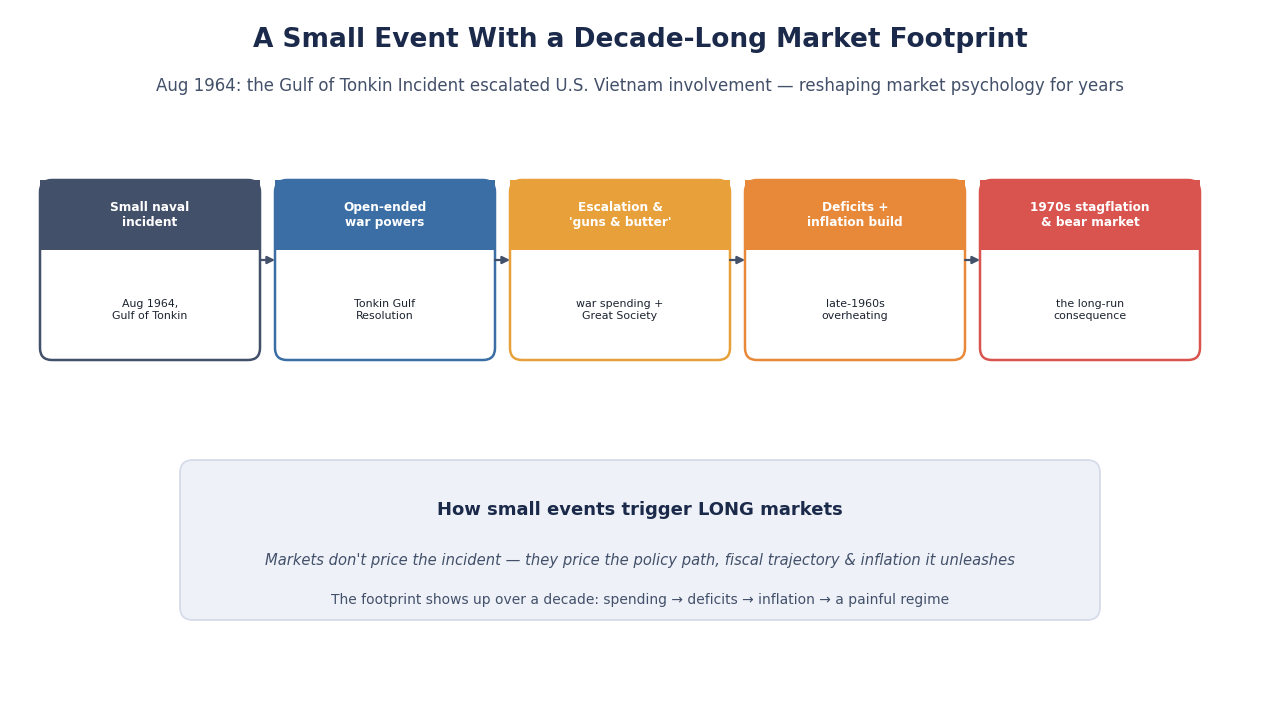
In this research article, we explore:
- What happened during the Gulf of Tonkin Incident
- Why the event escalated the Vietnam War
- Political controversies surrounding the incident
- The Gulf of Tonkin Resolution and its impact
- Lessons for geopolitical risk analysis today
- How modern AI tools such as SimianX AI can help interpret geopolitical shocks
Historical Background: The Cold War and Vietnam
To understand the Gulf of Tonkin Incident (1964), we must examine the broader Cold War context.
After World War II, the world was divided into two ideological blocs:
- The United States and its allies
- The Soviet Union and communist allies
Vietnam became a central battleground in this ideological struggle.
Following the First Indochina War (1946–1954) between France and the communist-led Viet Minh, Vietnam was divided into two states:
| Region | Political System | Leader |
|---|---|---|
| North Vietnam | Communist | Ho Chi Minh |
| South Vietnam | Anti-Communist | Ngo Dinh Diem |
The United States supported South Vietnam because of the Domino Theory, which argued that if one country in Southeast Asia fell to communism, others would follow.
“The fall of Vietnam could trigger a chain reaction across Southeast Asia.”
By the early 1960s, the U.S. had already deployed thousands of military advisors to South Vietnam. However, the Gulf of Tonkin Incident dramatically accelerated American involvement.
What Happened in the Gulf of Tonkin Incident (1964)?
The Gulf of Tonkin Incident refers to two alleged attacks on U.S. naval vessels by North Vietnamese forces in August 1964.
The events occurred in the Gulf of Tonkin, located off the coast of North Vietnam.
First Incident – August 2, 1964
On August 2, 1964:
- The U.S. destroyer USS Maddox was conducting intelligence patrols near North Vietnam.
- North Vietnamese patrol boats approached the ship.
- A brief naval skirmish occurred.
The USS Maddox fired warning shots and called for air support.
Although the confrontation caused limited damage, it heightened tensions between the two nations.
Second Incident – August 4, 1964
Two days later, reports suggested another attack occurred.
However, this second incident is highly controversial.
Evidence later revealed:
- Radar signals may have been misinterpreted
- Weather conditions caused confusion
- No confirmed North Vietnamese attack occurred
Despite the uncertainty, U.S. leadership treated the event as an act of aggression.
Why Did the Gulf of Tonkin Incident Escalate the Vietnam War?
The political response to the incident was immediate and dramatic.
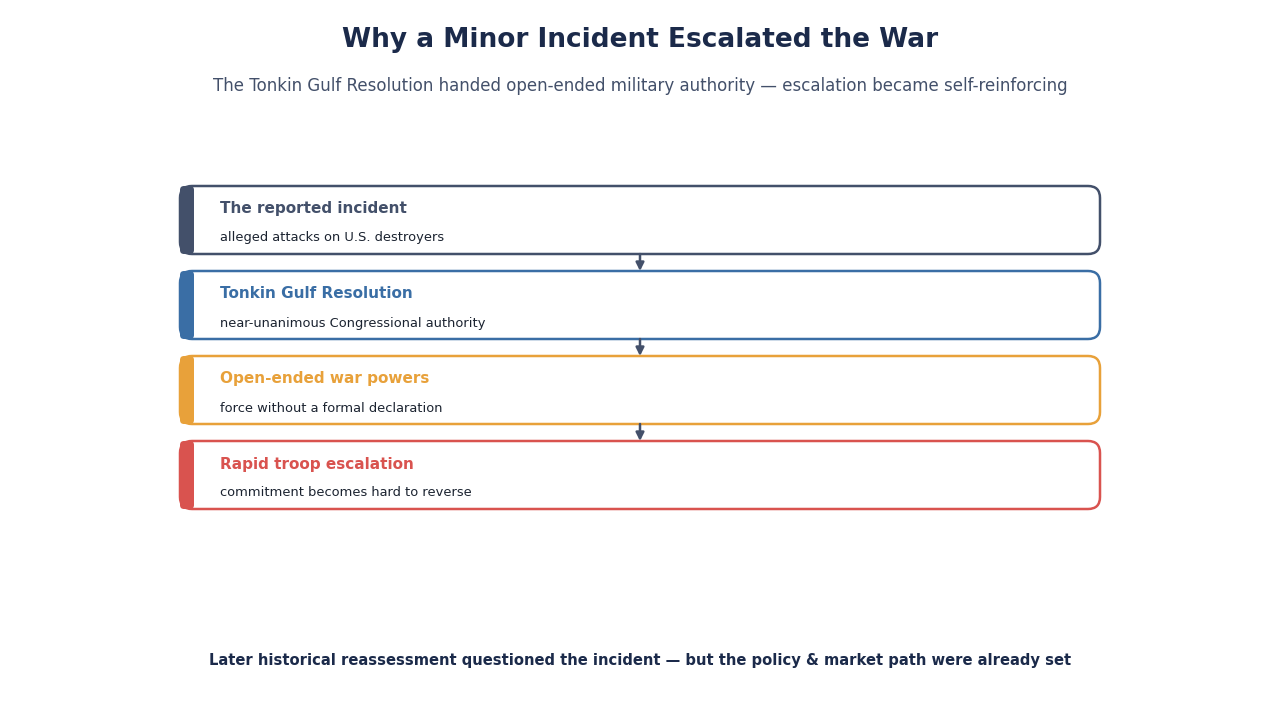
President Lyndon B. Johnson used the event to request congressional authority to expand military action.
The Gulf of Tonkin Resolution
On August 7, 1964, the U.S. Congress passed the Gulf of Tonkin Resolution.
This resolution allowed the President to:
- Use military force in Southeast Asia
- Defend South Vietnam
- Respond to communist aggression
The resolution passed overwhelmingly.
| Vote Result | Numbers |
|---|---|
| House of Representatives | 416–0 |
| Senate | 88–2 |
Effectively, the resolution functioned as a declaration of war without formally declaring war.
Immediate Military Consequences
Following the resolution, the United States dramatically expanded its military operations.
Operation Rolling Thunder
The U.S. launched a sustained bombing campaign against North Vietnam.
Goals included:
- Destroying supply routes
- Weakening North Vietnamese military capabilities
- Pressuring North Vietnam to negotiate
Troop Escalation
American troop levels increased rapidly.
| Year | US Troops in Vietnam |
|---|---|
| 1964 | ~23,000 |
| 1965 | ~184,000 |
| 1968 | ~536,000 |
The Gulf of Tonkin Incident effectively transformed the conflict into a large-scale war involving hundreds of thousands of U.S. troops.
Controversy and Historical Reassessment
Decades later, historians discovered that the second attack likely never occurred.
Declassified documents revealed that:
- Intelligence reports were incomplete
- Radar signals were misinterpreted
- Political pressure accelerated decision-making
The Gulf of Tonkin Incident became one of the most controversial episodes in U.S. foreign policy history.
Pentagon Papers
In 1971, the Pentagon Papers revealed internal government doubts about the incident.
The documents showed that U.S. leaders:
- Questioned the accuracy of the attack reports
- Understood the risks of escalation
- Continued expanding the war anyway
Long-Term Consequences of the Vietnam War Escalation
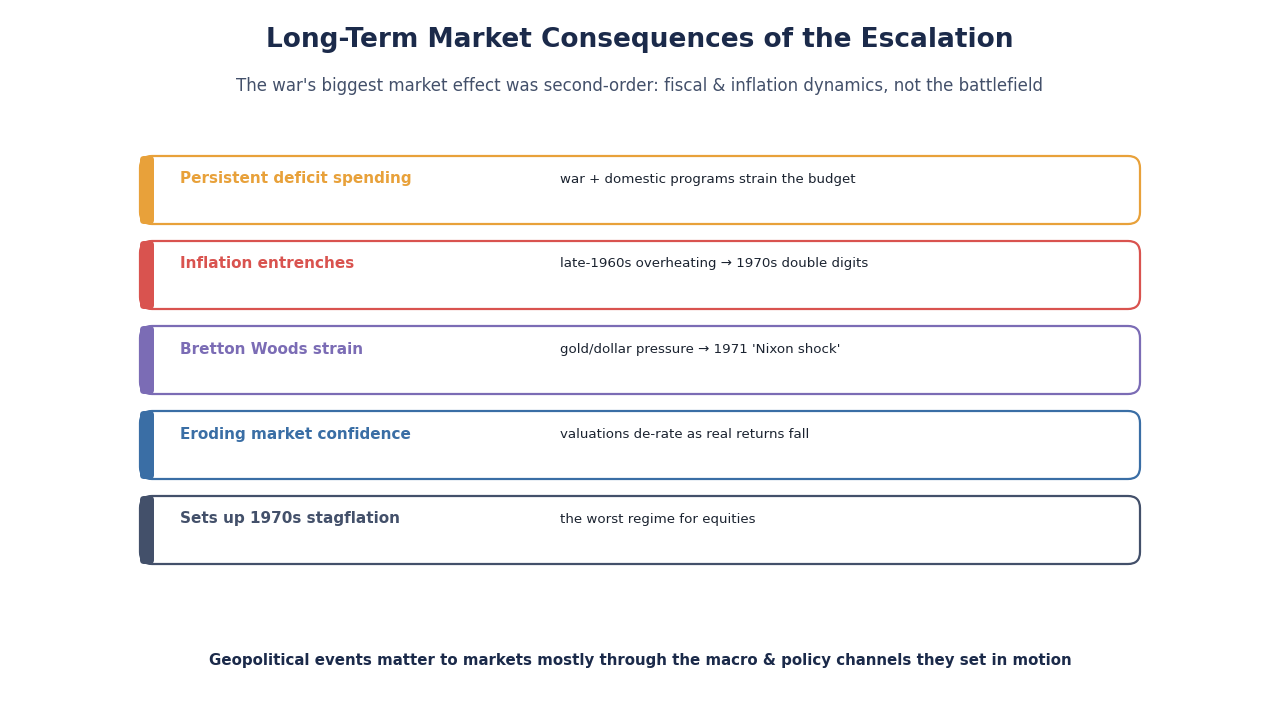
The escalation triggered by the Gulf of Tonkin Incident had enormous consequences.
Military Impact
The Vietnam War became one of the longest conflicts in U.S. history.
Key statistics:
- 58,000+ American soldiers killed
- Millions of Vietnamese casualties
- Massive destruction across Vietnam, Laos, and Cambodia
Political Impact
The war led to:
- Large anti-war protests
- Political divisions in the United States
- Declining trust in government
Strategic Lessons
Many historians now view the incident as a cautionary example of how intelligence uncertainty can lead to major geopolitical decisions.
Geopolitical Events and Financial Markets
Major geopolitical incidents often trigger market volatility.
Examples include:
- 9/11 attacks (2001)
- Iraq War (2003)
- Russia–Ukraine War (2022)
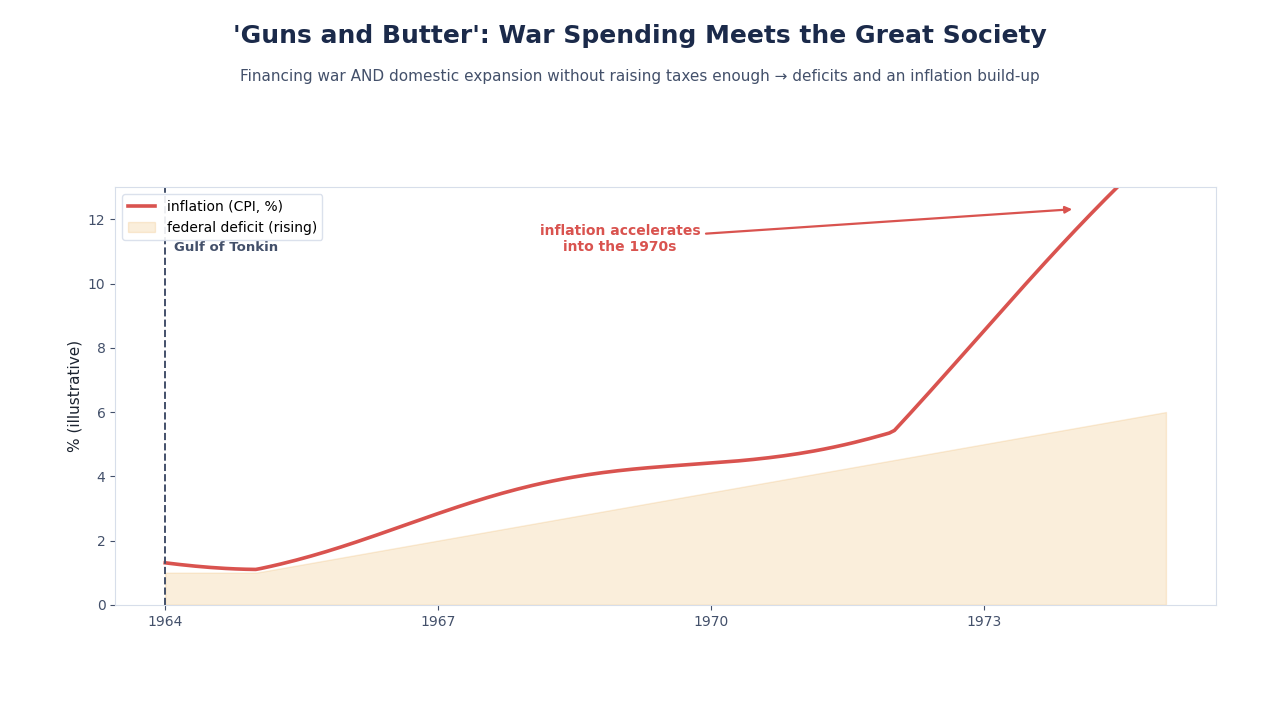
Similarly, Cold War crises like the Gulf of Tonkin Incident influenced:
- defense spending
- commodity prices
- global political alliances
Today, advanced AI-driven analysis platforms such as SimianX AI help traders and analysts understand how geopolitical shocks affect markets.
Using multi-agent models and macro analysis, SimianX AI can interpret signals related to:
- geopolitical conflict risk
- defense sector performance
- macroeconomic shocks
- global commodity markets
This type of AI-powered analysis allows investors to respond faster to events similar to historical crises like the Gulf of Tonkin Incident.
Learn more about these capabilities at
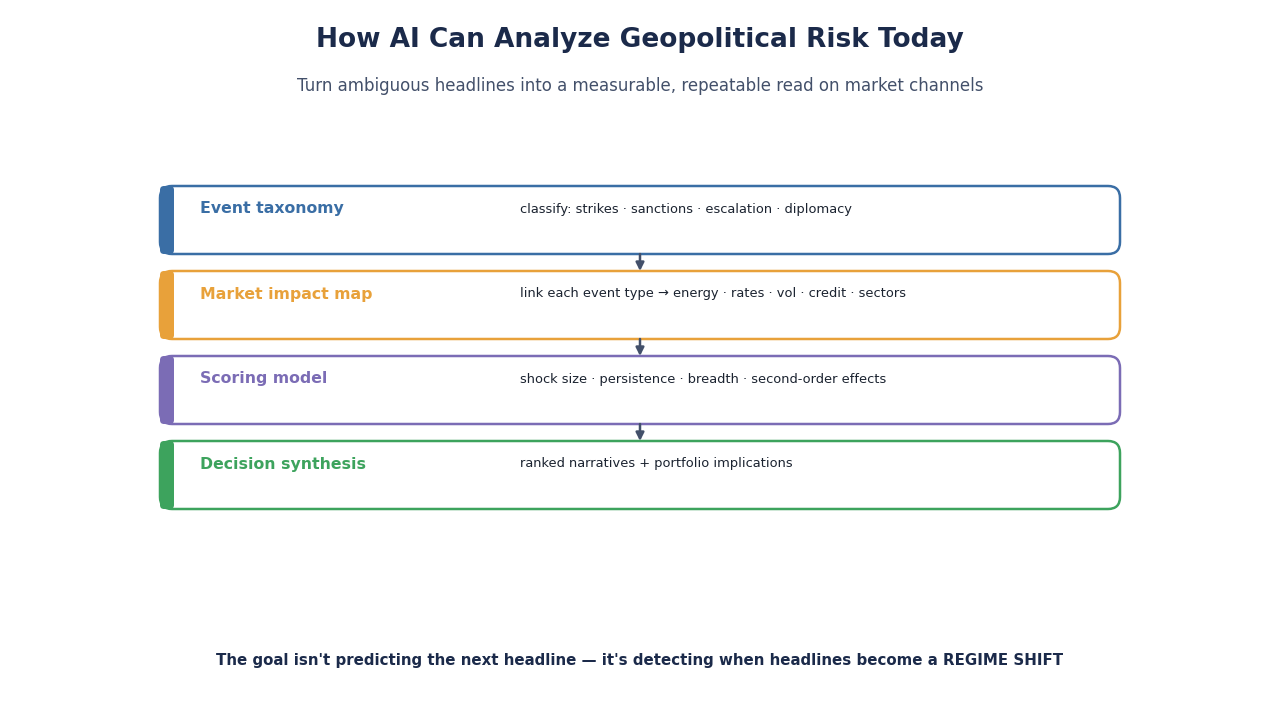
How AI Can Analyze Geopolitical Risk Today
Modern geopolitical risk analysis combines several types of data.
Key Data Sources
- News sentiment analysis
- Government policy signals
- Defense spending indicators
- Commodity markets
- global macroeconomic indicators
AI platforms integrate these signals to identify risk patterns before markets react.
Example Analytical Framework
- Monitor geopolitical events
- Track macroeconomic indicators
- Analyze financial market reaction
- Identify sector rotation
| Signal Type | Market Impact |
|---|---|
| Military escalation | Defense stocks rise |
| Trade conflict | Supply chains disrupted |
| Oil supply risk | Energy prices spike |
Advanced AI platforms such as SimianX AI integrate these signals into real-time analytical dashboards that help traders understand global risk environments.
How did the Gulf of Tonkin Incident escalate the Vietnam War?
The Gulf of Tonkin Incident escalated the Vietnam War by providing the political justification for U.S. military intervention. After the alleged attacks on American naval ships, Congress passed the Gulf of Tonkin Resolution, giving President Johnson broad authority to deploy military forces in Vietnam without a formal declaration of war.
The result was a rapid expansion of the war, including large troop deployments and sustained bombing campaigns.
Timeline of the Gulf of Tonkin Incident
| Date | Event |
|---|---|
| Aug 2, 1964 | USS Maddox engaged with North Vietnamese patrol boats |
| Aug 4, 1964 | Alleged second attack reported |
| Aug 7, 1964 | Gulf of Tonkin Resolution passed |
| 1965 | Large-scale US troop deployment begins |
| 1968 | US troop presence peaks |
This timeline shows how a single geopolitical event can rapidly transform international policy and military strategy.
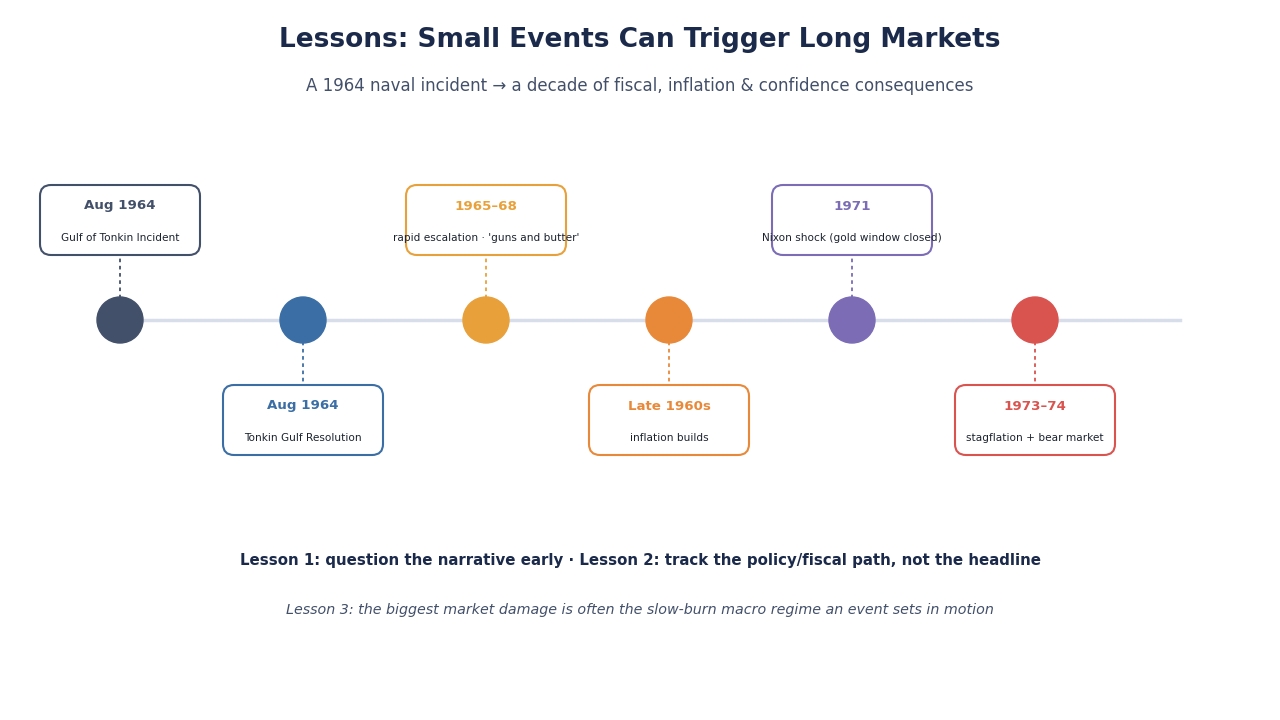
Lessons From the Gulf of Tonkin Incident
The incident offers several enduring lessons.
1. Intelligence Uncertainty
Military intelligence can be ambiguous.
Misinterpretation can lead to major geopolitical consequences.
2. Political Momentum
Once political momentum builds, reversing course becomes difficult.
3. Public Trust
Government transparency is crucial for maintaining public trust during wartime decisions.
4. Geopolitical Risk Awareness
For investors and analysts, geopolitical events can drastically reshape markets.
AI-driven platforms like SimianX AI help monitor global signals that may indicate emerging geopolitical risk.
FAQ About Gulf of Tonkin Incident (1964)
What was the Gulf of Tonkin Incident?
The Gulf of Tonkin Incident refers to two reported attacks by North Vietnamese forces against U.S. naval vessels in August 1964. The incident led to the Gulf of Tonkin Resolution and the escalation of the Vietnam War.
Why is the Gulf of Tonkin Incident controversial?
The controversy centers on the second reported attack on August 4, 1964. Later evidence suggested the attack likely never occurred, raising concerns that the war escalation was based on flawed intelligence.
How did the Gulf of Tonkin Resolution affect the Vietnam War?
The resolution gave the U.S. President authority to conduct military operations in Vietnam without a formal declaration of war. This allowed the United States to dramatically increase troop levels and military activity.
What can modern analysts learn from the Gulf of Tonkin Incident?
The event highlights the importance of analyzing geopolitical risk carefully. Modern AI platforms such as SimianX AI help analysts evaluate geopolitical signals and market reactions in real time.
Conclusion
The Gulf of Tonkin Incident (1964) stands as one of the most pivotal events of the Cold War. What began as a naval encounter quickly transformed into the justification for large-scale U.S. military intervention in Vietnam.
The incident illustrates how geopolitical events, intelligence interpretation, and political decisions can rapidly reshape global history.
Today, historians continue to analyze the event to understand how escalation occurred and how similar geopolitical risks may emerge in the future.
For investors, researchers, and analysts seeking to understand geopolitical events and their impact on markets, advanced AI-driven platforms like SimianX AI provide powerful tools for analyzing macro signals, market reactions, and global risk trends.
By combining historical insight with modern AI analysis, platforms like SimianX AI help users better navigate the complex relationship between geopolitics, markets, and global strategy.
Related Reading
- Buy the Invasion Pattern: Iraq 2003 S&P 500 +15% Rally
- Yom Kippur War 1973: Oil 4x, 2-Year Global Stock Crash
- 9/11 & Early War on Terror: S&P 500 -14%, 4-Month Recovery
- Russia-Ukraine War Stock Impact: Sectors, VIX, Risk Plan
- Iran-US War Impact on Stocks: AI Risk Signals Live
- 7 AI Risk Radars for Equities: Breadth, Revisions, Skew