
Narito na ang Stock Live Analysis: Ang mga AI Agent ay Ngayon ay Nakikipagkalakalan ng US Equities sa Real Time
Mula noong nakaraang taon, SimianX AI ay nagpapatakbo ng isang multi-agent live analysis engine para sa crypto market — isang maliit na koponan ng mga AI agent na nagtatalo sa bawat kandila, pinagsasama ang mga signal, at tahimik na nagbubukas, nagtatakda ng laki, at nagsasara ng mga posisyon habang natutulog ang mga gumagamit. Ngayon, ang parehong engine ay live na para sa US stocks. AAPL, NVDA, TSLA, MSFT, GOOGL, META, AMD, at ang natitirang bahagi ng US tape ay ngayon ay nakakabit sa parehong real-time, news-aware, fundamentals-grounded AI command room.
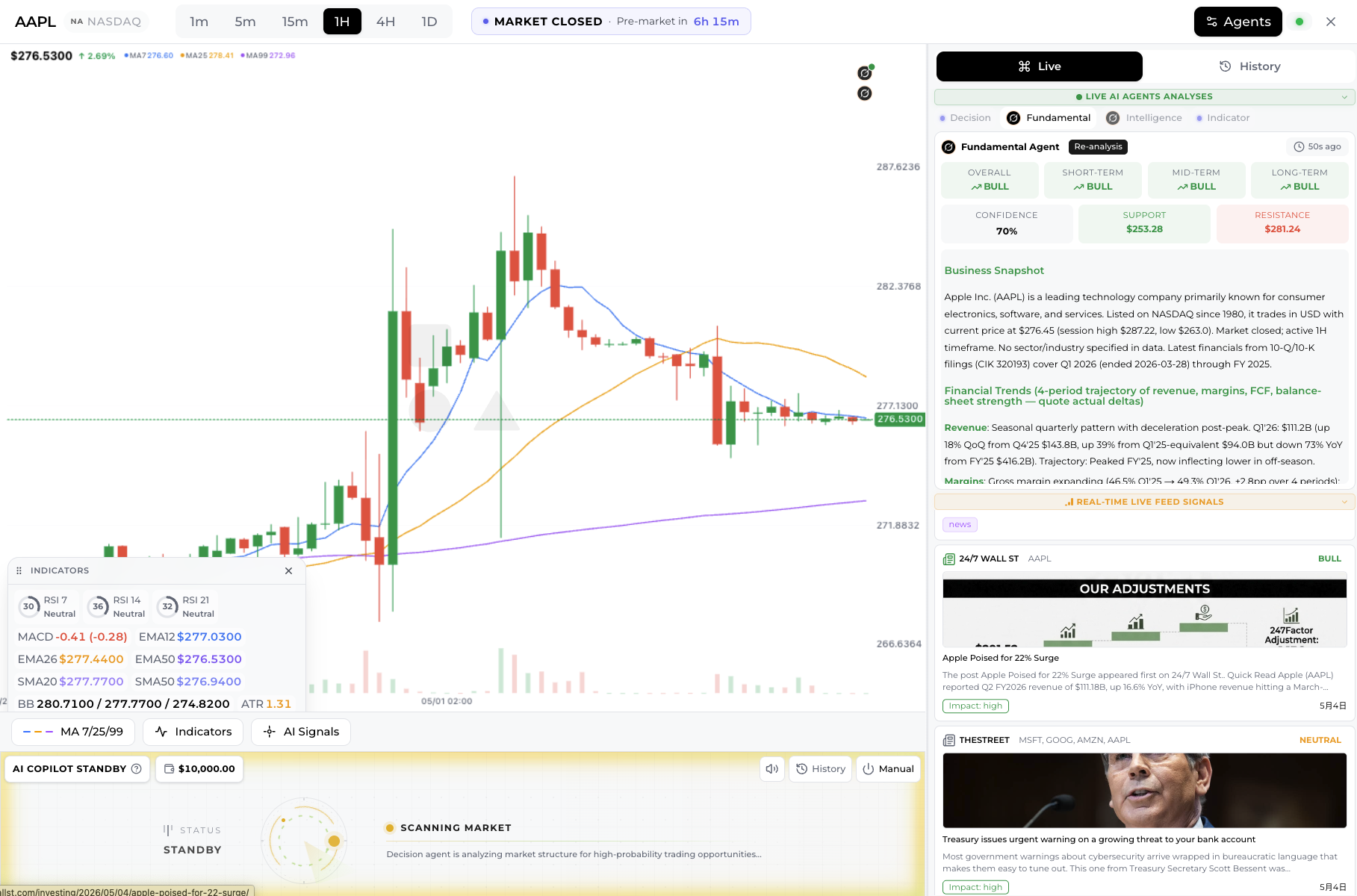
Ito ay hindi isang stripped-down na "stocks too" port. Ito ay isang ground-up adaptation na iginagalang kung paano talaga nakikipagkalakalan ang mga equities: mga oras ng merkado, SEC filings, insider activity, fractional shares, limit orders, at earnings horizons. Kung ikaw ay kailanman nagnanais na ang isang tool ay pagsamahin ang isang TradingView chart, isang Bloomberg news terminal, isang SEC EDGAR reader, at isang AI portfolio manager sa isang screen, ang Stock Live Analysis ay eksaktong iyon na screen — at ito ay nag-stream ng bawat hakbang ng pangangatwiran ng live, kaya walang nakatago sa likod ng isang black box ang tungkol sa desisyon ng AI.
Bakit Patuloy na Nabibigo ang mga Single-Signal Tools sa mga Retail Traders
Tingnan ang toolkit na karaniwang binubuo ng isang retail trader sa 2026: TradingView para sa mga chart, Yahoo Finance para sa mga headline, isang earnings app para sa mga filings, isang Discord channel para sa sentiment, at marahil isang robo-advisor para sa boring na 401(k) na pera. Bawat isa sa mga tool na iyon ay mahusay sa isang bagay at hindi alam ang tungkol sa iba. Ang chart ay hindi alam na ang earnings ay bumagsak pitong minuto na ang nakalipas. Ang news app ay hindi alam na ang RSI ay bagong nag-print ng 82. Ang robo-advisor ay hindi alam na isang insider ay bagong nagbenta ng $40 milyon ng stock. Ang trader ang integration layer — at ang trader din ang pinakamabagal, pinaka-distractible na bahagi ng stack.
Ang pangangalakal ng stock ay hindi isang problema ng solong signal. Ito ay isang problema ng multi-signal fusion. Sinumang nagsusuri ng teknikal, balita, at pundasyon nang magkasama — sa totoong oras — ang panalo.
Ang SimianX ay itinayo upang maging integrasyon na layer na iyon. Karamihan sa mga retail na tool ay nagbibigay sa iyo ng isa sa mga sumusunod: isang tsart, isang news feed, isang fundamentals screener, o isang robo-advisor. Ang SimianX ay nagpapatakbo ng mga ito nang sabay-sabay at naglalagay ng isang decision agent sa itaas na ang tanging trabaho ay makipagtalo sa iba hanggang ang isang posisyon ay maipaliwanag — o tahasang manatiling flat kapag walang tumutugma. Ang resulta ay isang screen na sa wakas ay tumutugma sa paraan ng pag-iisip ng mga propesyonal na trader: nag-cross-check ng teknikal laban sa mga catalyst laban sa katotohanan ng balance sheet, at kumikilos lamang kung saan ang maraming lens ay nagkakasundo.
Kilalanin ang mga Ahente
| Ahente | Trabaho | Nagbabasa | Output |
|---|---|---|---|
| Indicator | Basahin ang tape | Live candles, RSI, MACD, EMA 12/26, Bollinger Bands, ATR, volume | Signal ng direksyon + lakas |
| Intelligence | Basahin ang mga headline | 59+ pinagkukunan ng balita sa stock, pre-scored para sa damdamin at halaga | Signal ng catalyst + damdamin |
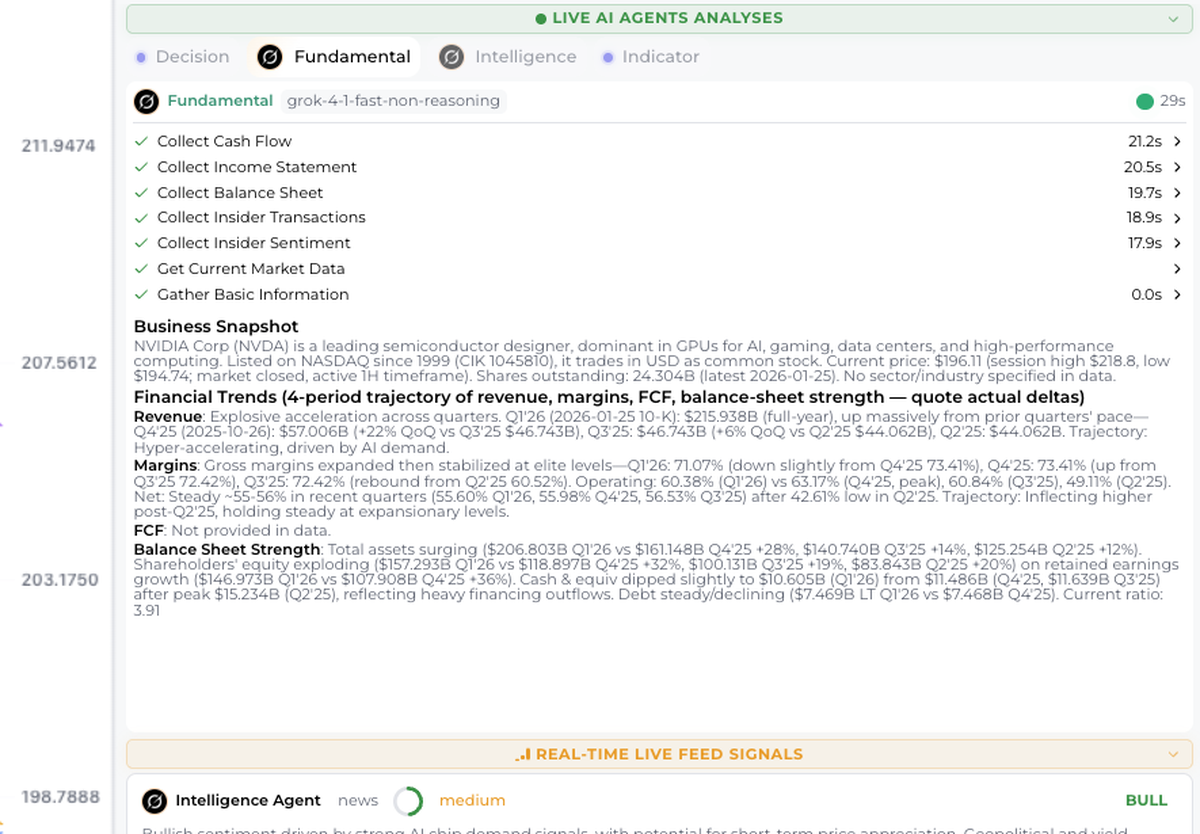
| Fundamental | Basahin ang mga filing | SEC EDGAR XBRL (kita, balance sheet, cash flow), insider Form 4, P/E | Outlook sa 3-horizon |
| Decision | Pagsamahin at kumilos | Lahat ng konklusyon + presyo + estado ng posisyon + oras ng merkado | BUY / SELL / HOLD nang may kumpiyansa, laki, SL, TP |
Bawat ahente ay nag-stream ng kanilang pangangatwiran token-by-token, sa parehong paraan ng ChatGPT, kaya maaari mong panoorin ang AI na nag-iisip sa halip na maghintay para sa isang black-box na sagot. Kapag natapos na ang pangangatwiran, isang malinis na kahon ng konklusyon ang lilitaw — badge ng direksyon, meter ng kumpiyansa, mga pangunahing antas, timestamp. Maaari mong i-collapse ang pangangatwiran kung nagtitiwala ka sa konklusyon, o i-expand ito kapag nais mong malaman kung bakit nakita ng isang ahente ang nakita nito.
Ito ay isang sinadyang pagpili ng disenyo. Ang mga tool ng AI na nagtago ng kanilang pangangatwiran sa likod ng isang solong "bili" o "ibenta" na hatol ay hindi nakakaligtas sa pakikipag-ugnayan sa isang seryosong mangangalakal. Sa unang pagkakataon na mali ang AI, walang paraan ang gumagamit upang suriin kung ang modelo ay mali sa pagbasa ng signal o kung ang gumagamit mismo ay mali sa pagbasa ng modelo. Sa pamamagitan ng live na pag-stream ng pangangatwiran, bawat konklusyon ay maaring suriin, bawat hindi pagkakaintindihan sa pagitan ng mga ahente ay nakikita, at ang mangangalakal ay nananatiling may kontrol.
Paano Binabasa ng Indicator Agent ang Tape
Ang Indicator agent ang pinakamabilis na miyembro ng koponan dahil hindi ito laging nangangailangan ng LLM. Isang rule engine ang nagpapagana sa sandaling magsara ang isang kandila at sinusuri ang isang baterya ng mga kilalang teknikal na kaganapan: RSI extremes, MACD crosses, EMA 12 / EMA 26 na pagbabago ng trend, Bollinger Band touches at breaks, ATR volatility shifts, volume anomalies, at mga pangunahing pattern ng kandila tulad ng engulfing bars at hammers. Anumang patakaran na nagpapagana ay naglalabas ng isang nakabalangkas na signal sa loob ng mga milisecond.
Kapag lumabas na ang signal, ang LLM ay pumapasok lamang upang isulat ang paliwanag na nakaharap sa tao — inilarawan kung ano ang nagpasimula, kung ano ang karaniwang ibig sabihin nito, at kung paano ito nauugnay sa kamakailang estruktura ng tsart. Ang disenyo na ito na may dalawang yugto ay nagpapanatili ng mababang gastos sa inferens habang patuloy na naglalabas ng uri ng analisis na maaring basahin ng isang mangangalakal sa pagitan ng mga kalakalan.
Paano Binabasa ng Intelligence Agent ang Balita
Ang ahente ng Intelligence ay pinapagana ng parehong pipeline ng balita na nagbibigay ng balita sa stock ng SimianX sa buong natitirang bahagi ng produkto. Sa paglulunsad na ito, ang pipeline na iyon ay sumasaklaw ngayon sa 59 na napatunayang pinagkukunan — kabilang ang Yahoo Finance, MarketWatch, ang Wall Street Journal, bawat sub-feed ng CNBC, Seeking Alpha, Investing.com, Forbes, Business Insider, Benzinga, Investor's Business Daily, mga press feed ng Nasdaq, PR Newswire, GlobeNewswire, ang mga press release ng SEC, ang Federal Reserve, BBC Business, The Guardian, Financial Post, Business Standard, LiveMint, Economic Times, at mga tech-heavy na outlet tulad ng TechCrunch, The Verge, Ars Technica, VentureBeat, at Engadget na naglilipat ng malalaking-cap tech tickers nang higit pa kaysa sa anumang tradisyunal na publikasyon ng pananalapi.
Bawat artikulo ay pre-scored upstream para sa sentiment (bullish, bearish, neutral) at value (isang 0–1 score na nagmamarka kung ang artikulo ay talagang nakakaapekto sa merkado o simpleng SEO filler), kaya ang ahente ay gumugugol ng mga token nito sa pag-iisip tungkol sa mga catalyst sa halip na maglakbay sa ingay.
Paano Binabasa ng Fundamental Agent ang mga Pagsusumite
Ang Fundamental agent ay hindi naghihintay para sa isang buod ng analyst. Ito ay kumukuha ng XBRL na nakastrukturang data nang direkta mula sa SEC EDGAR — ang parehong pangunahing pinagkukunan na binabasa ng mga analyst na iyon — at pinaparse ito sa konteksto ng pag-iisip sa loob ng ilang segundo matapos ang pagsusumite. Kapag ang NVDA ay nagsumite ng susunod na 10-Q, ang susunod na konklusyon ng Fundamental ay sumasalamin dito nang walang anumang tao na pag-aalaga.
The agent ay tumatakbo nang mas madalas kaysa sa iba dahil ang mga batayan ay hindi nagbabago bawat minuto. Kapag ito ay tumakbo, ito ay nagpa-parallelize ng pitong sabay-sabay na fetches: metadata ng kumpanya (CIK, exchange, petsa ng listahan), ang pinakabagong income statement (kita, netong kita, EPS, gross margin), ang balance sheet (mga ari-arian, mga pananagutan, equity, debt-to-equity), ang cash flow statement (operating, investing, financing flows), pinagsama-samang insider sentiment mula sa Form 3 / 4 / 5 filings, mga kamakailang transaksyon ng insider na naka-ranggo ayon sa laki at pagkakasunod-sunod, at mga live market multiples (P/E, P/B, dividend yield) mula sa Finnhub. Sa oras na ito ay magsalita, bawat kaugnay na lens sa kumpanya ay na-load sa parehong pag-uusap.
Paano Pinagsasama ng Decision Agent ang Lahat
Ang Decision agent ay ang team lead. Hindi ito nangangalap ng mga boto — ito ay tumutimbang ng mga aktibong lakas ng signal gamit ang isang fusion score at nagmumungkahi lamang ng isang trade kapag ang conviction ay lumampas sa isang threshold. Ang mga araw na may mababang conviction ay nagreresulta sa mga rekomendasyong HOLD, ayon sa disenyo. Binabasa ng agent ang pinakabagong konklusyon mula sa iba pang tatlo, ang kasalukuyang presyo, ang umiiral na estado ng posisyon ng gumagamit, ang sesyon ng merkado (pre-market, regular hours, post-market, closed), at anumang mga balita na naging sanhi na dumating sa nakaraang cycle, at pagkatapos ay sumusulat ng isang nakabalangkas na mungkahi na ang front end ay nag-render bilang decision card.
Isang Live Walk-Through
Naghanap ka ng ticker. Isang WebSocket session ang nagbukas. Sa loob ng mga millisecond:
- Isang live candle chart na may iyong mga indicator na naka-overlay
- Isang market hours pill na nagpapakita ng pre-market, regular, post-market, o closed — na may countdown sa susunod na transition
- Isang timeframe switcher para sa 1m, 5m, 15m, 1H, 4H, 1D
- Isang walang laman na Live tab na naghihintay para sa mga agent na magsimula
Walang reloads, walang polling, walang "loading…" spinners sa pagitan ng mga candle. Ang mga bagong ticks ay ipininta habang sila ay dumarating.
The Indicator agent ay tumatakbo muna dahil ito ang pinakamura. Ang Intelligence ay nagbabasa ng anumang balita mula sa huling siklo. Ang Fundamental, kapag ang mas mahabang cadence nito ay due, ay sabay-sabay na nagpa-parallelize ng pitong SEC at market-data fetches. Sa oras na matapos mong basahin ang unang talata ng Indicator agent, ang Decision agent ay nag-fuse na sa mga ito.
Ang Decision Card
Ito ang bayani ng screen:
- Isang malinaw na action badge — BILI, BENTA, o HOLD
- Isang confidence meter na iginuhit bilang isang colored arc (berde sa mataas na tiwala, amber sa katamtaman, pula sa ibaba ng threshold)
- Inirekomendang entry, stop-loss, at take-profit
- Isang risk-level pill (mababa / katamtaman / mataas)
- Isang streaming rationale na nagpapakita kung paano nagkasundo o hindi nagkasundo ang mga input agents
- Isang expandable signal breakdown ng bawat aktibong teknikal, balita, at fundamental signal
Ang Decision agent ay hindi lamang nag-a-average ng mga boto. Ito ay tumitimbang ng active signal strengths gamit ang isang fusion score at nagmumungkahi lamang ng isang trade kapag ang tiwala ay lumampas sa isang threshold. Ang mga araw na may mababang tiwala ay nagrerekomenda ng HOLD — sa disenyo.
Ang huling puntong ito ay karapat-dapat pagtuunan ng pansin. Karamihan sa mga "AI trading" na produkto ay binabayaran sa bawat trade at tahimik na nag-o-optimize para sa aktibidad. Ang SimianX ay tahasang gumagawa ng kabaligtaran: kapag walang signal na sapat na malakas, sinasabi ng Decision agent iyon. Walang kahihiyan sa isang HOLD card. Ang platform ay ginagantimpalaan kapag ang mga gumagamit nito ay nananalo, hindi kapag ang mga gumagamit nito ay nag-churn sa mga trade.
Pagbubukas ng Posisyon
I-click ang Buksan ang Posisyon o i-flip ang AI control at hayaan ang agent na isagawa ang sandaling ang mungkahi nito ay lumampas sa iyong threshold ng tiwala. Makakakuha ka ng:
- Fractional shares hanggang sa 8 decimal places — tumugma sa precision ng Robinhood, Fidelity, o Schwab fractional-share orders
- Market o limit orders — ang mga limit ay nasa
PLACEDstate na may auto-expiry, ang mga market orders ay agad na napupuno bilangOPEN
- Isang live P&L counter na tumutok sa bawat quote
- One-click edit (slider-based SL / TP adjustment) at close buttons
- Magdagdag at bawasan na mga operasyon para sa pyramiding o bahagyang pagkuha ng kita
Bawat transisyon — pagbubukas, bahagyang pagbawas, SL na pagsasaayos, TP na natamaan, pagsasara — ay may timestamp sa StockAIPositionOperation na may kalakip na dahilan ng AI. Maaari mong ulitin ang anumang kalakalan mula sa log ng operasyon at makita nang eksakto kung aling ahente ang nagsabi ng ano sa bawat punto ng desisyon. Iyan ang audit trail na inaasahan ng mga propesyonal na tagapamahala ng pera, at bihira itong matagpuan sa retail na antas.
Ano ang Nangyayari Kapag Ikaw ay Naka-disconnect
Ito ang tampok na halos hindi kailanman tama ang mga retail na tool. Isara ang tab, i-lock ang iyong laptop, o sumakay sa isang flight. Ang Orphan Position Monitor ang humahawak. Isang background scan ang tumatakbo bawat minuto at:
- Naghahanap ng mga posisyon na ang gumagamit ay naka-disconnect ng higit sa dalawang minuto
- Kumukuha ng mga sariwang kandila mula sa Massive REST endpoint, na hiwalay sa WebSocket pool
- Sinusuri ang bawat bar mula sa huling tseke para sa stop-loss o take-profit cross
- Kung natamaan, isinasara ang posisyon, minamarkahan ang dahilan ng pagsasara (
ORPHAN_STOP_LOSSoORPHAN_TAKE_PROFIT), at nag-eemail sa gumagamit - Kung may limit order na napuno habang ang gumagamit ay offline, inilipat ang posisyon sa
OPENat nag-eemail sa gumagamit
Ang mga orphan na pagsasara ay may hiwalay na marka upang hindi nila mapuno ang leaderboard ng win-rate. Sinusubaybayan namin ang tapat na pagganap, hindi ang mga metric na na-optimize para sa palabas.
Sa praktika, ito ay nangangahulugan na ang isang gumagamit na pumili ng stock sa 10:00 AM, nag-set up ng AI, at pagkatapos ay umalis para sa isang pulong ay nakakatanggap pa rin ng eksaktong lifecycle ng kalakalan na kanilang pinasukan. Ang posisyon ay hindi inabandona. Ang stop-loss ay hindi dramatiko. Kung ang galaw ay pumunta sa tamang direksyon, ang take-profit ay tumatakbo at isang email ang dumarating sa kanilang inbox bago sila makabalik sa kanilang desk.
Stock-Specific Intelligence na Hindi Maaaring Magkaroon ng Crypto
Ang Crypto ay tumatakbo 24/7 at walang SEC. Ang mga stock ay may mga oras, mga filing, at mga insider — at ang Stock Live Analysis ay itinayo sa paligid ng mga katotohanang iyon.
Kamalayan sa Oras ng Merkado
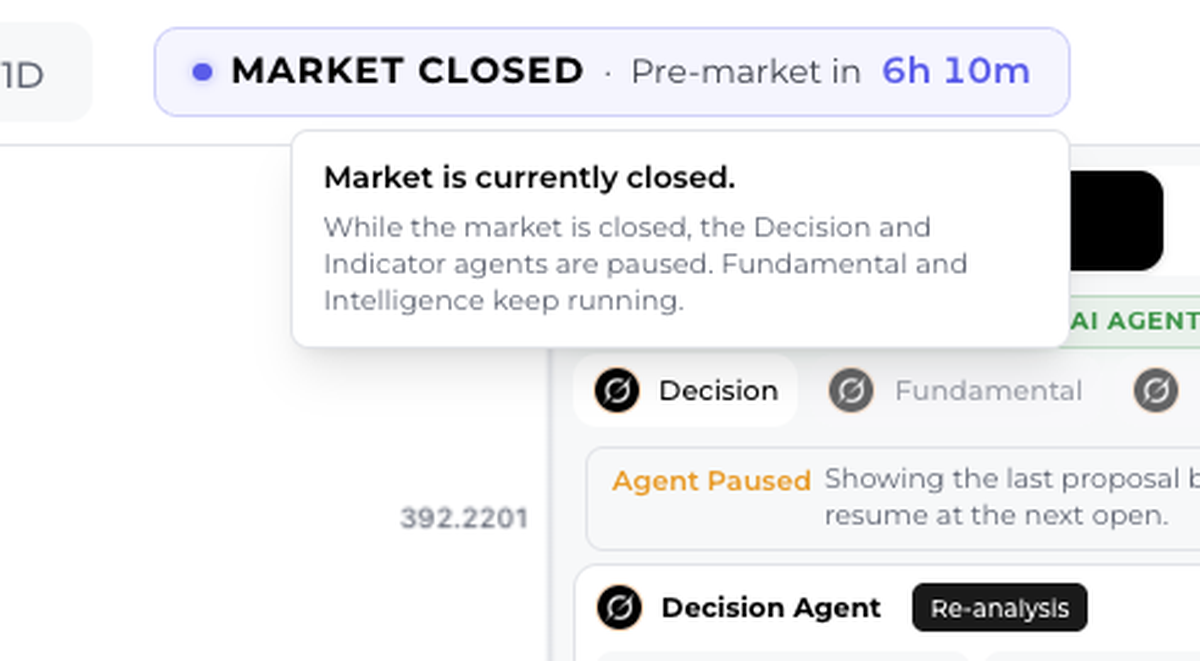
Laging ipinapakita ng header kung nasaan ang merkado ng US sa kanyang araw:
- Pre-market (4:00 AM – 9:30 AM ET) — mas manipis na likwididad, mas malalawak na agwat; ang AI ay mas maliit ang sukat at nagpapalawak ng mga stop
- Regular (9:30 AM – 4:00 PM ET) — buong aktibidad ng ahente, pinakamahigpit na spreads
- Post-market (4:00 PM – 8:00 PM ET) — mga reaksyon sa kita at balita pagkatapos ng oras na nagdudulot ng mga galaw
- Closed — ang Indicator at Decision agents ay humihinto; ang Fundamental at Intelligence agents ay patuloy na nagtatrabaho sa mga filing at balita sa magdamag
Ang ahente ay hindi magbubukas ng bagong posisyon 30 segundo bago ang pagsasara. Hindi ito mag-panic-sell sa isang pre-market ghost tick. Itinuturing nito ang Linggo na parang saradong merkado dahil ang Linggo ay talagang sarado. Ito ang mga uri ng maliliit, pangkaraniwang pag-uugali na naghihiwalay sa isang tool na "gumagamit ng AI" mula sa isang tool na nauunawaan ang asset class.
SEC Filings, Basahin ng Live
Ang pagkuha ng XBRL mula sa SEC EDGAR ay nagbibigay sa Fundamental agent ng hindi patas na bentahe sa impormasyon kumpara sa mga tool na umaasa sa third-party fundamentals APIs. Karaniwang nahuhuli ang mga third-party provider sa aktwal na filing ng ilang minuto hanggang oras, normalisahin ang data nang may pagkalugi, at naniningil ng mataas para sa kung ano ang teknikal na pampublikong impormasyon. Binabasa ng SimianX ang parehong machine-readable filings na inilalabas ng SEC nang libre, pinoproseso ang mga ito sa proseso, at pinapakain ang mga ito diretso sa prompt context ng Fundamental agent.
Ibig sabihin, kapag bumagsak ang isang ulat ng kita, nakikita ng Fundamental agent ang:
- Naiulat na kita, netong kita, gross margin, at EPS — quarter at taon-taon
- Kabuuang mga asset, kabuuang mga pananagutan, equity, at mga pagbabago sa debt-to-equity ratio
- Paggalaw ng operating, investing, at financing cash flow
- Mga pagbabago sa working capital at current ratio
- Aktibidad ng Insider Form 4 para sa kaugnay na panahon — sino ang bumili, sino ang nagbenta, sa anong laki, at kung gaano katagal na
Mahalaga, ang mga transaksyong insider ay pinagsama-sama at niranggo. Ang isang $5 milyong pagbili mula sa CFO ay mas mahalaga kaysa sa sampung $50,000 na benta mula sa mga junior officer, at ang ahente ay nag-iisip tungkol dito sa paraang iyon.
Balita na Naka-tune Para sa Equities
Ang 59-source na balita na pipeline ay hindi lamang mas malaki kaysa sa kung ano ang ginagamit ng karamihan sa mga retail tools — ito ay istruktura. Bawat artikulo ay kinukuha, dineduplicate ayon sa URL, at pinapantay sa isang karaniwang schema (pamagat, buod, larawan, petsa ng pag-publish, pangalan ng pinagmulan, uri ng pinagmulan), at pagkatapos ay sinusuri ng isang upstream na labeler na batay sa Gemini na kumukuha ng:
- Ang pangunahing damdamin ng artikulo patungo sa mga apektadong ticker
- Isang value score na nag-filter ng SEO chum mula sa tunay na balitang nakakaapekto sa merkado
- Isang listahan ng mga kaugnay na simbolo ng ticker (kaya ang isang piraso mula sa Reuters tungkol sa "Kita ng Big Tech" ay awtomatikong na-route sa
AAPL,MSFT,GOOGL,META, atAMZN)
- Isang boolean na
is_globalna flag para sa mga macro-level na piraso na naaangkop sa buong merkado
Sa oras na basahin ng Intelligence agent ang isang artikulo, alam nito kung ang artikulo ay sulit basahin, kung sino ito, at kung ano ang hitsura ng damdamin ng merkado sa pagpasok. Iyon ay lubos na naiiba mula sa isang tool na basta naglalagay ng isang chronological RSS feed sa screen at humihingi sa gumagamit na alamin kung ano ang mahalaga.
Tatlong Horizon, Hindi Isang Hatol
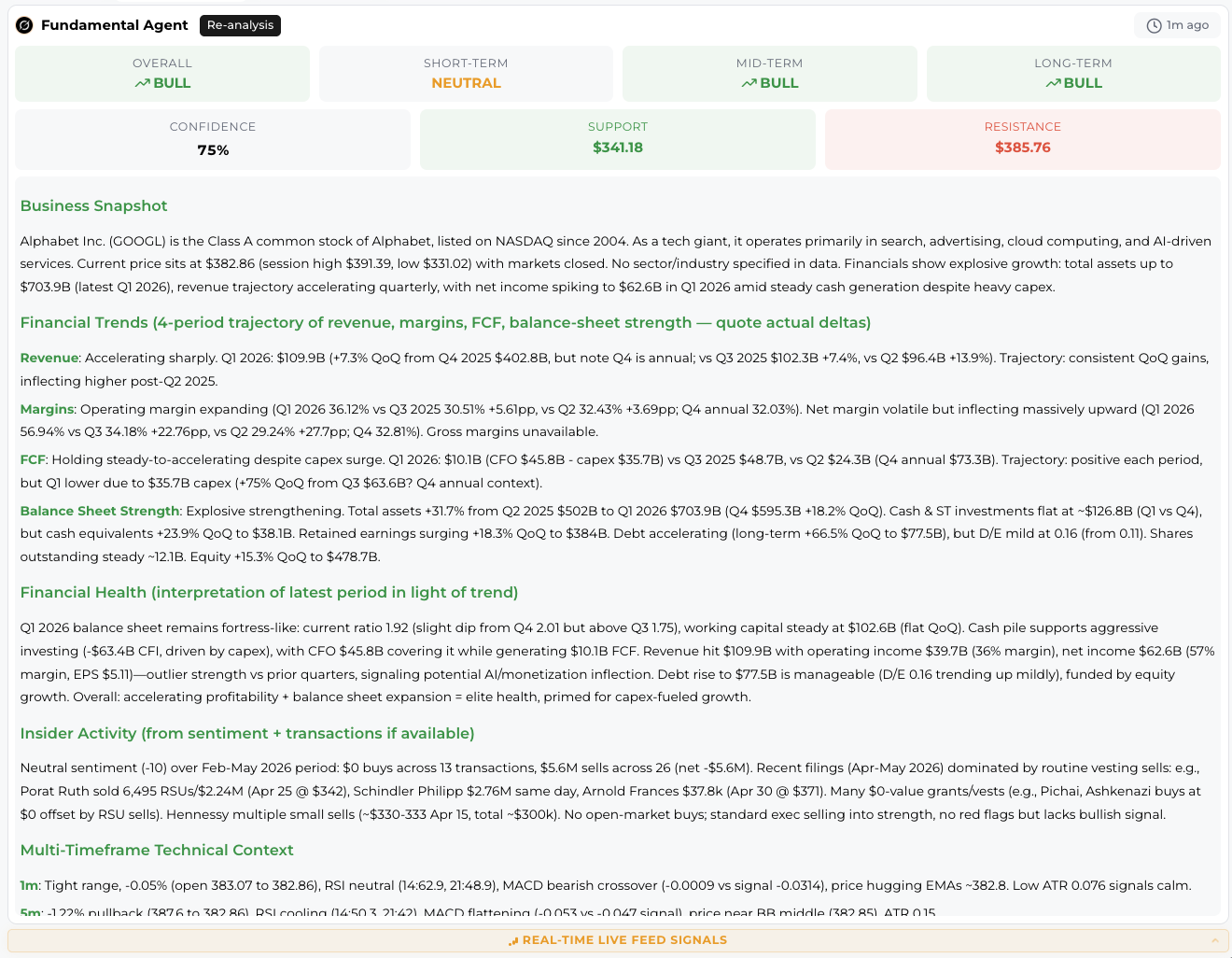
Ang isang stock ay maaaring maging long-term BUY, short-term HOLD, at ultra-short SELL nang sabay-sabay. Ang Fundamental card ay nagpapakita ng lahat ng tatlo:
- Long-Term (Araw-araw) — Saan nakatayo ang multi-month thesis?
- Short-Term (1H) — Saan ang swing structure?
- Ultra-Short (1m / 5m) — Saan ang susunod na intraday na galaw?
Bawat horizon ay nakakakuha ng sariling direction badge, porsyento ng kumpiyansa, at mga pangunahing antas ng suporta / paglaban. Ang Decision agent ay gumagamit ng iyong aktibong timeframe upang piliin ang tamang isa — ang isang long-term investor sa daily chart ay nakakakita ng ibang rekomendasyon kaysa sa isang day trader sa 5-minute chart, kahit na pareho silang tumitingin sa parehong ticker sa parehong sandali.
Ito ang paraan ng pag-iisip ng mga propesyonal na mangangalakal. Sa wakas, natutugunan ng platform ang kanilang mga pangangailangan.
Ang Makina sa Likod
Ilang bagay na dapat malaman tungkol sa platform na nagpapagana sa lahat ng ito:
- Default na modelo: Google Gemini 2.5 Flash Lite — mabilis, mura, at JSON-native, na nangangahulugang ang Decision agent ay makakapagbigay ng malinis na nakabalangkas na mga mungkahi nang walang prompt-engineering acrobatics.
- Switchable na mga modelo: Ang Claude, GPT, DeepSeek, Qwen, at Grok ay maaaring palitan ang utak ng anumang agent sa runtime. Walang restart, walang migration, walang kontrata — i-flip ang isang setting sa iyong account at ang susunod na cycle ng pagsusuri ay gumagamit ng bagong modelo.
- Streaming protocol: isang WebSocket-based, push-driven na pipeline. Ang latency mula sa pagsasara ng kandila hanggang sa rendered signal ay sinusukat sa milliseconds, hindi sa seconds. Walang polling layer sa pagitan ng makina at ng iyong screen.
- Notifications: Email, Discord, Telegram, Slack, at custom JSON webhooks ay lahat ng first-class delivery channels, bawat isa ay may multi-language formatting. Ang mga transactional email para sa orphan fills at orphan SL/TP closes ay lumalampas sa normal na opt-in filter kaya't ang isang user ay hindi kailanman mawawalan ng position event na nangyari habang sila ay offline.
- i18n: Bawat label ng agent, bawat pangalan ng signal, bawat tooltip, bawat katawan ng notification ay isinasalin sa lahat ng 16 na suportadong wika — Ingles, Simplified Chinese, Traditional Chinese, Hapon, Koreano, Portuges, Espanyol, Hindi, Indonesian, Vietnamese, Thai, Filipino, Ruso, Pranses, Aleman, at Turkish.
- Audit by design: Bawat konklusyon ng agent, bawat operasyon ng posisyon, bawat paghahatid ng notification, at bawat invocation ng modelo ay pinanatili. Walang ephemeral. Walang nawawala sa pagitan ng mga session.
Ang Tapat na Pagganap na Paninindigan
Mayroong tahimik ngunit mahalagang pangako na nakapaloob sa kung paano iniulat ang pagganap. Maraming produkto ng AI trading ang nagpapalaki ng kanilang mga istatistika sa pamamagitan ng pagbibilang lamang ng kanilang mga panalong pagsasara, sa pamamagitan ng tahimik na pagwawalang-bahala sa mga kalakal na nagsara dahil sa pag-disconnect ng gumagamit, o sa pamamagitan ng retroaktibong pag-aayos ng mga parameter upang gawing mas maganda ang mga backtest kaysa sa live trading.
Kabaligtaran ang posisyon ng SimianX. Ang nalalapit na pampublikong leaderboard ng stock ay magraranggo ng mga modelo at estratehiya batay sa orphan-adjusted win rate — ang mga pagsasara na nangyari habang offline ang gumagamit ay minarkahan upang hindi sila ma-pick sa mga vanity number. Ang mga paghahambing ng estratehiya ay nagaganap sa totoong panganib ng pera, sa mga live na merkado, laban sa parehong orderbook na nakikita ng bawat trader. Kung ang isang modelo ay tumatakbo ng mainit, sasabihin ng leaderboard iyon. Kung ito ay tumatakbo ng malamig, sasabihin din ng leaderboard iyon.
Ito ang tanging patas na paraan upang suriin ang AI trading sa malaking sukat, at ito ang tanging uri ng pag-uulat ng pagganap na handa kaming ilathala.
Paano Ito Gamitin Ngayon
Kung mayroon ka nang SimianX account, ang daloy ng trabaho ay pareho sa crypto live analysis — walang bagong dapat matutunan:
- Maghanap ng US ticker —
AAPL,NVDA,TSLA,META,AMD,GOOGL,MSFT,AMZN, anumang likido. - Panuorin ang mga ahente na nag-stream ng kanilang unang cycle. Maglaan ng isang minuto upang basahin ang rasyonal. Alamin kung paano ipinapahayag ng platform ang pagsang-ayon at hindi pagsang-ayon.
- Basahin ang Proposal ng Desisyon. Palawakin ang breakdown ng signal. Tingnan kung aling mga ahente ang tiwala at alin ang hindi.
- Mag-click sa Buksan ang Posisyon nang manu-mano o i-flip ang AI control upang payagan ang ahente na isagawa sa iyong ngalan sa sandaling ang kanyang proposal ay lumagpas sa threshold ng tiwala.
- I-configure ang mga notification sa ilalim ng Account → Notifications. Pumili ng mga channel na talagang binabasa mo — Telegram para sa mga naglalakbay, Slack para sa mga desk trader, email para sa lahat.
- Lumayo. Binabantayan ng orphan monitor ang posisyon para sa iyo. Kung may mangyari, malalaman mo sa loob ng ilang minuto.
Ang layunin ay hindi upang palitan ang iyong paghuhusga. Ang layunin ay upang pagsamahin ang trabaho ng ilang mga analyst sa isang solong screen upang magamit mo ang iyong oras sa pagpapasya, hindi sa pagkolekta.
Para sa mga bagong gumagamit, isang libreng tier ang available — pumili ng isang ticker, i-enable ang read-only AI analysis, at panoorin kung paano nag-iisip ang mga ahente tungkol sa isang merkado na alam mo na. Ang pinakamabilis na paraan upang suriin ang anumang AI tool ay ituro ito sa isang stock na mayroon kang matibay na opinyon at tingnan kung ang kanilang pangangatwiran ay nagkakaroon ng iyong respeto.
Mga Karaniwang Tanong
Gumagana ba ito sa labas ng oras ng merkado ng US? Bahagyang. Ang mga Fundamental at Intelligence agents ay patuloy na tumatakbo sa mga filing at balita sa magdamag. Ang mga Indicator at Decision agents ay humihinto hanggang sa muling magbukas ang merkado, dahil walang live tape na mababasa.
Ano ang nangyayari sa panahon ng kita? Isinasama ng Decision agent ang mga kamakailang kita sa kanyang mungkahi — ngunit maaari mo rin itong i-configure upang ganap na huminto sa oras bago ang isang print. Ang sizing na may kamalayan sa kita ay nasa malapit na roadmap.
Maaari ba akong magpatakbo ng maraming stocks nang sabay-sabay? Oo. Ang bawat ticker ay may sariling session at sariling team ng agent. Ang iyong account ay ang nag-iisang billing at notification surface sa lahat ng ito.
Mawawasak ba ang aking mga posisyon kung ako ay offline? Tanging kung ang SL o TP na itinakda mo ay maabot. Ang orphan monitor ay nagpapatupad ng iyong mga stop at kumukuha ng kita eksakto tulad ng iyong tinukoy — hindi ito nag-iimbento ng mga bagong exit.
Maaari ko bang dalhin ang sarili kong LLM API keys? Ang pagpili ng modelo ay nangyayari sa antas ng account ngayon. Ang bring-your-own-key ay nasa mas mahabang roadmap bilang bahagi ng isang enterprise tier.
Ano ang Susunod
Ang paglulunsad na ito ay ang pundasyon, hindi ang finish line. Sa malapit na roadmap:
- Isang pampublikong stock AI leaderboard — parehong hugis ng crypto leaderboard, niraranggo ang mga modelo at estratehiya ayon sa tapat, orphan-adjusted win rate
- Integrasyon ng kalendaryo ng kita upang malaman ng Decision agent kung kailan huminto bago ang isang print
- Options-aware risk sizing para sa mga trader na nais isama ang implied volatility sa paglalagay ng stop
- Mga sesyon ng sektor at basket — pumili ng "Mag 7" o "AI hardware chain" sa halip na isang solong ticker
- Mga custom na timbang ng ahente — hayaan ang mga advanced na mangangalakal na ayusin kung gaano ka-agresibo nakikinig ang Decision agent sa bawat input agent
- Backtesting laban sa parehong makina — ulitin ang mga makasaysayang sesyon sa pamamagitan ng mga live na ahente upang suriin ang mga estratehiya bago maglagay ng kapital
Ang Stock Live Analysis ay live na ngayon. Pumili ng ticker, panoorin ang mga ahente na nagtatalo, at magpasya kung sino ang panalo. Kung ikaw ay naghihintay na makita kung ano ang hitsura ng isang tapat, multi-signal, at may kaalaman sa pundasyon na trading copilot para sa equity market — ito na iyon.
Kaugnay na Babasahin
- SimianX AI: 4-Stage Multi-Agent Stock Analysis Platform
- Multi-Agent AI Pipeline para sa Hedge Fund Deep Research
- The Latency Tax: Paano 5-Min Delay Quotes Inuubos Pera
- GPT vs Gemini vs Claude: Gabay sa AI Stock Analysis 2026
- Multi-Agent AI vs ChatGPT para sa NVDA: 2026 Paghahambing
- SimianX AI vs TradingView: Real-Time na Signal Showdown