
Sa Loob ng $7B Capital Raise ng Supermicro: Kaya bang Talunin ng $39B Backlog ang Dilution?
SMCI stock 2026 ay ngayon isa sa mga pinaka-pinagtatalunang kwento ng imprastruktura ng AI sa merkado: Ang Super Micro Computer ay may napakalaking demand, ngunit kailangan din nito ng napakalaking kapital. Ang iminungkahing $7 bilyong equity at equity-linked na pagtaas ng kapital ng kumpanya ay dinisenyo upang makatulong sa pagpopondo ng mga pagbili ng bahagi para sa humigit-kumulang $39 bilyon ng mga kamakailang order ng AI server, na lumilikha ng isang klasikong dilema para sa mga mamumuhunan: ang dilution ba ay isang babala, o ito ba ay ang presyo ng pag-scale sa isang beses sa isang siklo ng AI backlog?
Para sa mga mamumuhunan na gumagamit ng mga tool tulad ng SimianX AI, ang susi ay huwag ituring ito bilang isang simpleng “magandang balita laban sa masamang balita” na pamagat. Sa halip, ang mas magandang tanong ay: maaaring i-convert ba ng Supermicro ang AI backlog sa kumikitang kita nang sapat na mabilis upang ma-offset ang dilution, pressure sa working capital, at pagbabago ng margin?
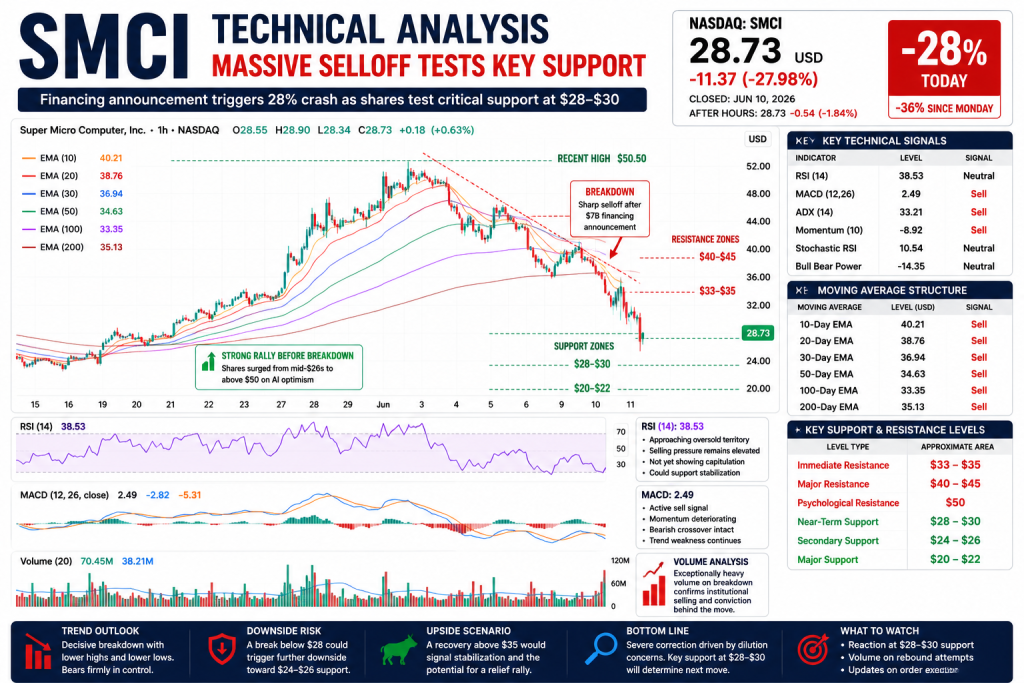
Bakit Ang SMCI Stock 2026 Ay Isang Mataas na Kumpiyansa Ngunit Mataas na Panganib na Kalakalan ng AI
Ang Super Micro Computer, ticker SMCI, ay nakaupo sa gitna ng pagbuo ng AI server. Ang value proposition nito ay simple: magdisenyo, magtipon, at maghatid ng mga high-performance na sistema ng server para sa AI, cloud, storage, edge, at mga customer ng data center. Sa isang merkado kung saan mahalaga ang mga GPU cluster, liquid cooling, at bilis ng deployment sa rack-scale, makikinabang ang Supermicro kapag ang mga hyperscaler, AI lab, negosyo, at mga provider ng cloud ay nagmamadaling palawakin ang imprastruktura.
Ngunit SMCI stock sa 2026 ay hindi lamang isang kwento ng demand ng AI. Ito rin ay isang kwento ng balance sheet, working capital, at pagpapatupad.
Ang bullish na naratibo ay nagsasabi:
- Ang demand para sa AI server ay bumibilis.
- Ang Supermicro ay may malaking pipeline ng order.
- Ang kita ay maaaring tumaas nang matindi kung ang mga hadlang sa supply ay humupa.
- Ang liquid-cooled at rack-scale na imprastruktura ay maaaring mapabuti ang estratehikong kaugnayan.
- Ang $39B AI backlog ay maaaring suportahan ang maraming quarter ng mataas na benta.
Sinasabi ng bearish na naratibo:
- Ang $7B na pagtaas ay maaaring magdilute sa mga umiiral na shareholders.
- Ang mga AI server ay maaaring may mababang margin at mas maraming bahagi.
- Ang libreng cash flow ay maaaring manatiling negatibo sa panahon ng mabilis na paglago.
- Mahalaga ang customer concentration at panganib ng pagkansela ng order.
- Ang mga pagkukulang sa pagpapatupad ay maaaring makasira sa tiwala ng mga mamumuhunan.
Pangunahing aral: Ang SMCI ay hindi isang simpleng AI momentum stock. Ito ay isang capital-intensive AI infrastructure scale-up na may parehong backlog upside at panganib ng dilution.
Iyan ang dahilan kung bakit ang mga mamumuhunan ay dapat suriin ang SMCI sa pamamagitan ng isang nakabalangkas na balangkas sa halip na tumugon lamang sa paggalaw ng presyo pagkatapos ng headline ng financing.
Ano ang Ibig Sabihin ng $7B SMCI Capital Raise para sa mga Mamumuhunan?
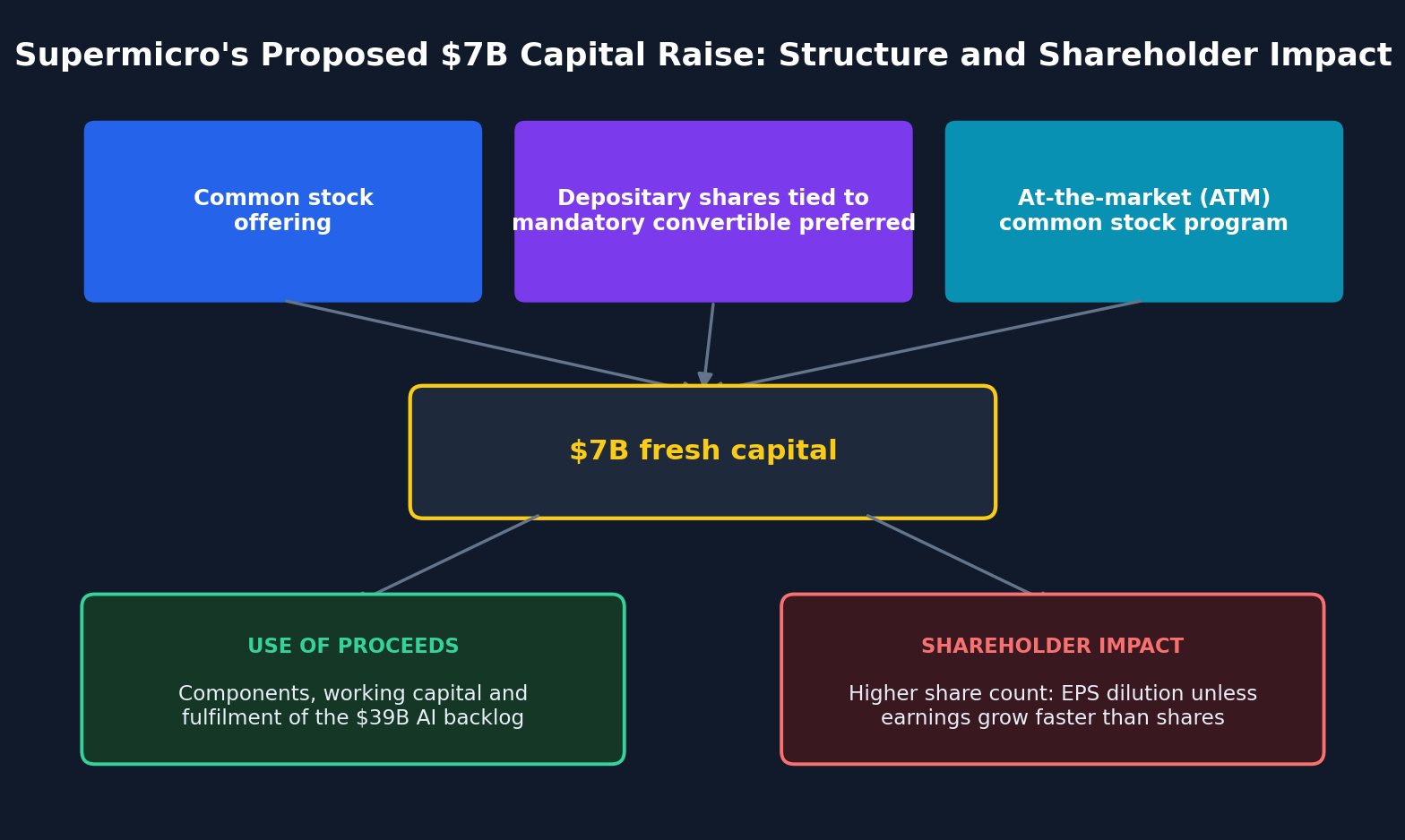
Ang iminungkahing SMCI $7B capital raise ay kinabibilangan ng isang halo ng karaniwang stock, mga depositary share na nakatali sa mandatory convertible preferred stock, at isang at-the-market common stock program. Sa praktikal na mga termino, ito ay nangangahulugang ang Supermicro ay naghahanap ng bagong kapital upang bumili ng mga bahagi, suportahan ang working capital, at tuparin ang malalaking order ng AI server.
Para sa mga shareholders, ang capital raise ay may dalawang panig.
| Factor | Bullish Interpretation | Bearish Interpretation |
|---|---|---|
| $7B financing | Nagpopondo ng paglago at pagtupad ng order | Nagdudulot ng dilution sa mga umiiral na shareholders |
| $39B AI orders | Nagpapahiwatig ng malakas na demand ng customer | Ang mga order ay maaaring maantala o makansela |
| Component purchases | Nagpapabilis ng paghahatid | Nangangailangan ng malaking paunang cash |
| Mandatory convertible preferred | Nagbibigay ng nakabalangkas na financing | Nagdadagdag ng presyon sa bilang ng shares sa hinaharap |
| ATM program | Flexible na access sa kapital | Maaaring magdulot ng presyon sa stock kung labis na gagamitin |
Karaniwang ayaw ng merkado ang dilution dahil ito ay nagpapataas ng bilang ng shares. Kung ang kita ay hindi tumaas ng sapat, ang kita bawat share ay maaaring bumaba kahit na ang kabuuang kita ay tumataas. Ito ang dahilan kung bakit ang mga mamumuhunan ay dapat magpokus ng mas kaunti sa laki ng headline ng pagtaas at higit pa sa sagot sa isang tanong:
Magbibigay ba ang capital raise ng mga kita na higit sa gastos ng dilution?
Kung ang $7B ay makakatulong sa Supermicro na i-convert ang makabuluhang bahagi ng $39B AI backlog sa kumikitang kita, maaaring mukhang estratehiko ang pagtaas. Kung ang mga margin ay bumaba, ang mga customer ay mag-antala ng mga order, o ang libreng cash flow ay mananatiling negatibo, maaaring mukhang depensibo ang pagtaas.
Gaano Kalaki ang $39B AI Backlog para sa SMCI Stock 2026?
Ang Supermicro $39B AI backlog ang pinakamahalagang bullish data point sa kwento. Sa teorya, ang backlog na kasing laki nito ay maaaring suportahan ang multi-quarter revenue ramp at palakasin ang kumpiyansa ng mga mamumuhunan sa visibility ng demand.
Gayunpaman, ang backlog ay hindi katulad ng garantisadong kita. Dapat paghiwalayin ng mga mamumuhunan ang tatlong konsepto:
- Mga order na natanggap — naipahayag ang demand ng customer.
- Mga order na natupad — naghahatid ang Supermicro ng hardware at serbisyo.
- Kita na kinilala — pinapayagan ng mga patakaran sa accounting ang kumpanya na i-book ang mga benta.
Mahalaga ang pagkakaiba sa pagitan ng tatlong yugto na ito. Ang mga proyekto ng AI infrastructure ay maaaring maapektuhan ng availability ng GPU, pagpepresyo ng memorya, kahandaan ng kuryente, pagkaantala sa pagtatayo ng data center, financing ng customer, at mga pagbabago sa disenyo. Ang isang backlog ay maaaring totoo at maaaring tumagal pa ng mas matagal kaysa sa inaasahan upang ma-convert.
Bakit Mahalaga ang SMCI $39B AI Backlog?
Mahalaga ang $39B backlog dahil nagpapahiwatig ito na ang Supermicro ay hindi nahihirapan na makahanap ng demand. Sa halip, tila nahaharap ang kumpanya sa kabaligtaran na problema: napakalaki ng demand na nangangailangan ito ng paunang kapital upang makuha ang mga bahagi at palakihin ang produksyon.
Mas mabuting problema ito kaysa sa mahina na demand, ngunit ito ay isang problema pa rin. Ang mga AI server ay nangangailangan ng mamahaling GPUs, networking, memorya, mga cooling system, racks, at integrasyon. Kadalasang kailangang bayaran ang mga supplier bago ganap na bayaran ng mga customer ang Supermicro. Nagdudulot ito ng pagsisikip sa working capital.
Para sa mga mamumuhunan, ang kapaki-pakinabang na tanong ay hindi lamang “Malaki ba ang backlog?” Ito ay:
Gaano karaming bahagi ng backlog ang maaaring maging kumikita, nag-generate ng cash na kita sa loob ng susunod na apat hanggang walong kwarter?
Ang $39B na order book na may manipis na margin ay maaaring hindi kasing halaga ng mas maliit na backlog na may mas malakas na gross margin at predictable na cash flow.
SMCI Margins: Ang Nakatagong Variable sa Likod ng 2026 Thesis
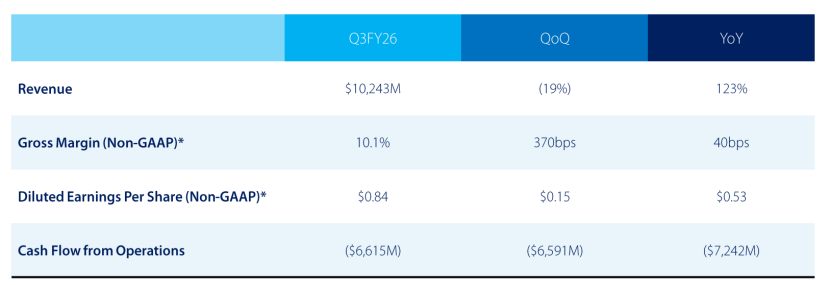
Ang gross margin ang tulay sa pagitan ng backlog at halaga ng shareholder. Sa AI infrastructure, ang mataas na paglago ng kita ay hindi awtomatikong lumilikha ng mataas na paglago ng kita. Kung ang Supermicro ay nagbebenta ng malalaking volume sa mababang margin, ang negosyo ay maaaring magmukhang malakas sa itaas na linya habang patuloy na kumakain ng cash.
Ang mga mamumuhunan na nagsusuri ng SMCI stock 2026 ay dapat mag-monitor:
- Tendensya ng gross margin
- Operating margin
- Antas ng imbentaryo
- Accounts receivable
- Libreng cash flow
- Konsentrasyon ng customer
- Utang at convertible securities
- Bilang ng shares pagkatapos ng financing
Isang pinasimpleng halimbawa ang makakatulong:
| Senaryo | Paglago ng Kita | Gross Margin | Epekto ng Dilution | Pagbasa ng Mamumuhunan |
|---|---|---|---|---|
| Bull case | Malakas | Lumalawak o nagiging matatag | Kayang pamahalaan | Lumilikha ng halaga ang backlog |
| Base case | Malakas | Halo-halo | Kapansin-pansin | Nanatiling volatile ang stock |
| Bear case | Naantala | Kumikipot | Mataas | Nabigo ang backlog na mapawi ang dilution |
Ang pinakamahusay na kaso para sa SMCI ay hindi lamang “mas maraming AI orders.” Ito ay mas maraming AI orders na may disiplinadong pagpepresyo, mas magandang availability ng mga bahagi, mas mabilis na paghahatid, at nagpapabuting cash conversion.
Dapat Bang Bilhin ang SMCI Stock sa 2026 Pagkatapos ng $7B Capital Raise?
Ito ang tanong na hinahanap ng maraming mamumuhunan, ngunit ang tapat na sagot ay nakasalalay sa tolerance sa panganib, panahon ng pamumuhunan, at disiplina sa pagpapahalaga. Ang stock ng SMCI pagkatapos ng $7B na pagtaas ng kapital ay maaaring umakit sa mga mamumuhunan na naniniwala na ang siklo ng imprastruktura ng AI ay nasa maagang yugto pa at na ang Supermicro ay makakapag-convert ng kanilang backlog sa kumikitang paglago.
Gayunpaman, maaaring hindi ito angkop para sa mga mamumuhunan na nangangailangan ng matatag na libreng cash flow, mababang panganib ng dilution, o mahuhulaan na margin.
Isang Praktikal na Balangkas sa Desisyon ng SMCI
Gamitin ang limang hakbang na balangkas na ito bago gumawa ng desisyon:
- Tiyakin ang kalidad ng demand
Tumingin lampas sa $39B na headline. Tanungin kung ang mga order ay iba-iba sa mga customer, rehiyon, at uri ng proyekto.
- Subaybayan ang conversion ng backlog
Bantayan kung ang mga order ay nagiging kinikilalang kita sa susunod na ilang kwarter.
- Panuorin ang gross margin
Hindi sapat ang tumataas na backlog kung ang gross margin ay bumabagsak nang matindi.
- Sukatin ang dilution laban sa paglago ng kita
Ihambing ang hinaharap na paglago ng bilang ng bahagi sa hinaharap na paglago ng EPS.
- Suriin ang cash flow, hindi lamang kita
Ang imprastruktura ng AI ay maaaring lumikha ng mataas na benta at negatibong libreng cash flow sa parehong oras.
Dito makakatulong ang isang multi-agent na workflow ng pananaliksik. Ang SimianX AI ay dinisenyo para sa mga mamumuhunan na nais pagsamahin ang mga teknikal na tagapagpahiwatig, mga batayan, damdamin ng balita, mga filing ng SEC, at pagsusuri sa panganib sa isang mas nakabalangkas na pananaw. Sa halip na umasa sa isang headline, maaaring gamitin ng mga mamumuhunan ang pananaliksik sa istilo ng SimianX upang ihambing ang mga bullish at bearish na argumento nang magkatabi.
Bull Case para sa SMCI Stock 2026
Nagsisimula ang bullish case sa isang simpleng premise: ang demand para sa imprastruktura ng AI ay nananatiling mas malakas nang mas matagal.
Kung ang mga negosyo, mga sovereign AI project, mga cloud provider, at mga AI lab ay patuloy na bumubuo ng mga cluster, ang Supermicro ay maaaring manatiling isang pangunahing supplier ng mga rack-scale na sistema. Ang pokus ng kumpanya sa liquid cooling, mga solusyon sa building block ng data center, at pinabilis na deployment ay maaaring maging mas mahalaga habang ang mga workload ng AI ay lumalaki at nagiging mas power-dense.
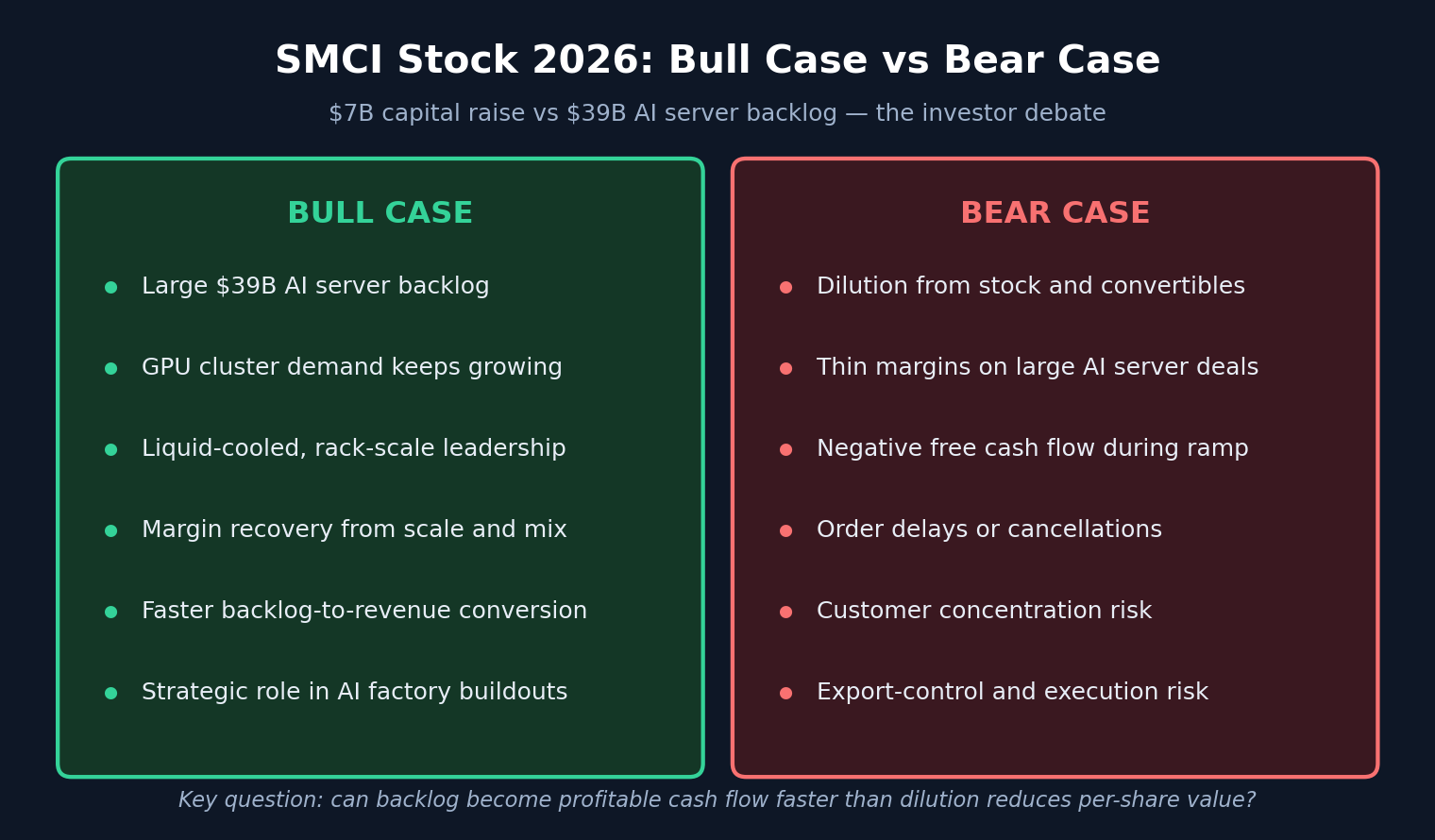
Mga bullish na driver ay kinabibilangan ng:
- Malaking backlog ng AI server
- Patuloy na demand para sa GPU cluster
- Lumalaking pangangailangan para sa liquid-cooled infrastructure
- Potensyal na pagbawi ng margin mula sa sukat at halo
- Mas mabilis na pag-convert ng mga AI order sa kita
- Mas malakas na estratehikong papel sa mga buildout ng AI factory
Sa isang bull case, ang $7B na pagtaas ay hindi tanda ng kahinaan. Ito ay isang pamumuhunan sa paglago. Maaaring tingnan ng mga mamumuhunan ang dilution bilang katanggap-tanggap kung ang kumpanya ay nagpapalawak ng kita, nagpapabuti ng mga margin, at bumubuo ng mas malakas na operating cash flow.
Bear Case para sa SMCI Stock 2026
Ang bear case ay pantay na mahalaga. Ang AI infrastructure ay mapagkumpitensya, mahal, at operationally complex. Maaaring manalo ang Supermicro ng mga order ngunit maaaring makaranas pa rin ng hirap sa timing at ekonomiya ng fulfillment.
Mga bearish na panganib ay kinabibilangan ng:
- Dilution ng shareholder mula sa karaniwang stock at convertibles
- Pressure sa margin mula sa malalaking deal ng AI server
- Negatibong free cash flow mula sa imbentaryo at pagbili ng mga bahagi
- Mga pagkaantala o pagkansela ng order
- Konsentrasyon ng customer
- Mga panganib sa kontrol ng export at regulasyon
- Kredibilidad sa pagpapatupad pagkatapos ng nakaraang volatility
Ang pangunahing argumento ng bear ay na ang paglago na pinondohan ng dilution ay hindi awtomatikong nagdadagdag ng halaga. Kung ang Supermicro ay kailangang paulit-ulit na magtaas ng kapital upang suportahan ang mababang margin na kita, maaaring humiling ang mga mamumuhunan ng mas mababang valuation multiple.
Valuation ng SMCI Stock 2026: Ano ang Dapat Bantayan ng mga Mamumuhunan?
Ang pagsusuri para sa SMCI ay dapat na nakatali sa mga milestone ng pagpapatupad. Ang mababang price-to-earnings ratio ay maaaring mukhang kaakit-akit, ngunit maaari itong maging nakaliligaw kung ang kita ay volatile o ang dilution ay tumataas. Ang mataas na revenue multiple ay maaaring maging makatwiran lamang kung ang kumpanya ay nagpapatunay ng matibay na pagbawi ng margin at pagbuo ng cash.
Dapat bumuo ang mga mamumuhunan ng isang dashboard sa paligid ng mga metric na ito:
| Metric | Bakit Ito Mahalaga |
|---|---|
| Patnubay sa kita | Ipinapakita kung ang backlog ay nagko-convert |
| Gross margin | Nagpapakita ng kapangyarihan sa pagpepresyo at kontrol sa gastos ng bahagi |
| Free cash flow | Ipinapakita kung ang pag-unlad ay nagpopondo sa sarili nito |
| Share count | Sinusukat ang dilution mula sa financing |
| Debt and convertibles | Sinusubaybayan ang presyon sa balance sheet |
| Inventory | Nagbibigay ng senyales ng intensity ng working-capital |
| Customer concentration | Ipinapakita ang tibay ng demand |
| Order cancellation language | Sinusubok ang kalidad ng backlog |
Ang magandang proseso ng pananaliksik ay hindi nangangailangan ng pagtukoy sa eksaktong presyo ng stock. Nangangailangan ito ng kaalaman kung aling ebidensya ang makapagpapabago ng iyong isip.
Halimbawa:
- Kung ang backlog ay mabilis na nagiging aktwal at ang mga margin ay nananatili, lumalakas ang bull thesis.
- Kung ang kita ay lumalaki ngunit ang free cash flow ay lumalala, nagiging mas mahina ang thesis.
- Kung ang mga order ay bumabagsak at ang dilution ay tumataas, lumalakas ang bear case.
Paano Suriin ang SMCI Stock 2026 Gamit ang AI Research Tools
Ang mga tool sa pananaliksik ng stock na AI ay kapaki-pakinabang kapag tinutulungan nila ang mga mamumuhunan na ayusin ang mga nakikipagkumpitensyang ebidensya. Para sa SMCI, ang set ng data ay malawak: mga paglabas ng kita, mga filing sa SEC, pagkilos ng presyo, posisyon ng opsyon, komento ng analyst, balita sa imprastruktura ng AI, mga supply chain ng semiconductor, at mga uso sa demand ng customer.
Ang isang nakabalangkas na workflow ay maaaring ganito:
- Fundamental agent ay nire-review ang kita, mga margin, cash flow, utang, at bilang ng bahagi.
- Sentiment agent ay nag-scan ng balita tungkol sa mga order ng AI, pagtaas ng kapital, at demand ng customer.
- Technical agent ay sumusuri sa trend ng presyo, dami, moving averages, RSI, at mga antas ng suporta.
- Risk agent ay tumutukoy sa dilution, backlog, pagsunod, at mga panganib sa pagpapatupad.
- Decision agent ay nagsasama-sama ng ebidensya sa isang watchlist, buy, hold, o avoid framework.
Ito ang uri ng workflow na sinusuportahan ng mga platform tulad ng SimianX AI. Para sa isang pabagu-bagong stock ng imprastruktura ng AI, ang bentahe ay hindi na ang AI ay maaaring "hulaan" ang merkado nang perpekto. Ang bentahe ay makakatulong ito sa mga mamumuhunan na iwasan ang pag-iisip na nakatuon sa isang salik at suriin ang buong debate nang mas mabilis.
Para sa SMCI, ang debate ay hindi "AI demand mabuti, dilution masama." Ang tunay na debate ay kung ang AI demand ay maaaring maging kumikitang cash flow nang mas mabilis kaysa sa dilution na nagpapababa ng halaga sa bawat bahagi.
FAQ Tungkol sa SMCI Stock 2026
Ano ang SMCI $39B AI backlog?
Ang SMCI $39B AI backlog ay tumutukoy sa isang malaking pool ng mga kamakailang order ng AI server na balak punan ng Supermicro sa mga susunod na quarter. Mahalaga ito dahil nagpapahiwatig ito ng malakas na demand, ngunit dapat tandaan ng mga mamumuhunan na ang mga order ay dapat pa ring maging kita at cash flow.
Paano makakaapekto ang dilution ng SMCI sa mga mamumuhunan sa 2026?
Ang dilution ng SMCI ay maaaring magpababa ng porsyento ng pagmamay-ari ng mga umiiral na shareholders at magbigay ng pressure sa kita bawat bahagi kung ang paglago ng kita ay hindi makakasabay sa mas malaking bilang ng bahagi. Ang dilution ay hindi gaanong nakababahala kung ang kapital na nakalap ay nagbubunga ng mataas na kita, katatagan ng margin, at positibong free cash flow.
Magandang pamumuhunan ba ang SMCI stock para sa AI infrastructure sa 2026?
Maaaring maging kaakit-akit ang SMCI para sa mga mamumuhunan na naniniwala na ang demand para sa AI server ay mananatiling malakas at na ang Supermicro ay makakapagpatupad nang kumikita. Maaaring masyadong mapanganib ito para sa mga mamumuhunan na hindi komportable sa dilution, volatility ng margin, at pressure sa working capital.
Ano ang dapat bantayan ng mga mamumuhunan pagkatapos ng SMCI $7B capital raise?
Dapat bantayan ng mga mamumuhunan ang backlog conversion, gross margin, free cash flow, paglago ng imbentaryo, konsentrasyon ng customer, bilang ng bahagi, at anumang update sa timing ng order. Ang mga indicator na ito ay magpapakita kung ang kapital na nakalap ay nagpopondo ng kumikitang pagpapalawak o simpleng sumusuporta sa isang cash-intensive growth cycle.
Ano ang pinakamahusay na paraan upang suriin ang SMCI stock sa 2026?
Ang pinakamahusay na paraan upang suriin ang SMCI stock sa 2026 ay ang pagsamahin ang fundamental analysis, technical analysis, news sentiment, pagsusuri ng SEC filing, at scenario planning. Ang isang multi-agent platform tulad ng SimianX AI ay makakatulong sa mga mamumuhunan na ihambing ang mga perspektibong ito sa isang research workflow.
Konklusyon
SMCI stock 2026 ay isang mataas na panganib na pagsubok kung ang malaking pangangailangan para sa imprastruktura ng AI ay makakayanan ang dilution at capital intensity. Ang $7B na pagtaas ng kapital ay nagdudulot ng tunay na mga alalahanin sa mga shareholder, ngunit ang $39B na backlog ng AI ay nagpapahiwatig din na ang Supermicro ay maaaring nagsisilbi sa isa sa pinakamalaking siklo ng imprastruktura sa teknolohiya.
Ang pinaka-balanseng pananaw ay ito: Ang SMCI ay hindi isang halatang bilhin o halatang ibenta batay lamang sa headline. Ito ay isang stock na nangangailangan ng disiplinadong pagmamanman ng backlog conversion, gross margin, free cash flow, at dilution-adjusted earnings power.
Para sa mga mamumuhunan na nais ng mas malinaw na paraan upang suriin ang kumplikadong mga kwento ng stock ng AI, tuklasin ang SimianX AI. Gamitin ito upang ihambing ang mga batayan, teknikal, damdamin ng merkado, at mga salik ng panganib bago gumawa ng iyong susunod na desisyon na nakabatay sa pananaliksik.
Kaugnay na Babasahin
- Kita ng Oracle 2026: OCI, Stargate Backlog at ORCL Stock
- Magnificent 7 sa 2026: Bigat at Concentration Risk
- Bakit Bullish ang AVGO Stock: Rebound ng AI ASIC Chips
- Multi-Agent AI vs ChatGPT para sa NVDA: 2026 Paghahambing
- Stock Live Analysis: AI Agents Cover US Stocks Real-Time
- SimianX AI: 4-Yugto na Multi-Agent Stock Analysis Platform
- Hype Premium Decay: Bakit Hot Stocks Madalas Bumagsak
- SMCI sa SimianX AI — real-time na multi-agent na pagsusuri