 Par Muke
S&P 500 et Nasdaq atteignent de nouveaux sommets suite à l'extension du cessez-le-feu en Iran
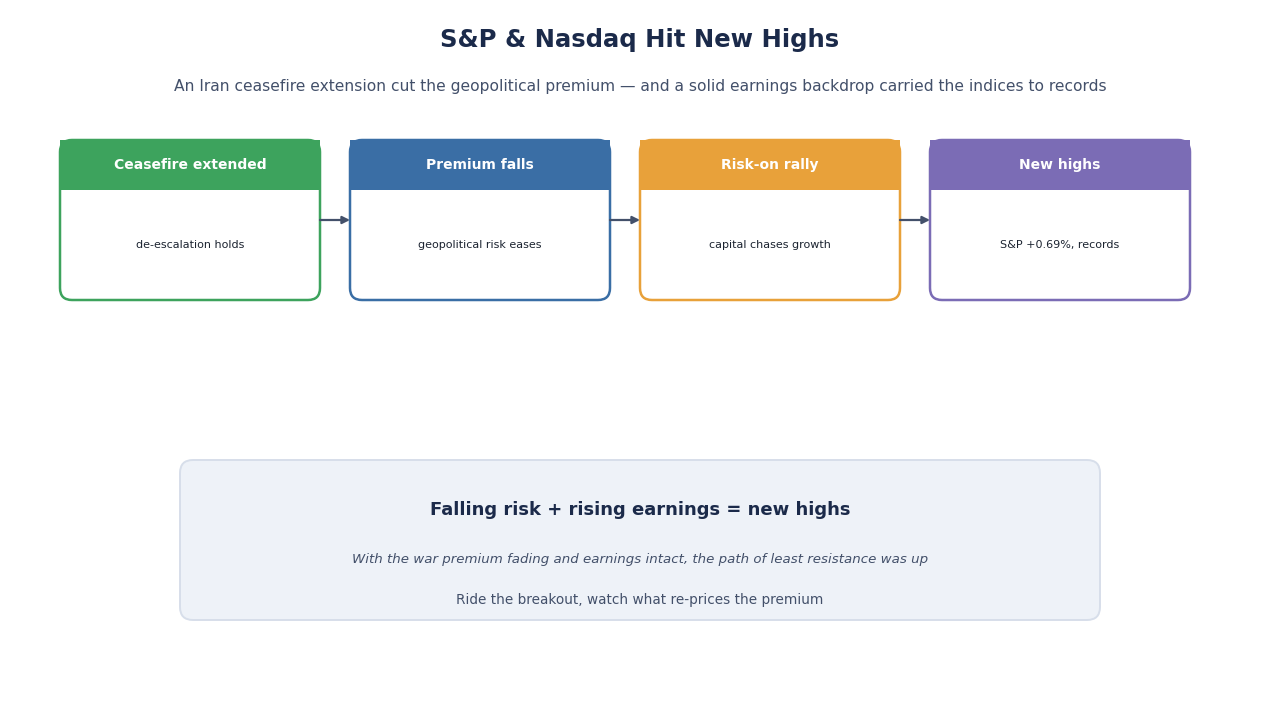
La phrase “S&P 500 et Nasdaq atteignent de nouveaux sommets suite à l'extension du cessez-le-feu en Iran” capture l'une des narrations de marché les plus importantes que les investisseurs surveillent en ce moment. Le 22 avril 2026, le S&P 500 a clôturé à 7 137,90 et le Nasdaq Composite a terminé à 24 657,57, les deux clôtures étant des records, alors que les investisseurs réagissaient positivement à une extension indéfinie du cessez-le-feu en Iran, tout en digérant un bon début de saison des résultats. Dans le même temps, le Dow a augmenté de 0,69 %, montrant qu'il ne s'agissait pas seulement d'un mouvement spéculatif étroit, mais d'une réponse plus large au risque.
Pour les traders, les gestionnaires de portefeuille et les chercheurs de marché, ce rallye ne concerne pas seulement un titre géopolitique. Il s'agit de l'interaction entre la désescalade géopolitique, les attentes en matière de prix du pétrole, la résilience des bénéfices et le leadership des actions technologiques. C'est exactement le genre de configuration de marché multifactorielle que des outils comme SimianX AI sont conçus pour aider à décoder, surtout lorsque les investisseurs doivent séparer le signal durable du bruit des gros titres. Une récente analyse de marché de SimianX avait déjà cadré la désescalade liée à l'Iran, la chute des prix du pétrole et la force des bénéfices comme une combinaison haussière pour les actions américaines.
Pourquoi le S&P 500 et le Nasdaq ont-ils atteint de nouveaux sommets ?
À première vue, il peut sembler surprenant que les actions puissent atteindre de nouveaux sommets alors que les tensions au Moyen-Orient restent non résolues. Mais les marchés n'attendent pas une certitude parfaite. Ils évaluent le changement de direction. Dans ce cas, l'extension du cessez-le-feu a suggéré que la probabilité immédiate d'une escalade plus large avait diminué, et cela suffisait à améliorer l'appétit pour le risque. Reuters a rapporté que le président Donald Trump a annoncé une extension indéfinie du cessez-le-feu après une demande de médiateurs pakistanais, même si le blocus naval américain des ports iraniens restait en place et que l'Iran avait saisi deux navires dans le détroit d'Hormuz.
Cela importe car les marchés équilibraient deux forces opposées :
- Soulagement que le conflit à grande échelle puisse être évité
- Préoccupation que les perturbations de l'approvisionnement en pétrole pourraient encore s'intensifier
- Reconnaissance que les bénéfices restaient suffisamment solides pour soutenir les valorisations
- Achats de momentum dans les leaders de la technologie et des semi-conducteurs
En d'autres termes, les investisseurs n'ont pas conclu que tous les risques avaient disparu. Ils ont conclu que le risque de queue avait suffisamment modéré pour que les taureaux des actions restent en contrôle. Cette distinction est cruciale.
Les marchés se redressent souvent non pas lorsque l'incertitude disparaît, mais lorsque la probabilité du pire scénario commence à diminuer.
Le Mécanisme de Transmission Géopolitique : Pourquoi les Nouvelles de Cessez-le-feu Font Bouger les Actions
Pour comprendre pourquoi le marché a réagi si fortement, il est utile de décomposer le processus en une réaction en chaîne.
1. L'extension du cessez-le-feu réduit la panique géopolitique immédiate
Lorsque les marchés croient qu'une guerre pourrait s'élargir, ils intègrent des primes de risque plus élevées dans les actions, les matières premières et le crédit. Une prolongation du cessez-le-feu réduit les chances d'une escalade imminente, ce qui soutient les multiples d'actions et encourage les investisseurs à revenir vers les actifs de croissance. Reuters a noté que les actions avaient déjà augmenté ces dernières semaines sur la croyance qu'un accord de paix pourrait être à l'horizon.
2. Un risque d'escalade plus faible influence les attentes sur le pétrole
Le détroit d'Ormuz reste critique car il gère environ 20% de l'approvisionnement mondial en pétrole, rendant toute menace militaire sur les routes maritimes une variable macroéconomique majeure. Même avec le blocus non résolu, un cessez-le-feu prolongé réduit l'urgence du marché à évaluer les scénarios de choc énergétique les plus extrêmes.
3. Les attentes sur le pétrole alimentent directement les attentes en matière d'inflation et de la Fed
Lorsque les prix du pétrole se stabilisent ou baissent, les investisseurs en déduisent souvent moins de pression inflationniste à venir. Cela peut réduire les attentes pour des conditions monétaires plus strictes et augmenter l'attractivité relative des actifs à long terme tels que les actions technologiques. L'histoire récente de SimianX sur le même thème géopolitique a souligné exactement cette logique de marché : un pétrole moins cher peut alléger la pression inflationniste, ce qui soutient les évaluations des actions.
4. Les bénéfices et le leadership technologique amplifient le mouvement
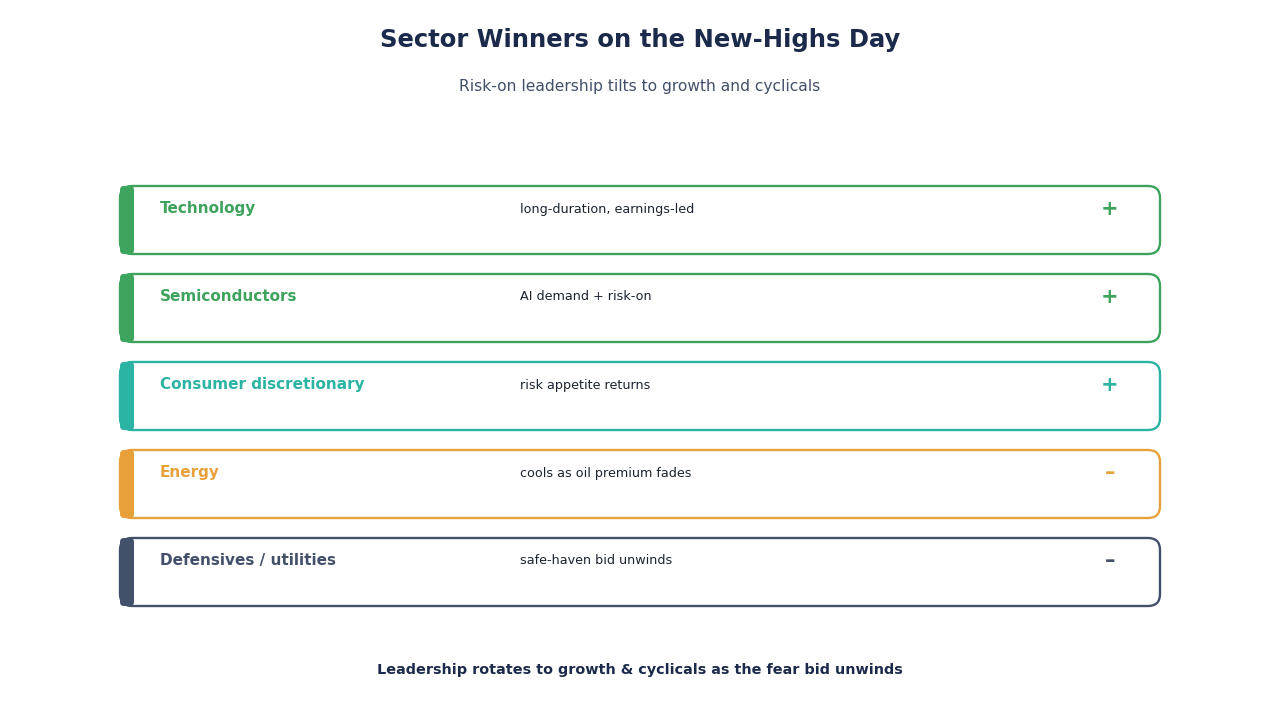
Le soulagement seul produit rarement une rupture durable de l'indice. La hausse a été renforcée par de solides bénéfices et un leadership exceptionnel des secteurs technologique et des semi-conducteurs. Reuters a rapporté que la croissance des bénéfices du premier trimestre est d'environ 14%, tandis que l'indice technologique S&P a augmenté de 2,31% ce jour-là et que l'indice Philadelphia Semiconductor a prolongé sa série de gains à 16 sessions consécutives, le plus long jamais enregistré.
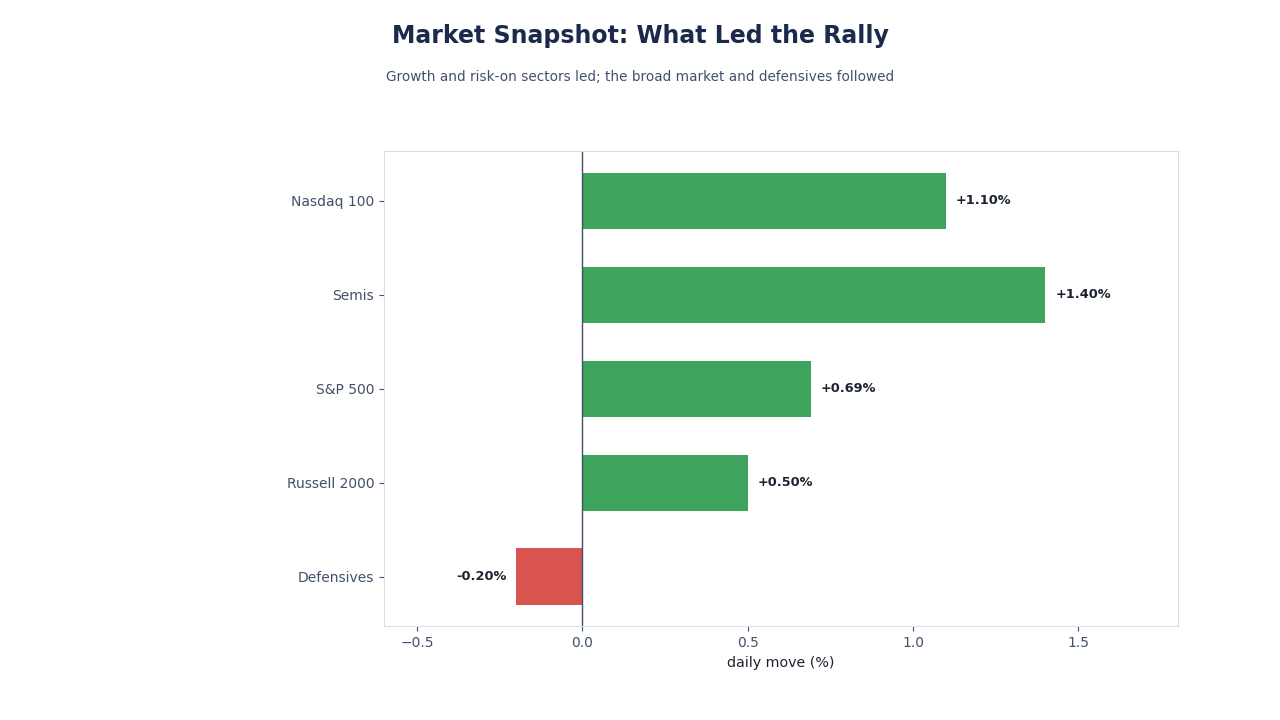
Instantané du marché : Qu'est-ce qui a réellement conduit au rallye ?
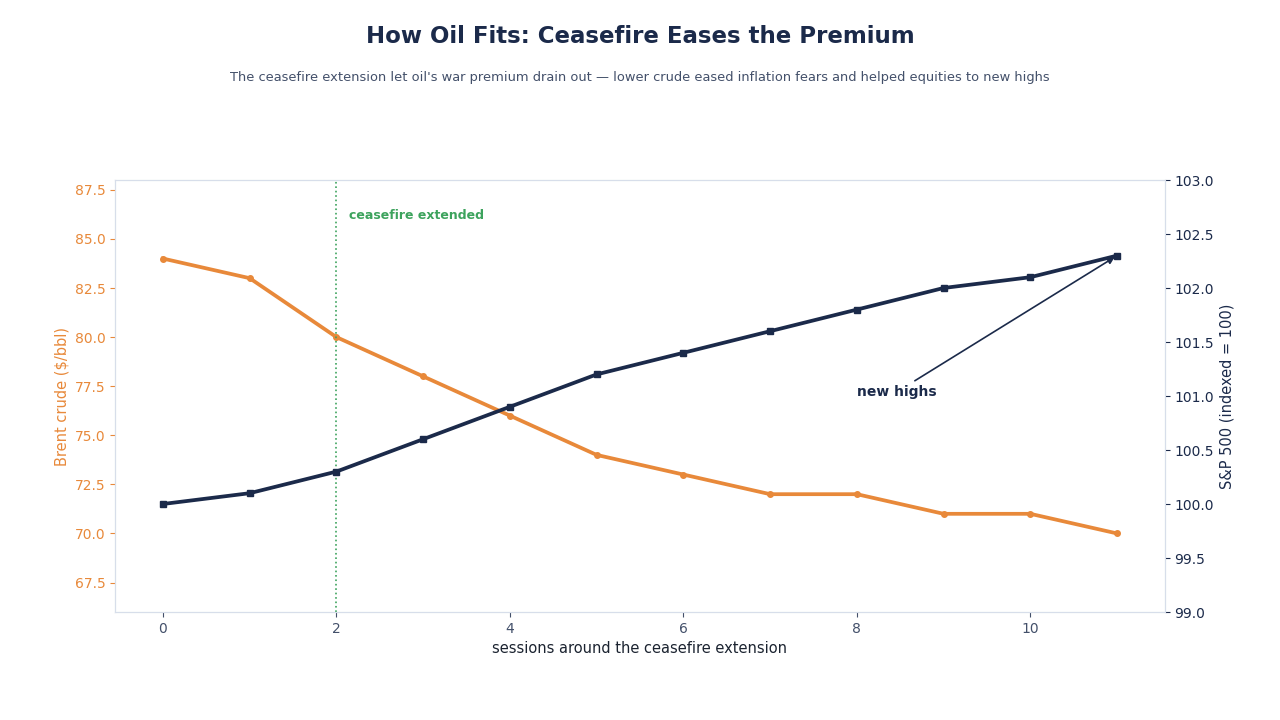
Le titre parlait du cessez-le-feu, mais la structure interne du marché raconte une histoire plus complète.
| Élément du marché | Ce qui s'est passé | Pourquoi c'était important |
|---|---|---|
| S&P 500 | A clôturé à un record de 7,137.90 | La confiance générale du marché est revenue |
| Nasdaq Composite | A clôturé à un record de 24,657.57 | La croissance et la technologie sont restées dominantes |
| Dow Jones | A augmenté de 0.69 % à 49,490.03 | Le rallye n'était pas uniquement une action spéculative sur la technologie |
| Secteur technologique | A gagné 2.31 % | Meilleur secteur du S&P de la journée |
| Semi-conducteurs | 16ème jour consécutif de gains | Signale un fort élan et un appétit lié à l'IA |
| Bénéfices | Croissance d'environ 14 % en cours | Le soutien fondamental a renforcé le sentiment |
Plusieurs mouvements au niveau des entreprises ont également compté. GE Vernova a grimpé après avoir relevé ses prévisions de revenus, Boston Scientific a bondi grâce à de solides résultats trimestriels, Boeing a augmenté après une perte inférieure aux attentes, et Micron Technology a atteint un record de clôture. Ces mouvements ont renforcé l'idée que le marché ne se contentait pas de réagir uniquement aux titres géopolitiques ; les investisseurs récompensaient également les entreprises qui offraient des fondamentaux meilleurs que redoutés.
Cette combinaison est puissante car elle crée une base plus solide pour les gains d'index. Un rallye soutenu par un soulagement macroéconomique + une crédibilité des bénéfices + un leadership sectoriel tend à être plus durable qu'un squeeze à la baisse d'un jour.
Comment les prix du pétrole s'intègrent dans l'histoire
Une des plus grandes erreurs que font les investisseurs est de traiter les nouvelles géopolitiques comme si elles affectaient directement les actions. En réalité, le pont le plus important est souvent le pétrole.
Si les risques de conflit augmentent au Moyen-Orient, les traders pensent immédiatement à :
- Les perturbations d'expédition
- Les pics de prix du brut
- La pression inflationniste
- La réaction des banques centrales
- La compression des marges pour les entreprises
- Des évaluations boursières plus faibles
C'est pourquoi l'extension du cessez-le-feu était si importante. Même si Reuters a averti que le pétrole restait près de 100 $ le baril et pouvait encore augmenter, l'extension a réduit la probabilité immédiate d'un nouveau choc suffisamment important pour dérailler les actions.
C'est aussi là que la nuance est importante. L'extension du cessez-le-feu n'a pas éliminé le risque pétrolier. Reuters a explicitement noté que le blocus restait en vigueur et que la réouverture du détroit d'Hormuz était toujours une grande inconnue. Cela signifie que les haussiers des actions parient effectivement que le chemin du risque s'améliore plus rapidement que le chemin de l'inflation ne se détériore.
Pour les investisseurs, cela crée un cadre actionnable :
- Cas haussier : le cessez-le-feu tient, le pétrole se stabilise, les bénéfices restent solides, le leadership technologique continue
- Cas neutre : le cessez-le-feu tient mais le pétrole reste élevé, limitant l'expansion des évaluations
- Cas baissier : les négociations échouent, le risque d'expédition s'aggrave, le pétrole monte en flèche, les craintes inflationnistes reviennent
C'est pourquoi une analyse de marché intelligente ne peut pas se fier à un seul titre. Elle doit suivre l'interaction entre le risque d'événement et la tarification du marché.
Pourquoi les actions technologiques ont de nouveau mené
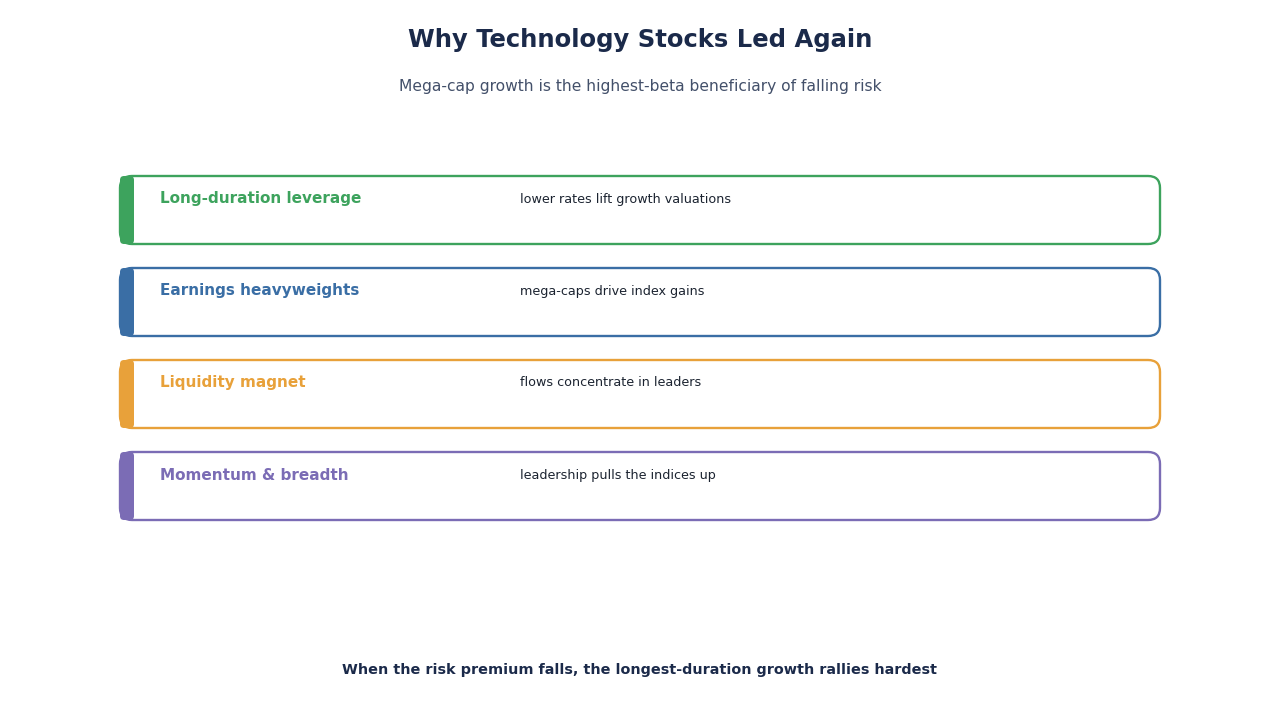
La surperformance du Nasdaq n'était pas aléatoire. Elle reflétait la préférence du marché pour les secteurs qui bénéficient le plus lorsque l'incertitude macroéconomique s'atténue sans un effondrement correspondant des attentes de croissance.
La technologie a connu une hausse pour plusieurs raisons :
Soutien des bénéfices
La dernière saison des bénéfices a contribué à rassurer les investisseurs sur le fait que l'Amérique des entreprises reste plus résiliente que prévu. Reuters a rapporté que les estimations de BPA du S&P 500 pour 2026 et 2027 avaient augmenté de 4 % depuis fin janvier, selon les données de Goldman Sachs citées dans le rapport.
Élan de l'IA et des semi-conducteurs
La série record de l'indice des semi-conducteurs suggère que les investisseurs sont toujours prêts à payer pour des entreprises exposées à l'infrastructure de l'IA, à la mémoire et à la demande de calcul. La clôture record de Micron a renforcé ce thème.
Sensibilité de l'évaluation aux attentes de taux
Les actions de croissance sont particulièrement sensibles aux attentes d'inflation et de taux d'intérêt. Tout signe que la pression sur le pétrole ne pourrait pas se transformer en une plus grande peur de l'inflation peut améliorer le sentiment envers le Nasdaq plus que vers les secteurs défensifs.
Élan et participation
Les marchés proches de leurs sommets historiques ont souvent tendance à devenir auto-renforçants lorsque les secteurs leaders continuent à atteindre de nouveaux sommets. Les traders, les fonds systématiques et le capital à la recherche de performance ont tous tendance à renforcer la tendance.
!Nasdaq et actions de semi-conducteurs menant le rallye à risque:maxbytes(150000):stripicc()/GettyImages-2271054187-45ddff8a20f540e4ab0a80d35ab777fe.jpg)
La question : “Le S&P 500 et le Nasdaq atteignent de nouveaux sommets grâce à l'extension du cessez-le-feu en Iran” est-elle une tendance durable ?
C'est la question la plus importante pour les investisseurs.
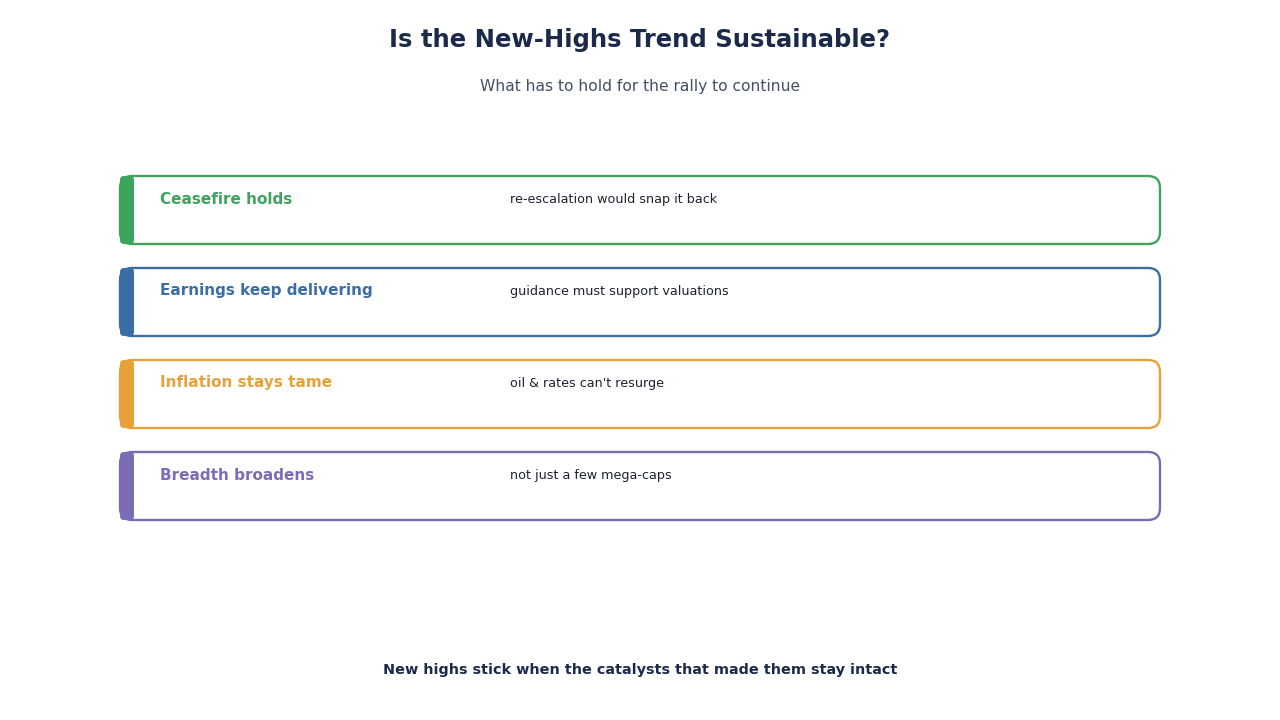
L'argument haussier
Le cas haussier est simple. Les marchés constatent :
- un risque géopolitique qui s'atténue légèrement, sans s'aggraver
- une croissance des bénéfices toujours autour de 14 %
- large participation au-delà d'un ou deux noms méga-cap
- une tendance puissante en leadership dans les semi-conducteurs et l'IA
- une forte psychologie de momentum près des sommets historiques
Si ces conditions persistent, alors de nouveaux sommets peuvent devenir une plateforme pour une nouvelle jambe à la hausse plutôt qu'un point d'épuisement à court terme.
L'argument de prudence
Le cas de prudence est également réel. Reuters a clairement indiqué que l'extension du cessez-le-feu existe aux côtés de risques non résolus : le blocus américain demeure, l'Iran a saisi des navires dans le Hormuz, et le pétrole reste élevé. Si le marché évalue trop agressivement la paix alors que le contexte énergétique reste fragile, les actions pourraient devenir vulnérables à une nouvelle flambée de volatilité.
Le scénario de base le plus réaliste
Le cadre le plus réaliste est probablement celui-ci : le marché est justifié dans l'évaluation d'un risque de baisse plus faible qu'auparavant, mais il pourrait également sous-estimer la rapidité avec laquelle le récit pourrait s'inverser si le processus de cessez-le-feu stagne. Cela signifie que les investisseurs devraient faire la distinction entre :
- confirmation de tendance
- fragilité des titres
- risque de positionnement
- sensibilité à la valorisation
C'est une des raisons pour lesquelles SimianX AI peut être utile en pratique. Au lieu de se concentrer uniquement sur le prix, les investisseurs peuvent combiner plusieurs couches d'analyse—tendance technique, variables macro, sentiment et risque d'événement—pour juger si un rallye est sain, encombré ou vulnérable.
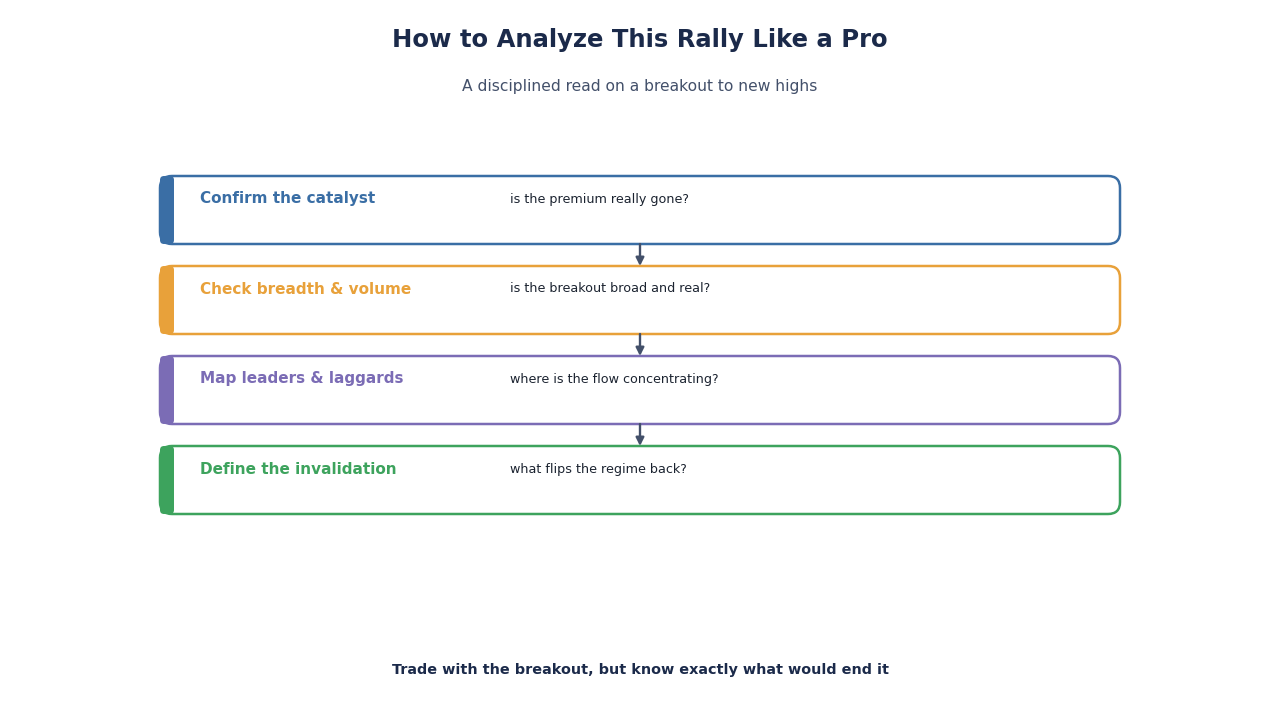
Comment analyser ce rallye comme un professionnel
Un cadre professionnel pour ce type de mouvement comprend généralement cinq couches.
1. Qualité des titres
Demandez-vous si le titre change la distribution de probabilité des résultats ou ne fait que changer le ton. L'extension du cessez-le-feu a clairement changé la distribution suffisamment pour être significative, mais pas assez pour éliminer tout risque.
2. Confirmation inter-actifs
Vérifiez si les actions, le pétrole, le crédit et les rendements obligataires confirment le même message. Si les actions augmentent mais que le pétrole monte en flèche et que les spreads de crédit s'élargissent, le mouvement peut être plus faible qu'il n'y paraît.
3. Leadership sectoriel
Une hausse saine a généralement des leaders identifiables. Dans ce cas, la technologie et les semi-conducteurs ont fourni ce leadership.
4. Confirmation des bénéfices
Le soulagement macroéconomique est plus durable lorsque les entreprises continuent de livrer. Le solide contexte des bénéfices précoces est important.
5. Gestion des risques
Même les récits haussiers peuvent se retourner. Les investisseurs doivent identifier les niveaux d'invalidation, les indices de rotation sectorielle et les déclencheurs macroéconomiques qui remettraient en question la thèse.
Voici une simple liste de contrôle opérationnelle :
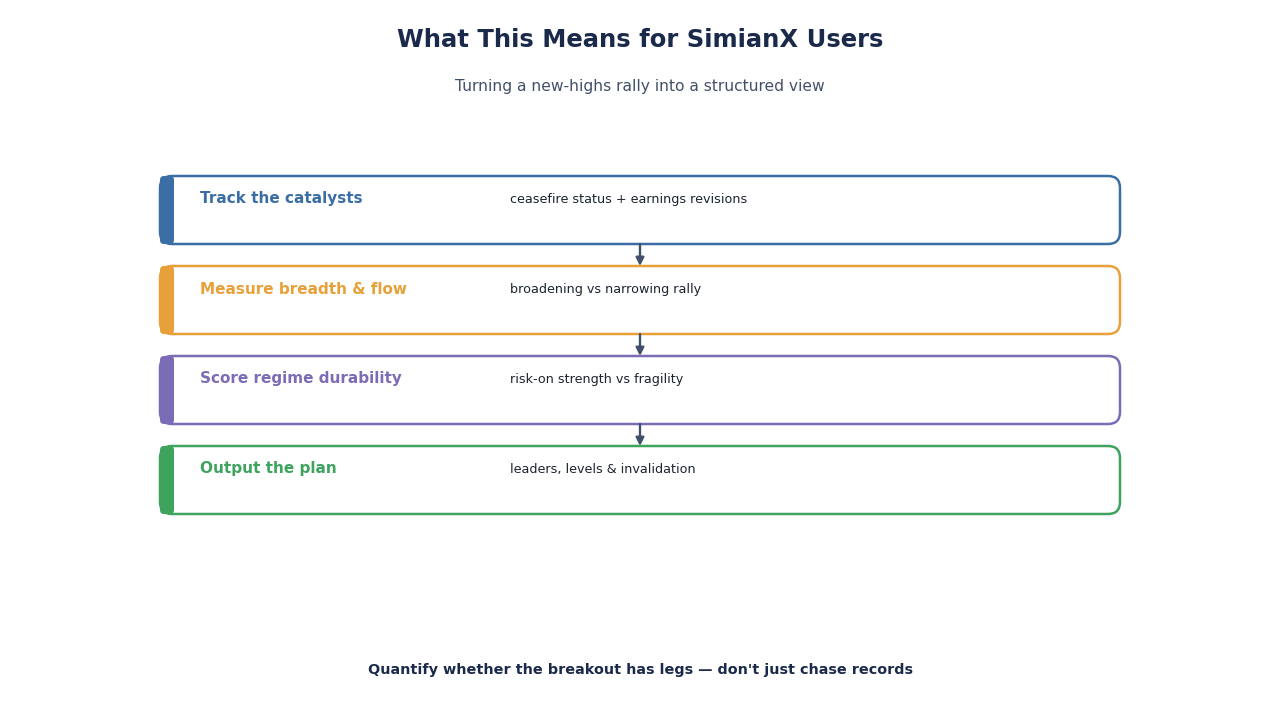
- Suivez quotidiennement les gros titres concernant le cessez-le-feu ou les négociations
- Surveillez le Brent et le WTI pour des prix de choc d'approvisionnement renouvelés
- Observez les semi-conducteurs pour la continuité du leadership
- Vérifiez si les dépassements de bénéfices génèrent toujours des réactions de prix positives
- Passez en revue la largeur du marché et les nouveaux sommets pour confirmer la participation
Ce processus est beaucoup plus solide que de réagir émotionnellement à une seule notification d'actualité.
Que signifie cela pour les utilisateurs de SimianX et les investisseurs actifs ?
Pour les investisseurs actifs, la plus grande leçon n'est pas seulement que les actions ont augmenté. C'est pourquoi elles ont augmenté.
Un mouvement comme celui-ci montre que le marché fonctionne comme un moteur de tarification multi-variable :
- la prime de risque géopolitique a diminué
- la confiance dans les bénéfices est restée forte
- le leadership technologique est resté intact
- les investisseurs ont récompensé les secteurs avec le plus grand potentiel de soulagement macroéconomique
C'est exactement l'environnement où une analyse structurée a un avantage. L'IA de SimianX est pertinente ici car elle aide à traduire des récits de marché désordonnés et en rapide évolution en cadres décisionnels plus clairs. Un trader peut l'utiliser pour comparer les signaux macroéconomiques, les implications des bénéfices, l'élan technique et le comportement sectoriel sans se fier uniquement à l'intuition.
Tout comme l'article précédent de SimianX sur le marché lié à l'Iran a connecté la diplomatie, le pétrole et les bénéfices dans un cadre cohérent, les investisseurs doivent maintenant juger si le rallye actuel est un breakout de confirmation ou un commerce de soulagement excessif.
FAQ sur les nouveaux sommets du S&P 500 et du Nasdaq suite à l'extension du cessez-le-feu en Iran
Pourquoi le S&P 500 et le Nasdaq ont-ils atteint de nouveaux sommets suite à l'extension du cessez-le-feu en Iran ?
Ils ont atteint de nouveaux sommets parce que les investisseurs ont interprété l'extension du cessez-le-feu comme une réduction du risque géopolitique immédiat, tandis que de solides bénéfices d'entreprise et de puissants gains dans les actions technologiques ont ajouté un soutien fondamental. Reuters a rapporté des clôtures record pour les deux indices le 22 avril 2026.
Comment l'extension du cessez-le-feu en Iran affecte-t-elle les actions américaines ?
Une extension du cessez-le-feu peut réduire la prime de risque géopolitique intégrée dans les actions, surtout si elle diminue les craintes de perturbation de l'approvisionnement en pétrole et de choc inflationniste. Les actions ont tendance à réagir positivement lorsque les marchés estiment que la probabilité d'escalade diminue, même si l'incertitude n'a pas complètement disparu.
Les sommets record du Nasdaq concernent-ils principalement les actions technologiques ?
Oui, les actions technologiques et de semi-conducteurs étaient centrales dans ce mouvement. Reuters a déclaré que le secteur technologique du S&P était le meilleur performeur de la journée et que l'indice des semi-conducteurs de Philadelphie avait prolongé une série de gains record.
Quels sont les principaux risques après ce rallye du marché boursier ?
Les plus grands risques sont une nouvelle rupture des négociations, une pression pétrolière persistante et un retournement des attentes en matière d'inflation. Reuters a également noté que le blocus des ports iraniens restait en place et que la situation dans le détroit d'Ormuz n'était toujours pas résolue.
Quelle est la meilleure façon de surveiller le risque géopolitique dans les actions ?
La meilleure approche est de suivre les titres géopolitiques parallèlement aux prix du pétrole, à la direction des secteurs, aux tendances des bénéfices et à la largeur du marché plutôt que de se concentrer sur une seule variable. Ce type d'analyse inter-marchés est là où des plateformes comme SimianX AI peuvent aider les investisseurs à transformer des informations éparses en décisions plus claires.
Conclusion
Le titre “S&P 500 et Nasdaq atteignent de nouveaux sommets grâce à l'extension du cessez-le-feu en Iran” est important car il capture plus qu'un mouvement de marché d'un jour. Il révèle comment les marchés modernes traitent le risque géopolitique à travers les prismes du pétrole, de l'inflation, des bénéfices et des secteurs de leadership. Les dernières clôtures record ont été soutenues non seulement par des espoirs de désescalade, mais aussi par une forte croissance des bénéfices, une large participation et une force technologique continue.
La leçon clé pour les investisseurs est que les marchés n'ont pas besoin d'une paix parfaite pour se redresser. Ils ont besoin d'une amélioration crédible du chemin du risque. En ce moment, c'est ce que le marché semble évaluer. Mais parce que les risques liés au détroit d'Ormuz et à l'approvisionnement en pétrole restent non résolus, les investisseurs devraient rester disciplinés et axés sur les données plutôt que complaisants.
Pour quiconque essaie d'interpréter des récits de marché en mouvement rapide avec plus de clarté, c'est un moment fort pour explorer comment SimianX AI peut aider à combiner des signaux macro, sentimentaux, techniques et basés sur des événements en un processus décisionnel plus structuré. Dans des marchés façonnés à la fois par des titres et des fondamentaux, de meilleurs cadres comptent souvent plus que des réactions plus rapides.
S&P 500 et Nasdaq atteignent de nouveaux sommets grâce à l'extension du cessez-le-feu en Iran
Le récit selon lequel “S&P 500 et Nasdaq atteignent de nouveaux sommets grâce à l'extension du cessez-le-feu en Iran” continue de dominer les marchés financiers mondiaux, mais l'histoire plus profonde va bien au-delà d'un simple titre. Bien que le rallye initial ait été déclenché par des signaux de désescalade géopolitique, la poursuite de ce mouvement dépend d'une interaction beaucoup plus complexe de liquidité, positionnement, sentiment, attentes macroéconomiques et flux de capitaux structurels.
Pour les investisseurs utilisant des plateformes avancées comme SimianX AI, la clé n'est pas seulement d'identifier pourquoi les marchés ont bougé, mais de comprendre si le mouvement est durable, encombré ou fragile.
La liquidité continue de driver le marché plus que les titres
Un des aspects les plus négligés de ce rallye est la liquidité. Même si les nouvelles géopolitiques attirent souvent l'attention, les conditions de liquidité déterminent finalement jusqu'où un mouvement peut s'étendre.
En analysant pourquoi le S&P 500 et le Nasdaq ont atteint de nouveaux sommets grâce à l'extension du cessez-le-feu en Iran, considérez les moteurs de liquidité suivants :
- Les bilans des banques centrales mondiales restent élevés
- Les taux réels se stabilisent plutôt que d'augmenter brusquement
- Le capital de risque continue de se réorienter vers les secteurs de croissance
- Les flux passifs amplifient l'élan à la hausse
Le marché ne réagit pas seulement aux nouvelles - il les amplifie à travers la liquidité et le positionnement.
Insight clé : Liquidité + Narratif = Expansion de l'élan
Lorsqu'un narratif positif (comme une extension de cessez-le-feu) s'aligne avec des conditions de liquidité favorables, les marchés peuvent dépasser la valeur juste à court terme.
C'est exactement ce que nous observons actuellement.
- Cessez-le-feu = prime de risque réduite
- Liquidité = carburant pour l'expansion
- Leadership technologique = moteur d'élan
Prise de conscience pratique pour les traders
Pour naviguer dans cet environnement :
- Suivez les indicateurs de liquidité (rendements réels, spreads de crédit)
- Surveiller les entrées d'ETF dans les actions
- Observer si les baisses sont achetées de manière agressive
- Observer la compression de la volatilité (comportement du VIX)
| Signal | Interprétation haussière | Avertissement baissier |
|---|---|---|
| VIX en baisse | Appétit pour le risque en hausse | Risque de complaisance |
| Écarts de crédit serrés | Confiance forte | Signal de fin de cycle |
| Technologie surperformante | Leadership en croissance intact | Surcharge |
Positionnement : Les investisseurs sont-ils déjà trop haussiers ?
Une autre dimension critique est le positionnement du marché.
Après plusieurs sommets historiques, une question clé émerge :
Sommes-nous déjà pleinement positionnés pour de bonnes nouvelles ?
Les investisseurs institutionnels, les fonds spéculatifs et les stratégies systématiques ont tendance à :
- Augmenter l'exposition lors des cassures
- Poursuivre l'élan dans les secteurs surperformants
- Réduire les couvertures lorsque la volatilité diminue
Cela crée une boucle de rétroaction :
- Prix plus élevés → plus d'achats → des prix encore plus élevés
Mais cela introduit également de la fragilité.
Signes de positionnement surchargé
- Concentration excessive dans la technologie des méga-capitalisations
- Sur-extension au-dessus des moyennes mobiles clés
- Forte levée dans le positionnement des contrats à terme
- Largeur de marché étroite
Pourquoi cela importe
Lorsque le positionnement devient surchargé :
- Même des nouvelles négatives mineures peuvent déclencher des replis disproportionnés
- La prise de bénéfices s'accélère rapidement
- La volatilité augmente de manière inattendue
C'est là que des outils comme SimianX AI deviennent particulièrement précieux, car ils permettent aux traders de surveiller le sentiment, le positionnement et les signaux multi-agents en temps réel, plutôt que de s'appuyer sur des indicateurs retardés.
Le rôle des bénéfices : La colonne vertébrale cachée du rallye
Alors que les gros titres se concentrent sur la géopolitique, les bénéfices restent le vrai fondement du rallye.
Les marchés peuvent tolérer l'incertitude si les bénéfices restent solides.
Tendances Actuelles des Bénéfices Soutenant le Rallye
- Attentes de croissance des BPA à deux chiffres
- Solides prévisions des entreprises industrielles et technologiques
- Résilience des marges malgré les pressions sur les coûts
- Accélération des revenus tirée par l'IA dans les semi-conducteurs
Pourquoi les Bénéfices Comptent Plus Que les Gros Titres
Les nouvelles géopolitiques affectent le sentiment, mais les bénéfices affectent la réalité de valorisation.
Si les bénéfices :
- Continuent de dépasser les attentes → le rallye se maintient
- Commencent à décevoir → le rallye s'affaiblit
Cadre : Bénéfices vs Narratif
| Scénario | Réaction du Marché |
|---|---|
| Bénéfices solides + géopolitique positive | Hausse explosive |
| Bénéfices solides + géopolitique négative | Volatilité mais résiliente |
| Bénéfices faibles + géopolitique positive | Hausse limitée |
| Bénéfices faibles + géopolitique négative | Correction brutale |
Les bénéfices déterminent jusqu'où un rallye peut aller. Les gros titres déterminent à quelle vitesse il y parvient.
Comment Trader les Gros Titres Géopolitiques Comme un Professionnel
Étape 1 : Identifier le Type d'Événement
Tous les événements géopolitiques ne sont pas égaux.
- Chocs à court terme → pics de volatilité (par exemple, conflit soudain)
- Changements structurels → réévaluation à long terme (par exemple, guerre prolongée)
- Événements de désescalade → rallyes de soulagement (comme le scénario actuel)
Étape 2 : Cartographier les Canaux de Transmission
Demandez-vous toujours :
- Cela affecte-t-il le pétrole ?
- Cela affecte-t-il l'inflation ?
- Cela affecte-t-il la croissance mondiale ?
Étape 3 : Suivre la Réaction du Marché, Pas Juste les Nouvelles
Les marchés souvent :
- Réagissent de manière excessive au départ
- Puis se stabilisent
- Puis évoluent en fonction des fondamentaux
Étape 4 : Utiliser l'Analyse Multi-Temps
Les traders professionnels examinent :
- Réaction intrajournalière
- Tendance quotidienne
- Structure hebdomadaire
C'est ici que le système d'agent multi-temporelle de SimianX AI devient puissant, permettant aux traders de synchroniser les signaux à court terme avec les tendances macro à long terme.
Pourquoi ce rallye semble plus fort que les rallyes de soulagement typiques
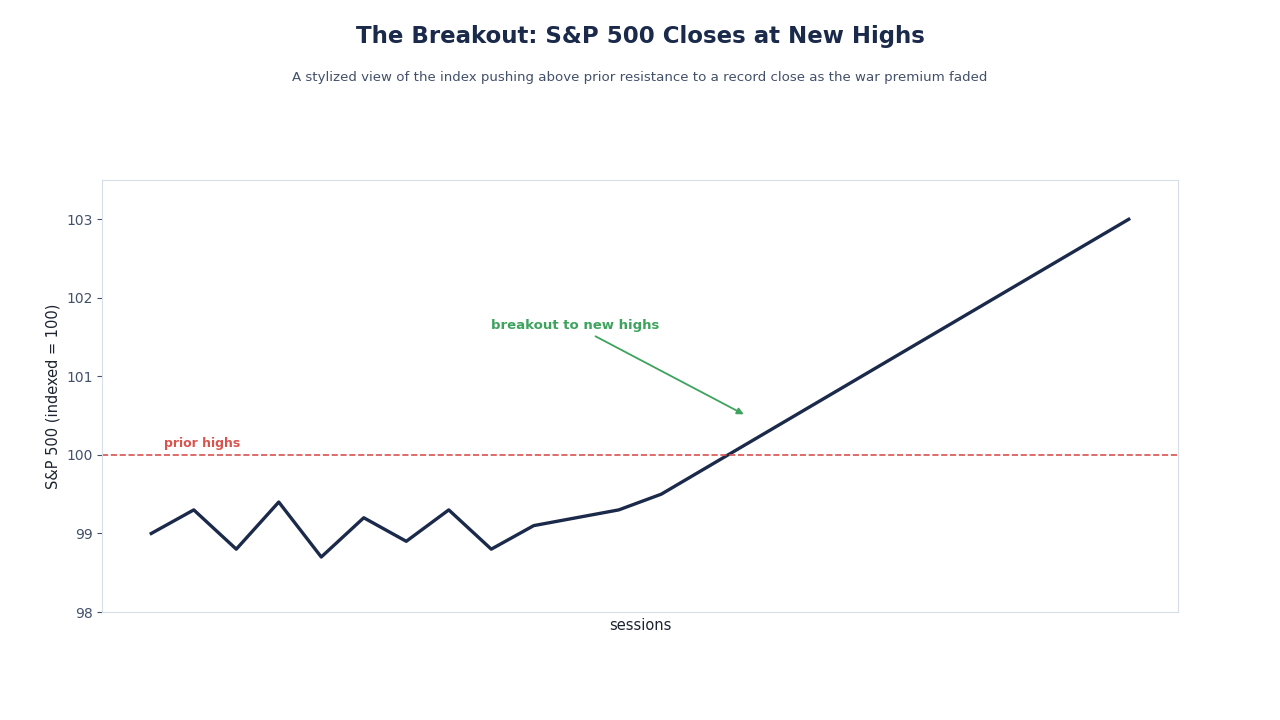
Tous les rallyes de soulagement ne mènent pas à de nouveaux sommets. Celui-ci l'a fait.
Différences clés dans ce rallye
- S'est produit près des sommets précédents (pas après une forte vente)
- Soutenu par des bénéfices solides
- Mené par des secteurs à forte conviction (technologie, semi-conducteurs)
- Renforcé par des conditions de liquidité
Indicateurs de force structurelle
- Sommets plus hauts et creux plus hauts
- Poursuite de la forte cassure
- Rotation sectorielle soutenant la tendance
- Comportement d'achat persistant lors des baisses
Momentum vs Réversion à la moyenne
En ce moment, le marché est dans un régime de momentum, pas dans un régime de réversion à la moyenne.
Cela signifie :
- Les tendances s'étendent plus longtemps que prévu
- Les retraits sont peu profonds
- Les cassures ont tendance à se poursuivre
Scénarios de risque que les investisseurs devraient surveiller de près
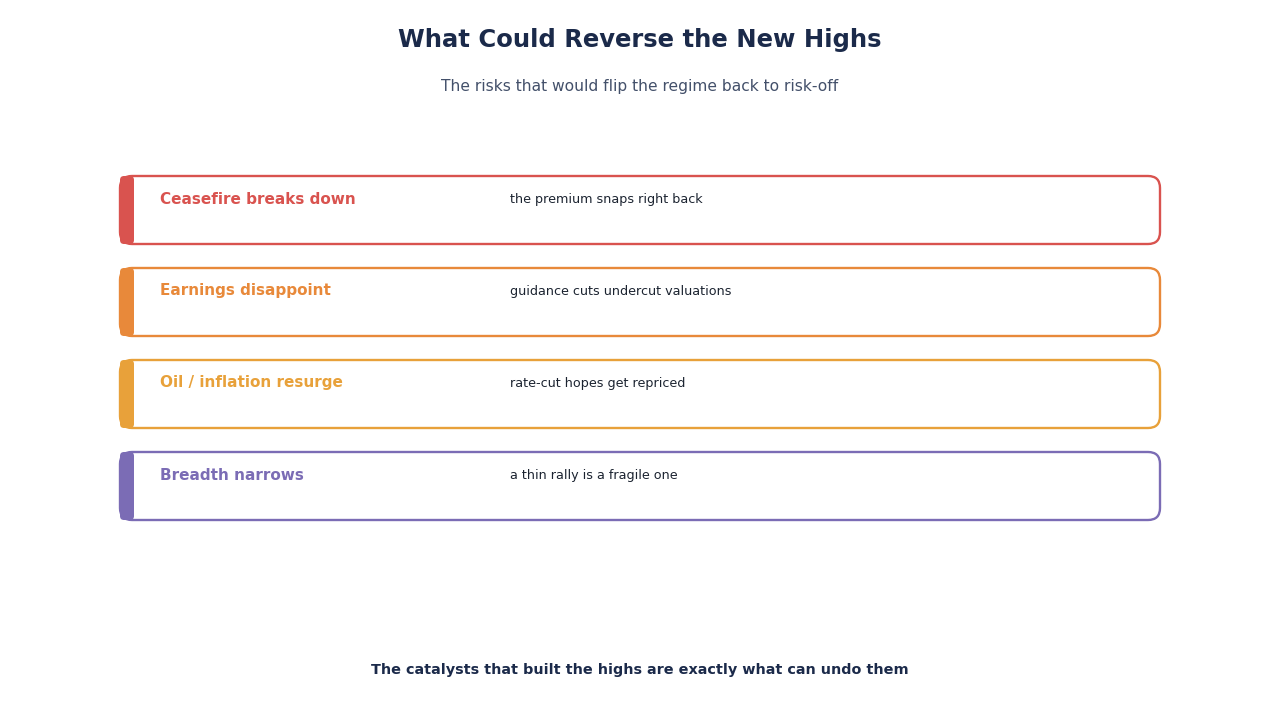
Même dans un environnement haussier, les risques demeurent.
1. Effondrement du cessez-le-feu
Si les négociations échouent :
- Le pétrole s'envole
- La prime de risque revient
- Les actions se re-prix rapidement
2. Surprise inflationniste
Si le pétrole reste élevé :
- Les attentes d'inflation augmentent
- Les attentes de baisse des taux s'estompent
- Les actions de croissance subissent des pressions
3. Déception des bénéfices
Si les entreprises :
- Manquent les attentes
- Baissent leurs prévisions
→ La confiance du marché s'affaiblit
4. Désengagement des positions
Si les trades surpeuplés se désengagent :
- Des baisses rapides se produisent
- La volatilité augmente
- La liquidité se tarit temporairement
Liste de contrôle de surveillance des risques
- Tendance des prix du pétrole
- Comportement du VIX
- Révisions des bénéfices
- Indicateurs de largeur
Comment SimianX AI Vous Aide à Naviguer Dans Ce Marché
Les marchés modernes sont trop complexes pour une analyse à facteur unique.
C'est là que SimianX AI fournit un avantage.
Qu'est-ce qui Rend SimianX Différent
- Analyse multi-agents (technique + macro + sentiment)
- Synthèse de décisions en temps réel
- Perspectives multi-temporelles
- Score de confiance transparent
Exemple de Flux de Travail
- Vérifier les signaux macro (pétrole, taux, géopolitique)
- Analyser la structure technique (force de tendance)
- Évaluer le sentiment et le positionnement
- Combiner les signaux en décisions exploitables
Pourquoi Cela Compte
Au lieu de réagir émotionnellement à des gros titres comme :
- “Prolongation du cessez-le-feu en Iran”
- “Le marché atteint de nouveaux sommets”
Vous pouvez évaluer systématiquement :
- Est-ce durable ?
- Le risque augmente-t-il ou diminue-t-il ?
- Où se trouvent les niveaux de support et de résistance clés ?
Que Va-t-il Se Passer Ensuite pour le S&P 500 et le Nasdaq ?
En regardant vers l'avenir, le marché fait face à trois chemins potentiels :
Scénario Haussier
- Le cessez-le-feu tient
- Le pétrole se stabilise
- Les bénéfices restent solides
→ Poursuite de la rupture et nouveaux sommets
Scénario de Base
- Le cessez-le-feu tient mais l'incertitude demeure
- Pétrole volatil mais contenu
→ Consolidation dans une fourchette
Scénario Baissier
- L'escalade géopolitique revient
- L'inflation augmente
→ Correction brutale
Positionnement Stratégique
Les investisseurs devraient :
- Rester alignés sur la tendance
- Éviter le surendettement
- Surveiller de près les signaux macro
- Utiliser des outils basés sur les données
!graphique des scénarios de marché futurs:maxbytes(150000):stripicc()/ES12024-02-2609-38-07-84442f01b18f46b5a51fd435f84490c6.png)
FAQ sur le S&P 500 et le Nasdaq atteignant de nouveaux sommets suite à l'extension du cessez-le-feu en Iran
Pourquoi les actions ont-elles augmenté suite à l'extension du cessez-le-feu en Iran ?
Les actions ont augmenté parce que le cessez-le-feu a réduit le risque géopolitique immédiat, a abaissé la probabilité perçue d'un choc pétrolier et a renforcé la confiance des investisseurs, surtout lorsqu'il est combiné avec de solides bénéfices.
Comment le risque géopolitique affecte-t-il les marchés boursiers ?
Le risque géopolitique affecte les marchés à travers les prix du pétrole, les attentes en matière d'inflation et le sentiment des investisseurs, qui à leur tour influencent les évaluations et les flux de capitaux.
Ce rallye est-il durable ?
Le rallye est durable si les bénéfices restent solides et que les risques géopolitiques continuent de diminuer, mais il reste vulnérable à des changements soudains des prix du pétrole ou de la dynamique des conflits.
Quels secteurs bénéficient le plus de l'assouplissement géopolitique ?
Les secteurs technologique et de croissance ont tendance à bénéficier le plus, car ils sont sensibles aux taux d'intérêt et à l'appétit pour le risque des investisseurs.
Comment les traders peuvent-ils suivre ces mouvements de marché efficacement ?
Les traders devraient surveiller plusieurs facteurs simultanément, y compris les données macroéconomiques, le sentiment et les tendances techniques—quelque chose que des plateformes comme SimianX AI sont conçues pour intégrer.
Conclusion
Le rallye capturé dans le titre “S&P 500 et Nasdaq atteignent de nouveaux sommets suite à l'extension du cessez-le-feu en Iran” n'est pas seulement une réaction—c'est un reflet d'une structure de marché plus large, alimentée par la liquidité, la force des bénéfices et l'élan.
Comprendre cet environnement nécessite plus que de réagir aux titres. Cela nécessite :
- Une analyse multi-facteurs
- Une sensibilisation au risque
- Un positionnement stratégique
Alors que les marchés continuent d'évoluer, les investisseurs qui s'appuient sur des insights structurés et pilotés par l'IA auront un avantage significatif.
Pour rester en avance sur des dynamiques de marché complexes et en rapide évolution, explorez comment SimianX AI peut vous aider à transformer le bruit du marché en informations exploitables.
Lecture Liée
- Ultimatum Trump-Iran : Pétrole $110, Actions +2% Pivot
- Actions en Hausse : S&P +0.6%, Dow +1%, Nasdaq +1.2%
- Pourquoi Stocks Up : Iran Talks + Earnings Lift Rally
- Tensions Iran : Pétrole $100, Énergie +3.9%, S&P -1%
- Guerre Iran : Actions Risk-Off, Pétrole $100-$120, VIX
- Désescalade Iran 2026 : pétrole baisse, voyage en rallye