
The AI Trade Expands Beyond Chips Into Cloud and Applications
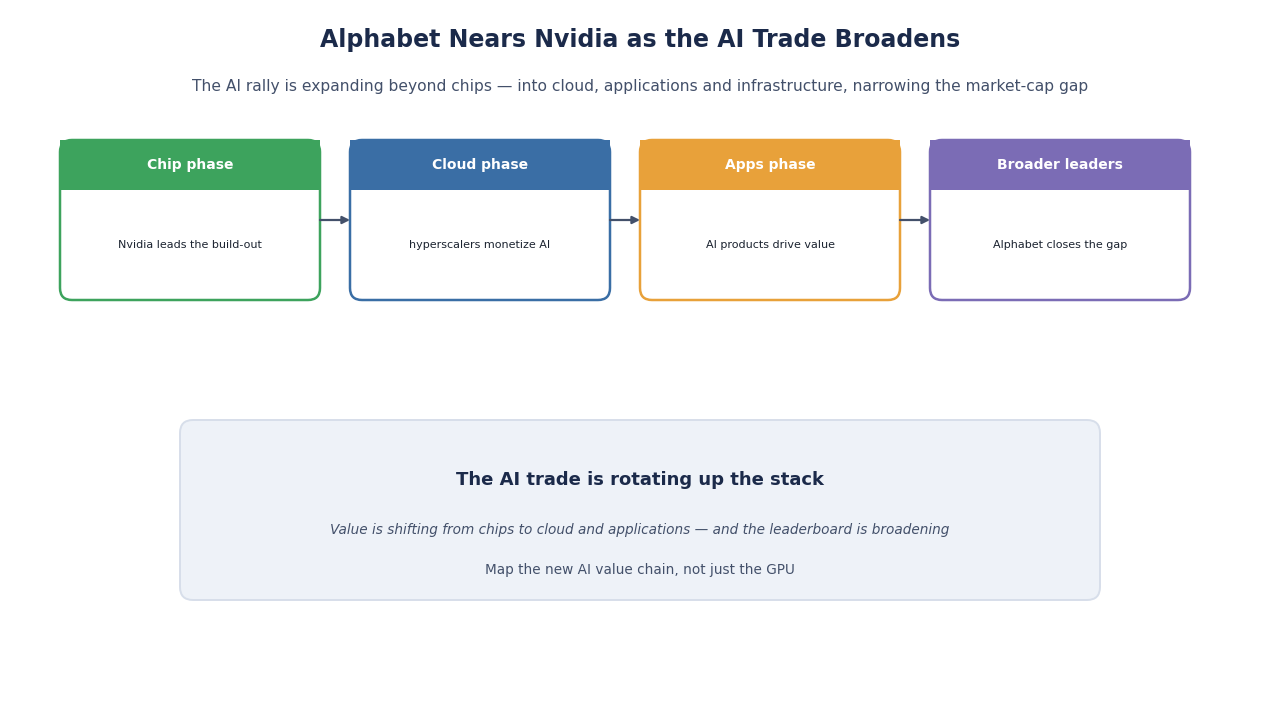
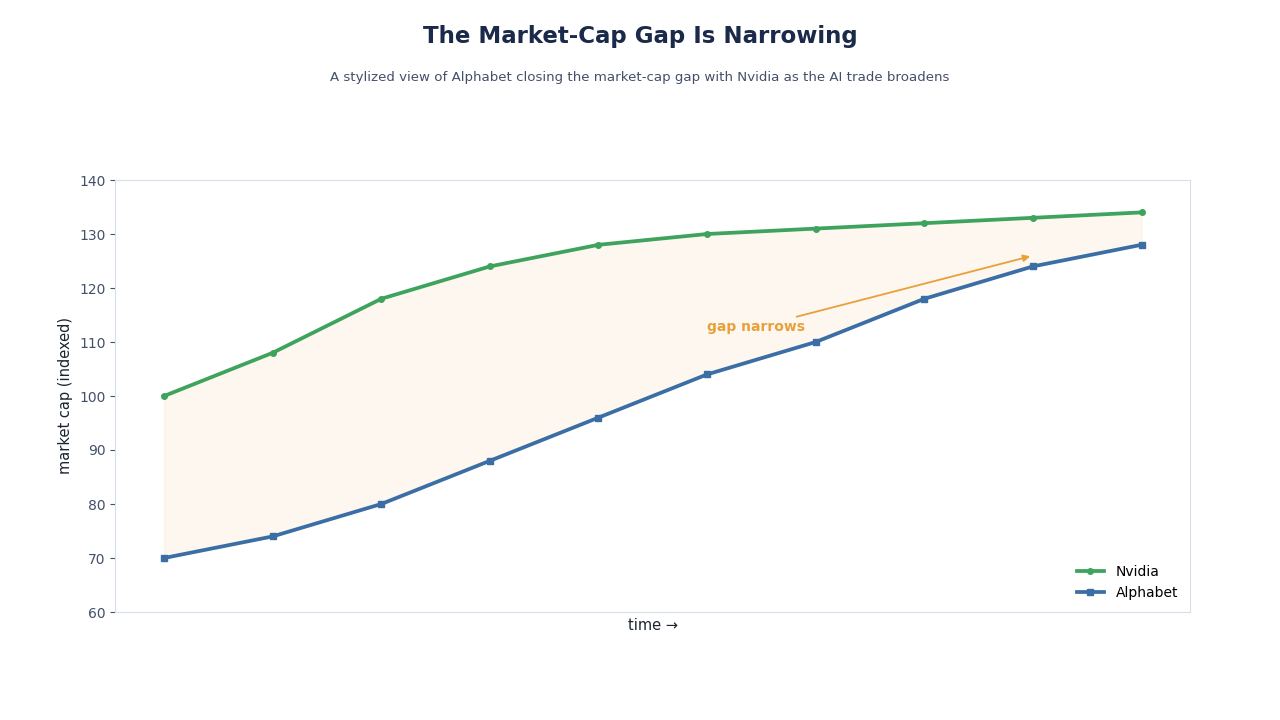
The global AI trade is entering a new phase. For much of the last two years, investors treated AI as largely synonymous with semiconductor dominance, pushing Nvidia to historic highs as demand for GPUs exploded. But now, as Alphabet nears Nvidia in market value, markets are signaling something important: the AI opportunity is broadening beyond chips into cloud infrastructure, enterprise software, consumer AI applications, and real-world monetization.
This transition matters because it changes how investors evaluate the next generation of AI winners. Instead of focusing only on compute suppliers, the market is increasingly rewarding companies that can deploy, scale, and commercialize AI at global scale. That includes cloud leaders, hyperscalers, enterprise AI platforms, and integrated ecosystems.
Platforms like SimianX AI are helping traders and investors understand these shifting AI market dynamics in real time by combining macro analysis, sentiment monitoring, technical signals, and multi-agent AI decision frameworks.
Why Alphabet Is Catching Up to Nvidia
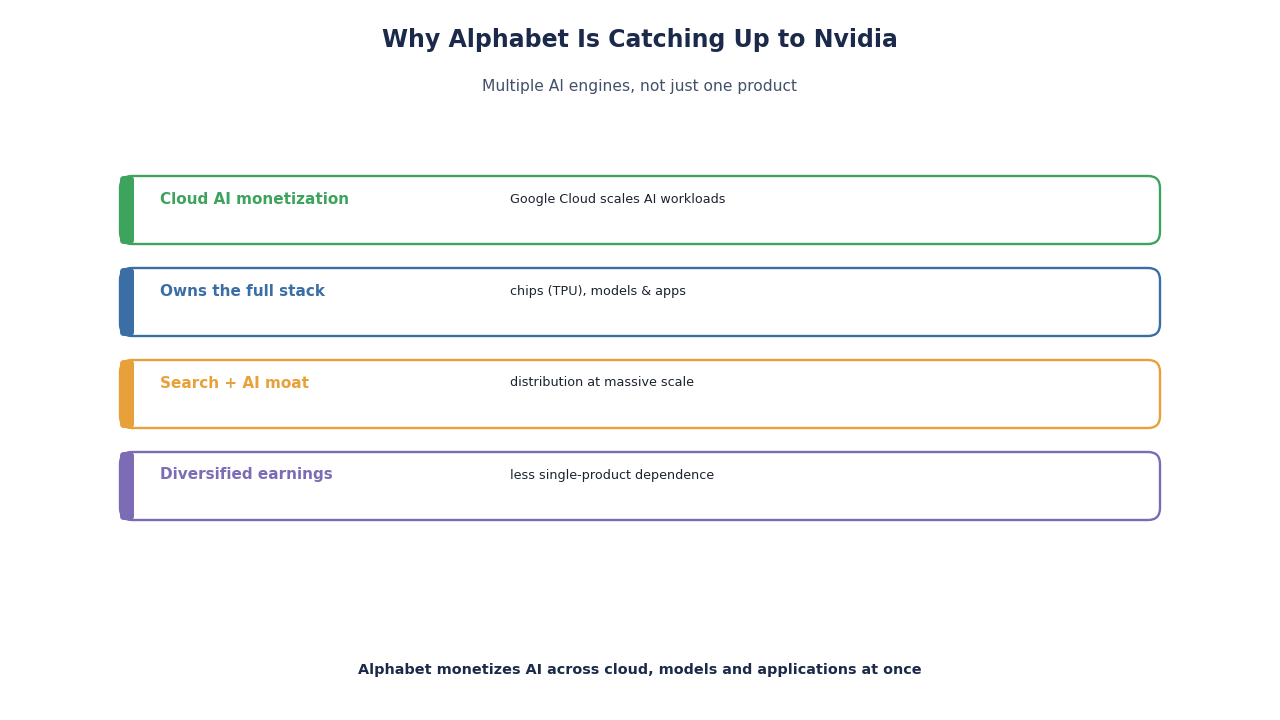
Nvidia remains the symbolic leader of the AI boom. Its GPUs power training clusters across nearly every major AI model in the world. However, investors are beginning to recognize that AI monetization ultimately depends on more than hardware.
Alphabet’s growing momentum reflects several structural advantages:
- Dominance in cloud AI infrastructure
- Massive AI application distribution through Google products
- Proprietary AI models and TPU chips
- Strong enterprise adoption via Google Cloud
- Advertising monetization powered by AI
The market is increasingly pricing AI as an ecosystem rather than a single hardware cycle.
The AI trade is evolving from “who builds the chips” to “who captures the recurring revenue generated by AI adoption.”
Key Drivers Behind Alphabet’s AI Momentum
| Factor | Why It Matters |
|---|---|
| Google Cloud Growth | AI workloads increase enterprise cloud spending |
| TPU Development | Reduces reliance on external GPU supply |
| Gemini AI Models | Expands consumer and enterprise AI ecosystem |
| Search AI Integration | Protects core advertising dominance |
| AI Applications | Creates long-term recurring monetization |
Unlike earlier phases of the AI rally, investors are now evaluating sustainability of earnings growth rather than pure infrastructure scarcity.
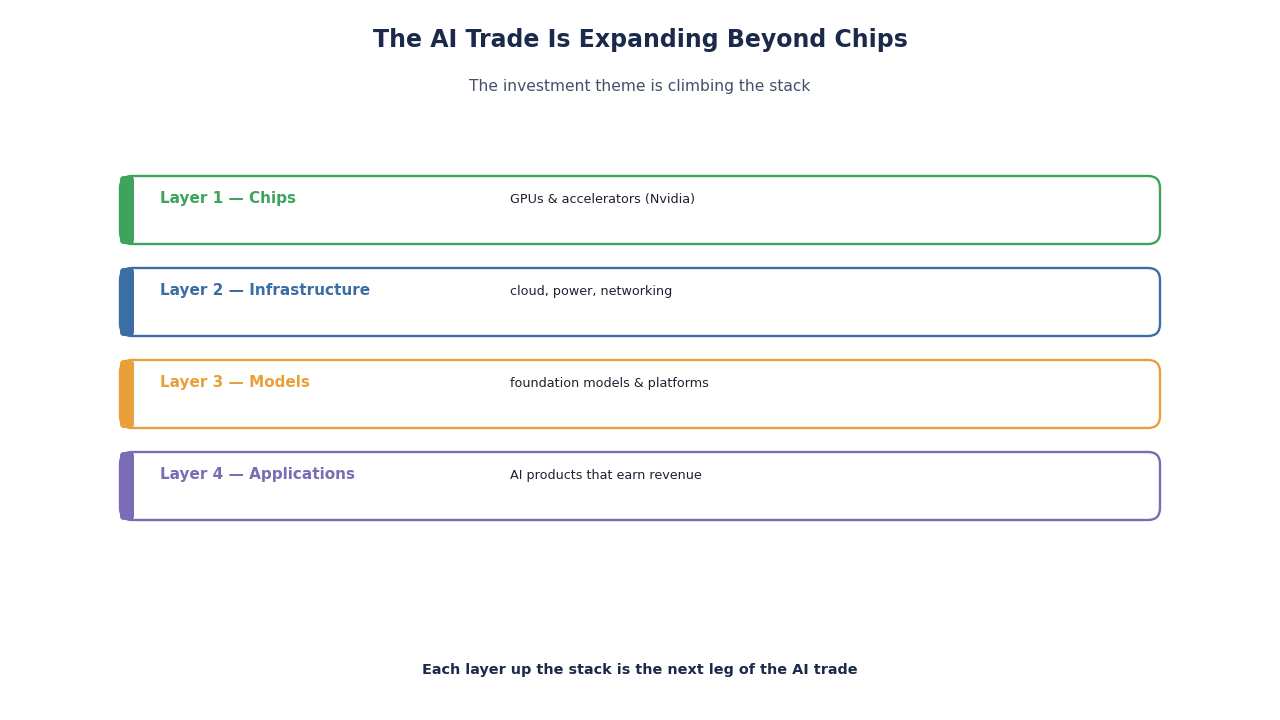
The AI Trade Is Expanding Beyond Chips
One of the biggest shifts happening in markets is the transition from a chip-centric AI rally to a broader AI commercialization cycle.
During the initial AI boom:
- GPU demand exploded
- Semiconductor margins surged
- Infrastructure spending dominated headlines
- Nvidia became the primary AI proxy
But now, the next wave focuses on:
- AI-powered cloud services
- AI software subscriptions
- Enterprise productivity tools
- Consumer AI platforms
- AI advertising optimization
- AI-driven automation
This broader expansion benefits companies like Alphabet because they sit at the intersection of infrastructure and applications.
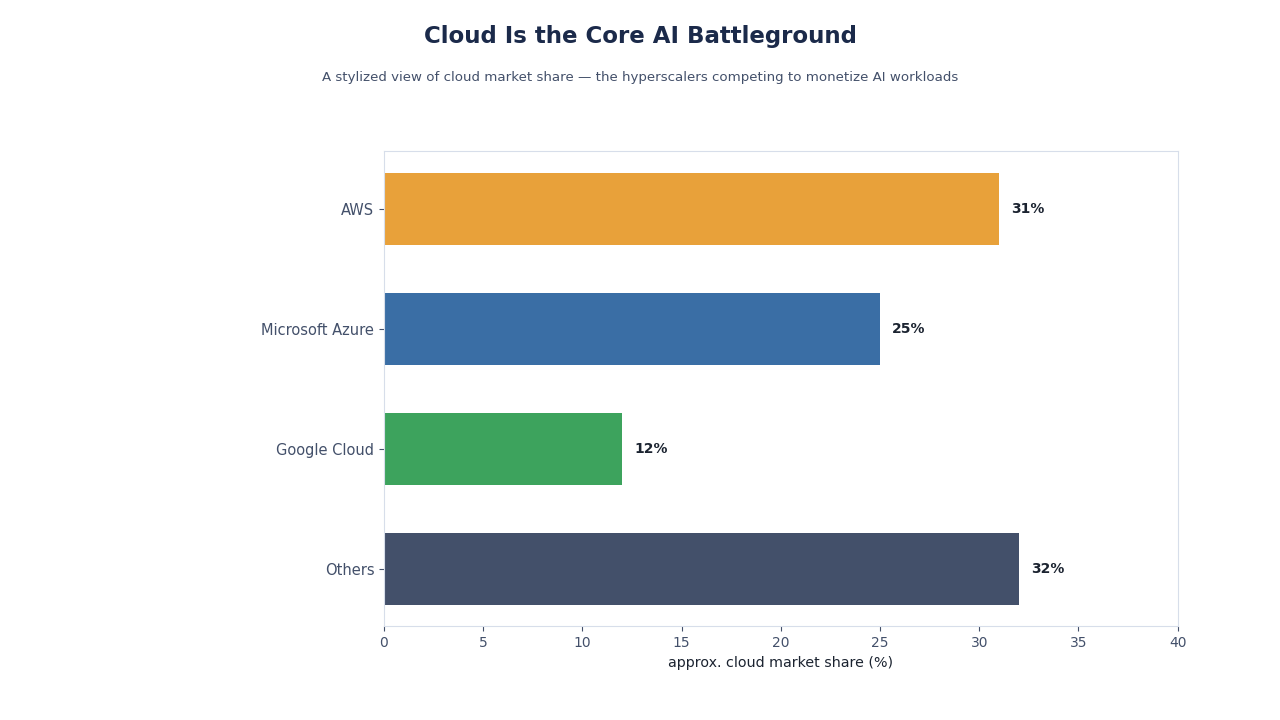
Cloud Infrastructure Is Becoming the Core AI Battleground
Cloud providers are now competing aggressively to become the operating system of AI.
The three dominant hyperscalers are:
- Amazon AWS
- Microsoft Azure
- Google Cloud
Among them, Google Cloud has increasingly positioned itself as a high-growth AI platform.
Why Google Cloud Matters
AI applications require enormous amounts of:
- Compute
- Data processing
- Storage
- Networking
- Model deployment infrastructure
Every enterprise building AI products eventually needs scalable cloud architecture.
This creates a powerful flywheel:
| AI Layer | Revenue Opportunity |
|---|---|
| GPU Infrastructure | Semiconductor suppliers |
| Cloud Compute | Hyperscalers |
| AI Models | Foundation model providers |
| Enterprise Tools | SaaS companies |
| Consumer Apps | Platform ecosystems |
Alphabet participates across nearly every layer.
That diversification is one reason investors increasingly compare Alphabet’s AI positioning to Nvidia’s dominance.
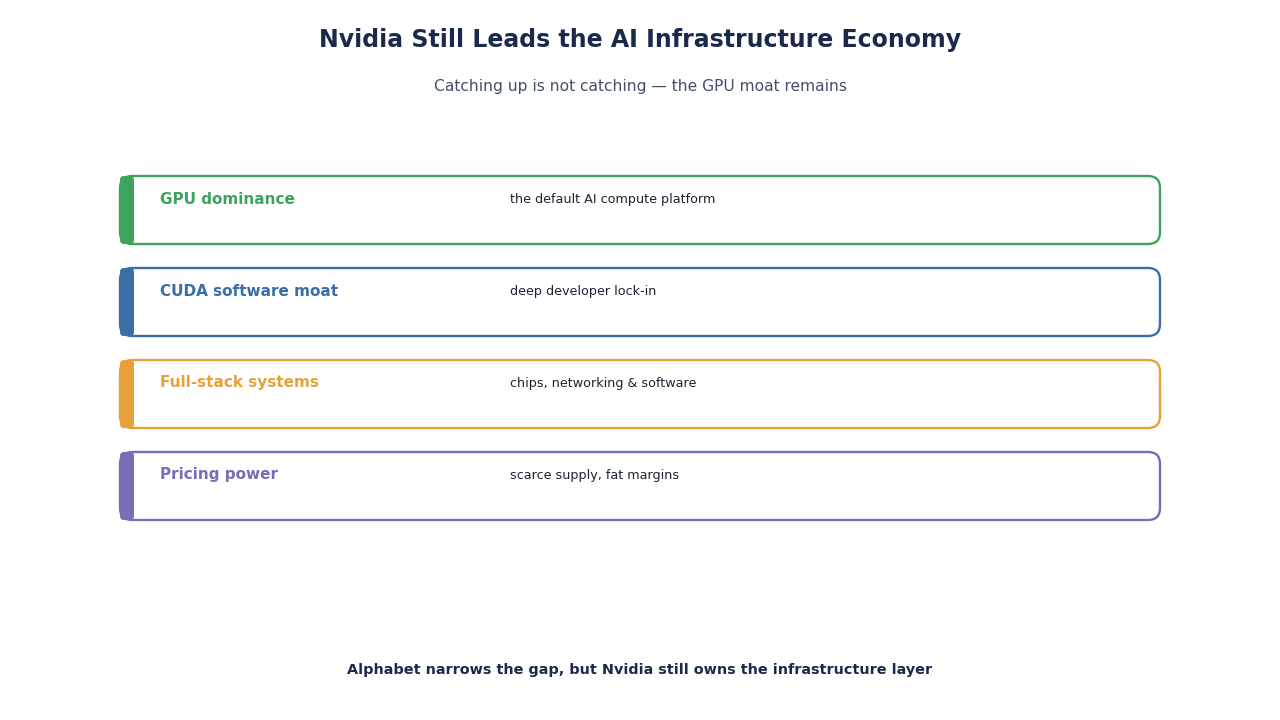
Nvidia Still Leads the AI Infrastructure Economy
Even as the AI trade broadens, Nvidia remains foundational to the ecosystem.
Its advantages include:
- CUDA software dominance
- Massive developer ecosystem
- High-end AI accelerator leadership
- Networking infrastructure expansion
- Strong hyperscaler relationships
However, the market is beginning to question whether semiconductor growth rates can remain permanently elevated.
Investors Are Watching for Several Risks
Potential Nvidia risks include:
- Margin normalization
- Increased competition from AMD and custom chips
- Hyperscaler vertical integration
- Export restrictions
- AI capex moderation
This does not necessarily imply Nvidia weakness. Instead, it suggests that AI leadership may diversify across multiple sectors.
Platforms like SimianX AI monitor these sector rotations through:
- AI-driven market breadth analysis
- Liquidity monitoring
- Earnings revision tracking
- Real-time sentiment analysis
- Technical regime detection
This allows investors to identify whether capital is rotating from semiconductors into software, cloud, or applications.
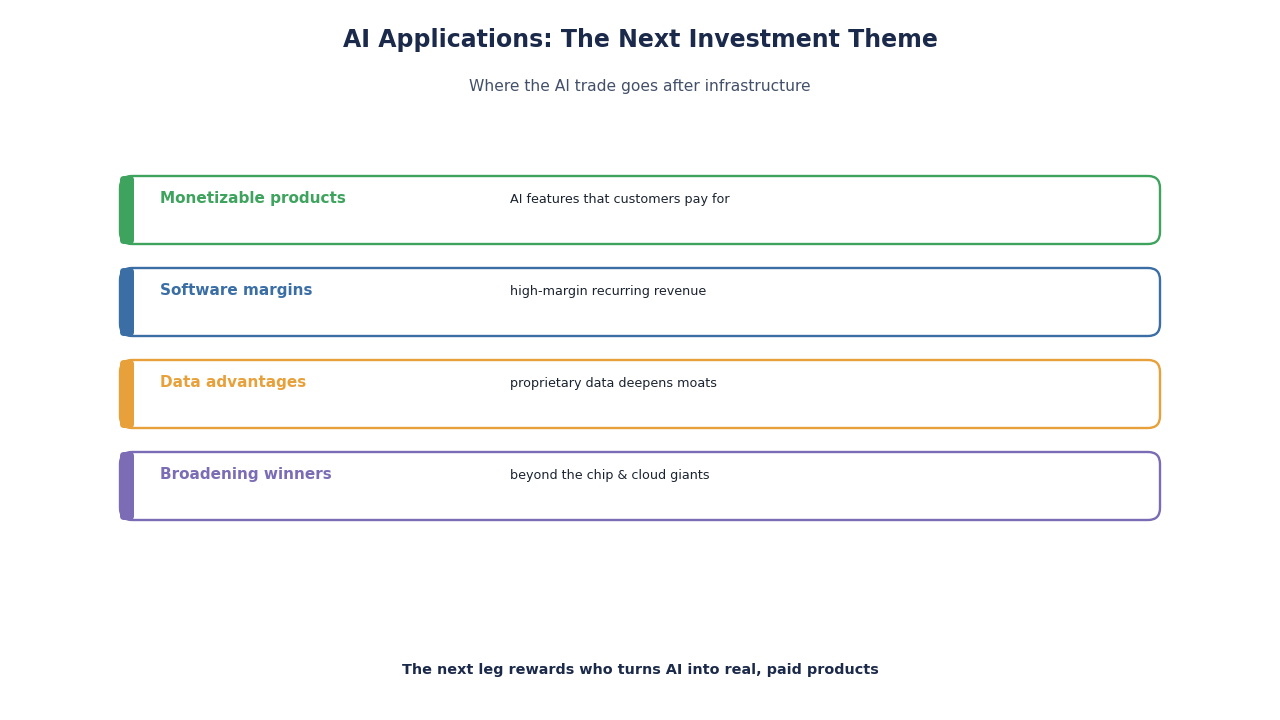
How AI Applications Are Becoming the Next Major Investment Theme
The biggest long-term value creation in AI may ultimately come from applications rather than infrastructure.
Historically, infrastructure waves eventually give way to application-layer dominance.
Examples include:
| Technology Era | Infrastructure Winners | Application Winners |
|---|---|---|
| Internet | Cisco | Google, Amazon |
| Smartphones | Qualcomm | Apple, Meta |
| Cloud Computing | AWS | SaaS platforms |
| Artificial Intelligence | Nvidia | Still emerging |
This is why Alphabet’s positioning is increasingly attractive.
It already owns:
- Search distribution
- YouTube ecosystem
- Android platform
- Enterprise cloud presence
- AI productivity suite
- Advertising network
As AI becomes embedded into everyday workflows, Alphabet has multiple monetization channels.
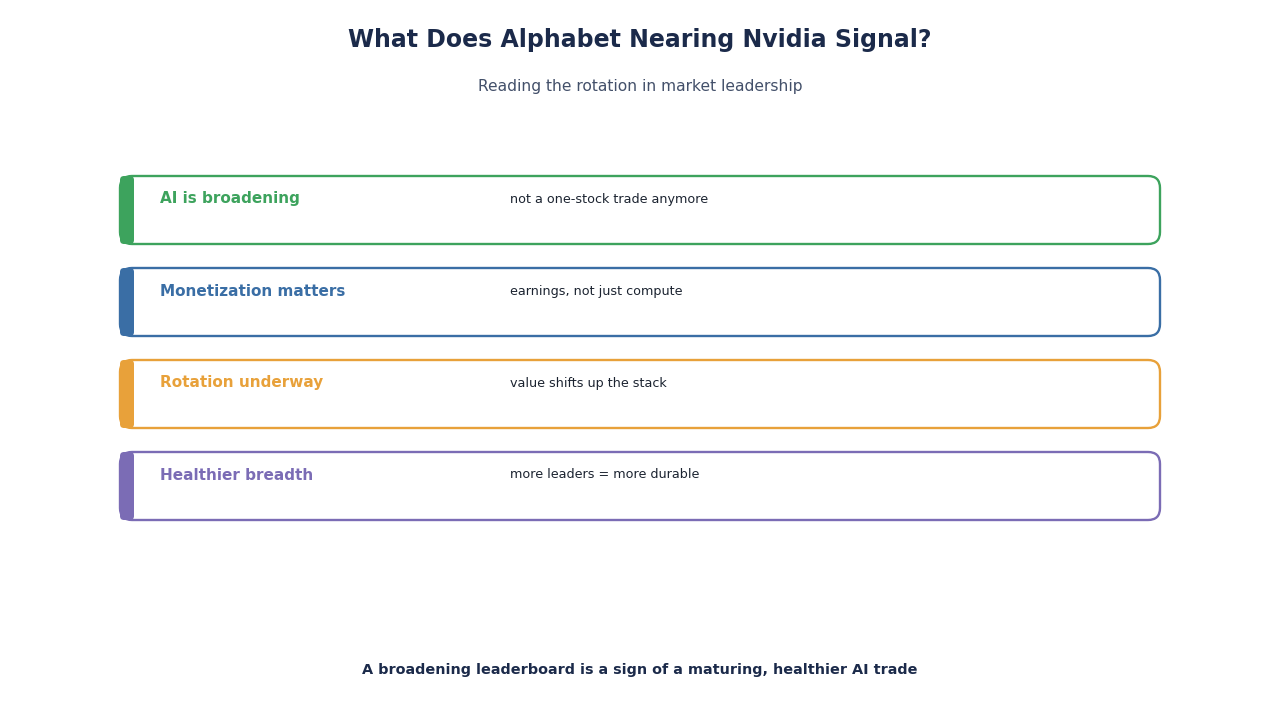
What Does Alphabet Nearing Nvidia in Market Value Signal?
The narrowing valuation gap between Alphabet and Nvidia reflects changing investor expectations.
The Market Is Pricing Several Themes
1. AI Revenue Diversification
Investors increasingly want exposure to:
- AI software
- AI applications
- Cloud infrastructure
- AI advertising
- AI productivity
Rather than only semiconductor exposure.
2. AI Monetization Is Becoming More Important
Markets now care about:
- Recurring revenue
- Enterprise adoption
- Consumer engagement
- Long-term margins
- AI-driven profitability
Alphabet scores well across these metrics.
3. AI Competition Is Expanding
The AI ecosystem is becoming more competitive:
This diversification may reduce concentration risk in the AI trade.
Investors are no longer asking only “Who sells the GPUs?” They are asking “Who owns the users, platforms, and recurring AI revenue streams?”
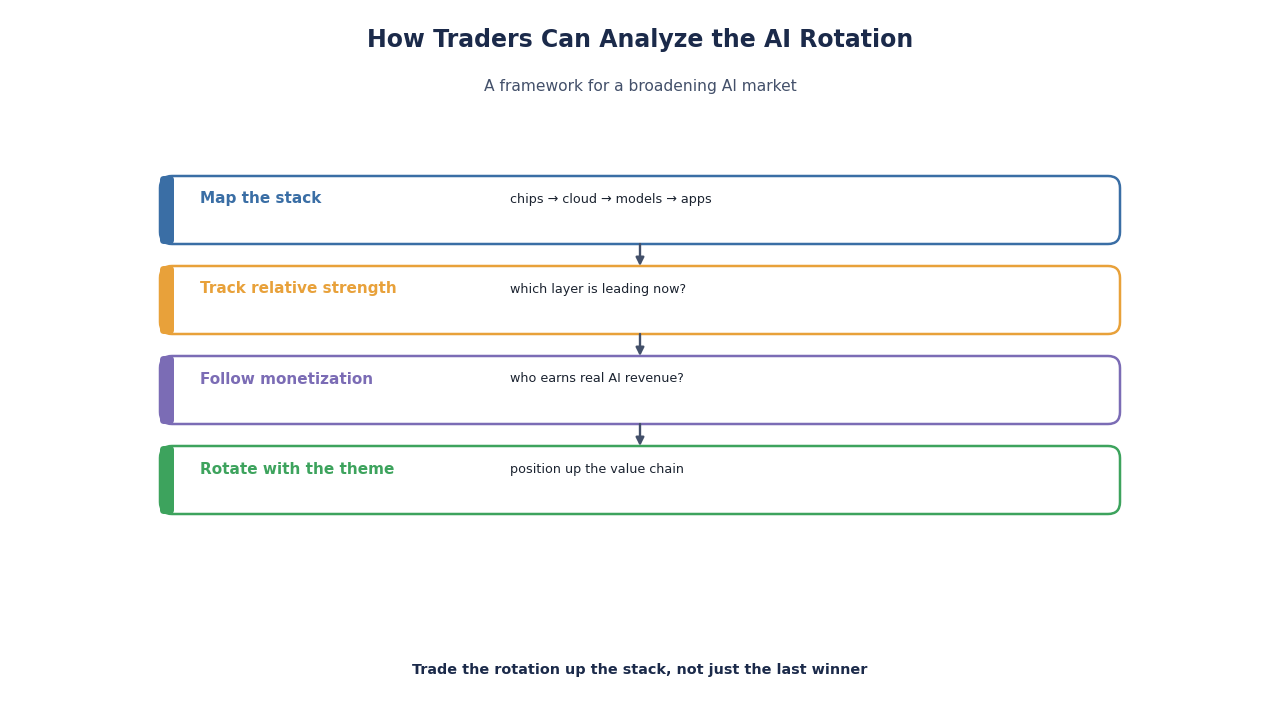
How Traders Can Analyze the AI Rotation
The AI sector is becoming increasingly complex.
Simple momentum investing may no longer be sufficient because leadership rotates rapidly between:
- Semiconductors
- Cloud providers
- Software platforms
- Cybersecurity
- AI applications
- Data infrastructure
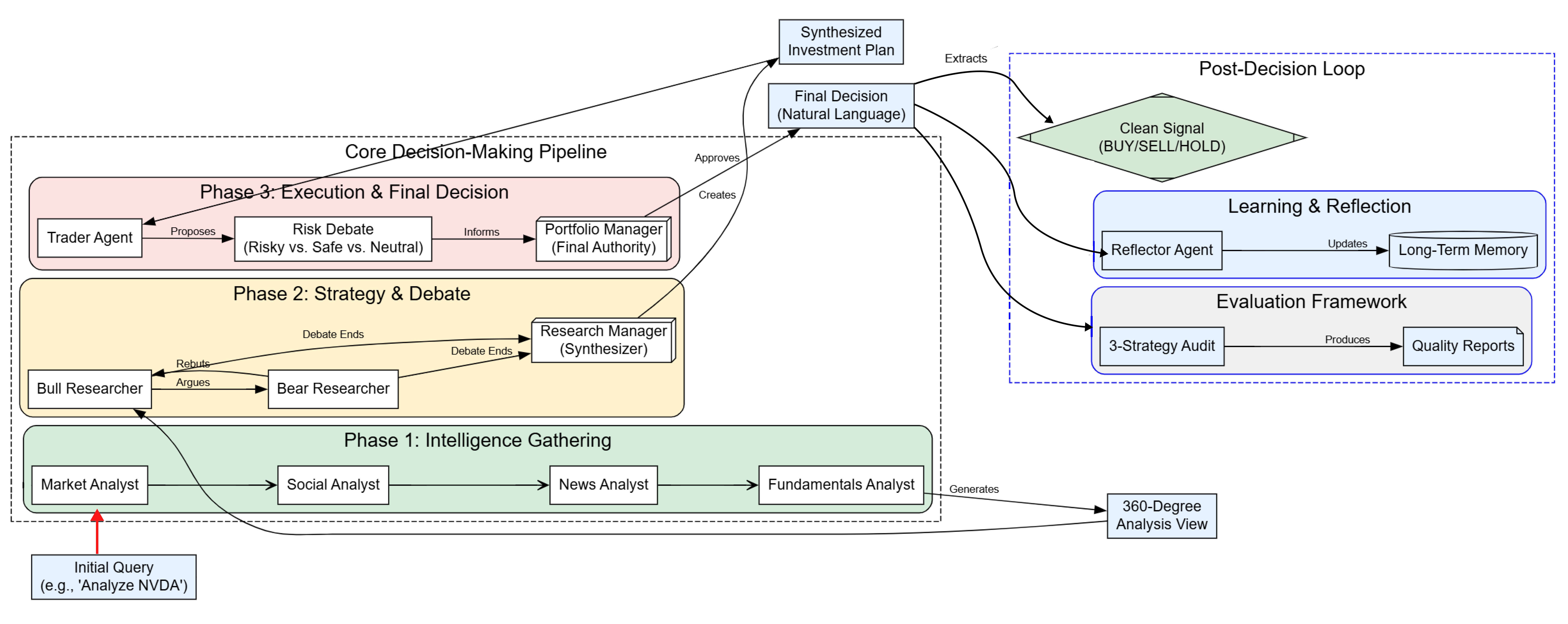
This is where multi-agent analysis frameworks become useful.
How SimianX AI Helps Analyze AI Market Rotations
SimianX AI combines multiple AI agents to evaluate:
| AI Agent | Function |
|---|---|
| Indicator Agent | Technical momentum analysis |
| Intelligence Agent | News and sentiment monitoring |
| Fundamental Agent | Earnings and macro analysis |
| Decision Agent | Multi-factor trade synthesis |
Instead of relying on isolated signals, traders can evaluate:
- Cloud earnings momentum
- AI capex trends
- Market breadth
- Risk appetite
- Volatility regimes
- Sector leadership rotation
This is increasingly important as AI transitions from a narrow semiconductor trade into a multi-sector investment cycle.
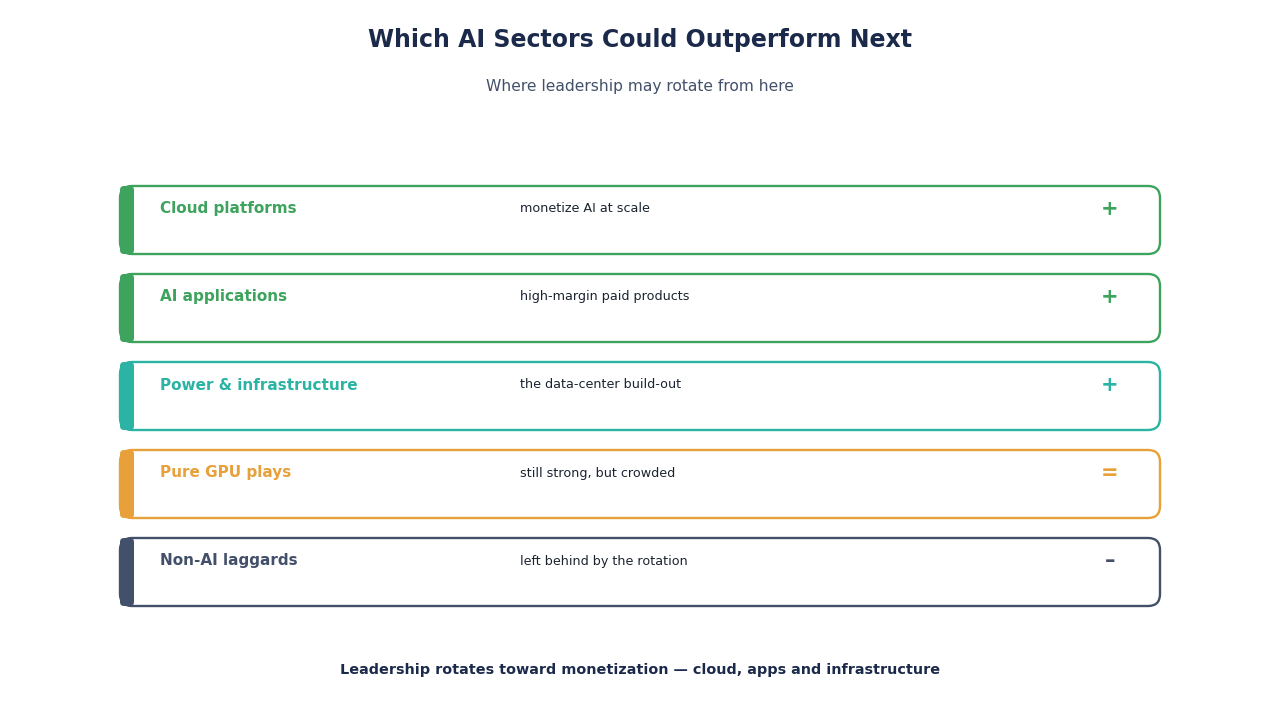
Which AI Sectors Could Outperform Next?
Several areas could benefit from the next phase of the AI expansion.
Potential AI Leaders Beyond Chips
Cloud Infrastructure
Companies enabling AI deployment at scale.
Examples:
- Alphabet
- Microsoft
- Amazon
Enterprise AI Software
AI workflow integration tools.
Examples:
- Salesforce
- ServiceNow
- Adobe
AI Data Infrastructure
Data pipelines and storage systems.
Examples:
- Snowflake
- Databricks
- MongoDB
AI Cybersecurity
AI-driven threat detection and automation.
Examples:
- CrowdStrike
- Palo Alto Networks
AI Consumer Platforms
Consumer-facing AI applications.
Examples:
- Alphabet
- Meta
- Apple
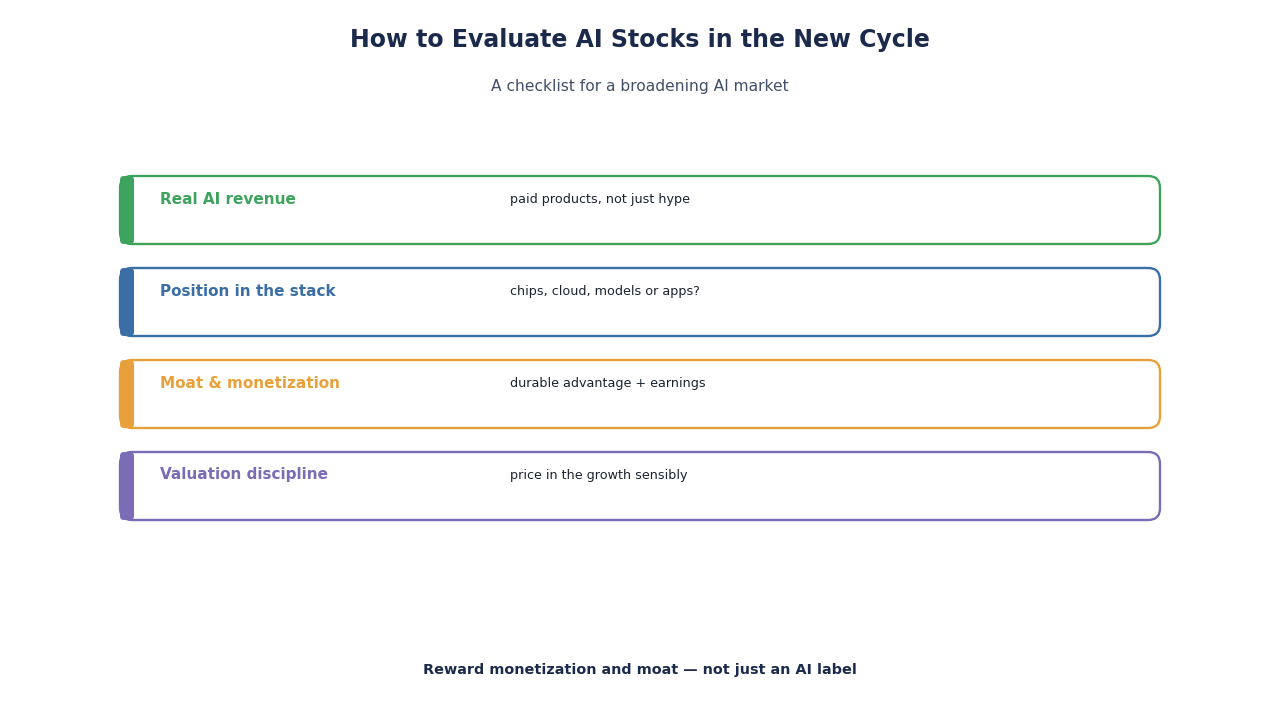
How to Evaluate AI Stocks in the New Market Cycle
Investors should increasingly focus on:
Key Metrics
- AI revenue growth
- Enterprise adoption rates
- Cloud expansion
- Margin durability
- AI monetization efficiency
- User engagement
- Infrastructure scalability
Questions Investors Should Ask
- Does the company own distribution?
- Can it monetize AI repeatedly?
- Does it control data ecosystems?
- Is AI integrated into core products?
- Does it benefit from recurring enterprise spending?
The companies best positioned for the next AI phase may not necessarily be the same companies that dominated the first infrastructure wave.
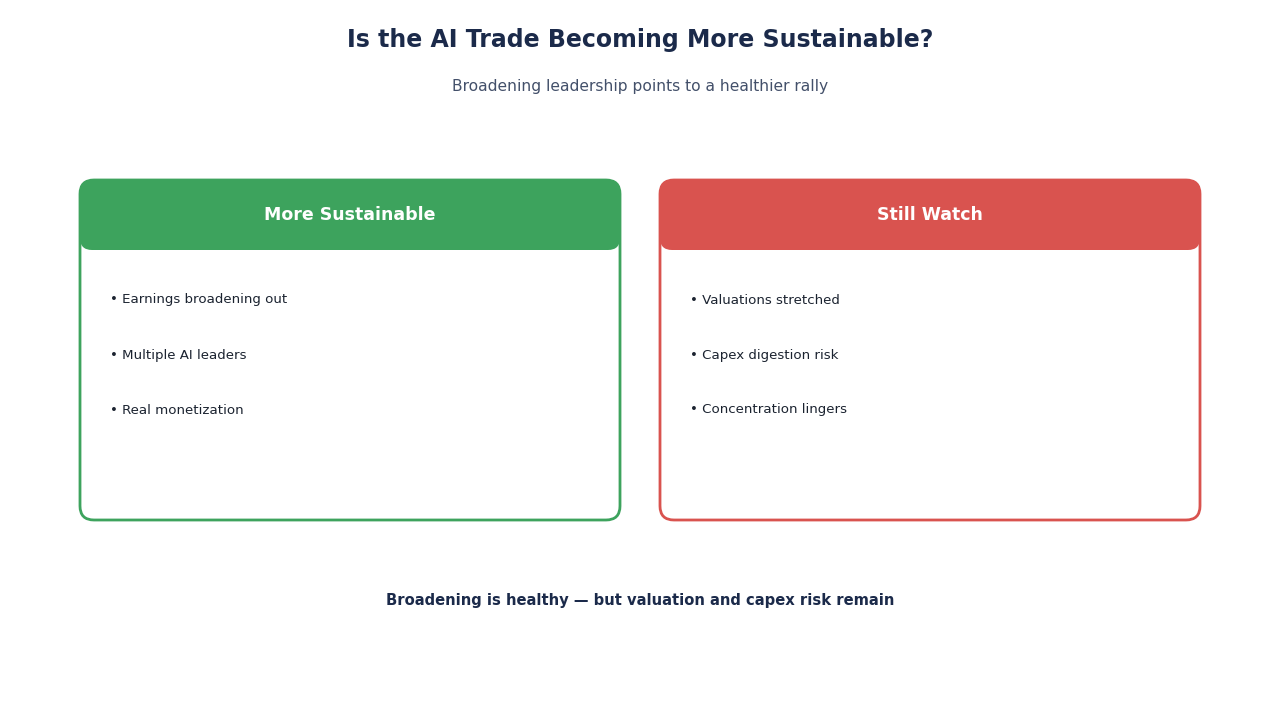
Is the AI Trade Becoming More Sustainable?
One positive development is that the AI trade is becoming fundamentally broader.
Earlier rallies often depended heavily on:
- speculative momentum,
- concentrated chip demand,
- and narrow leadership.
Now, participation is widening.
This includes:
- cloud services,
- enterprise software,
- productivity tools,
- AI advertising,
- and consumer applications.
Broader participation can potentially make the AI cycle more durable.
However, volatility remains elevated.
Risks Investors Still Need to Watch
| Risk | Impact |
|---|---|
| AI regulation | Slower deployment |
| Capex slowdown | Lower infrastructure demand |
| Economic recession | Enterprise spending cuts |
| Competitive pricing | Margin compression |
| AI commoditization | Reduced differentiation |
This is why real-time analysis tools remain important for navigating rapidly changing AI market conditions.
FAQ About Alphabet Nearing Nvidia in Market Value
Why is Alphabet catching Nvidia in market value?
Alphabet is benefiting from strong Google Cloud growth, AI integration across its products, and expanding AI monetization opportunities. Investors increasingly view AI as a broader ecosystem opportunity rather than only a semiconductor story.
Is Nvidia still the leader in AI infrastructure?
Yes. Nvidia remains the dominant provider of AI GPUs and infrastructure accelerators. However, investors are beginning to diversify exposure into cloud, software, and AI application companies.
How is the AI trade expanding beyond chips?
The AI trade is expanding into cloud computing, enterprise AI software, consumer AI applications, cybersecurity, and AI productivity tools. These sectors monetize AI adoption directly rather than only supplying infrastructure.
What are the best AI cloud stocks in 2026?
Major AI cloud leaders include Alphabet, Microsoft, and Amazon. These companies provide the infrastructure required for enterprise AI deployment and benefit from growing AI workloads.
How can traders track AI sector rotations?
Platforms like SimianX AI help traders monitor AI market rotations using multi-agent analysis that combines technical indicators, sentiment, macro trends, and real-time AI-driven signals.
Conclusion
The fact that Alphabet nears Nvidia in market value as AI trade expands beyond chips into cloud and applications represents a major shift in how investors view the future of artificial intelligence.
The first AI cycle rewarded infrastructure scarcity and semiconductor dominance. The next phase may increasingly reward companies that can deploy, monetize, and scale AI across real-world applications and enterprise ecosystems.
Alphabet’s growing momentum highlights this transition. AI is no longer just about GPUs — it is becoming about platforms, cloud ecosystems, applications, and recurring revenue models.
For investors and traders trying to navigate this rapidly evolving AI landscape, understanding sector rotation, sentiment shifts, and real-time market signals is becoming essential. Explore how SimianX AI can help analyze AI-driven market opportunities using multi-agent intelligence, real-time signals, and advanced market analytics.
The Strategic Importance of AI Ecosystems in the Next Market Cycle
One of the most underestimated developments in the AI market is the rise of closed-loop AI ecosystems. During the early phase of the AI boom, investors mainly focused on isolated components such as GPUs, AI servers, and semiconductor capacity. But as the industry matures, ecosystem control is becoming more important than raw compute alone.
Alphabet’s strength comes from the fact that it controls multiple layers simultaneously:
| Layer | Alphabet Position |
|---|---|
| Infrastructure | Google Cloud |
| AI Models | Gemini |
| Hardware | TPU chips |
| Distribution | Search, Android, YouTube |
| Monetization | Advertising & subscriptions |
| Enterprise | Workspace & Cloud APIs |
This integrated structure allows Alphabet to compound AI monetization across billions of users.
Nvidia, while dominant in compute, still relies heavily on hyperscalers and enterprise customers for demand generation. Alphabet, by contrast, owns both infrastructure and end-user ecosystems.
That distinction is increasingly important in market valuation discussions.
Why Wall Street Is Repricing AI Winners
The market narrative surrounding AI has evolved dramatically.
Phase One: Infrastructure Panic
The first phase of the AI rally was driven by fears of GPU shortages.
Key themes included:
- exploding compute demand,
- hyperscaler capex races,
- AI training clusters,
- semiconductor scarcity,
- supply chain bottlenecks.
During this phase, Nvidia became the central beneficiary.
Phase Two: AI Commercialization
The current phase is focused more on:
- monetization,
- user engagement,
- recurring subscriptions,
- AI productivity gains,
- enterprise AI deployment.
This naturally favors companies like Alphabet.
Investors are now asking:
Which companies can convert AI usage into durable long-term cash flow?
That question changes valuation frameworks significantly.
The Cloud War Is Becoming an AI Arms Race
The competition between:
- Google Cloud,
- Microsoft Azure,
- and Amazon AWS
is no longer simply about traditional cloud hosting.
It is now fundamentally about:
- AI inference infrastructure,
- model deployment,
- enterprise AI integration,
- and developer ecosystems.
Why AI Inference Matters More Than Training
Training large models is extremely expensive and relatively infrequent.
Inference, however, happens constantly.
Every AI-generated response requires:
- compute,
- memory,
- networking,
- data retrieval,
- and optimization.
As AI adoption grows globally, inference demand could become far larger than training demand over time.
That dynamic strongly benefits hyperscalers.
Google’s AI Infrastructure Advantage
Alphabet has several unique strengths:
1. TPU Vertical Integration
Google’s Tensor Processing Units allow the company to reduce dependence on external GPU vendors.
Benefits include:
- lower infrastructure costs,
- better workload optimization,
- internal scalability,
- pricing flexibility.
2. Massive Global Data Infrastructure
Google already operates one of the world’s largest internet infrastructures.
This supports:
- low latency AI deployment,
- scalable inference,
- global enterprise reach.
3. Consumer Data Ecosystem
Google products generate enormous behavioral datasets:
- Search,
- YouTube,
- Gmail,
- Maps,
- Android.
This improves AI personalization and optimization.
AI Applications Could Become More Valuable Than AI Infrastructure
History suggests application layers often capture more long-term value than infrastructure suppliers.
Historical Technology Cycles
| Technology Shift | Infrastructure Leaders | Application Leaders |
|---|---|---|
| PC Revolution | Intel | Microsoft |
| Internet Era | Cisco | |
| Mobile Era | Qualcomm | Apple |
| Cloud Era | AWS | SaaS Platforms |
| AI Era | Nvidia | Still emerging |
This framework explains why investors increasingly favor diversified AI ecosystems over single-category exposure.
Why AI Applications Have Higher Long-Term Potential
Applications generate:
- recurring subscriptions,
- customer lock-in,
- user engagement,
- network effects,
- pricing power.
Infrastructure businesses often experience:
- commoditization pressure,
- margin compression,
- cyclical capex swings.
This does not diminish Nvidia’s importance. Instead, it suggests that application-layer companies may eventually capture larger portions of AI-generated economic value.
Enterprise AI Spending Is Accelerating
One of the strongest bullish arguments for Alphabet is enterprise AI adoption.
Companies worldwide are integrating AI into:
- workflows,
- customer support,
- analytics,
- software development,
- marketing,
- cybersecurity,
- operations.
Enterprise AI Spending Drivers
| Driver | Impact |
|---|---|
| Productivity gains | Lower labor costs |
| Automation | Faster workflows |
| Data analysis | Better decision-making |
| Customer service AI | Scalable support |
| AI coding tools | Developer efficiency |
Google Cloud is increasingly positioning itself as a core infrastructure provider for these workloads.
The AI Productivity Boom Could Reshape Corporate Margins
A major reason investors remain bullish on AI is the possibility of productivity-driven margin expansion.
AI could allow companies to:
- automate repetitive work,
- reduce operational costs,
- improve sales efficiency,
- optimize supply chains,
- accelerate software development.
AI Productivity Categories
Administrative Automation
- document generation,
- email summarization,
- scheduling,
- reporting.
Knowledge Work Optimization
- research assistance,
- coding copilots,
- data analysis.
Customer Interaction
- AI chatbots,
- automated support,
- personalization engines.
Alphabet participates in many of these categories through:
- Gemini,
- Google Workspace AI,
- enterprise APIs,
- cloud integrations.
How AI Is Changing Digital Advertising
Alphabet’s advertising business remains one of the most important parts of its valuation.
AI integration could significantly improve:
- ad targeting,
- personalization,
- conversion optimization,
- user intent analysis.
AI-Driven Advertising Optimization
AI systems can now:
- predict purchasing behavior,
- optimize bidding,
- generate creatives,
- personalize recommendations.
This could enhance monetization efficiency over time.
Why This Matters for Investors
Advertising businesses benefit enormously from:
- data scale,
- engagement,
- predictive modeling.
Alphabet already dominates all three categories.
This creates a strong feedback loop:
- More users generate more data.
- More data improves AI models.
- Better AI improves ad performance.
- Better performance increases revenue.
That cycle helps explain why Alphabet is increasingly viewed as an AI platform leader rather than merely a search company.
The AI Investment Rotation Is Broadening Across Sectors
Another important trend is expanding AI participation across industries.
Earlier AI rallies were highly concentrated.
Now AI adoption is spreading into:
- healthcare,
- finance,
- cybersecurity,
- manufacturing,
- logistics,
- education,
- media.
AI Adoption by Industry
| Industry | AI Use Cases |
|---|---|
| Healthcare | diagnostics, drug discovery |
| Finance | risk modeling, fraud detection |
| Retail | personalization, logistics |
| Manufacturing | automation, predictive maintenance |
| Cybersecurity | threat detection |
| Education | AI tutoring systems |
This broadening adoption may support a longer-lasting AI investment cycle.
Why Investors Are Watching AI Capex Carefully
Despite bullish enthusiasm, AI infrastructure spending remains extremely expensive.
Major hyperscalers are spending billions on:
- data centers,
- networking,
- power infrastructure,
- GPUs,
- AI accelerators.
Questions Investors Are Asking
- Can AI monetization justify capex growth?
- Will enterprise demand remain strong?
- Can margins remain elevated?
- Is infrastructure oversupply possible?
These concerns partly explain why investors increasingly favor companies with:
- diversified revenue,
- application monetization,
- strong free cash flow.
Alphabet fits this profile better than many pure infrastructure plays.
The Energy Problem Behind the AI Boom
One underappreciated issue is AI’s enormous energy consumption.
Large AI systems require:
- high-density compute,
- cooling infrastructure,
- stable electricity supply,
- advanced networking.
AI and Energy Demand
AI data centers are becoming major electricity consumers globally.
This creates opportunities in:
- nuclear energy,
- power infrastructure,
- grid modernization,
- cooling technologies.
Why This Matters for AI Stocks
Infrastructure constraints could affect:
- deployment speed,
- operating costs,
- geographic expansion.
Companies with efficient infrastructure architectures may gain advantages.
Google’s custom TPU strategy may partially help reduce energy intensity compared with traditional GPU scaling.
The Geopolitical Dimension of the AI Trade
AI has become a strategic geopolitical issue.
Governments increasingly view AI leadership as:
- an economic advantage,
- a military advantage,
- a technological sovereignty issue.
Key AI Geopolitical Themes
Semiconductor Export Restrictions
Restrictions on advanced chip exports continue reshaping global supply chains.
Domestic AI Infrastructure Investment
Countries are investing heavily in local AI ecosystems.
AI Regulation
Governments are evaluating:
- data privacy,
- AI safety,
- model governance.
Implications for Investors
AI leadership may increasingly depend on:
- supply chain resilience,
- regulatory adaptability,
- domestic infrastructure capacity.
These geopolitical dynamics create both risks and opportunities for AI companies.
Why AI Volatility Is Likely to Remain Elevated
Even though AI remains one of the strongest structural market themes, volatility could stay high.
Reasons include:
- stretched valuations,
- earnings sensitivity,
- macro uncertainty,
- regulatory developments,
- competitive pressures.
Common AI Market Rotation Patterns
| Rotation Trigger | Market Impact |
|---|---|
| Strong earnings | Momentum expansion |
| Weak guidance | Rapid correction |
| AI capex increases | Infrastructure rally |
| Consumer AI growth | Application rally |
| Rising yields | Multiple compression |
This environment rewards disciplined risk management.
How Multi-Agent AI Analysis Improves Market Decision-Making
Traditional investing often relies on isolated indicators.
However, AI markets increasingly react simultaneously to:
- earnings,
- macro data,
- liquidity,
- sentiment,
- technical positioning,
- geopolitical headlines.
SimianX AI’s Multi-Agent Framework
SimianX AI uses multiple AI agents working together:
Indicator Agent
Analyzes:
- RSI,
- MACD,
- trend structures,
- volatility.
Intelligence Agent
Tracks:
- breaking news,
- sentiment,
- unusual events,
- social trends.
Fundamental Agent
Monitors:
- earnings revisions,
- macro liquidity,
- valuation changes.
Decision Agent
Synthesizes all signals into:
- directional bias,
- risk assessment,
- confidence scoring.
This framework becomes increasingly useful in AI-driven markets where narrative changes happen rapidly.
AI Competition Is Intensifying Rapidly
One reason investors are broadening beyond Nvidia is that competition is accelerating throughout the AI ecosystem.
Key Competitive Battlegrounds
| Category | Major Competitors |
|---|---|
| AI Models | OpenAI, Google, Anthropic |
| AI Chips | Nvidia, AMD, Intel |
| Cloud AI | AWS, Azure, Google Cloud |
| AI Search | Google, Perplexity |
| AI Productivity | Microsoft, Google |
| Consumer AI | Meta, Apple, Google |
This competition may:
- increase innovation,
- reduce margins,
- accelerate adoption.
The Long-Term Bull Case for Alphabet
Several structural trends support Alphabet’s long-term AI positioning.
1. Distribution Dominance
Alphabet owns massive user ecosystems:
- Search,
- YouTube,
- Android,
- Chrome,
- Gmail.
This creates enormous AI deployment opportunities.
2. Data Advantages
AI systems improve with:
- scale,
- engagement,
- behavioral data.
Google possesses some of the world’s largest datasets.
3. Enterprise AI Expansion
Google Cloud continues gaining traction in:
- enterprise AI workloads,
- infrastructure deployment,
- AI APIs.
4. Vertical AI Integration
Alphabet controls:
- chips,
- models,
- infrastructure,
- applications,
- monetization.
Few companies possess this level of integration.
Could the AI Trade Become the Largest Technology Cycle Since the Internet?
Many analysts increasingly believe AI could rival:
- the internet revolution,
- smartphones,
- cloud computing.
Why AI Could Be Even Larger
AI impacts:
- labor,
- productivity,
- software,
- content creation,
- automation,
- scientific research.
Unlike previous technologies, AI affects nearly every knowledge-based industry simultaneously.
Potential Long-Term Outcomes
| AI Trend | Economic Impact |
|---|---|
| Automation | Lower operational costs |
| Productivity | Higher output efficiency |
| AI assistants | Workflow acceleration |
| AI coding | Faster software development |
| AI research | Scientific breakthroughs |
This explains why investors remain aggressively focused on AI-related equities.
How Traders Can Navigate the Next AI Phase
The next stage of the AI cycle may become more selective.
Earlier rallies rewarded almost every AI-related stock.
Future leadership may depend more heavily on:
- monetization,
- margins,
- execution quality,
- adoption metrics.
Important Metrics to Watch
For Infrastructure Companies
- capex growth,
- utilization rates,
- supply constraints.
For Cloud Companies
- AI workload growth,
- enterprise adoption,
- inference revenue.
For Application Companies
- user growth,
- engagement,
- recurring subscriptions.
Risk Management Principles
- avoid excessive concentration,
- monitor valuation extremes,
- track earnings revisions,
- watch liquidity conditions.
Platforms like SimianX AI can help monitor these dynamics through real-time AI signal frameworks and multi-dimensional market analysis.
FAQ About the Expanding AI Trade Beyond Chips
Why are investors rotating from Nvidia into Alphabet?
Investors increasingly believe AI monetization will expand beyond semiconductors into cloud services, applications, and enterprise AI solutions. Alphabet benefits from owning both infrastructure and massive consumer ecosystems.
Is the AI trade still bullish in 2026?
The long-term AI trend remains strong because enterprise adoption and productivity gains continue accelerating. However, volatility and sector rotations are likely to remain significant.
Why are cloud companies benefiting from AI growth?
AI systems require massive inference infrastructure and scalable deployment environments. Cloud providers earn recurring revenue from hosting and running AI workloads.
Could AI applications outperform AI infrastructure stocks?
Historically, application-layer companies often capture larger long-term economic value than infrastructure providers. AI productivity tools and consumer applications may become major growth drivers.
How can investors track AI market rotations in real time?
Tools like SimianX AI combine technical analysis, sentiment monitoring, macro analysis, and multi-agent decision systems to help investors identify AI sector rotations and emerging opportunities.
Final Thoughts: The AI Market Is Entering a Broader, More Complex Era
The fact that Alphabet is approaching Nvidia in market value reflects something much larger than a simple valuation shift. It signals that the AI market is evolving from a narrow semiconductor boom into a broad-based technological transformation involving cloud computing, enterprise software, consumer applications, productivity tools, and real-world monetization.
Nvidia remains foundational to the AI ecosystem. But the next stage of the AI cycle may increasingly reward companies that can:
- distribute AI globally,
- monetize user engagement,
- integrate AI into workflows,
- and generate recurring revenue streams.
Alphabet’s growing AI strength reflects this transition.
For traders and investors, the challenge is no longer simply identifying “AI stocks.” The challenge is understanding which parts of the AI value chain are gaining momentum at different stages of the market cycle.
This is where advanced analytical frameworks become increasingly important. Platforms like SimianX AI help investors monitor:
- AI sector rotation,
- market breadth,
- cloud momentum,
- sentiment shifts,
- liquidity trends,
- and multi-agent trading signals in real time.
As AI adoption expands across the global economy, the companies best positioned to combine infrastructure, applications, and monetization may ultimately define the next generation of market leadership.
Related Reading
- AI Stock Boom: Nvidia Leads the Chip Supercycle Now
- AI Chip Stocks Stay Strong: AMD, Intel Drive Data Centers
- AI Stocks Pull Back: OpenAI Doubts Hit Big-Tech Earnings
- AI Spending Surges: TSMC Outlook Confirms Nvidia Demand
- Snowflake Stock Soars 36% on AI Data Cloud and AWS Deal