Mỗi vụ mất chốt rơi sâu đến đâu và hồi phục nhanh thế nào
Một stablecoin chỉ có đúng một nhiệm vụ: giữ 1 đô la. Khi nó thất bại ở nhiệm vụ đó — khi giá trượt về 0,97 đô la, hoặc 0,82, hoặc tan biến xuống một phần nhỏ của một xu — giới giao dịch gọi đó là mất chốt (depeg). Có những vụ mất chốt chỉ là cú hú vía năm phút rồi trở về chỗ cũ ngay chiều hôm ấy. Những vụ khác là vòng xoáy tử thần làm bốc hơi hàng chục tỷ đô la và không bao giờ hồi phục.
Bài viết này là một tài liệu tham chiếu duy nhất, đã được kiểm chứng cho mọi vụ mất chốt stablecoin lớn trong lịch sử tiền mã hóa, từ màn ra mắt gập ghềnh của Fei Protocol năm 2021 đến sự trở lại của các cú gãy chốt năm 2025 ở Ethena, Synthetix và First Digital. Với mỗi sự kiện, bạn có mức đáy mà nó in ra, ngày tháng, số đô la gặp rủi ro, nguyên nhân gói trong một dòng, và sự thật quan trọng nhất: nó có bao giờ trở lại 1 đô la không?
Thị trường stablecoin lần đầu vượt 300 tỷ đô la vào năm 2025, tăng từ khoảng 205 tỷ hồi đầu năm, với Tether (USDT) và USD Coin (USDC) cùng nhau chiếm khoảng 85%. Đó là tiền thật — lương, dự trữ ngân quỹ, tài sản thế chấp giao dịch — tất cả đặt trên giả định rằng 1 đô la vẫn là 1 đô la. Lịch sử dưới đây là hồ sơ vụ việc cho mọi điều có thể đi chệch với giả định ấy.
Cách đọc một vụ mất chốt
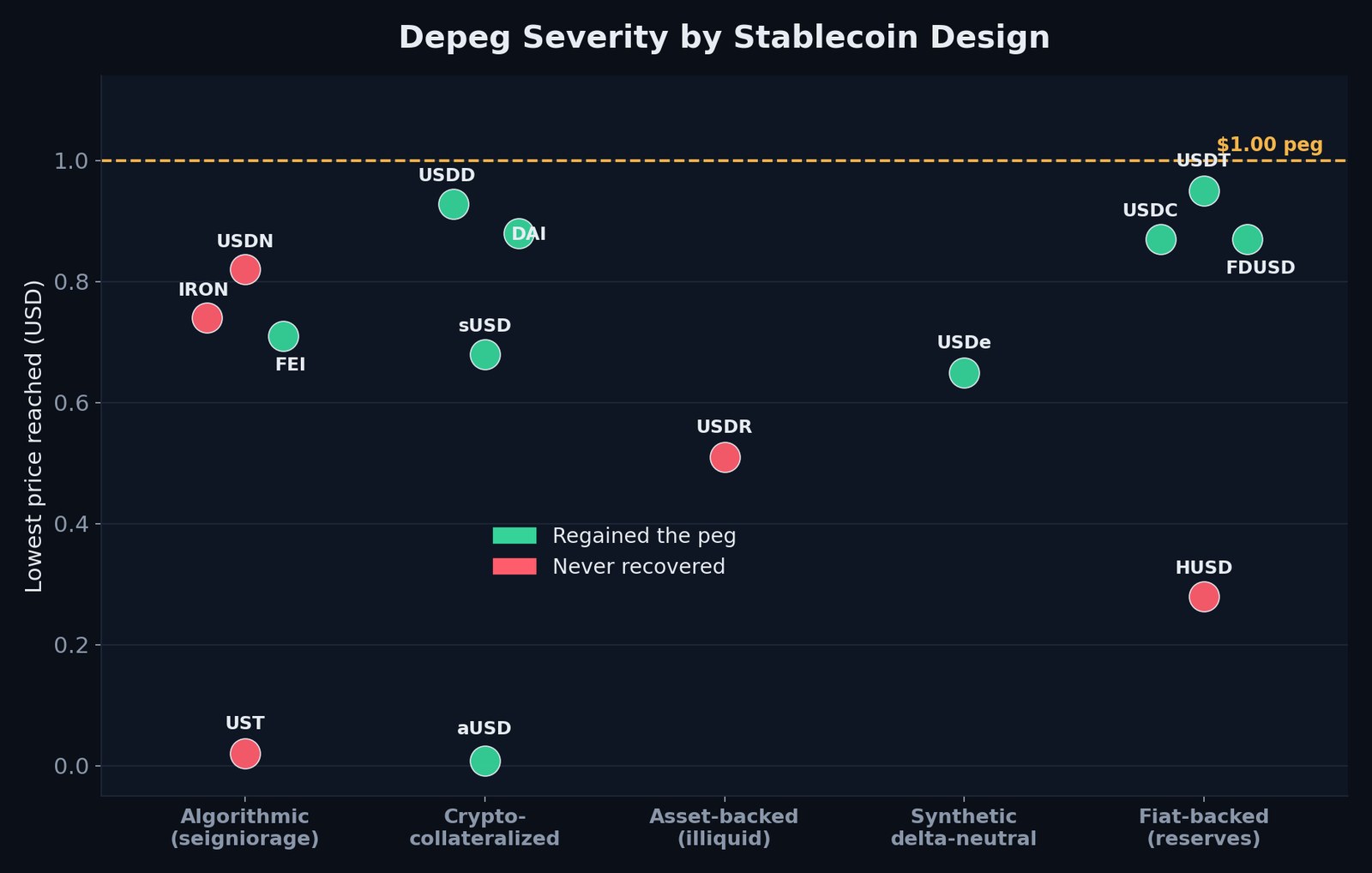
Không phải vụ mất chốt nào cũng giống nhau, và điều hữu ích nhất bạn có thể biết về một stablecoin là cái gì đứng sau nó. Khoản bảo chứng đó quyết định cách nó vỡ.
- Bảo chứng bằng tiền pháp định (USDC, USDT, FDUSD): mỗi token lẽ ra phải đổi được 1:1 lấy đô la hoặc tương đương tiền mặt trong quỹ dự trữ. Chúng mất chốt do cú sốc dự trữ hoặc đối tác — ngân hàng giữ dự trữ sụp đổ, hoặc thị trường nghi ngờ khả năng chi trả của nhà phát hành. Cú gãy thì gắt, nhưng thường nông và hồi phục được.
- Thế chấp bằng tiền mã hóa (DAI, sUSD, USDD): mỗi token được bảo chứng bằng hơn 1 đô la tiền mã hóa biến động (thế chấp vượt mức). Chúng mất chốt khi tài sản thế chấp rớt nhanh hơn tốc độ thanh lý của hệ thống, hoặc khi oracle trục trặc.
- Thuật toán / seigniorage (TerraUSD, Neutrino, IRON): rất ít hoặc không có tài sản thế chấp cứng. Chốt được bảo vệ bằng cách đúc và đốt một token cặp đôi cùng niềm tin thuần túy của thị trường. Khi niềm tin gãy, bên dưới chẳng có gì — và chính loại này tạo ra những vụ mất chốt vĩnh viễn thảm khốc.
Hãy ghi nhớ thứ bậc đó. Như dữ liệu cho thấy, một stablecoin càng xa dự trữ thật thì càng có xu hướng rớt sâu và càng ít khả năng quay lại.
Bảng tham chiếu đầy đủ các vụ mất chốt stablecoin
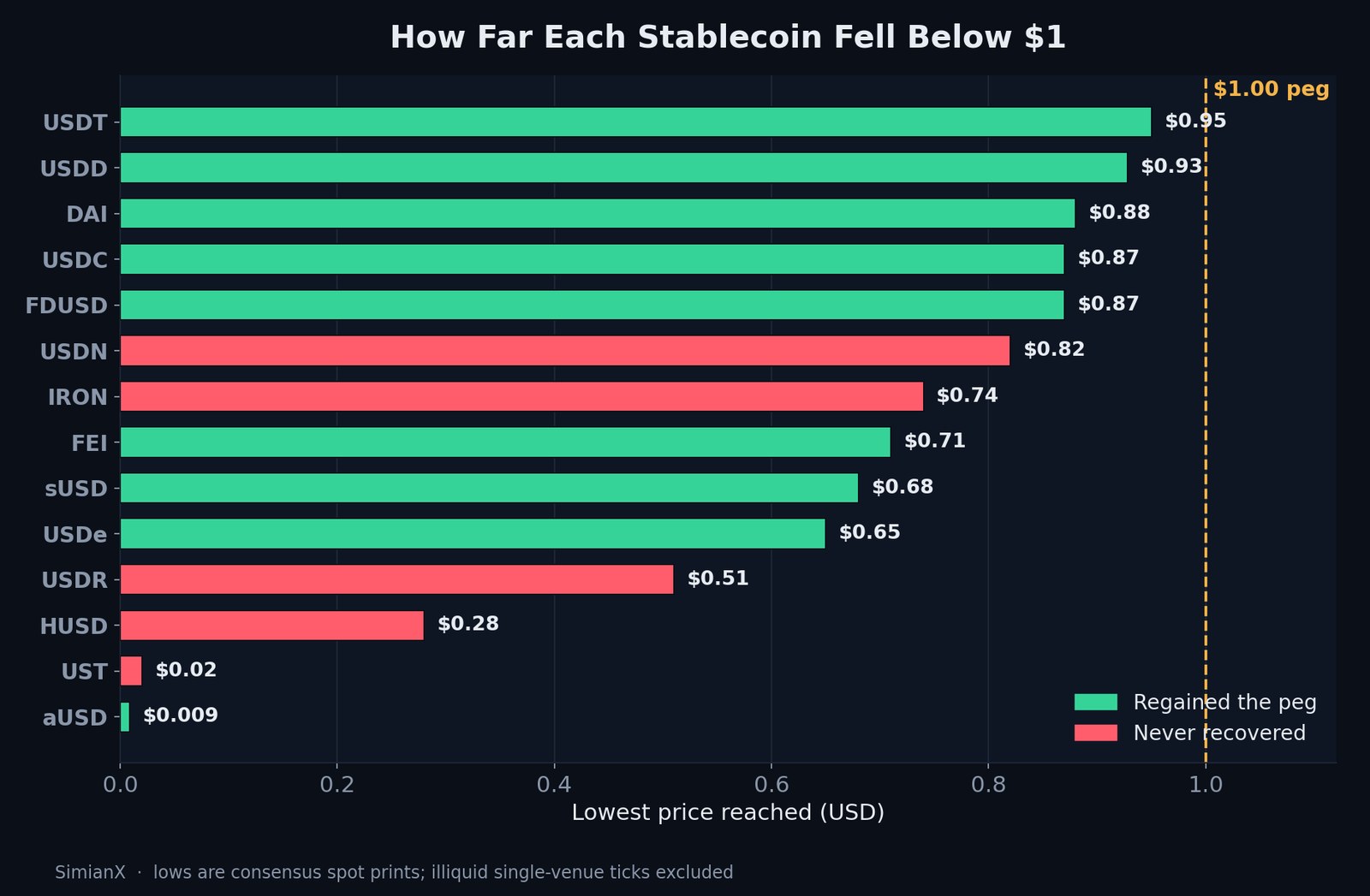
Mức đáy bên dưới là giá giao ngay đồng thuận trên các sàn có thanh khoản; các tick mỏng từ một sàn đơn lẻ (chẳng hạn mức 0,51 đô la nổi tiếng của USDT) bị loại như giá trị ngoại lai. Nơi nào con số gây tranh cãi, phần thân bài giải thích biên độ.
| Stablecoin | Loại | Ngày | Đáy | Giá trị rủi ro | Nguyên nhân | Hồi phục? |
|---|---|---|---|---|---|---|
| TerraUSD (UST) | Thuật toán | Th5 2022 | ~$0,02 | ~40 tỷ+ (UST+LUNA) | Cơn rút vốn bẻ gãy vòng đúc/đốt | Không bao giờ |
| HUSD | Pháp định (thất bại) | Th10 2022 | ~$0,28 | — | Huobi gỡ các cặp giao dịch | Không bao giờ |
| USDR | Bảo chứng tài sản | Th10 2023 | ~$0,51 | ~60–70 tr | Dự trữ bất động sản kém thanh khoản khi rút vốn | Không bao giờ |
| USDe | Tổng hợp | Th10 2025 | $0,65* | chỉ một sàn | Méo oracle của Binance trong chuỗi thanh lý | Có (giữ vững nơi khác) |
| sUSD | Tiền mã hóa | Th4 2025 | ~$0,68 | — | Gỡ một lớp đệm thế chấp (SIP-420) | Có |
| FEI | Thuật toán | Th4 2021 | ~$0,71 | ~1,3 tỷ huy động | Cơ chế tái cân bằng kích hoạt bán tháo hoảng loạn | Có |
| IRON | Thuật toán | Th6 2021 | <$0,75 | ~2 tỷ → 0 | "Cơn rút vốn DeFi đầu tiên"; TITAN về không | Không bao giờ |
| USDN | Thuật toán | Th4 2022 | ~$0,82 | vốn ~800 tr | Bảo chứng WAVES thiếu thế chấp | Không bao giờ |
| USDC | Pháp định | Th3 2023 | $0,87 | 3,3 tỷ kẹt ở SVB | Dự trữ kẹt tại Silicon Valley Bank phá sản | Có (~3 ngày) |
| FDUSD | Pháp định | Th4 2025 | ~$0,87 | mức phơi nhiễm ~2 tỷ+ | Cáo buộc mất khả năng thanh toán (bác bỏ) | Có |
| DAI | Tiền mã hóa | Th3 2023 | $0,88 | >50% bảo chứng bằng USDC | Bị kéo theo lây lan từ USDC | Có (~48 giờ) |
| USDD | Tiền mã hóa | Th6 2022 | ~$0,93 | cam kết dự trữ 2 tỷ | Áp lực bán trong đợt lây lan UST | Có (~1 tuần) |
| USDT | Pháp định | Th5 2022 | ~$0,95 | ~17 tỷ+ được đổi | Cú sốc niềm tin từ sự sụp đổ của UST | Có |
*Mức 0,65 đô la của USDe là riêng của oracle nội bộ Binance trong chuỗi thanh lý tháng 10/2025; token này giữ vững chốt trên các sàn khác, và Ethena phản đối nhãn "depeg".
Vòng xoáy tử thần: những vụ mất chốt không bao giờ trở lại
Các thất bại vĩnh viễn gần như tụ hết vào một thiết kế: stablecoin thuật toán không có dự trữ thật.
Trường hợp điển hình là TerraUSD (UST). Tháng 5/2022, nó là stablecoin lớn thứ ba hành tinh, neo bằng cơ chế hoán đổi 1 đô la đổi 1 đô la với token chị em LUNA. Khi một làn sóng rút vốn ập đến, giao thức đúc LUNA ngày càng nhiều để hấp thụ — nguồn cung LUNA siêu lạm phát từ khoảng 350 triệu token lên hơn 6,5 nghìn tỷ, giá sụp đổ, và cơ chế tự ăn chính mình trong cái nay đã thành "vòng xoáy tử thần" kinh điển. UST trượt về khoảng 0,10 đô la trong vài ngày rồi xuống vài xu. Mức tàn phá từ đỉnh đến đáy vào khoảng 40 tỷ đô la (con số được dẫn trong vụ án lừa đảo của nhà sáng lập Do Kwon), và thị trường tiền mã hóa rộng lớn hơn mất ước tính 400 tỷ trong đợt lây lan. UST không bao giờ hồi phục; nay nó giao dịch dưới tên "USTC" ở một phần nhỏ của một xu. Chainalysis có một bản mổ xẻ chi tiết.
UST không phải vụ nổ thuật toán đầu tiên, chỉ là vụ lớn nhất. Một năm trước đó, IRON Finance hứng chịu cái mà chính đội ngũ của nó gọi là “cơn rút tiền ngân hàng quy mô lớn đầu tiên của tiền mã hóa”. IRON một phần được bảo chứng bằng token đối tác biến động TITAN; ngày 16/6/2021, các tay nắm giữ lớn rút thanh khoản và xả TITAN, khiến nó lao từ khoảng 60 đô la xuống thực chất là không trong vài giờ. Giá trị giao thức bốc hơi từ khoảng 2 tỷ xuống còn không. Cục Dự trữ Liên bang Mỹ sau đó dùng IRON làm nghiên cứu điển hình về cách stablecoin thuật toán bị rút vốn.
Neutrino USD (USDN), bảo chứng bằng token WAVES, gãy chốt về khoảng 0,82 đô la vào tháng 4/2022 và mất chốt nhiều lần suốt năm, chứng minh thiết kế thiếu thế chấp kinh niên. Cuối cùng nó bị bỏ và đổi tên; nó không bao giờ giao dịch bền vững ở 1 đô la nữa.
Hai thất bại vĩnh viễn khác đến từ những thiết kế rất khác nhau — bằng chứng rằng bạn không cần phải "thuật toán" mới chết được. HUSD, trên danh nghĩa bảo chứng bằng pháp định, rớt khoảng 72% về 0,28 đô la vào cuối tháng 10/2022 sau khi sàn Huobi gỡ các cặp giao dịch của nó sau một đợt đổi chủ — không có sàn nào đỡ giá, chốt cứ thế bốc hơi. Và USD Real (USDR), phần lớn bảo chứng bằng bất động sản token hóa, sụp về khoảng 0,51 đô la vào tháng 10/2023 khi cơn rút vốn vét cạn khoản dự trữ thanh khoản duy nhất của nó (ngân quỹ khoảng 12 triệu bằng DAI) trong bốn giờ, để lại người nắm giữ trơ mắt nhìn bất động sản không thể bán theo yêu cầu.
Khuôn mẫu thì tàn khốc nhưng rõ ràng: khi thứ đứng sau một stablecoin kém thanh khoản, biến động mạnh, hoặc hư ảo, cơn rút vốn tìm thấy đáy rất nhanh.
Những cú hú vía bật lại: các vụ mất chốt đã hồi phục
Giờ đến nửa yên lòng hơn của sổ cái — những cú gãy chốt trông kinh hoàng một hai ngày rồi lành lại. Gần như tất cả là các đồng bảo chứng pháp định hoặc thế chấp vượt mức đúng đắn bị một cú sốc bên ngoài giáng vào, chứ không phải lỗi thiết kế.
Bài học nhất là cú gãy của USDC vào tháng 3/2023. Khi Silicon Valley Bank sụp đổ, Circle tiết lộ 3,3 tỷ đô la dự trữ tiền mặt của USDC — khoảng 8% khoản bảo chứng — bị kẹt tại ngân hàng. Cơn rút vốn hoảng loạn đẩy USDC về 0,87 đô la vào rạng sáng 11/3/2023. Nhưng khoản bảo chứng là thật: ngay khi nhà quản lý Mỹ bảo lãnh toàn bộ tiền gửi SVB, USDC hoàn toàn trở về 1 đô la trong khoảng ba ngày. Bài đưa tin của CoinDesk ghi lại dòng thời gian. Sự kiện này cũng kéo DAI xuống 0,88 đô la, vì hơn một nửa tài sản thế chấp của DAI khi đó chính là USDC — một mắt xích lây lan kinh điển mà MakerDAO sau đó cắt giảm.
Ngay cả Tether (USDT), mục tiêu muôn thuở của nghi ngờ về dự trữ, cũng đã chao đảo và hồi phục mỗi lần. Mức giá tệ nhất của nó trên các sàn thanh khoản vào khoảng 0,95 đô la trong đợt lây lan UST tháng 5/2022, khi Tether xử lý ước tính hơn 17 tỷ yêu cầu đổi mà không hề tạm dừng. Nó từng có cú rớt tương tự về ~0,92 đô la vào tháng 10/2018. Lần nào nó cũng trở về mệnh giá.
Một vài đồng thế chấp bằng tiền mã hóa cũng vào cột hồi phục. USDD của Tron rớt về khoảng 0,93 đô la vào tháng 6/2022 trước khi quỹ dự trữ cam kết tung tới 2 tỷ để bảo vệ chốt. Và aUSD của Acala dính một vụ khai thác kỳ quặc vào tháng 8/2022 — một bể thanh khoản cấu hình sai cho phép người dùng đúc 1,29 tỷ aUSD từ hư không, dìm nó về khoảng 0,009 đô la. Acala đóng băng mạng lưới, cộng đồng bỏ phiếu đốt số token sai, và chốt leo trở lại gần 1 đô la. Ngay cả Fei Protocol (FEI), ra mắt tháng 4/2021 với 1,3 tỷ huy động được rồi chìm ngay xuống 0,71 đô la khi ưu đãi "tái cân bằng" của nó phản tác dụng, cũng bò lại 1 đô la vào đầu tháng 5 — dù sau đó đóng cửa vì lý do không liên quan.
Bài học từ các vụ hồi phục là tấm gương phản chiếu của vòng xoáy tử thần: dự trữ thật, thanh khoản mới là thứ đưa chốt về nhà. Một đồng đổi được 1:1 lấy đô la sống sót qua hoảng loạn; một stablecoin chỉ đổi được lấy chính token đang rớt của nó thì không.
Vụ "mất chốt" hóa ra không phải: BUSD
Một sự kiện liên tục bị phân loại sai và đáng được đính chính. Tháng 2/2023, Binance USD (BUSD) — khi đó là stablecoin lớn thứ ba, quy mô khoảng 16 tỷ — bị dừng trên thực tế khi cơ quan quản lý New York lệnh cho nhà phát hành Paxos ngừng đúc token mới. BUSD chao đảo về khoảng 0,995 đô la theo tin này và hồi phục trong vài giờ.
Đó là một cuộc đóng cửa có trật tự do quy định, không phải một cú sụp chốt. BUSD vẫn được bảo chứng đầy đủ và đổi được suốt thời gian đó; Paxos đã đổi 7,9 tỷ đô la trong một tháng mà không gây xáo trộn thị trường. Đó là ví dụ hiếm hoi về một stablecoin lớn kết thúc một cách đường hoàng — đáng nhớ chính vì nó quá khác mọi thứ còn lại trong danh sách này.
Sự trở lại năm 2025: mất chốt quay về
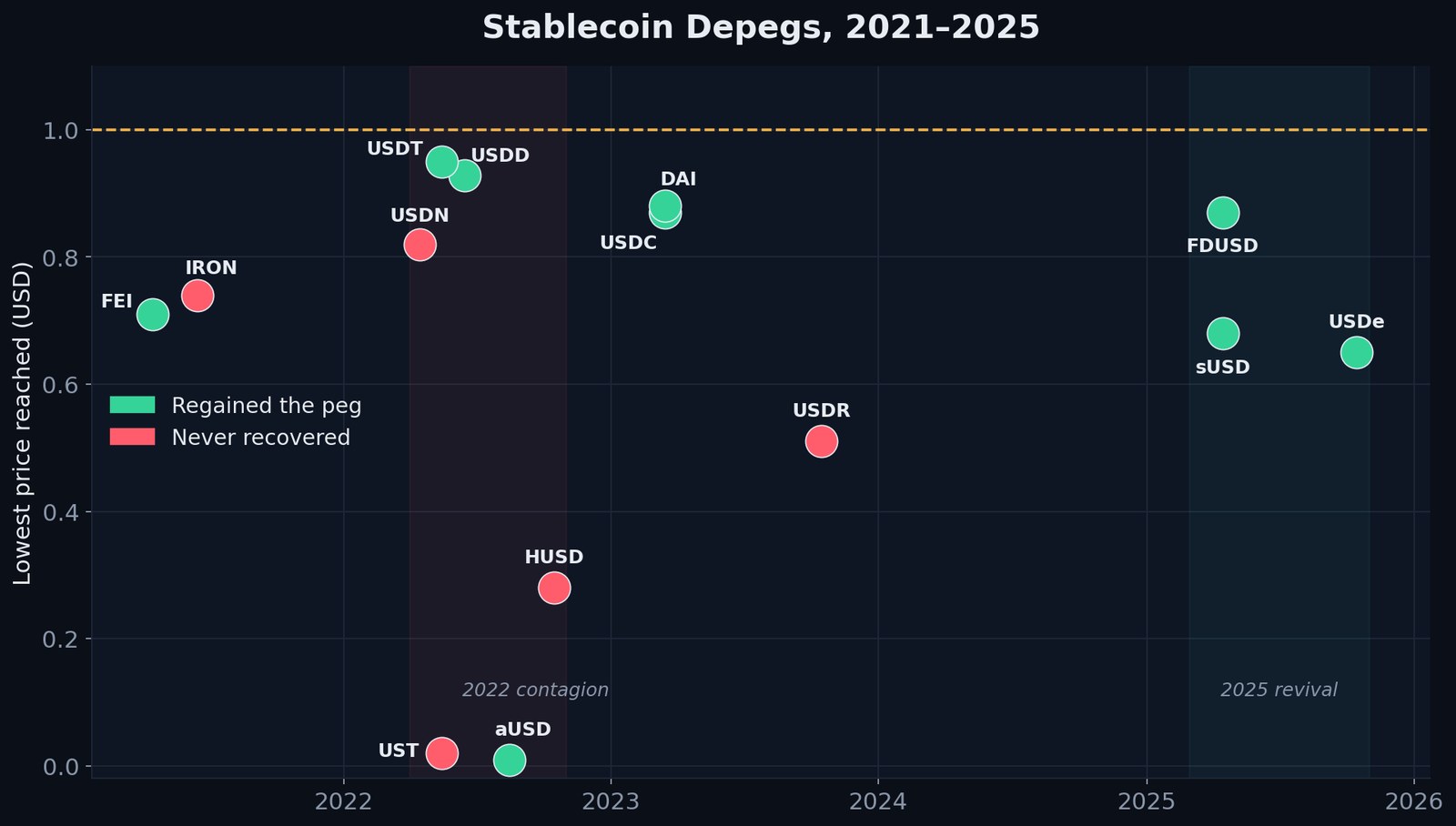
Sau hai năm yên ả khi USDT và USDC gần như không nhúc nhích, các cú gãy chốt trở lại vào năm 2025 — lần này tập trung vào những thiết kế mới hơn, lạ hơn.
Tháng 4/2025, First Digital USD (FDUSD) trượt về khoảng 0,87 đô la sau khi Justin Sun của Tron công khai cáo buộc nhà phát hành mất khả năng thanh toán. First Digital bác bỏ và đổi khoảng 26 triệu theo yêu cầu, và chốt hồi phục — một lời nhắc rằng với các đồng bảo chứng pháp định, niềm tin là cả cuộc chơi. Cùng tháng, sUSD của Synthetix rớt về khoảng 0,68 đô la sau khi một thay đổi quản trị (SIP-420) gỡ một lớp đệm thế chấp; nó ổn định lại nhưng giao dịch dưới chốt suốt nhiều tuần.
Sự kiện được bàn nhiều nhất năm 2025 là USDe của Ethena, một "đô la tổng hợp" giữ chốt bằng phòng hộ trung tính delta thay vì tiền mặt. Trong chuỗi thanh lý khổng lồ khoảng 19 tỷ ngày 10–11/10/2025, USDe in ra 0,65 đô la trên Binance — nhưng đó là méo oracle riêng của sàn đó. USDe giữ vững chốt trên các sàn khác, và Ethena bác bỏ việc một cú mất chốt thật sự đã xảy ra. (Trong cùng chuỗi đó, crvUSD của Curve có lúc giao dịch trên chốt, ở 1,02 đô la, trước khi tự điều chỉnh.) Bài học: khi thiết kế stablecoin càng tinh khôn, các kiểu hỏng càng tinh vi — và bạn giao dịch ở đâu ngày càng quan trọng ngang với việc bạn nắm giữ cái gì.
Điểm chung của mọi vụ mất chốt — và cách nhìn trước nó
Bóc hết chi tiết thì mọi vụ mất chốt trong danh sách này đều cùng một vần. Một cú sốc ập đến, người nắm giữ đổ xô ra cửa cùng lúc, và câu hỏi trở nên thuần túy máy móc: có đủ khoản bảo chứng thanh khoản, đáng tin để trả cho tất cả những ai muốn rút không? Nếu có, đồng tiền hú vía rồi hồi phục. Nếu không, nó vào vòng xoáy.
Vì thế các dấu hiệu cảnh báo sớm đều giống nhau trong mọi trường hợp:
- Chất lượng bảo chứng. Tiền mặt và trái phiếu kho bạc ngắn hạn thì vững; một token tiền mã hóa biến động khác thì không; bất động sản token hóa không bán nổi trong một buổi chiều là tệ nhất khi rút vốn.
- Ma sát đổi token. Một chốt chỉ mạnh bằng khả năng đổi 1:1, tức thì, ở quy mô lớn. USDR chết vì dự trữ thanh khoản cạn; USDC sống vì dự trữ của nó, dù kẹt một lúc, thật sự tồn tại.
- Rủi ro tập trung và oracle. DAI rớt vì một nửa khoản bảo chứng của nó là một đồng khác. USDe "rớt" vì nguồn cấp giá của một sàn trục trặc. Điểm hỏng đơn lẻ bẻ gãy chốt.
- Lợi suất đẹp đến mức khó tin. Anchor Protocol trả ~20% cho khoản gửi UST. Lợi suất quá cao, được trợ giá, thường là dấu hiệu một stablecoin đang mua niềm tin mà nó không kham nổi.
Giám sát tất cả những điều đó theo thời gian thực trên hàng chục stablecoin, sàn giao dịch và bể DeFi đúng là loại việc không vừa với một màn hình của con người. Đó là lý do SimianX dựng công cụ quanh nó: Phòng Điều hành AI tiền mã hóa theo dõi trực tiếp dòng lệnh, funding và áp lực thanh khoản trên các sàn lớn, bảng xếp hạng mô hình AI chạy hơn 30 mô hình trên dữ liệu thị trường thật để bạn thấy các bộ máy khác nhau đọc cùng một rủi ro ra sao, và autopilot có thể hành động theo những tín hiệu đó suốt ngày đêm. Chúng tôi từng viết về dùng AI để cảnh báo sớm rủi ro thanh khoản và mất chốt DeFi và về bức tranh stablecoin hướng tới 2026 — cả hai đều là bài đọc đồng hành hữu ích cho tài liệu tham chiếu này.
Câu hỏi thường gặp
Một stablecoin "mất chốt" nghĩa là gì?
Một stablecoin được thiết kế để bám theo một giá trị cố định, gần như luôn là 1 đô la. Mất chốt là bất kỳ độ lệch đáng kể và kéo dài nào khỏi mục tiêu đó — trượt về 0,97 đô la là mất chốt nhẹ; sụp về 0,10 đô la là thảm khốc. Những độ lệch nhỏ xíu, ngắn ngủi cỡ một phần của một xu xảy ra liên tục và là nhiễu thị trường bình thường.
Vụ mất chốt stablecoin nào tệ nhất?
TerraUSD (UST) tháng 5/2022, bỏ xa phần còn lại. Nó xóa khoảng 40 tỷ đô la giá trị giữa UST và token chị em LUNA, gây ra ước tính 400 tỷ thiệt hại tiền mã hóa rộng hơn, và không bao giờ hồi phục. Nó vẫn là ví dụ kinh điển vì sao stablecoin thuần thuật toán mong manh.
USDC hay USDT đã bao giờ mất chốt vĩnh viễn chưa?
Chưa. Cả hai đều từng chao đảo — USDC về 0,87 đô la trong khủng hoảng Silicon Valley Bank 2023, USDT về khoảng 0,95 đô la trong đợt lây lan Terra 2022 — nhưng cả hai đều trở về 1 đô la trong vài ngày mỗi lần, vì cả hai được bảo chứng bằng dự trữ thật, đổi được.
Stablecoin thuật toán giờ đã an toàn hơn chưa?
Một số thiết kế mới hơn (loại tổng hợp trung tính delta như USDe, mô hình thế chấp vượt mức) vững hơn cách tiếp cận seigniorage thuần của UST, nhưng các cú gãy chốt 2025 cho thấy nhóm này vẫn mang rủi ro cao. Quy luật lịch sử vẫn đúng: một stablecoin càng ít bảo chứng cứng, thanh khoản thì càng nguy hiểm khi hoảng loạn.
Làm sao giám sát rủi ro stablecoin và DeFi theo thời gian thực?
Theo dõi chất lượng bảo chứng, năng lực đổi token, mức tập trung tài sản thế chấp và lợi suất không bền vững. Công cụ tự động giúp ích — phòng điều hành AI và bảng xếp hạng mô hình của SimianX liên tục phơi bày áp lực thanh khoản và funding xuyên sàn, nơi phần lớn vụ mất chốt lộ diện đầu tiên.
Tài liệu tham chiếu này tổng hợp giá giao ngay đồng thuận từ các nhà cung cấp dữ liệu lớn (CoinDesk, CoinGecko, Chainalysis và công bố của nhà phát hành); giá mỏng từ một sàn đơn lẻ bị loại. Các con số giá trị rủi ro phản ánh ước tính từ đỉnh đến đáy và tuyên bố của nhà phát hành tại thời điểm mỗi sự kiện. Không điều gì ở đây là lời khuyên tài chính — rủi ro stablecoin là có thật, và dự trữ có thể thay đổi sau khi đăng.