
EP-3 Incident 2001 Stock Market Impact: -4.9% Drawdown, 3-Day Bottom, 7-Day Recovery
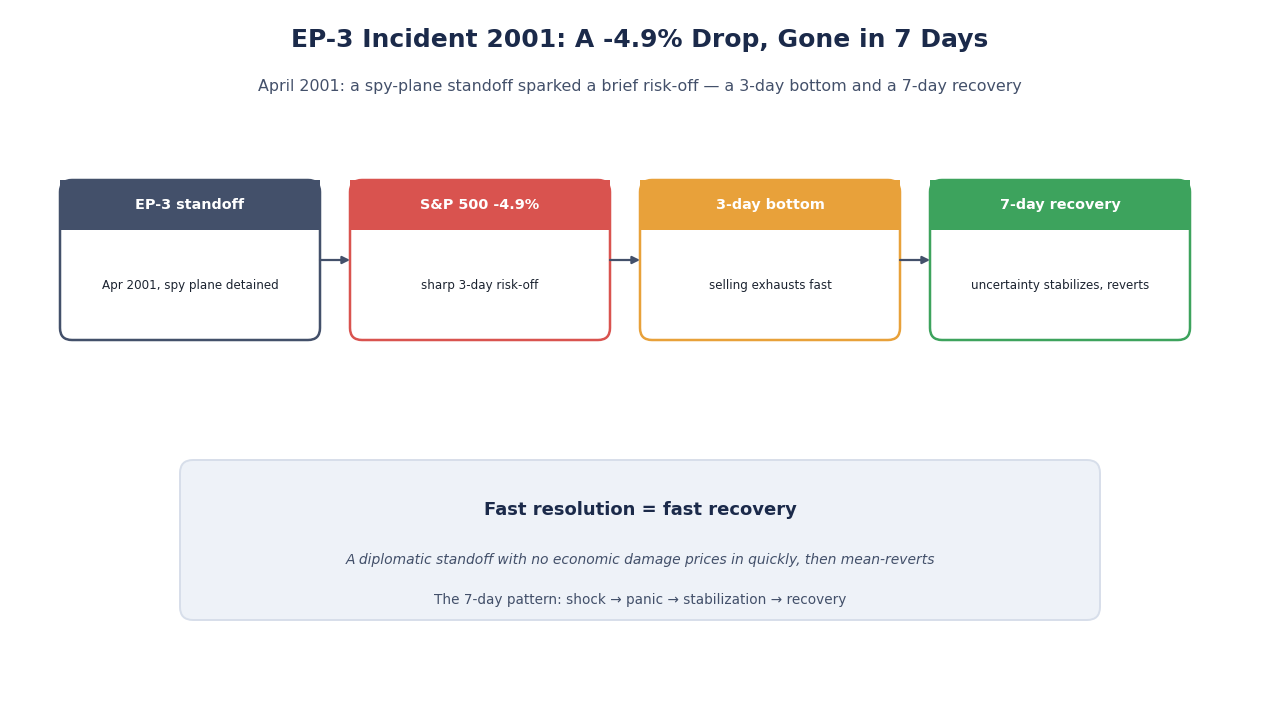
The EP-3 Incident 2001 stock market impact offers a powerful case study in how financial markets react to sudden geopolitical shocks—and more importantly, how quickly they recover. In April 2001, a U.S. Navy EP-3 reconnaissance aircraft collided with a Chinese fighter jet, triggering a diplomatic crisis that briefly rattled global markets.
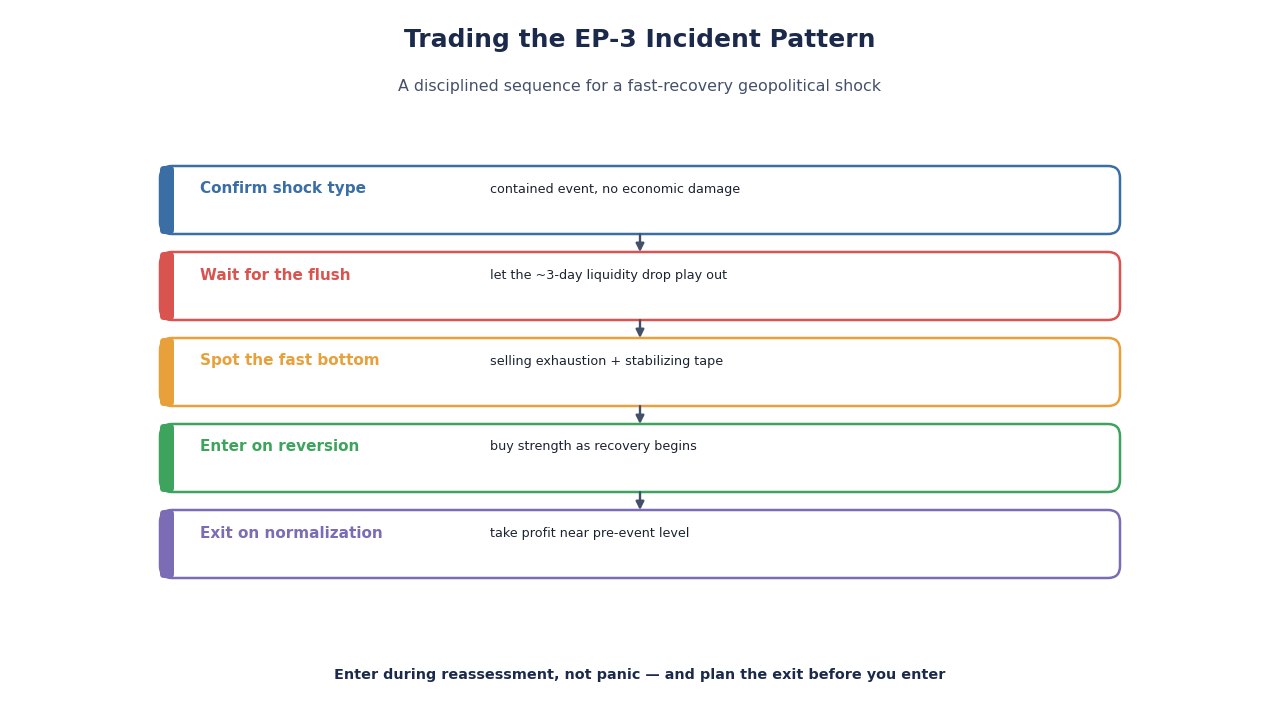
For traders and investors, this event provides a highly structured short-term drawdown and recovery pattern: approximately -4.9% decline, a 3-day bottom, and a 7-day recovery window. Understanding this pattern is critical for navigating similar modern geopolitical risks—and this is where tools like SimianX AI become invaluable, offering real-time signal integration and structured decision-making.
Understanding the EP-3 Incident and Market Reaction
The EP-3 Incident occurred on April 1, 2001, when a U.S. surveillance plane collided with a Chinese fighter jet over the South China Sea. The U.S. crew made an emergency landing on Hainan Island, escalating tensions between two global powers.
Markets reacted quickly—but not irrationally.
Markets often price geopolitical shocks rapidly but recover once uncertainty stabilizes.
Key Market Metrics
| Metric | Value |
|---|---|
| Max Drawdown | -4.9% |
| Time to Bottom | 3 trading days |
| Recovery Duration | ~7 trading days |
| Market Behavior | Sharp dip, fast rebound |
This pattern highlights a crucial insight:
Geopolitical shocks tend to create short-lived volatility rather than long-term structural damage—unless escalation continues.
Why Did the Market Recover So Quickly?
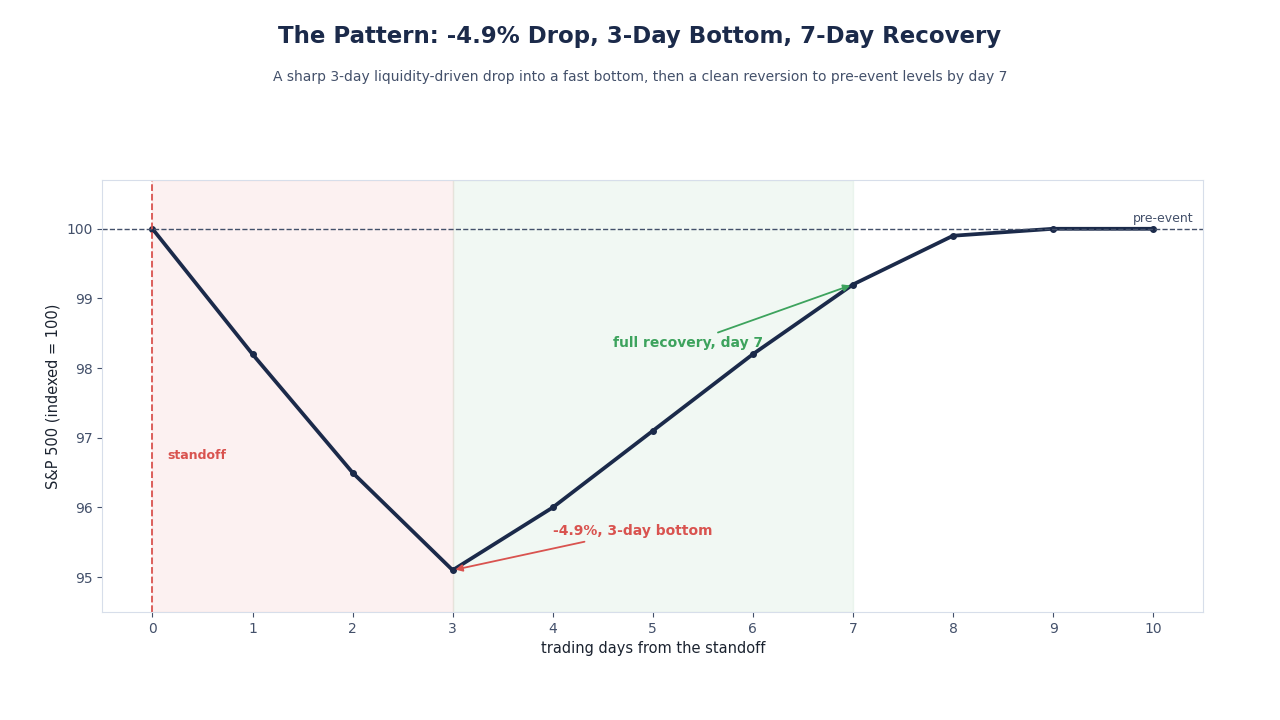
Several factors explain the rapid recovery following the EP-3 Incident:
1. Contained Escalation Risk
Despite initial tensions, both the U.S. and China avoided military escalation. Markets quickly repriced the risk downward.
2. No Economic Infrastructure Impact
Unlike wars or energy crises, the incident did not disrupt global trade, oil supply, or production chains.
3. Liquidity Conditions Remained Stable
The early 2000s environment maintained sufficient liquidity, preventing panic selling from cascading.
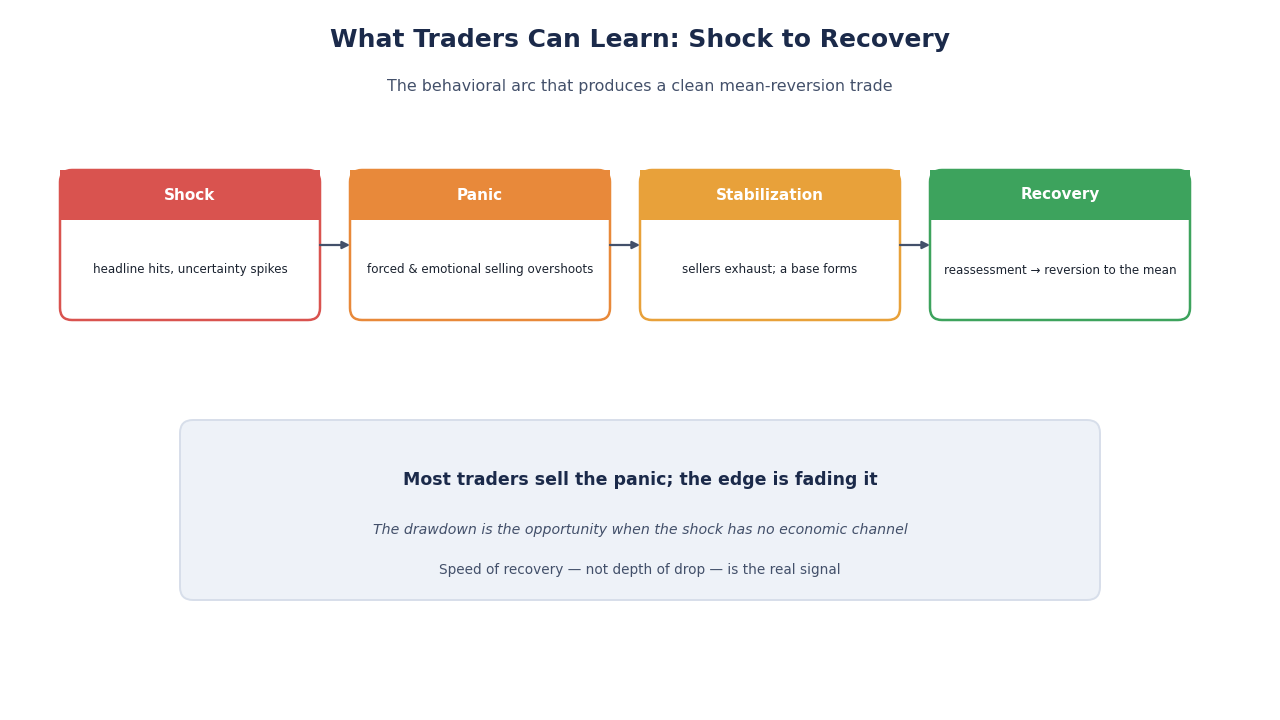
4. Behavioral Pattern: Panic → Reassessment → Recovery
This pattern is consistent across many geopolitical events:
- Phase 1: Shock-driven sell-off
- Phase 2: Information digestion
- Phase 3: Rapid rebound
Bold takeaway:
Short-term geopolitical shocks often create tradable volatility rather than long-term bear trends.
Trading the EP-3 Incident Pattern
Understanding the EP-3 Incident 2001 stock market impact allows traders to develop structured strategies.
Tactical Framework
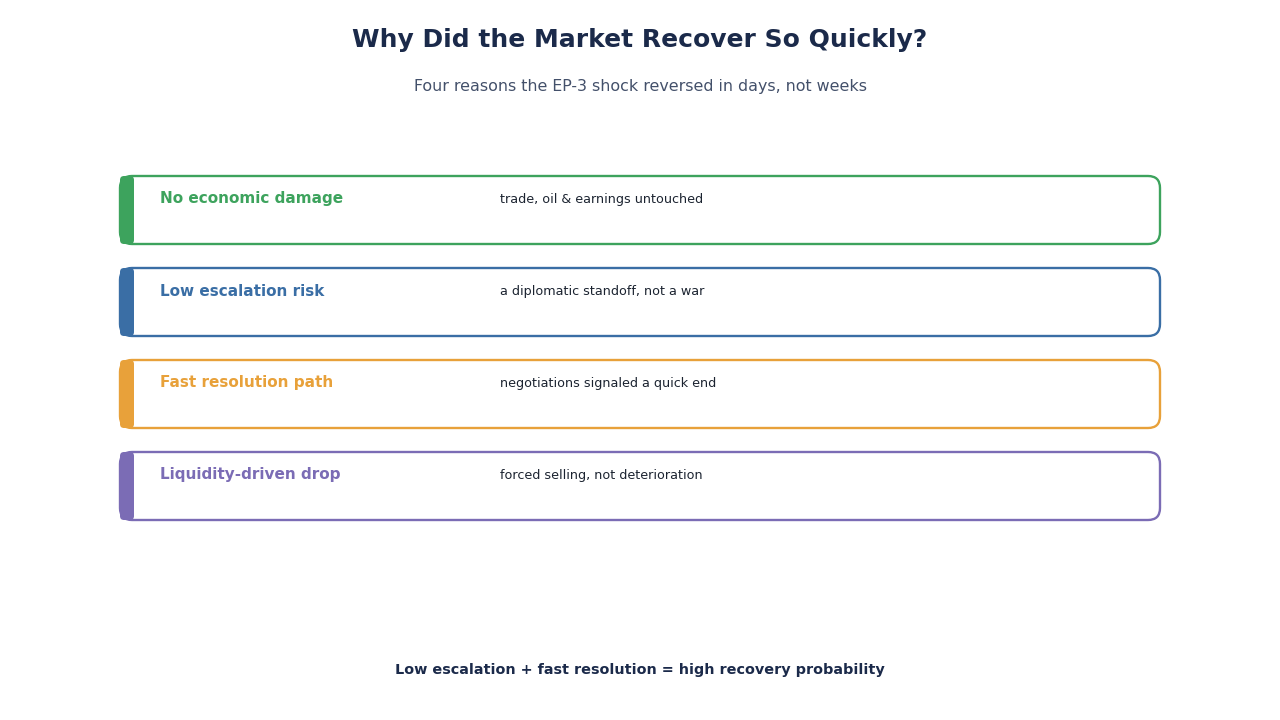
- Identify initial shock and magnitude
- Monitor escalation signals (news + sentiment)
- Track technical exhaustion (RSI, volume spikes)
- Enter during stabilization phase
- Exit during recovery normalization
Example Strategy Table
| Step | Action |
|---|---|
| Shock Detection | Monitor news + volatility spikes |
| Risk Assessment | Evaluate escalation probability |
| Technical Setup | RSI oversold + support levels |
| Entry Timing | After panic selling slows |
| Exit Strategy | During rebound phase (5–10 days) |
How to Trade Geopolitical Events Using AI?
Modern markets move faster than in 2001. Manual analysis is no longer sufficient.
Why AI Matters
Platforms like SimianX AI provide:
- Multi-agent analysis (technical + sentiment + macro)
- Real-time signal streams (EMA, RSI, MACD)
- News-driven intelligence integration
- Decision-layer outputs with confidence scores
Instead of guessing, traders can follow structured AI-driven decision flows.
Practical Example with SimianX
Using SimianX AI, traders can:
- Detect early volatility spikes from geopolitical news
- Validate signals using multiple AI agents
- Identify support/resistance zones automatically
- Execute trades based on probability, not emotion
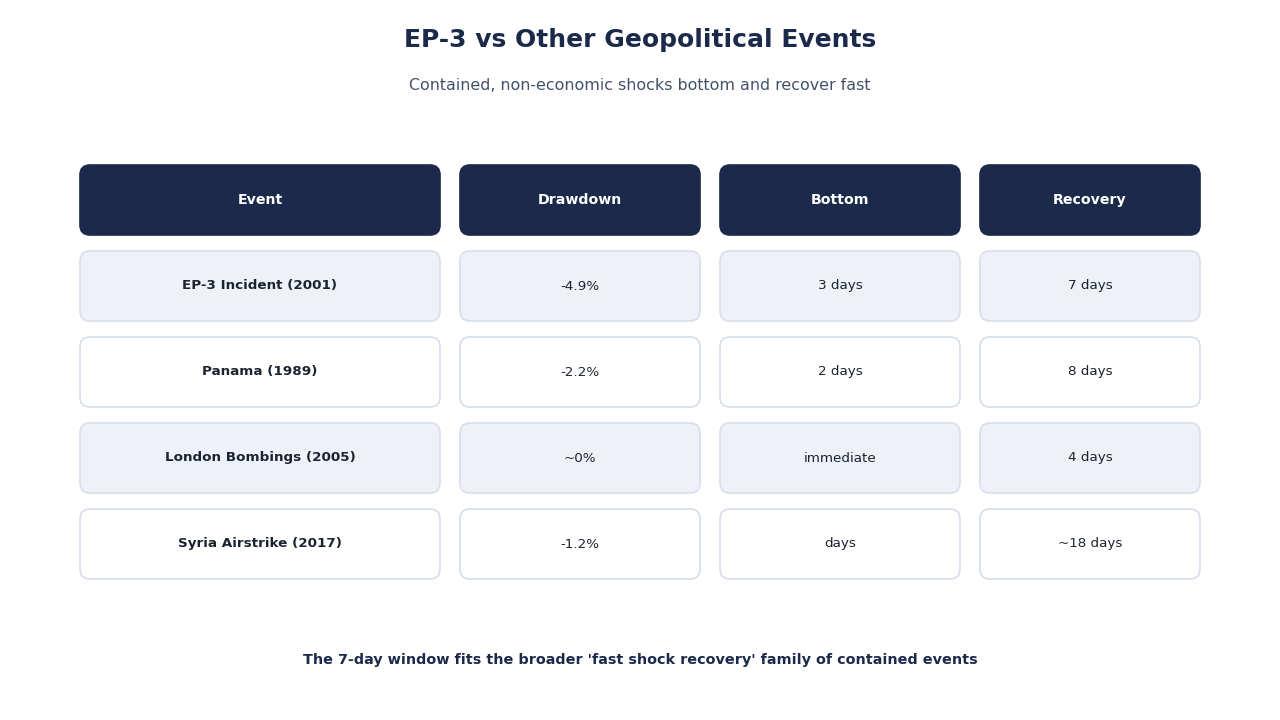
Comparing EP-3 with Other Geopolitical Events
To fully understand the significance of the EP-3 pattern, compare it with similar shocks:
| Event | Drawdown | Bottom Time | Recovery Time |
|---|---|---|---|
| EP-3 Incident (2001) | -4.9% | 3 days | 7 days |
| London Bombings (2005) | ~0% | Same day | 4 days |
| Syria Strike (2017) | -1.2% | 7 days | 18 days |
| Israel-Hamas (2023) | -4.5% | 14 days | 19 days |
Insight
- Fast resolution = fast recovery
- Escalation risk = longer drawdowns
What Traders Can Learn from the EP-3 Incident
Key Lessons
- Markets overreact short-term but correct quickly
- Timing is critical—early panic is not always optimal entry
- Information flow drives price more than the event itself
Actionable Takeaways
- Focus on reaction, not headlines
- Use multi-signal confirmation before entering trades
- Avoid chasing initial panic moves
The edge lies in understanding how markets behave—not just what happens.
How Does the EP-3 Incident 2001 Stock Market Impact Compare to Modern Markets?
Today’s markets are:
- Faster (algorithm-driven)
- More sensitive to headlines
- More interconnected globally
However, the core behavioral pattern remains unchanged:
Shock → Panic → Stabilization → Recovery
With tools like SimianX AI, traders can now:
- Quantify sentiment in real time
- Detect early reversal signals
- Reduce emotional bias
FAQ About EP-3 Incident 2001 Stock Market Impact
What is the EP-3 Incident 2001 stock market impact?
The EP-3 Incident caused a short-term market drawdown of about -4.9%, followed by a rapid recovery within 7 days. It is a classic example of a contained geopolitical shock.
How do markets typically react to geopolitical incidents?
Markets usually experience an immediate sell-off due to uncertainty, followed by stabilization and recovery once risks are reassessed.
Can traders profit from geopolitical events like the EP-3 Incident?
Yes, by identifying panic-driven sell-offs and entering during stabilization phases, traders can capture rebound opportunities.
What is the best way to trade geopolitical risk today?
Using AI-powered platforms like SimianX AI helps integrate technical, sentiment, and macro signals into a structured decision-making process.
Why was the EP-3 recovery so fast?
Because the incident did not escalate into broader conflict and had no lasting economic impact, allowing markets to quickly normalize.
Conclusion
The EP-3 Incident 2001 stock market impact demonstrates a critical truth: not all geopolitical shocks lead to prolonged market downturns. In fact, many create short-term volatility followed by rapid recovery, offering strategic trading opportunities.
By understanding patterns like the -4.9% drawdown, 3-day bottom, and 7-day recovery, traders can better position themselves in future events.
More importantly, leveraging tools like SimianX AI allows you to transform raw market chaos into structured, actionable insights—combining indicators, sentiment, and macro intelligence into a single decision framework.
If you want to trade geopolitical events with precision instead of emotion, now is the time to explore how SimianX AI can elevate your strategy.
Advanced Quant Framework: Modeling the EP-3 Incident Pattern
To go beyond surface-level analysis of the EP-3 Incident 2001 stock market impact, we need to translate the observed behavior into a repeatable quantitative framework. This allows traders to not only understand past events, but systematically exploit future geopolitical shocks.
Building a Geopolitical Shock Model
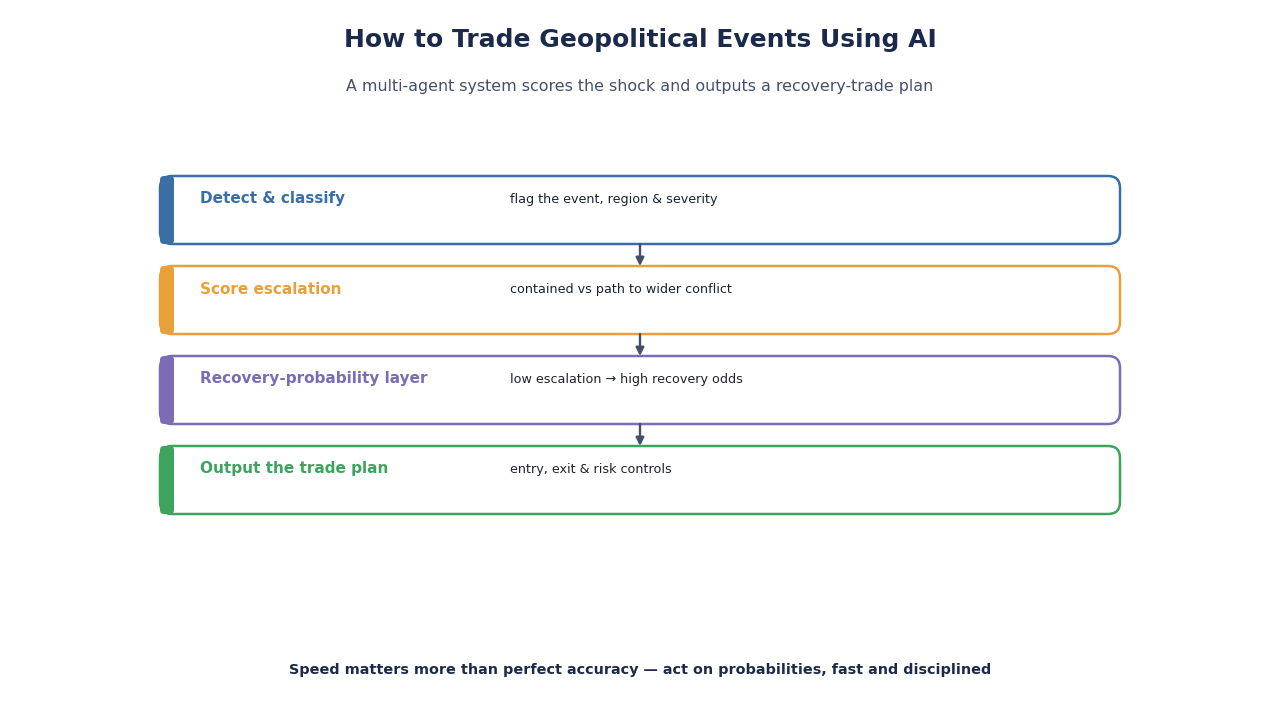
A robust model typically consists of three layers:
- Event Detection Layer
- Market Reaction Layer
- Recovery Probability Layer
1. Event Detection Layer
This layer identifies unexpected geopolitical triggers:
- Military incidents
- Diplomatic escalations
- Sanctions or embargo announcements
- Leadership-level conflicts
Using SimianX AI, this corresponds to the Intelligence Agent:
- Real-time news parsing
- Sentiment scoring
- Abnormal event detection
The earlier the detection, the stronger the trading edge.
2. Market Reaction Layer
This layer quantifies immediate impact:
- Volatility spike (VIX proxy)
- Drawdown magnitude
- Volume expansion
Typical signals:
- RSI < 30 (oversold)
- Sudden spike in put/call ratio
- Liquidity thinning
3. Recovery Probability Layer
This is where alpha is generated.
We assign probabilities based on:
| Factor | Impact on Recovery |
|---|---|
| Escalation Risk | Negative |
| Economic Disruption | Negative |
| Policy Response | Positive |
| Liquidity Environment | Positive |
EP-3 Case Insight:
- Low escalation → High recovery probability
- No economic shock → Short drawdown
Multi-Agent Decision System: SimianX in Action
Traditional trading systems fail during geopolitical events due to information overload and conflicting signals. SimianX AI solves this using a multi-agent architecture.
The Four-Agent Framework
1. Indicator Agent
Tracks:
- EMA trends
- RSI oversold conditions
- MACD divergence
2. Intelligence Agent
Tracks:
- News sentiment
- Social media signals
- Breaking geopolitical updates
3. Fundamental Agent
Tracks:
- Interest rates
- Liquidity conditions
- Macro stability
4. Decision Agent
Synthesizes everything:
- Direction (bullish / bearish)
- Key levels (support/resistance)
- Risk scenarios
- Confidence score
This transforms chaotic data into a single actionable decision.
Execution Layer: Timing the Entry and Exit
Understanding the EP-3 pattern is not enough—you must execute with precision.
Entry Timing Framework
Optimal entry occurs when:
- Price stabilizes after initial drop
- Volume declines from panic peak
- RSI exits extreme oversold zone
Exit Timing Framework
Exit when:
- Price approaches pre-shock levels
- Momentum slows
- News sentiment neutralizes
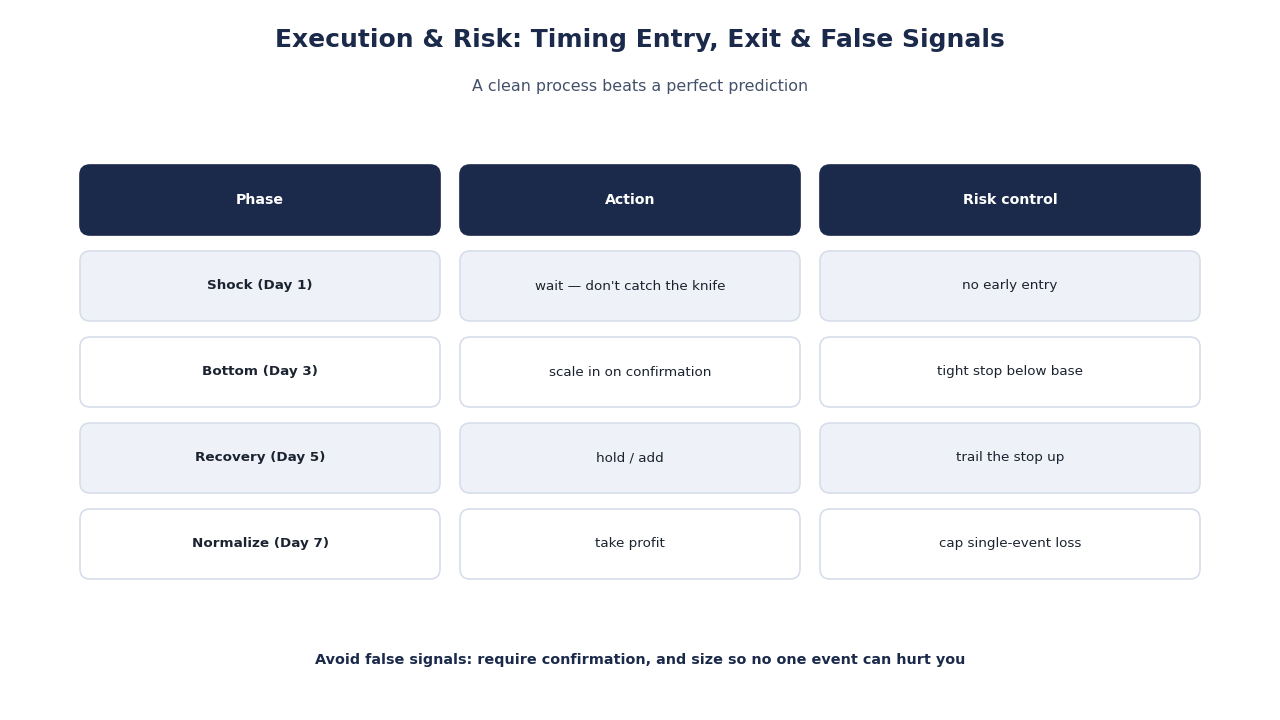
Example Trade Timeline
| Day | Market Behavior | Strategy Action |
|---|---|---|
| Day 1 | Panic sell-off | Wait |
| Day 2 | Continued decline | Monitor signals |
| Day 3 | Bottom formation | Begin scaling in |
| Day 5 | Recovery begins | Hold / add |
| Day 7 | Near full recovery | Take profit |
Risk Management: Avoiding False Signals
Not all geopolitical events follow the EP-3 pattern.
When the Model Fails
- Escalation continues (war risk)
- Energy markets disrupted
- Systemic financial stress appears
Risk Filters
Use these filters before entering trades:
- Is VIX above crisis threshold?
- Are credit spreads widening rapidly?
- Is central bank policy tightening?
If multiple risk signals align, avoid mean-reversion trades.
Behavioral Finance Perspective
Markets are not purely rational—they are driven by human psychology.
The Three Emotional Phases
- Fear (Panic Selling)
- Uncertainty (Sideways Movement)
- Relief (Recovery Rally)
Why This Matters
Understanding psychology helps you:
- Avoid emotional trades
- Enter when others are exiting
- Capture inefficiencies
Extending the Framework to Crypto Markets
Geopolitical shocks increasingly affect crypto.
Key Differences
| Factor | Stocks | Crypto |
|---|---|---|
| Trading Hours | Limited | 24/7 |
| Volatility | Moderate | High |
| Reaction Speed | Slower | Instant |
Application
In crypto markets:
- Drawdowns are often deeper
- Recovery can be faster
- Liquidity shifts rapidly
SimianX AI excels here by providing:
- Real-time signal flow
- Multi-timeframe analysis
- Cross-exchange liquidity tracking
Case Simulation: Applying EP-3 Logic to Modern Markets
Let’s simulate a modern equivalent:
Scenario
- U.S.–China military tension escalates briefly
- News shock triggers market drop
Expected Pattern
- Day 1–2: Sharp sell-off
- Day 3–5: Stabilization
- Day 5–10: Recovery
Strategy
- Wait for confirmation signals
- Enter during stabilization
- Exit into strength
Building a Repeatable Trading Playbook
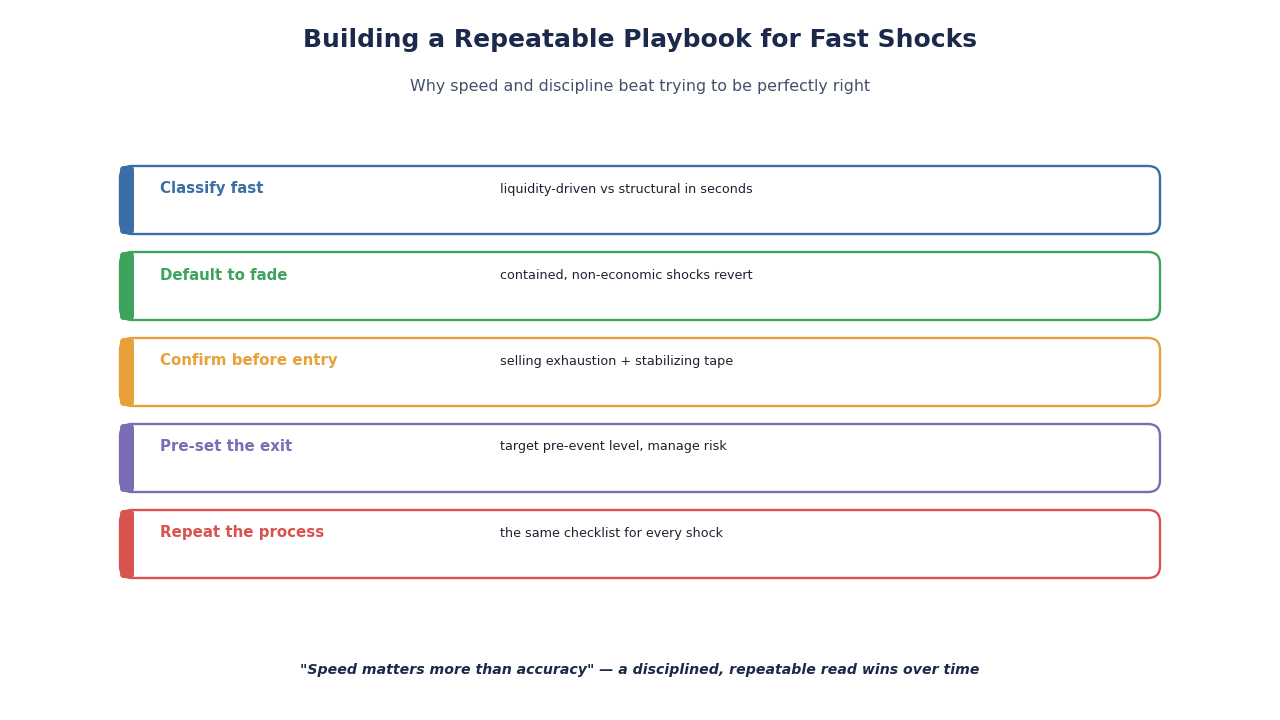
Step-by-Step System
- Detect geopolitical shock
- Quantify drawdown magnitude
- Evaluate escalation probability
- Monitor technical exhaustion
- Execute structured entry
- Manage risk dynamically
- Exit during recovery
Integrating SimianX into Daily Workflow
To operationalize this:
Daily Routine
- Monitor real-time signal stream
- Track EMA / RSI / MACD alignment
- Watch sentiment changes
Weekly Routine
- Review model leaderboard
- Adjust agent configurations
- Optimize timeframe selection
Advanced Insight: Why Speed Matters More Than Accuracy
In geopolitical trading:
- Being early is more valuable than being perfect
- Reaction time determines profitability
SimianX AI enables:
- Faster signal aggregation
- Reduced latency
- Higher decision confidence
Conclusion (Extended Insights)
The EP-3 Incident 2001 stock market impact is more than a historical case—it is a blueprint for trading modern geopolitical risk.
By breaking down the event into:
- Quantifiable drawdowns
- Predictable recovery phases
- Behavioral patterns
we gain a repeatable edge.
However, the real advantage comes from execution and systemization.
This is where SimianX AI stands out:
- It transforms fragmented data into structured decisions
- It reduces emotional bias
- It increases consistency and win rate
As markets become faster and more complex, relying on intuition alone is no longer enough.
Related Reading
- Syria Airstrike 2017: S&P 500 -1.2%, Same-Week Recovery
- 1989 Panama Invasion: S&P -2.2% in 2 Days, 8-Day Recovery
- London Bombings 2005: The Zero-Drawdown Market Signal
- U-2 Incident 1960: First Cold War Stock Market Stress Test
- Bay of Pigs 1961: Failed Invasion, Quick Market Recovery
- 7 AI Risk Radars for Equities: Breadth, Revisions, Skew