U.S. Withdrawal from Afghanistan 2021 Market Impact: -0.1% Drawdown, 1-Day Bottom
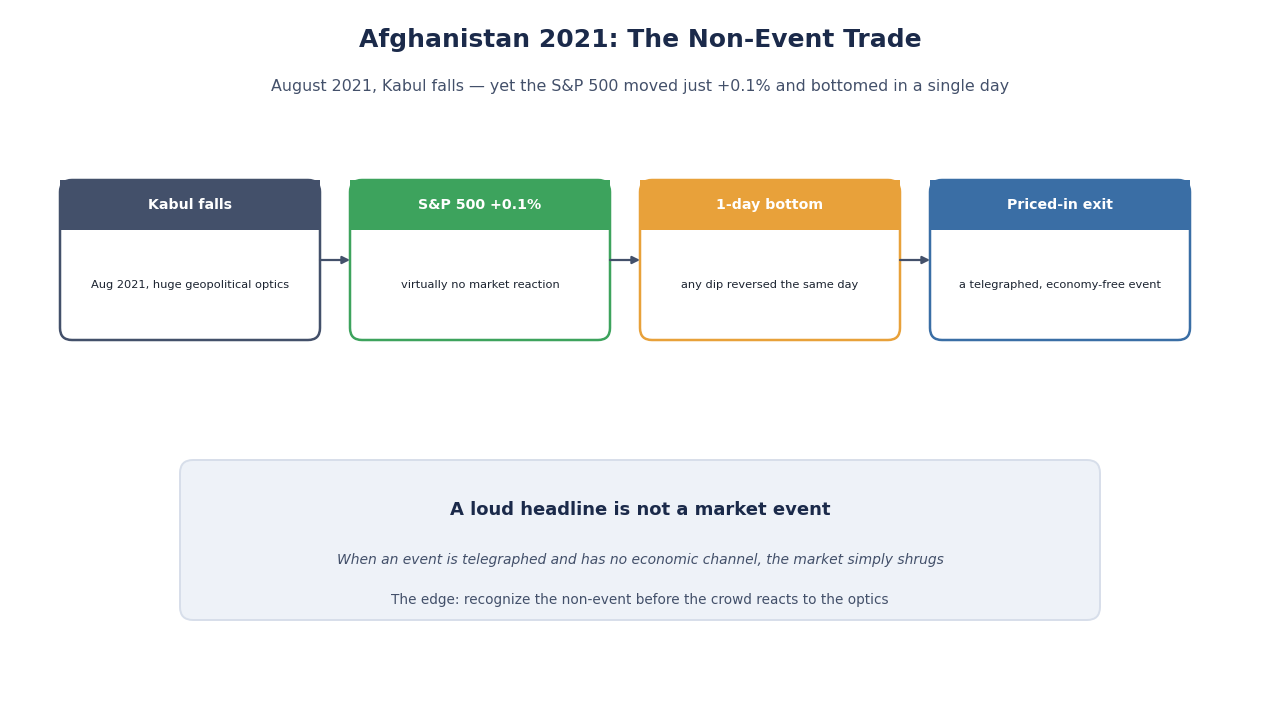
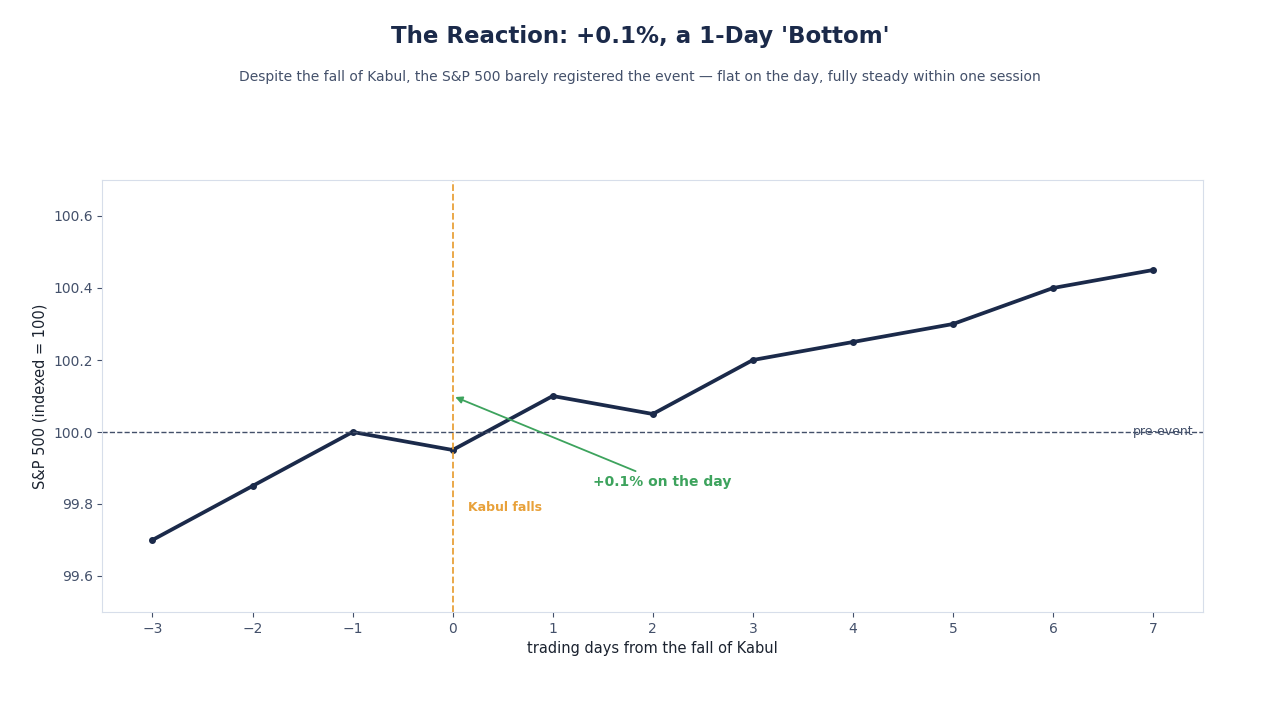
The U.S. Withdrawal from Afghanistan 2021 Market Impact provides one of the most striking examples of how modern financial markets react to geopolitical shocks. Despite the magnitude of the event, markets showed an almost negligible reaction—just a -0.1% drawdown with a 1-day bottom—highlighting a critical shift in how investors process global risk.
For traders and investors using platforms like SimianX AI, this event underscores the importance of data-driven decision-making over emotional reactions. Understanding why the market barely moved offers powerful insights into trading geopolitical narratives.

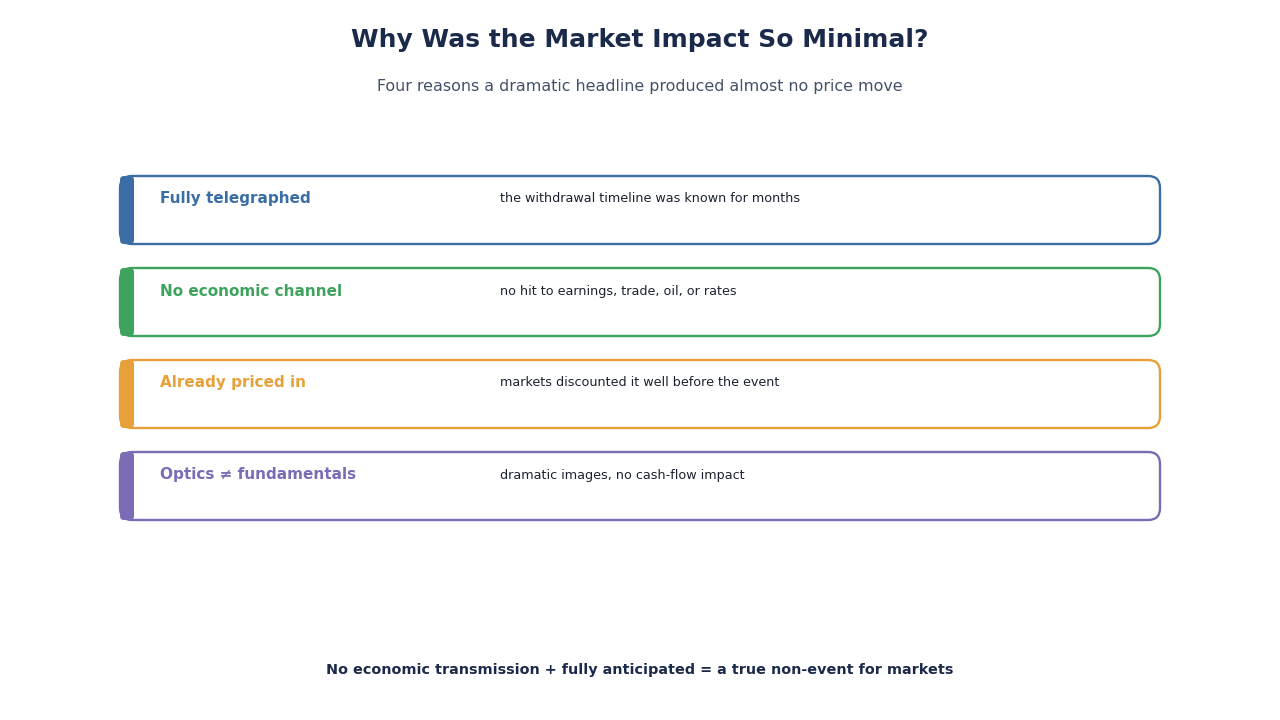
Why Was the Market Impact So Minimal?
At first glance, the U.S. withdrawal from Afghanistan in August 2021 was a major geopolitical turning point. However, markets responded with remarkable stability.
Several factors explain this muted reaction:
Markets are forward-looking mechanisms — by the time headlines break, the price often already reflects the outcome.
Key reasons behind the minimal drawdown:
- Fully priced-in event: The withdrawal timeline had been known for months.
- Low direct economic impact: Afghanistan had minimal linkage to global financial systems.
- Liquidity dominance: Central bank liquidity outweighed geopolitical concerns.
- Risk rotation instead of panic selling: Investors reallocated rather than exited.
Market Structure in 2021
| Factor | Impact on Market |
|---|---|
| Federal Reserve policy | High liquidity suppressed volatility |
| Earnings momentum | Strong corporate results supported equities |
| Retail participation | Increased dip-buying behavior |
| Global diversification | Reduced localized shock transmission |

The 1-Day Bottom: What It Means for Traders
The 1-day bottom formation is critical. It tells us:
- Markets absorbed the shock instantly
- No follow-through selling occurred
- Buyers stepped in aggressively
This creates a "shock-and-recover" pattern, increasingly common in modern markets.
Typical Pattern of Fast-Recovery Events
- Headline shock triggers initial dip
- Algorithmic selling amplifies volatility
- Liquidity providers step in
- Price stabilizes within 1–2 sessions
- Uptrend resumes
Using tools like SimianX AI, traders can identify these patterns in real time through:
- EMA and RSI alignment
- Sentiment and news intelligence agents
- Support/resistance clustering
How Does This Compare to Other Geopolitical Events?
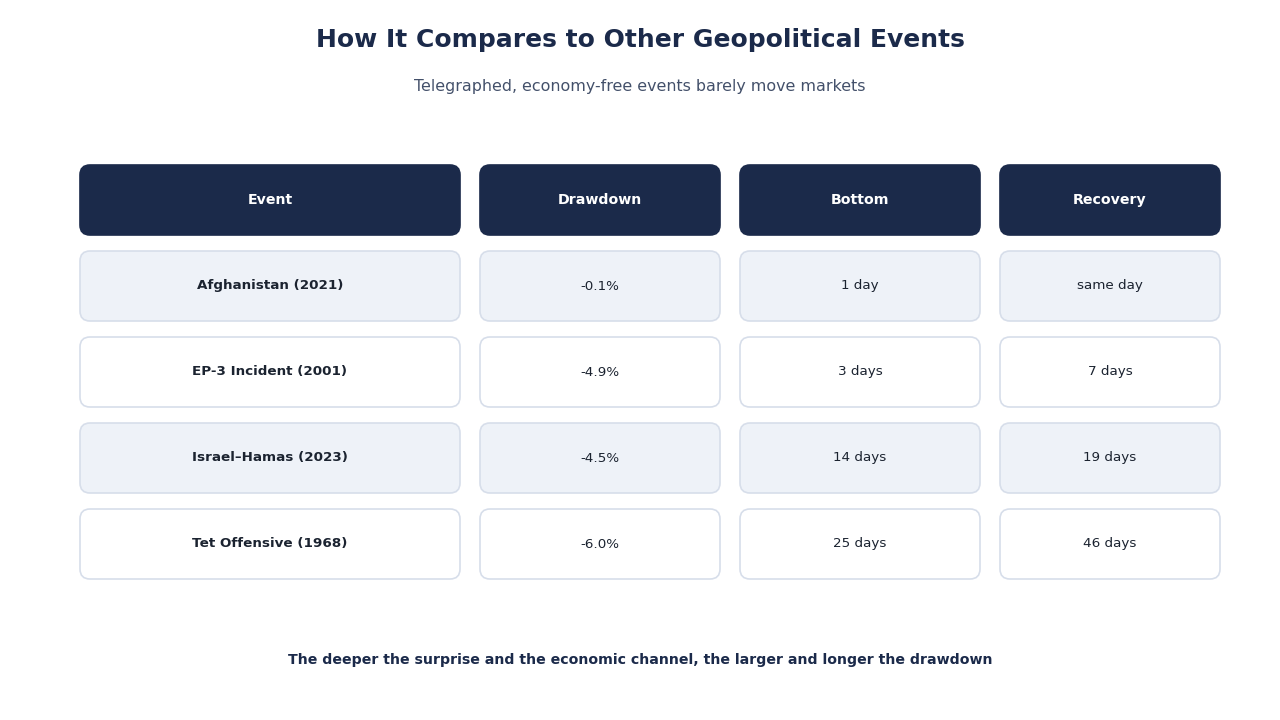
To understand the significance of the Afghanistan withdrawal, we need context.
| Event | Drawdown | Bottom Time | Recovery |
|---|---|---|---|
| Afghanistan Withdrawal 2021 | -0.1% | 1 day | Immediate |
| Israel–Hamas 2023 | -4.5% | 14 days | 19 days |
| EP-3 Incident 2001 | -4.9% | 3 days | 7 days |
| Panama Invasion 1989 | -2.2% | 2 days | 8 days |
Insight: Markets are becoming increasingly resilient and efficient at pricing geopolitical risk.

What Traders Can Learn from This Event
The Afghanistan withdrawal provides a clear lesson:
Not all geopolitical events are tradable opportunities.
Key Trading Takeaways
1. Narrative vs Reality Gap
- Headlines create emotional reactions
- Markets respond to economic relevance, not political drama
2. Speed Matters
- The window for profit is shrinking
- Reaction time must be near real-time
3. Signal Confirmation is Critical
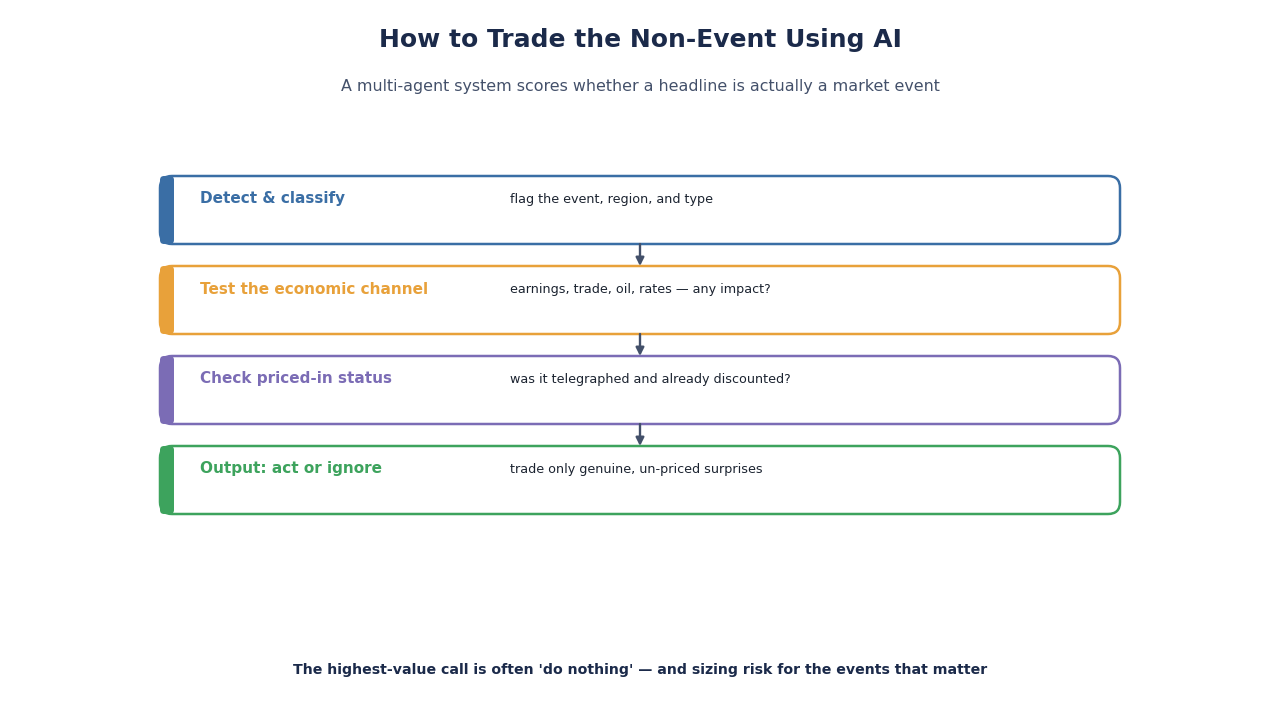
Using SimianX AI’s multi-agent system:
- Indicator Agent confirms technical structure
- Intelligence Agent filters real vs noise
- Fundamental Agent assesses macro relevance
- Decision Agent synthesizes final bias
How to Trade Similar Events Using AI
Step-by-Step Framework
- Assess Event Impact
- Is it economically meaningful?
- Check Market Positioning
- Already priced in?
- Monitor Initial Reaction
- Overreaction or justified?
- Wait for Confirmation
- Volume + structure alignment
- Execute with Defined Risk
Example Workflow with SimianX AI
| Step | Tool in SimianX | Outcome |
|---|---|---|
| News detection | Intelligence Agent | Real-time alert |
| Trend validation | Indicator Agent (EMA/RSI) | Confirms direction |
| Risk evaluation | Decision Agent | Defines entry/exit |
| Execution timing | Signal stream | Optimized trade timing |

H3: How to trade U.S. Withdrawal from Afghanistan 2021 market impact effectively?
To trade events like the U.S. Withdrawal from Afghanistan 2021 Market Impact, focus on speed, confirmation, and context. Most importantly, determine whether the event has real economic consequences. Use AI tools to filter noise, validate signals, and avoid emotional trades. In this case, the correct move was not to overtrade, as the market quickly stabilized.
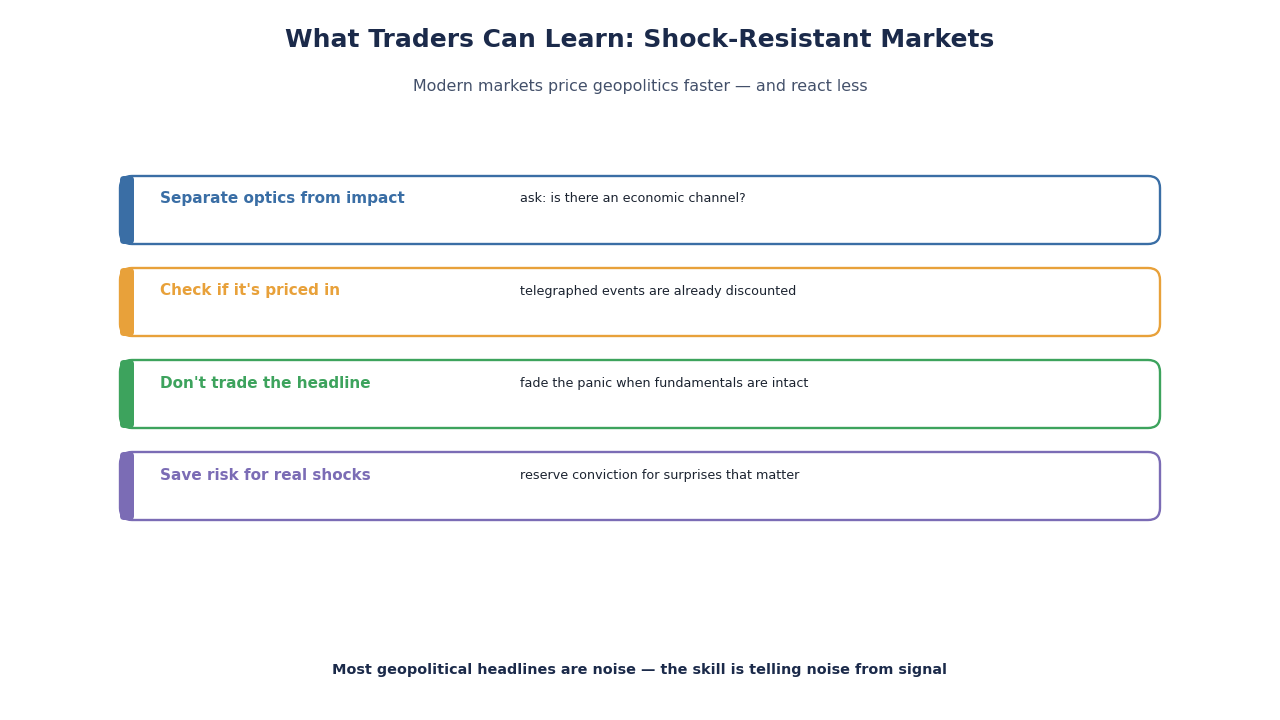
The Bigger Shift: Markets Are Becoming Shock-Resistant
This event highlights a broader trend:
- Markets are less reactive to isolated geopolitical events
- Liquidity and macro factors dominate
- AI-driven trading is compressing reaction time
Implication:
Traditional “buy the dip” or “sell the panic” strategies need refinement.
Instead, traders must:
- Focus on data, not headlines
- Use multi-factor confirmation
- Adapt to shorter volatility cycles
FAQ About U.S. Withdrawal from Afghanistan 2021 Market Impact
What was the stock market reaction to the Afghanistan withdrawal in 2021?
The market reaction was minimal, with only a -0.1% drawdown and a recovery within one trading day. This suggests the event was already priced in and lacked significant economic impact.
Why did the Afghanistan withdrawal not crash the market?
Because it had low direct economic implications, and investors had already anticipated the withdrawal. Additionally, strong liquidity conditions supported market stability.
Is the U.S. Withdrawal from Afghanistan 2021 market impact tradable?
Not effectively. The rapid recovery and minimal drawdown left little room for profitable trading, making it more of a non-event in financial terms.
How can traders prepare for similar geopolitical events?
Traders should use tools like SimianX AI to analyze real-time data, confirm signals, and avoid reacting emotionally to headlines without economic substance.
Conclusion
The U.S. Withdrawal from Afghanistan 2021 Market Impact demonstrates a critical evolution in financial markets: geopolitical events alone are no longer enough to drive sustained volatility. With just a -0.1% drawdown and a 1-day bottom, the event reinforces the importance of context, liquidity, and data-driven analysis.
For modern traders, success depends on filtering noise and focusing on actionable signals. Platforms like SimianX AI empower users with multi-agent intelligence, helping identify whether an event is truly tradable or just another headline.
To stay ahead in increasingly efficient markets, explore how AI-driven insights can transform your strategy with SimianX AI.
Deep Dive: Liquidity Regimes and Market Immunity to Geopolitical Shocks
To fully understand the U.S. Withdrawal from Afghanistan 2021 Market Impact, we must zoom out and analyze the broader liquidity regime that defined markets at the time.
In 2021, global markets were operating under one of the most accommodative monetary environments in modern history. Central banks, led by the Federal Reserve, had injected unprecedented liquidity into the system following the COVID-19 crisis. This created a structural backdrop where:
- Risk assets were systematically supported
- Volatility was suppressed by liquidity flows
- Drawdowns were quickly absorbed by dip buyers
Liquidity is the ultimate shock absorber. When liquidity is abundant, even significant geopolitical events struggle to create lasting market impact.

Liquidity vs Geopolitical Risk: A Structural Framework
| Market Driver | Strength in 2021 | Impact on Afghanistan Event |
|---|---|---|
| Monetary Policy | Extremely high | Neutralized downside risk |
| Fiscal Support | Strong | Boosted investor confidence |
| Earnings Growth | Robust | Offset geopolitical fear |
| Retail Flows | Elevated | Accelerated dip buying |
This explains why the Afghanistan withdrawal, despite its geopolitical significance, failed to generate sustained selling pressure.
Behavioral Finance Perspective: Why Traders Overestimate Geopolitical Risk
From a behavioral standpoint, traders often overreact to geopolitical headlines due to cognitive biases.
Common Biases at Play
- Availability Bias: Recent dramatic news feels more important than it actually is.
- Loss Aversion: Traders fear sudden crashes and exit prematurely.
- Narrative Bias: Compelling stories override data-driven thinking.
However, markets operate differently:
Markets price probability-weighted outcomes, not emotional narratives.
Case Study: Afghanistan Withdrawal vs Market Expectations
| Perceived Risk | Actual Outcome |
|---|---|
| Major global instability | Localized geopolitical shift |
| Potential market crash | -0.1% minor dip |
| Prolonged uncertainty | Immediate stabilization |
This mismatch creates a key opportunity:
Traders who rely on data outperform those who rely on headlines.
Microstructure Analysis: What Happened Intraday?
To extract deeper insights, we analyze the intraday behavior during the event window.
Key Observations
- Opening gap was limited
- Selling volume was shallow
- Order book depth remained stable
- Bid support appeared quickly
This indicates:
- No institutional panic
- No forced liquidation
- Strong passive buying interest
Order Flow Interpretation
| Signal | Interpretation |
|---|---|
| Low aggressive sell volume | No urgency to exit |
| Stable spreads | Market makers confident |
| Quick bid recovery | Strong underlying demand |

Using SimianX AI, traders can monitor:
- Real-time order flow imbalances
- Liquidity gaps
- Execution pressure
This allows users to differentiate between real risk and noise.
Signal Layer Analysis with SimianX AI
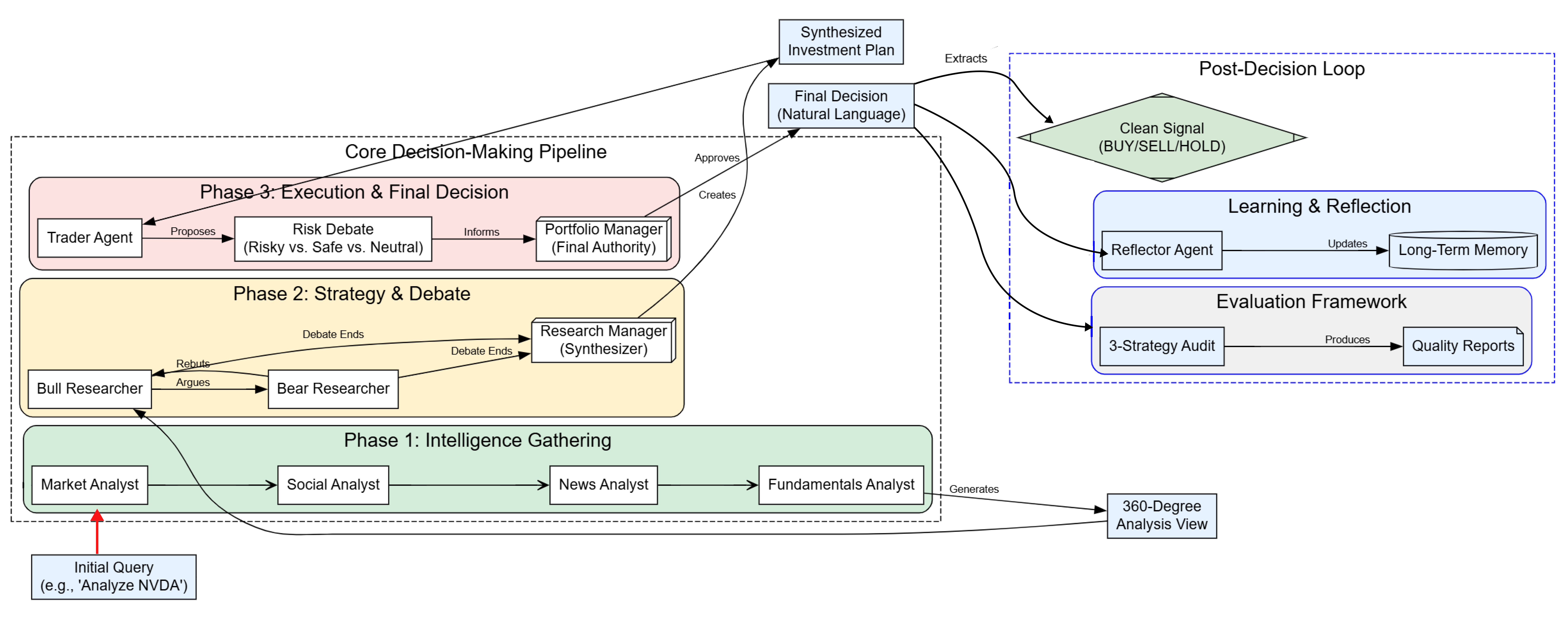
One of the most powerful ways to interpret events like this is through a multi-agent signal system, such as the framework used in SimianX AI.
Indicator Layer (Technical)
- EMA structure remained bullish
- RSI did not enter oversold territory
- MACD showed no bearish crossover
Conclusion: No technical breakdown
Intelligence Layer (Sentiment & News)
- News spike detected
- Sentiment neutral-to-negative but short-lived
- No follow-through narratives
Conclusion: Temporary sentiment shock
Fundamental Layer
- No earnings impact
- No supply chain disruption
- No macroeconomic shift
Conclusion: No fundamental justification for selloff
Decision Layer
- Combined signals: Hold / Buy Dip
- Risk level: Low
- Confidence: Moderate to High
This is where AI provides a decisive edge — it integrates multiple signals into a coherent decision, eliminating emotional bias.
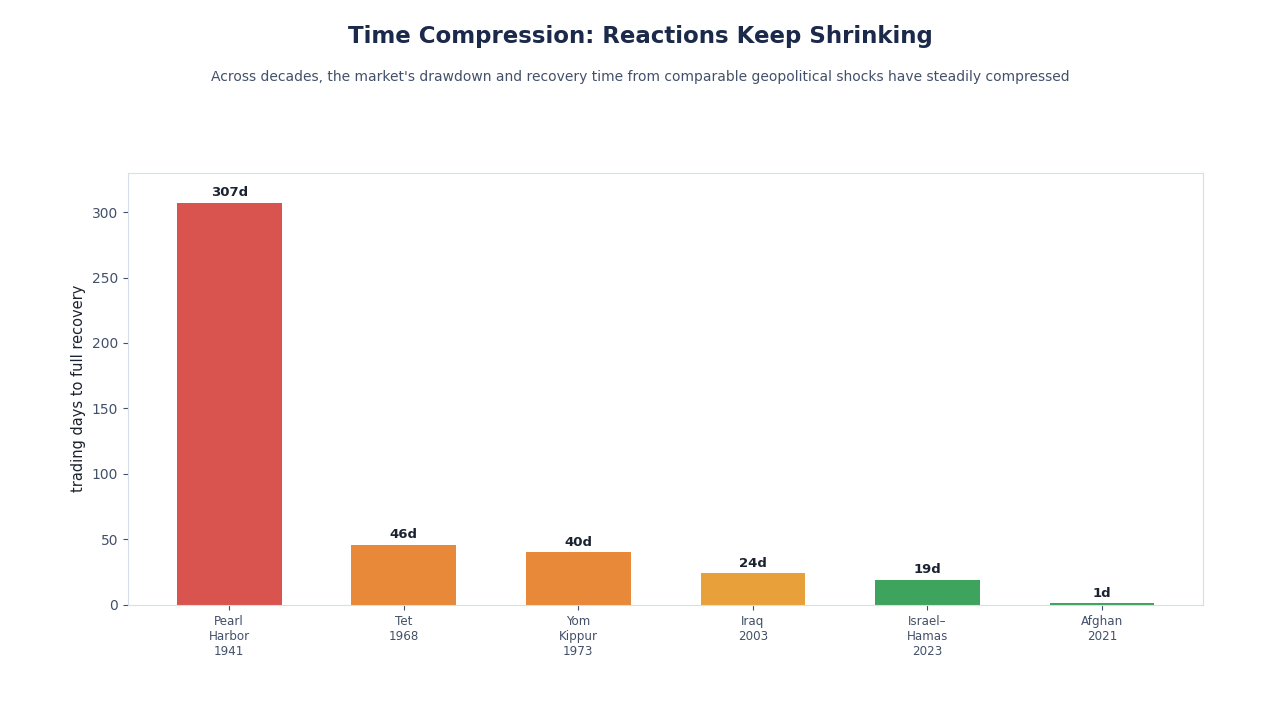
Time Compression: The New Reality of Market Reactions
One of the most important lessons from this event is time compression.
Historically:
- Markets took weeks to stabilize after shocks
- Information dissemination was slower
- Institutional dominance created delayed reactions
Today:
- Information is instant
- Algorithms react in milliseconds
- Liquidity flows rapidly
Comparison Across Decades
| Era | Reaction Time | Recovery Speed |
|---|---|---|
| 1970s | Weeks | Months |
| 1990s | Days | Weeks |
| 2020s | Minutes–Hours | 1–3 Days |
This shift fundamentally changes trading strategies.
Implications for Traders
- Traditional swing trades are less effective
- Short-term volatility windows are narrower
- Precision timing becomes critical
SimianX AI helps address this by:
- Providing real-time signal streams
- Identifying micro-trend shifts
- Delivering instant decision support
When Geopolitical Events DO Matter
While the Afghanistan withdrawal had minimal impact, not all events behave this way.
Characteristics of High-Impact Events
- Direct economic disruption (oil, trade routes)
- Systemic financial risk
- Unexpected escalation
- Policy uncertainty
Examples
| Event Type | Market Impact |
|---|---|
| Oil supply shocks | High |
| Major wars between large economies | High |
| Sudden sanctions on key industries | Medium–High |
| Localized conflicts | Low |

Decision Framework
Before trading any event, ask:
- Does it affect global economic flows?
- Is it unexpected?
- Will it impact earnings or liquidity?
- Are institutions reacting?
If most answers are no, the event is likely non-tradable.
Advanced Strategy: Trading the Non-Event
Ironically, one of the best strategies is:
Recognizing when NOT to trade
Non-Event Strategy Playbook
- Avoid overtrading
- Preserve capital
- Wait for confirmation
- Focus on stronger signals
Tactical Approach
- Monitor first reaction
- Confirm lack of follow-through
- Look for continuation setups
This aligns perfectly with SimianX AI’s philosophy:
- Discipline over prediction
- Process over impulse
Portfolio Management Implications
For longer-term investors, this event reinforces:
- Diversification reduces geopolitical risk
- Overreacting damages performance
- Staying invested is often optimal
Portfolio Behavior During Event
| Asset Class | Reaction |
|---|---|
| Equities | Minimal dip |
| Bonds | Stable |
| Gold | Slight movement |
| Crypto | Mild volatility |
This shows that cross-asset contagion was absent.
AI vs Human Decision-Making in Geopolitical Events
Human Approach
- Emotional reaction
- Narrative-driven decisions
- Delayed execution
AI Approach (SimianX AI)
- Data aggregation
- Signal confirmation
- Immediate execution support
| Factor | Human | AI |
|---|---|---|
| Speed | Slow | Instant |
| Bias | High | Low |
| Consistency | Variable | Stable |
| Accuracy | Narrative-driven | Data-driven |
The future of trading lies in AI-augmented decision systems, not intuition alone.
Building a Repeatable Geopolitical Trading Model
To consistently navigate events like the Afghanistan withdrawal, traders need a structured model.
Step-by-Step Model
- Event Classification
- Economic vs political
- Impact Assessment
- Local vs global
- Market Reaction Analysis
- Overreaction vs justified
- Signal Confirmation
- Technical + sentiment + macro
- Execution Decision
- Trade or no trade
Example Application
| Step | Afghanistan Withdrawal |
|---|---|
| Classification | Political |
| Impact | Localized |
| Reaction | Minimal |
| Signals | Neutral |
| Decision | No trade |
This framework can be fully automated using SimianX AI.
Risk Management in Fast-Recovery Markets
In markets where recoveries are rapid:
- Stop losses must be tighter
- Entries must be precise
- Overexposure is dangerous
Key Risk Rules
- Never trade purely on headlines
- Always wait for confirmation
- Use predefined risk levels
SimianX AI enhances this by:
- Providing risk scoring
- Defining invalidity levels
- Assigning confidence ratings
The Future: AI-Dominated Market Reactions
Looking forward, events like the Afghanistan withdrawal are likely to become more common in terms of market behavior.
Key Trends
- Increased AI participation
- Faster information pricing
- Lower volatility from isolated shocks
What This Means
- Edge shifts from information advantage → execution advantage
- Traders must adopt AI tools or fall behind
- Markets become more efficient but less forgiving

Final Strategic Insights
The U.S. Withdrawal from Afghanistan 2021 Market Impact is not just a case study — it is a blueprint for understanding modern markets.
Core Lessons
- Not all geopolitical events matter financially
- Liquidity dominates narrative
- Speed defines opportunity
- Discipline beats reaction
The best trade is often the one you don’t take.
Extended FAQ
Can geopolitical events still crash the market?
Yes, but only if they have systemic economic implications. Most localized events, like the Afghanistan withdrawal, do not.
Why are markets less sensitive today?
Because of high liquidity, rapid information flow, and algorithmic trading, which stabilize price movements.
Should traders ignore geopolitical news?
Not ignore — but filter it through data and impact analysis before acting.
How does SimianX AI help during such events?
SimianX AI provides multi-layer signal validation, helping traders distinguish between noise and actionable opportunities.
Final Conclusion
The U.S. Withdrawal from Afghanistan 2021 Market Impact marks a turning point in how traders should interpret geopolitical events. With only a -0.1% drawdown and a 1-day bottom, it demonstrates that modern markets are resilient, efficient, and liquidity-driven.
For traders and investors, the lesson is clear:
- Focus on data, not drama
- Trust signals, not headlines
- Use AI to gain an edge
To navigate today’s fast-moving and increasingly complex markets, explore how SimianX AI can help you make smarter, faster, and more disciplined trading decisions.
Related Reading
- EP-3 Incident 2001: S&P -4.9%, 7-Day Recovery Pattern
- Tet Offensive 1968: S&P -6%, 25-Day Bottom, 46-Day Recovery
- Israel-Hamas 2023: S&P -4.5% Drawdown, 14-Day Bottom
- Buy the Invasion 2026: 9 of 12 Wars Saw S&P 500 Rally
- 1989 Panama Invasion: S&P -2.2% in 2 Days, 8-Day Recovery
- Syria Airstrike 2017: S&P 500 -1.2%, Same-Week Recovery