
Israel–Hamas War 2023 Market Impact: -4.5% Drawdown, 14-Day Bottom, 19-Day Recovery
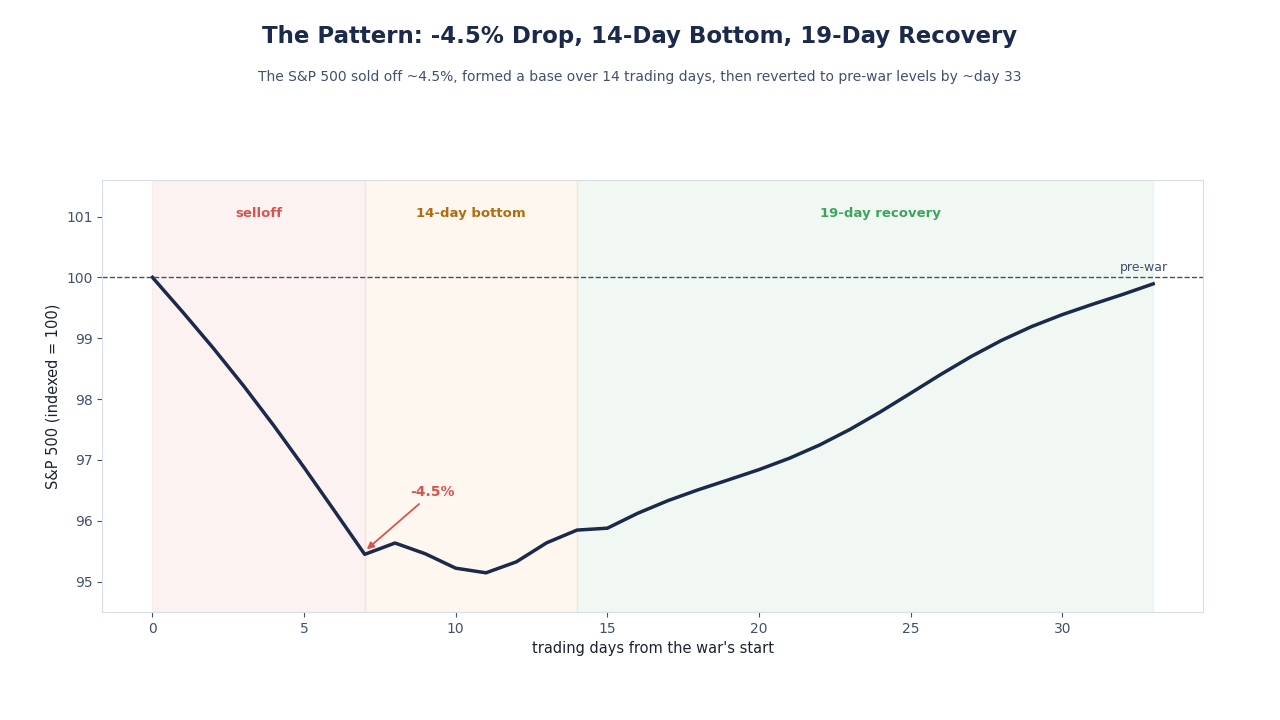
The Israel–Hamas War 2023 market impact provides a clear, data-driven case study of how modern financial markets react to sudden geopolitical shocks. Within days of the October 7 escalation, global equities experienced a -4.5% drawdown, followed by a 14-day bottoming process and a 19-day recovery cycle—a pattern increasingly common in AI-monitored markets.
For traders and investors, understanding this structure is critical. Platforms like SimianX AI enable real-time interpretation of these shocks by combining technical signals, sentiment analysis, and macro intelligence, helping users avoid emotional decisions and instead operate with structured, multi-agent insights.
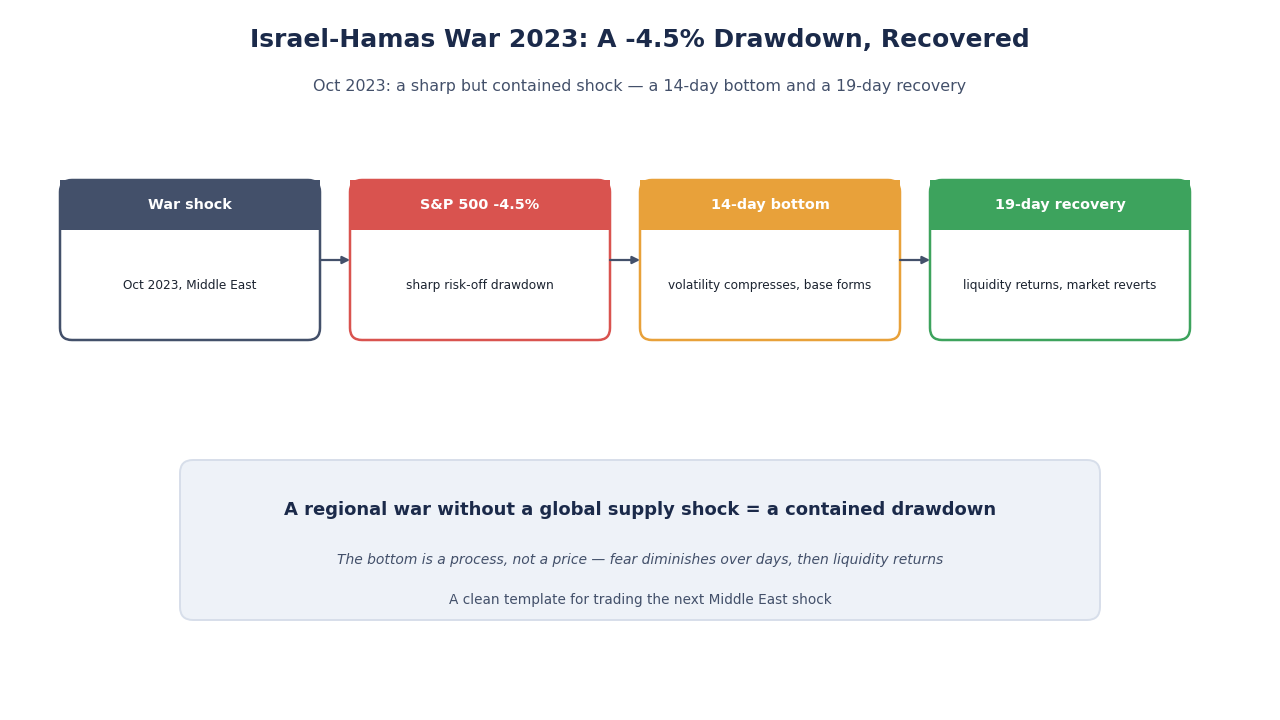
The Immediate Shock: Understanding the -4.5% Drawdown
When the Israel–Hamas conflict escalated in October 2023, markets reacted swiftly. The initial sell-off was not purely about fundamentals—it was driven by uncertainty, risk repricing, and liquidity shifts.
Markets do not price wars—they price uncertainty about escalation.
Key drivers of the drawdown:
- Surge in geopolitical risk premium
- Oil price volatility expectations
- Safe-haven rotation into gold and US Treasuries
- Algorithmic risk-off triggers
Market Behavior Breakdown
| Phase | Timeframe | Market Behavior |
|---|---|---|
| Shock Phase | Day 1–3 | Sharp sell-off, volatility spike |
| Panic Pricing | Day 4–7 | Continued downside, sentiment deterioration |
| Stabilization | Day 8–14 | Volatility compresses, bottom forms |
This -4.5% drawdown is relatively mild compared to historical war events, suggesting that modern markets—enhanced by AI and liquidity—absorb shocks faster.
The 14-Day Bottom: Why Markets Stabilize Faster Today
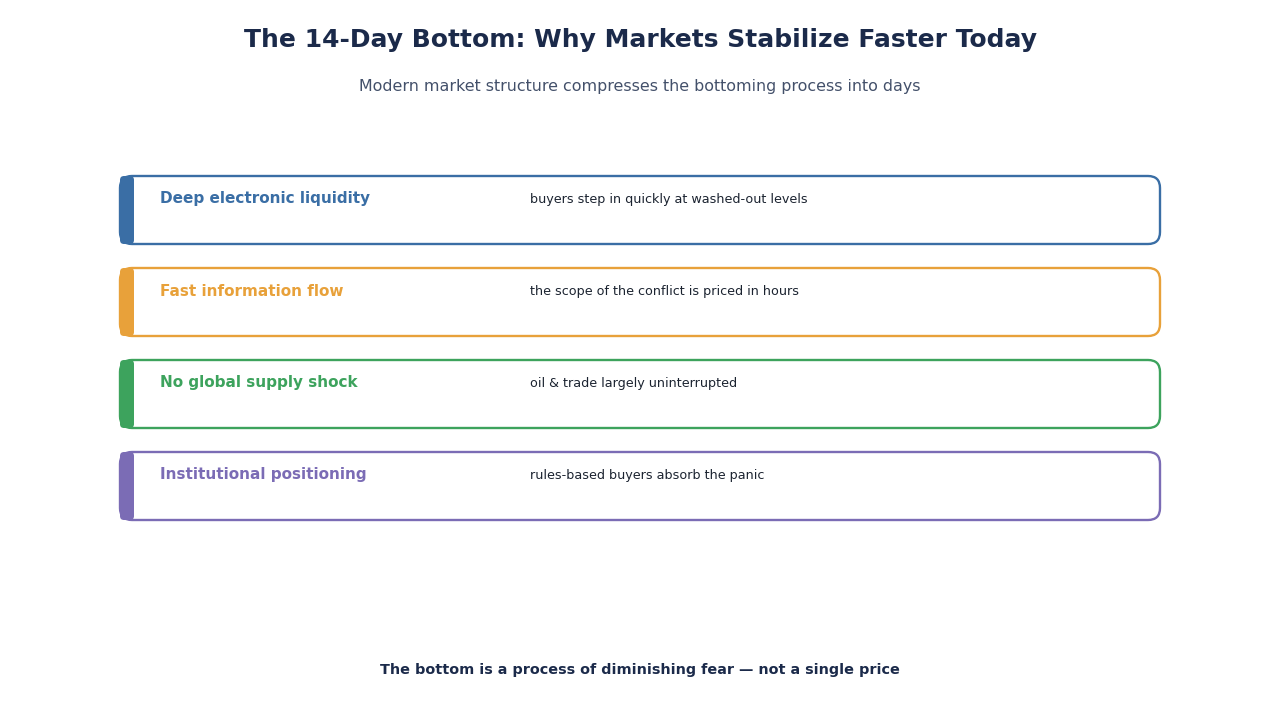
One of the most important insights from the Israel–Hamas War 2023 market impact is the 14-day bottoming structure.
Unlike historical conflicts (e.g., WWII or Gulf War), modern markets:
- Process information faster
- Have deeper liquidity
- Use algorithmic rebalancing
- React to expected scenarios, not just events
Bottom formation signals included:
- RSI divergence across major indices
- Declining volatility (VIX compression)
- Stabilization in oil prices
- Reduced negative news momentum
How AI Identifies Bottom Formation
Using SimianX AI, traders can detect bottoming conditions through:
- Multi-timeframe signal alignment (1H + 4H + Daily)
- Order flow stabilization detection
- Sentiment exhaustion tracking
- Macro narrative flattening
The bottom is not a price—it is a process of diminishing fear.
| Signal Type | Indicator Example | Interpretation |
|---|---|---|
| Technical | RSI divergence | Selling pressure weakening |
| Sentiment | News negativity peak | Panic exhaustion |
| Order Flow | Reduced large sell orders | Institutional stabilization |
The 19-Day Recovery: Liquidity Always Returns
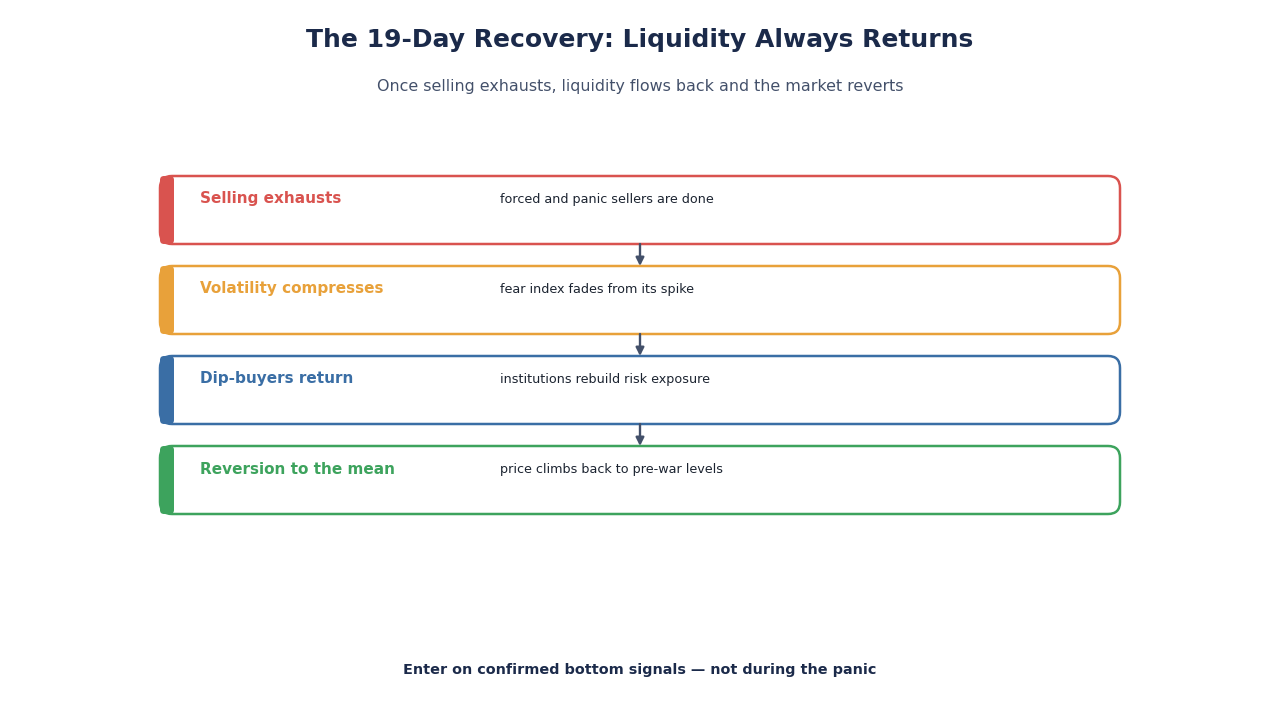
After bottoming, markets entered a 19-day recovery phase, reflecting a critical principle:
Liquidity returns faster than fear persists.
Recovery Drivers
- Absence of escalation into broader regional war
- Stabilization in macro expectations
- Institutional re-entry
- Short covering
Recovery pattern characteristics:
- Gradual upward grind (not V-shaped spike)
- Sector rotation (energy → tech → cyclicals)
- Declining volatility
How to Trade the Recovery Phase
Using structured frameworks (like those in SimianX AI), traders can approach recovery phases systematically:
Key strategy components:
- Enter on confirmed bottom signals (not during panic)
- Focus on high-liquidity assets
- Monitor cross-asset confirmation (oil, bonds, VIX)
- Use staggered entries
Example Trading Framework
- Identify bottom structure (14-day stabilization)
- Confirm via multi-signal alignment
- Enter partial position
- Scale in on higher lows
- Exit near resistance zones
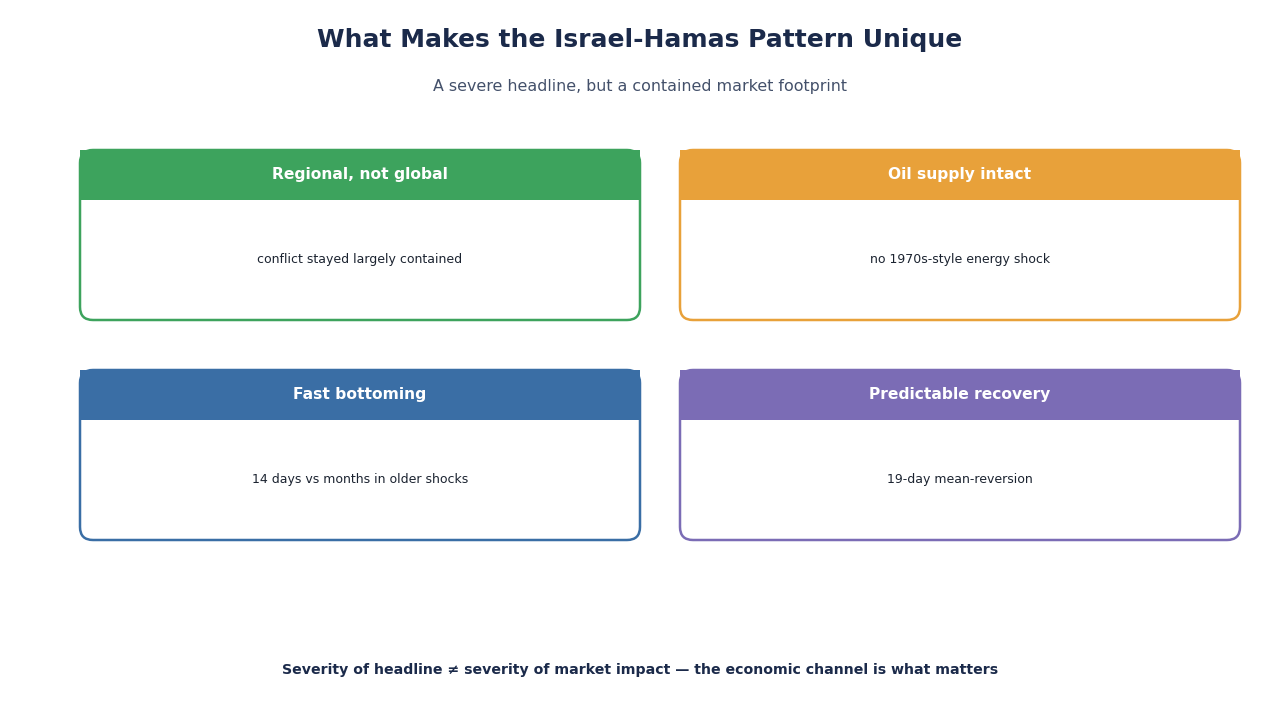
What Makes the Israel–Hamas War Pattern Unique?
Compared to historical war events, this pattern reflects a new market regime:
| Factor | Historical Wars | Modern Conflicts |
|---|---|---|
| Information speed | Slow | Instant |
| Market reaction duration | Months | Days–Weeks |
| AI influence | None | High |
| Liquidity response | Delayed | Immediate |
This explains why the market only experienced a -4.5% drawdown, rather than deeper systemic collapse.
How to Trade Geopolitical Risk Using AI
How to trade geopolitical risk events like the Israel–Hamas War 2023?
Trading geopolitical shocks requires discipline, structure, and multi-source intelligence.
With tools like SimianX AI, traders gain:
- Real-time AI-driven signal aggregation
- Multi-agent decision systems (technical + sentiment + macro)
- Risk scoring and confidence levels
- Replayable decision logic
The edge is no longer speed—it is structured interpretation.
Practical Workflow with SimianX
- Monitor real-time geopolitical signals
- Observe AI-generated risk level
- Validate with technical indicators
- Execute based on multi-agent consensus
Key Lessons for Traders and Investors
The Israel–Hamas War 2023 market impact teaches several critical lessons:
- Markets price uncertainty, not events
- Bottoms form through processes, not single candles
- Recovery phases are predictable when liquidity returns
- AI tools significantly improve decision clarity
Actionable Takeaways
- Avoid panic selling during initial drawdown
- Wait for bottom confirmation signals
- Focus on structured frameworks, not emotions
- Use AI-assisted tools to reduce noise
FAQ About Israel–Hamas War 2023 Market Impact
What is the typical drawdown during geopolitical wars?
Most modern geopolitical events result in -1% to -5% drawdowns, depending on escalation risk. Larger conflicts may trigger deeper corrections.
How long does it take markets to recover from war shocks?
In modern markets, recovery often occurs within 2–4 weeks, as seen in the 19-day recovery of the Israel–Hamas War 2023.
How can traders identify a market bottom during war events?
Look for volatility compression, RSI divergence, and sentiment exhaustion. AI tools like SimianX can combine these signals effectively.
Is it safe to trade during geopolitical uncertainty?
It can be, but only with structured risk management and multi-signal confirmation. Avoid impulsive decisions based on headlines.
Conclusion
The Israel–Hamas War 2023 market impact demonstrates a clear and repeatable pattern: sharp drawdown, structured bottom, and liquidity-driven recovery. Understanding this cycle allows traders to move from reactive behavior to strategic execution.
In today’s fast-moving markets, relying on fragmented information is no longer enough. Tools like SimianX AI provide a unified, multi-agent decision framework that transforms geopolitical chaos into actionable insights.
If you want to trade future geopolitical events with clarity and confidence, explore how SimianX AI can help you build a disciplined, data-driven trading process.
Deep Dive: Cross-Asset Reaction During the Israel–Hamas War 2023
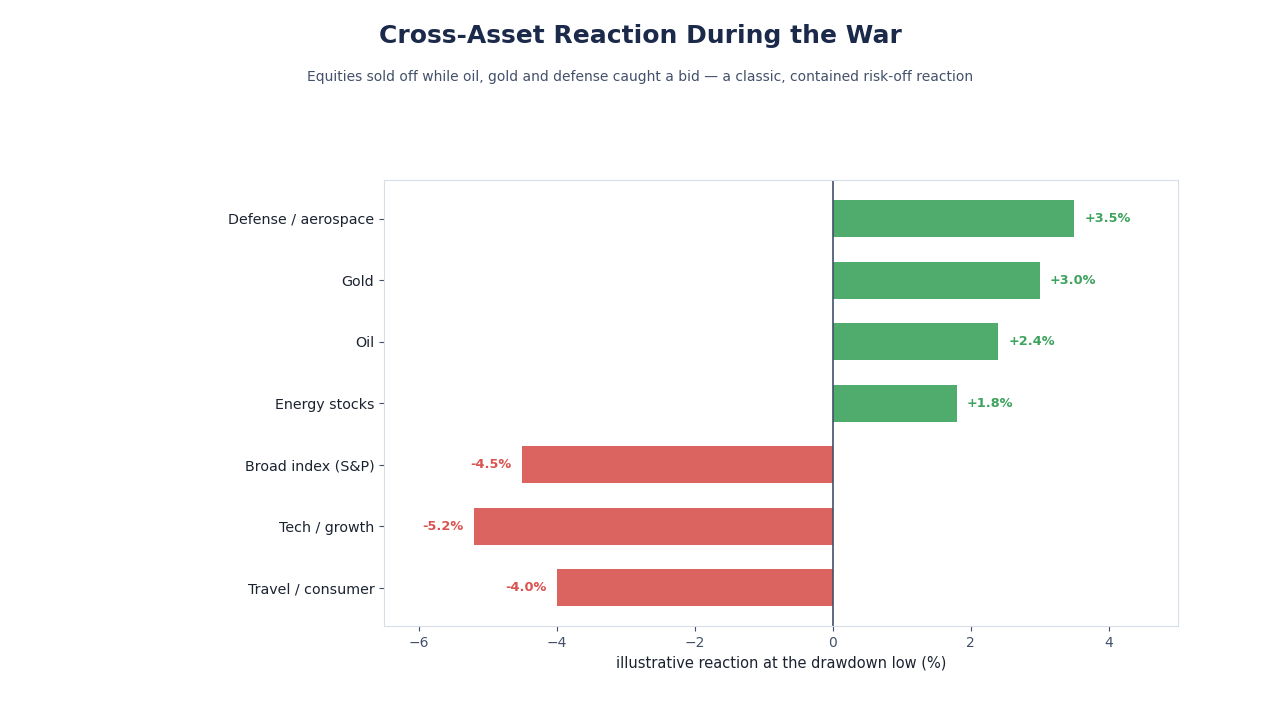
To fully understand the Israel–Hamas War 2023 market impact, it is essential to move beyond equities and examine cross-asset behavior. Modern markets are interconnected, and geopolitical shocks propagate through multiple channels simultaneously.
Equities vs. Commodities vs. Bonds
| Asset Class | Initial Reaction | Mid-Phase Behavior | Recovery Phase |
|---|---|---|---|
| Equities | Sell-off (-4.5%) | Stabilization | Gradual recovery |
| Oil | Spike upward | Volatility | Range-bound |
| Gold | Safe-haven bid | Peak sentiment | Slight retrace |
| Bonds | Yield drop | Stabilization | Repricing |
Key observation:
- Oil reacts to supply risk
- Gold reacts to fear
- Equities react to uncertainty
Understanding cross-asset alignment is critical for confirming market direction.
Cross-Market Confirmation Signals
Using SimianX AI, traders can track:
- Oil price breakout → confirms geopolitical risk
- Gold surge → confirms fear peak
- Bond yield compression → confirms risk-off sentiment
When these signals begin to diverge, it often indicates a market turning point.
Sector Rotation During the Recovery Phase
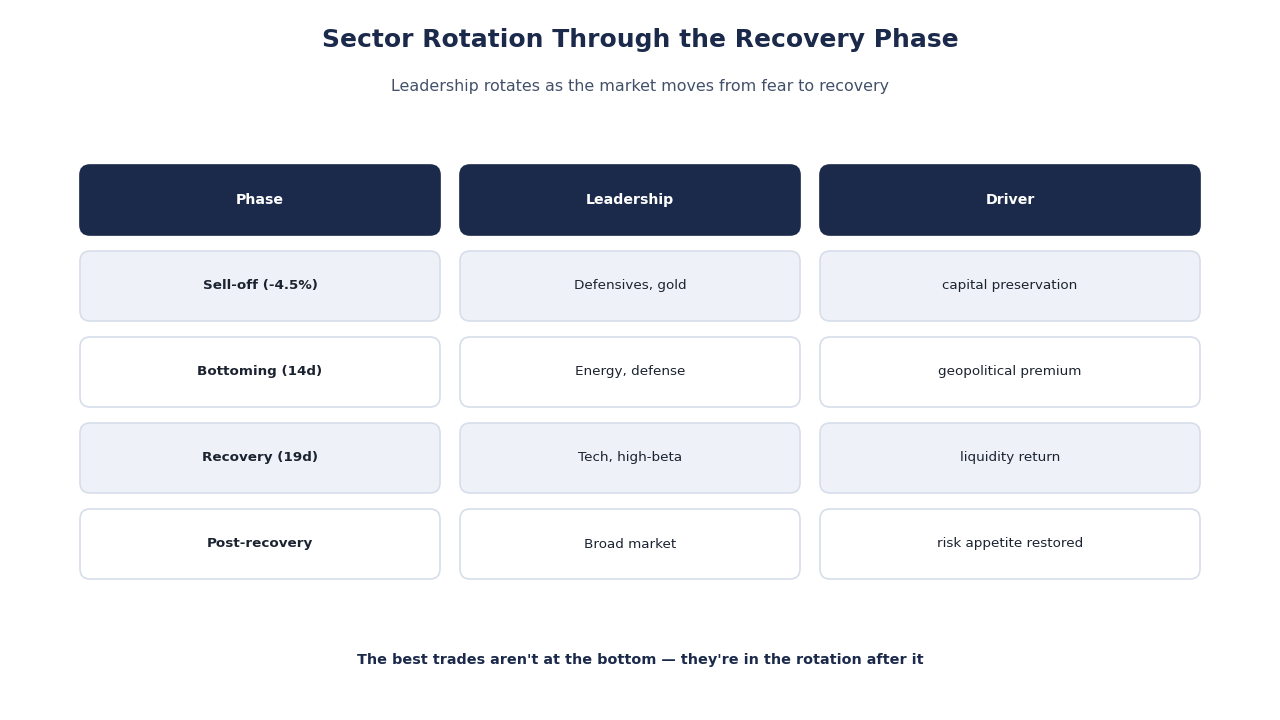
The 19-day recovery phase was not uniform across sectors. Instead, it followed a predictable rotation pattern, which offers valuable trading opportunities.
Phase-by-Phase Rotation
- Phase 1 (Days 1–7): Defensive Outperformance
- Energy (oil-driven)
- Utilities
- Defense stocks
- Phase 2 (Days 8–14): Stabilization
- Financials stabilize
- Industrials stop declining
- Phase 3 (Days 15–19): Growth Rebound
- Technology leads
- High-beta assets recover
| Phase | Leading Sector | Reason |
|---|---|---|
| Early Shock | Energy | Oil price spike |
| Bottoming | Defensive | Capital preservation |
| Recovery | Tech | Liquidity return |
Trading Insight
The best trades are not at the bottom—they are in the rotation after the bottom.
Using SimianX AI, traders can:
- Track sector momentum shifts in real time
- Identify early leadership transitions
- Allocate capital dynamically
Microstructure Analysis: Order Flow and Liquidity
Modern markets are increasingly driven by order flow dynamics, not just macro narratives.
What Happened Under the Surface?
During the -4.5% drawdown:
- Large institutional sell orders dominated early sessions
- Liquidity thinned temporarily
- Bid-ask spreads widened
During the bottoming phase:
- Selling pressure decreased
- Passive buyers entered
- Market depth improved
Order Flow Signals That Indicated a Bottom
- Decreasing sell-side aggression
- Increased absorption of large orders
- Stabilization in futures markets
SimianX AI advantage:
- Real-time order flow monitoring
- AI interpretation of institutional behavior
- Signal integration across timeframes
Volatility Regime Analysis
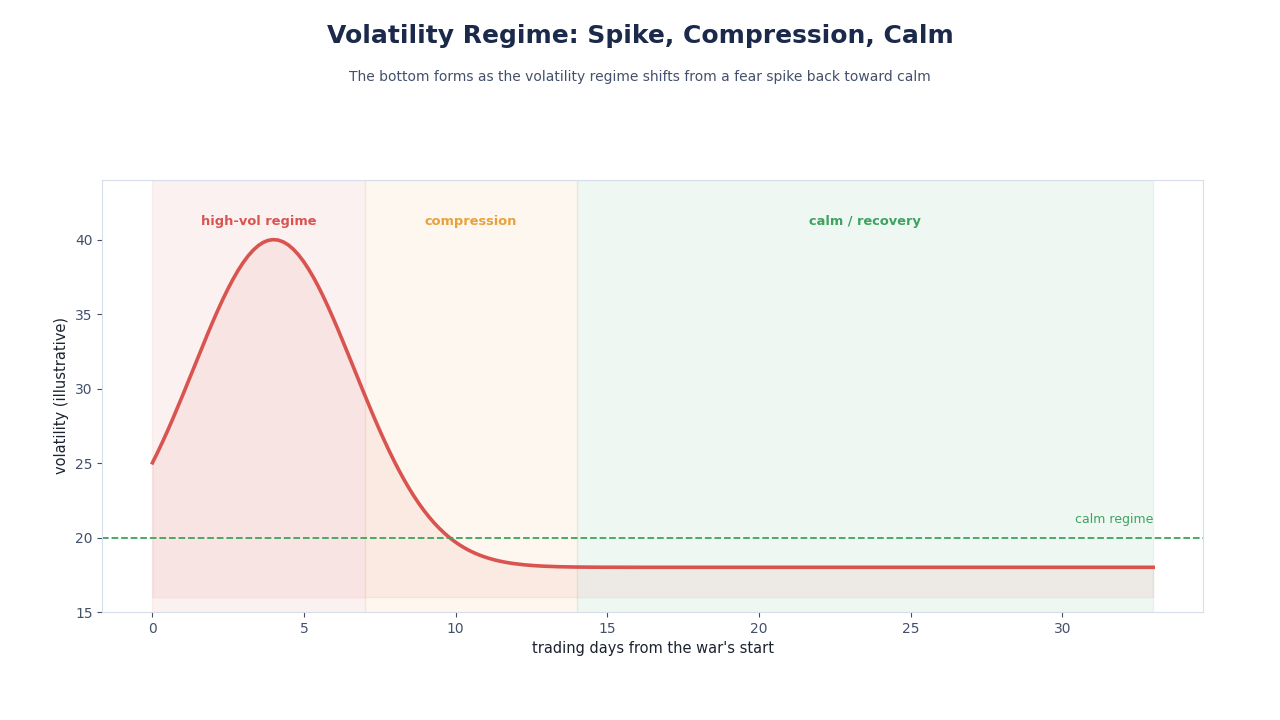
Volatility is the heartbeat of geopolitical trading.
VIX Behavior During the Event
| Phase | VIX Behavior |
|---|---|
| Shock | Sharp spike |
| Panic | Elevated plateau |
| Bottom | Decline begins |
| Recovery | Compression |
Key Insight
The bottom often forms when volatility stops rising, not when it falls.
Trading Volatility with AI
Using SimianX AI, traders can:
- Detect volatility regime shifts
- Align entries with volatility contraction
- Avoid entering during peak uncertainty
Sentiment Analysis: The Invisible Driver
Market sentiment during the Israel–Hamas War 2023 followed a classic curve:
- Shock
- Fear
- Panic
- Acceptance
- Recovery
Sentiment Indicators
- News headline negativity
- Social media sentiment
- Institutional positioning
AI-Based Sentiment Tracking
SimianX integrates:
- Real-time news parsing
- NLP-based sentiment scoring
- Signal weighting across sources
When sentiment is most negative, opportunity begins to emerge.
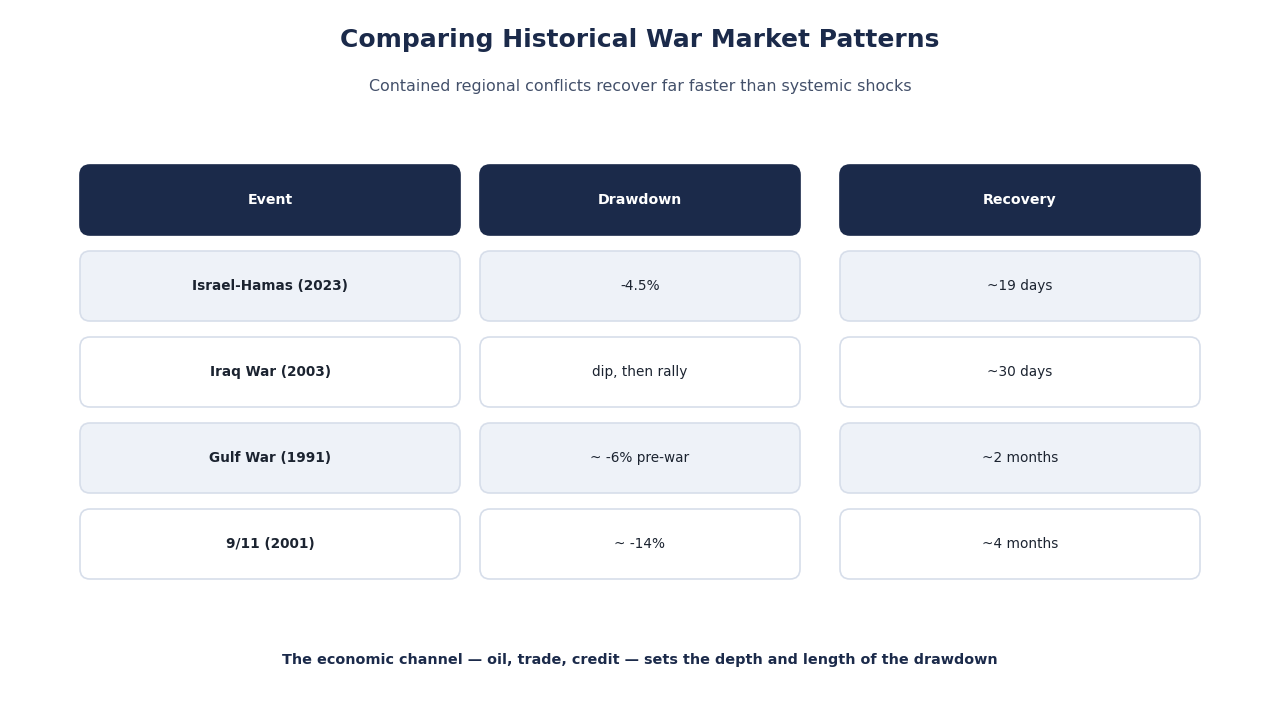
Comparing Historical War Market Patterns
To validate the Israel–Hamas War 2023 pattern, we compare it with past events:
| Event | Drawdown | Bottom Time | Recovery Time |
|---|---|---|---|
| Gulf War 1991 | -16% | Months | Months |
| Iraq War 2003 | -12% | Weeks | Weeks |
| Crimea 2014 | -3% | Days | Days |
| Israel–Hamas 2023 | -4.5% | 14 days | 19 days |
Structural Evolution
- Faster information → faster pricing
- Higher liquidity → faster recovery
- AI integration → more efficient markets
Building a Geopolitical Trading Framework
Step-by-Step System
- Identify geopolitical trigger
- Measure initial market reaction
- Track cross-asset confirmation
- Monitor bottom formation signals
- Enter during stabilization
- Ride recovery phase
Framework Table
| Step | Tool | Objective |
|---|---|---|
| Detection | News + AI | Identify event |
| Analysis | SimianX AI | Interpret signals |
| Confirmation | Cross-assets | Validate trend |
| Execution | Strategy | Enter trade |
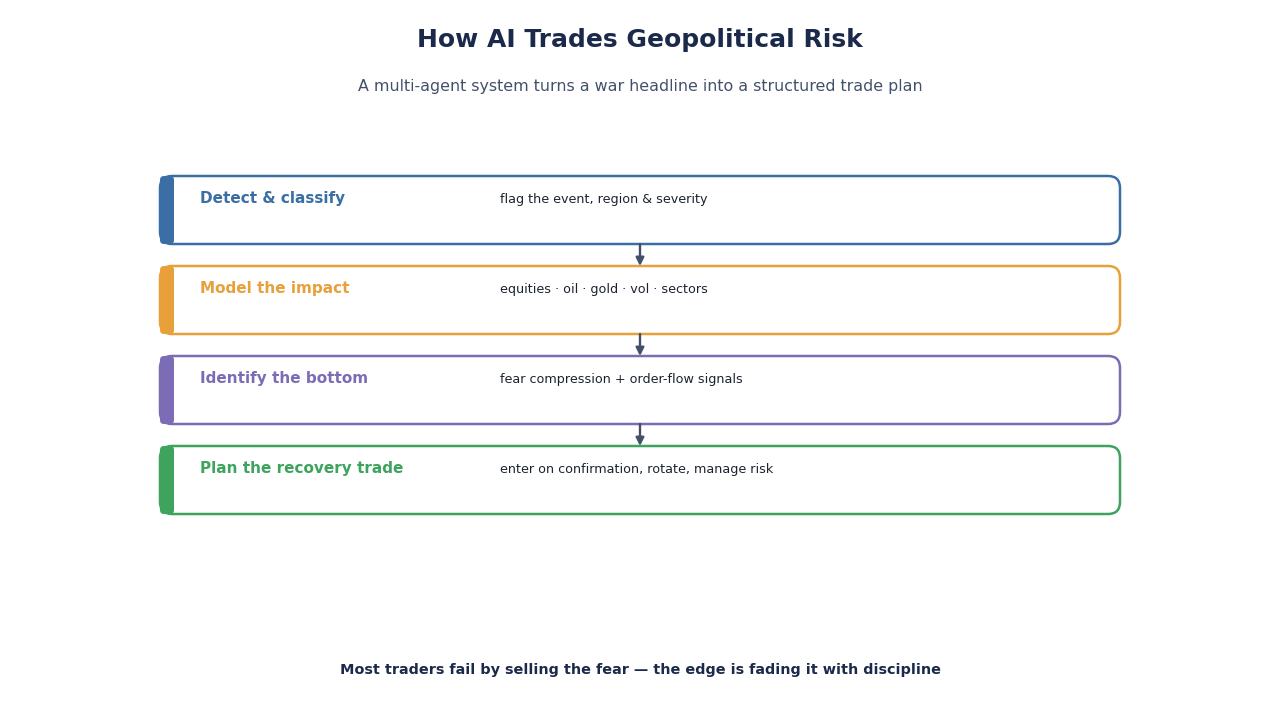
Advanced Strategy: Multi-Agent Decision Systems
One of the most powerful innovations is the multi-agent trading model, as implemented in SimianX AI.
Agent Breakdown
- Technical Agent → indicators (EMA, RSI, MACD)
- Sentiment Agent → news + social signals
- Macro Agent → interest rates, oil, geopolitics
- Decision Agent → final trade recommendation
Why Multi-Agent Systems Work
- Reduce bias
- Combine multiple perspectives
- Improve consistency
A single signal can mislead. Multiple aligned signals create conviction.
Risk Management During War Events
Key Risks
- Escalation risk
- Liquidity shocks
- False bottoms
Risk Management Rules
- Never trade full size during uncertainty
- Use staggered entries
- Set dynamic stop-loss levels
- Monitor real-time updates
Example Risk Model
| Risk Level | Position Size |
|---|---|
| High Risk | 25% |
| Medium Risk | 50% |
| Low Risk | 100% |
Case Study Simulation Using SimianX AI
Let’s simulate a trader using SimianX AI during the Israel–Hamas War:
Day 1–3
- AI flags high risk
- Trader avoids entry
Day 8–14
- AI detects stabilization
- Trader enters partial position
Day 15–19
- AI confirms recovery
- Trader scales in
Result:
- Avoided drawdown
- Captured recovery
Behavioral Finance: Why Most Traders Fail
Despite predictable patterns, most traders:
- Panic sell at lows
- Miss recovery
- Overtrade during volatility
Psychological Traps
- Loss aversion
- Recency bias
- Overreaction to news
The market rewards discipline, not emotion.
Future Implications: AI-Driven Markets
The Israel–Hamas War 2023 confirms a broader trend:
Markets Are Becoming:
- Faster
- More efficient
- AI-influenced
What This Means
- Edge shifts from information → interpretation
- Human intuition alone is insufficient
- AI-assisted trading becomes essential
Practical Checklist for Traders
Before Trading
- Identify event severity
- Check cross-asset signals
- Evaluate sentiment
During Trading
- Follow structured plan
- Avoid emotional decisions
- Monitor AI signals
After Trading
- Review decisions
- Analyze performance
- Refine strategy
FAQ About Israel–Hamas War 2023 Market Impact (Extended)
How do geopolitical events affect different asset classes differently?
Different assets respond to different drivers. Oil reacts to supply risks, gold to fear, and equities to uncertainty. Understanding these differences helps confirm trends.
What indicators are most reliable during war events?
A combination of volatility, sentiment, and cross-asset signals is most reliable. Single indicators often fail.
Can AI really improve trading performance?
Yes. AI systems like SimianX reduce noise, integrate multiple data sources, and provide structured decision-making.
Is the Israel–Hamas War pattern repeatable?
While each event is unique, the shock → bottom → recovery pattern is increasingly consistent in modern markets.
Conclusion (Extended)
The Israel–Hamas War 2023 market impact is more than a historical case—it is a blueprint for trading modern geopolitical events.
We observed:
- A controlled -4.5% drawdown
- A structured 14-day bottoming process
- A predictable 19-day recovery phase
These patterns highlight a critical shift: markets are no longer chaotic—they are structured, data-driven systems influenced by liquidity, algorithms, and AI.
For traders, the implication is clear:
Success depends on structure, not intuition.
By leveraging tools like SimianX AI, traders can:
- Interpret complex signals in real time
- Avoid emotional mistakes
- Execute with discipline and clarity
If you want to consistently navigate geopolitical volatility and turn uncertainty into opportunity, now is the time to explore SimianX AI—and upgrade your trading process for the modern market era.
Related Reading
- Iran-US War Impact on Stocks: AI Risk Signals Live
- U.S. Strike on Iran General: Stocks Down, Oil +4% Shock
- Yom Kippur War 1973: Oil 4x, 2-Year Global Stock Crash
- Russia-Ukraine War Stock Impact: Sectors, VIX, Risk Plan
- 2019 Saudi Aramco Drone Strike: Oil +20%, Stocks -5%
- 7 AI Risk Radars for Equities: Breadth, Revisions, Skew