
 लेखक: Muke
क्या 2026 में अमेरिकी उपभोक्ता टूट रहा है? वॉलमार्ट और टारगेट ने निवेशकों को डेटा देखने के लिए चेतावनी दी
“2026 में अमेरिकी उपभोक्ता टूट रहा है” वाक्यांश अब केवल एक मंदी की शीर्षक नहीं है। यह उन निवेशकों के लिए एक व्यावहारिक शोध प्रश्न बन गया है जो WMT, TGT, खुदरा बिक्री, मुद्रास्फीति, घरेलू ऋण, और कमाई मार्गदर्शन पर नज़र रख रहे हैं। वॉलमार्ट के नवीनतम परिणाम मजबूत यातायात दिखाते हैं लेकिन स्पष्ट ईंधन से संबंधित तनाव भी प्रकट करते हैं, जबकि टारगेट की वापसी अभी भी अनिश्चित संचालन वातावरण के बारे में सतर्कता के साथ आई। SimianX AI का उपयोग करने वाले पाठकों के लिए, यह वास्तव में एक बहु-चर वाले बाजार प्रश्न का प्रकार है जहाँ एकल शीर्षक पर्याप्त नहीं है: निवेशकों को बुनियादी बातों, भावना, मैक्रो डेटा, और जोखिम संकेतों के बीच एक संरचित, साक्ष्य-आधारित दृष्टिकोण की आवश्यकता है।
वॉलमार्ट और टारगेट अमेरिकी उपभोक्ता को समझने में क्यों महत्वपूर्ण हैं
Walmart और Target अमेरिका के घरेलू जीवन में सबसे स्पष्ट वास्तविक समय की खिड़कियों में से दो हैं। Walmart खाद्य, ईंधन, मूल्य खरीदारी, और व्यापार-नीचे व्यवहार के प्रति भारी रूप से संवेदनशील है। Target अधिक विवेकाधीन है, जिसमें परिधान, घर, सौंदर्य, मौसमी सामान, और डिजिटल सुविधा के प्रति संवेदनशीलता है। जब दोनों खुदरा विक्रेता उपभोक्ता दबाव पर टिप्पणी करते हैं, तो निवेशकों को सुनना चाहिए—लेकिन उन्हें दोनों कंपनियों से एक ही संदेश मानने की उम्मीद नहीं करनी चाहिए।
Walmart का वित्तीय 2027 का पहले तिमाही का आय कॉल 21 मई, 2026 के लिए निर्धारित था, जिसमें उस रिलीज़ तिथि से जुड़े तिमाही सामग्री शामिल थे। रिलीज़ के बाद की रिपोर्टों में, Walmart ने मजबूत बिक्री लेकिन बढ़ते तनाव संकेत दिखाए: राजस्व लगभग 7.3% बढ़कर लगभग $177.8 बिलियन हो गया, Walmart U.S. के तुलनीय बिक्री में 4.1% की वृद्धि हुई, और ई-कॉमर्स में 26% की वृद्धि हुई; हालाँकि, प्रबंधन ने यह भी इंगित किया कि छोटे गैसोलीन भराव एक संकेत है कि खरीदार नकद प्रवाह को अधिक कसकर प्रबंधित कर रहे हैं।
Target की नवीनतम रिपोर्ट ने एक अलग कहानी बताई। कंपनी ने कहा कि पहले तिमाही की शुद्ध बिक्री 6.7% बढ़ी, तुलनीय बिक्री 5.6% बढ़ी, यातायात 4.4% बढ़ा, और डिजिटल तुलनीय बिक्री 8.9% बढ़ी, जो उसी दिन की डिलीवरी की वृद्धि द्वारा संचालित थी। फिर भी Target ने "अनिश्चित परिचालन वातावरण" में अनुशासन और लचीलापन पर जोर दिया, जो महत्वपूर्ण है क्योंकि बिक्री में पुनरुद्धार मार्जिन, लागत, और मांग के जोखिमों को समाप्त नहीं करता है।
मुख्य निष्कर्ष: अमेरिकी उपभोक्ता ढह नहीं रहा है, लेकिन डेटा बढ़ती हुई विभाजित उपभोक्ता का सुझाव देता है: मूल्य-केंद्रित खर्च बनाए रख रहा है, विवेकाधीन आत्मविश्वास नाजुक है, और ईंधन महंगाई पहले निम्न-आय वाले घरों पर दबाव डाल रही है।
क्या अमेरिकी उपभोक्ता 2026 में टूट रहा है या बस व्यापार-नीचे कर रहा है?
सही सवाल यह नहीं है कि उपभोक्ता टूट गया है या नहीं। सवाल यह है कि उपभोक्ता मार्जिन, मिश्रण, और मार्गदर्शन पर दबाव डालने के लिए तेजी से व्यवहार बदल रहा है या नहीं।
एक सच्चा उपभोक्ता टूटना आमतौर पर एक साथ कई स्थानों पर दिखाई देता है:
- गिरते लेनदेन की मात्रा
- बढ़ती डिफॉल्ट दरें
- कमजोर विवेकाधीन श्रेणियाँ
- प्रचारों से मार्जिन दबाव
- नीचे की ओर कमाई में संशोधन
- बिगड़ती भावना
- महंगाई समायोजन के बाद खर्च में कमी
इस समय, तस्वीर मिश्रित है। अमेरिका की खुदरा बिक्री नाममात्र के संदर्भ में लचीला दिखती है, लेकिन महंगाई कहानी को जटिल बनाती है। जब बिक्री इसलिए बढ़ती है क्योंकि कीमतें बढ़ती हैं, तो निवेशकों को नाममात्र वृद्धि को वास्तविक क्रय शक्ति से अलग करना चाहिए।
वॉलमार्ट संकेत: मूल्य की ताकत का मतलब उपभोक्ता तनाव हो सकता है
जब घरों को दबाव महसूस होता है, तो वॉलमार्ट अक्सर अच्छा प्रदर्शन करता है क्योंकि उपभोक्ता खर्च को मूल्य, किराने, निजी लेबल और आवश्यक श्रेणियों की ओर स्थानांतरित करते हैं। यह वॉलमार्ट की मजबूत तुलनीय बिक्री को उतना सीधा नहीं बनाता जितना कि वे दिखते हैं।
यदि वॉलमार्ट को इसलिए बाजार हिस्सेदारी मिलती है क्योंकि उच्च आय वाले खरीदार डिलीवरी और मूल्य चैनलों का उपयोग कर रहे हैं, तो यह वॉलमार्ट के लिए सकारात्मक है। यदि निम्न आय वाले खरीदार प्रति यात्रा कम गैसोलिन खरीद रहे हैं, किराने के बजट को खींच रहे हैं, या बास्केट का आकार घटा रहे हैं, तो यह व्यापक उपभोक्ता के लिए नकारात्मक है।
यही कारण है कि निवेशकों को वॉलमार्ट को केवल एक खुदरा विक्रेता के रूप में नहीं, बल्कि एक उपभोक्ता तनाव सेंसर के रूप में पढ़ना चाहिए।
वॉलमार्ट बाजार को क्या बता रहा है:
- उपभोक्ताओं को अभी भी आवश्यकताओं की आवश्यकता है।
- मूल्य खुदरा विक्रेता दबाव में यातायात प्राप्त कर सकते हैं।
- ईंधन की लागत एक बड़ा व्यवहारिक चालक बनती जा रही है।
- मजबूत बिक्री का मतलब स्वचालित रूप से मजबूत घरेलू विश्वास नहीं होता है।
- मार्जिन की लचीलापन इस पर निर्भर करता है कि खुदरा विक्रेता लागत को अवशोषित करते हैं या पारित करते हैं।
टारगेट संकेत: एक पुनरुद्धार का मतलब यह नहीं है कि चक्र स्पष्ट है
टारगेट के पहले तिमाही के परिणाम अपेक्षा से बेहतर थे, लेकिन चेतावनी अधिक सूक्ष्म है। टारगेट ने माल की श्रेणियों में व्यापक बिक्री वृद्धि, उच्च यातायात, और मजबूत डिजिटल वृद्धि की रिपोर्ट की। हालांकि, टारगेट का व्यवसाय वॉलमार्ट की तुलना में विवेकाधीन मांग के प्रति अधिक संवेदनशील है, जो इसकी मार्गदर्शन और मार्जिन प्रवृत्तियों को विशेष रूप से महत्वपूर्ण बनाता है।
Target का व्यवसाय विशेष रूप से महत्वपूर्ण है क्योंकि विवेकाधीन श्रेणियाँ अक्सर आवश्यक वस्तुओं से पहले कमजोर होती हैं। यदि उपभोक्ता Target पर खर्च करना जारी रखते हैं जबकि ट्रैफिक में सुधार होता है, तो यह पूर्ण उपभोक्ता संकट के खिलाफ तर्क करता है। लेकिन यदि Target को अधिक प्रमोशन्स की आवश्यकता होती है, उत्पाद लागत से मार्जिन दबाव का सामना करता है, या घर और वस्त्र में धीमी मांग का सामना करता है, तो यह संकेत दे सकता है कि दबाव निम्न-आय वाले परिवारों से परे फैल रहा है।
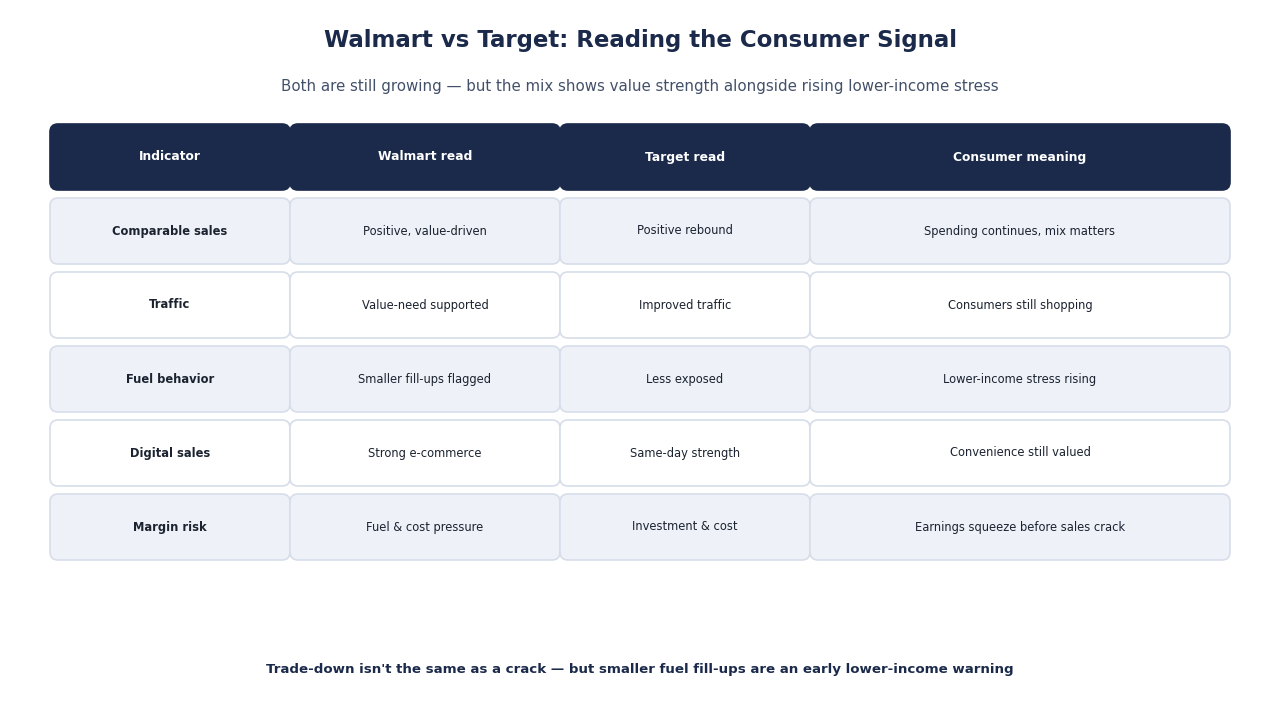
| संकेतक | Walmart रीड | Target रीड | उपभोक्ता अर्थ |
|---|---|---|---|
| तुलनीय बिक्री | सकारात्मक, मूल्य-प्रेरित | सकारात्मक पुनरुद्धार | खर्च जारी है, लेकिन मिश्रण महत्वपूर्ण है |
| ट्रैफिक | मूल्य आवश्यकताओं द्वारा समर्थित | सुधारित ट्रैफिक | उपभोक्ता अभी भी खरीदारी कर रहे हैं |
| ईंधन व्यवहार | छोटे भराव का संकेत | कम सीधे प्रभावित | निम्न-आय तनाव बढ़ रहा है |
| डिजिटल बिक्री | मजबूत ई-कॉमर्स वृद्धि | उसी दिन डिलीवरी की ताकत | सुविधा मूल्यवान बनी हुई है |
| मार्जिन जोखिम | ईंधन और लागत दबाव | निवेश और लागत दबाव | खुदरा विक्रेताओं को बिक्री संकट से पहले आय दबाव का सामना करना पड़ सकता है |
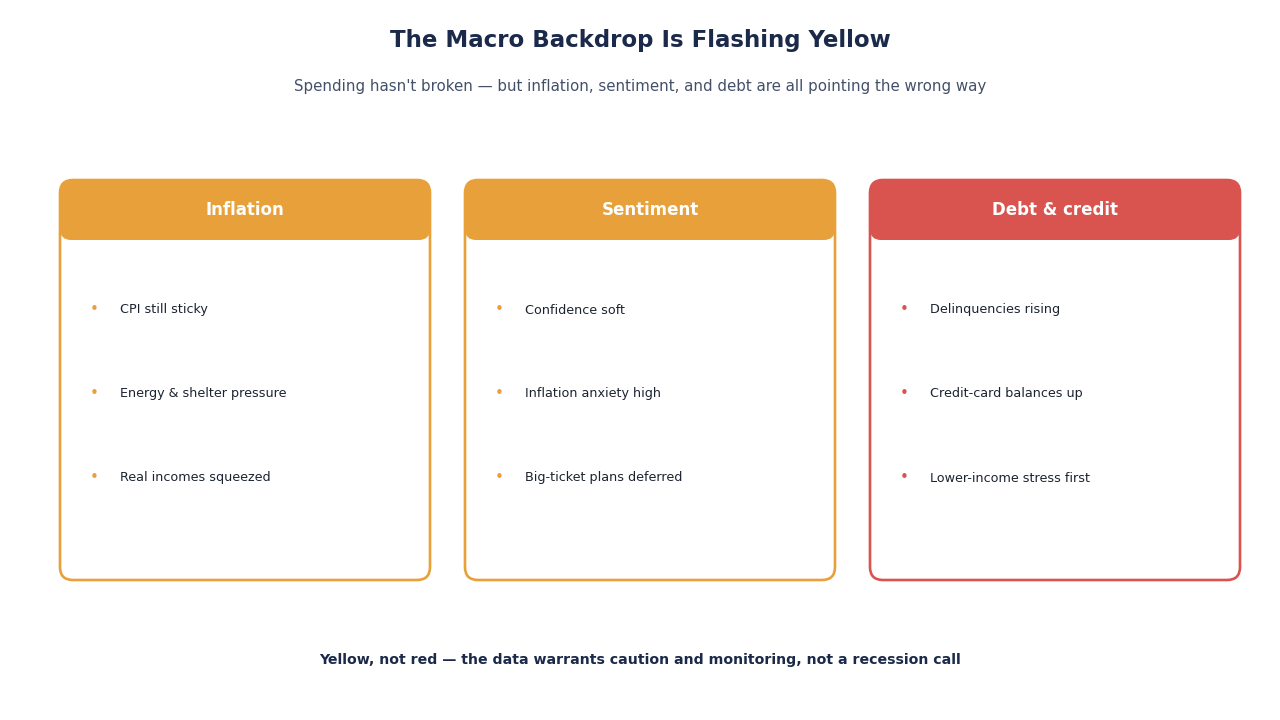
मैक्रो पृष्ठभूमि: महंगाई, भावना, और ऋण पीले संकेत दे रहे हैं
उपभोक्ता अर्थव्यवस्था केवल आय कॉल द्वारा संचालित नहीं होती है। एक उपयोगी शोध ढांचा खुदरा विक्रेता की टिप्पणियों को मैक्रो डेटा के साथ जोड़ता है।
खुदरा बिक्री तब भी बढ़ सकती है जब घरेलू तनाव बढ़ता है। महंगाई, ईंधन लागत, बीमा, किराया, क्रेडिट कार्ड बैलेंस, और ऋण भुगतान सभी यह प्रभावित करते हैं कि उपभोक्ताओं के पास आवश्यकताओं के बाद कितना विवेकाधीन नकद बचता है।
उन परिवारों के लिए जो वेतन से वेतन तक जीते हैं, ऊर्जा महंगाई एक कर की तरह कार्य करती है क्योंकि यह रेस्तरां, वस्त्र, इलेक्ट्रॉनिक्स, यात्रा, और घरेलू सामान के लिए उपलब्ध पैसे को कम करती है। उपभोक्ता भावना भी महत्वपूर्ण है क्योंकि कम आत्मविश्वास आमतौर पर परिवारों को अधिक मूल्य-संवेदनशील, अधिक प्रमोशन-प्रेरित, और बड़े खरीदारी के लिए कम इच्छुक बनाता है।
घर के ऋण ने एक और चेतावनी संकेत जोड़ा है। बढ़ते क्रेडिट कार्ड बैलेंस, उच्च डिफॉल्ट संक्रमण दरें, और कड़े उधारी मानक सभी यह संकेत कर सकते हैं कि उपभोक्ता खर्च बनाए रखने के लिए उधारी पर अधिक निर्भर हो रहा है।
उपभोक्ता स्वास्थ्य के लिए खुदरा आय का विश्लेषण कैसे करें
निवेशकों को "बिक्री बढ़ी" या "मार्गदर्शन चूक गया" जैसे एक शीर्षक पर प्रतिक्रिया देने से बचना चाहिए। इसके बजाय, एक परतदार प्रक्रिया का उपयोग करें।
- राजस्व के बजाय ट्रैफ़िक से शुरू करें। राजस्व बढ़ सकता है क्योंकि कीमतें बढ़ती हैं। ट्रैफ़िक दिखाता है कि क्या ग्राहक अभी भी आ रहे हैं।
- आवश्यकताओं को विवेकाधीन श्रेणियों से अलग करें। किराने की मजबूती कपड़ों, घरेलू सामान, और इलेक्ट्रॉनिक्स में कमजोरी को छिपा सकती है।
- सकल मार्जिन और मार्कडाउन पर नज़र रखें। प्रचार अक्सर मांग के कमजोर होने का पहला संकेत होते हैं।
- मूल्य खुदरा विक्रेताओं की तुलना विवेकाधीन खुदरा विक्रेताओं से करें। वॉलमार्ट की मजबूती और टारगेट की कमजोरी व्यापार-डाउन दबाव का संकेत दे सकती है।
- ईंधन और क्रेडिट डेटा को ट्रैक करें। पेट्रोल और डिफॉल्ट सीधे घरेलू तरलता को प्रभावित करते हैं।
- मार्गदर्शन भाषा को ध्यान से पढ़ें। "लचीला," "अनिश्चित," और "अनुशासित" अक्सर संकेत करते हैं कि प्रबंधन अस्थिरता के लिए तैयारी कर रहा है।
- बहु-स्रोत विश्लेषण का उपयोग करें। आय ट्रांसक्रिप्ट, मैक्रो रिलीज़, मूल्य कार्रवाई, विश्लेषक संशोधन, और भावना को मिलाकर एकीकृत करें।
यही वह जगह है जहाँ SimianX AI जैसे प्लेटफार्म निवेशकों को मैनुअल शीर्षक पढ़ने से आगे बढ़ने में मदद कर सकते हैं। SimianX एक कार्यप्रवाह का समर्थन कर सकता है जहाँ कई संकेतों का एक साथ विश्लेषण किया जाता है: मौलिक बातें, तकनीकी, आय टिप्पणी, मैक्रो जोखिम, समाचार भावना, और बाजार की प्रतिक्रिया। 2026 में अमेरिकी उपभोक्ता के टूटने जैसे जटिल प्रश्न के लिए, यह संरचना उपयोगी है क्योंकि बुल केस और बियर केस दोनों एक ही समय में सच हो सकते हैं।
बुल केस: रोजगार और नाममात्र खर्च स्थिर हैं।
भालू का मामला: महंगाई, ईंधन, क्रेडिट, और मार्जिन दबाव उस खर्च की गुणवत्ता को कमजोर कर रहे हैं।
निवेशकों को अगली बातों पर ध्यान देना चाहिए
बाजार की गलती अक्सर द्विआधारी सोच होती है। या तो उपभोक्ता "ठीक है," या उपभोक्ता "टूट रहा है।" वास्तव में, उपभोक्ता धीमापन आमतौर पर क्रमिक विभाजन के माध्यम से होता है।
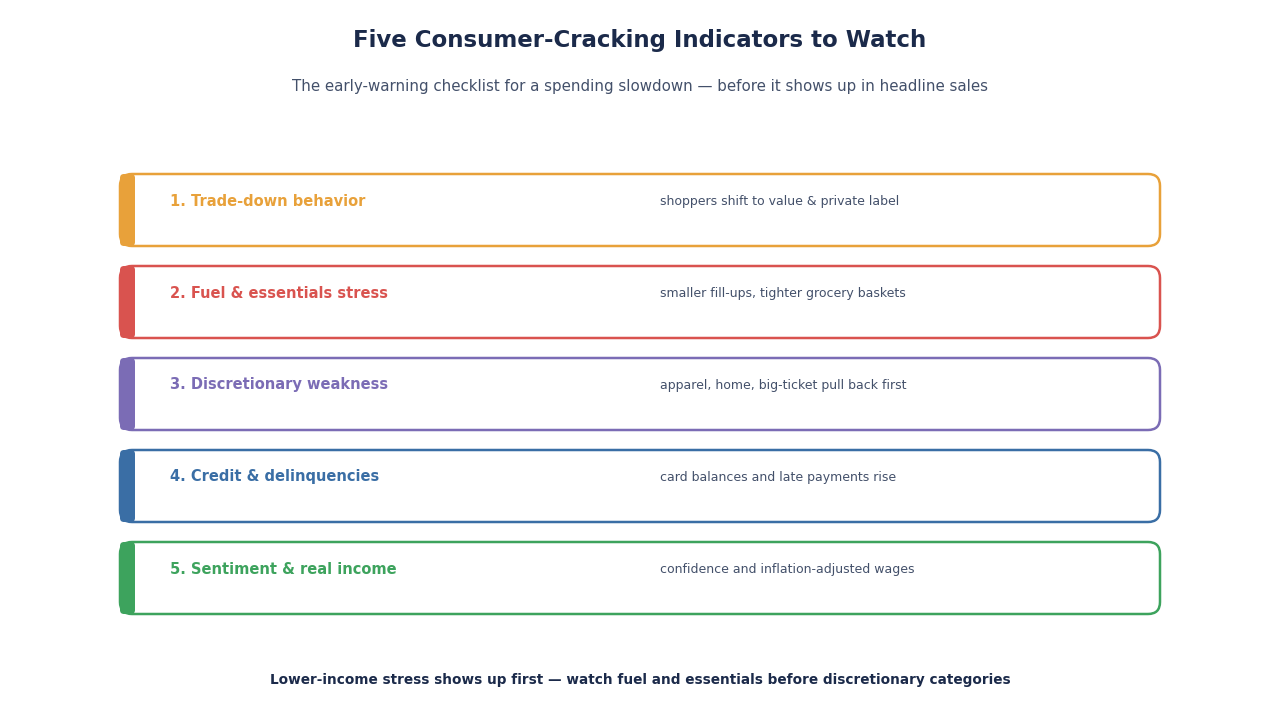
इन पांच उपभोक्ता टूटने के संकेतकों पर ध्यान दें
1. वास्तविक खुदरा बिक्री में गिरावट
यदि नाममात्र खुदरा बिक्री बढ़ती है लेकिन महंगाई लाभ को खा जाती है, तो वास्तविक मांग रिपोर्ट की तुलना में कमजोर हो सकती है।
2. निम्न-आय वाले ईंधन व्यवहार
छोटे गैस भराव, अधिक निजी-लेबल खरीददारी, और छोटे बास्केट तनाव के प्रारंभिक संकेत हो सकते हैं।
3. विवेकाधीन श्रेणी में नरमी
फर्नीचर, घरेलू सुधार, वस्त्र, इलेक्ट्रॉनिक्स, और रेस्तरां में कमजोरी किराने की कमजोरी की तुलना में अधिक चिंताजनक होगी।
4. क्रेडिट कार्ड डिफॉल्ट प्रवृत्तियाँ
यदि प्रारंभिक चरण के क्रेडिट कार्ड डिफॉल्ट तेज होते हैं, तो निवेशकों को मान लेना चाहिए कि खर्च का जोखिम भावना से बैलेंस शीट की ओर बढ़ रहा है।
5. रिटेलर मार्जिन संकुचन
बिक्री ठीक लग सकती है जबकि लाभ गिर रहा है। यह अक्सर बाजार की पहली वास्तविक चेतावनी होती है।
एक व्यावहारिक उपभोक्ता अनुसंधान स्कोरकार्ड
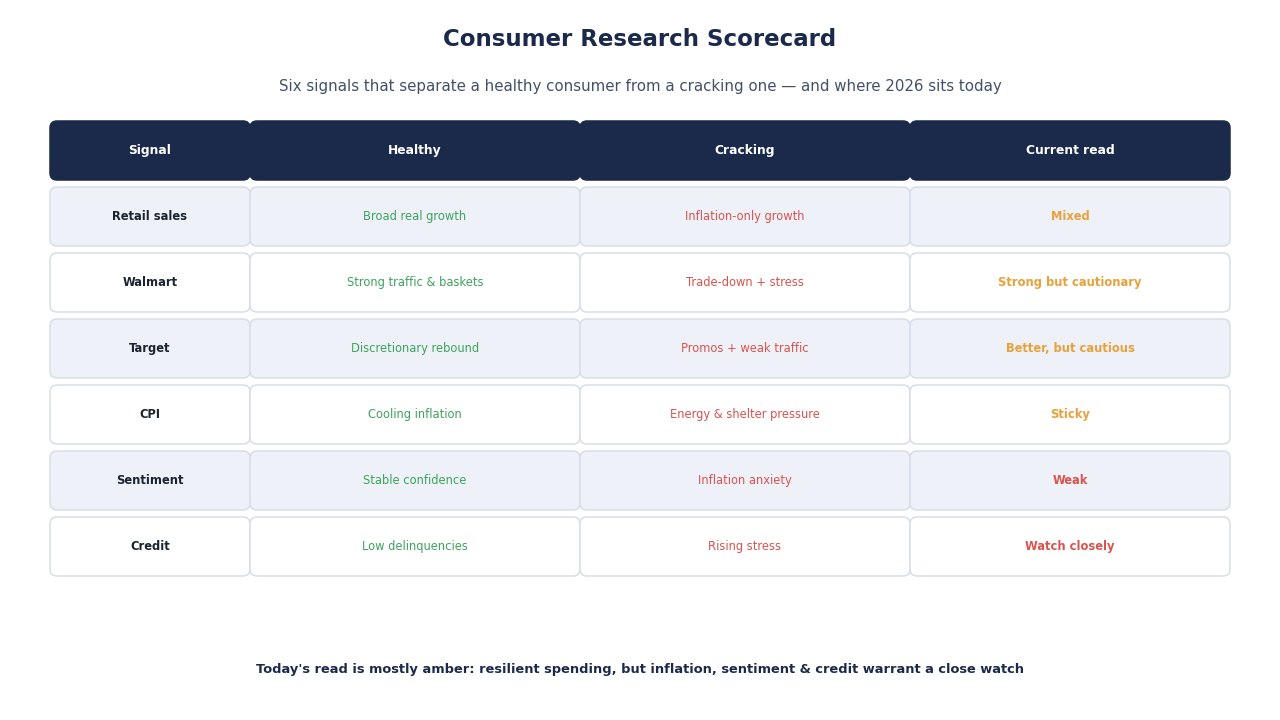
| संकेत | स्वस्थ उपभोक्ता | टूटता उपभोक्ता | वर्तमान रीड |
|---|---|---|---|
| खुदरा बिक्री | व्यापक वास्तविक वृद्धि | महंगाई-प्रेरित वृद्धि केवल | मिश्रित |
| वॉलमार्ट | मजबूत ट्रैफिक और बास्केट | व्यापार-डाउन प्लस तनाव व्यवहार | मजबूत लेकिन सावधानीपूर्वक |
| टारगेट | विवेकाधीन पुनरुत्थान | भारी प्रचार और कमजोर ट्रैफिक | बेहतर, लेकिन सतर्क |
| सीपीआई | ठंडी महंगाई | ऊर्जा और आश्रय दबाव | चिपचिपा |
| भावना | स्थिर विश्वास | महंगाई की चिंता | कमजोर |
| क्रेडिट | कम डिफॉल्ट | बढ़ता तनाव | ध्यान से देखें |
यह उत्तर स्टॉक्स के लिए क्यों महत्वपूर्ण है
एक कमजोर उपभोक्ता सभी शेयरों को समान रूप से प्रभावित नहीं करता। वॉलमार्ट एक दबाव में बेहतर प्रदर्शन कर सकता है क्योंकि इसका मूल्य प्रस्ताव अधिक महत्वपूर्ण हो जाता है। टारगेट पुनः उभर सकता है यदि मध्य-आय वाले उपभोक्ता खर्च करना जारी रखते हैं, लेकिन इसका विवेकाधीन आत्मविश्वास पर अधिक प्रभाव है। कॉस्टको, ऑफ-प्राइस रिटेलर्स, डॉलर स्टोर्स, ग्रोसर्स, रेस्तरां, क्रेडिट कार्ड जारी करने वाले, बैंक, यात्रा कंपनियां, और उपभोक्ता ऋणदाता सभी अलग-अलग प्रतिक्रिया करते हैं।
WMT के लिए, मुख्य प्रश्न यह है कि क्या शेयर लाभ और नए लाभ पूल—विज्ञापन, ई-कॉमर्स, सदस्यता, मार्केटप्लेस, और पूर्ति—ईंधन और वेतन दबाव को संतुलित कर सकते हैं। वॉलमार्ट की नवीनतम टिप्पणी यह सुझाव देती है कि यह एक सापेक्ष विजेता बना हुआ है, भले ही उपभोक्ता तनाव में हो।
TGT के लिए, मुख्य प्रश्न यह है कि क्या हाल की ताकत एक स्थायी बदलाव को चिह्नित करती है या एक अस्थायी उछाल है जो आसान तुलना और बेहतर निष्पादन से मदद मिली है। टारगेट की विवेकाधीन संवेदनशीलता का मतलब है कि निवेशकों को ट्रैफिक, बास्केट आकार, प्रचार की तीव्रता, और मार्जिन मार्गदर्शन पर ध्यान से नजर रखनी चाहिए।
वॉलमार्ट और टारगेट की आय अमेरिकी उपभोक्ताओं के बारे में क्या कहती है?
वॉलमार्ट और टारगेट की आय कहती है कि अमेरिकी उपभोक्ता टूटे नहीं हैं, बल्कि अधिक चयनात्मक हैं। उपभोक्ता अभी भी खर्च कर रहे हैं, लेकिन उस खर्च की गुणवत्ता मुद्रास्फीति, ईंधन, और विवेकाधीन आत्मविश्वास से जुड़ी क्षेत्रों में बिगड़ रही है।
सबसे महत्वपूर्ण भेद लचीलापन और आराम के बीच है। एक उपभोक्ता खर्च करना जारी रख सकता है क्योंकि किराने का सामान, ईंधन, और घरेलू आवश्यकताएं अनिवार्य हैं। इसका मतलब यह नहीं है कि उपभोक्ता वित्तीय रूप से स्वस्थ महसूस कर रहा है। 2026 में, सबूत एक घरेलू क्षेत्र की ओर इशारा करते हैं जो अभी भी सक्रिय है लेकिन तेजी से मूल्य-संवेदनशील है।
निवेशकों के लिए, सही निष्कर्ष है:
- एक वॉलमार्ट ईंधन डेटा बिंदु से मंदी की भविष्यवाणी न करें।
- एक टारगेट बिक्री उछाल से पूर्ण पुनर्प्राप्ति की भविष्यवाणी न करें।
- नाममात्र बिक्री और वास्तविक क्रय शक्ति के बीच के अंतर को देखें।
- ट्रैक करें कि क्या तनाव निम्न-आय वाले घरों से मध्य-आय वाले विवेकाधीन मांग में स्थानांतरित हो रहा है।
- आय मार्गदर्शन और मार्जिन टिप्पणी का उपयोग पुष्टि संकेतों के रूप में करें।
SimianX AI उपभोक्ता मंदी थिसिस को ट्रैक करने में कैसे मदद कर सकता है
एक उपभोक्ता मंदी थिसिस के लिए निरंतर अपडेट की आवश्यकता होती है। मैक्रो रिलीज़, रिटेलर की आय, गैसोलीन की कीमतें, क्रेडिट डेटा, और स्टॉक प्रतिक्रियाएँ जल्दी दृष्टिकोण को बदल सकती हैं। SimianX AI इस प्रकार के बाजार अनुसंधान कार्यप्रवाह के लिए डिज़ाइन किया गया है क्योंकि यह निवेशकों को बाजार डेटा, मूलभूत बातों, तकनीकी विश्लेषण, और कथा जोखिम के बीच संकेतों को जोड़ने में मदद करता है।
उदाहरण के लिए, एक निवेशक जो 2026 में अमेरिकी उपभोक्ता में दरार का शोध कर रहा है, वह SimianX का उपयोग करके तुलना कर सकता है:
WMTबनामTGT
COSTबनाम डॉलर स्टोर्स
- उपभोक्ता आवश्यकताएँ बनाम विवेकाधीन ETF
- रिटेल आय संशोधन
- आय के बाद तकनीकी प्रवृत्ति टूटना
- ईंधन और महंगाई के चारों ओर समाचार भावना
- बुल, भालू, और जोखिम-प्रबंधन मामले
यह महत्वपूर्ण है क्योंकि उपभोक्ता दरारें शुरू में कभी स्पष्ट नहीं होतीं। वे पहले छोटे परिवर्तनों के रूप में प्रकट होती हैं: ईंधन खरीद पर कम गैलन, आवश्यकताओं की ओर मिश्रण परिवर्तन, धीमी विवेकाधीन बिक्री, भारी प्रचार, या मार्गदर्शन में सूक्ष्म भाषा परिवर्तन।
2026 में अमेरिकी उपभोक्ता दरार के बारे में सामान्य प्रश्न
क्या 2026 में अमेरिकी उपभोक्ता दरार में है?
अभी तक व्यापक रूप से नहीं। रिटेल बिक्री अभी भी नाममात्र में बढ़ रही है, और प्रमुख रिटेलर्स अभी भी ट्रैफिक और बिक्री में वृद्धि की रिपोर्ट कर रहे हैं। हालांकि, महंगाई, ईंधन की लागत, कमजोर भावना, और क्रेडिट दबाव यह सुझाव देते हैं कि उपभोक्ता अधिक नाजुक होता जा रहा है।
वॉलमार्ट और टारगेट की आय उपभोक्ताओं के बारे में क्या कहती है?
वॉलमार्ट सुझाव देता है कि मूल्य मांग मजबूत बनी हुई है, लेकिन ईंधन व्यवहार बजट-चेतन खरीदारों के बीच तनाव की ओर इशारा करता है। टारगेट सुझाव देता है कि विवेकाधीन मांग में सुधार हो सकता है, लेकिन प्रबंधन की सतर्क भाषा यह दिखाती है कि वातावरण अभी भी अनिश्चित है।
निवेशक कैसे बता सकते हैं कि उपभोक्ता खर्च धीमा हो रहा है?
निवेशकों को ट्रैफ़िक, वास्तविक बिक्री, मार्जिन, मार्कडाउन, क्रेडिट डिफ़ॉल्ट, और श्रेणी मिश्रण की तुलना करनी चाहिए। जब विवेकाधीन कमजोरी, क्रेडिट तनाव, और रिटेलर मार्जिन दबाव एक साथ दिखाई देते हैं, तो एक वास्तविक मंदी अधिक गंभीर हो जाती है।
उपभोक्ता खर्च के लिए गैसोलीन की कीमतें क्यों महत्वपूर्ण हैं?
गैसोलीन एक उच्च-आवृत्ति घरेलू खर्च है। जब ईंधन की लागत तेजी से बढ़ती है, तो निम्न-आय वाले उपभोक्ता अक्सर विवेकाधीन खरीदारी को कम कर देते हैं, छोटी मात्रा में खरीदते हैं, या सस्ते रिटेलरों की ओर बढ़ते हैं।
वॉलमार्ट और टारगेट उपभोक्ता चेतावनी संकेतों का विश्लेषण करने का सबसे अच्छा तरीका क्या है?
सबसे अच्छा दृष्टिकोण एक बहु-स्रोत ढांचा है: आय कॉल, मैक्रो डेटा, महंगाई रिलीज़, क्रेडिट रिपोर्ट, स्टॉक प्रतिक्रियाएँ, और प्रबंधन मार्गदर्शन। SimianX AI जैसे उपकरण निवेशकों को एकल शीर्षक पर निर्भर रहने के बजाय बुल और बियर मामलों की तुलना करने में मदद कर सकते हैं।
निष्कर्ष
“2026 में अमेरिकी उपभोक्ता टूट रहा है?” का सबसे अच्छा उत्तर है: पूर्ण रूप से नहीं, लेकिन दबाव बिंदु अनदेखा करना कठिन होता जा रहा है। वॉलमार्ट के परिणाम दिखाते हैं कि मूल्य रिटेल अभी भी शक्तिशाली है, फिर भी छोटे ईंधन खरीद और लागत दबाव घरेलू तनाव को प्रकट करते हैं। टारगेट की पुनरावृत्ति दिखाती है कि उपभोक्ताओं ने विवेकाधीन खरीदारी को नहीं छोड़ा है, लेकिन इसका सतर्क मार्गदर्शन भाषा निवेशकों को याद दिलाती है कि परिचालन वातावरण अभी भी नाजुक है।
निवेशकों के लिए, अवसर एकल मैक्रो परिणाम का अनुमान लगाने में नहीं है। यह एक दोहराने योग्य शोध प्रक्रिया बनाने में है: वास्तविक खर्च का ट्रैक रखना, ईंधन व्यवहार पर नज़र रखना, रिटेलर मिश्रण की तुलना करना, डिफ़ॉल्ट की निगरानी करना, और हर आय चक्र के बाद थिसिस को अपडेट करना। उस प्रक्रिया को तेज और अधिक अनुशासित बनाने के लिए, SimianX AI का अन्वेषण करें और उपभोक्ता-समर्थित स्टॉक्स का मूल्यांकन करने के लिए इसके एआई स्टॉक शोध कार्यप्रवाह का उपयोग करें, एक स्पष्ट, साक्ष्य-आधारित ढांचे के साथ।
संबंधित लेख
- S&P 500 सेक्टर रोटेशन प्लेबुक: सचमुच काम करने वाले AI सिग्नल
- US स्टॉक रिस्क डैशबोर्ड: AI सिग्नल Breadth & Spreads गाइड
- 2026 Fed रेट कट उम्मीदें: मार्केट प्राइसिंग मैप पूरी गाइड
- IEEPA टैरिफ रिफंड: 78 कंपनियों में से किसे कितना पैसा मिला