
 Por Marcus Reeve
Comparando estratégias cripto automatizadas: bots, copy trading e risco
O trading automatizado de criptomoedas já virou rotina. Se você prefere não ficar olhando velas até as 3 da manhã, dois sistemas prometem operar por você: o copy trading, em que você espelha as operações ao vivo de outro humano, e os bots de trading com IA, em que um software executa uma estratégia em seu nome 24 horas por dia. Os dois liberam você de vigiar gráficos. Eles não eliminam os mesmos riscos, e em 2026 não são igualmente bons.
Este guia encerra o debate bots de trading com IA versus copy trading do jeito certo: pelas dimensões que de fato mexem nos seus lucros e perdas (P&L): velocidade de reação, transparência, personalização, disciplina emocional, custo e controle de risco. No fim, você terá um modelo claro para decidir qual combina com seu capital, seu tempo e sua tolerância aos erros alheios. Adianto: para a maioria dos traders de cripto sérios entrando na segunda metade de 2026, o bot vence — mas não pelo motivo que quase todos imaginam.
As duas formas de parar de operar na mão
O trading discricionário — você, um gráfico e seus nervos — é exaustivo e, para a maioria, não dá lucro. O mercado funciona 24 horas; você não. Então a indústria criou duas saídas de emergência.
O copy trading permite alocar capital a um "trader líder" e replicar automaticamente as posições dele na sua própria conta, dimensionadas conforme seu saldo. Quando ele compra Bitcoin, você compra Bitcoin; quando ele fecha, você fecha. Plataformas como eToro, Bybit, Bitget e OKX transformaram isso em um recurso social, com rankings, número de seguidores e taxas de divisão de lucros.
Os bots de trading com IA seguem outro caminho. Em vez de espelhar uma pessoa, você implanta um software que ingere dados de mercado, os avalia contra uma estratégia e executa operações automaticamente. Os primeiros bots eram motores de regras rígidos ("compre quando o RSI cair abaixo de 30"). Os sistemas modernos são bem mais capazes: leem a ação do preço, os fluxos on-chain, as notícias e o sentimento, e então raciocinam sobre isso como faria um analista — só que nunca dormem, nunca se descontrolam e nunca operam por vingança.
Ambas as abordagens automatizam a execução. A diferença é em que você confia. No copy trading você confia em uma pessoa. Num bot de IA você confia em um processo. Essa única distinção dirige quase todas as vantagens e todos os riscos a seguir.
O que é, de fato, o copy trading
O copy trading é delegação. Você está alugando o julgamento de outro trader e pagando por isso — normalmente via uma taxa de performance (muitas vezes de 10% a 20% dos lucros) ou um acréscimo embutido no spread da plataforma.
O apelo é óbvio. Você ganha exposição a alguém com histórico sem aprender análise técnica por conta própria. A camada social faz parecer seguro: dá para percorrer um ranking, ordenar pelo retorno de 12 meses, ler os comentários e escolher um "vencedor". Para um iniciante total, replicar um trader lucrativo parece mais esperto do que chutar.

Mas a mecânica esconde várias armadilhas. Suas operações só são tão rápidas quanto o relé do sistema de cópia, então você frequentemente pega uma entrada pior que a do trader líder — ele compra ETH a US\$ 3.000 e sua execução cai em US\$ 3.012 depois do slippage e da fila. O ranking em que você confiou é moldado pelo viés de sobrevivência: contas estouradas somem, e o sobrevivente no topo pode ser simplesmente o que usou mais alavancagem e teve sorte neste ciclo. E você herda todo o comportamento do trader líder — inclusive a saída em pânico das 3 da manhã e a aposta superdimensionada que enfim se vira contra ele. Você não escolheu a psicologia dele, mas comprou ela do mesmo jeito.
O que é, de fato, um bot de trading com IA
Um bot de trading com IA é um processo delegado, não uma pessoa delegada. Você define as regras de engajamento — qual par, qual estratégia, quanto risco — e o software as aplica com disciplina de máquina.
A geração de 2026 é um verdadeiro salto em relação aos bots de grade e de DCA de alguns anos atrás. Em vez de uma única regra fixa no código, um sistema agêntico pode rodar um pipeline: puxar dados ao vivo, avaliar indicadores técnicos (RSI, MACD, médias móveis), pesar sentimento e notícias, cruzar sinais on-chain e só então decidir agir. Algumas plataformas rodam vários modelos de IA em paralelo e os colocam para debater — uma abordagem multiagente que cobrimos em IA multiagente para traders. O resultado se comporta menos como um fio de gatilho e mais como um analista júnior incansável que executa 24 horas por dia.
O crucial é que o bot faz exatamente o que você configurou — nem mais, nem menos. Ele não vai dobrar o tamanho da posição porque "sente" um rompimento. Não vai pular o stop-loss porque desta vez está "certo". Essa consistência mecânica é justamente o objetivo, e é algo que nenhum trader líder humano consegue te oferecer.
Bots de trading com IA versus copy trading: o confronto direto
Aqui está a comparação que importa, dimensão por dimensão.
| Dimensão | Bot de trading com IA | Copy trading |
|---|---|---|
| Velocidade de reação | Milissegundos; reage aos dados diretamente | Atrasada; espera o líder, depois o relé |
| Cobertura | 24/7 de verdade, em cada par que você atribui | Só quando o trader líder está ativo |
| Transparência | Você vê a estratégia e as regras | Opaca — você raramente sabe por que houve uma operação |
| Personalização | Controle total de estratégia e risco | Quase zero — você herda os ajustes dele |
| Disciplina emocional | Consistente como máquina, sem descontrole | Herda o medo e a ganância humanos |
| Controle de risco | Stops, tamanho e tetos por operação que você define | O que o líder usar (ou nada) |
| Modo de falha | Configuração ruim (corrigível) | O líder estoura (não é você que conserta) |
| Custo | Assinatura / infraestrutura | Taxa de performance + arrasto do slippage |
| Escalabilidade | Roda muitas estratégias ao mesmo tempo | Cada líder é um único pacote de decisões |
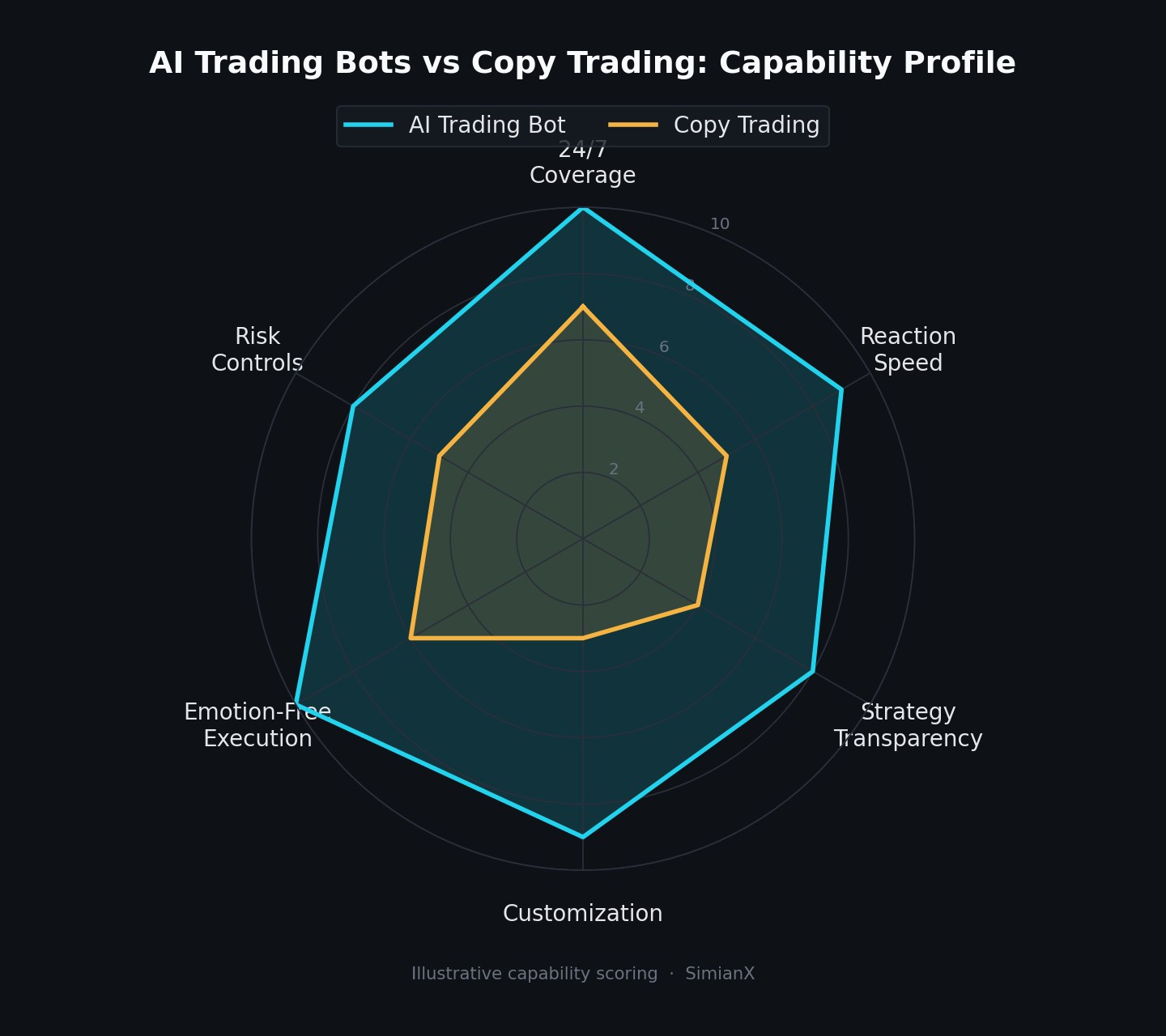
O padrão é difícil de não ver. O copy trading vence em curva de aprendizado zero — e estruturalmente pouco mais. O bot de IA vence em velocidade, transparência, personalização, disciplina e controle de risco, que juntas são as variáveis que compõem (ou destroem) uma conta ao longo de um ciclo inteiro.
Onde o copy trading ainda vence
Sejamos justos com ele. O copy trading é de fato a melhor escolha em três situações.
Você não tem nenhum interesse em estratégia. Se você nunca vai definir uma regra, colocar um stop ou pensar no dimensionamento de posição, então alugar o julgamento de um humano é melhor do que implantar um bot que você nunca vai configurar. Um ajuste padrão que você ignora é pior do que um líder que você ao menos escolheu.
Você quer a vantagem de uma pessoa específica. Alguns traders líderes têm um nicho real e duradouro — um especialista em memecoins, um arbitrador de taxa de financiamento — difícil de codificar como estratégia genérica. Se você quer especificamente a leitura de mercado daquela pessoa, o copy trading é o único jeito de comprá-la.
Você está aprendendo ao observar. Seguir um trader transparente e ler o raciocínio dele pode ser um aprendizado decente, assim como estudar quais modelos de IA operam melhor te ensina como são as boas decisões. Só encare isso como mensalidade, não como plano de aposentadoria.
Fora desses casos, as desvantagens estruturais — atraso, opacidade, risco herdado, viés de sobrevivência — começam a dominar.
Onde os bots de trading com IA se adiantam
A vantagem do bot não é ser "mais esperto que um humano". É que ele elimina as três coisas que silenciosamente arruínam a maioria das contas de varejo.
Ele elimina a latência. Os mercados reprecificam em segundos. Um bot reage aos dados em si, não a um humano que reage aos dados e depois é relevado até você. Num movimento rápido de SOL ou BTC, esses segundos são a operação inteira.
Ele elimina a emoção. O bot não sente FOMO no topo nem capitula no fundo. Ele dimensiona cada posição do mesmo jeito e honra cada stop. A maioria das perdas em trading não são falhas analíticas — são falhas de disciplina, e disciplina é exatamente aquilo em que o software é bom.
Ele elimina a opacidade. Você configurou a estratégia, então sabe com precisão por que cada operação disparou. Quando algo rende mal, dá para inspecionar, ajustar um parâmetro e reimplantar. No copy trading, quando o líder tem um mês ruim, você é um passageiro sem volante.
Some a isso cobertura 24/7 de verdade e a capacidade de rodar várias estratégias ao mesmo tempo em pares diferentes, e o bot simplesmente opera em outro plano. Para um passo a passo mais aprofundado, veja Como os autopilotos de IA operam cripto 24/7.
Os riscos ocultos que ninguém menciona
Nenhuma das abordagens é mágica, e fingir que é, é como as pessoas se machucam.
O maior risco oculto do copy trading é o estouro correlacionado: milhares de seguidores espelham uma única conta, então quando esse líder se sobrealavanca rumo a uma vela ruim, a coorte inteira é liquidada junta. O ranking que te atraiu é exatamente o mecanismo que concentra o estrago. Você ainda paga um arrasto constante — taxas de performance mais slippage — que corrói os retornos até nos meses bons.
Os bots de IA têm seu próprio modo de falha: um bot ruim é só um jeito rápido de perder dinheiro. Uma estratégia mal desenhada, um backtest sobreajustado ou um ajuste de alavancagem imprudente vão executar impecavelmente direto para o prejuízo. A disciplina que te protege quando a configuração é boa vai te machucar com a mesma eficiência quando ela é ruim. A solução são controles de risco reais — tetos de posição, stops por operação e dimensionamento conservador — e uma estratégia que você realmente entenda. A automação amplifica o que você dá a ela; dê um processo sólido, não um palpite.
Há também um risco de qualidade de dados que os dois compartilham. Um bot agindo sobre feeds de preço atrasados ou errados, ou um líder operando um par de baixa liquidez, podem produzir sinais fantasma. Dados confiáveis em tempo real não são negociáveis — são o alicerce sobre o qual todo o resto se apoia.
Como os autopilotos da SimianX combinam o melhor dos dois
Aqui a comparação deixa de ser abstrata. Os autopilotos da SimianX são projetados para te dar a disciplina do bot e o julgamento de nível analista que você esperava alugar de um trader líder — sem o risco humano herdado.
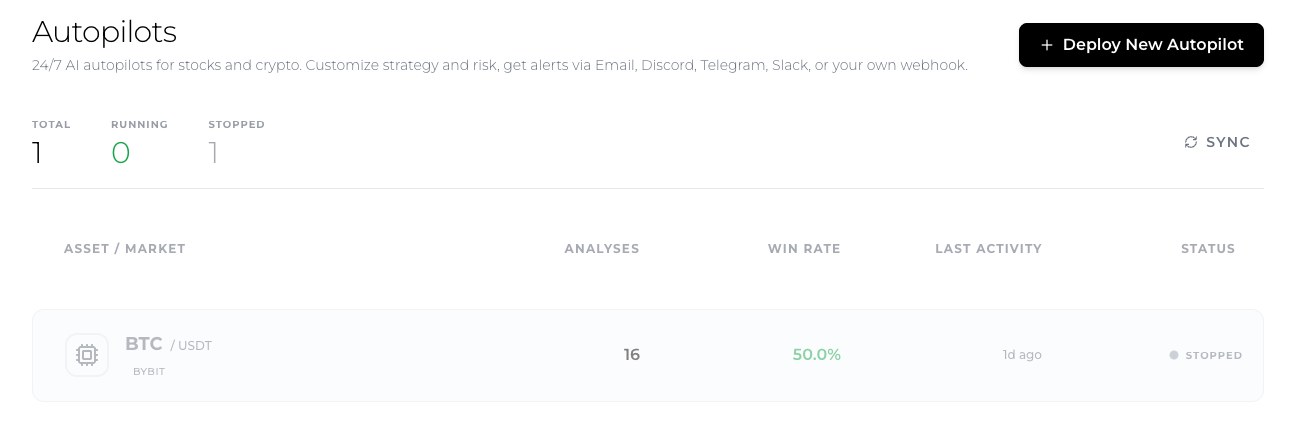
Cada autopiloto roda um pipeline de IA multiagente 24 horas por dia: puxa dados de mercado ao vivo, avalia técnicos e sentimento e produz uma decisão fundamentada em vez de uma única regra de gatilho. Você mantém o controle do que importa — escolhe o par, define a estratégia e o risco, e decide como os alertas chegam até você (Email, Discord, Telegram, Slack ou seu próprio webhook). Quando o mercado se mexe, o autopiloto age sobre os dados diretamente, sem nenhum relé humano no meio.
A lacuna de transparência também se fecha. Como você pode ver as análises por trás de cada decisão — e comparar os modelos subjacentes no ranking de modelos de IA e no ranking de cripto ao vivo — você nunca é um passageiro às cegas. Se quiser ver o motor em ação antes de automatizar, a Sala de Comando de Cripto ao Vivo mostra os mesmos agentes raciocinando em tempo real. E se você preferir começar com uma configuração guiada, Como rodar um bot de trading de cripto com IA 24/7 no autopiloto te leva passo a passo a implantar o primeiro.
Qual você deveria escolher?
Use este modelo rápido de decisão.
- Escolha o copy trading se você nunca vai configurar nada, quer especificamente o nicho de um trader nomeado e aceita herdar o risco dele e pagar taxas de performance pelo privilégio.
- Escolha um bot de trading com IA se você quer velocidade, transparência, disciplina de máquina e controle real sobre estratégia e risco — e está disposto a gastar dez minutos definindo como ele deve se comportar.
- Escolha um autopiloto de IA híbrido (a abordagem da SimianX) se você quer a disciplina do bot mais um raciocínio analítico genuíno, com os botões de risco nas suas mãos e não nas de um estranho num ranking.
Para a maioria dos leitores que se importam o bastante para ler uma comparação assim, a resposta é o bot — e, cada vez mais, um autopiloto de IA que raciocina em vez de um motor de regras burro. Os traders que sofrem costumam ser os que terceirizaram o julgamento por completo; os que se dão bem mantêm as decisões de estratégia e risco e deixam o software cuidar da execução incansável.
Perguntas frequentes
Os bots de trading com IA são lucrativos em 2026?
Um bot bem configurado com controles de risco sólidos pode ser, porque elimina os erros emocionais e de latência que afundam a maioria dos traders discricionários. Um mal configurado perde dinheiro com eficiência. A lucratividade vem da estratégia e dos ajustes de risco, não da "IA" como palavra mágica — a automação só amplifica o processo que você dá a ela.
O copy trading é mais seguro do que usar um bot?
Não inerentemente. O copy trading parece mais seguro porque um humano está no comando, mas você herda a alavancagem, a psicologia e o risco de estouro dele, e milhares de seguidores podem ser liquidados juntos. Um bot com tetos de posição e stops explícitos pode ser bem mais controlado — a diferença é quem define as regras de risco e se você consegue vê-las.
Posso perder todo o meu dinheiro com um bot de trading com IA?
Sim, se você der ajustes imprudentes a ele — alavancagem alta, sem stop-loss, posições superdimensionadas. A proteção é a configuração: dimensionamento conservador, stops por operação e uma estratégia que você entenda. Comece pequeno, observe como ele se comporta e escale só depois que ele tiver conquistado sua confiança.
Preciso saber programar para rodar um bot de IA?
Não. Plataformas modernas como os autopilotos da SimianX são sem código: você seleciona um par de trading, escolhe uma estratégia e um perfil de risco, define seus alertas e implanta. A IA cuida da análise; você cuida das barreiras de segurança.
Qual a diferença entre um bot de trading e um autopiloto de IA?
Um bot clássico segue uma regra fixa ("compre abaixo de RSI 30"). Um autopiloto de IA roda um pipeline de raciocínio — lendo dados, técnicos e sentimento, muitas vezes entre vários modelos — antes de agir, o que o torna adaptável ao contexto em vez de disparar cegamente o mesmo gatilho em todo mercado.
Conclusão
No debate bots de trading com IA versus copy trading, o copy trading só serve para traders que nunca vão tocar num ajuste e querem especificamente a vantagem de uma pessoa. Para todos os outros, o bot vence nas variáveis que se compõem ao longo de um ciclo inteiro: velocidade, transparência, disciplina e controle de risco. O copy trading te vende o julgamento de uma pessoa e o risco dela; um bom bot te vende um processo que você controla.
A opção mais forte em 2026 é a híbrida — um autopiloto que traz raciocínio de nível analista para a camada de execução enquanto deixa os botões de estratégia e risco nas suas mãos. Se é nessa direção que você quer ir, dá para implantar um autopiloto da SimianX, comparar os modelos que o movem no ranking ou explorar mais histórias da SimianX para afiar sua vantagem antes de automatizar.
Leituras relacionadas
- Como rodar um bot de trading de cripto com IA 24/7
- Como autopilotos de IA operam criptomoedas 24/7 (Guia 2026)
- Qual modelo de IA opera melhor? Ranking por R médio
- BTC vs ETH vs SOL: melhores zonas de compra na queda de 2026
- Como Operar um Bear Market Cripto: Playbook de Sobrevivência
- Sala de Comando Cripto AI Live: Coinbase, Binance, Bybit
- SimianX AI vs TradingView: Duelo de Sinais ao Vivo