Inside the September 2026 FOMC Decision: What a 12-0 Vote Really Said
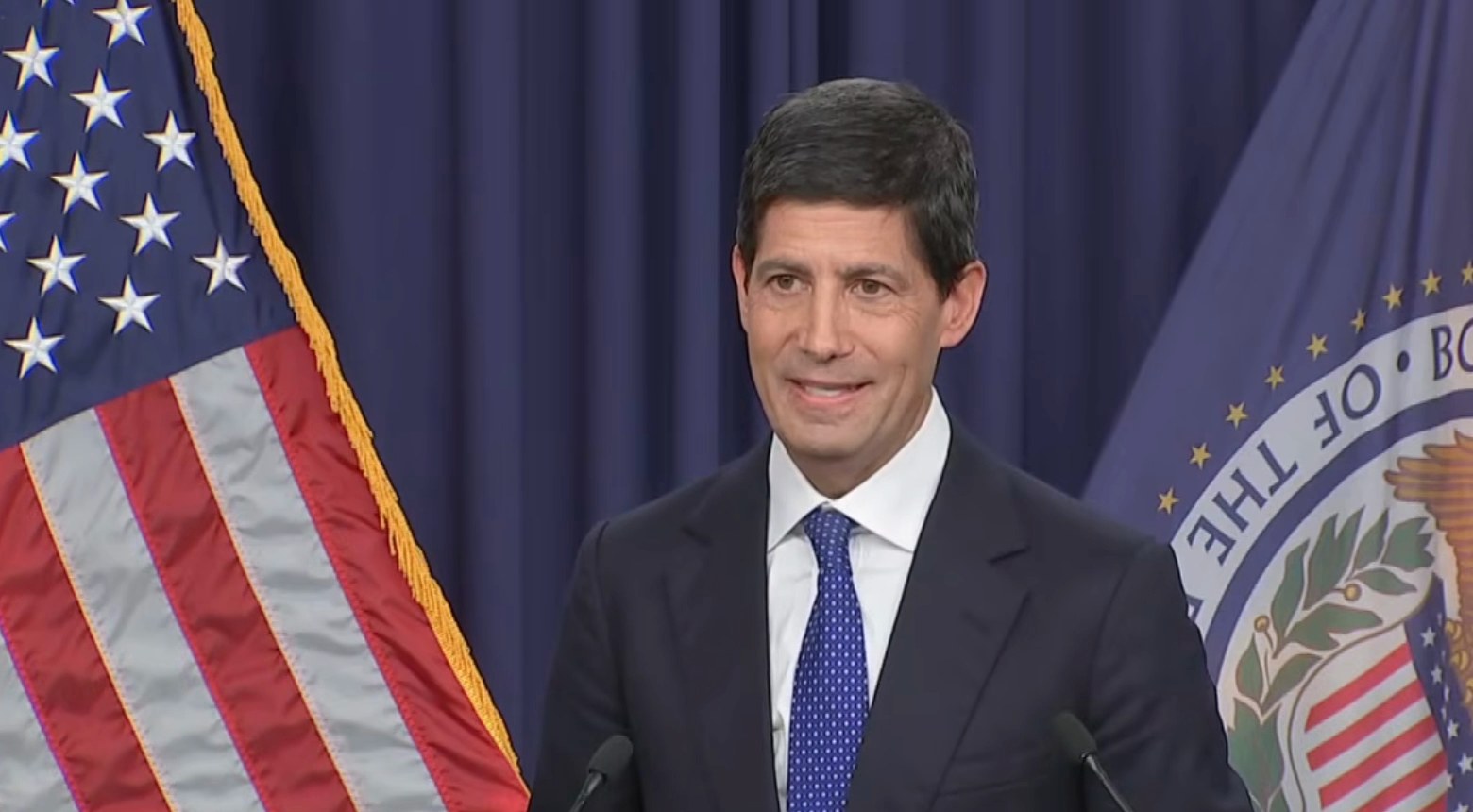
On Wednesday, September 16, 2026, the Federal Reserve raised interest rates for the first time in more than three years. The move was small — a quarter of a percentage point, lifting the federal funds target range to 3.75%–4.00%. The politics around it were not small at all. Kevin Warsh, the chairman President Trump personally picked eight months ago to deliver cheaper money, spent his first real test doing the opposite. Then he stood at the podium for half an hour and refused, three separate times, to say a single word about the president.
This is a plain-English breakdown of what happened, who Warsh is, whether he is a hawk or a dove, which stocks actually paid for the decision, and what to expect when the committee meets again in October.
What the Fed actually did
The Federal Open Market Committee (FOMC) voted to raise the federal funds rate by 25 basis points, from 3.50%–3.75% to 3.75%–4.00%. Three things about that sentence matter more than the number itself.
First, it is the first increase since July 2023. Rates had been sitting untouched at 3.50%–3.75% since the final cut of December 2025 — nine months of nothing.
Second, the vote was unanimous. Twelve to zero. Not a single dissent, including from officials who had publicly floated standing pat only two weeks earlier.
Third, the official FOMC statement contained a sentence the Fed had not used in years: "Inflation remains elevated. Today's policy action will support a timelier return to the Committee's 2 percent goal." The word to underline is timelier. A central bank that says it wants to get somewhere sooner is a central bank that is not finished.
Warsh's own framing was gentler and more revealing. He did not say the Fed was tightening. He said it "removed a dose of accommodation" — as if the previous setting had been a mild indulgence that a serious adult finally took away.
Who is Kevin Warsh?
If the name is new to you, that is fair. Warsh has been chairman for roughly four months.
He was nominated by President Trump on March 4, 2026, confirmed by the Senate in mid-May, and sworn in on May 22, replacing Jerome Powell. By the day of this decision he had been in the job about 117 days — a number he referenced himself, twice, as "my hundred and ten or twenty days here."
He is not a newcomer to the building. Warsh joined the Fed's Board of Governors in 2006 at age 35, the youngest governor in the institution's history. Before that he worked in mergers and acquisitions at Morgan Stanley, then served in the George W. Bush White House as a special assistant for economic policy and executive secretary of the National Economic Council. He has a public policy degree from Stanford and a law degree from Harvard — notably, no economics PhD, which makes him unusual among modern Fed chairs.
He sat through the entire 2008 financial crisis as the Fed's main link to Wall Street, then resigned in 2011. The reason is the single most useful fact about him: he was deeply skeptical of quantitative easing. He voted for QE2 in November 2010 because governors do not break ranks, but he told Ben Bernanke he "would not be leading the Committee in this direction" if he were chair, and argued publicly that the benefits of bond buying were "small and fleeting" while the risks were "unknown, uncertain, and potentially large."
So: a crisis-hardened market practitioner, allergic to unconventional stimulus, who has never once in his career dissented in public but who reliably pulls the institution toward tighter money from the inside. That is who Trump put in charge of the dollar.
Hawk or dove? A straight answer
Warsh is a hawk. Not a borderline case, not a "depends on the data" hawk. A hawk.
The evidence from Wednesday alone is overwhelming. He described inflation as "too high and has been for too long." He said this summer's inflation readings "do not tell me that underlying trends have meaningfully improved." He flagged that too many categories are still running above 3% on both six- and twelve-month views. And when a reporter pointed out that the Fed's own projections do not show inflation reaching 2% until 2029, he did not soften — he simply noted those were his colleagues' forecasts, not his, and repeated that the committee will deliver price stability.
But the more interesting thing is what kind of hawk he is, because that changes how you should trade around him.
He refuses to give forward guidance. Asked directly whether this hike starts a sequence, he said: "I'm not in the forward guidance business." Asked about the neutral rate — the level at which policy is neither helping nor hurting — he was blunter still: asked whether he thinks in those terms, he answered, "In a word, no."
He also rejects the data-point obsession that has defined Fed-watching for a decade. "Data point dependence is a dangerous preoccupation," he said. "Trends matter. Data points are noisy." At Jackson Hole in August he put it as a principle: "I stand here today committed to a discipline, not to a decision," and said policymakers must "interrogate reality."
Practical translation for investors: under Powell, the market could usually reverse-engineer the next move from the last inflation print. Under Warsh, it cannot. He is telling you he will act on his read of the trend, on his own schedule, and he will not pre-announce it. That is a recipe for larger surprise moves around FOMC dates — in both directions.
The part where he ignores Trump
Three different reporters tried to get him to engage on the president. Three times he declined, and the declines were the story.
ABC News asked what his message was to a president who has repeatedly demanded cuts. Warsh: "I've got nothing for you on a discussion with the president."
The Washington Examiner asked about Trump's threat to cut off trade with countries unless rates came down, and whether this was a test of Fed independence. Warsh: "I don't have anything for you on discussions with the president, and I'm not a Wall Street newsletter. Part of the independence of the Federal Reserve is we stay in our lane. Independence is a two-way street. We'll let people that do trade policy and fiscal policy stay in their lane too."
That is about as close as a sitting Fed chair gets to telling the White House to mind its own business — delivered flatly, without drama, which is exactly what makes it land.
The administration had spent the ten days before the meeting in a full-court press: the president, the vice president, the Treasury secretary and senior economic advisers all publicly pushing the Fed not to hike. Trump had posted that "high interest rates put the U.S.A. at a very unfair disadvantage." He had also said he would not have chosen Warsh if he wanted rate hikes.
Here is the part markets should care about most. It was not close. The vote was 12–0. If the White House pressure campaign had any effect inside the room, it was not visible in a single ballot. For anyone worried that an appointed-by-Trump Fed would be a captured Fed, Wednesday was a real, observable data point — and the bond market treated it as one.
Why hike when inflation is a supply problem?
This was the sharpest line of questioning, and it deserves a plain answer because it is the objection most readers will have.
Inflation right now is largely an energy and tariff story. The Strait of Hormuz disruption has kept crude above $100 for much of the year, and the twelve-month change in total PCE prices was running near 3.6% in August, with core PCE around 3.2% and core CPI closer to 2.4%. A quarter-point hike in Washington does not reopen a shipping lane in the Gulf.
Warsh conceded the point and then reframed it. "We cannot affect any individual price," he said, "whether it be oil prices, whether it be foodstuffs at the grocery store. But what we can do and will do is ensure that any change in relative prices don't broaden out, don't have second and third order effects."
That is the whole argument, and it is a defensible one. The Fed is not trying to lower gasoline. It is trying to stop expensive gasoline from turning into higher wage demands, higher service prices, and unanchored expectations — the mechanism that turned the 1970s oil shocks into a decade of inflation.
The labor market gives him room to try. Unemployment is about 4.1%, job openings and weekly hours are rising, and four-week average jobless claims are consistent with full employment. When one side of the dual mandate is essentially satisfied, the other side gets the attention. Warsh said so explicitly: "our predominant focus is on the price stability side of our mandate."
The bond market hiked before the Fed did
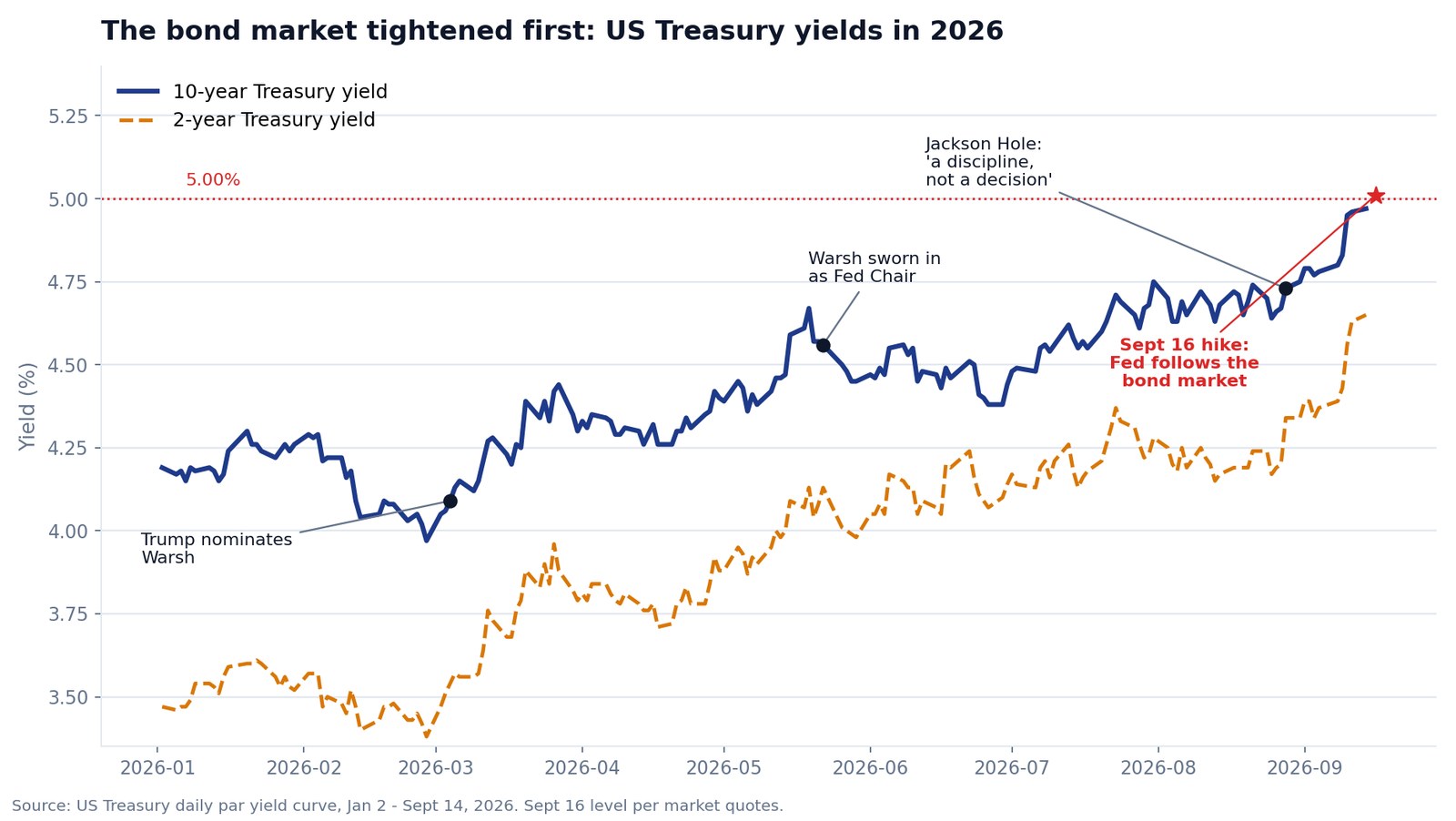
Look at the chart above, because it is the real story of 2026.
On March 4, the day Trump nominated Warsh, the 10-year Treasury yield was 4.09%. By mid-September it had crossed 5.00% — the highest since 2007. The 2-year went from 3.54% to about 4.72% over the same stretch. The Fed did not move once in that window. The market did all of the tightening on its own.
That is why Warsh could say he was "hard pressed to describe broad financial conditions as restrictive," and why his colleagues agreed. In his telling, the quarter point was not the Fed leading — it was the Fed catching up to a bond market that had already made its judgment.
Asked why long yields had risen so much, he gave three reasons worth remembering: the economy genuinely strengthened; competition for capital intensified as the "hyperscalers" — the big cloud and AI builders — flooded the market raising funding for capital expenditure; and geopolitics, particularly the gap between spot energy prices and the refined-product spreads that actually reach store shelves.
And on the day itself? The 10-year barely moved and long bonds firmed slightly. TLT, the 20-year-plus Treasury ETF, closed up 0.29%. Bond investors, in other words, treated the hike as inflation-fighting credibility rather than as a growth threat. That is the best possible review Warsh could have received.
How stocks voted: banks paid the bill
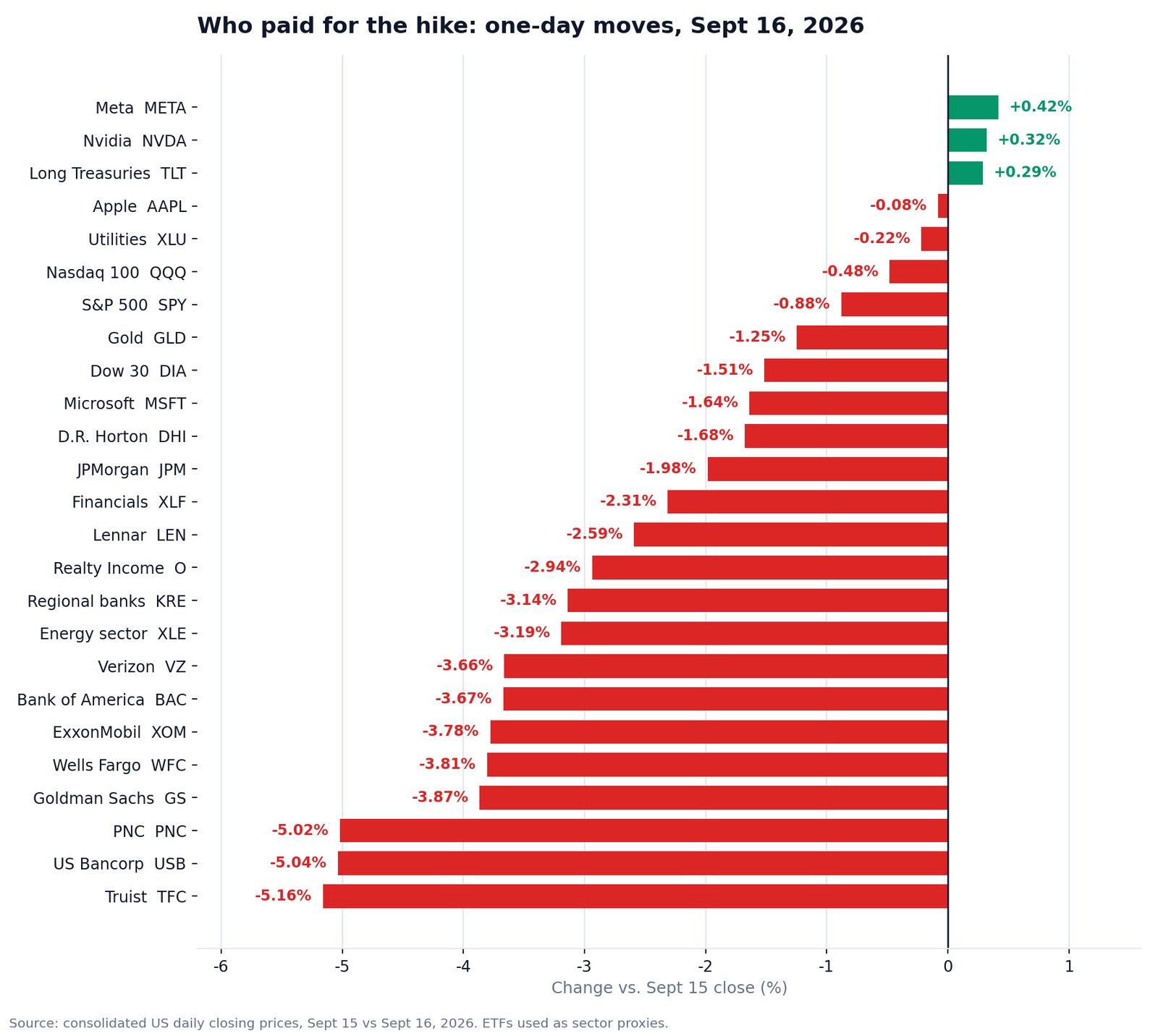
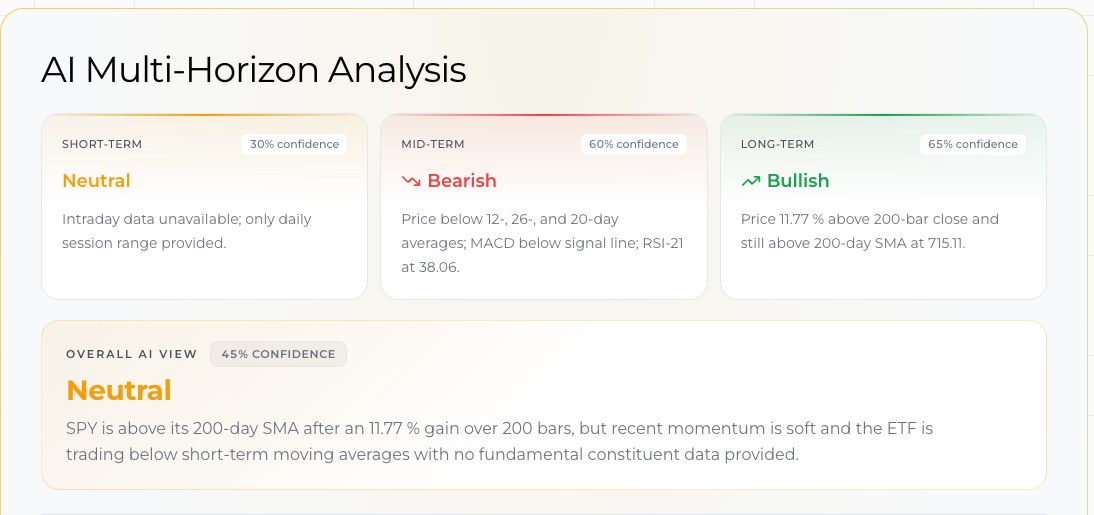
The headline indices told a mild story. The Dow fell about 1.4%, the S&P 500 about 0.8%, and the Nasdaq Composite about 0.5%. SPY closed at $750.74, down 0.88%.
Underneath, it was not mild at all. It was one of the sharpest single-day rotations of the year, and the pain was concentrated in one place: banks.
Truist fell 5.16%. U.S. Bancorp fell 5.04%. PNC fell 5.02%. Goldman Sachs lost 3.87%, Wells Fargo 3.81%, Bank of America 3.67%, Citigroup 3.41%, Charles Schwab 3.37%. Even JPMorgan, the sector's fortress, dropped 1.98%. The regional bank ETF KRE fell 3.14% and the broad financials ETF XLF 2.31%.
Most people assume banks love rate hikes, so this deserves explaining simply. Banks make money on the gap between what they earn on loans and what they pay on deposits. This hike lifted the short end — the cost of deposits — while the long end, where loan yields come from, barely budged. The gap gets squeezed, not widened. On top of that, a 5% 10-year marks down the value of the bonds banks already hold, and higher rates for longer raise the odds that borrowers stop paying. Regional lenders, which have the least diversified revenue and the most rate-sensitive deposit bases, get hit hardest. That is precisely the ranking the tape produced.
Energy was the second casualty, for a different reason: crude fell more than 3% on the day. ExxonMobil dropped 3.78% and Chevron 3.21%.
The bond-substitute trades were third. Verizon fell 3.66%, AT&T 3.42%, and net-lease REIT Realty Income 2.94% — when risk-free yields near 5%, a 6% dividend stops looking special.
Housing took a smaller hit than you might expect: Lennar fell 2.59%, D.R. Horton 1.68%. Mortgage rates had already priced in a 5% 10-year.
And then the surprise. Megacap technology barely flinched. Nvidia rose 0.32%, Meta rose 0.42%, Apple was flat at –0.08%. Microsoft was the exception at –1.64%. The old rule said high rates crush long-duration growth stocks. In 2026 the AI-capex complex is being treated as a cash-generating industrial cycle rather than a discount-rate trade — and it is now a big enough share of the index to hold the S&P's loss to less than a percent while banks fell 4%.
The clearest loser outside financials was crypto-linked equity. Coinbase fell 6.04%, though that had a second cause: the Senate failed 49–50 to advance the Clarity Act the same afternoon.
My read: this was a rotation, not a de-rating. The market did not decide the economy is breaking. It decided that the businesses whose earnings depend on cheap money are worth less, and that the businesses selling into an AI capital-expenditure boom are not. That distinction is the single most useful thing to carry into October.
What the dot plot says about what comes next
Alongside the decision, the Fed published its quarterly Summary of Economic Projections. Warsh pointedly declined to submit a forecast of his own, for the second meeting running, and presented his colleagues' numbers as theirs rather than his.
Here is where the 18 participants put the federal funds rate at the end of 2026:
| End-2026 fed funds rate | What it implies | Participants |
|---|---|---|
| 4.375% | Two more hikes this year | 4 |
| 4.125% | One more hike this year | 12 |
| 3.875% | Done for the year | 2 |
Sixteen of eighteen want at least one more increase in 2026. Only two think the job is finished.
The rest of the projections are just as hawkish in their quiet way:
| Median projection | 2026 | 2027 | 2028 | 2029 |
|---|---|---|---|---|
| Real GDP growth | 2.3% | 2.4% | 2.2% | 2.1% |
| Unemployment rate | 4.1% | 4.1% | 4.1% | 4.1% |
| PCE inflation | 3.7% | 2.3% | 2.1% | 2.0% |
| Core PCE inflation | 3.4% | 2.5% | 2.2% | 2.0% |
| Federal funds rate | 4.1% | 4.1% | 3.9% | 3.6% |
Read the bottom row carefully. The median participant sees no rate cuts at all in 2027 — the rate ends 2027 exactly where it ends 2026. Eight of eighteen actually put 2027 higher, at 4.375%. And inflation does not reach 2% until 2029, which is a tacit admission that this will be a long grind rather than a quick fix.
Against a longer-run neutral rate the committee pegs at 3.2%, today's 3.875% midpoint is only modestly restrictive. There is room to go further without anyone calling it extreme.
What to expect at the October meeting
The next FOMC meeting is October 27–28, 2026. There is no new dot plot at that meeting — the next Summary of Economic Projections comes in December — but there is a press conference, which means another half hour of Warsh refusing to commit to anything.
Futures markets are leaning toward one more hike before year-end. The dots agree. The genuine question is not whether but which meeting: October or December.
My view, stated plainly as a view:
A hold in October followed by a hike in December is slightly the more likely path, and I would put it a little above even money. The case for waiting is that Warsh has now bought himself exactly the thing he said he wanted in July — time to see whether the trend turns. He has said repeatedly that trends matter and data points do not, and one CPI print between now and late October is a data point. The December meeting arrives with a full set of projections and two more months of evidence.
But the case for October is real and I would not dismiss it. The statement said timelier. Warsh said the committee's standard for action — confidence that underlying inflation is moving to 2% "clearly and at sufficient speed" — has not been satisfied. If it was not satisfied in September, one month of data is unlikely to satisfy it in October. Historically, when the Fed starts hiking it rarely stops at one, a point a New York Times reporter pressed him on and which he conspicuously declined to rebut.
Three things would tip it toward an October move: core inflation printing above expectations, crude pushing higher on fresh Gulf escalation, or another firm payroll report. Three things would tip it toward a hold: a genuine break lower in core services, oil giving back its geopolitical premium, and any crack in the labor data — particularly a jump in continuing claims.
One warning. Because Warsh refuses to pre-commit, the market will go into October with less certainty than it is used to. Expect wider moves on the day in exactly the places that moved Wednesday: regional banks, long-duration bonds, and anything paying a dividend for a living.
What this means for an ordinary portfolio
Four takeaways, none of which require a trading desk.
Cash and short bonds are genuinely competitive again. With the policy rate at 3.75%–4.00% and no cuts penciled in through 2027, the opportunity cost of holding some dry powder is close to zero. That was not true two years ago.
Rate-sensitive income needs a second look. If you own utilities, telecoms or REITs primarily for yield, you are competing with a risk-free 5%. The dividend has to be growing, not merely large.
Bank exposure is now a curve bet, not a rate bet. Banks do not need higher rates; they need a steeper curve. Until the gap between short and long yields widens, hikes are a headwind for the group, and the smaller and more deposit-dependent the lender, the sharper that headwind.
And don't reflexively sell growth. The one thing Wednesday proved is that the old high-rates-kill-tech reflex is not working in this cycle, because the AI capital-expenditure cycle is currently a bigger force on those earnings than the discount rate is.
If you want to see how these moves look in real time rather than in a recap, our live multi-agent command room runs the same setup on any US ticker, Sector Watch tracks which groups are actually absorbing the damage, and Autopilots will monitor a position and tell you when the picture changes. Pricing and included analysis limits are on the plans page, and more market breakdowns live in Stories.
Frequently asked questions
How much did the Fed raise rates in September 2026?
By 0.25 percentage points, taking the federal funds target range from 3.50%–3.75% to 3.75%–4.00%. It was the first increase since July 2023 and the first of Kevin Warsh's chairmanship.
Was the decision unanimous?
Yes. The FOMC voted 12–0 with no dissents, which is notable given how publicly divided officials had appeared in the weeks beforehand.
Is Kevin Warsh a hawk or a dove?
A hawk. He calls inflation "too high and for too long," was a QE skeptic during his 2006–2011 term as governor, and has made price stability his stated predominant focus. He is, however, an unusual hawk in that he refuses to give forward guidance and dismisses the neutral-rate framework as academically interesting but operationally useless.
Will the Fed hike again in October 2026?
The October 27–28 meeting is live. Sixteen of eighteen FOMC participants project at least one more increase in 2026, and the committee said it wants a "timelier" return to 2% inflation. Whether that hike lands in October or at the December 8–9 meeting is genuinely uncertain, and Warsh explicitly declined to signal.
Why did bank stocks fall if rates went up?
Because the hike raised short-term funding costs without lifting long-term lending yields, squeezing margins, and because a 10-year yield near 5% depresses the value of the bonds banks already hold. Regional banks such as Truist, U.S. Bancorp and PNC fell around 5%.
What did Warsh say about President Trump?
Nothing. Three reporters asked about the White House pressure campaign and he declined each time, saying only that "independence is a two-way street" and that the Fed intends to "stay in our lane."
The bottom line
The quarter point is not the story. Two things are.
The first is that a chairman appointed specifically to cut rates hiked them 117 days into the job, got every colleague to sign on, and then declined even to acknowledge the president who appointed him. Central bank independence is usually an abstraction. Wednesday it was a roll call.
The second is that the market believed him. Long yields eased, the dollar firmed, and the selling concentrated in the businesses that need cheap money rather than spreading across the whole index. That is what credibility looks like in price data.
Warsh keeps saying he is committed to a discipline, not a decision. Investors now have to price a Fed that will not tell them what it is going to do. That is less comfortable than the last decade. It is also, on the evidence of one afternoon, considerably more serious.
Related Reading
- Warsh's First Fed Meeting 2026: Dot Plot Flips to Hike
- 2026 Midterms Meet the Fed: Is a September Rate Cut Dead?
- Trump Praises Warsh, Pushes for a July Fed Rate Cut
- Every Fed Rate-Hike Cycle Since 1983: S&P 500 & Chip Stocks
- Global Bond Selloff 2026: 30-Year Yields at 19-Year Highs
- AI Capex 2026: Big Tech Now Spends 96% of Its Cash Flow
- July CPI Report 2026: Inflation Falls, Fed Hike in Doubt
- Yield Curve Inversions and US Recessions: A Reference Table
- Jackson Hole 2026: Will Innovation Rewrite Fed Policy?
References
- Federal Reserve — FOMC statement, September 16, 2026
- Federal Reserve — Summary of Economic Projections, September 2026
- Federal Reserve — Chair Warsh's Jackson Hole remarks, August 28, 2026
- Federal Reserve — FOMC meeting calendar
- U.S. Department of the Treasury — Daily Treasury Par Yield Curve Rates
- Bureau of Economic Analysis — Personal Consumption Expenditures Price Index